
On this page
Start here
Quick answer
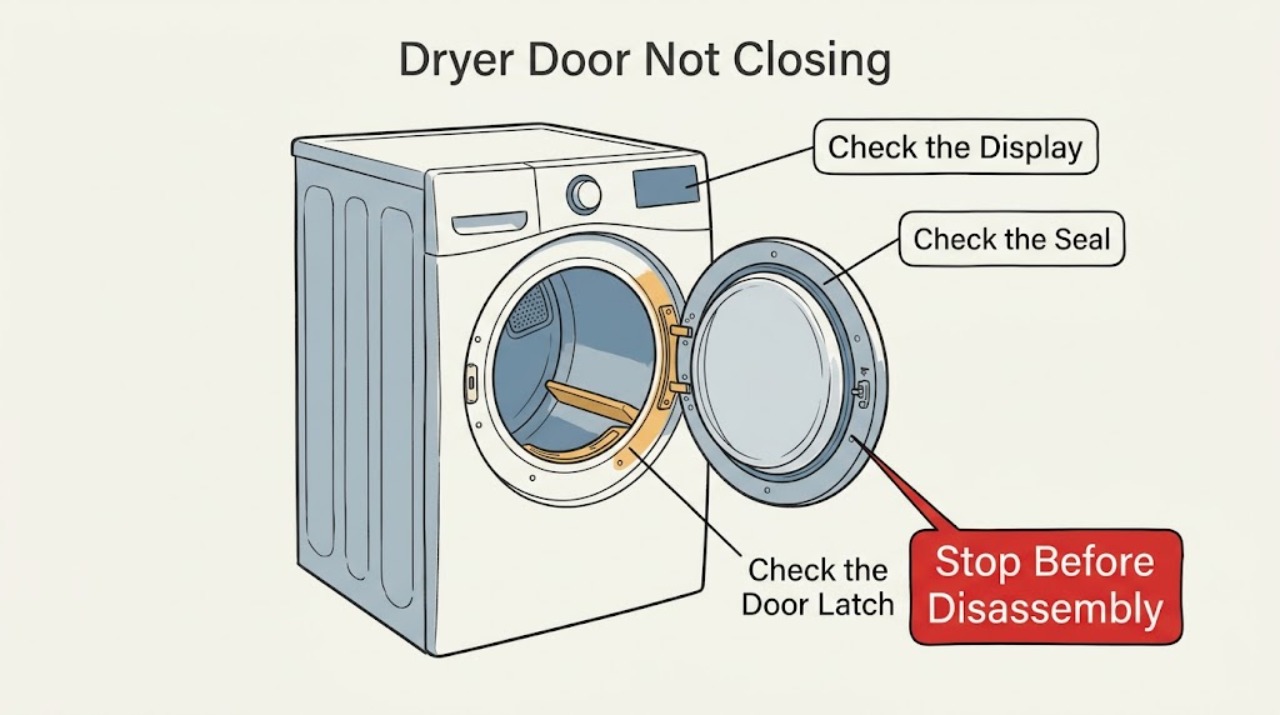
A GE dryer door that will not close is commonly blocked by clothing, lint, or a shifted gasket; misalignment at the hinge or strike; a bent door or cabinet; or a latch or switch that is damaged. Stop the dryer, remove the load, inspect the seal and door opening with the drum stationary, and close the door gently without forcing it. If the door was reversed or reinstalled, use the exact model installation instructions to verify its hinge and strike arrangement. Do not run a dryer with a door that will not latch, a scorched or pushed-in door switch, broken glass, sharp metal, exposed wiring, smoke, or a burning smell. If an external obstruction and alignment check do not restore a secure latch, arrange qualified service.
Work through in order
Diagnostic checks
Use only checks that match the exact appliance or system and its official guide.
-
Check 1
Stop the dryer, turn the controls off, and wait for the drum to stop. Remove the clothes and check from outside for smoke, a burning smell, a hot or damaged power connection, broken glass, sharp exposed metal, or a door that is hanging loose. Do not operate or force a door with visible damage.
Expected result: There is a fire, electrical, glass, or mechanical hazard, or the dryer is intact and safe for an external door check.
Next step: If a hazard is present, stop using the dryer and isolate power only if safe without touching damaged parts; arrange qualified appliance or electrical service. If there is no hazard, continue with the obstruction check.
Why this matters
Why: A damaged door or electrical condition can allow heat, moving parts, or electricity to escape. It is not a routine alignment problem when the door or power parts are unsafe.
-
Check 2
With the drum empty and stationary, inspect the full door gasket, the cabinet lip, and the drum opening. Remove only loose lint, a small item of clothing, or another accessible obstruction; smooth a gasket that is visibly folded or outside its channel without tools. Check that no zipper, drawstring, or bulky edge is caught between the door and cabinet.
Expected result: A visible obstruction or displaced gasket is found and the door sits flush after it is safely cleared, or the opening is clear but the door still will not close.
Next step: If the door now closes without force and the latch engages, proceed to a stationary latch check before restarting. If it remains open or resists, do not slam it; continue to the hinge and strike check.
Why this matters
Why: A trapped load item or seal can hold the door away from its latch. If the opening is clear, the next likely distinction is alignment, latch hardware, or the switch rather than laundry placement.
-
Check 3
Look at the door gap and hinge side from the front without removing screws. Check whether the door is level with the cabinet, whether the hinge is visibly loose or bent, and whether the latch or strike is at the same height and centered. If the door swing was recently changed, compare the arrangement with the exact GE installation instructions for the model.
Expected result: The door is sagging, the hinge or strike is visibly displaced, or the door aligns squarely but the latch still does not engage.
Next step: If the installation instructions allow a simple external adjustment and the hardware is undamaged, follow those instructions exactly. If the hinge, cabinet, or door is bent, hardware is loose behind the panel, or the correct arrangement is uncertain, leave the dryer unused and arrange service.
Why this matters
Why: A hinge or strike misalignment can prevent a sound latch even when the seal and opening are clear. Door-swing hardware is model-specific, so a generic adjustment may worsen alignment.
-
Check 4
Close the door gently while listening and feeling only for normal latch engagement; do not apply extra force. Check that the latch is not blocked by lint or a broken plastic piece and that the strike has not been pushed out of position. Do not insert a tool into the latch or remove the inner door panel.
Expected result: The latch engages and holds the door flush, or it will not engage, feels loose, or immediately releases.
Next step: If the latch holds, perform only the safe stationary switch check and a cautious start check. If it does not hold or the door must be forced, stop using the dryer and request qualified service.
Why this matters
Why: A secure latch is needed before a cycle can start. A latch that cannot hold may involve the latch, strike, hinge, door shell, or cabinet alignment and cannot be confirmed by repeated slamming.
-
Check 5
If the door appears to latch but the dryer reports an open door or will not start, inspect the door-switch area visually with the door open and the dryer off. Look for a switch that is scorched, cracked, or pushed in, but do not press it with a tool, bypass it, or expose wiring.
Expected result: The switch area looks intact and the door latches normally, or the switch is scorched, pushed in, damaged, or does not line up with the closed door.
Next step: If the switch is damaged or misaligned, do not run the dryer; arrange qualified service. If it looks intact, continue only with the model's normal start procedure and stop if the door opens, unlatches, or the dryer reports an open door.
Why this matters
Why: GE identifies a scorched or pushed-in door switch as a reason a dryer may not operate. A switch symptom with a secure door points beyond simple door loading and needs a safety-component diagnosis.
-
Check 6
After the door closes and latches without force, run only a normal short start check with the area clear and the dryer attended. Confirm the door remains closed, the drum starts normally, and there is no scraping, air escaping around a gap, smoke, or unusual heat at the door. Stop the cycle if any abnormal symptom appears.
Expected result: The door remains securely latched and the dryer runs normally, or it unlatches, opens, makes a harsh mechanical sound, or shows a safety symptom.
Next step: If the check is normal, monitor the next load and avoid overloading the opening. If the door will not stay latched or any hazard appears, stop using the dryer and arrange qualified service.
Why this matters
Why: A successful latch and normal start support an obstruction or alignment cause that has been corrected. A returning door fault or abnormal heat or sound means the door and safety interlock should be examined by a technician.
Use your observations
Decision map
Find the observation that best matches what you see, then follow the next safe action.
-
PATH 01Next step
What you see
Clothing, lint, or a folded gasket is visibly blocking the door and the door closes after it is cleared
Do this next
Use the dryer only with the door sitting flush and latched, and keep items fully inside the drum opening. Stop if the obstruction returns with no obvious cause.
-
PATH 02Next step
What you see
The door became misaligned after it was reversed, reinstalled, or moved
Do this next
Use the exact GE installation instructions for the model and its allowed door-swing arrangement. Arrange service if the hinge, strike, or cabinet needs more than a safe external adjustment.
-
PATH 03Next step
What you see
The latch will not hold, the door must be slammed, or the door springs open after closing
Do this next
Do not run the dryer. Leave it unused and arrange qualified appliance service for the latch, strike, hinge, door, or alignment diagnosis.
-
PATH 04Next step
What you see
The door appears closed but the dryer reports an open door or the door switch is scorched, pushed in, or damaged
Do this next
Stop using the dryer and request service. Do not bypass, hold, or electrically test the door switch.
-
PATH 05Next step
What you see
Broken glass, sharp exposed metal, smoke, burning smell, damaged wiring, or a hot power connection is present
Do this next
Stop using the dryer and isolate power only if safe without touching damaged parts. Arrange qualified appliance or electrical service.
-
PATH 06Next step
What you see
The door closes and latches normally after the external correction and remains secure during a normal start check
Do this next
Use the dryer normally according to the model guide and monitor the door edge, latch, and switch for recurrence. Stop if the door opens or the symptom returns.
Helpful context
Understand the symptom
A door that looks shut is not necessarily latched
The door must sit squarely against the cabinet and engage its latch or strike before the dryer can safely run. A small item caught in the opening, a gasket folded out of place, or a door that has sagged at the hinge can leave a visible gap or prevent the switch from being actuated. Do not compensate by slamming the door; that can damage the latch, glass, or cabinet.
Inspect only when the drum is stopped
Turn the controls off and remove the load before looking around the door opening. Keep fingers clear of the hinge and latch, watch for sharp sheet metal or broken glass, and do not reach into a running dryer. If the door cannot close because the cabinet or hinge is bent, the door switch is scorched or pushed in, or wiring is visible, leave the dryer unused and use qualified service.
Model identity matters after a door change
Many GE dryers have reversible doors, but the swing and hardware are model-specific and some unitized or portable models are exceptions. If the problem began after reversing or reinstalling the door, compare the hinge, latch, and strike position with the exact installation instructions rather than copying a different model's arrangement.
Only after diagnosis
Potential parts
- dryer door latch or strike
Consider this category only after qualified service confirms that the latch or strike is worn, broken, or misaligned after the opening and hinge checks.
Latch and strike geometry varies by GE model. Confirm the complete model identity and diagnosis before selecting a replacement. - dryer door hinge or door-seal component
Consider this category only when service confirms a sagging hinge, damaged door, or seal that cannot be correctly seated for the exact model.
Door and seal hardware is model-specific. Do not bend the door or dismantle the inner door to correct an alignment problem. - dryer door switch
Consider this category only after qualified service confirms a scorched, pushed-in, failed, or misaligned door switch with the door otherwise closing correctly.
The switch is a safety interlock and compatibility depends on the model. Never bypass or test it live.
When checks do not resolve it
Need a professional?
Stop and seek professional help for broken glass, sharp metal, smoke, burning smell, damaged wiring, a hot power connection, a door that cannot latch securely, a scorched or pushed-in switch, or a door fault that returns after safe obstruction and model-specific alignment checks.
Have this ready
- Provide the full model identity, whether the door was recently reversed or moved, where the gap or interference appears, latch and hinge observations, whether the switch looks scorched or pushed in, and what changed after removing the load or visible obstruction. Do not bypass the interlock, remove panels, or operate a damaged dryer.
Common questions
FAQ
Why will my GE dryer door not close?
Check for clothing, lint, a folded gasket, a shifted hinge or strike, or a bent door. Remove only loose visible obstructions and close gently. If the latch will not hold without force, leave the dryer unused and arrange service.
Can I run a GE dryer if the door is partly closed?
No. The door must close tightly and latch before operation. Do not hold down or bypass the door switch, and do not run the dryer with a damaged door, broken glass, or a latch that will not hold.
What if my GE dryer door stopped closing after I reversed it?
Door swing hardware is model-specific. Compare the hinge and strike arrangement with the exact GE installation instructions. Some GE unitized and portable models are exceptions and may not be reversible; use qualified help if alignment is uncertain.
When should I stop troubleshooting a GE dryer door?
Stop for broken glass, sharp metal, smoke, burning smell, damaged wiring, a hot connection, a scorched or pushed-in door switch, or a door that will not latch securely. Arrange qualified appliance or electrical service and do not bypass the interlock.
Read the exact guide
Official sources
- Frequently Asked Questions About GE DryersGE Appliances · GE dryer support topics, manuals, and repair pathway
- Dryer - Door SwingGE Appliances Support · GE and Hotpoint dryers; reversible-door exceptions and model-specific installation guidance
- Dryer - Will Not Run or StartGE Appliances Support · GE dryers; closed-door requirement, door-switch inspection boundary, power safety, and service escalation
- Dryer - Minimum Clearance RequirementsGE Appliances Support · GE dryer installation and airflow clearance guidance
Community feedback
Share a repair observation
Share a plain-text repair observation. Accepted observations are published automatically; this page may take a moment to update.