
On this page
Start here
Quick answer
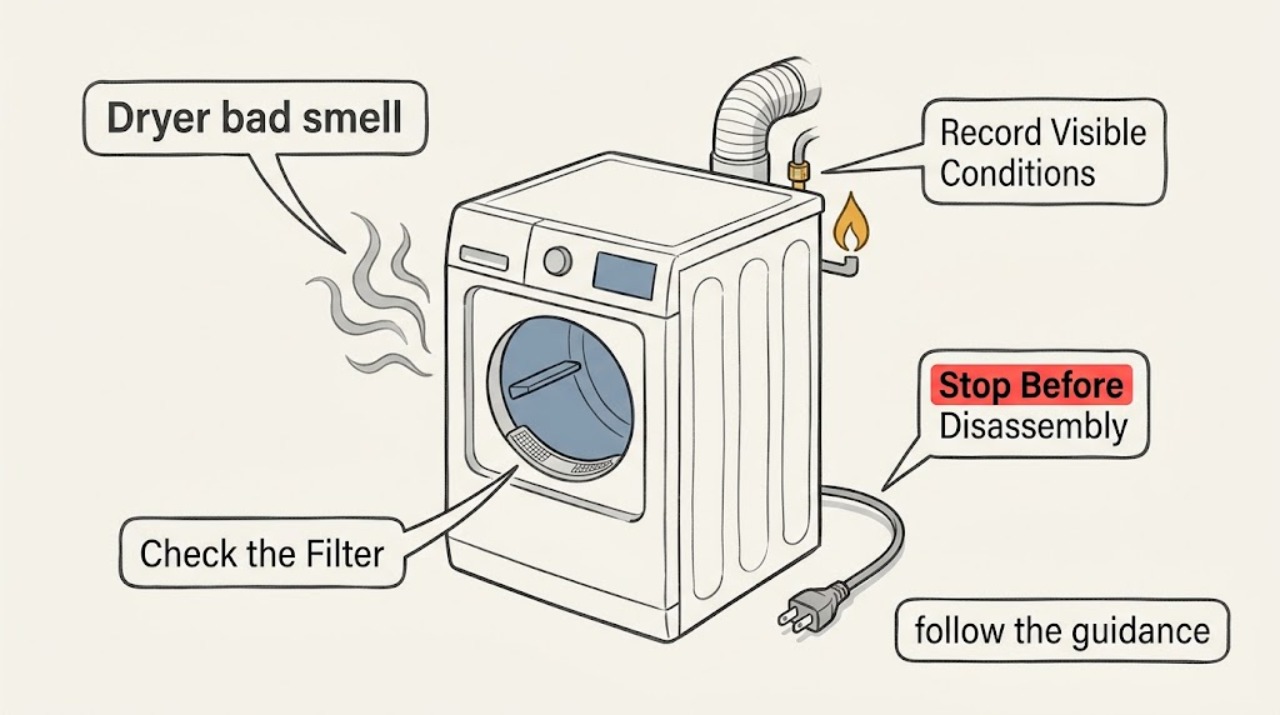
A bad smell from a GE dryer is commonly tied to first-use residue, lint or restricted exhaust, damp or musty conditions, or an abnormal gas flame. Stop the dryer and sort the odor before continuing: a new-machine oily smell may fade after the manufacturer-recommended empty run, while a persistent burning smell, smoke, melting odor, or gas odor is a safety stop. Check the lint filter and visible vent path, keep the intake clear, and arrange qualified service when the odor remains or any flame, electrical, or overheating symptom appears.
Work through in order
Diagnostic checks
Use only checks that match the exact appliance or system and its official guide.
-
Check 1
Stop the cycle, turn the dryer control off, and identify the odor without touching hot surfaces. Record whether it smells like new-machine oil, warm lint, mildew or damp fabric, melting plastic or wiring, or gas, and note whether there is smoke, visible scorching, an unusually hot cabinet, or an odor on the clothes.
Expected result: The smell is limited to first use, follows lint or dampness, or resembles burning electrical material, smoke, or gas.
Next step: For smoke, melting odor, scorching, an unusually hot cabinet, or gas odor, keep the dryer off, leave the area if needed, and contact the appropriate emergency, gas, electrical, or appliance professional from a safe location. Otherwise continue with the filter and airflow checks.
Why this matters
Why: GE describes a temporary oily or burning odor during initial use, but persistent odors should be checked. Lint and moisture point toward the filter, exhaust, or loading environment. Smoke, melting odor, scorching, unusual heat, or gas odor can indicate a fire, electrical, or combustion hazard rather than a cleaning issue.
-
Check 2
If the dryer is new and the smell is only a light oily or dusty odor during the first use, follow the GE guidance for an empty, supervised initial run using the cycle and safety instructions for the model. Do not use this test for gas odor, smoke, scorching, or a strong persistent burning smell.
Expected result: The odor fades after the initial run, or it remains, returns with laundry, or becomes stronger.
Next step: If the odor persists or returns, stop using heat until the filter and exhaust path are checked. If the symptom includes smoke or scorching, skip further testing and arrange service.
Why this matters
Why: A fading first-use odor is consistent with residue or dust warming off during initial operation. A recurring smell is not explained by first use and needs the lint, vent, load, or appliance checks below.
-
Check 3
With the dryer off and cool, remove the lint filter and inspect the screen, filter housing, and door area for a heavy lint film or accumulated debris. Clean the filter using the model instructions and reinstall it completely before any normal cycle.
Expected result: The screen or housing is coated, lint is present around the door, or the filter and housing are visibly clear.
Next step: If lint was present, clean it and recheck only with a small supervised load after the exhaust path is also inspected. If the filter is clear but the smell remains, do not open the cabinet; continue to the vent and airflow check.
Why this matters
Why: Lint buildup can carry a warm, burning, or musty odor and can reduce airflow. A clean filter does not rule out lint farther inside the exhaust path, but it makes a filter-surface cause less likely.
-
Check 4
Inspect the accessible exhaust hose behind the dryer and the outside wall cap without disassembling the appliance. Look for a kinked or collapsed hose, lint at the termination, an obstruction, weak exhaust movement, or a blocked intake area in front of the dryer. Confirm the installed duct material and routing match the model's installation instructions.
Expected result: The hose is restricted, the outside cap is blocked, exhaust movement is weak, or the path appears clear.
Next step: Clear only accessible lint or an obvious outside obstruction and have a qualified duct professional correct concealed or extensive blockage. Do not operate a gas dryer with its vent disconnected; if the odor or heat remains after the path is restored, arrange appliance service.
Why this matters
Why: GE links restricted airflow with heat and humidity retained in the drum and with longer drying or sweating. A clear-looking filter cannot compensate for a restricted exhaust. A clear path makes an internal appliance fault or odor source more likely if the symptom persists.
-
Check 5
Check the load and room conditions after the filter and vent are safe: remove items with residual fuel, solvent, oil, or chemical contamination, avoid packing the drum, and note whether the smell occurs only with damp loads or in a cold, unheated location. Keep clothing and other objects away from the dryer's front air intake.
Expected result: The odor follows a particular load or chemical residue, appears with dampness or condensation, or occurs across ordinary loads.
Next step: Do not dry contaminated items until they have been safely laundered according to their care and chemical instructions. Improve the room and loading conditions; if the odor occurs with ordinary clean loads, keep the dryer off and seek service.
Why this matters
Why: Odors can come from the load rather than the dryer. GE also notes that an unheated location can cause condensation or sweating, and retained humidity can contribute to musty conditions. A smell across normal loads is more consistent with the appliance, lint path, venting, or combustion system.
-
Check 6
For a GE gas dryer only, do not remove panels or adjust the burner. From a safe distance during normal operation, note whether the odor is gas-like or whether the flame appears abnormal, and stop immediately if either occurs. For an electric dryer, stop for an electrical or melting odor even if the drum still turns.
Expected result: There is a gas odor, an abnormal flame, smoke, scorching, a melting smell, or none of these symptoms.
Next step: Turn the dryer off, keep away from ignition sources, leave the area if a gas odor is present, and contact local emergency or gas service from a safe location. For an electrical or burning smell without gas, isolate use and arrange a qualified appliance or electrical inspection.
Why this matters
Why: GE says an incorrect gas flame size or color can produce a gas odor and identifies a blue flame with a small yellow tip as normal guidance. Gas, smoke, scorching, and melting odors require professional evaluation; they are not corrected by repeated cycles or vent cleaning.
Use your observations
Decision map
Find the observation that best matches what you see, then follow the next safe action.
-
PATH 01Safety boundary
What you see
The dryer is new and the odor is a light oily or dusty smell limited to initial use.
Do this next
Follow the model's initial-use guidance for an empty run and monitor whether the odor fades. Do not use this branch for smoke, scorching, strong persistent burning odor, or gas odor.
Why this path and its safety boundary
Safety stop: Treat the odor as a fault or environmental condition and inspect lint, exhaust, load, and gas or electrical safety symptoms.
-
PATH 02Safety boundary
What you see
The filter, filter housing, exhaust hose, or outside wall cap contains lint or an obstruction.
Do this next
Keep the dryer off while accessible lint or obstruction is addressed, then have concealed ducting corrected if airflow remains weak. Do not disconnect a gas dryer's vent for a test.
Why this path and its safety boundary
Safety stop: A clear path makes an internal heat, electrical, or combustion issue more likely when the smell persists; stop repeated operation and arrange service.
-
PATH 03Safety boundary
What you see
The odor is musty and occurs with damp loads, condensation, or a cold unheated laundry location.
Do this next
Check room conditions, load condition, lint path, and retained humidity. Do not assume a musty smell is harmless if the cabinet is unusually hot or drying performance is worsening.
Why this path and its safety boundary
Safety stop: An odor across clean ordinary loads needs appliance-level diagnosis after the safe external checks.
-
PATH 04Safety boundary
What you see
There is gas odor, smoke, scorching, a melting or electrical smell, an abnormal flame, or an unusually hot cabinet.
Do this next
Stop the dryer and leave the area when appropriate. Contact the relevant emergency, gas, electrical, or appliance professional from a safe location; do not continue a diagnostic cycle.
Why this path and its safety boundary
Safety stop: One supervised retest is reasonable only after a low-risk lint, airflow, or load condition has been corrected. If the odor returns, stop and schedule service.
Helpful context
Understand the symptom
Treat the odor itself as the first diagnostic result. An odor only during the first use of a new GE gas or electric dryer can come from assembly oils or dust warming off, but a smell that starts after normal use needs inspection. The distinction is not just how strong the smell is: note whether it is oily, musty, lint-like, electrical or melting, or gas-like, and whether the cabinet or laundry is unusually hot.
A dryer depends on a clear lint path and exhaust path. GE says restricted venting can retain heat and humidity, while lint accumulation can produce a burning or musty odor. Do not use a gas dryer with its exhaust disconnected, and do not continue operation when an odor suggests fire, gas, or an electrical fault.
Only after diagnosis
Potential parts
- lint filter
Consider this only when the existing filter is damaged, does not seat correctly, or remains visibly compromised after the model-specific filter type is confirmed.
Confirm the full GE model number and the manufacturer's parts information before ordering. - exhaust duct or wall-cap component
Consider this only when a qualified inspection identifies a damaged or unsuitable exhaust component after the airflow problem is located.
Follow the model installation instructions and local requirements; do not infer suitability from appearance alone. - thermal or combustion component
Consider this only after a qualified technician identifies an internal overheating, ignition, or flame fault; an odor alone does not identify a replacement part.
Internal thermal and gas components are model-specific and require professional diagnosis and installation.
When checks do not resolve it
Need a professional?
Stop using the GE dryer and arrange qualified service for smoke, scorching, a melting or electrical odor, a gas odor, an abnormal gas flame, an unusually hot cabinet, repeated odor after lint and vent checks, or an odor that affects clean ordinary loads. Do not open the cabinet, adjust a gas burner, bypass a safety device, or operate a gas dryer with the exhaust disconnected.
Have this ready
- GE dryer model number and whether it uses gas or electricity
- A description of the odor and whether it occurs with an empty drum, clean laundry, or one particular load
- Whether the dryer is new, recently installed, recently cleaned, or recently moved
- What was observed at the lint filter, exhaust hose, outside wall cap, cabinet temperature, and flame if it is a gas model
Common questions
FAQ
Why does my new GE dryer smell oily or like burning dust?
GE says a light oily or burning odor can occur during the first use of a new gas or electric dryer as assembly oils or dust warm off. Follow the model's initial-use guidance; a persistent, strong, smoky, or scorching smell needs service.
Can a blocked dryer vent cause a bad smell?
Yes. GE links restricted airflow and lint buildup with retained heat, humidity, and burning or musty odors. Check the filter, accessible hose, and outside wall cap, and have concealed blockage corrected.
What should I do if my GE gas dryer smells like gas?
Stop the dryer, avoid ignition sources, leave the area if needed, and contact local emergency or gas service from a safe location. Do not keep cycling the dryer or adjust the burner yourself.
Why does my dryer smell musty?
A musty smell can follow damp loads, condensation, lint buildup, or restricted airflow, especially in a cold or unheated location. Check those external conditions, but stop and arrange service if the cabinet is unusually hot or the smell persists with clean loads.
Read the exact guide
Official sources
- Dryer - Things To Check For A Venting IssueGE Appliances · GE dryer exhaust airflow, lint and vent obstruction, outside wall cap, location, and gas-dryer vent safety
- Dryer - OdorGE Appliances · GE gas and electric dryer odor, first-use oily or burning smell, lint odor, and gas-flame guidance
- Dryer - Hot to the Touch or SweatsGE Appliances · GE dryer heat retention, restricted exhaust, condensation, location, and gas-dryer vent safety
Community feedback
Share a repair observation
Share a plain-text repair observation. Accepted observations are published automatically; this page may take a moment to update.