
On this page
Start here
Quick answer
An Amana dryer odor is often traceable to a first-use heating-element smell, fumes in the laundry room, a damp load left sitting, or residue in the drum or lint path. If the smell is burning, electrical, melting plastic, smoke-like, or gas-like, stop the dryer and keep it out of service; otherwise identify the odor, clean only the accessible areas with power disconnected, and have a qualified technician investigate an odor that returns.
Work through in order
Diagnostic checks
Use only checks that match the exact appliance or system and its official guide.
-
Check 1
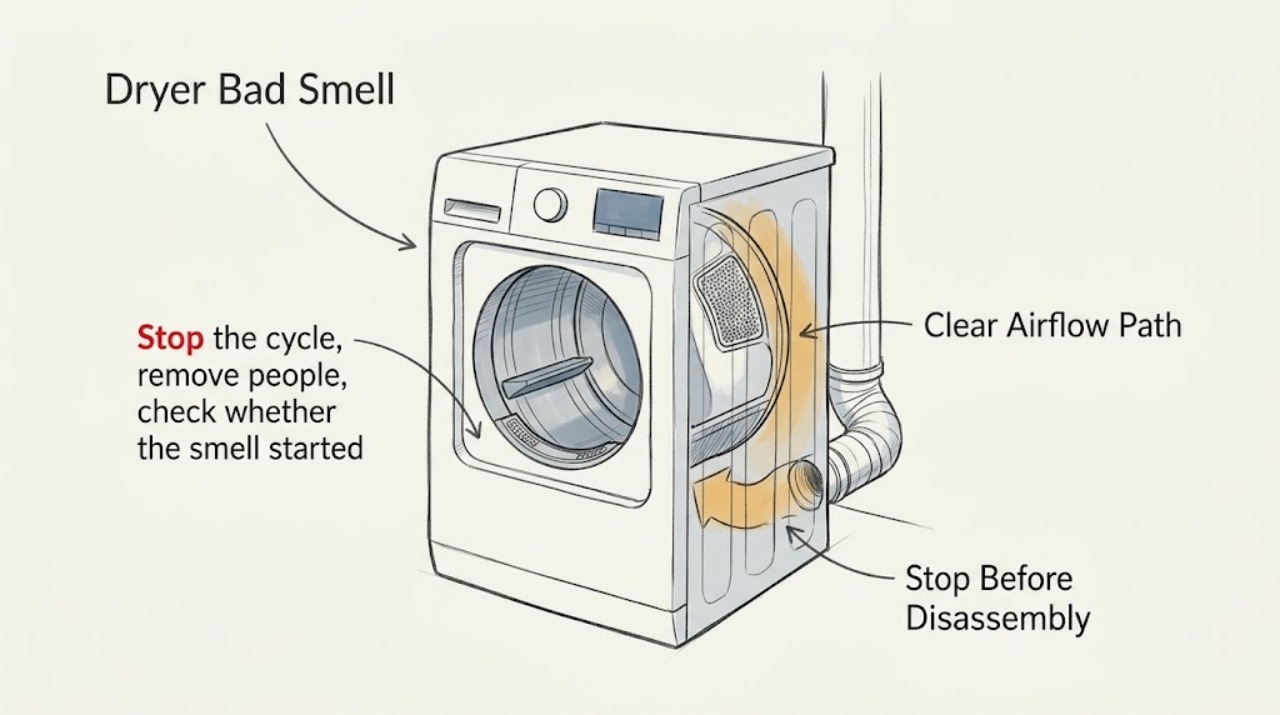
Stop the cycle, remove people from the immediate area if needed, and classify the odor without putting your face near the exhaust. Note whether it smells like burning lint, hot plastic, electrical insulation, gas, paint or varnish, mildew, or a residue on the drum; also note whether there is smoke, unusual heat, sparking, or a tripped breaker.
Expected result: A gas-like odor, smoke, visible scorching, sparking, melted material, rapidly increasing heat, or a sharp electrical or burning smell is present.
Next step: Keep the dryer off. For a gas odor, leave the area and follow the gas supplier or emergency-service instructions from outside; do not operate switches or appliances in the area. For smoke or electrical burning, stay clear and arrange qualified appliance or electrical service. Do not restart to see whether the smell goes away.
Why this matters
Why: Those observations can indicate fire, electrical, or fuel hazards and are not a normal cleaning or first-use condition.
-
Check 2
If the dryer is new or this is its first heated run, check whether the smell started immediately with an otherwise normal cycle and is fading rather than getting stronger. Run only the short empty cycle described by the model's Amana instructions, with the room ventilated and while you remain present; skip this check if the odor is sharp, smoky, gas-like, or accompanied by abnormal heat.
Expected result: The odor is a mild temporary warm or oily smell that decreases after the first cycle, with no smoke, scorching, abnormal noise, or loss of control.
Next step: Let the cycle finish its cool-down and monitor the next normal load. If the odor remains, returns, becomes stronger, or is not consistent with a mild first-use smell, stop using the dryer and move to the room, load, and airflow checks or service.
Why this matters
Why: Amana says a new electric heating element can smell during first use and that the odor should be gone after the first cycle; a fading first-use odor is different from a recurring fault.
-
Check 3
Check the laundry-room environment and recent activities. Ask whether the room was painted, stained, varnished, or exposed to another strong vapor, and whether the odor is strongest with the dryer door open or near the room air intake rather than in the drum itself.
Expected result: The smell matches paint, stain, varnish, or another room vapor and appeared after that work.
Next step: Ventilate the room and keep the dryer off until the vapor has cleared. Rewash or air out affected clothing as appropriate. If the odor persists after the room is clear, continue with the unplugged cleaning and airflow checks.
Why this matters
Why: The dryer pulls room air through the appliance, so an environmental vapor can be carried into the drum and clothes; this does not prove an internal dryer failure.
-
Check 4
Inspect the timing of the smell against the load. Check whether wet clothes were left sitting in the washer or dryer, whether only one load smells, and whether the odor is musty or sour rather than hot or acrid.
Expected result: The smell is musty or sour and is limited to clothing from a damp load that sat before drying.
Next step: Treat and rewash the affected clothing according to its care labels, then dry it promptly. If an empty, clean drum still smells, do not assume the load was the only source; proceed to the drum and lint-path check.
Why this matters
Why: Amana notes that damp clothing left in the dryer can develop a mildew odor; the source may be the load rather than the dryer mechanism.
-
Check 5
Disconnect the dryer's power before cleaning accessible areas. Remove lint from the screen, look for detergent or softener residue, and wipe the drum and door-seal area with the mild cleaner and damp-cloth method in the Amana guidance; dry the surfaces before reinstalling the screen.
Expected result: The lint screen is coated, the drum has a film or stain, or the smell is strongest around residue near the screen or door opening.
Next step: Correct only the accessible cleaning issue and reinstall an intact, dry screen firmly. Do not remove panels or reach into the heater, motor, blower, burner, or wiring. If the smell remains or the screen or drum is damaged, arrange qualified service.
Why this matters
Why: Residue can hold odor and a blocked or poorly seated lint screen can reduce airflow and contribute to overheating; a screen that is damaged, loose, blocked, or missing is not safe to run with.
-
Check 6
With the dryer cool and still disconnected while inspecting, check the visible exhaust hood and the vent route for crushed ducting, heavy lint, or poor outside airflow. Do not substitute plastic or foil ducting and do not dismantle a concealed vent run as a casual repair.
Expected result: The lint screen or exhaust hood is heavily restricted, the vent is kinked or crushed, or little air reaches the outside hood during a normal professional test.
Next step: Keep the dryer off until the airflow restriction is corrected. Have the vent system cleaned or repaired to the manufacturer's installation requirements, then reassess the odor. A clear vent does not rule out an internal heater, motor, or control fault.
Why this matters
Why: Amana links restricted exhaust airflow with longer drying and overheating risk; a concealed or damaged vent may require a qualified cleaning or installation assessment.
-
Check 7
Review the load before another cycle. Check labels and recent washing history for cooking oil, gasoline, solvent, or other flammable contamination, and check whether any item contains foam, rubber, or another material not approved for the selected heat.
Expected result: An item was soaked or spotted with oil, gasoline, solvent, or another flammable substance, or the care label excludes the selected heat.
Next step: Do not put that item back in the dryer. Follow the garment and substance-safety instructions and obtain professional guidance if contamination or a fire concern is uncertain. Do not restart the dryer until the load is known to be suitable.
Why this matters
Why: Residual oil and flammable vapors can ignite or create a fire risk when heated; a dryer odor can be a warning from the load rather than a part failure.
Use your observations
Decision map
Find the observation that best matches what you see, then follow the next safe action.
-
PATH 01Next step
What you see
Gas-like odor is present on a gas dryer.
Do this next
Do not light anything or operate electrical switches in the area. Clear the area and contact the gas supplier or fire department from a safe location; have installation and service handled by qualified personnel.
-
PATH 02Next step
What you see
Smoke, sparking, electrical burning, melted plastic, scorching, or unusually high heat is present.
Do this next
Stop using the dryer, keep clear, and arrange qualified appliance or electrical service. Do not remove covers or repeatedly reset a breaker.
-
PATH 03Next step
What you see
A mild smell occurs only during the first heated use and fades without any other abnormal sign.
Do this next
Allow the safe cycle and cool-down to finish while ventilating and monitoring. A returning or worsening smell needs service evaluation.
-
PATH 04Next step
What you see
The smell follows painting, staining, varnishing, or another room vapor.
Do this next
Clear and ventilate the room before using the dryer; rewash or air out affected clothing. Persistent odor after the vapor clears needs further diagnosis.
-
PATH 05Next step
What you see
The smell is musty and follows a damp load that sat.
Do this next
Treat and rewash the clothing, then dry promptly. If the empty drum also smells, clean accessible residue and inspect the lint path.
-
PATH 06Next step
What you see
The smell remains after safe cleaning and the visible airflow path is clear.
Do this next
Keep the dryer out of service and book a qualified appliance technician to diagnose internal heating, electrical, motor, blower, seal, or burner components.
Helpful context
Understand the symptom
Start with the character and timing of the smell. A brief oily or warm smell on a new dryer can be different from a sharp electrical or melting-plastic smell that begins during a later load. Also check whether the odor is in the clothes, in the room, or only inside the drum; that distinction changes the next safe check.
Do not use the dryer to burn off an active hazard. Do not dry clothing contaminated with gasoline, solvents, or cooking oil, and do not open panels or work near wiring, the burner, or the exhaust while the appliance is energized.
Only after diagnosis
Potential parts
- lint screen or screen housing
Consider only if the installed screen is damaged, missing, loose, or cannot be cleaned and seated correctly after confirming the model.
Confirm the complete dryer model and the manufacturer's fit information before selecting a replacement. - drum seal or felt seal
Consider only if a qualified inspection finds a damaged seal that is trapping lint, rubbing, or allowing odor from an internal area into the drum.
Seal shape and installation differ by model; verify fitment from the model documentation. - heating or temperature-control assembly
Consider only after a technician confirms the odor is internal and finds an overheating, open, shorted, or otherwise failed heating or temperature-control component.
Do not infer a failed heater from smell alone; use the exact model's service information and approved replacement. - blower or exhaust airflow assembly
Consider only if lint-path cleaning and the vent installation are sound but a qualified inspection finds a restricted or damaged internal airflow component.
Confirm model-specific fit and the cause of restriction before replacing any airflow component. - gas ignition or valve components
Relevant only to a gas model and only after qualified service confirms an internal combustion or ignition fault; a gas smell is a safety emergency, not a part-shopping signal.
Gas components require model-specific parts and qualified installation or service.
When checks do not resolve it
Need a professional?
Stop immediately for a gas-like, electrical, burning, melting-plastic, or smoke odor; visible scorching; sparks; abnormal heat; a damaged or missing lint screen; or a repeat odor after cleaning. Do not open panels or test energized heater, motor, burner, wiring, or controls as a homeowner. Use qualified appliance service, and use a qualified gas installer or gas supplier for gas-related work.
Common questions
FAQ
Is a smell from a brand-new Amana dryer always a failure?
No. Amana documents a temporary first-use heating-element odor that should be gone after the first cycle. It should not be treated as normal when there is smoke, scorching, abnormal heat, a gas smell, or a smell that returns.
Why do clothes smell musty after drying?
If damp clothing sat before drying, the load can develop a mildew odor. Rewash and dry it promptly, then check whether the empty drum also smells so that a load odor is not confused with a dryer odor.
Can a blocked lint screen cause a bad smell?
Residue or blockage on the screen can lengthen drying and restrict airflow, and Amana warns not to run with a loose, damaged, blocked, or missing screen because overheating can result. Clean accessible parts with power disconnected and arrange service if the screen or airflow path is damaged or the odor persists.
What should I do if my gas Amana dryer smells like gas?
Stop using it, do not light an appliance or operate electrical switches in the area, clear the area, and contact the gas supplier or emergency services from a safe location. Gas installation and service belong to qualified personnel.
Read the exact guide
Official sources
- Odor or Smell from a DryerAmana · Amana dryer odor troubleshooting and drum cleaning after room painting, staining, or varnishing
- Removing Odors or Smells - DryerAmana · Amana dryer odor causes and first-use, room-fume, and damp-load guidance
- Owner's ManualAmana · Amana gas dryer gas-odor safety, flammable-load warnings, venting, and first-use odor guidance
- Owner's ManualAmana · Amana dryer operating safety, lint-screen, venting, load, and service boundaries
- Cleaning the Dryer DrumAmana · Amana dryer drum, lint screen, door seal, and vent cleaning guidance
Community feedback
Share a repair observation
Share a plain-text repair observation. Accepted observations are published automatically; this page may take a moment to update.