
On this page
Start here
Quick answer
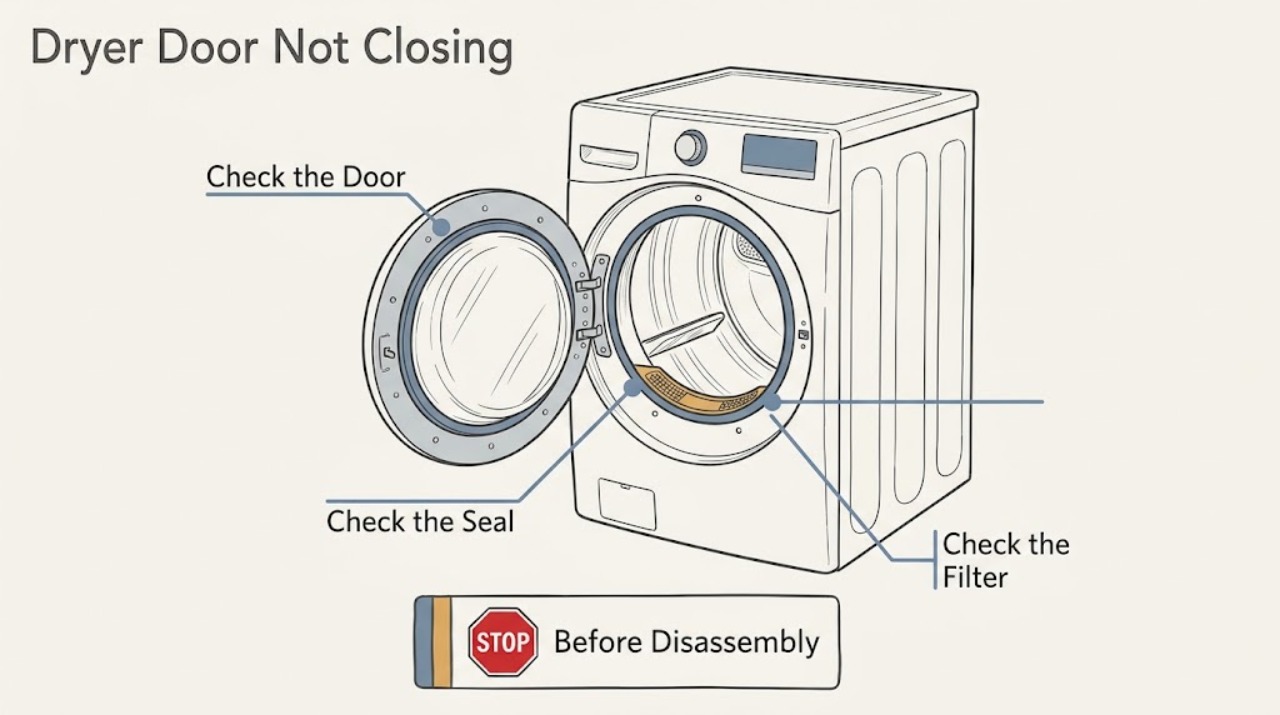
An LG dryer door that will not close is most often being held open by clothing, a filter that is not fully seated, lint on the gasket, or a door that is out of alignment. Unload the drum, inspect the door and latch area without forcing anything, gently wipe lint from the gasket, and reseat the lint filter. If the door is bent, the glass or gasket is damaged, the latch will not engage, or a dE/dE4 message returns after a power reset, stop using the dryer and arrange LG or qualified appliance service. Never bypass the door switch or run a dryer that cannot latch securely.
Work through in order
Diagnostic checks
Use only checks that match the exact appliance or system and its official guide.
-
Check 1
Stop the cycle, wait for the drum and door to be safe to touch, and check whether there is any cracked glass, sharp damage, scorching, smoke, sparks, abnormal heat, or a gas smell.
Expected result: The door or surrounding cabinet is damaged, or there is smoke, a burning odor, sparking, abnormal heat, or gas odor.
Next step: Stop using the dryer. If gas is suspected, leave the area without operating switches or phones inside and contact the gas supplier or emergency service from a safe location. Otherwise isolate power only when it is safe to do so and arrange qualified service.
Why this matters
Why: This is a safety boundary, not an ordinary alignment problem; continued operation could expose you to fire, electrical, or gas risk.
-
Check 2
Open the door and remove every garment, sheet, drying accessory, and loose item from the drum opening; then look around the latch and seal for fabric caught in the gap.
Expected result: The door closes normally when the drum is empty, or a garment was visibly trapped at the edge.
Next step: Remove the trapped item, reload less densely so the door closes without force, and run a short supervised test. If the empty door still will not latch, continue to the filter and gasket checks.
Why this matters
Why: The load or a trapped item was preventing the latch from reaching the catch; an overfilled drum can also push clothing into the closing path.
-
Check 3
Remove the lint filter only as intended for normal cleaning, clear visible lint, and slide it fully back into its housing; do not use a tool to push it into place.
Expected result: The filter was raised, crooked, or not fully seated, and the door closes after it is correctly reinserted.
Next step: With the filter seated, close the door normally and test one short cycle. If the filter will not sit flush, do not operate the dryer; check the exact model manual or request service.
Why this matters
Why: LG lists an incompletely inserted filter as one reason a dryer door error can occur because the filter or its edge can interfere with closure.
-
Check 4
Inspect the full rubber gasket and the mating door edge in good light, then gently wipe loose lint or dust from the gasket with a damp, soft cloth; do not pull the gasket out.
Expected result: Lint, a small foreign object, a fold, or residue was on the gasket and the door now sits evenly; or the gasket is loose, torn, detached, or permanently deformed.
Next step: Remove only loose debris, allow the area to dry, and retry normal closure. If the gasket is damaged or comes loose, stop and arrange service; never remove or reinstall it by force.
Why this matters
Why: Debris can hold the door away from the latch. A damaged or displaced gasket cannot be safely corrected by forcing it and may require a model-specific replacement or inspection.
-
Check 5
With the drum empty and the dryer off, view the door from the front and side: compare the gap around the door, the hinge side, the catch side, and the latch alignment without loosening screws.
Expected result: The door is even and the latch meets the catch, or it is visibly sagging, skewed, rubbing, bent, or sitting away from the front frame.
Next step: If alignment is visibly wrong, do not bend the door or adjust hardware blindly; stop using the dryer and arrange LG or qualified appliance service. If alignment is normal, continue to the reset check.
Why this matters
Why: An even door supports a debris or seating cause. A visible offset points to a hinge, latch, frame, or installation issue rather than a need for more closing force.
-
Check 6
If the door is clear and undamaged, perform LG's basic power reset: unplug the dryer or switch off its breaker, wait at least five seconds, restore power, close the door normally, and select a cycle.
Expected result: The dryer starts without the dE/dE4 message and the door remains latched, or the same door error returns immediately.
Next step: Use the dryer only if it latches securely and runs normally. If dE/dE4 returns, stop resetting and request service; do not bypass the door switch.
Why this matters
Why: A one-time control-state problem may have cleared. A repeat error after a clear, aligned door indicates the latch sensor, switch, wiring, or control needs diagnosis.
-
Check 7
If the door was recently reversed, moved, or installed, compare the hinge and catch positions with the exact LG model instructions and confirm the appliance is stable without rocking; do not start disassembly.
Expected result: The model supports reversal but the hinge/catch arrangement differs from the instructions, or the cabinet is unstable and the door gap changes when the unit moves.
Next step: Stop and have the installation or door assembly checked by the installer, LG, or a qualified technician. If the setup matches the model guide and the door still will not latch, continue with service rather than forcing it.
Why this matters
Why: Door hardware is model-specific, and movement can change latch alignment. A generic reversal sequence or an unstable installation is not a safe repair.
-
Check 8
After a successful latch-only test, watch one short cycle from outside the appliance for the door opening, rubbing, repeated dE/dE4, unusual movement, or abnormal heat; stop immediately if any appears.
Expected result: The door stays latched and the cycle is normal, or it opens, rubs, reports the error again, or shows another safety symptom.
Next step: Stop using the dryer and arrange model-specific service for any recurrence or abnormal symptom. Do not tape, wedge, tie, or otherwise hold the door closed.
Why this matters
Why: A stable latch during a supervised test supports a resolved obstruction. Recurrence under motion or heat suggests a mechanical or sensing fault that an external inspection cannot safely confirm.
Use your observations
Decision map
Find the observation that best matches what you see, then follow the next safe action.
-
PATH 01Next step
What you see
Damage, smoke, sparks, abnormal heat, burning odor, or gas odor is present
Do this next
Stop immediately and follow the applicable electrical, fire, or gas emergency boundary; do not test the dryer again.
-
PATH 02Next step
What you see
The door closes after removing clothing or a trapped item
Do this next
Reload less densely and supervise a short cycle; recurring interference means the door or drum area needs service.
-
PATH 03Next step
What you see
The lint filter is not flush
Do this next
Reseat it only by hand. If it will not sit correctly, leave the dryer off and request service.
-
PATH 04Next step
What you see
Lint is on the gasket but the gasket is intact
Do this next
Gently wipe loose lint with a damp cloth and retry normal closure after the area dries.
-
PATH 05Next step
What you see
The gasket is torn, detached, or pulled out
Do this next
Do not remove or refit it yourself; stop using the dryer and arrange inspection.
-
PATH 06Next step
What you see
The door is visibly sagging, skewed, bent, or rubbing
Do this next
Do not bend or force it and do not loosen hardware blindly; request model-specific service.
-
PATH 07Next step
What you see
dE/dE4 returns after the door area is clear and a basic reset
Do this next
Stop repeated testing and have the latch, door sensor, hinge, frame, and wiring diagnosed by qualified service.
-
PATH 08Next step
What you see
A normal latch survives a short supervised cycle with no abnormal symptoms
Do this next
The obstruction or seating issue is likely resolved; continue normal use while cleaning the gasket and filter routinely.
Helpful context
Understand the symptom
What the symptom tells you
A door can look shut while the latch or door-sensing circuit still sees a gap. A single item caught between the drum opening and door, an improperly seated lint filter, or lint on the gasket can prevent the latch from reaching its normal position. If the door sits visibly high, low, or proud of the front panel, suspect alignment or damage rather than a setting. The dE or dE4 display is a door-closed signal, not permission to force the door or defeat its safety switch.
Keep the inspection low risk
Do the checks with the dryer stopped and cool. Do not remove the gasket, reach into a moving drum, insert tools into the latch, or remove panels. Do not keep testing a door with cracked glass, a torn seal, sharp metal, a loose hinge, scorching, smoke, sparks, or a gas smell. Those conditions need the appliance isolated safely and professional help; a door that cannot latch can defeat normal operating protection.
After a simple correction
Once the opening is clear, the filter is seated, and the door appears undamaged, close it with normal hand pressure and select a cycle. If the dryer starts and the door stays latched, monitor the first short run for rubbing, repeated door errors, unusual heat, or movement of the door. If the error returns, stop repeating resets: the latch, switch, hinge, frame, or wiring may need model-specific diagnosis.
Do not assume every LG door is adjustable
LG's door-reversal instructions apply only to models designed for that change, and electric and gas models can have different limitations. A door that became misaligned after moving the appliance or after an attempted reversal should be compared with the exact owner's manual or handled by service. Do not loosen hinge screws or rearrange a latch just to make the door close; incorrect hardware placement can leave the door unsafe even when it appears to fit.
Only after diagnosis
Potential parts
- dryer door latch or catch
Only consider this part if the door is clear and aligned but the latch still will not engage or the dE/dE4 error returns, and service diagnosis identifies the latch or catch.
Confirm the complete dryer model and the manufacturer's fit information before ordering. - dryer door gasket
Only consider this part when the gasket is visibly torn, detached, or deformed and the exact model's service information calls for replacement.
Do not remove an intact gasket just to test the door; verify model fitment with LG or a qualified technician. - dryer door hinge
Only consider this part when a qualified diagnosis finds a bent, loose, or worn hinge causing measurable door sag or misalignment.
Hinge and latch arrangements vary by model, so confirm fitment and repair procedure before ordering.
When checks do not resolve it
Need a professional?
Call LG or a qualified appliance technician if the door remains misaligned, the latch will not engage, dE/dE4 returns after the clear low-risk checks and reset, the gasket is damaged or detached, the glass or frame is damaged, or the dryer opens or rubs during a test. Stop immediately for smoke, sparks, scorching, abnormal heat, a burning smell, or a gas odor. Never bypass the door switch, wedge the door shut, or run the dryer when it cannot latch securely.
Common questions
FAQ
Why will my LG dryer door not close?
Check for clothing at the opening, an overfilled drum, a filter that is not fully seated, lint on the gasket, and visible door misalignment. Do not force the door.
What does dE or dE4 mean on an LG dryer?
LG uses dE/dE4 for a door that is not completely closed. Clear the door and filter area, then use the basic reset only if the door is undamaged and aligned.
Can lint stop an LG dryer door from closing?
Yes. Lint or a small object on the door gasket can hold the door away from its latch. Gently wipe loose lint with a damp cloth and never pull the gasket out.
Should I force an LG dryer door shut?
No. Forcing it can damage the latch, hinge, gasket, frame, or glass. A dryer should not be used unless the door closes and latches normally.
Can I bypass the LG dryer door switch?
No. The door switch is a safety device. Do not bypass it, tape it, wedge the door, or run the dryer when the latch does not engage.
When should I call service for an LG dryer door problem?
Call when the door is bent, sagging, damaged, rubbing, or unable to latch after clearing the opening and resetting the dryer. Also stop immediately for smoke, sparks, scorching, abnormal heat, or gas odor.
Can I reverse the door myself?
Only if the exact model's LG instructions support reversal and you can follow them safely. If the door became misaligned after installation or reversal, have the setup checked instead of adjusting hardware blindly.
Read the exact guide
Official sources
- Installation Check - Laundry DryerLG USA Support · LG dryer installation and stability checks
- LG Dryer - Error Code List(New)LG USA Support · LG dryers, dE/dE4 door error, filter seating, clothing obstruction, door misalignment and reset guidance
- LG Dryer - How to Reverse the Dryer DoorLG USA Support · LG dryer model-specific hinge, latch, catch and door-reversal limitations
- Power Issues - Laundry DryerLG USA Support · LG dryer reset and post-reset service boundary
- [LG dryer] Bits of lint are stuck to the rubber seal (gasket) of the doorLG USA Support · LG dryer door gasket lint cleaning and do-not-remove warning
Community feedback
Share a repair observation
Share a plain-text repair observation. Accepted observations are published automatically; this page may take a moment to update.