
On this page
Start here
Quick answer
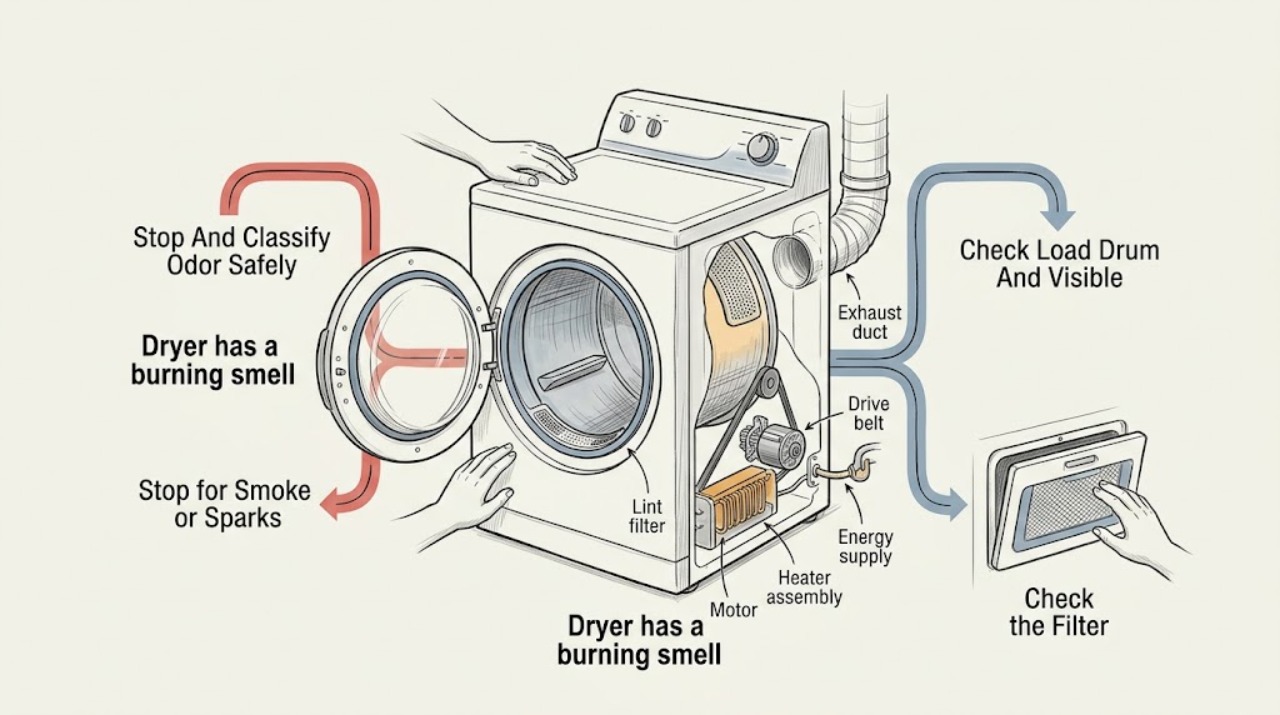
Stop an LG dryer that smells burned and identify whether the odor is new-appliance odor, hot fabric or residue, burning lint, rubber, electrical insulation, or gas. If you smell gas, do not operate switches or ignite anything; clear the area and follow local gas-emergency guidance. For other odors, disconnect power from a dry safe location and let the dryer cool. Check the lint filter, visible drum stains or foreign objects, load size and fabric care labels, and the accessible exhaust duct or vent path. A clogged filter or duct can raise temperature, while lint, dust, or residue can smell when heated. A persistent odor, smoke, sparks, damaged cord, melted material, abnormal heat, or odor from an older dryer requires service; do not keep running cycles to see if it clears.
Before you begin
Safety first
- This article covers stopping the dryer, safe odor classification, cool visual checks of the drum, gasket, lint filter, load, and accessible exhaust, and model-manual lookup. It does not authorize operating switches during a gas odor, touching unsafe electrical equipment, opening panels, handling gas, bypassing thermal devices, testing live parts, or replacing internal components.
Work through in order
Diagnostic checks
Use only checks that match the exact appliance or system and its official guide.
-
Check 1
Stop the dryer immediately. If the odor is gas-like, do not touch electrical switches or attempt to light an appliance; clear people and pets from the area and follow local gas-emergency guidance. For a non-gas odor, disconnect power from a dry safe location and let the dryer cool before inspecting it.
Expected result: The smell is gas-like, electrical or ozone-like, burning rubber or plastic, hot lint or fabric, or a faint odor from a new dryer; smoke, sparks, or melted material may also be present.
Next step: Keep the dryer off for any gas, electrical, smoke, or material-damage symptom. For a new-appliance odor without a hazard, ventilate only after the dryer is off and continue with cool visual checks.
Stop if: Stop for gas odor, smoke, sparks, burning wiring, melted parts, a hot cord, or uncontrolled heat; do not re-energize the dryer.
Why this matters
Why: Gas odor is an immediate gas-safety event. Smoke, sparks, melted material, or electrical or rubber odor can indicate fire or component damage. A faint odor from initial use may be temporary, but it should not include smoke, visible damage, or worsening heat.
-
Check 2
With power off and the drum cool, remove the load. Check care labels and whether the load was oversized, inspect the drum for stains or foreign objects, and look at the door gasket or packing for lint or residue. Wipe only loose surface residue with a damp cloth; do not pull the gasket out.
Expected result: Fabric has a scorch mark, the load was too large, a toy or paper is in the drum, a stain or residue is present, lint is on the gasket, or the drum and gasket look clear.
Next step: Remove only a loose visible object and separate or discard damaged fabric. Gently wipe accessible gasket lint as LG directs; keep the dryer off if the smell returns or material is melted, scorched, or trapped.
Stop if: Do not remove the gasket, scrape a stain with a sharp tool, use a solvent, or run the dryer with scorched fabric or an inaccessible object.
Why this matters
Why: An overloaded load can press fabric against the rear of the drum and burn it. A foreign object or residue can heat and smell. Lint on the gasket is a surface-cleaning issue, but a damaged or displaced gasket can expose a friction or airflow problem. A clear cool drum shifts concern toward airflow, heater, belt, motor, or electrical parts.
-
Check 3
With the dryer cool and power off, clean the lint filter as the exact manual directs. Inspect the accessible exhaust duct, outside vent hood, and surrounding area for lint buildup, crushing, or a blocked outlet; do not dismantle the cabinet or reach into a hidden blower.
Expected result: The filter is packed or damaged, the duct is crushed or heavily linted, outside airflow is weak when a qualified person later checks it, the vent hood is blocked, or the accessible airflow path is clear.
Next step: Clean or replace only a filter identified by the manual and have a vent professional address a restricted or damaged exhaust path. Do not run the dryer with a severely restricted exhaust or persistent odor.
Stop if: Do not operate with a blocked vent, use a sharp object in the duct, bypass the lint screen, or open the blower or heater area.
Why this matters
Why: A full filter or restricted duct can raise temperature and make fabric, lint, or nearby material smell burned. A damaged filter can let lint travel inward. A clear accessible path makes a heater, motor, belt, control, or internal lint accumulation more likely.
-
Check 4
Record the dryer age, number of completed cycles, whether the odor appears only with heat, and whether it remains after the dryer is cool. Compare a faint new-product smell with a sharp odor from the rear, drum, cord, belt area, or clothing; do not run a cycle solely as an odor test.
Expected result: The dryer is new and the faint odor fades, the odor persists after several uses, it occurs only with heat, it is strongest at the rear or cord, or clothes show discoloration.
Next step: Do not use an older dryer with a persistent burning odor. For a new faint odor without any hazard, ventilate with the dryer off and follow the manual; arrange service if it does not fade or any damage appears.
Stop if: Do not normalize smoke, visible scorch marks, melting, electrical odor, burning rubber, or a smell that grows stronger.
Why this matters
Why: LG says a temporary odor can occur during initial drying cycles as heated materials settle. Persistence on an older unit, discoloration, a rear or cord odor, or a smell that worsens with heat is more consistent with airflow, lint, belt, motor, heater, or electrical service needs.
-
Check 5
Do not disassemble the dryer to chase the smell. From outside, record whether the drum turns normally, stalls, or makes squealing or screeching sounds, and whether the odor appears with that sound. If the drum is safe to turn by hand only after power is disconnected, note smooth versus rough motion without forcing it.
Expected result: The drum stalls, the motor hums, a sharp squeal or scrape occurs, the drum turns roughly by hand, or the drum turns normally with no abnormal sound.
Next step: Keep the dryer off for any stall, rough rotation, abnormal noise, or burning-rubber odor and arrange service. Provide the sound and when it occurs rather than trying to access the drive.
Stop if: Do not run a heated cycle with a stalled or noisy drum, remove panels, touch the motor or heater, or test live circuits.
Why this matters
Why: A belt, roller, shaft, or other internal wear can create friction and odor when accompanied by squealing, screeching, rough rotation, or stalling. Normal drum motion with a heat-related odor leaves airflow, lint, heater, or electrical causes open; it does not prove the drive is sound.
-
Check 6
Record the exact LG model, gas or electric type, odor description and location, load and fabric condition, filter and duct observations, drum motion, noise, and any visible damage. Use the exact manual only for accessible cleaning; stop when diagnosis would require a cabinet, heater, blower, belt, motor, or gas or electrical access.
Expected result: The odor returns after safe surface and airflow checks, the model manual gives no user-accessible procedure, a suspected part is internal, or any safety symptom is present.
Next step: Leave the dryer off and arrange qualified appliance service, or qualified vent or gas help for the matching external system. Give the technician the full symptom record and do not order a part from odor alone.
Stop if: Do not open panels, disconnect gas, bypass thermal protection, replace a heater or motor, or test live electrical components.
Why this matters
Why: A persistent or internal odor cannot be assigned to one part from smell alone. Model identity controls the heat source, airflow path, access, and part fit; safety symptoms require prompt qualified help.
Use your observations
Decision map
Find the observation that best matches what you see, then follow the next safe action.
-
PATH 01Safety boundary
What you see
The odor is gas-like, electrical, or accompanied by smoke, sparks, melted material, a hot cord, or uncontrolled heat.
Do this next
For gas odor, do not touch switches or ignite anything; clear the area and follow local gas-emergency guidance. For smoke, sparks, or electrical damage, keep the dryer off and obtain qualified emergency or appliance help from a safe location.
Why this path and its safety boundary
Why it matters: This is an immediate safety condition, not a lint-cleaning or normal new-appliance path.
Safety stop: Do not operate the dryer, use an electrical switch during a gas odor, or attempt internal repair.
-
PATH 02Safety boundary
What you see
The dryer is new, the smell is faint and limited to initial heated cycles, no smoke or visible damage is present, and the odor fades when the dryer is off and ventilated.
Do this next
Follow the model manual and ventilate with the dryer off. Arrange service if the smell does not fade, returns after the initial period, or affects clothing.
Why this path and its safety boundary
Why it matters: LG describes a temporary initial-use odor from heated materials as possible, but this pattern does not excuse a worsening, sharp, or persistent burning smell.
Safety stop: Do not keep using the dryer if smoke, melting, scorch marks, gas odor, or electrical odor appears.
-
PATH 03Safety boundary
What you see
The lint filter or duct is restricted, the load was oversized, the smell is on fabric or lint, or the drum contains residue or a foreign object without electrical or gas warning signs.
Do this next
With power off and the dryer cool, clean the documented filter, correct load size, remove a loose visible object, and have a restricted exhaust path corrected. Do not resume use while the odor persists.
Why this path and its safety boundary
Why it matters: High temperature or heated residue is more likely than a confirmed motor or heater failure. Poor airflow can make the dryer hotter and increase fire risk.
Safety stop: Do not bypass the lint filter, run with a blocked duct, or use chemicals to remove residue.
-
PATH 04Safety boundary
What you see
The odor persists on an older dryer, the drum stalls or turns roughly, squealing or screeching accompanies the smell, clothes discolor despite clear airflow, or the smell comes from the rear or internal area.
Do this next
Keep the dryer off and arrange qualified appliance service. Provide the noise, hand-rotation result, odor location, load condition, filter and duct findings, and model number.
Why this path and its safety boundary
Why it matters: A belt, roller, shaft, motor, heater, internal lint path, or electrical component is more likely, and the exact cause cannot be identified safely from the odor alone.
Safety stop: Do not remove panels, test live circuits, touch the heater or motor, or run additional heated cycles.
Helpful context
Understand the symptom
Treat the odor as a safety symptom first
A faint temporary odor on a new dryer can come from heated materials and should not be confused with smoke, melting, or an electrical smell. Burning lint, rubber, or insulation is not a normal reason to continue a cycle. Gas odor is a separate emergency path: do not use switches or attempt ignition, leave the area, and obtain qualified gas help.
Heat and airflow explain many fabric or lint odors
LG notes that a clogged lint filter or restricted duct can raise dryer temperature. An oversized load can press clothing against the back of the drum, and residue from excessive detergent can smell when heated. These checks are different from a belt or motor fault, so record whether the smell is on the clothing, inside the drum, at the rear vent, or around the cabinet.
A persistent odor needs a model-specific inspection
LG dryer designs vary by gas or electric heat source, venting, motor, and control layout. Do not remove a door gasket, blower cover, heater guard, or cabinet panel to search for a smell. Use the exact model manual for accessible cleaning and give a technician the odor type, location, timing, and visible evidence.
Safety boundary
Stop conditions
- Stop and keep the dryer off for gas odor, smoke, sparks, burning wiring, melted material, a hot or damaged cord, or uncontrolled heat.
- For gas odor, do not touch electrical switches or attempt ignition; clear the area and follow local gas-emergency guidance.
- Do not run a heated cycle with a blocked exhaust, stalled or scraping drum, burning-rubber odor, scorch marks, or persistent burning smell.
- Do not open cabinet, blower, heater, motor, or control panels, bypass thermal protection, disconnect gas, or test live circuits.
- Do not remove the door gasket, scrape residue with sharp tools, bypass the lint screen, or use improvised chemical treatments.
- Do not order a belt, roller, motor, heater, filter, or control until the exact LG model and qualified diagnosis identify the failed part and fit.
Only after diagnosis
Potential parts
- dryer lint filter or exhaust component
Consider this category only when the exact manual identifies the filter or exhaust component and inspection confirms damage or a restricted part after cleaning and vent-path checks.
Confirm the exact LG model, filter frame, duct connection, and manufacturer fit information before ordering. - dryer belt, roller, or seal
Consider this category only when qualified inspection links rough rotation, squeal, scrape, stall, or visible seal damage to the drive or drum-support assembly.
Confirm the exact LG model, support layout, belt route, seal location, and technician diagnosis before ordering. - dryer motor, heater, thermal device, or control
Consider this category only when airflow and visible checks are clear and qualified diagnosis links persistent odor, overheating, stall, or electrical symptoms to the internal assembly.
Confirm the exact LG model, gas or electric design, safety rating, connectors, and technician diagnosis before ordering.
When checks do not resolve it
Need a professional?
Arrange qualified appliance service when a burning odor persists after the dryer cools and safe filter, load, drum, and accessible exhaust checks; when the drum stalls, turns roughly, or makes a sharp squeal or scrape; when clothing discolors; or when the suspected source is behind a panel, in the motor, heater, belt, or control. Arrange qualified vent help for a restricted exhaust path and qualified gas help for any gas odor. Seek prompt help for smoke, sparks, melted material, burning wiring, a hot cord, or uncontrolled heat.
Safety scope: This article covers stopping the dryer, safe odor classification, cool visual checks of the drum, gasket, lint filter, load, and accessible exhaust, and model-manual lookup. It does not authorize operating switches during a gas odor, touching unsafe electrical equipment, opening panels, handling gas, bypassing thermal devices, testing live parts, or replacing internal components.
Common questions
FAQ
Is a burning smell from a new LG dryer normal?
LG says a faint odor can occur during initial drying cycles as heated materials settle and should fade. Keep the dryer off for smoke, melting, scorch marks, electrical or rubber odor, gas odor, or a smell that persists or worsens.
Can a clogged lint filter cause an LG dryer burning smell?
Yes. LG says a full or clogged lint filter can raise temperature, and a restricted exhaust can increase heat inside the dryer. Clean the documented filter and have a restricted vent corrected; do not run the dryer while the burning smell continues.
Why do my clothes smell burned after using an LG dryer?
An oversized load can press fabric against the back of the drum, and residue or a foreign object can heat inside the drum. Remove the load, inspect the cool drum, check care labels, and stop if clothing is scorched or the odor returns.
What if an LG dryer smells like burning rubber?
Stop using it. A belt, roller, seal, motor, or another drive part may be creating friction, especially if the drum stalls, turns roughly, or squeals. Do not open the cabinet; arrange qualified service.
What should I do if my LG gas dryer smells like gas?
Do not operate switches or try to light anything. Clear the area and follow local gas-emergency guidance, then have the gas supply and dryer inspected by qualified professionals.
Read the exact guide
Official sources
- [LG Dryer] Noise From the DryerLG Electronics USA · Official LG noise guidance used to interpret scraping or squealing accompanying a burning odor; standard-model guidance does not replace the exact manual.
- LG Dryer - What to Do If You Smell Gas Around Your LG DryerLG Electronics USA · Official LG gas-safety guidance used only for the gas-odor emergency branch; local emergency and gas-supplier procedures also apply.
- LG Dryer - Troubleshooting Burning or DiscolorationLG Electronics USA · Official LG dryer guidance used for the main heat, load, lint, drum, and exhaust branches; exact settings and access vary by model.
- [LG Dryer] Lint on the door gasketLG Electronics USA · Official LG gasket guidance used for the visible gasket-cleaning boundary; exact door designs vary by model.
- [LG Dryer] A burning smell comes from the dryer during dryingLG Electronics USA · Official LG burning-odor guidance used for new-versus-persistent odor decisions; it states that actual models and materials can differ.
Community feedback
Share a repair observation
Share a plain-text repair observation. Accepted observations are published automatically; this page may take a moment to update.