
On this page
Start here
Quick answer
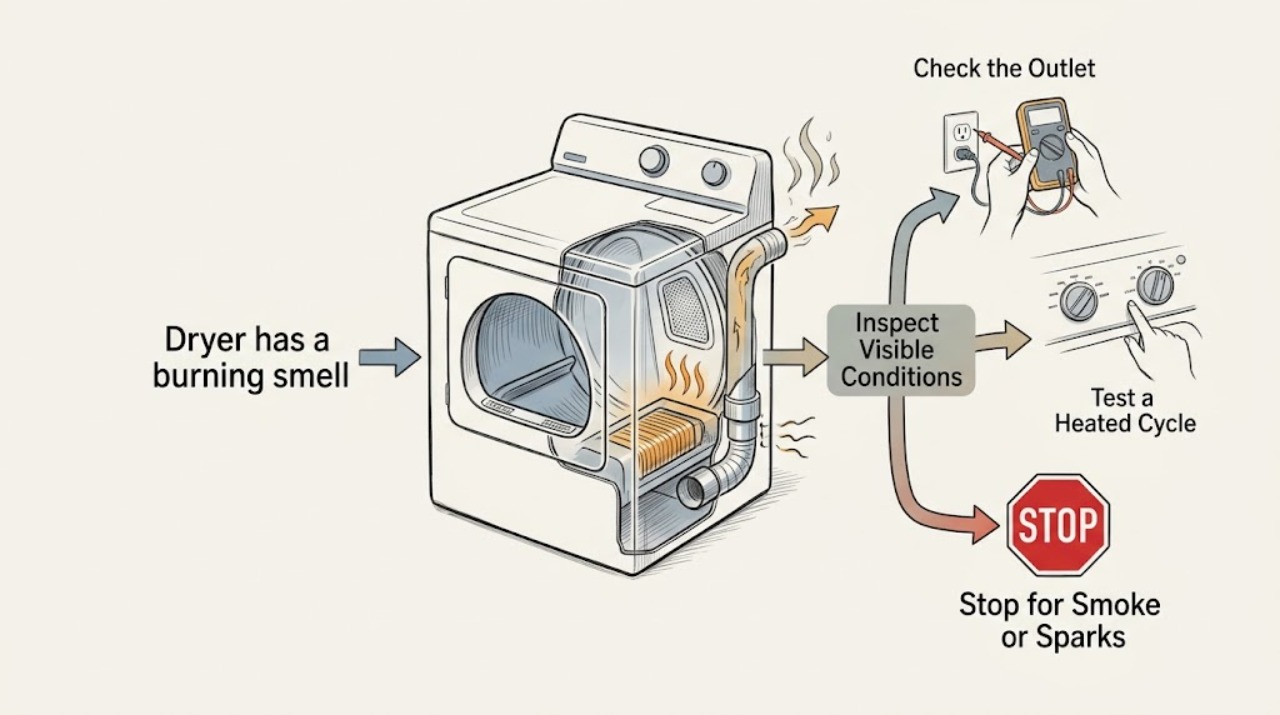
A burning smell that appears when a dryer heats can come from normal oils or dust during initial use of a new appliance, lint in the screen, cabinet, or exhaust path, a blocked vent that makes the dryer run hotter, an overheated belt, drum support, motor, heating element, wiring, or a gas-combustion problem. Treat an established or worsening burning odor as a stop signal: turn the dryer off, unplug it or isolate power when safe, and do not run another load until the source is checked. From a safe, powered-off position, identify whether the dryer is new, check the lint screen and accessible exhaust path, look for scorch marks or melted material, and note whether drying has become slow or the cabinet is unusually hot. Do not open the cabinet, touch heating or gas parts, use the dryer without its lint screen, dry solvent- or oil-contaminated items, or keep testing an odor by repeated cycles. If the smell persists, returns after a new-dryer empty run, comes with smoke, gas odor, sparks, a hot plug or outlet, a tripped breaker, or visible lint buildup, arrange qualified appliance service and professional vent cleaning as appropriate.
Before you begin
Safety first
- A qualified technician should inspect the lint and exhaust path, heater or gas burner and ignition, drum, belt, rollers, motor, blower, wiring, plug and outlet, thermostats and controls, and any internal lint or scorch damage. Homeowner checks should remain limited to stopping power safely, cleaning the lint screen, visible exterior and exhaust observations, load review, and documentation.
Work through in order
Diagnostic checks
Use only checks that match the exact appliance or system and its official guide.
-
Check 1
Stop the dryer immediately when the burning smell is established, worsening, or accompanied by smoke, sparks, flame, a hot outlet or plug, a tripped breaker, or visible scorching; unplug or isolate power only from a dry, safe position and keep the door and area clear.
Expected result: There is only a mild odor on the first use of a new dryer with no smoke or abnormal heat, or there is smoke, flame, electrical heat, gas odor, scorching, or another warning.
Next step: For smoke, flame, gas odor, or electrical heat, leave the area or home as appropriate and contact emergency, gas, or qualified appliance support from a safe location. For other warnings, keep power off and arrange service. Do not restart simply to see whether the smell returns.
Why this matters
Why: A limited first-use odor can be a break-in condition. Smoke, heat damage, gas, sparks, or a breaker event can indicate a fire, gas, or electrical hazard and should not be reproduced.
-
Check 2
Determine whether the dryer is new or recently moved, whether the odor occurs only during the first heated cycle, and whether the smell remains after the cycle or appears with every heated load; record whether clothes or the laundry room also smell.
Expected result: The dryer is new and the odor is brief, the appliance is established and the odor is recurring, or the smell follows a specific load or is present in the room even when the dryer is off.
Next step: Keep the dryer off until the source is identified. If the manual permits a single empty first-use cycle and no warning is present, follow that manual; otherwise arrange service for a recurring odor and rewash or isolate any suspect load rather than drying it again.
Why this matters
Why: A brief first-use smell can fit residual manufacturing oil or dust. A recurring odor on an established appliance keeps lint, vent, mechanical, heating, electrical, or gas causes in consideration. A load-specific or room-wide odor may originate in the fabrics, nearby chemicals, gas supply, or another source.
-
Check 3
With power off, remove and clean the lint screen as directed by the manual, inspect the screen housing and accessible rear connection for lint, and look at the exterior exhaust hood for a flap that can open freely; do not insert tools deep into the dryer cabinet.
Expected result: The screen or housing is packed with lint, lint is visible at the rear connection, the exterior hood is blocked or its flap does not move freely, or the accessible path is clear.
Next step: Clean only the lint screen and accessible exterior or connection debris as the manual permits. Do not operate without the screen; arrange professional vent cleaning or appliance service for heavy buildup, a concealed run, repeated odor, or any scorch mark.
Why this matters
Why: Lint at the screen or exhaust path can restrict airflow and create a burning odor as heat accumulates. A clear accessible path does not rule out lint in a concealed duct, cabinet, blower, or heater area.
-
Check 4
Check the recent drying performance and temperature from a safe position: note longer cycles, clothes remaining damp, the dryer cabinet or laundry room becoming unusually hot, poor airflow at the outside hood, or normal drying and airflow.
Expected result: Drying is slower than before, the cabinet or room is hot, outside airflow is weak, the vent alert is active, or performance and airflow are normal.
Next step: Stop using the dryer and arrange vent inspection or cleaning when airflow is weak, heat is excessive, or an alert is present. If airflow is normal but the odor persists, arrange appliance service rather than increasing the heat setting or running smaller loads to test it.
Why this matters
Why: Longer drying, excess heat, and weak exhaust support a restricted vent or lint path, which can make a burning smell more urgent. Normal airflow does not rule out a mechanical, heating-element, wiring, or gas fault.
-
Check 5
From a powered-off, dry position, visually inspect the accessible power cord, plug, outlet face, gas line area if applicable, and cabinet exterior for melting, discoloration, fraying, oil, lint, or impact; do not remove panels or touch a gas connection.
Expected result: The plug or outlet is hot or discolored, the cord is damaged, lint or oil is visible, the gas connection smells abnormal, or no exterior damage is visible.
Next step: Do not use an appliance with damaged electrical parts or gas odor; keep it isolated and arrange qualified electrical, gas, or appliance service as appropriate. Do not tape, bend, tighten, or replace cord, outlet, gas, or internal parts as a DIY odor fix.
Why this matters
Why: Hot or discolored electrical parts can indicate arcing, overload, or a poor connection. Gas odor requires immediate evacuation. Visible lint or oil near a heat source can be a fire concern. A clear exterior does not rule out an internal heater, motor, belt, or wiring failure.
-
Check 6
Review what was dried immediately before the odor: check labels and whether fabrics contained cooking oil, hair products, solvents, gasoline, kerosene, wax, paint, rubber, foam, or other flammable chemicals; do not put the suspect load back in the dryer.
Expected result: The odor follows an oil- or chemical-exposed load, only one unusual item, a normal washed load, or no load at all.
Next step: Remove and isolate suspect fabrics according to their care and product-safety instructions; do not dry them again until safe. For ordinary loads or an empty-drum odor, leave the dryer off and arrange inspection of the vent, heater, drum supports, motor, belt, wiring, and gas components as applicable.
Why this matters
Why: Oil-affected or solvent-contaminated fabrics can heat and ignite or release harmful fumes, while an odor with ordinary loads or an empty drum keeps an appliance or exhaust fault more likely. A load-related smell does not prove the dryer is safe.
-
Check 7
Gather the dryer brand, model and fuel type, odor description and location, cycle and heat setting, load contents, timing, vent arrangement, filter and airflow condition, photos of any damage, and recent installation or repair history for service.
Expected result: The odor is new, recurs only on high heat, began after moving or repair, is paired with longer drying or noise, or has no clear pattern.
Next step: Give the record to a qualified appliance or vent professional and request a safety inspection before normal use. Ask for checks of the lint path, exhaust, heater, drum supports, belt, motor, wiring, gas ignition and exhaust if applicable, and controls; do not order a part from odor alone.
Why this matters
Why: A new post-work odor keeps a connection, vent, installation, or disturbed lint issue in consideration. High-heat recurrence with long drying supports airflow or lint restriction; odor with squeal, scrape, or thump keeps drum supports, belt, motor, or blower causes in consideration. No pattern still requires caution because internal faults can be intermittent.
Use your observations
Decision map
Find the observation that best matches what you see, then follow the next safe action.
-
PATH 01Next step
What you see
The dryer is new, the smell is mild and brief, no smoke or abnormal heat is present, and the odor fades after following the owner manual’s first-use procedure.
Do this next
Use the dryer only as the manual permits and monitor the next normal load. Stop and arrange service if the smell persists, returns, becomes acrid, or is joined by heat, lint, smoke, noise, or electrical symptoms.
Why this path and its safety boundary
Why it matters: Residual manufacturing oil or dust during initial heating is more likely than a failing component.
-
PATH 02Next step
What you see
An established dryer has a burning smell plus longer drying, a hot cabinet or room, weak outside exhaust, or heavy lint at the screen or duct.
Do this next
Keep the dryer off, clean the lint screen, and arrange professional vent cleaning or inspection for the exhaust path. Do not continue testing with high heat or operate without the screen.
Why this path and its safety boundary
Why it matters: A restricted lint or exhaust path is more likely and can create a fire hazard, though an internal lint accumulation or heater fault remains possible.
-
PATH 03Next step
What you see
The odor is accompanied by smoke, scorch marks, sparks, a hot or discolored plug or outlet, repeated breaker trips, or a burning smell that continues after power is removed.
Do this next
Keep the dryer disconnected and arrange qualified appliance or electrical service; use emergency services for active fire or smoke. Do not reconnect the appliance or replace a fuse or outlet to see whether the odor clears.
Why this path and its safety boundary
Why it matters: An electrical, heater, motor, wiring, or lint fire hazard is more likely than normal heat odor.
-
PATH 04Next step
What you see
The smell occurs with a squeal, scrape, thump, or drum resistance, but there is no vent warning or gas odor.
Do this next
Stop using the dryer and arrange qualified appliance service for mechanical and thermal inspection. Do not open the cabinet, reach around the drum, or spray lubricant into the appliance.
Why this path and its safety boundary
Why it matters: A belt, drum support, roller, motor, blower, or internal lint contact with a hot surface is more likely than a simple first-use odor.
-
PATH 05Next step
What you see
A gas dryer produces a gas odor, an abnormal flame, or a persistent odor from the supply or burner area, or the smell follows solvent- or oil-contaminated items.
Do this next
For gas odor, leave the area or home and contact the gas utility or emergency services from a safe location. Remove suspect fabrics without drying them again and follow product safety guidance; arrange qualified gas-appliance service before use.
Why this path and its safety boundary
Why it matters: A gas, combustion, or load-related fire and fume hazard is more likely and cannot be safely reduced to vent cleaning.
Helpful context
Understand the symptom
New-appliance odor is a narrow exception
A new gas or electric dryer may emit an oily or semi-burning smell as assembly oils or dust burn off during initial operation. That explanation fits only a new appliance with no smoke, abnormal heat, gas odor, or visible damage, and the owner manual controls any empty-run procedure. A recurring odor on an established dryer should be treated as a fault or airflow warning, not as normal break-in.
Heat and lint are a fire-risk combination
Lint can accumulate at the screen, inside accessible duct connections, or in the exhaust route. A restricted vent can lengthen drying, make the dryer or laundry room unusually hot, and allow a burning scent. Clean the lint screen after every load and keep it installed. Vent cleaning that requires moving a heavy dryer or accessing a concealed run may be better handled by a qualified professional.
The odor source may be mechanical or electrical
A smell localized near the drum or rear of the cabinet can involve a belt, roller, motor, heater, wiring, or lint contacting a hot surface. A hot plug or outlet, scorch mark, sparking, or breaker event raises an electrical concern. A gas odor or abnormal flame on a gas dryer is a separate emergency path. Do not remove panels to identify which component is hot.
Load contents matter too
Items contaminated with cooking oil, hair products, solvents, gasoline, or other flammable substances can remain a fire hazard even after washing. Do not put such items in the dryer unless the care and safety instructions explicitly address them. If the odor follows a particular load, remove it from the dryer, ventilate safely, and do not assume the appliance is the only source.
Safety boundary
Stop conditions
- Stop and disconnect the dryer from a safe position for smoke, sparks, scorch marks, a hot or discolored plug or outlet, repeated breaker trips, persistent burning odor, or abnormal heat; arrange qualified appliance or electrical service.
- For gas odor, leave immediately and contact the gas utility or emergency services from a safe location. Do not operate switches, create flames, or restart the dryer.
- Do not use the dryer without its lint screen, with a blocked or damaged exhaust path, or for items contaminated with solvents, gasoline, kerosene, wax, paint, cooking oil, or other flammable substances unless the safety instructions explicitly make them safe.
- Do not open the cabinet, touch the heater, motor, belt, wiring, gas valve, or internal lint, or keep running cycles to reproduce the odor. Arrange service when the smell persists after a safe first-use check or any accessible lint and vent check.
Only after diagnosis
Potential parts
- dryer lint screen or screen housing
Consider this only when the screen is damaged, missing, or does not seat correctly according to the model instructions; a dirty screen should be cleaned rather than automatically replaced.
Match the exact dryer model, screen shape, mesh, sealing and seating arrangement, and manufacturer instructions. - dryer exhaust duct or vent component
Consider this only when inspection confirms a crushed, punctured, blocked, or incompatible exhaust component; burning odor and slow drying may also reflect concealed lint or an appliance fault.
Match dryer fuel type, approved duct material and routing, outlet and hood arrangement, length constraints, and local installation requirements. - dryer belt, drum roller, or idler component
Consider this only after a technician confirms mechanical wear, drag, or heat damage; odor with noise does not identify which drum-drive part failed.
Confirm the exact dryer model, drum support and belt arrangement, pulley or idler design, and approved repair procedure; cabinet access is service work. - dryer heating element or thermal safety component
Consider this only after professional testing confirms a heater, thermostat, thermal fuse, or related component is overheating or open after airflow causes are assessed.
Match the exact electric dryer model, heater assembly, temperature and electrical ratings, mounting, and safety controls; do not bypass a thermal device. - gas dryer burner or ignition component
Consider this only after a qualified technician confirms a burner, igniter, valve, flame, or combustion issue; gas odor requires immediate safety action first.
Match the exact gas dryer model, fuel type, burner and ignition system, connectors, regulator, and manufacturer procedure; gas work is professional service.
When checks do not resolve it
Need a professional?
Safety scope: A qualified technician should inspect the lint and exhaust path, heater or gas burner and ignition, drum, belt, rollers, motor, blower, wiring, plug and outlet, thermostats and controls, and any internal lint or scorch damage. Homeowner checks should remain limited to stopping power safely, cleaning the lint screen, visible exterior and exhaust observations, load review, and documentation.
Common questions
FAQ
Why does my dryer smell like burning when it heats?
On a new dryer, a brief oily or semi-burning smell can be normal. On an established dryer, a burning smell can point to lint or exhaust restriction, excess heat, a belt, roller, motor, heater, wiring, or gas-combustion problem. Stop the dryer, clean only the lint screen and accessible vent area, and arrange service for a recurring or warning-associated odor.
Is a burning smell normal the first time I use a dryer?
A new gas or electric dryer may emit a brief oily or semi-burning smell as residual oils or dust burn off. Follow the exact owner manual and stop if the smell persists, becomes strong, or is accompanied by smoke, excessive heat, sparks, gas odor, or visible damage. That first-use exception should not be applied to an older dryer.
Can a clogged dryer vent cause a burning smell?
Yes. Lint buildup or a restricted exhaust can lengthen drying, make the dryer or room hot, reduce outside airflow, and produce a burning scent. Stop using the dryer, clean the lint screen, and arrange vent inspection or cleaning when the path is heavily built up, concealed, damaged, or the odor returns.
What should I do if a gas dryer smells like gas?
Do not use the dryer or nearby electrical equipment. Leave the area or home and contact the gas utility or emergency services from a safe location. Do not relight, switch, or troubleshoot the burner yourself; arrange qualified gas-appliance service before use.
Can clothes cause a dryer burning smell?
Yes. Items contaminated with cooking oil, hair products, solvents, gasoline, kerosene, wax, paint, or similar substances can heat, release fumes, or ignite. Remove the suspect load and do not dry it again until its care and product-safety instructions make that safe. An odor with normal loads still requires appliance and vent checks.
When should I stop using a dryer with a burning smell?
Stop immediately for smoke, sparks, scorch marks, a hot plug or outlet, repeated breaker trips, excessive heat, persistent burning odor, gas odor, or an abnormal flame. Also stop when the smell returns on an established appliance, drying is slower, airflow is weak, or unusual noise accompanies the odor. Arrange qualified appliance or vent service before another heated cycle.
Read the exact guide
Official sources
- User Instructions: Export Maytag DryerMaytag · The official safety instructions warn against using a dryer with gas odor or without its lint screen, drying flammable or oil-affected items, and stopping heat without dissipating it safely.
- Removing Odors or Smells - DryerMaytag · Maytag distinguishes first-use odor from odors caused by nearby paint or finishes and damp loads, supporting the need to identify the source before more heated cycles.
- How Hot Does a Dryer Get? - Temperature GuideWhirlpool · Whirlpool recommends checking airflow, lint screens, exhaust vents, and exterior venting for excess heat and directs owners to professional help for a burning smell.
- How to Clean a Dryer Vent from Inside & OutsideWhirlpool · Whirlpool connects burning scent, long drying, and a hot dryer to possible vent blockage and advises cleaning the lint screen and exhaust path with power disconnected.
- Dryer - OdorGE Appliances · GE distinguishes first-use oily or burning odor from installed-dryer lint buildup and says an abnormal gas flame or gas odor needs repair attention.
- Dryer - How to Clean Exhaust / Vent DuctGE Appliances · GE says lint accumulation in the exhaust duct can lengthen drying and create a potential fire hazard, and provides power-off and exterior hood checks.
Community feedback
Share a repair observation
Share a plain-text repair observation. Accepted observations are published automatically; this page may take a moment to update.