
On this page
Start here
Quick answer
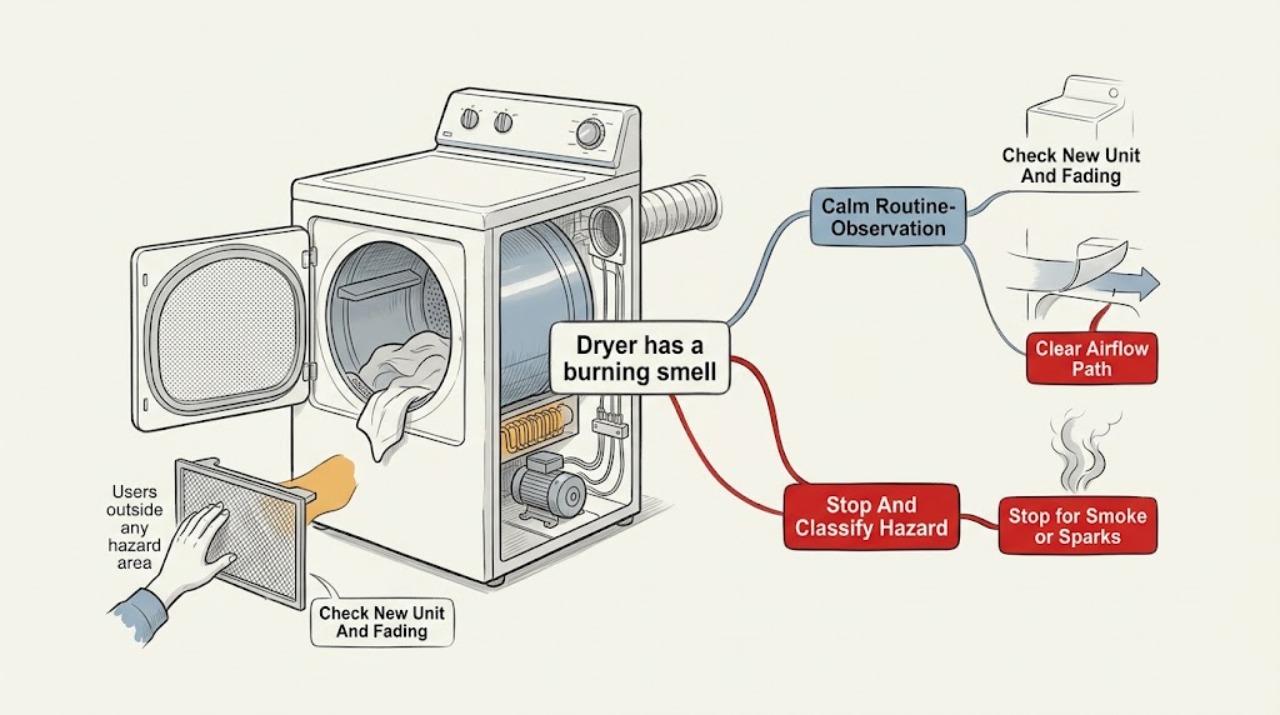
Treat a dryer burning smell as a stop-and-check symptom, not as a normal operating noise. If you see smoke, smell gas, see sparks, or the cabinet, cord, or outlet is hot, leave the area as appropriate, do not operate switches or the dryer, and use qualified or emergency help; a gas smell or smoking gas dryer requires clearing the building and contacting emergency services. If there is no smoke or gas smell, turn the dryer off and disconnect power when it is safe, then note whether it is a new unit, whether the smell is on the load, and whether lint or airflow is restricted. A mild oil-like odor can occur during first use, but it should dissipate under the exact manufacturer instructions; a persistent, electrical, rubber, sharp, or worsening odor needs qualified service. Do not keep running the dryer to test a continuing smell, bypass a safety device, open the cabinet, or work on gas or live electrical parts.
Work through in order
Diagnostic checks
Use only checks that match the exact appliance or system and its official guide.
-
Check 1
Stop the cycle and identify whether there is visible smoke, a gas smell, sparks, a hot cabinet or outlet, a burning-electrical odor, or only a mild odor with no visible smoke; do not restart the dryer while making this observation.
Expected result: Record smoke or flame, gas smell, sparks or electrical heat, a strong worsening odor without smoke, or a mild fading odor with no hazard sign.
Next step: For smoke, gas, sparks, or electrical heat, leave operation off and follow the emergency branch. For a non-emergency odor, disconnect power when safe and continue only with external checks.
Stop if: Do not touch electrical switches or use the dryer if gas is suspected; clear occupants and contact emergency services for a gas smell or smoking gas dryer. Keep clear of smoke, fire, shock, or active electrical hazards.
Why this matters
Why: Smoke, gas, sparks, or electrical heat is an immediate safety boundary. A persistent strong odor without visible smoke still suggests overheating, lint, a load issue, or an internal fault; a mild fading first-use odor is the only narrow normal-use pattern.
-
Check 2
If the dryer is new and there is no smoke, gas smell, electrical odor, heat, or visible damage, compare the odor with the first-use guidance in the exact model manual and note whether it is mild and fading rather than stronger or returning.
Expected result: Record a first-use oily odor that is fading, an odor that persists or becomes stronger, or a unit that is not new.
Next step: Only if the manual permits it and all hazard signs are absent, follow its single controlled first-use procedure; stop immediately if the odor intensifies or does not dissipate. Otherwise keep the dryer off and arrange service.
Stop if: Do not run an empty cycle when smoke, gas, electrical, rubber, sharp-lint, or worsening odor is present, or when the manufacturer does not authorize the procedure.
Why this matters
Why: Initial oils or manufacturing dust can create a temporary smell during first use, but an ongoing or worsening odor is not confirmed safe by the dryer’s age. An older unit needs a lint, load, airflow, or service branch.
-
Check 3
With the dryer off and power disconnected when safe, clean or inspect the lint screen and look at the accessible exhaust connection, hood, and vent opening for lint buildup, crushed flex material, or an obvious blockage; do not move the appliance or open the cabinet.
Expected result: Record a clean screen and open vent, heavy lint, a blocked hood or screen, crushed or disconnected accessible vent material, or a vent route that cannot be safely inspected.
Next step: Clean only the user-accessible screen and vent areas as the exact manual permits. Arrange qualified vent or appliance service for a hidden, damaged, disconnected, or inaccessible vent or for an odor that remains.
Stop if: Do not reach through the vent, use a flammable solvent, disassemble the duct or cabinet, operate with the vent disconnected, or continue near smoke or heat.
Why this matters
Why: Lint buildup or restricted exhaust can reduce airflow and contribute to excess heat and odor. A clear accessible path does not rule out a hidden duct blockage, heater fault, or internal lint accumulation.
-
Check 4
Remove the load and note whether the smell is on the fabric, began after drying a particular synthetic or solvent-exposed item, or is also present in the laundry room; ask whether painting, staining, varnishing, or another fume-producing activity occurred nearby.
Expected result: Record a load-specific smell, nearby finishing fumes, a dryer-only smell with no room or load source, or uncertainty about the source.
Next step: Keep solvent- or fume-contaminated items out of the dryer, ventilate the room, and follow the fabric-care and manufacturer guidance. If the dryer itself remains the source, leave it off and arrange service.
Stop if: Do not dry items contaminated with flammable liquids, paint, stain, varnish, oil, or other volatile material, and do not operate while those fumes are present.
Why this matters
Why: Fumes drawn from the room or residue on a load can make the dryer smell without an internal dryer failure. A dryer-only burning smell, especially with heat or a change in drying performance, makes a dryer fault or internal lint problem more likely.
-
Check 5
With power disconnected, inspect the empty drum, door seal, lint-filter area, and other visible openings for melted fabric, dark marks, pooled residue, excess lint, or a foreign item; clean only residue the exact manual says is user-removable with a nonflammable cleaner.
Expected result: Record no visible residue, fabric or residue stuck to the drum, a dark or heat-marked area, lint around a seal or opening, or an area that is sharp, hot, or inaccessible.
Next step: Remove only loose, cool residue using the manual’s approved method. Do not run the dryer after heat damage, a persistent odor, or internal buildup is found; arrange qualified diagnosis.
Stop if: Do not scrape heating components, reach behind panels, use flammable cleaners, bypass a fuse or thermostat, or work while the drum or parts are hot.
Why this matters
Why: A load residue or foreign item can explain a one-time odor, but heat marks, melted material, heavy lint, or an inaccessible buildup may indicate overheating or contact with an internal heater or moving part.
-
Check 6
Prepare a service handoff with the exact model, gas or electric type, whether smoke or gas was present, when the smell starts, whether the drum was empty, the lint and vent findings, load and room factors, visible marks, and any heat, noise, error, or drying change.
Expected result: Confirm that only stopping, safe power disconnection, external lint/vent inspection, load removal, and manual-authorized surface cleaning were performed, with no cabinet, gas, wiring, or safety-device work.
Next step: Arrange qualified appliance service for a persistent or unexplained burning smell, any electrical odor, visible heat damage, smoke, or a symptom requiring internal access. Arrange vent service when the duct is restricted or inaccessible.
Stop if: Do not resume ordinary drying until a continuing burning smell is assessed. Use emergency help for smoke, fire, gas, shock, or uncontrolled electrical danger.
Why this matters
Why: This history helps a technician distinguish a first-use odor, load or room fumes, airflow restriction, heater or burner issue, motor or belt overheating, electrical fault, and accumulated internal lint without guessing at a part.
Use your observations
Decision map
Find the observation that best matches what you see, then follow the next safe action.
-
PATH 01Next step
What you see
There is visible smoke or flame, a gas smell, sparks, a hot outlet or cord, or a strong electrical odor.
Do this next
Do not operate switches or the dryer. For a gas smell or smoking gas dryer, clear the building and contact emergency services; for an electric dryer smoking or an electrical hazard, stay clear and obtain emergency or qualified service as appropriate.
-
PATH 02Next step
What you see
The dryer is new, the odor is mild and oily, no smoke or gas/electrical signs are present, and the smell is fading under the exact model’s first-use guidance.
Do this next
Follow the model manual’s controlled first-use instruction once, remain present, and stop if the odor strengthens, persists, or changes character.
-
PATH 03Next step
What you see
The lint screen or accessible vent has heavy buildup, the hood is blocked, drying has become slower, or the cabinet becomes unusually hot without smoke.
Do this next
Keep the dryer off, clean only accessible areas allowed by the manual, and arrange qualified vent or appliance service if the path is hidden, damaged, or the odor persists.
-
PATH 04Next step
What you see
The smell is limited to a load or room where paint, stain, varnish, solvent, oil, or synthetic-fabric heat exposure occurred, and the empty dryer has no odor or damage.
Do this next
Remove the affected load, ventilate the room, and keep flammable-vapor-contaminated items out of the dryer. If odor returns from the dryer itself, use the service branch.
-
PATH 05Next step
What you see
The odor comes from the dryer with the load removed, persists after accessible lint and room sources are excluded, or is accompanied by heat marks, melted material, unusual noise, or changed drying.
Do this next
Leave the dryer off and arrange qualified appliance diagnosis. Do not open the cabinet, bypass a thermal device, or replace a part based only on the odor.
Helpful context
Understand the symptom
Smoke and gas change the decision immediately
A burning smell without smoke still requires the dryer to be stopped and checked, but visible smoke, sparks, or a gas smell is an emergency branch. Samsung instructs occupants to clear the building and contact emergency services for a smoking gas dryer or gas smell, and to turn off a smoking electric dryer and arrange service. Do not investigate a suspected gas or electrical fire by switching the dryer, lights, or other appliances on and off.
A new-unit odor is a narrow exception
GE and Whirlpool both note that a new dryer can emit an oily or semi-burning smell as residue or dust from manufacturing and shipping heats during initial use. That explanation applies only when the dryer is new, there is no smoke or gas/electrical warning, and the odor is mild and fading. Follow the exact model manual; do not treat a smell that grows stronger, returns after initial use, or smells like burning wiring, rubber, or lint as normal.
Lint and airflow can make heat-related odors worse
A blocked lint screen, vent, or exhaust path can reduce airflow and increase heat around the dryer. Whirlpool recommends cleaning the lint screen and checking the vent area for blockage, while its manual describes maintaining the full vent system. Inspect the accessible screen, hood, and vent connection only; a hidden blockage, a vent that requires moving the appliance, or an odor that persists after cleaning belongs with qualified service.
The load or room can be the odor source
Samsung notes that odors can come from the lint trap, exhaust vent, the laundry itself, or the room rather than from the dryer. Whirlpool says paint, stain, or varnish fumes near the appliance can be pulled into the dryer, and high heat can be unsuitable for some fabrics. If the odor is on the load or began after nearby finishing work, remove the load and ventilate the area; do not dry flammable-vapor-contaminated items or keep operating while fumes are present.
Safety boundary
Stop conditions
- Do not operate the dryer or electrical switches when there is gas smell, visible smoke or flame, sparks, a hot outlet, shock, or an active electrical hazard; clear occupants and contact emergency services for a gas smell or smoking gas dryer.
- Do not keep running the dryer to test a continuing odor, open the cabinet, reach into the vent or lint opening, bypass a fuse or thermostat, or work on gas, wiring, heater, motor, belt, or live electrical components.
- Do not dry items contaminated with flammable liquids, paint, stain, varnish, oil, or volatile fumes. Stop for heat damage, melted fabric, heavy internal lint, a damaged cord or vent, or an unstable appliance.
Only after diagnosis
Potential parts
- dryer lint screen or filter
Consider this only when the screen is damaged, cannot seat correctly, or a qualified diagnosis links it to lint bypass or restricted airflow; a burning smell alone does not prove it failed.
Confirm the exact dryer model, screen shape, frame, sealing surface, and manufacturer fit before selection. - dryer exhaust duct or vent component
Consider this only when inspection or qualified vent service confirms a crushed, split, disconnected, or otherwise unsuitable component restricting airflow.
Confirm the exact installation requirements, material, length, connections, termination, and local safety requirements before replacement. - dryer heating element or burner assembly
Consider this only after qualified diagnosis confirms a heater or burner fault, heat damage, or abnormal heating after airflow and load causes are excluded.
Confirm the exact dryer model, gas or electric design, electrical or gas specifications, mounting, and manufacturer-approved fit before selection. - dryer thermal cutoff, thermostat, motor, or belt
Consider these only when qualified service identifies the specific overheated or failed safety or drive component; do not infer a part from odor alone or bypass it.
Confirm the exact dryer model, component rating and location, belt routing or motor design, and required service procedure before replacement.
When checks do not resolve it
Need a professional?
Arrange qualified appliance service for a burning smell that persists, returns after the dryer cools, comes from the empty dryer, smells electrical or like burning rubber, leaves heat marks or melted material, follows a breaker trip, or requires cabinet, heater, motor, belt, wiring, gas, or safety-control access. Arrange qualified vent service for a restricted or inaccessible exhaust path. For smoke, flame, sparks, a gas smell, shock, or an active electrical hazard, stop immediately, keep clear, and use emergency help as appropriate.
Have this ready
- Provide the exact model, gas or electric type, smoke/gas result, odor timing and character, empty-versus-loaded result, lint and vent findings, load or room-fume factors, visible marks, and any heat, noise, error, breaker, or drying change.
Common questions
FAQ
Is a burning smell from a new dryer normal?
A mild oily or semi-burning odor can occur during initial use as manufacturing or shipping residue heats, according to manufacturer guidance. It should be fading and there must be no smoke, gas smell, electrical odor, heat damage, or other warning sign; follow the exact model manual and stop if the odor persists or worsens.
What should I do if my dryer has a burning smell but no smoke?
Stop the dryer and disconnect power when safe. Check the load and room for fumes, then inspect the accessible lint screen and vent without moving or opening the appliance. A persistent, electrical, rubber, or dryer-only odor needs qualified service even when smoke is absent.
What if the dryer is smoking?
Do not continue troubleshooting. For a smoking gas dryer or any gas smell, clear the building and contact emergency services without operating switches or appliances. For an electric dryer that is smoking, stay clear, turn it off only if that can be done without approaching danger, and obtain emergency or qualified service.
Can lint in the dryer cause a burning smell?
Lint buildup in the screen, vent, or exhaust path can contribute to odor and restricted airflow. Clean only the user-accessible lint and vent areas described by the model manual. If lint is hidden, the vent is blocked or damaged, or the smell continues, stop using the dryer and arrange service.
Why does the smell seem to come from the clothes instead of the dryer?
The dryer can pull room air into the load, and odors can also come from damp laundry, finishing fumes, or fabric heated at an unsuitable setting. Remove the load, ventilate the area, and keep solvent- or fume-contaminated items out of the dryer. If an empty dryer still smells, arrange appliance service.
Read the exact guide
Official sources
- Samsung dryer smells or smokesSamsung Electronics America · Samsung dryer support guidance used for general dryer odor safety branches; exact model instructions govern operation and access.
- Owner's ManualWhirlpool Corporation · Whirlpool owner-manual safety and venting guidance used for general boundaries; the owner's manual for the exact dryer controls.
- Dryer - OdorGE Appliances · GE dryer support guidance used for general odor triage; exact model instructions govern operation and service.
- Cleaning the Dryer DrumWhirlpool Product Help · Whirlpool dryer care guidance used for low-risk external cleaning and airflow checks; exact model instructions govern access.
- Removing Odors or Smells - DryerWhirlpool Product Help · Whirlpool dryer support guidance used for general odor-source triage; exact model instructions govern cleaning and operation.
Community feedback
Share a repair observation
Share a plain-text repair observation. Accepted observations are published automatically; this page may take a moment to update.