
On this page
Start here
Quick answer
A Kenmore dryer door that will not close is usually blocked by clothing or lint, out of alignment at the hinge, or unable to engage its catch and strike. Unload the drum, inspect the door opening and seal, and check that the hinge side sits evenly and the latch meets the strike without force. Use the exact Kenmore manual for your model because door and latch layouts vary. Do not run the dryer with a door that will not latch, pops open, or is being held shut, and do not bypass the door safety switch. If the door remains misaligned or damaged after the external checks, contact Kenmore repair support with the model number.
Before you begin
Safety first
- Do not run the dryer with an unsecured door, bypass the door switch, remove internal panels, or force structural parts into alignment.
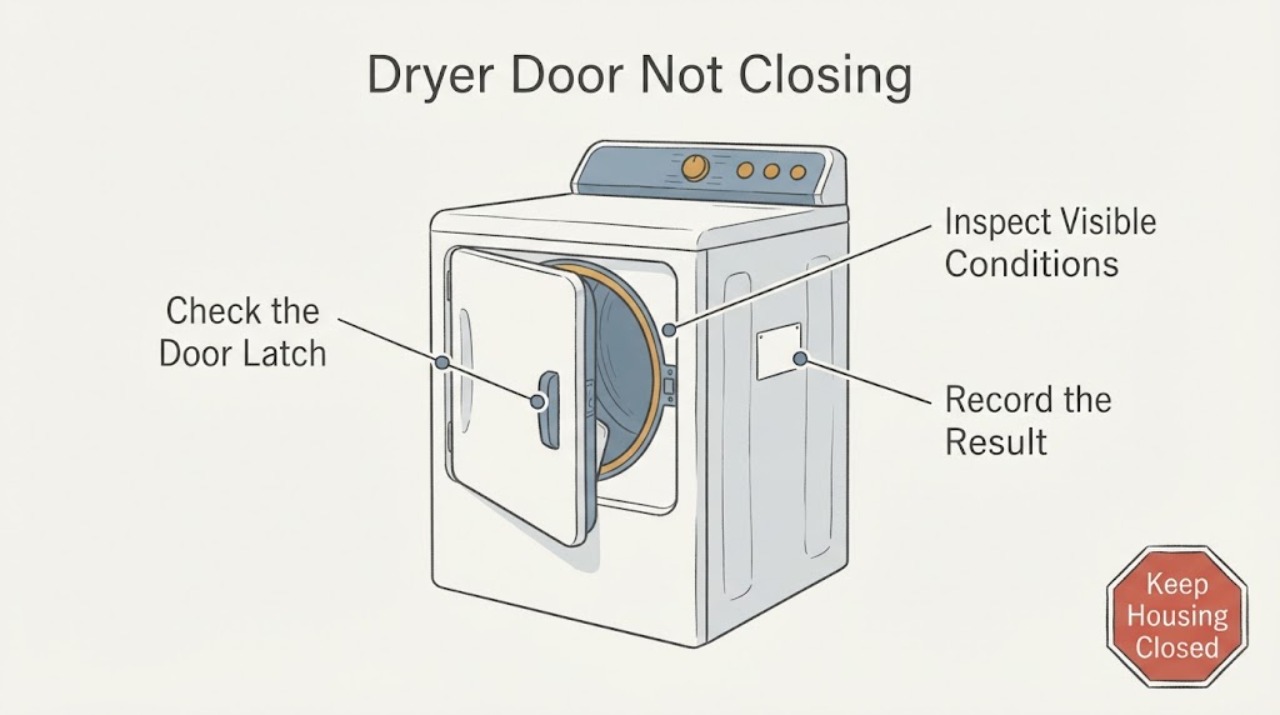
Work through in order
Diagnostic checks
Use only checks that match the exact appliance or system and its official guide.
-
Check 1
With the dryer stopped and cool, remove the load and inspect the entire door opening, seal, drum lip, and latch area for clothing, a hanger, lint, packaging, or another object caught between the door and frame.
Expected result: An obstruction or packed lint is visible, or the opening is clear but the door still cannot reach the frame.
Next step: Remove only loose material by hand and wipe the accessible contact area. If the door still does not sit correctly, continue to the alignment check without forcing it.
Why this matters
Why: A small obstruction can hold the door away from the latch and mimic a failed catch. A clear opening shifts attention to door alignment, hinge movement, or latch hardware.
-
Check 2
Close the empty door gently and observe the gap around the frame and the contact with the seal; do not slam it or hold it shut.
Expected result: The door sits evenly and reaches the latch, or it is low, tilted, rubbing one side, or leaves an uneven gap.
Next step: If alignment is visibly wrong, leave the dryer off and use the model manual or qualified service for hinge work. Do not bend the door or frame to make it fit.
Why this matters
Why: An even fit supports a catch or strike engagement issue. A low, tilted, or rubbing door suggests hinge looseness, sag, a bent door, or another alignment problem.
-
Check 3
Inspect the visible catch, strike, and latch opening for cracks, looseness, missing pieces, or lint that prevents the two sides from meeting; do not remove the front panel or door switch.
Expected result: The catch or strike is visibly damaged or loose, lint blocks the opening, or the hardware appears intact and aligned.
Next step: Clear loose lint only. If hardware is damaged or loose, stop using the dryer and request model-matched service; do not substitute an unverified part or bypass the safety switch.
Why this matters
Why: Damaged or displaced latch hardware can keep the door from closing or make it open unexpectedly. Intact hardware with a correct door fit points toward an internal latch or switch diagnosis.
-
Check 4
With the drum empty and the door fully closed without force, gently test whether the latch holds the door in place; do not start a cycle if the door must be pushed, lifted, or held to stay shut.
Expected result: The door remains latched with a normal fit, or it pops back open, feels loose, or only stays closed when pressure is applied.
Next step: Leave the dryer off and arrange service for a door that pops open or needs pressure. Never tape, wedge, or bypass the door to make the dryer run.
Why this matters
Why: A door that will not stay closed has not established a reliable latch and should not be treated as safe for operation. Pressure-dependent closure indicates a mechanical or latch alignment fault.
-
Check 5
If the door closes and latches normally, select the model-approved cycle and observe the start response without placing hands near the drum; stop immediately if the dryer reports an open door, starts with the door not fully secured, or the door moves during operation.
Expected result: The dryer recognizes the closed door and remains secure, or it reports an open door, refuses to start, or the door moves during the attempt.
Next step: Stop and request qualified service for any door-sensing fault or movement. Do not repeat starts to force the switch to engage.
Why this matters
Why: A secure door with normal start behavior supports an obstruction or alignment issue that was corrected. A door-sensing failure or movement indicates the latch or safety switch still needs diagnosis.
-
Check 6
Find the exact Kenmore model number from the appliance label and compare the door, hinge, and latch instructions in the official manual; record whether the door is reversible and which part of the fit is abnormal.
Expected result: The manual identifies a model-specific adjustment or the manual does not provide a user-level correction for the observed damage or misalignment.
Next step: Follow only the manual's user-safe guidance. If no correction is specified or the door remains unsafe, contact Kenmore repair support with the model and observations.
Why this matters
Why: Kenmore dryer designs differ, so the model number determines the correct door orientation, parts, and service procedure. Missing instructions or structural damage is a professional-service boundary.
Use your observations
Decision map
Find the observation that best matches what you see, then follow the next safe action.
-
PATH 01Next step
What you see
Clothing, lint, packaging, or another object blocks the door opening
Do this next
Stop the dryer, remove the loose obstruction, clean the accessible contact area, and close the door gently. Do not restart if the door still does not latch.
-
PATH 02Next step
What you see
The door is low, tilted, rubbing, or leaves an uneven gap
Do this next
Leave the dryer off and use the exact model manual or qualified service for hinge and door alignment; do not bend or force the frame.
-
PATH 03Next step
What you see
The visible catch or strike is cracked, loose, missing, or does not meet the latch
Do this next
Do not operate the dryer. Request model-matched service and do not bypass the door safety switch.
-
PATH 04Next step
What you see
The door closes but the dryer still reports it open or will not start
Do this next
Stop repeated start attempts and arrange qualified diagnosis of the latch engagement and door-sensing circuit.
-
PATH 05Next step
What you see
The door opens or moves during a cycle, or must be held shut
Do this next
Stop using the dryer immediately and request service; never tape, wedge, or otherwise defeat the door safety system.
Helpful context
Understand the symptom
Do not force or bypass the door
A dryer door that does not close securely is a safety problem as well as a convenience problem. Do not slam it, hold it shut during a cycle, tape it closed, or defeat the door switch. Unload the drum and do the inspection with the dryer stopped and cool.
The useful distinction is obstruction versus alignment
A small item caught in the opening, lint packed around the catch, or a displaced seal can prevent the door from reaching the latch. If the opening is clear but the door sits low, rubs the frame, or has an uneven gap, the hinge or door structure may be misaligned. A door that reaches the frame but will not stay latched points toward the catch, strike, or switch area.
Use the exact model manual
Kenmore's manual finder covers dryers and other appliances and asks for the model number. That manual is the right place to confirm the door orientation, cleaning instructions, and any model-specific latch or door-reversal procedure. Do not copy a repair sequence from a different model.
When service is the next step
Stop using the dryer if the door is cracked, the hinge is loose, the catch or strike is broken, the door opens during operation, or the dryer runs without a properly closed door. Kenmore's customer-care page provides repair and support routes; internal door-switch or structural work should be handled by qualified service.
Safety boundary
Stop conditions
- Do not run the dryer if the door will not latch, pops open, moves during operation, or must be held shut.
- Stop for a cracked door, loose hinge, broken catch or strike, damaged frame, exposed wiring, burning odor, or smoke.
- Do not slam or bend the door, remove the front panel, defeat the door switch, or tape or wedge the door closed.
- Stop and request service if the exact model manual does not provide a safe user-level correction.
Only after diagnosis
Potential parts
- dryer door catch or strike
Only consider this category if the door opening is clear and qualified diagnosis finds a damaged or missing latch-mating part.
Confirm the exact Kenmore model and door orientation before ordering; appearances and fit vary across dryer families. - dryer door hinge
Only consider this category if the door sits low, rubs the frame, or has an uneven gap and the hinge is confirmed damaged or loose.
Use the official model manual or a qualified technician to confirm fit and safe installation. - dryer door switch
Only consider this category if the door closes and latches correctly but the dryer still reports an open door or will not start.
The door switch is a safety component; confirm model-specific fit and have qualified service install or test it.
When checks do not resolve it
Need a professional?
Contact Kenmore repair support for a door that remains misaligned after the opening is clear, or for damaged hinge, catch, strike, or latch hardware., Request prompt service if the dryer reports an open door, will not start with a securely closed door, or moves or opens during operation., Provide the model number, door orientation, whether the door is low or rubbing, the condition of the catch and strike, and whether the issue began after moving or reversing the door.
Safety scope: Do not run the dryer with an unsecured door, bypass the door switch, remove internal panels, or force structural parts into alignment.
Common questions
FAQ
Why will my Kenmore dryer door not close?
Start with clothing or lint caught in the opening, then check whether the door is low, tilted, or rubbing and whether the catch meets the strike. A damaged or misaligned door should not be forced or used until serviced.
Can I run the dryer if I have to hold the door shut?
No. Do not tape, wedge, or hold the door shut, and do not bypass its safety switch. A door that will not latch securely needs repair before operation.
How do I know which Kenmore door part I need?
Find the exact model number and use Kenmore's official manual resources before selecting a catch, strike, hinge, or switch. Dryer families differ, so do not assume a part from another model will fit.
What if the door closes but the dryer still says it is open?
Stop repeated start attempts. If the door is aligned and latches normally but the dryer still reports an open door, arrange qualified diagnosis of the latch engagement and door-sensing circuit.
Read the exact guide
Official sources
- Find Your Manual | Kenmore Appliance Manuals & GuidesKenmore · Kenmore model-specific appliance manuals, including dryer operating and user-service guidance
- Dryers | Laundry | KenmoreKenmore · Kenmore dryer product families and model-specific product selection
- Customer Care & Support | Kenmore AppliancesKenmore · Kenmore customer support, repair, warranty, product manuals, and safety resources
Community feedback
Share a repair observation
Share a plain-text repair observation. Accepted observations are published automatically; this page may take a moment to update.