
On this page
Start here
Quick answer
A burning or electrical smell from a GE dryer is a safety symptom, not a reason to keep running the machine until a repair decision is made. Stop the cycle, unplug the dryer when the plug is safely reachable, and do not open the cabinet or run a heated test. GE says some oily or burning odor can occur during the initial use of a new gas or electric dryer, but it also says most dryer smells should be checked; its fire-safety guidance requires a clean lint filter and a clear area, and its vent guidance warns that restricted or unsuitable ducting can accumulate lint. On an older or previously used dryer with a strong electrical smell, smoke, overheating, a melted connector, or a recurring odor, leave it out of service and have a qualified appliance professional diagnose it before comparing repair and replacement costs.
Before you begin
Safety first
- Do not run heated test cycles, open the cabinet, probe live wiring, bypass a thermal or electrical safety device, or order a heater, belt, motor, thermostat or connector without a model-specific professional diagnosis.
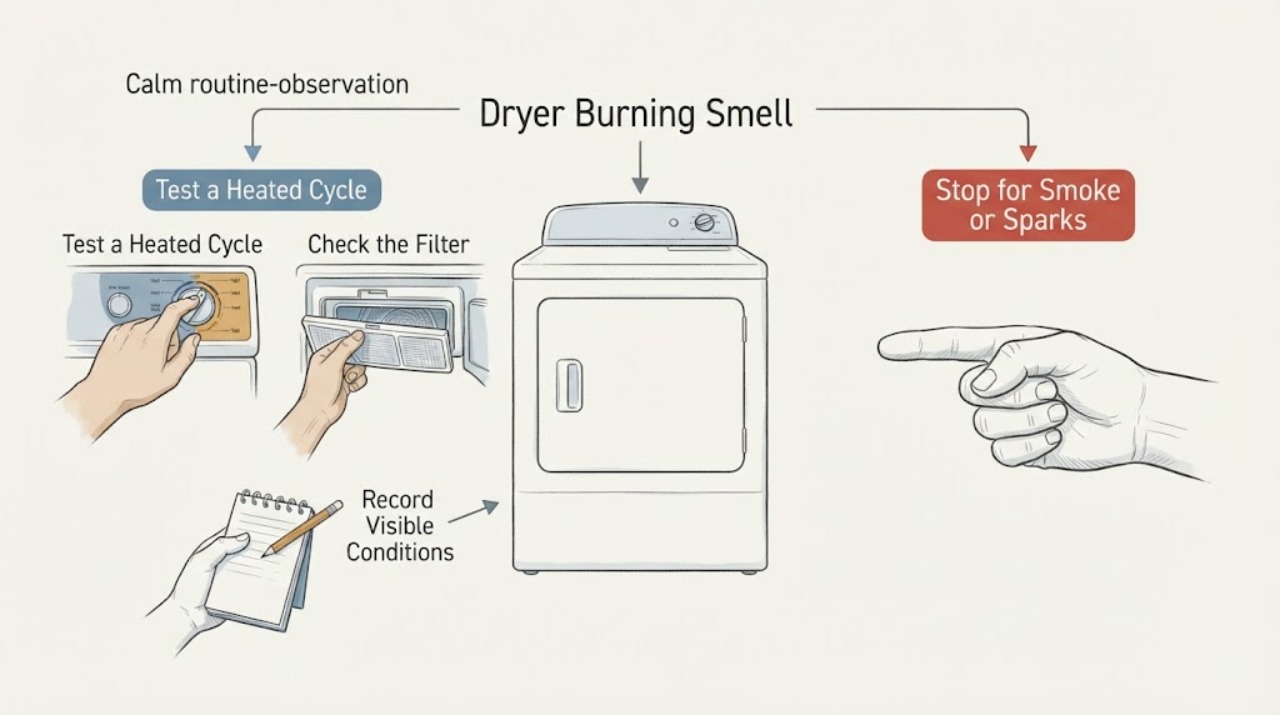
Work through in order
Diagnostic checks
Use only checks that match the exact appliance or system and its official guide.
-
Check 1
Stop the dryer immediately if the odor is present. If the plug is safely reachable without smoke, flame, water or a hot cord, switch the dryer off and unplug it; otherwise keep away and use the appropriate emergency or electrical/gas service route. Do not restart a heated cycle to see whether the smell disappears.
Expected result: There is smoke, flame, a hot or discolored cord, sparking, a strong electrical odor, or a gas odor, or there is only a faint odor with no visible emergency.
Next step: For smoke or flame, leave the area and use emergency help as appropriate. For gas odor, do not operate switches or create a spark; leave and contact the gas utility or emergency service from a safe location. Otherwise keep the dryer unplugged and continue only with external checks.
Why this matters
Why: Smoke, flame, electrical damage and gas odor are safety events rather than repair tests. GE's normal-odor exception is limited to initial use of a new dryer and does not clear an older or previously used dryer with a strong recurring smell.
-
Check 2
When the dryer is cool and unplugged, remove and inspect the lint filter. Look around the filter opening, floor and immediately visible rear vent connection for accumulated lint, paper, rags, chemicals, a crushed transition duct or a blocked outside flap. Do not reach inside the cabinet or remove the drum, heater, rear panel or wiring.
Expected result: The filter or surrounding area is heavily contaminated, the duct is visibly kinked or crushed, the outside cap is blocked, or the visible path is clear.
Next step: Clean only the removable filter and clear a plainly visible external obstruction without opening the dryer. If lint is inside the cabinet, the path remains restricted, or the smell persists, leave the appliance off and arrange qualified service or professional vent cleaning.
Why this matters
Why: GE identifies lint accumulation and unsuitable or restricted exhaust as fire and overheating concerns. A clear filter or visible vent does not rule out lint or an electrical fault inside the cabinet.
-
Check 3
Identify the appliance externally from the rating label while it is cool and unplugged: record the complete GE model, serial information and whether it is gas or electric. Note when the smell appeared—at startup, only with heat, near the end of a cycle, or after the dryer had been serviced—without running another cycle to reproduce it.
Expected result: The model and fuel type are readable, or the label is missing; the odor was a one-time initial-use odor, or it occurred on a used dryer and returned during operation.
Next step: Give the label data and odor history to GE or a qualified appliance technician. If the model or fuel type cannot be confirmed, do not order a heating, motor, belt, thermostat or electrical part by appearance.
Why this matters
Why: GE's initial-use odor explanation is limited to a new dryer and does not establish the cause of a recurring smell on a used appliance. Model and fuel information are needed for the correct installation instructions and service diagnosis.
-
Check 4
Ask the service provider to separate the diagnosis from the repair-versus-replace decision: request the identified source, safety condition, parts and labor estimate, and whether the vent installation needs professional correction. Do not accept a recommendation to keep testing a burning-smell dryer or to bypass a thermal or electrical safety device.
Expected result: The professional identifies a correctable external vent/lint condition, a repairable internal fault, a safety-damaged appliance, or cannot establish a safe cause without further disassembly.
Next step: Approve repair only after the technician explains the model-specific diagnosis and safety test. If the source is unknown, damage is extensive, or safe operation cannot be confirmed, keep the dryer disconnected and compare replacement options without reusing it as a test appliance.
Why this matters
Why: The financial decision depends on a verified cause and safe operating condition; the smell alone cannot establish a cheap belt repair, a failed heater, an electrical connection, or a replacement requirement.
Use your observations
Decision map
Find the observation that best matches what you see, then follow the next safe action.
-
PATH 01Next step
What you see
The dryer is genuinely new and the first-use odor is a faint oily smell that does not recur, with no smoke, overheating or electrical damage.
Do this next
Follow the new-dryer instructions and monitor only as GE directs; stop and request service if the odor is strong, electrical, recurring or accompanied by heat or smoke.
Why this path and its safety boundary
Why it matters: GE describes an oily or burning odor during initial use of a new gas or electric dryer as potentially coming from assembly oils or dust on mechanical parts.
-
PATH 02Next step
What you see
The dryer has a recurring or strong burning/electrical smell, smoke, a hot cord, visible lint contamination or overheating during operation.
Do this next
Keep the dryer unplugged and arrange qualified appliance service; use emergency help for active smoke or fire. Do not run an empty heated cycle or open the cabinet yourself.
Why this path and its safety boundary
Why it matters: The normal initial-use exception does not establish safety for this used or symptomatic dryer, and GE identifies lint and exhaust conditions as fire-hazard concerns.
-
PATH 03Next step
What you see
The filter and visible exhaust are clear, but the odor continues or the cause would require access to the heater, motor, belt, wiring, thermal device or cabinet interior.
Do this next
Do not resume operation or select a part by appearance. Give the complete GE model and fuel type to a qualified technician for a safety diagnosis, then decide repair versus replacement from that estimate.
Why this path and its safety boundary
Why it matters: External cleanliness does not rule out an internal or electrical fault, and the opened GE guidance does not support identifying that component from smell alone.
Helpful context
Understand the symptom
A repair-versus-replace question starts with a safe diagnosis
The assigned symptom is a GE dryer burning smell, while the title frames a decision about whether repair is worthwhile. Cost or appliance age cannot make a burning smell safe to ignore. GE's odor guidance says the normal initial-use exception applies to a new gas or electric dryer; otherwise most dryer smells should be checked. A used dryer with a strong electrical or recurring burning smell should remain out of service until the source is assessed.
Use external lint and vent checks only
GE's fire-safety guidance says to clean the lint filter after every use, never operate without it, and keep lint, paper, rags and chemicals away from the dryer. GE's exhaust guidance requires model-specific duct instructions, a suitable metal duct and an outdoor termination; it warns that unsuitable or restricted ducting can let lint build up. These are safe external observations, not permission to remove panels or infer a heating element, motor, belt or wiring failure.
Make the decision after the cause and appliance identity are known
Record the GE model and whether the dryer is gas or electric from the rating label only while it is cool and disconnected. Give a technician the timing of the smell, any smoke or heat, whether the outside vent was clear, and whether the odor returned. Ask for a diagnosis and written estimate before deciding whether repair is sensible. Do not choose a part or replacement from the smell alone, and do not resume operation merely because the lint screen looks clear.
When checks do not resolve it
Need a professional?
Stop using the dryer and arrange service for a recurring or strong burning smell, electrical odor, smoke, overheating, a hot or damaged cord, visible lint inside the cabinet, or a blocked/restricted exhaust that cannot be corrected externally. For active fire or a gas odor, leave the area and contact emergency or gas-service help from a safe location.
Safety scope: Do not run heated test cycles, open the cabinet, probe live wiring, bypass a thermal or electrical safety device, or order a heater, belt, motor, thermostat or connector without a model-specific professional diagnosis.
Have this ready
- Provide the complete GE model and serial information, gas/electric type, appliance age if known, timing and character of the odor, any smoke or heat, visible lint or vent condition, and whether the smell returned after the dryer was serviced.
Common questions
FAQ
Can a GE dryer burning smell be normal?
GE says an oily or burning odor can occur during initial use of a new gas or electric dryer as assembly oils or dust burn off. That exception does not clear a used dryer with a strong, recurring or electrical smell, smoke or overheating; keep that appliance off and have it checked.
Is a clean lint screen enough to make it safe to run?
No. GE also requires proper exhaust ducting and a clear area around the dryer. A clean removable screen does not rule out a restricted duct, lint inside the cabinet or an electrical fault, so do not restart a dryer that still smells burnt.
How do I decide whether to repair an older GE dryer?
First obtain a safe, model-specific diagnosis and estimate. Do not base the decision on the smell alone or keep testing the machine. Compare the verified repair, any required vent correction and the technician's safety assessment with replacement options while the dryer remains disconnected.
Read the exact guide
Official sources
- Dryer - OdorGE Appliances · Opened the official GE dryer odor page. It distinguishes a possible oily/burning odor during initial use of a new gas or electric dryer from odors that should be checked, and it directs repair for a yellow gas flame. It does not diagnose a specific part on an unidentified used dryer.
- Dryers Minimize the Fire HazardGE Appliances · Opened official GE fire-hazard guidance. It supports cleaning the lint filter each use, never operating without it, and keeping lint, paper, rags, chemicals and other combustible material away. It does not identify the source of an individual burning smell or authorize cabinet disassembly.
- Dryer - Taking Too Long To Dry Clothes or Not Drying at AllGE Appliances · Opened official GE drying-performance guidance. It supports visible vent obstruction, lint-filter and airflow observations and says to unplug before maintenance; it is used only for external checks and safety boundaries, not for a burning-smell component diagnosis.
- Dryer - Installation Information for Exhaust DuctingGE Appliances · Opened official GE exhaust-ducting guidance. It supports checking visible duct type, restrictions and outside termination and says to use the individual model installation instructions for exact limits. It does not transfer a duct length or vent conversion to an unidentified GE dryer.
Community feedback
Share a repair observation
Share a plain-text repair observation. Accepted observations are published automatically; this page may take a moment to update.