
Repair problem
Burning Smell Troubleshooting Guides
Published FixGraph guidance for diagnosing and responding to burning smell.
Matching published guides
Choose a guide that matches the service, equipment, and conditions you are seeing.
-
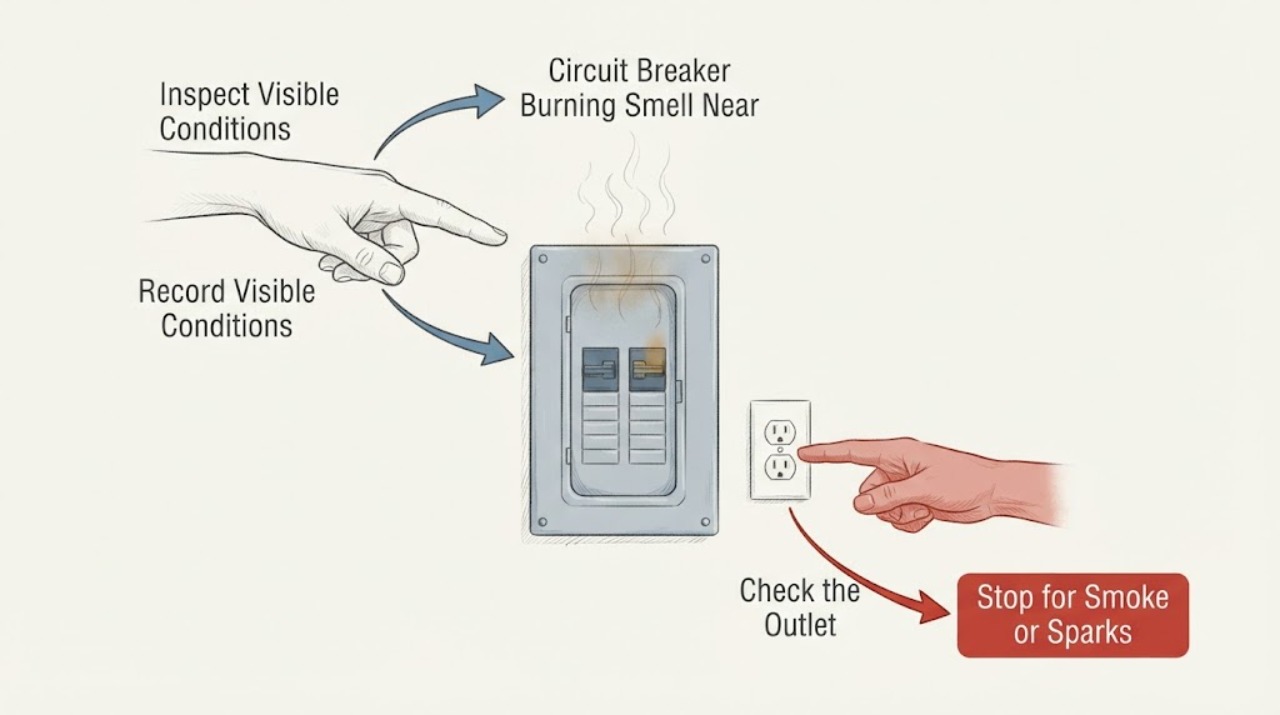
Circuit Breaker Burning Smell Near an Outlet: Treat It as an Electrical Emergency
A burning smell near a circuit breaker, outlet, plug, or wall plate is not a normal troubleshooting symptom. From a safe distance, note whether there is smoke or flame, where the odor is strongest, which circuit appears affected, and whether the breaker has tripped.
-
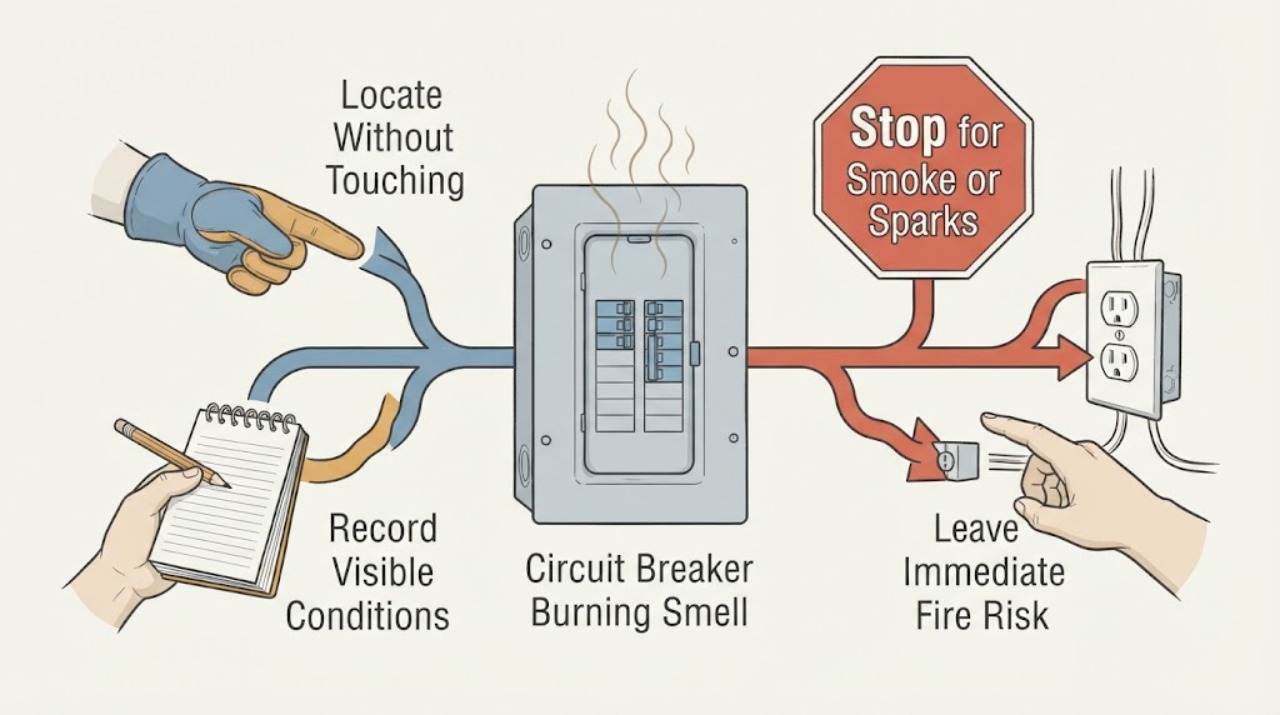
Circuit Breaker Burning Smell: Stop Using the Outlet and Wiring
A burning smell near a circuit breaker, outlet, wall plate, or wiring is an electrical warning, not a breaker-reset problem. Stop using the affected circuit and keep away from a hot panel, outlet, plug, buzzing, crackling, visible arc, smoke, or discoloration.
-
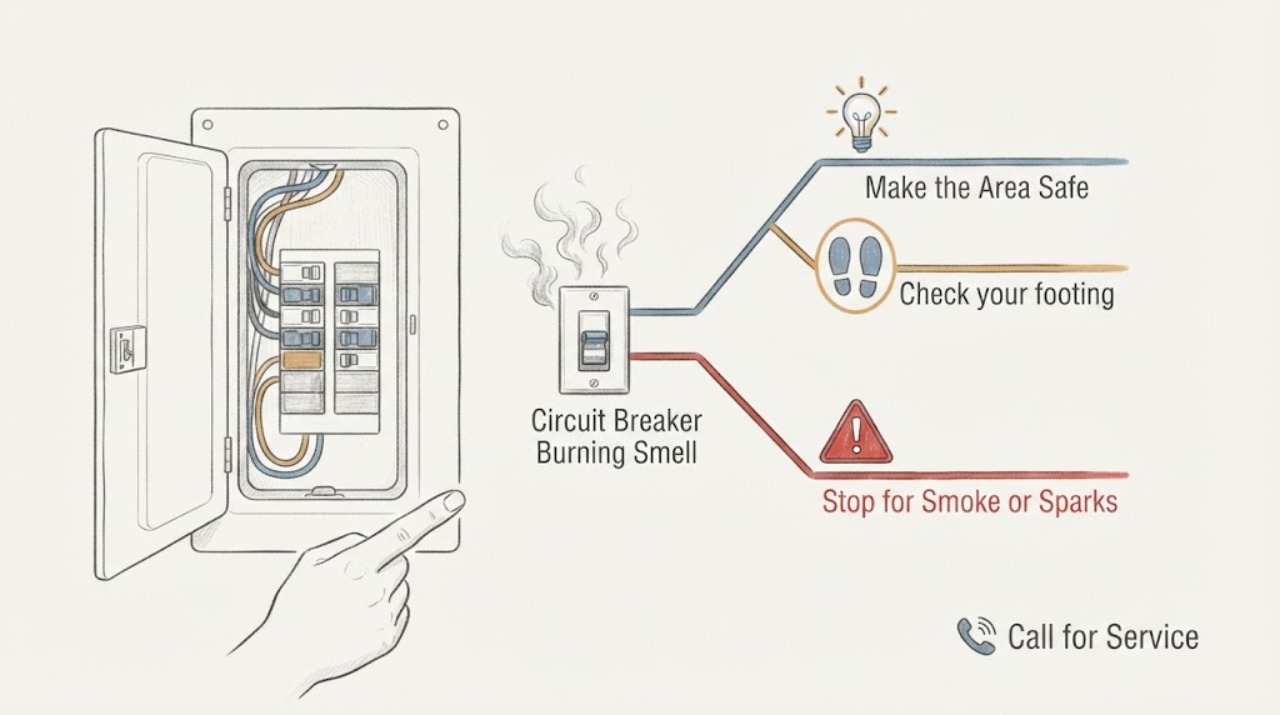
Circuit Breaker Burning Smell: What to Do Before an Electrical Inspection
A burning smell at a circuit-breaker switch, electrical panel, or nearby wiring is a warning of overheating or an electrical fault, not a normal breaker condition. Do not open the panel, touch the switch or cover, reset the breaker, remove a faceplate, measure voltage, or keep using the affected circuit.
-
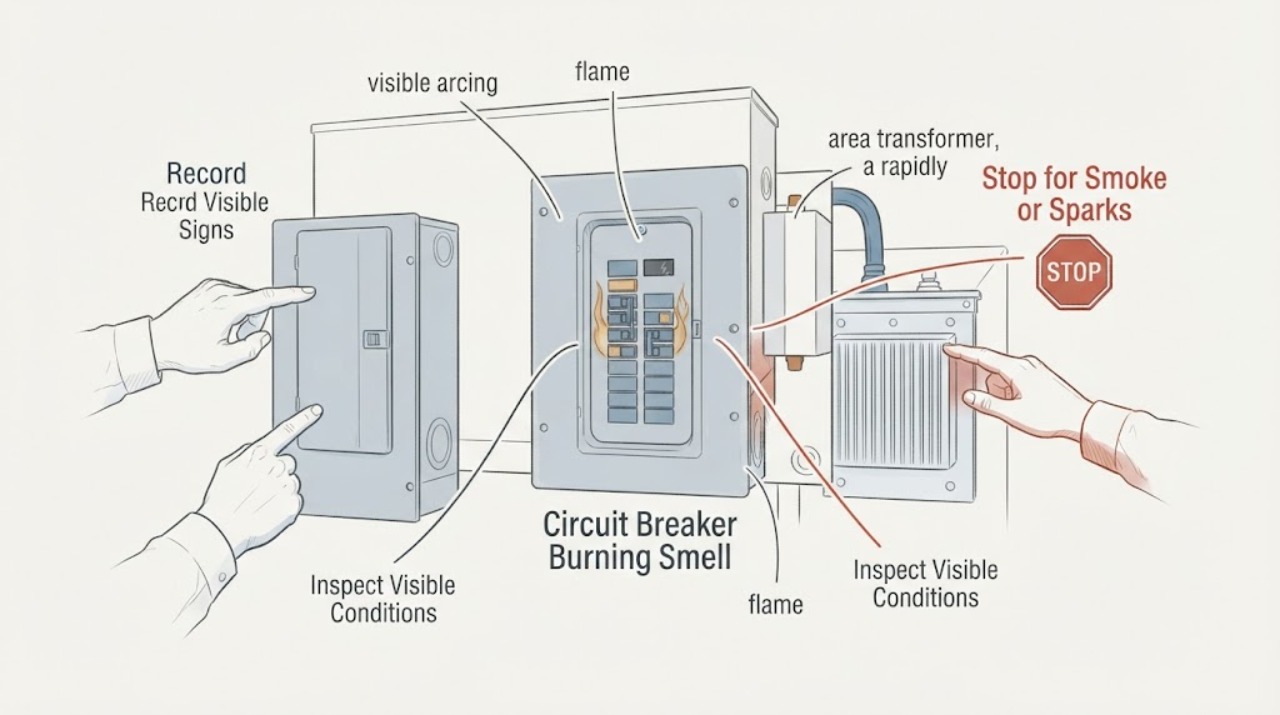
Circuit Breaker Burning Smell: What to Do When a Transformer May Be Involved
Treat a burning smell near a circuit breaker as an electrical fire hazard. Do not reset the breaker, open the panel, touch wiring or a transformer, or use water.
-
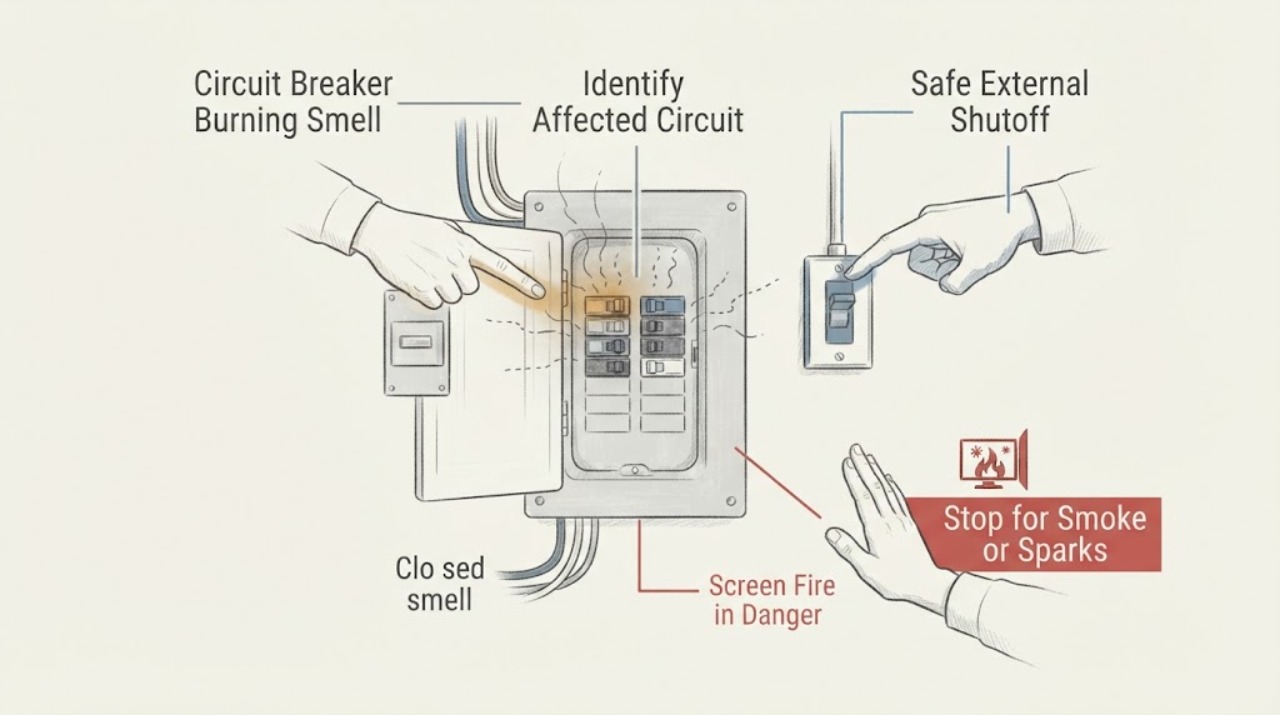
Circuit Breaker Burning Smell: Shut Down Safely and Call an Electrician
A burning smell at a circuit breaker is an electrical fire warning, not a normal breaker odor. From a safe position, note whether there is smoke, sizzling or crackling, visible arcing, a hot or discolored panel, a melted-plastic smell, or a circuit that will not stay on.
-
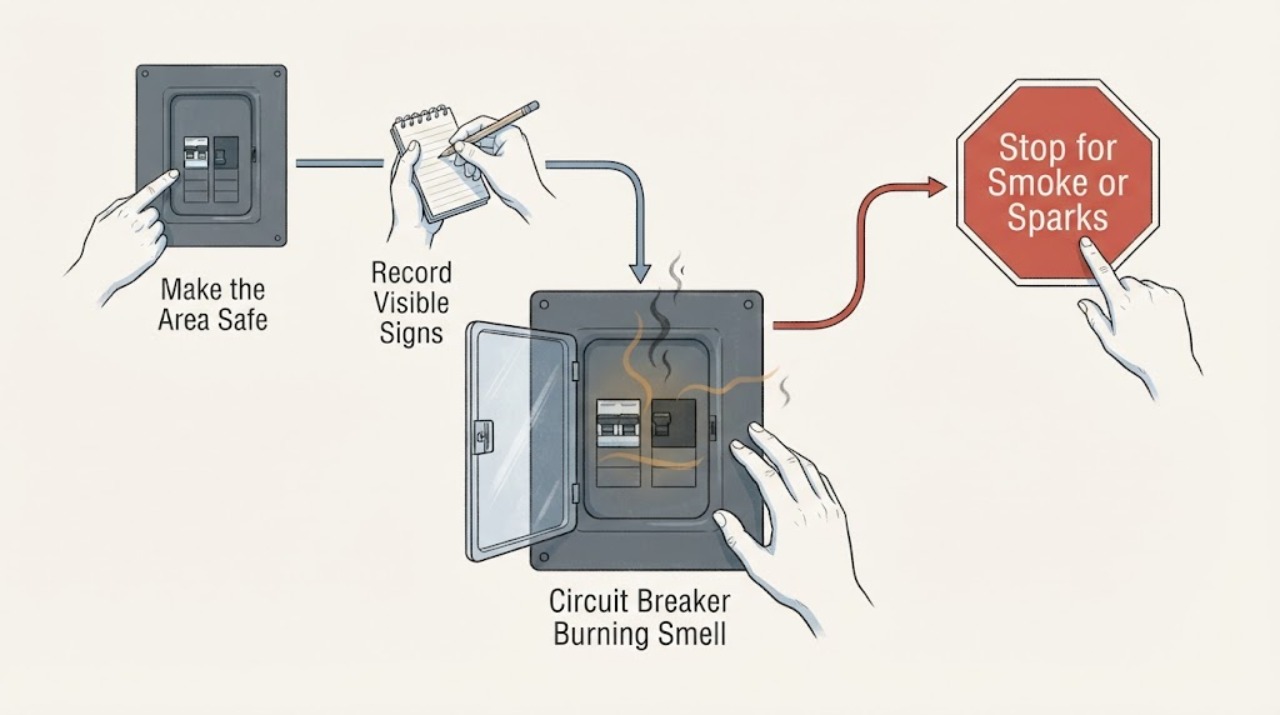
Circuit Breaker Burning Smell: What to Do Safely
A burning smell near a circuit breaker or electrical panel is a stop-use warning, not a repair invitation. Leave the panel cover and breaker wiring closed, stop using the affected circuit, and arrange a licensed electrician to inspect it.
-
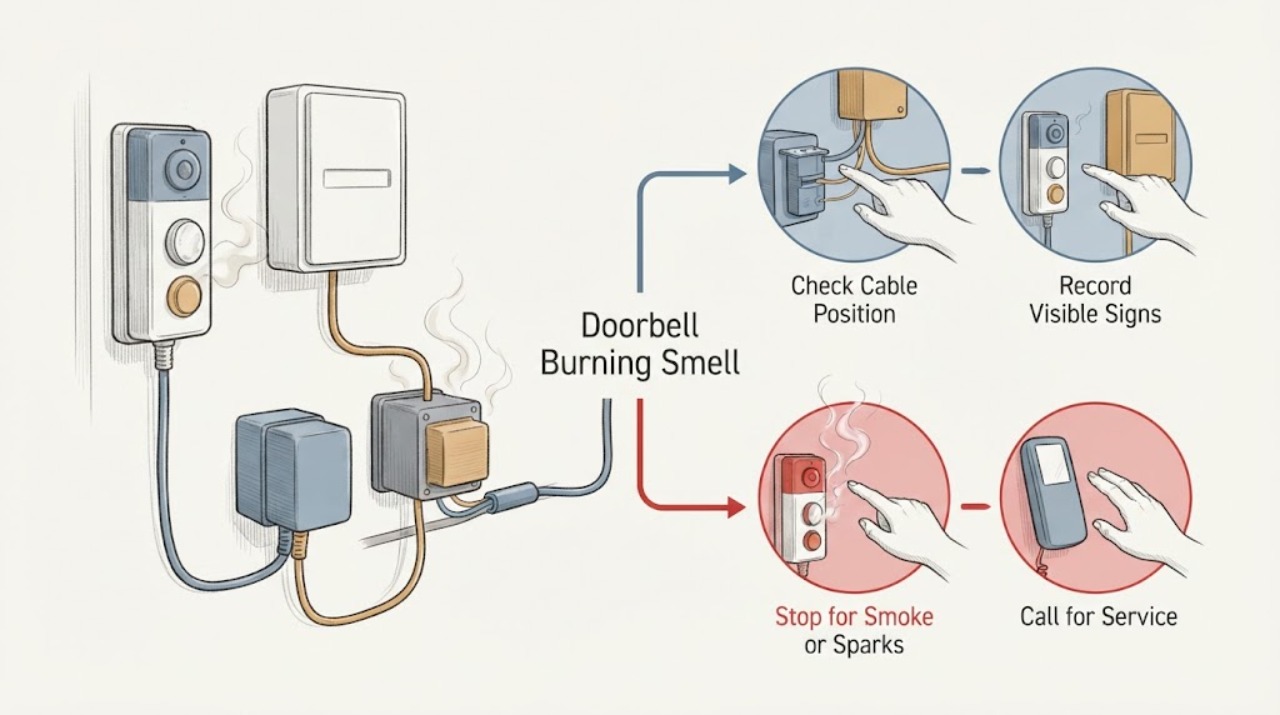
Doorbell Burning Smell: Stop Using It and Make Safe Observations
A burning smell from a doorbell is not a normal troubleshooting symptom. It can come from the outdoor button or camera, an indoor chime, a plug-in adapter or transformer, a damaged cable, moisture, or a battery-powered unit that is overheating.
-
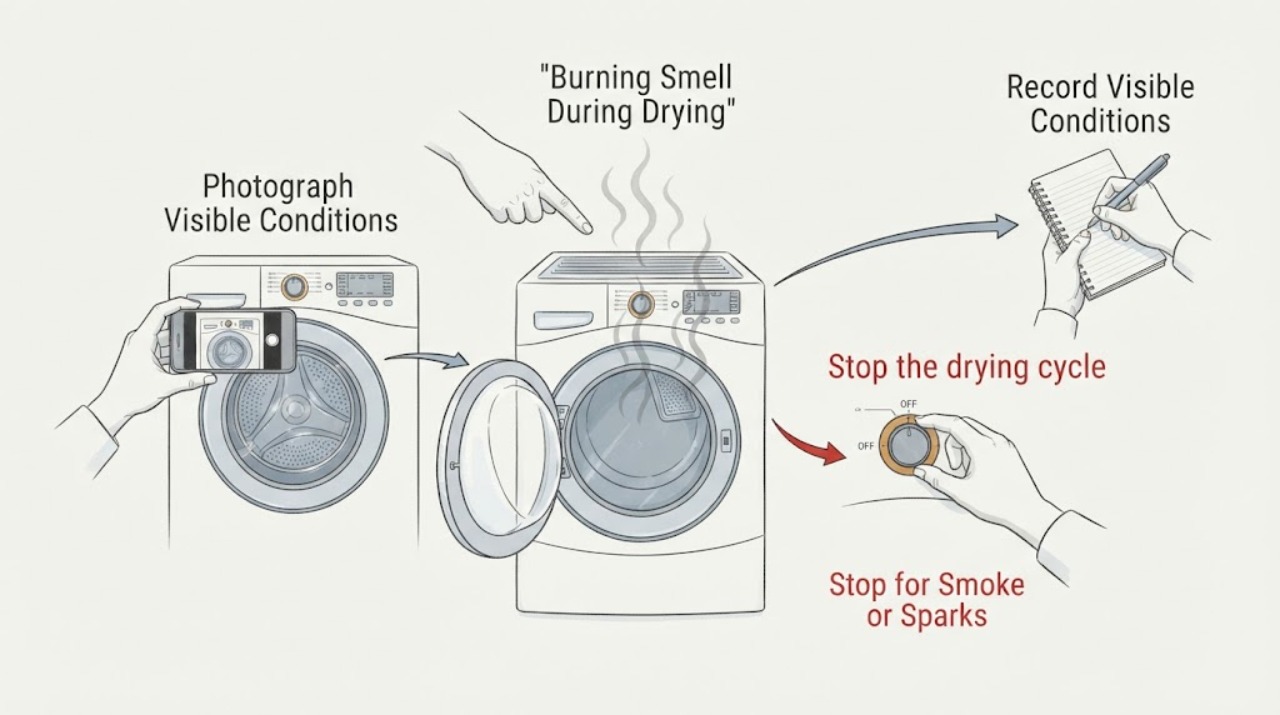
Electrolux EWW51476HW Burning Smell During Drying: Stop Before Choosing a Thermostat
Do not run another drying cycle to identify a thermostat. Electrolux says a burning smell from a washing machine, washer dryer, or tumble dryer requires immediate unplugging and contact with an Authorized Service Center.
-
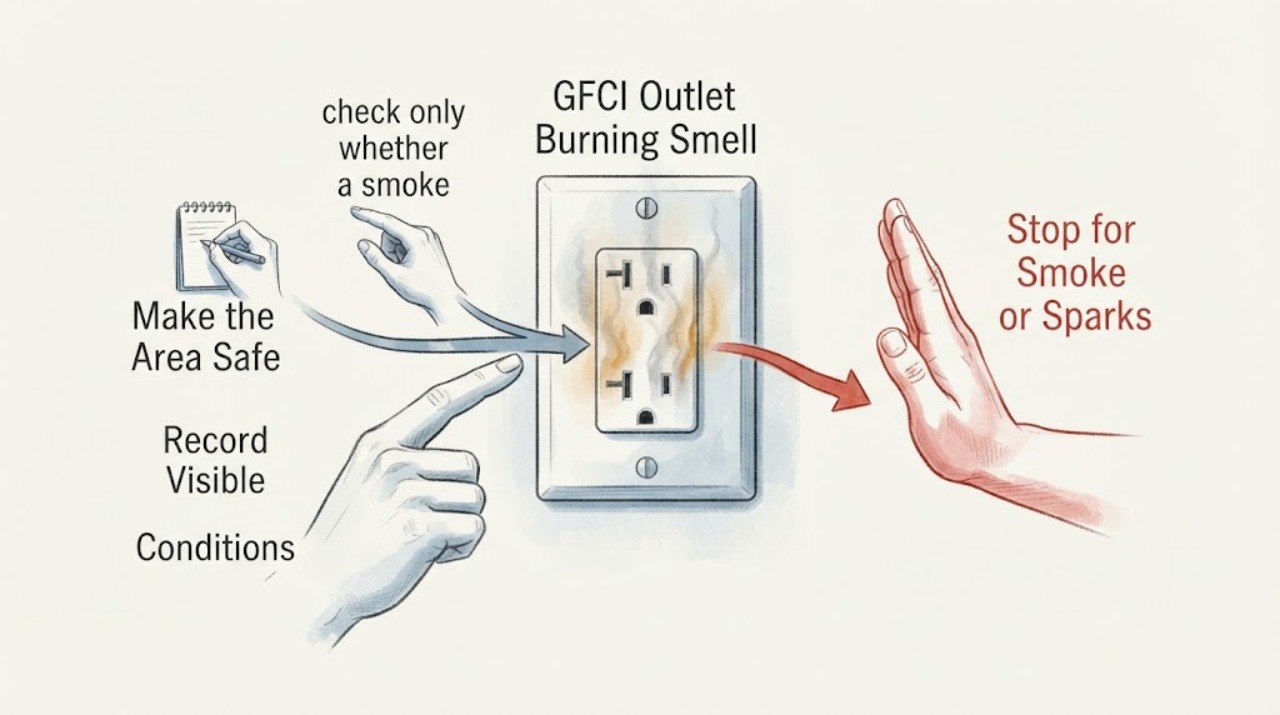
GFCI Outlet Burning Smell: Stop Using It and Get Electrical Help
A burning smell from a GFCI outlet is an electrical-fire warning, not a reason to press TEST or RESET. Stop using the outlet and keep people away without touching the receptacle, plug, cord, switch, breaker panel, or nearby equipment.
-
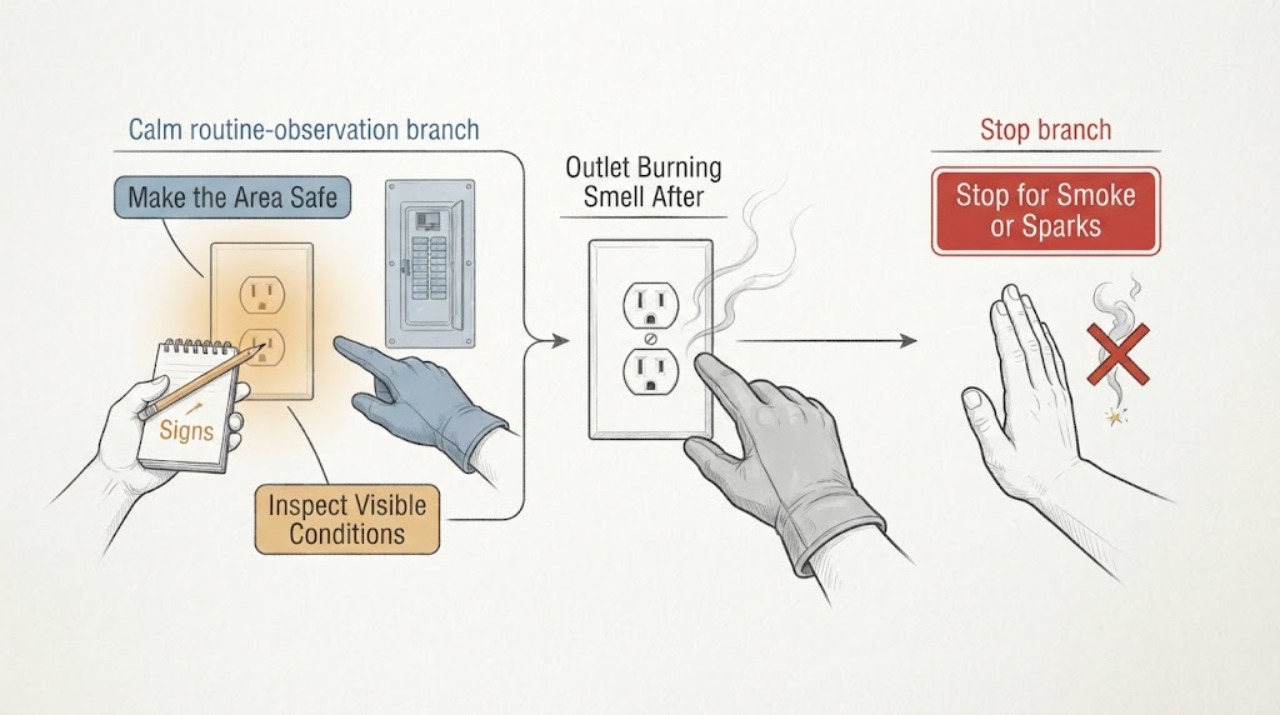
Outlet Burning Smell After an Outlet Change: Stop and Have It Inspected
A burning smell that appears after an outlet change is an immediate stop-use signal. Do not operate the new outlet or switch, plug in a test load, remove the faceplate, touch wiring, reset a breaker repeatedly, or try to correct the installation yourself.
-
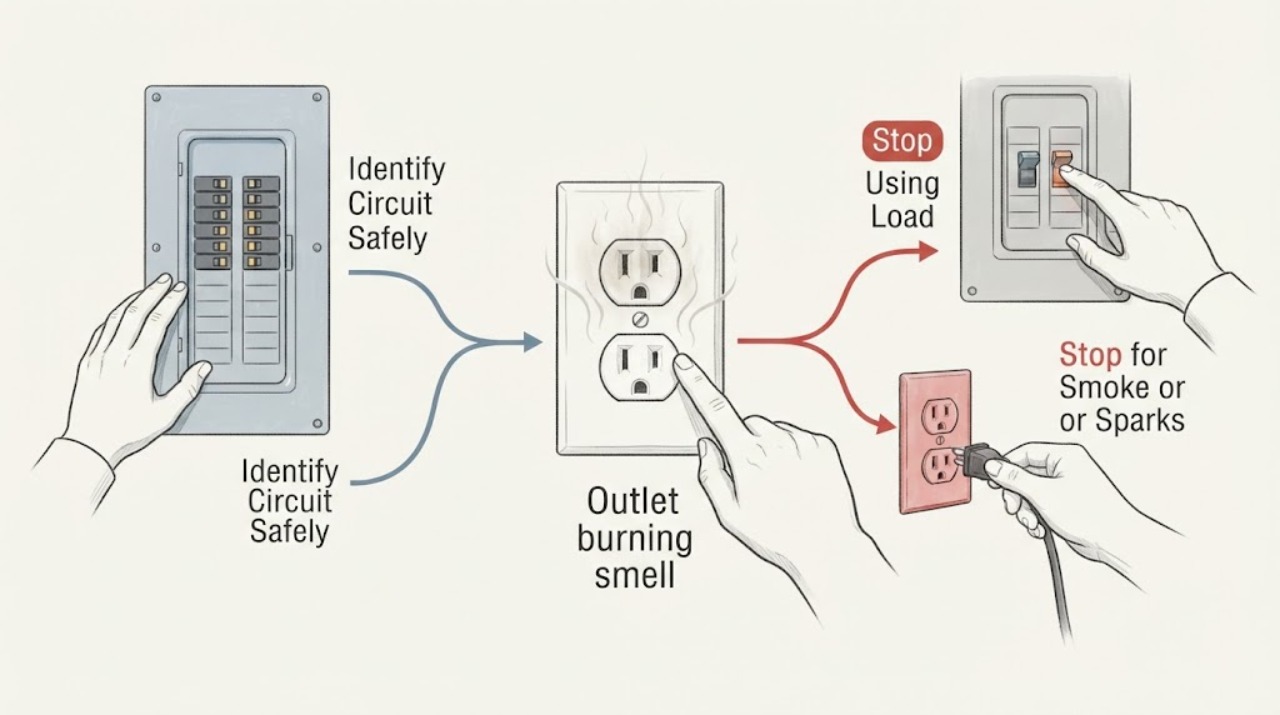
Outlet burning smell: shut it down and trace the circuit safely
Treat a burning or rubbery smell from an outlet, plug, appliance cord, wall plate, or breaker area as an electrical fire warning. Stop using the outlet and do not unplug a hot, loose, smoking, or discolored plug.
-
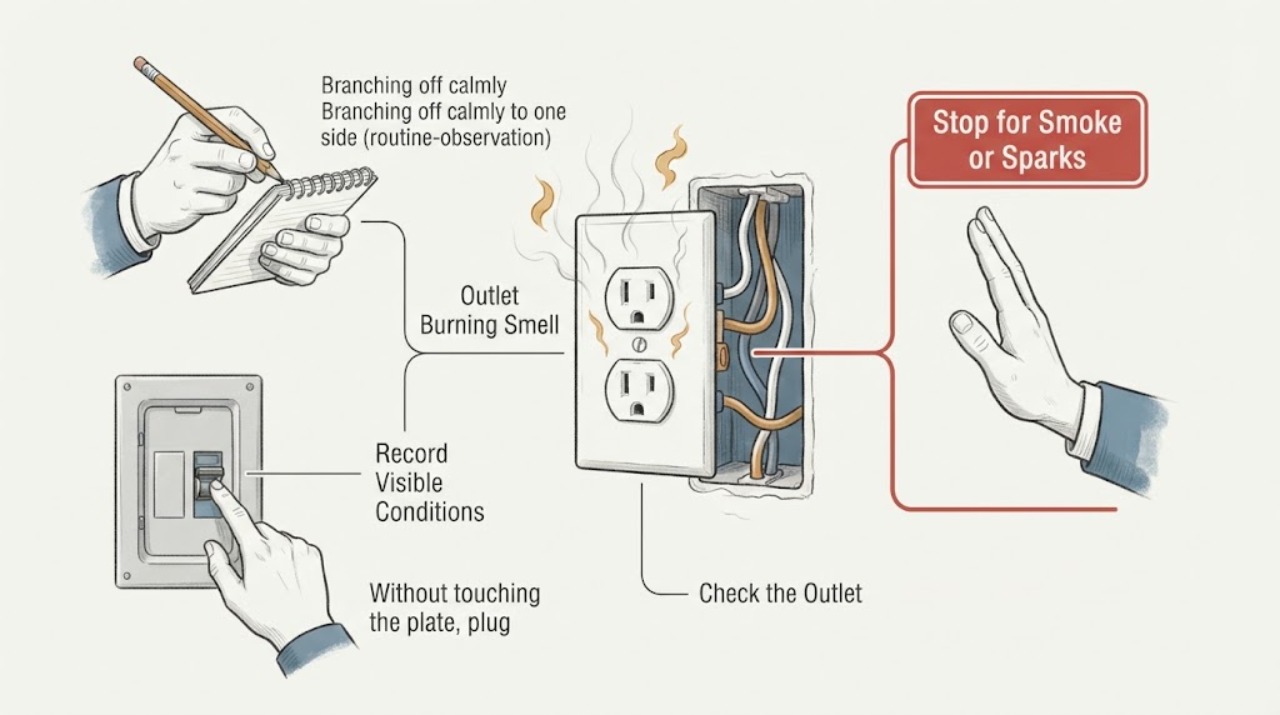
Outlet Burning Smell: Safe Steps for a Possible Wiring or Breaker Fault
A burning or hot-plastic smell at an outlet is a stop-use warning, not a symptom to reproduce. From a safe, dry position, note the outlet location, whether there is smoke, heat, discoloration, buzzing, crackling, sparking, moisture, or a tripped breaker, and whether other outlets or lights are affected.
-
Outlet Burning Smell: Stop Using the Switch and Check the Risk Safely
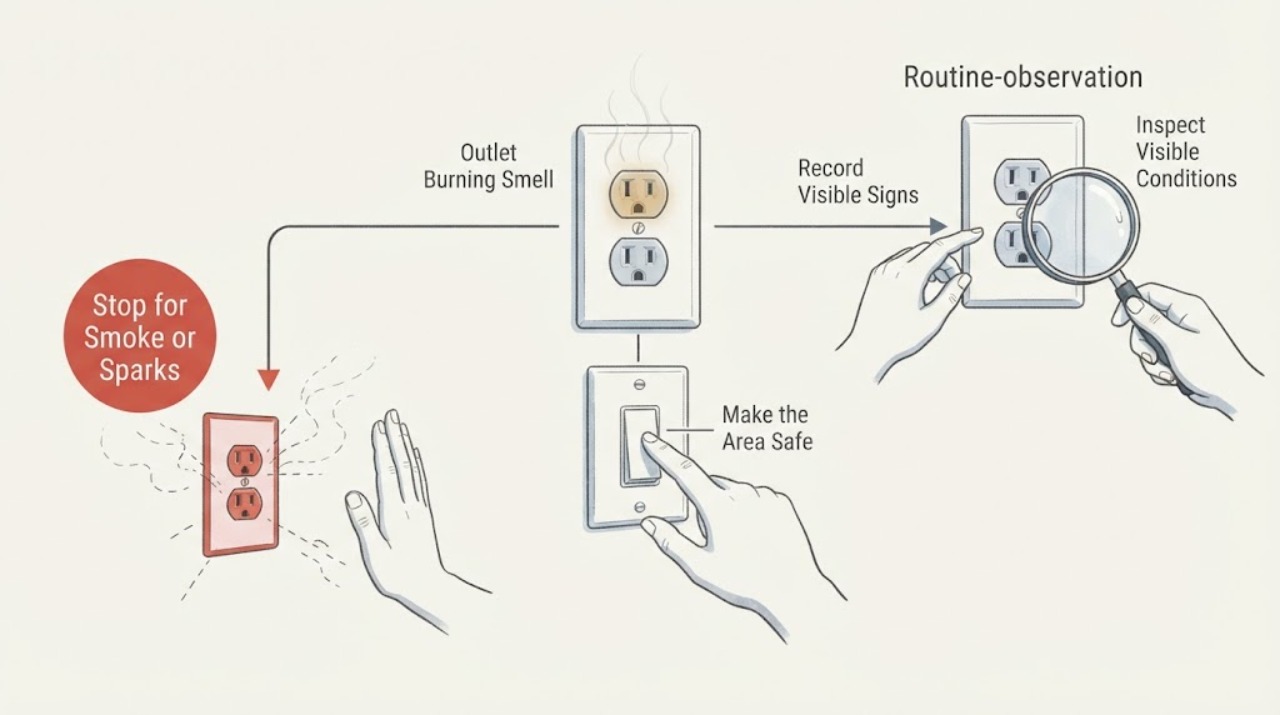
A burning smell from an outlet, wall switch, plug, or nearby wall is a warning of overheating or an electrical fault, not a normal operating odor. Stop using the switch and outlet immediately, keep people away, and do not plug in another device, operate the switch to test it, reset a tripped breaker repeatedly, remove the cover, or take live measurements.
-
Outlet Burning Smell: Stop Using It and Set a Safe Service Boundary
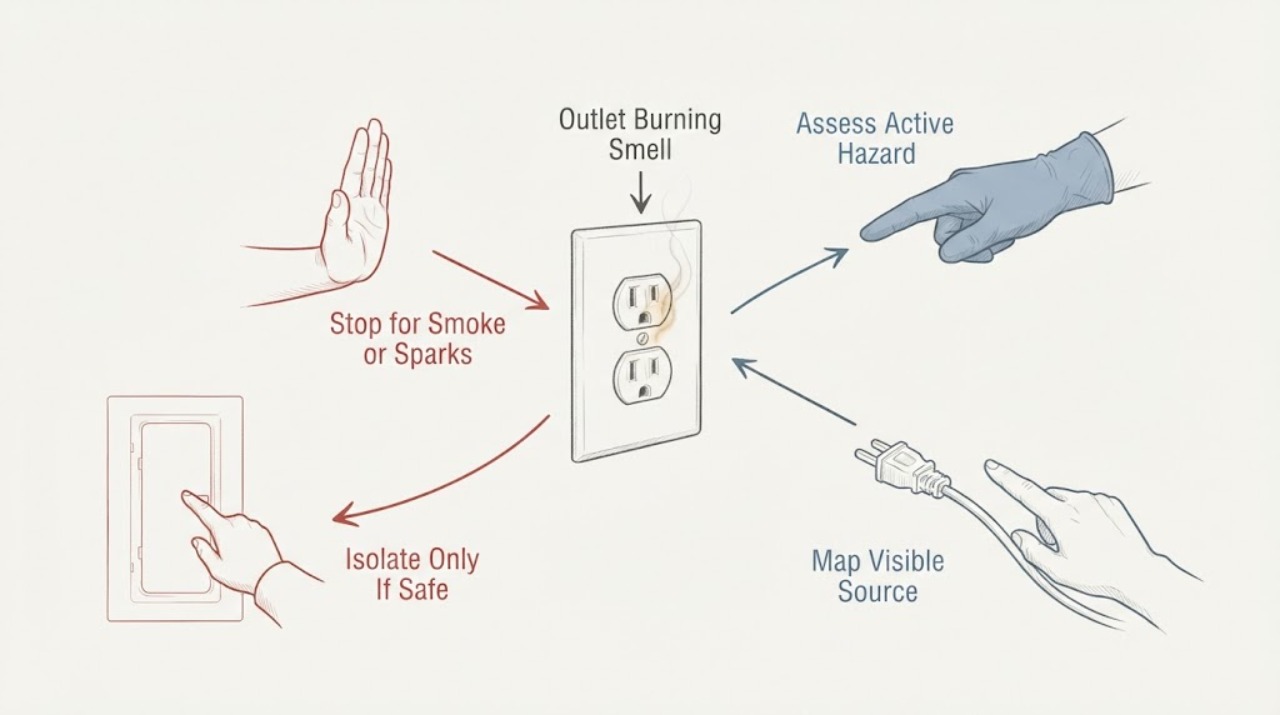
A burning smell from a wall outlet, plug, or nearby wiring is a stop-use warning, not a fault to test by plugging the appliance back in. Keep people away and do not touch a hot, discolored, loose, wet, sparking, or damaged outlet, plug, cord, or faceplate.
-
Outlet burning smell: stop using it and identify the source safely
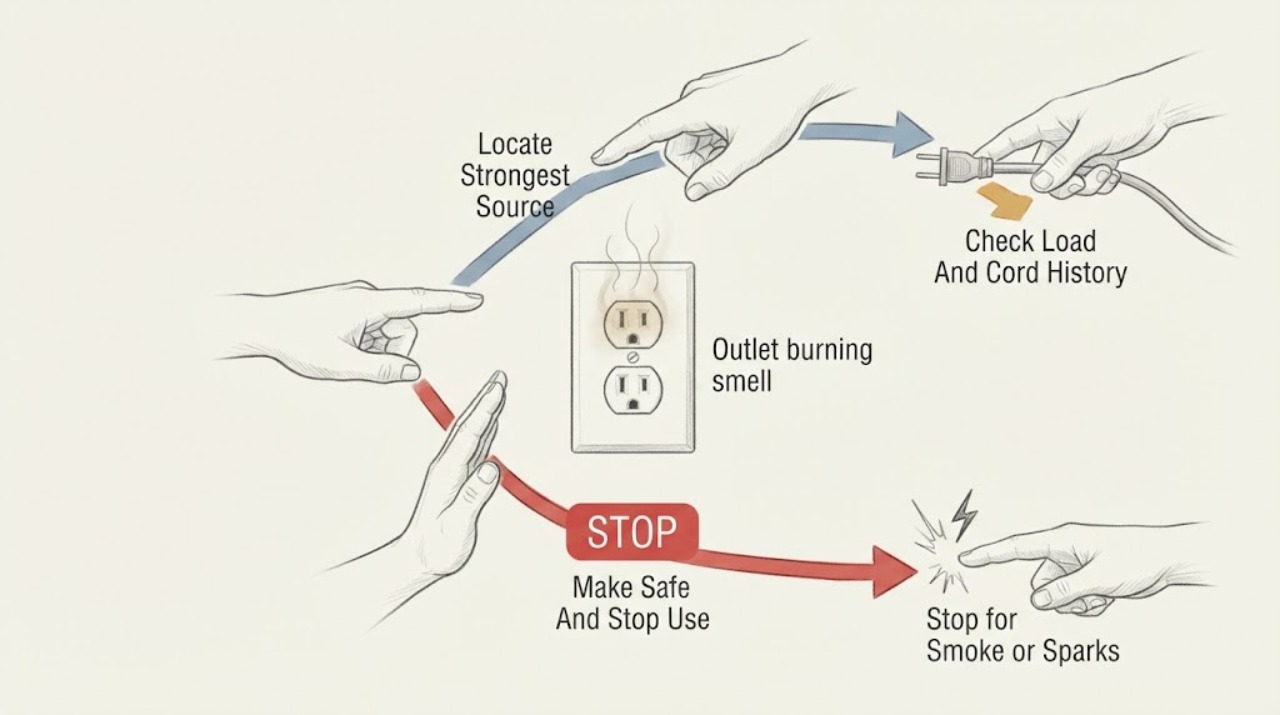
A burning smell from an outlet is a warning of overheating, a loose or arcing connection, an overloaded circuit, or a failing plug or appliance—not a condition to test by plugging something else in. Turn off and stop using the appliance or outlet if you can do so without touching anything hot, smoking, wet, sparking, or damaged; keep people away, never use water on an electrical fire, and call emergency services if there is smoke or fire.
-
Switch burning smell: stop using it and have the circuit inspected
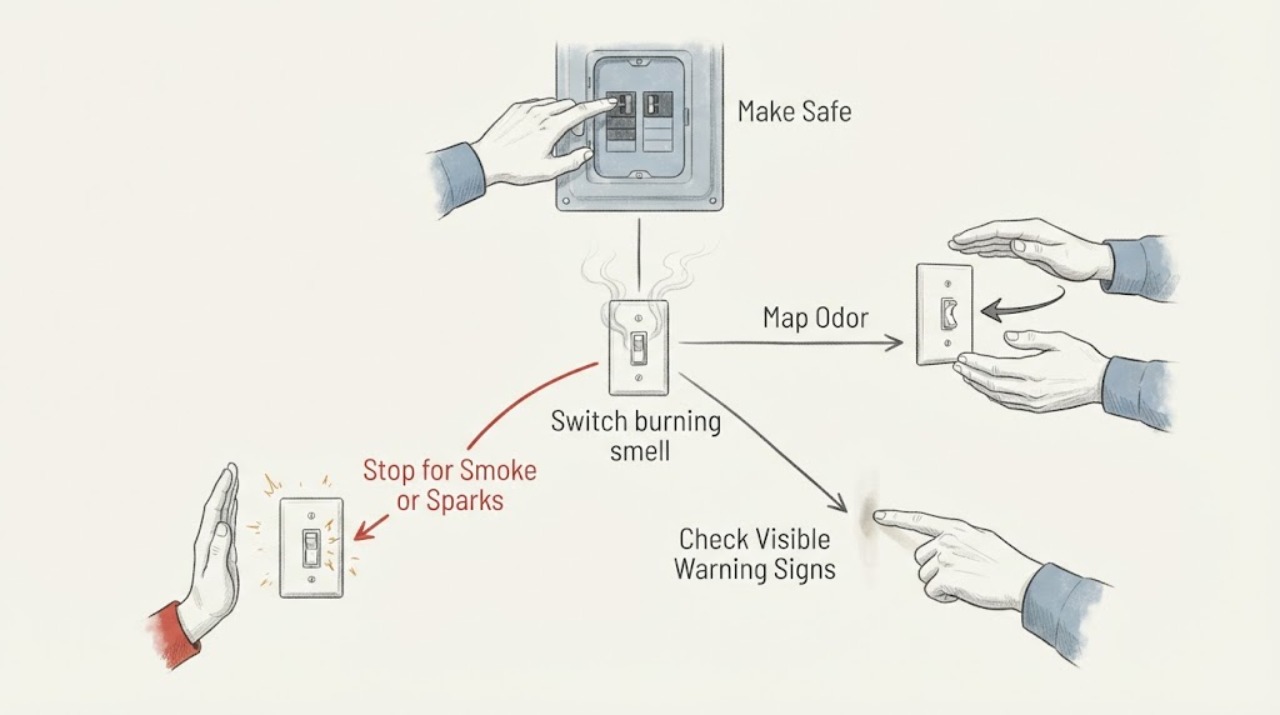
A burning smell at a wall switch is a warning sign, not a normal operating odor. If the switch is cool, dry, and operates normally enough to turn off without touching a hot or damaged surface, turn it off and leave that circuit or load unused; otherwise leave it alone.
-
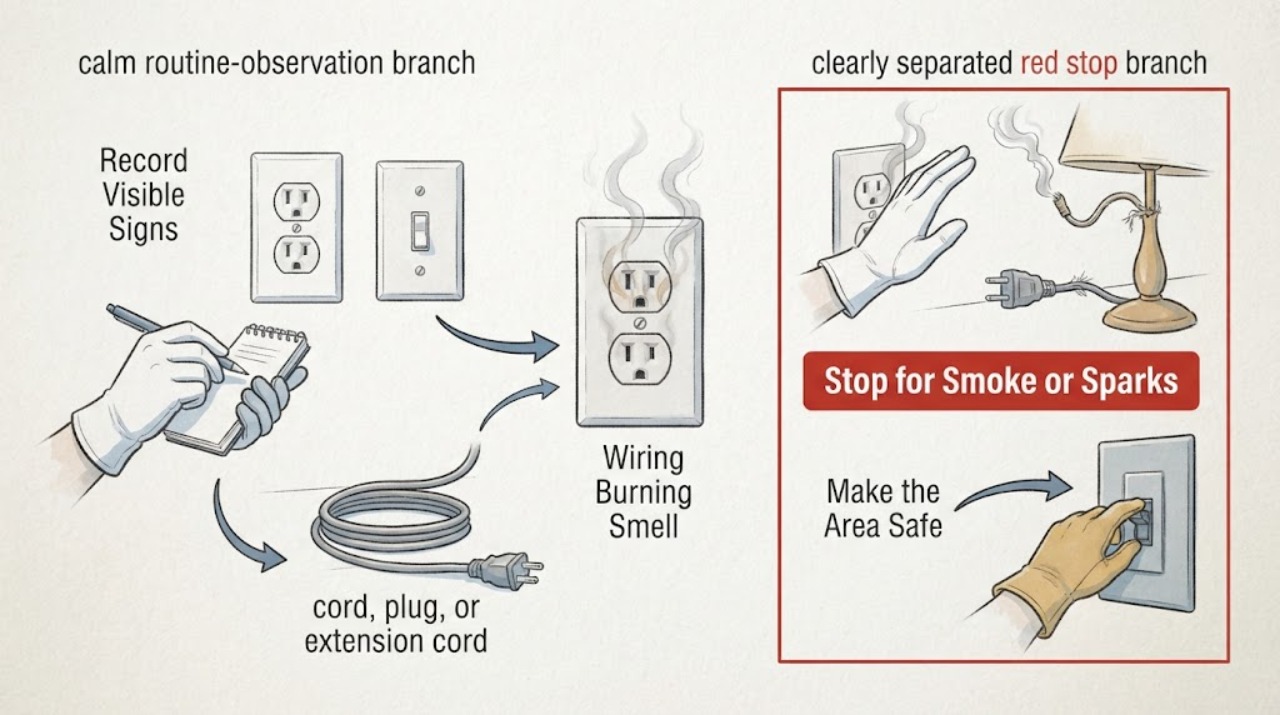
Wiring Burning Smell: Stop, Isolate, and Find the Safe Next Step
A burning smell from wiring, an outlet, or a switch is a stop-use warning, not a scent to troubleshoot by repeated operation. If there is smoke, flame, sparking, crackling, heat, discoloration, shock, or an escalating odor, leave the area and use emergency help as appropriate.