
On this page
Start here
Quick answer
A burning smell at a circuit-breaker switch, electrical panel, or nearby wiring is a warning of overheating or an electrical fault, not a normal breaker condition. Do not open the panel, touch the switch or cover, reset the breaker, remove a faceplate, measure voltage, or keep using the affected circuit. From a safe, dry position, note whether there is smoke, a hot or discolored panel, sizzling, sparks, or a fire. If any of those signs are present, evacuate and contact emergency services. If there is no visible fire and it is safe to do so without touching hot, wet, damaged, or arcing equipment, isolate the affected circuit or main power from the designated control; otherwise leave it for emergency personnel or a licensed electrician. Have the system inspected before restoring power.
Before you begin
Safety first
- Do not open or touch the panel, test live wiring, reset repeatedly, bypass protection, or restore power until emergency personnel or a licensed electrician clears the system.
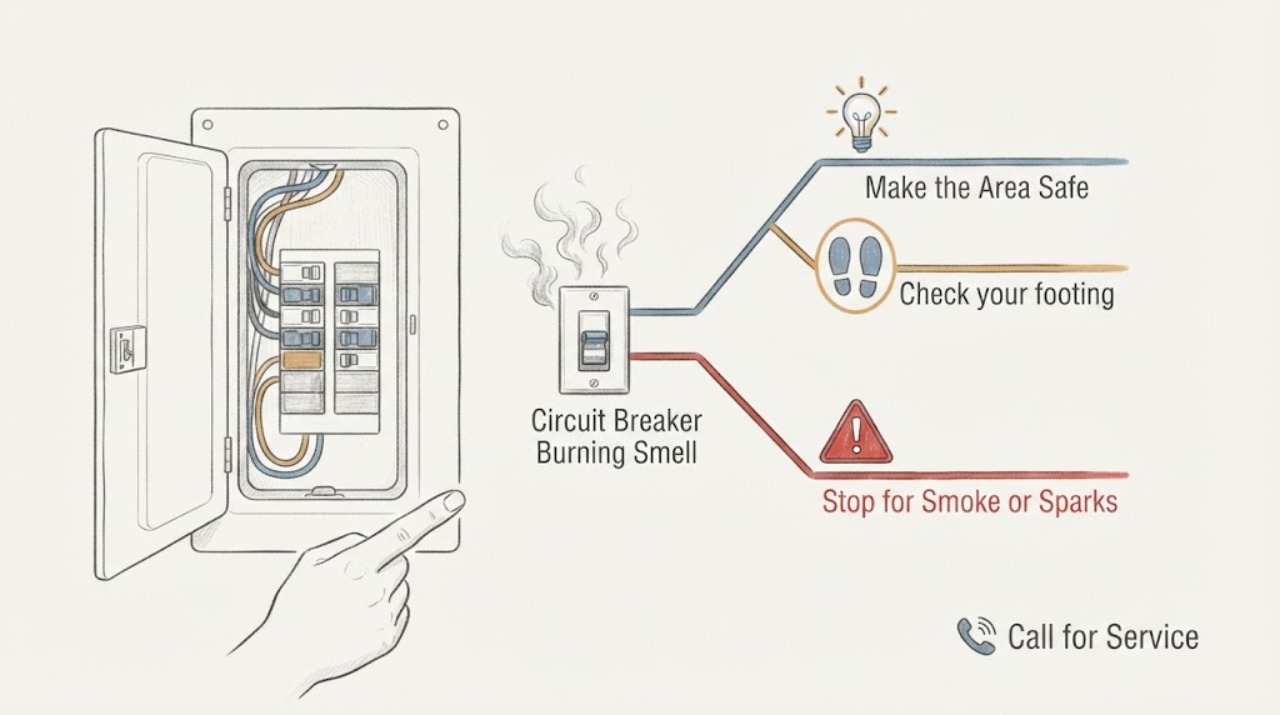
Work through in order
Diagnostic checks
Use only checks that match the exact appliance or system and its official guide.
-
Check 1
From a safe distance, identify the location and pattern of the odor without approaching the panel, switch, outlet, appliance, or cord that may be hot, wet, damaged, or arcing.
Expected result: You see smoke or flame, hear sizzling or buzzing, see sparks or an arc, notice a hot or discolored panel or switch, or the smell is getting stronger.
Next step: Leave the danger area, keep others out, and contact emergency services. Do not use water on an electrical fire or return to investigate until responders declare it safe.
Why this matters
Why: These are active fire or shock warning signs, and the source cannot be safely diagnosed by a household inspection.
-
Check 2
Check your footing and the surrounding area visually from a distance before considering any power isolation: do not approach if there is standing water, a wet panel, structural damage, exposed conductors, or an obstructed exit.
Expected result: Water is present or the electrical equipment is wet, or the area is dry and the service disconnect can be reached without contact with damaged or hot equipment.
Next step: Do not wade into water or touch the equipment. Call emergency responders or a licensed electrician to isolate power when the control cannot be reached safely; after a safe isolation, keep the circuit off and do not restore it until inspected.
Why this matters
Why: Water and electrical equipment can create a shock path. A dry, unobstructed route may allow isolation from the designated control, but it does not make the fault safe to touch.
-
Check 3
Without opening the panel or touching the switch, note whether the breaker handle is tripped, whether only one area has lost power, and whether lights flickered or the odor appeared when a particular appliance or switch was used.
Expected result: The same circuit trips repeatedly, the smell follows one appliance or switch, or the panel remains warm, discolored, noisy, or odorous even with loads turned off.
Next step: Keep the suspected circuit and any implicated equipment out of use. Do not substitute a higher-rated breaker, defeat the breaker, open the cover, or repeatedly reset it to see whether the smell returns.
Why this matters
Why: The pattern can help an electrician locate the affected branch, but it does not prove that the breaker itself is the defective component.
-
Check 4
From outside the hazard area, distinguish a localized smell at the panel from a smell at a receptacle, wall switch, cord, plug, or permanently connected appliance on the same circuit.
Expected result: The odor is strongest at a wall switch or receptacle, follows a cord or appliance, or cannot be localized without moving close to the panel.
Next step: Stop using the affected switch, outlet, cord, or appliance and tell the electrician what was operating when the odor began. Do not pull a hot, damaged, or wet plug and do not remove a faceplate.
Why this matters
Why: A breaker can trip because of a downstream wiring or appliance fault; a localized odor does not authorize opening that device or unplugging it in an unsafe location.
-
Check 5
Look only for external, non-contact signs such as a melted or discolored cover, soot, a loose-looking plug, damaged insulation, flickering lights, or a breaker that has tripped again after a prior event.
Expected result: Any external damage, flicker, exposed conductor, warmth visible from a distance, or repeat trip is present; or no visible damage is present but the burning smell occurred.
Next step: Do not use the circuit in either case. Arrange a licensed electrical inspection; escalate to emergency services if smoke, sparks, heat, or worsening odor develops.
Why this matters
Why: A hidden connection or conductor can overheat without obvious damage. The absence of visible damage does not clear the circuit.
-
Check 6
Record what was running on the circuit, any recent installation or renovation, the approximate time the smell began, the breaker label, and whether other rooms or outlets were affected; do this without restoring power or testing the circuit.
Expected result: The odor began after a new appliance, high-load device, switch, outlet, or wiring change, or the affected circuit cannot be identified confidently.
Next step: Give these observations to the electrician or emergency responder. Do not reconnect the load, use an extension cord as a workaround, or move the appliance to another outlet.
Why this matters
Why: Recent changes and load-specific symptoms are useful service evidence, but the fault may be in the installation, device, connection, or protective equipment.
-
Check 7
After power has been safely isolated by the designated control or emergency personnel, verify only from a distance that smoke, odor, sparks, and heat are no longer increasing; do not reopen or re-energize the panel.
Expected result: The odor or heat persists, smoke returns, or the circuit cannot be isolated; alternatively, the area is quiet but the cause has not been inspected.
Next step: Stay out of the hazard area and contact emergency responders for active signs. Otherwise keep power off and arrange a licensed electrician; do not reset the breaker as a test.
Why this matters
Why: A quiet panel is not proof that the wiring is safe. Persistent or worsening signs require emergency response, while a resolved symptom still requires professional inspection before restoration.
Use your observations
Decision map
Find the observation that best matches what you see, then follow the next safe action.
-
PATH 01Next step
What you see
There is flame, visible smoke, arcing, sizzling, rapidly increasing heat, or a strong/worsening odor.
Do this next
Evacuate, keep people away, call emergency services, and do not use water or return to inspect the electrical equipment.
-
PATH 02Next step
What you see
Electrical equipment is wet or standing water blocks access to the breaker or main disconnect.
Do this next
Do not enter the water or touch the equipment. Have emergency personnel or a licensed electrician isolate power from a safe location.
-
PATH 03Next step
What you see
There is a burning smell but no visible fire, and a breaker or main disconnect can be reached from a dry, unobstructed position without touching damaged equipment.
Do this next
Isolate the affected circuit or main power once, leave it off, and arrange an electrical inspection. Do not restore power to see whether the odor returns.
-
PATH 04Next step
What you see
The odor seems to come from one appliance, cord, outlet, or wall switch rather than the panel.
Do this next
Stop using that device or point, do not pull a hot or wet plug, and have the electrician inspect both the branch circuit and the device.
-
PATH 05Next step
What you see
The smell fades after isolation and there is no smoke, heat, or visible damage.
Do this next
Keep the circuit off. A temporary symptom does not clear a hidden connection, overloaded circuit, breaker, or wiring fault; obtain professional clearance before reuse.
Helpful context
Understand the symptom
Treat the smell as a fault until an electrician clears it
A breaker is designed to interrupt a dangerous overcurrent; it is not a repair for a hot connection, damaged conductor, failing switch, overloaded circuit, or arcing fault. The smell may come from the breaker, a bus connection, wiring, an outlet, or an appliance on the circuit, so a quick glance cannot identify the failed part.
Distance and dry footing come before diagnosis
Look only from a safe position. Do not remove the panel cover or faceplate, touch a warm or discolored switch, pull plugs from a wet area, or use a flashlight, meter, or other tool near exposed electrical equipment. If there is smoke, flame, crackling, or rapidly worsening heat, leave the building and contact emergency responders.
A licensed electrician must find the cause
Even if the odor fades or a breaker appears to hold, the fault may remain energized or may recur under load. The electrician should identify the affected circuit, inspect the breaker and terminations, assess connected equipment and wiring, and confirm that the installation is safe before power is restored.
Safety boundary
Stop conditions
- Stop and evacuate for flame, smoke, arcing, sparks, sizzling, rapidly increasing heat, a strong or worsening burning odor, or any immediate fire sign.
- Never open the panel or switch box, remove a cover or faceplate, touch a hot or discolored component, measure voltage, probe wiring, bypass the breaker, install a higher-rated breaker, or reset repeatedly.
- Do not enter standing water to reach a breaker, use an electrical tool while wet, pull a hot or damaged plug, or use water on an electrical fire.
- Keep the affected circuit off until a licensed electrician inspects it; if power cannot be isolated safely, wait for emergency personnel or qualified electrical help.
When checks do not resolve it
Need a professional?
Call emergency services immediately for flame, smoke, sparks, arcing, sizzling, rapidly increasing heat, or a worsening odor. For a burning smell without visible fire, isolate power only if the disconnect is safely reachable from a dry, unobstructed position and then call a licensed electrician. The electrician should inspect the breaker, panel connections, branch wiring, switches, receptacles, cords, and connected loads before restoring power.
Safety scope: Do not open or touch the panel, test live wiring, reset repeatedly, bypass protection, or restore power until emergency personnel or a licensed electrician clears the system.
Have this ready
- safe location of the odor
- smoke, sparks, heat, or sound observed
- whether water is present
- breaker label and visible trip state
- affected rooms or outlets
- appliance, switch, or installation active when the smell began
- any prior trip or flicker
Common questions
FAQ
Is a faint burning smell from a circuit breaker safe if the breaker has not tripped?
No. A burning odor can indicate overheating or a connection fault even when the handle has not tripped. Keep the circuit out of use and arrange a licensed electrical inspection; escalate immediately for smoke, heat, sparks, or sizzling.
Should I reset a breaker that smells hot?
No. Do not reset it repeatedly or replace it with a higher-rated breaker. If power can be isolated safely from a dry, unobstructed position, leave the affected circuit off and have it inspected.
What if there is a burning smell but no visible smoke?
Treat the odor as an electrical warning. From a safe distance note the source, isolate power only when safely reachable, leave the circuit off, and call a licensed electrician. Call emergency services if the odor worsens or you notice heat, sparks, sizzling, or smoke.
Read the exact guide
Official sources
- Home Wiring Safety TipsElectrical Safety Foundation International · Residential wiring warning signs including arcs, sparks, sizzling, buzzing, overheating, odors, and qualified electrician inspection
- Electrical Fire SafetyCommonwealth of Massachusetts · Government fire-department escalation for electrical arcs, sparks, sizzling, and burning odors
- Appliance and Electrical Fire SafetyU.S. Fire Administration · Electrical appliance fire prevention, direct wall connection, damaged cords, and electrical fire hazard awareness
- CPSC Guide to Home Wiring HazardsU.S. Consumer Product Safety Commission · Home electrical panel, circuit breaker, switch, wiring warning signs and professional repair boundaries
- Electrical Safety: ChecklistNational Fire Protection Association · Residential electrical warning signs, burning odors, warm or discolored outlets, sparks, and qualified electrician escalation
- What to Do to Protect Yourself From Electrical HazardsCenters for Disease Control and Prevention · Electrical hazard response around water, burning odors, sparks, power isolation, and qualified inspection
- CERT Basic TrainingFederal Emergency Management Agency / Ready.gov · Electrical emergency utility isolation and standing-water safety
Community feedback
Share a repair observation
Share a plain-text repair observation. Accepted observations are published automatically; this page may take a moment to update.