
Repair service
Electrical Guides
Browse published Electrical guidance by system, equipment, or component, then choose the article that matches your problem.
Browse by system or equipment
Start with the Electrical system you are working on.
- Circuit Breakers Guidance for tripping breakers, panel symptoms, circuit loads, and safe next steps. 102 guides
- Ceiling Fans Ceiling-fan guidance for power, speed, wobble, noise, lights, and controls. 61 guides
- Light Fixtures Lighting guidance for flicker, dimming, wiring symptoms, lamps, and fixtures. 32 guides
- GFCI Outlets GFCI guidance for reset failures, nuisance trips, upstream protection, and testing. 23 guides
- Outlets Outlet guidance for lost power, loose connections, heat, damage, and circuit checks. 13 guides
- Doorbells Doorbell guidance for power, buttons, chimes, transformers, and wiring symptoms. 16 guides
- Switches Switch guidance for intermittent operation, wiring symptoms, dimmers, and controls. 7 guides
Other published guides
These guides do not yet belong to one of the established categories above.
-
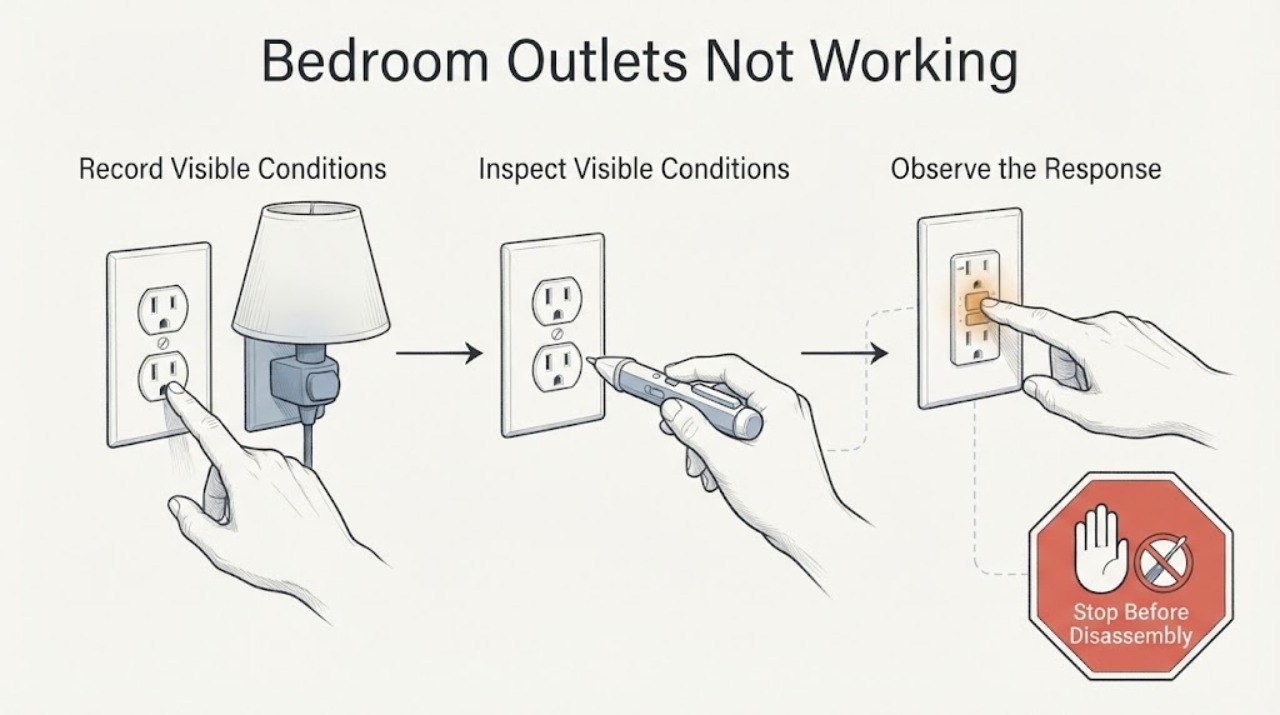
Bedroom Outlets Not Working: Upstream GFCI and Daisy-Chain Checks
If several bedroom receptacles are dead, first prove the symptom with a known-working lamp, map which outlets and nearby lights are affected, and look for a tripped GFCI receptacle or breaker. A GFCI in a bathroom, garage, kitchen, basement, laundry area, or outside can protect receptacles farther downstream, so a reset may restore the bedroom.
-
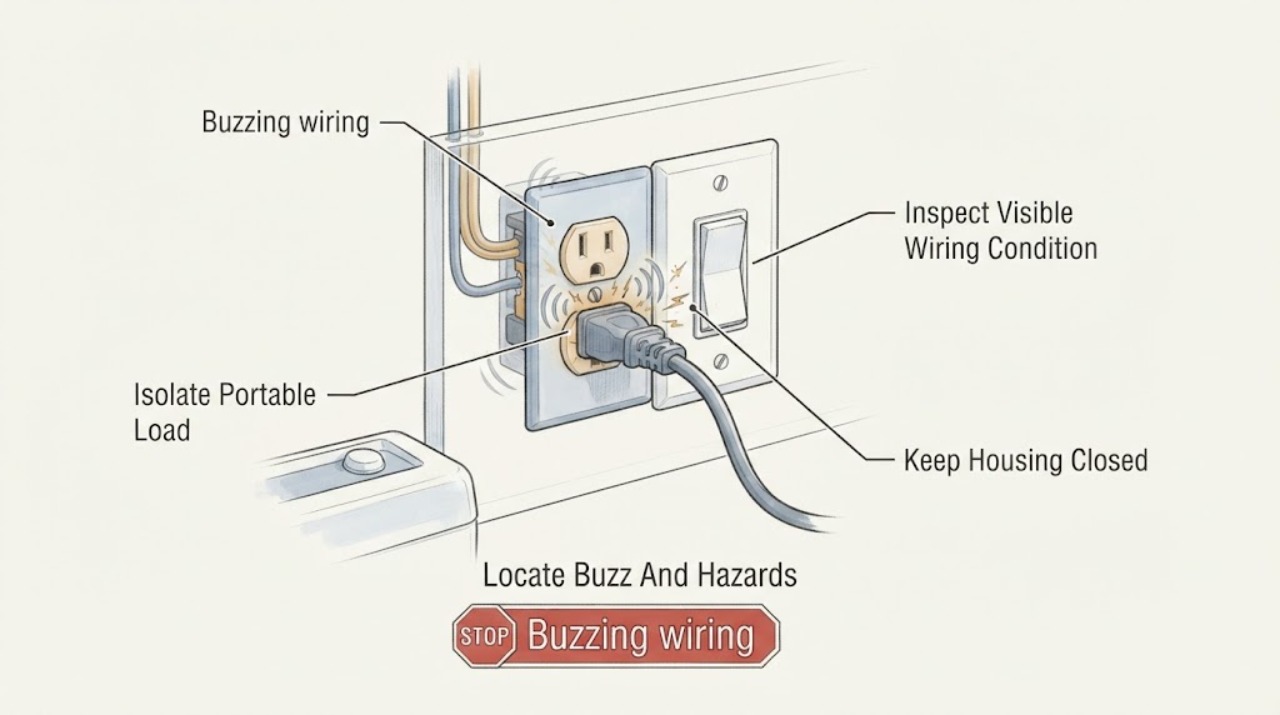
Buzzing wiring: safe checks before calling an electrician
Treat a new or unusual buzz from wiring, a switch, outlet, plug, or appliance as a possible electrical hazard, not as a noise to ignore. From a safe position, note exactly where it comes from and look without touching for sparks, smoke, burning or hot-plastic odor, scorch marks, melted plastic, a hot or discolored plate, flickering lights, shocks, or repeated breaker trips.
-
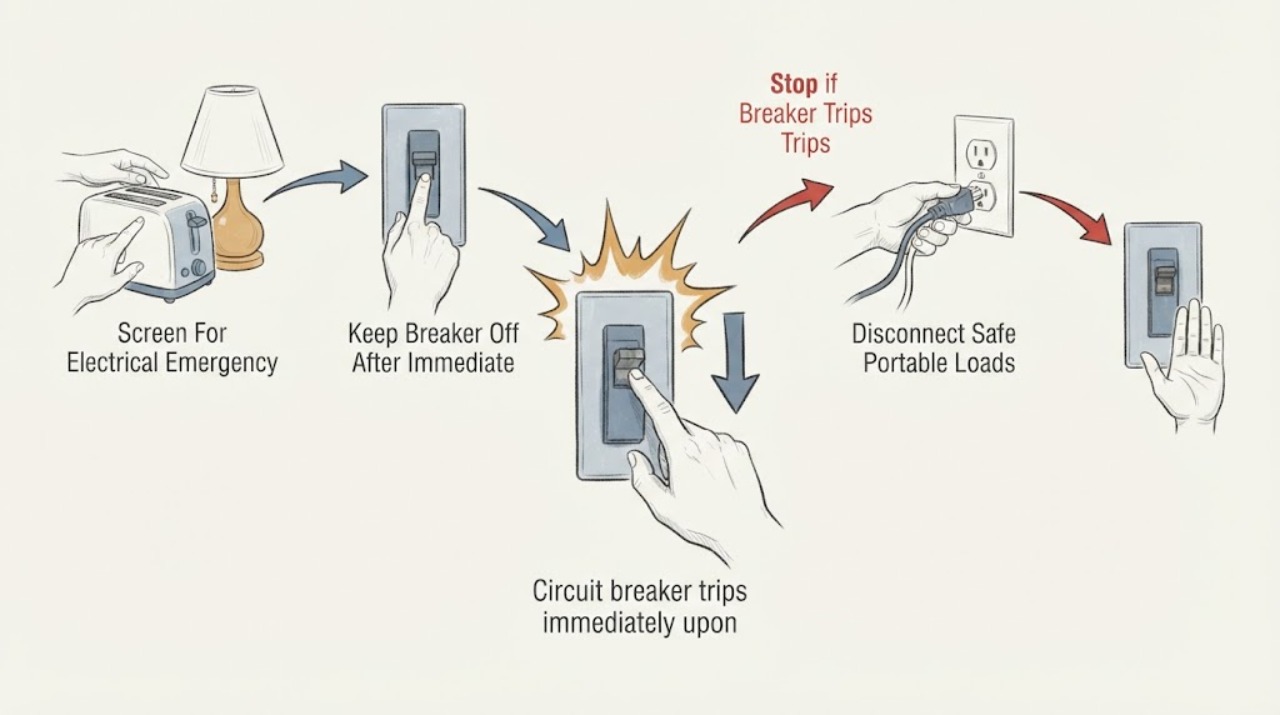
Circuit breaker trips immediately upon reset: Stop resetting and isolate the cause
If a circuit breaker trips immediately when you reset it, leave it off and do not keep trying to reset it. A near-instant trip can indicate a short circuit, ground fault, arc-fault condition, a connected appliance or cord failure, miswiring, overload, or a breaker or panel problem.
-
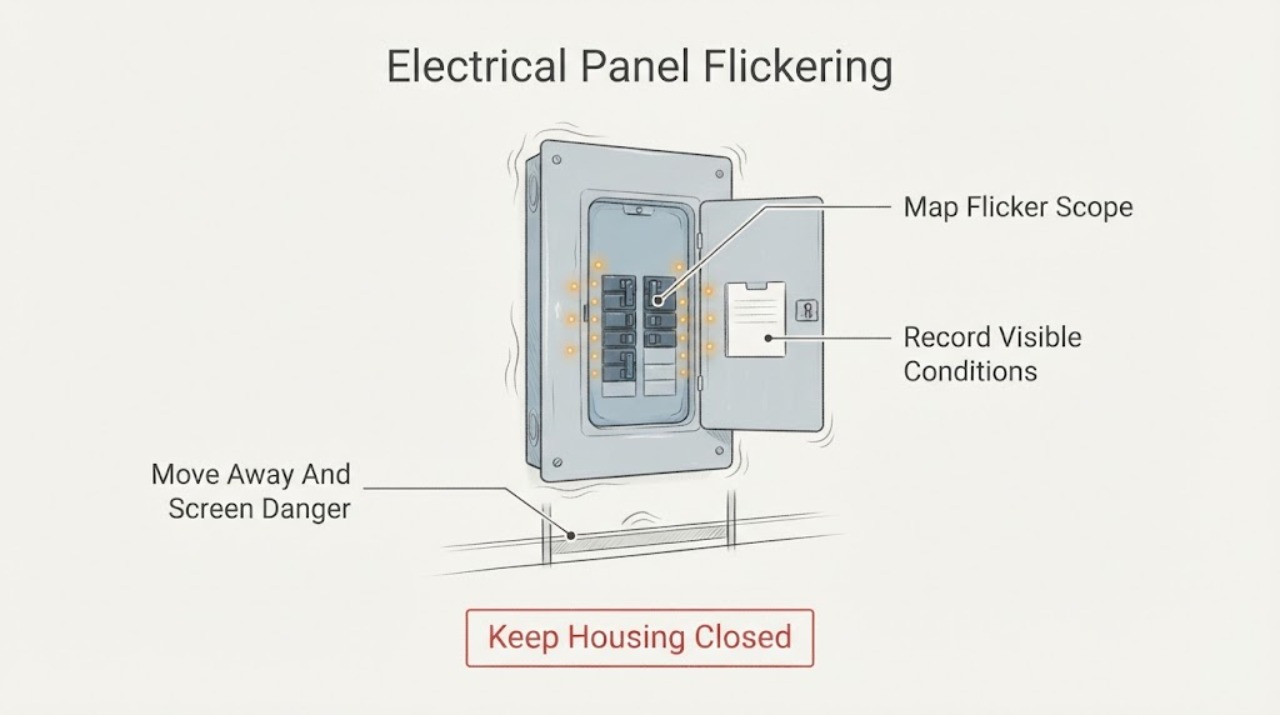
Electrical Panel Flickering: Observe the Circuit Safely and Stop Before Opening It
Flickering at or around an electrical panel can reflect a loose connection, an overloaded or failing circuit, a utility-side problem, or a normal-looking light or appliance issue elsewhere. Treat it as a safety symptom, not a reason to open the panel or move a breaker.
-
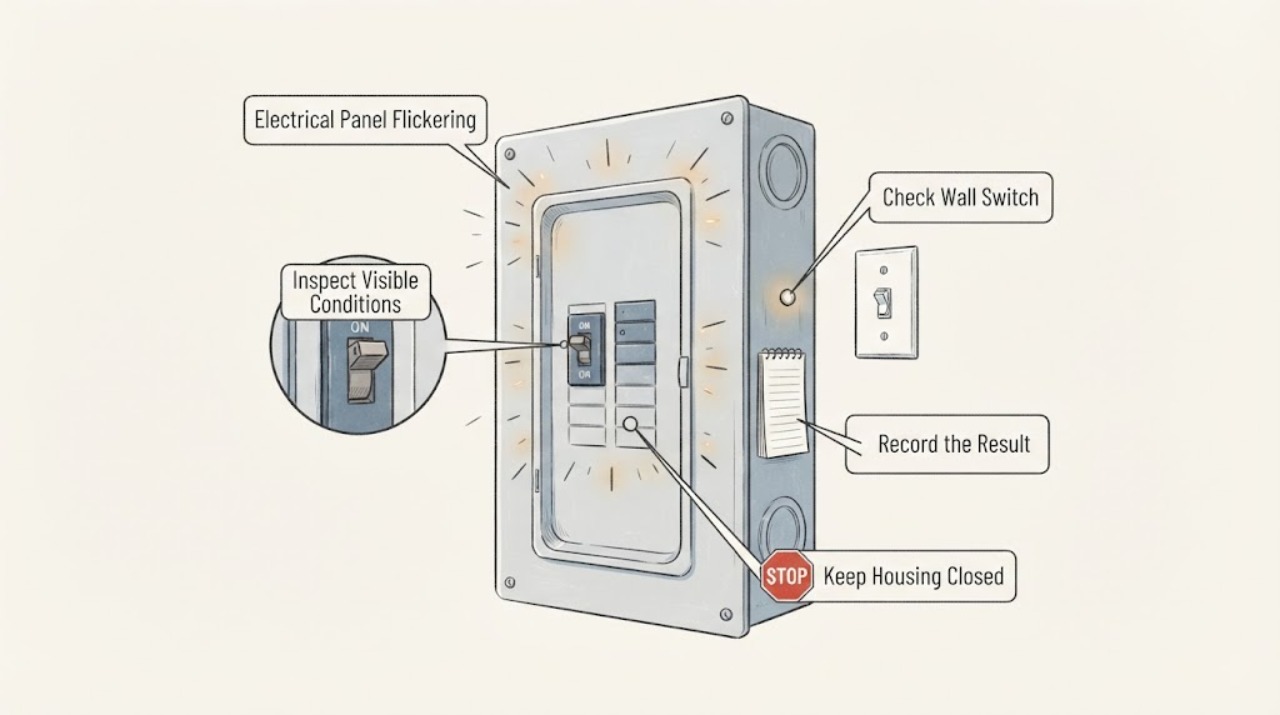
Electrical Panel Flickering: Safe Observations Before Calling an Electrician
Treat flickering associated with an electrical panel, circuit breaker, or switch as a wiring warning rather than a switch-adjustment problem. From a safe, dry location, observe whether the flicker affects one light, several circuits, or the whole home; note buzzing, visible flashes, smoke, discoloration, heat, odor, or a breaker that trips.
-
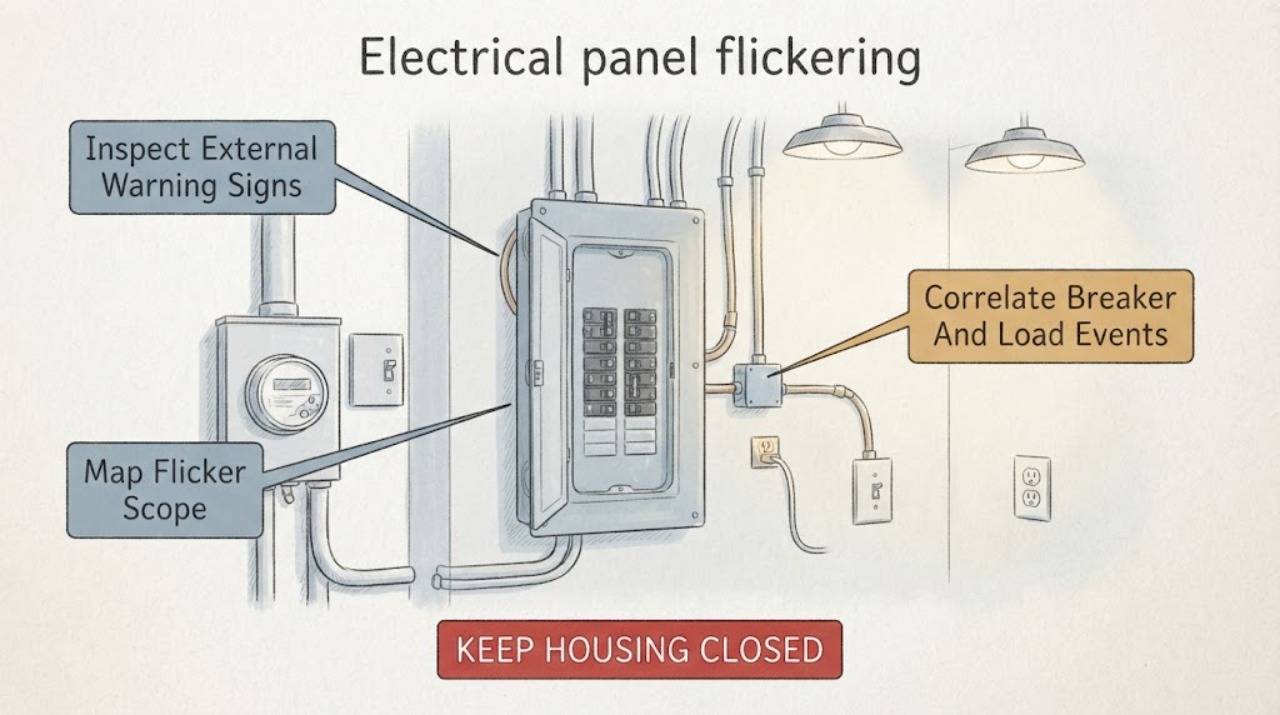
Electrical panel flickering: distinguish a local light issue from a wiring or service hazard
Flickering near an electrical panel or flickering lights in the home can come from one lamp, a loose connection, an overloaded or failing branch circuit, a panel connection, or utility service equipment. First determine whether one light flickers or multiple circuits change together, and whether the change follows a particular appliance, breaker, wind, or utility event.
-
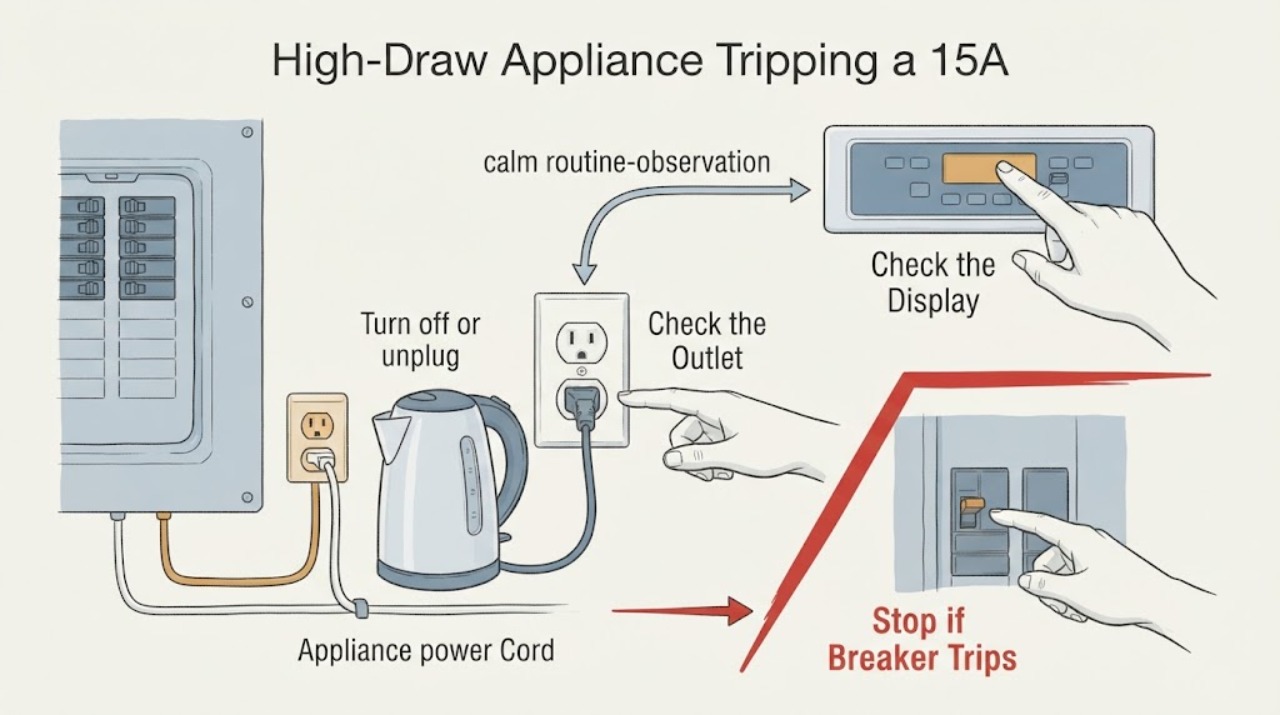
High-Draw Appliance Tripping a 15A Bedroom Circuit Breaker: Safe Triage
Stop the appliance, disconnect it if the plug and outlet are cool and undamaged, and switch off other devices on the same bedroom circuit. With dry hands and no smoke, scorching, buzzing, water, or heat, reset the breaker once by moving it fully OFF and then ON; do not keep resetting it.
-
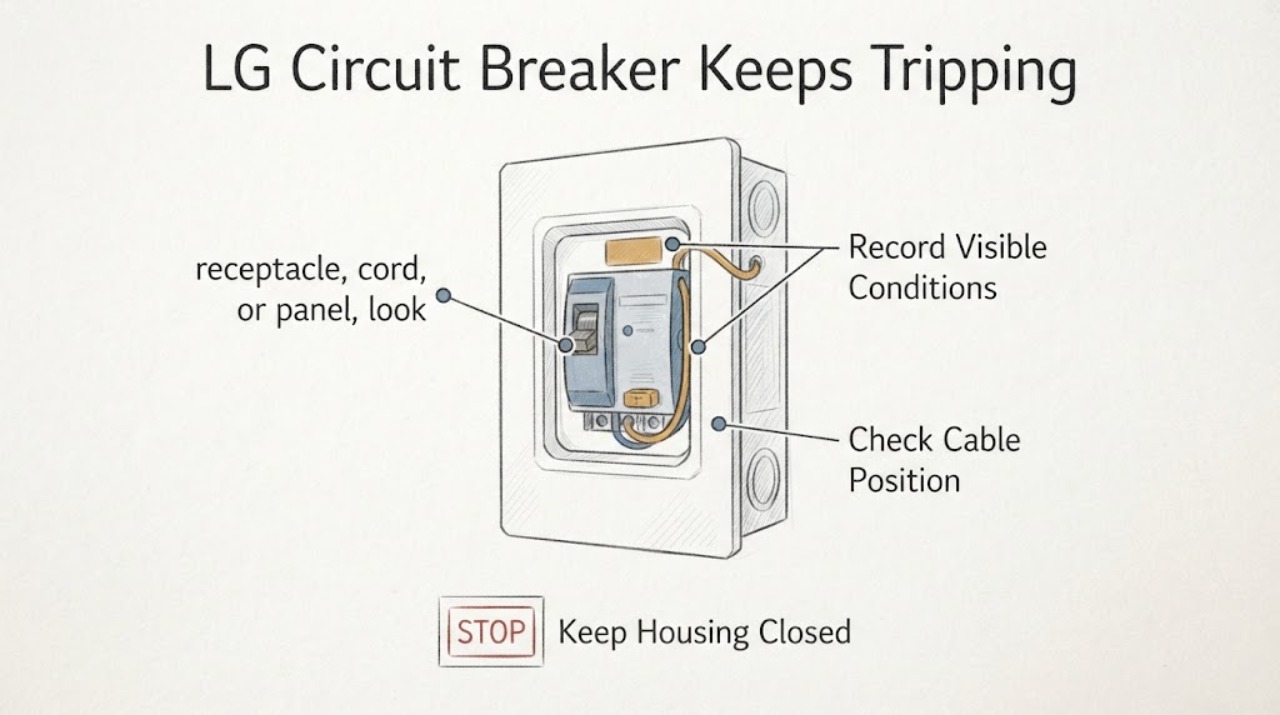
LG Circuit Breaker Keeps Tripping: Safe Checks Before Electrical Service
If the circuit breaker for an LG product keeps opening, do not keep resetting it or assume that the LG product is the only cause. The fault may be an overloaded extension or shared circuit, a defective receptacle or building circuit, a ground fault or short in the product, or a defective protective device.
-
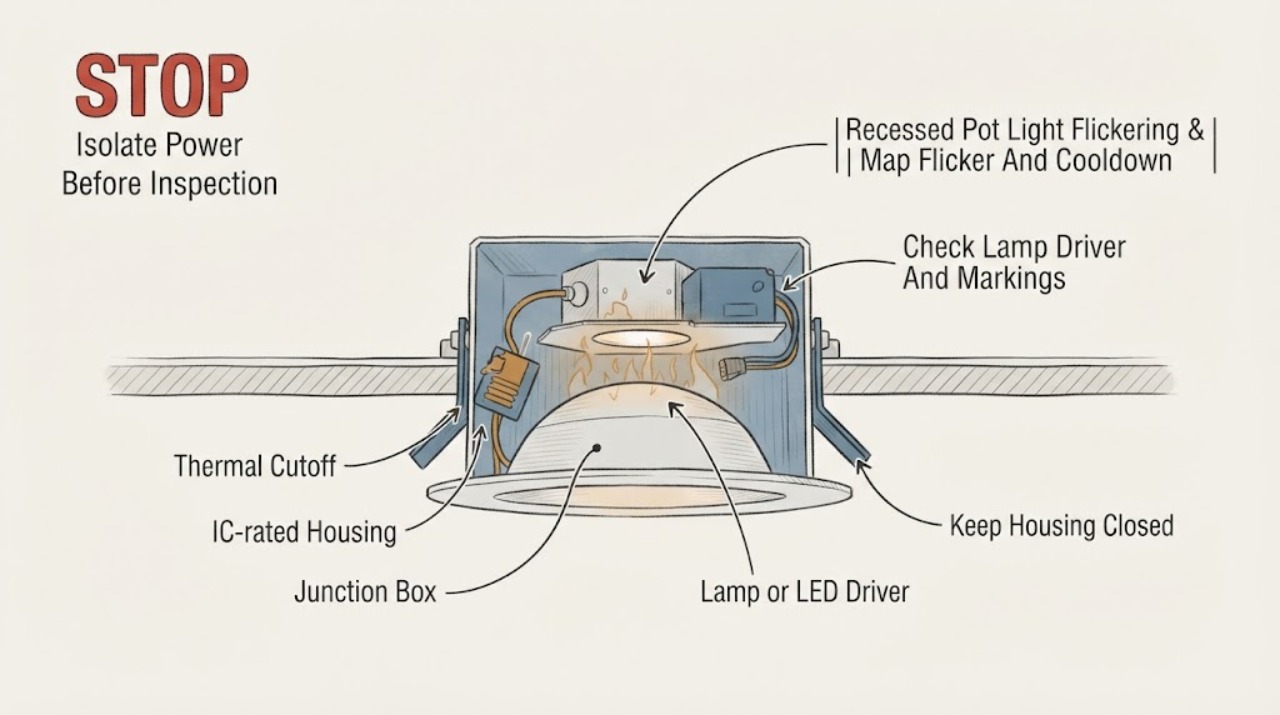
Recessed Pot Light Flickering & Shutting Off: Thermal Cutoff Switch Troubleshooting
A recessed pot light that flickers, shuts off, then returns after cooling may be cycling its thermal protector. Overheating can follow an incorrect lamp, blocked heat path, insulation or other material used contrary to the fixture marking, a failed protector, or a driver or wiring fault.
-
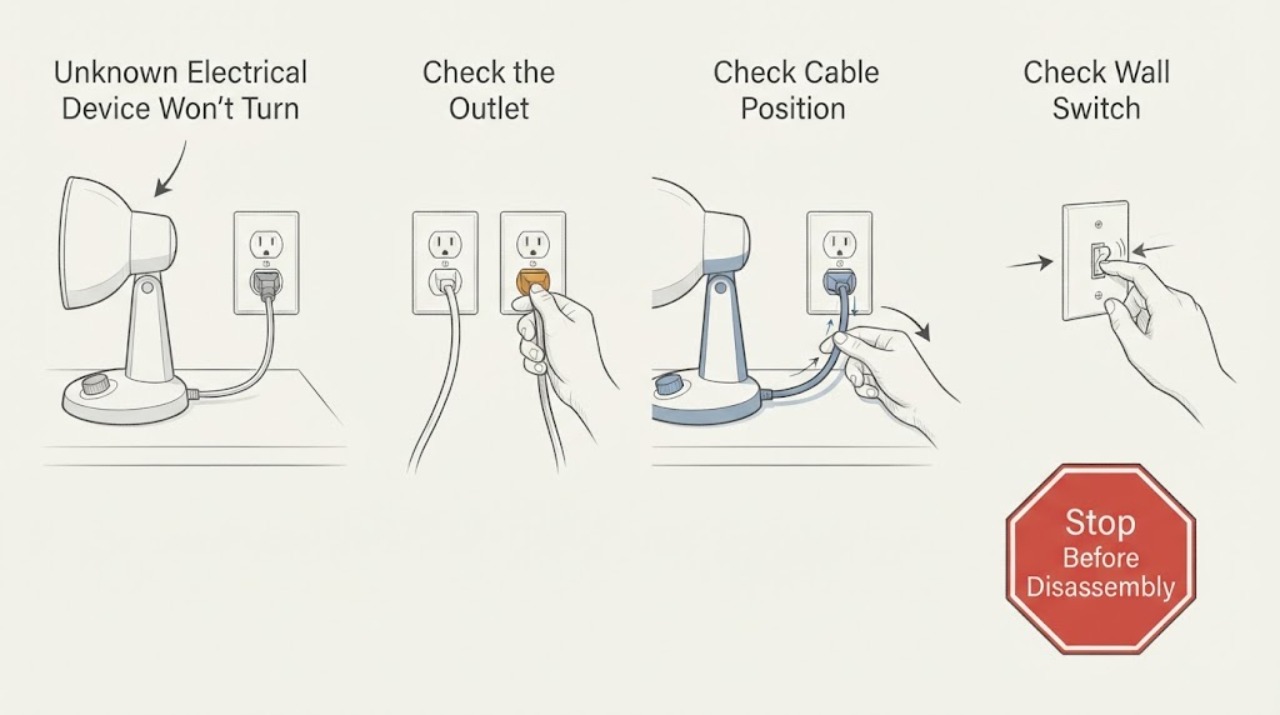
Unknown Electrical Device Won't Turn On: Safe Power Checks
First decide whether the problem is the device or the power feeding it: stop immediately for smoke, burning odor, sparks, heat, shock, water exposure, or a damaged cord; then check the plug, outlet, GFCI, and breaker only from a dry, safe position. If the outlet works but the device stays dead, or a breaker or fuse trips again, leave internal diagnosis to an authorized repair center or qualified electrician.
-
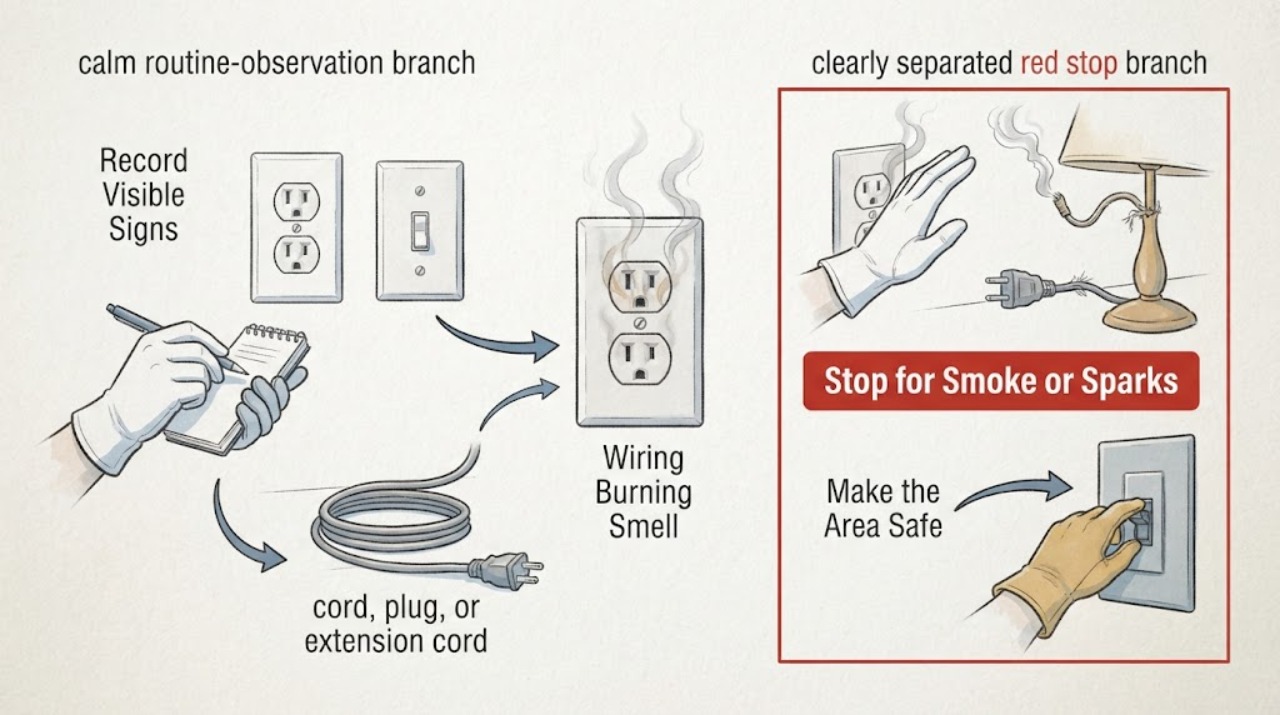
Wiring Burning Smell: Stop, Isolate, and Find the Safe Next Step
A burning smell from wiring, an outlet, or a switch is a stop-use warning, not a scent to troubleshoot by repeated operation. If there is smoke, flame, sparking, crackling, heat, discoloration, shock, or an escalating odor, leave the area and use emergency help as appropriate.
-
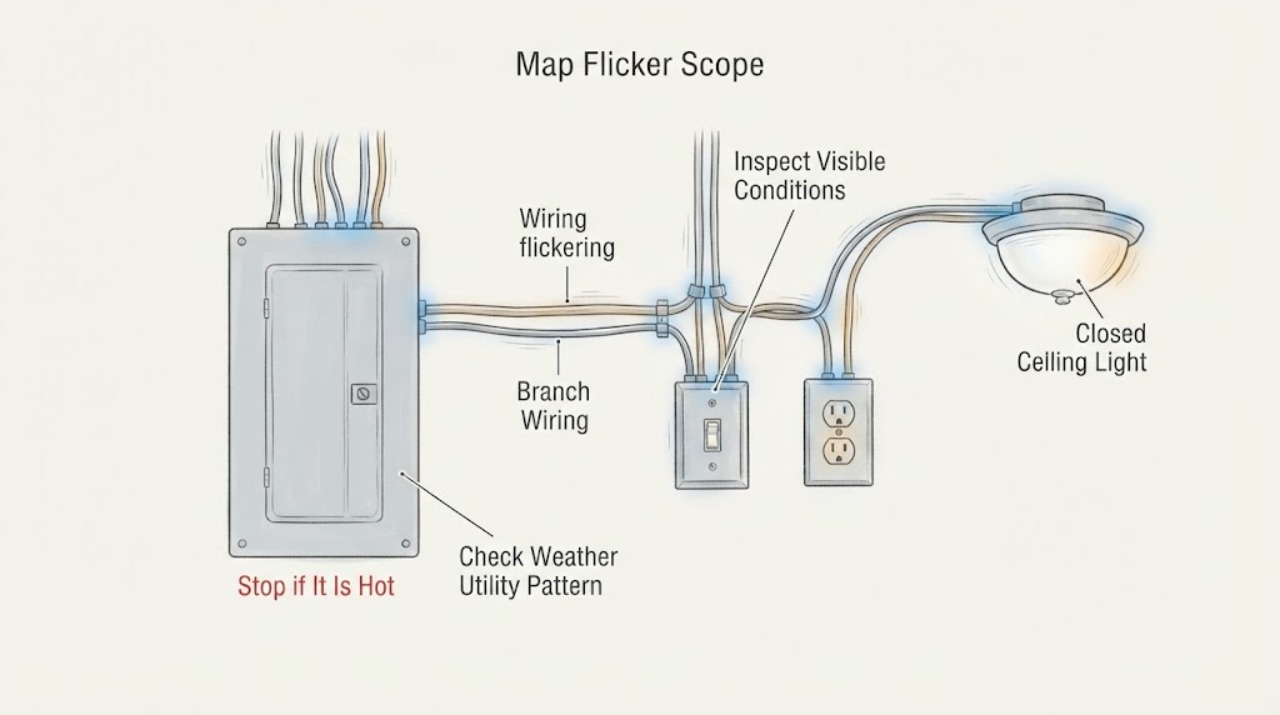
Wiring flickering: Map the symptom without opening the panel
Flickering or dimming lights can come from a lamp or fixture, a switch or receptacle connection, a branch-circuit load, service equipment, or the utility supply; the symptom alone does not identify the fault. From a safe position, map whether one light, one room, several rooms, or the whole property flickers and whether it changes when a particular appliance starts or when wind or weather changes.
-
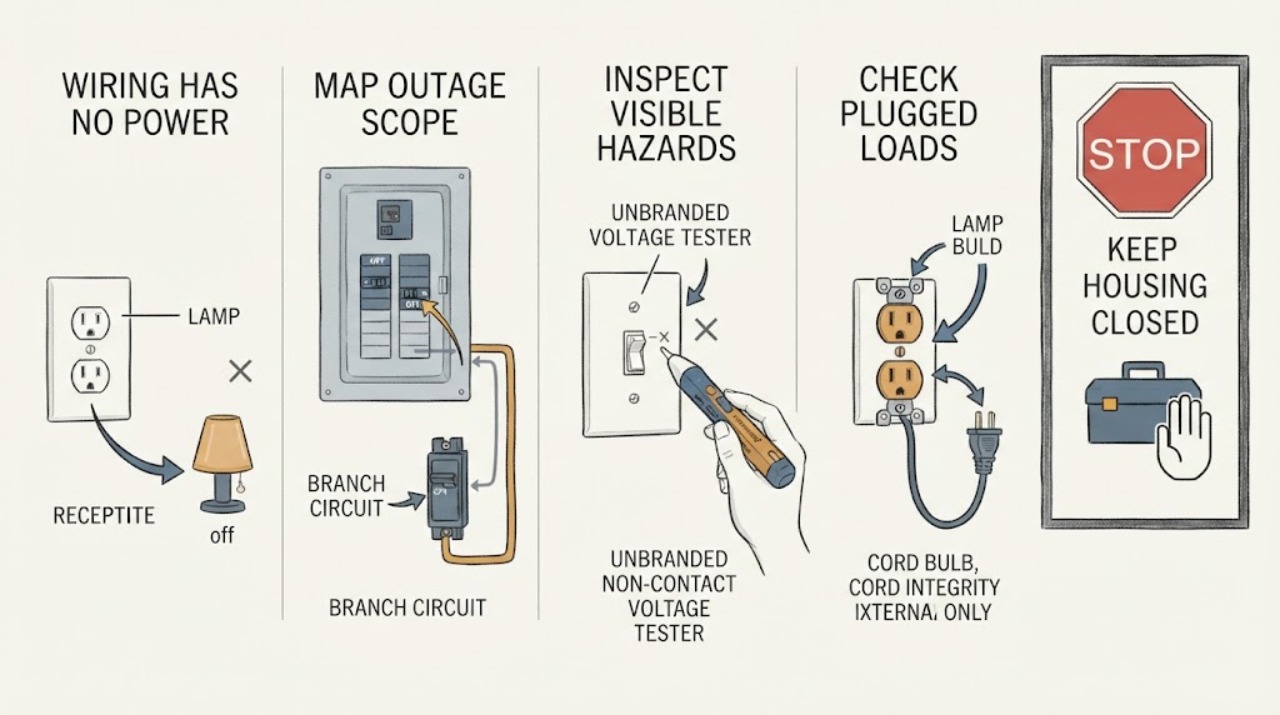
Wiring Has No Power: Safe Checks and Next Steps
If part of a home has no power, first determine whether the outage affects the whole property, one circuit, or one switch, outlet, or appliance. From a dry and safe position, check for visible damage, burning odor, heat, smoke, water, sparks, or a tripped breaker or residual-current device.