
Electrical guides
Circuit Breakers Repair Guides
Guidance for tripping breakers, panel symptoms, circuit loads, and safe next steps.
Published circuit breakers guides
Choose the guide that best matches the equipment and symptom you are seeing.
-
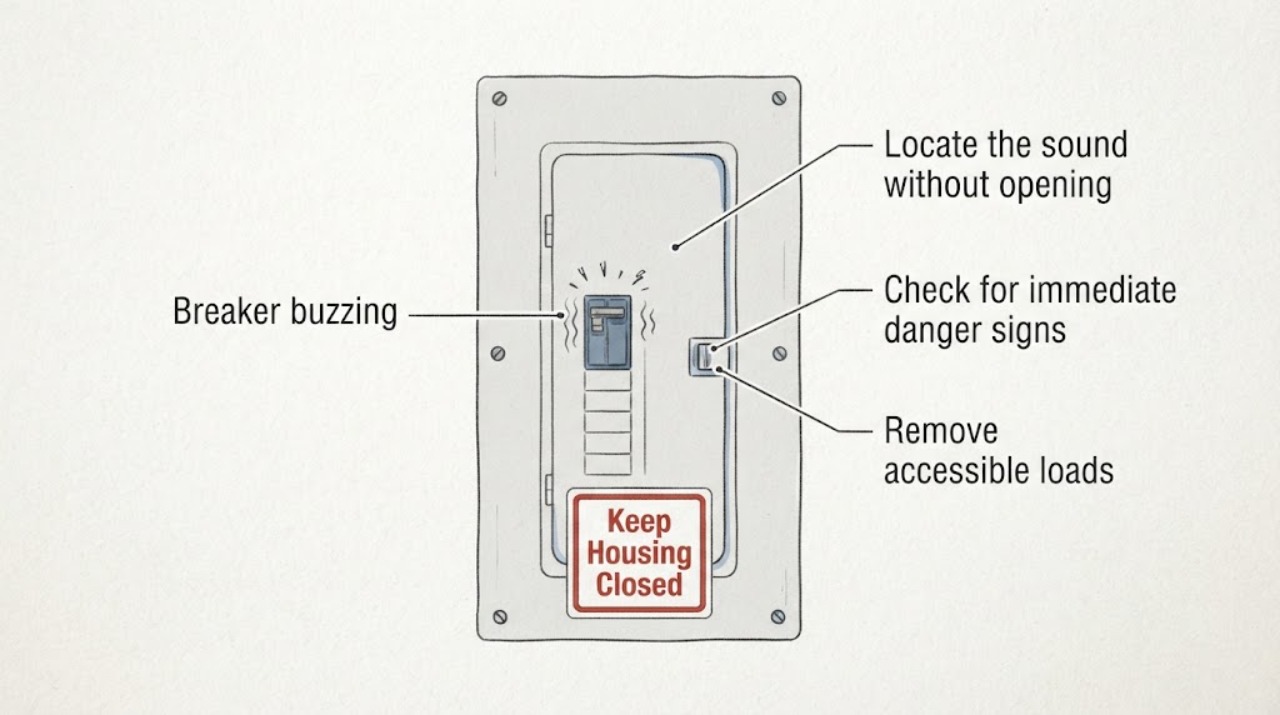
Breaker buzzing: What to Check and What to Do Next
A sustained buzz, hum, crackle, or sizzle from a circuit breaker or electrical panel is a warning sign, not a noise to mask or troubleshoot by opening the panel. Stop using the loads on that circuit, keep the panel cover closed, and arrange a qualified electrician to inspect it. If you notice heat, a burning smell, discoloration, smoke, sparks, or repeated tripping, leave the area and call for urgent electrical help; call emergency services if there is smoke or fire.
-
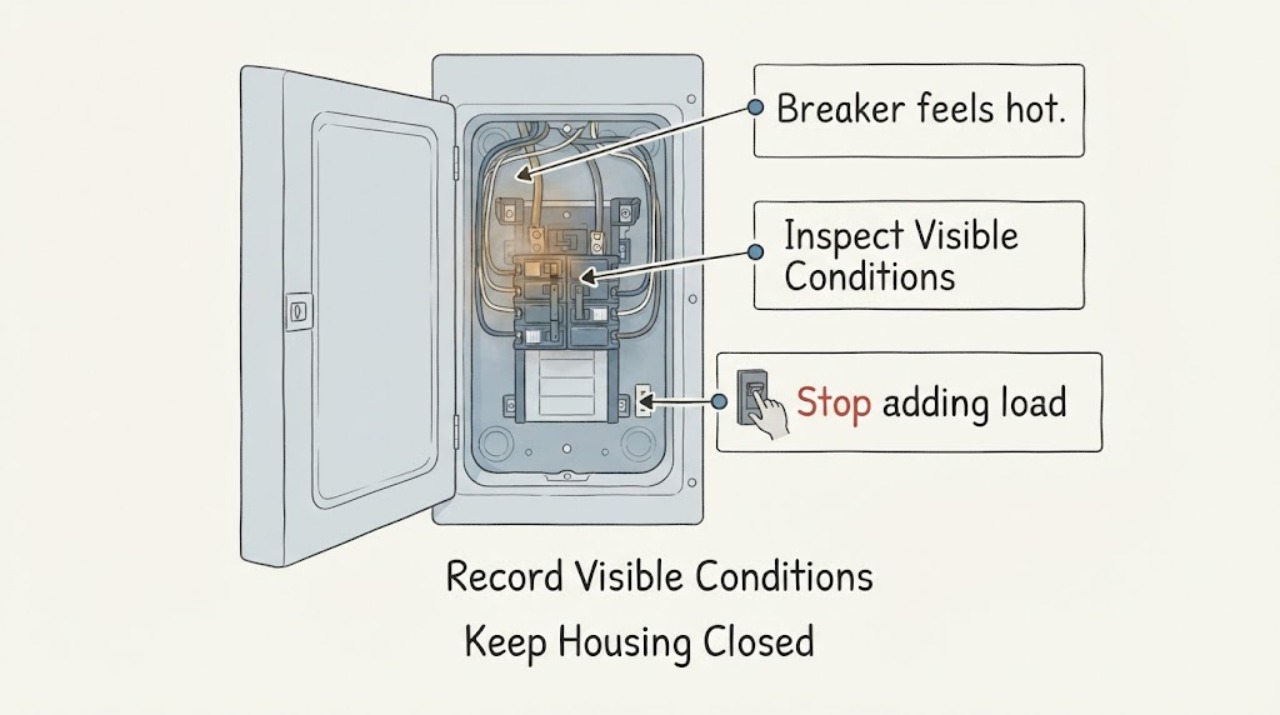
Breaker feels hot: What to Check and What to Do Next
A circuit breaker or panel area that feels hot is a high-risk electrical warning, not a normal DIY adjustment. Do not touch the breaker, remove the panel cover, tighten anything, reset the breaker repeatedly, or continue using heavy loads on the affected circuit.
-
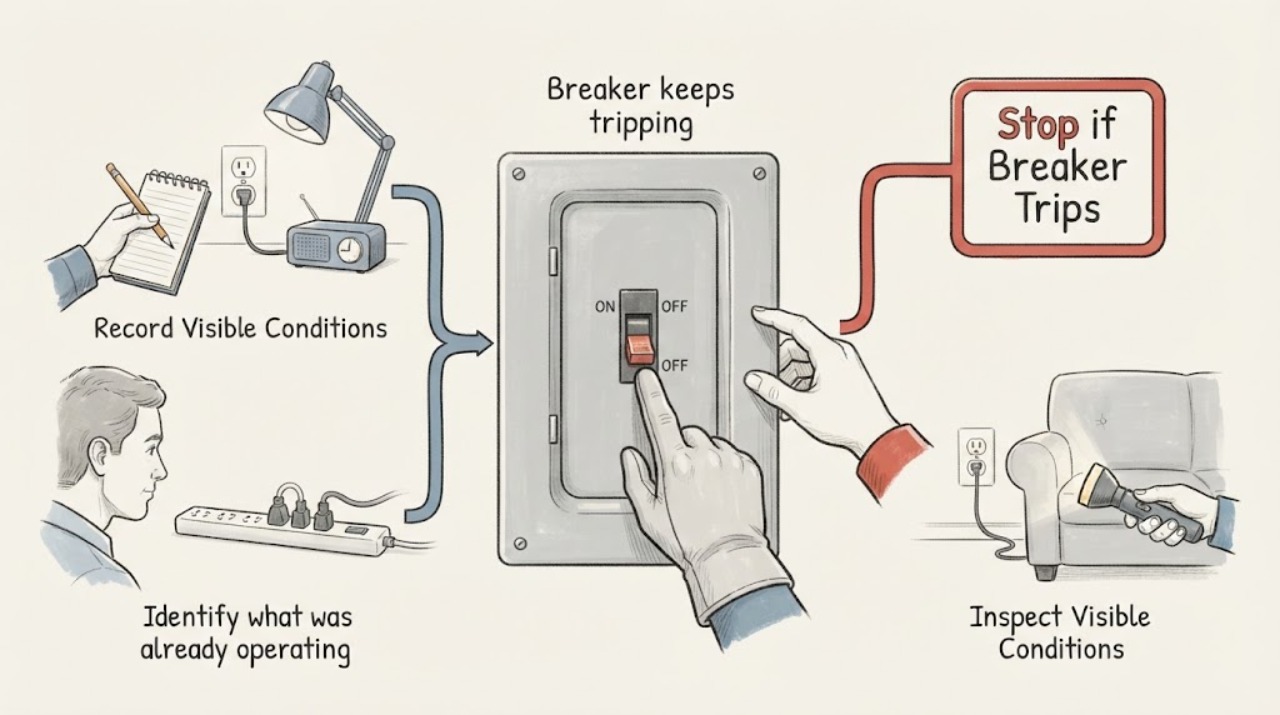
Breaker keeps tripping: What to Check and What to Do Next
A breaker that keeps tripping is a warning, not a nuisance to work around. Do not repeatedly reset it, open the panel cover, replace the breaker, install a larger breaker, or bypass it.
-
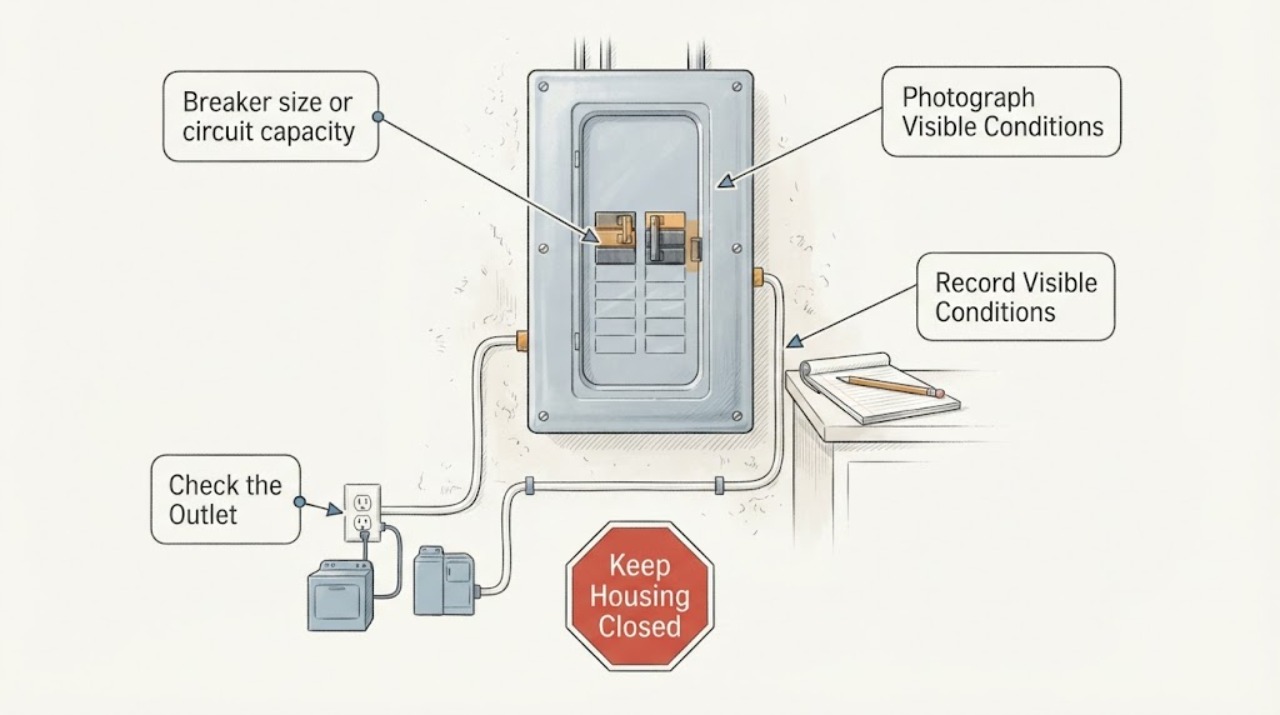
Breaker size or circuit capacity concern: What to Check and What to Do Next
Do not replace a breaker with a larger one or open the panel to test capacity. From outside the panel, photograph the breaker handle and panel directory, read the appliance nameplates without moving wiring, and record which loads were running when the breaker tripped.
-
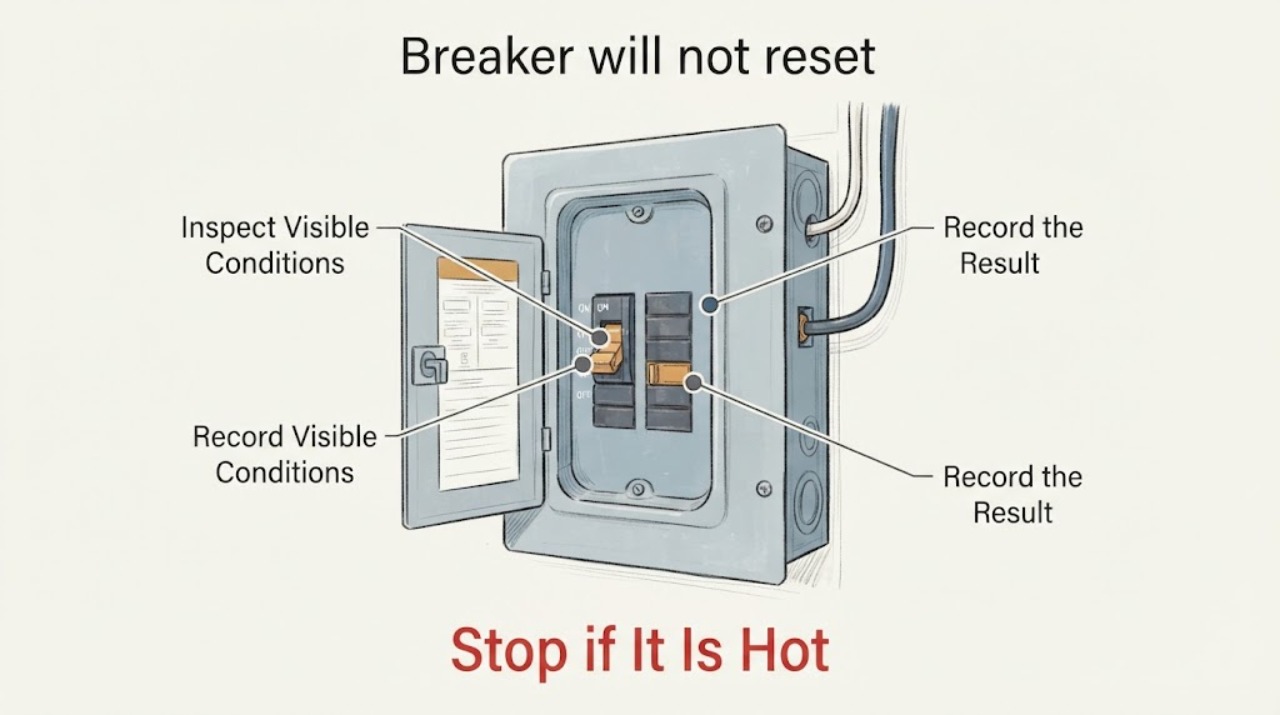
Breaker will not reset: What to Check and What to Do Next
Do not hold a breaker on, repeatedly reset it, open the panel cover, test live wiring, bypass the breaker, or replace it yourself. From outside the closed panel, note the breaker's visible position and label, what lost power, and whether there are smoke, burning odor, buzzing, sparking, heat, discoloration, or shock signs at accessible devices.
-
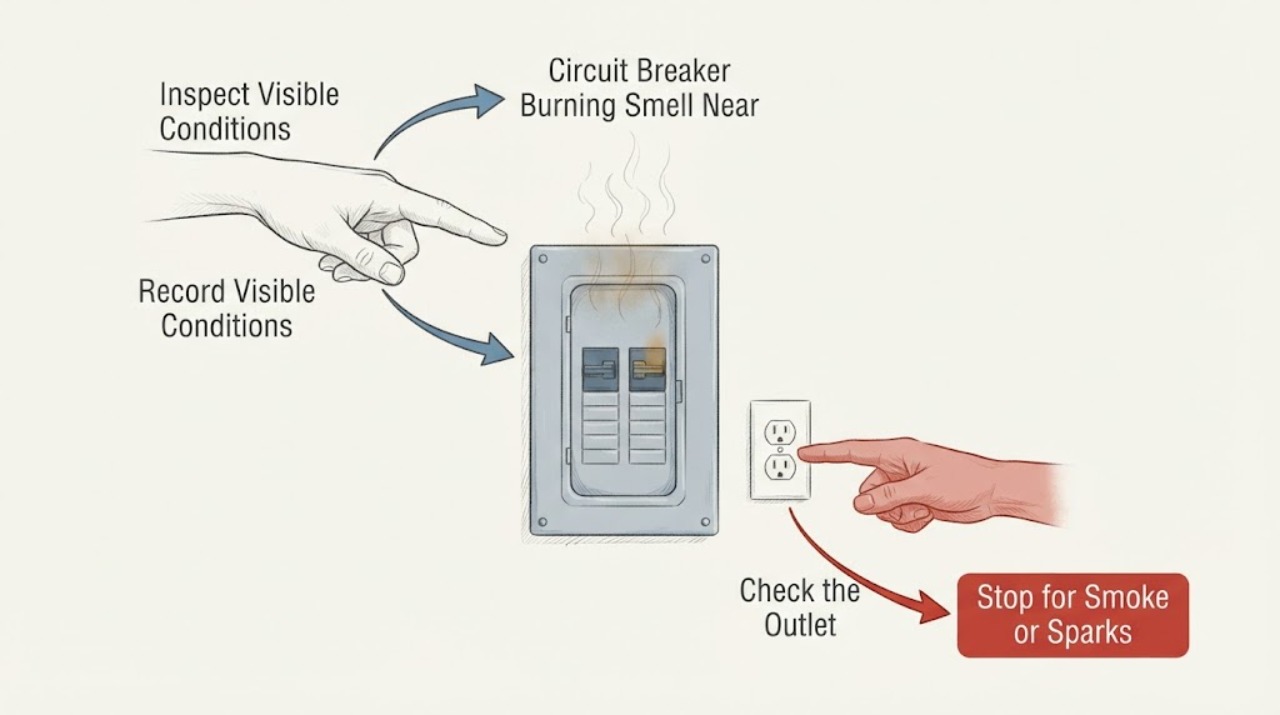
Circuit Breaker Burning Smell Near an Outlet: Treat It as an Electrical Emergency
A burning smell near a circuit breaker, outlet, plug, or wall plate is not a normal troubleshooting symptom. From a safe distance, note whether there is smoke or flame, where the odor is strongest, which circuit appears affected, and whether the breaker has tripped.
-
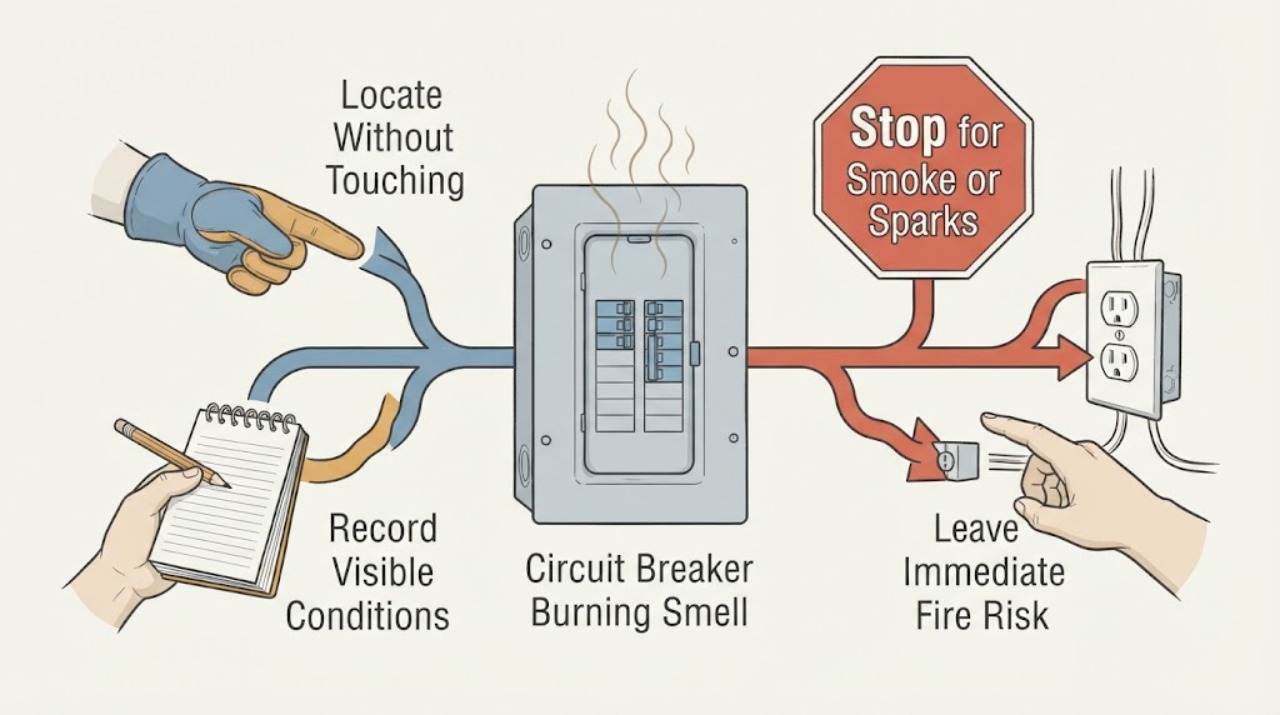
Circuit Breaker Burning Smell: Stop Using the Outlet and Wiring
A burning smell near a circuit breaker, outlet, wall plate, or wiring is an electrical warning, not a breaker-reset problem. Stop using the affected circuit and keep away from a hot panel, outlet, plug, buzzing, crackling, visible arc, smoke, or discoloration.
-
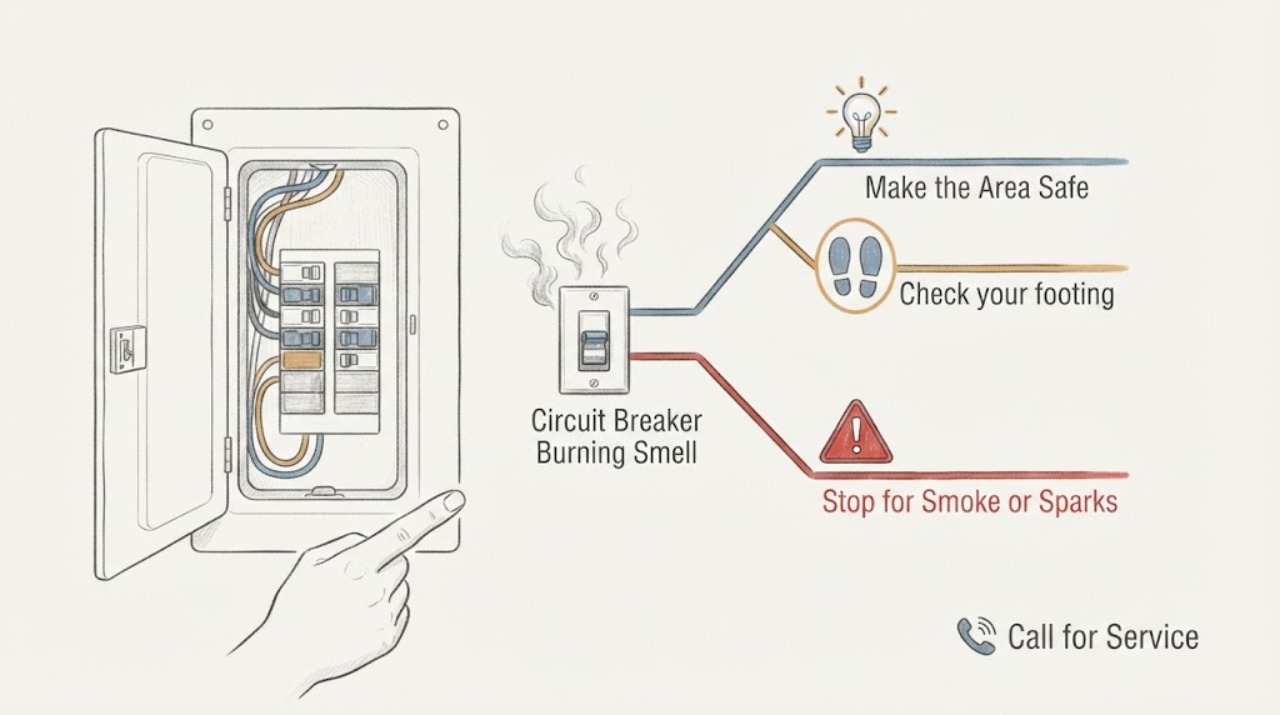
Circuit Breaker Burning Smell: What to Do Before an Electrical Inspection
A burning smell at a circuit-breaker switch, electrical panel, or nearby wiring is a warning of overheating or an electrical fault, not a normal breaker condition. Do not open the panel, touch the switch or cover, reset the breaker, remove a faceplate, measure voltage, or keep using the affected circuit.
-
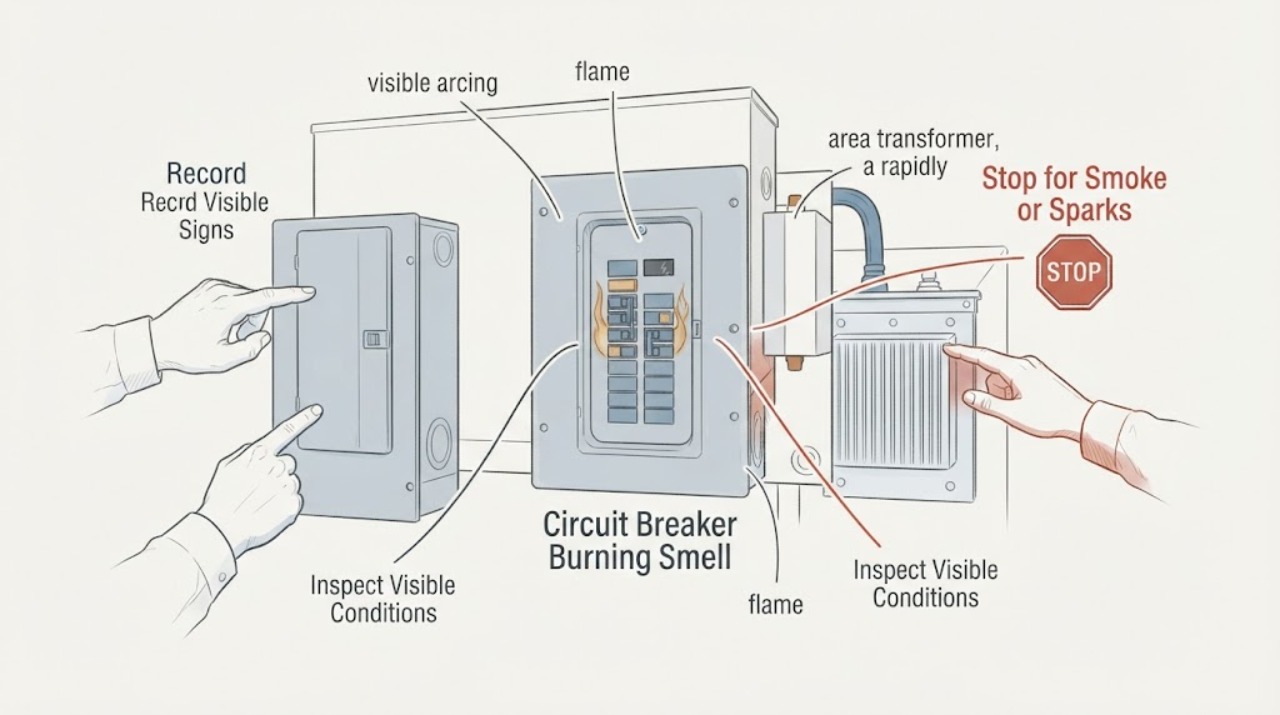
Circuit Breaker Burning Smell: What to Do When a Transformer May Be Involved
Treat a burning smell near a circuit breaker as an electrical fire hazard. Do not reset the breaker, open the panel, touch wiring or a transformer, or use water.
-
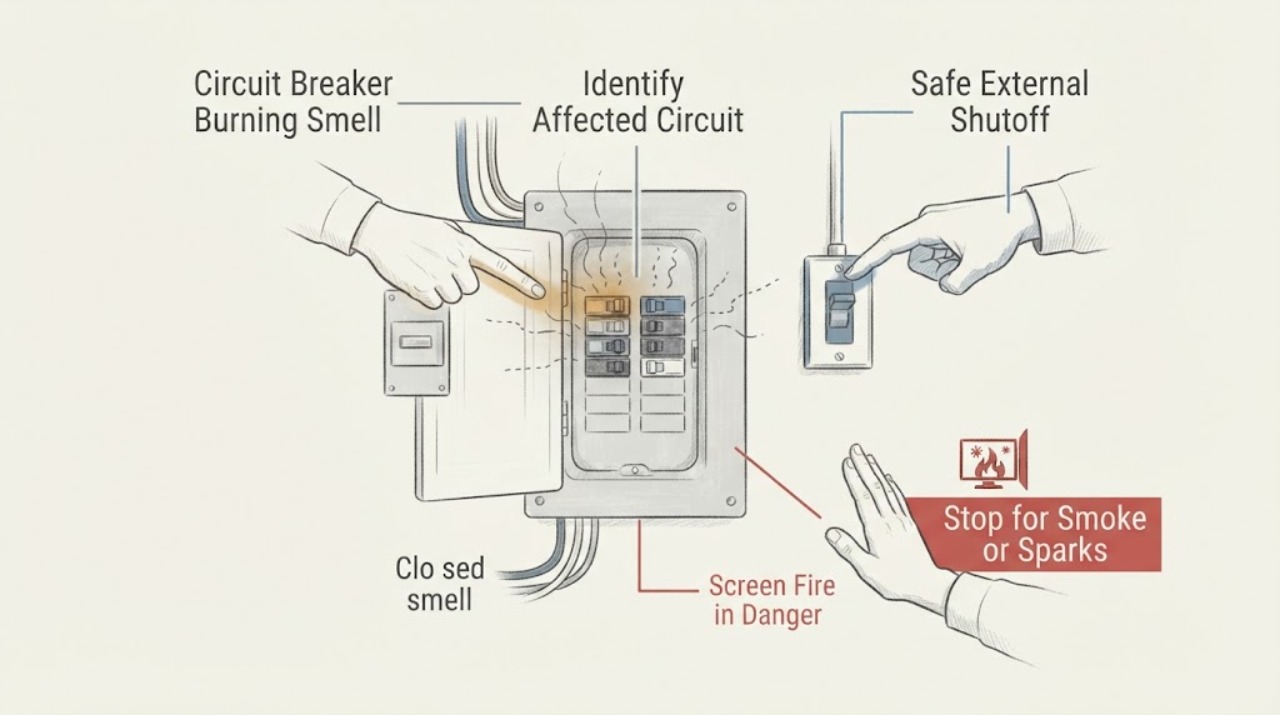
Circuit Breaker Burning Smell: Shut Down Safely and Call an Electrician
A burning smell at a circuit breaker is an electrical fire warning, not a normal breaker odor. From a safe position, note whether there is smoke, sizzling or crackling, visible arcing, a hot or discolored panel, a melted-plastic smell, or a circuit that will not stay on.
-
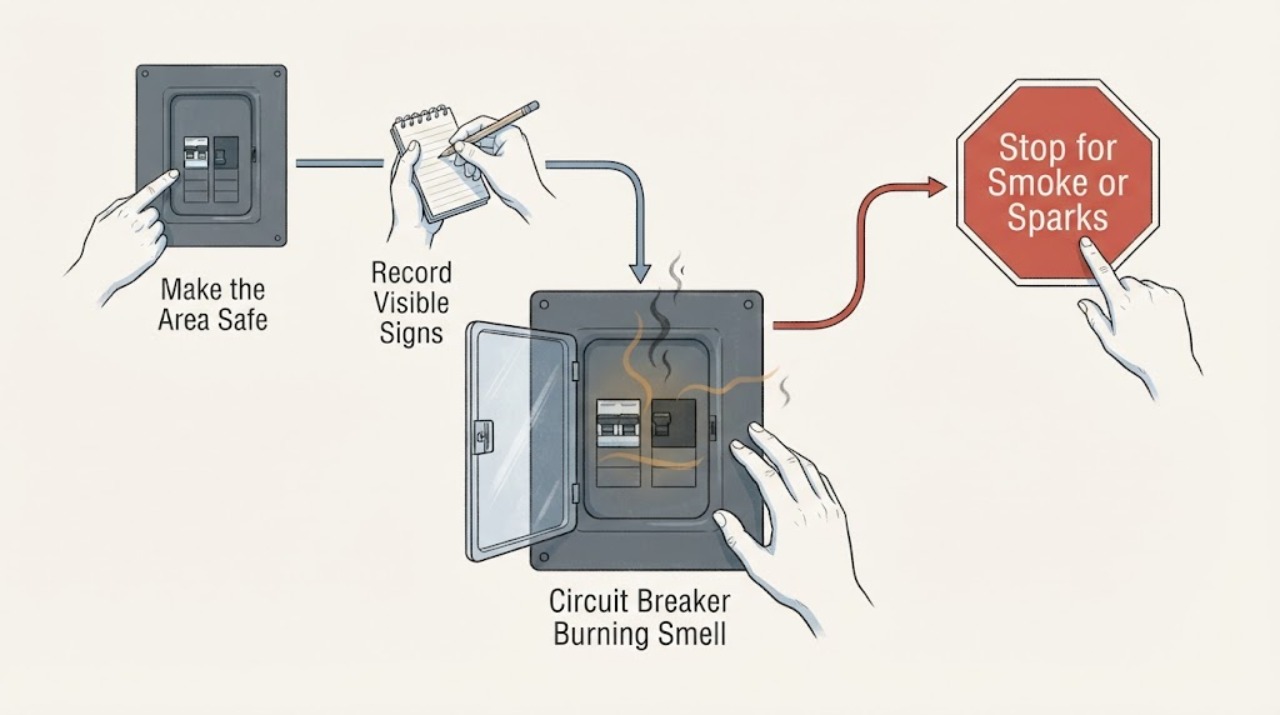
Circuit Breaker Burning Smell: What to Do Safely
A burning smell near a circuit breaker or electrical panel is a stop-use warning, not a repair invitation. Leave the panel cover and breaker wiring closed, stop using the affected circuit, and arrange a licensed electrician to inspect it.
-
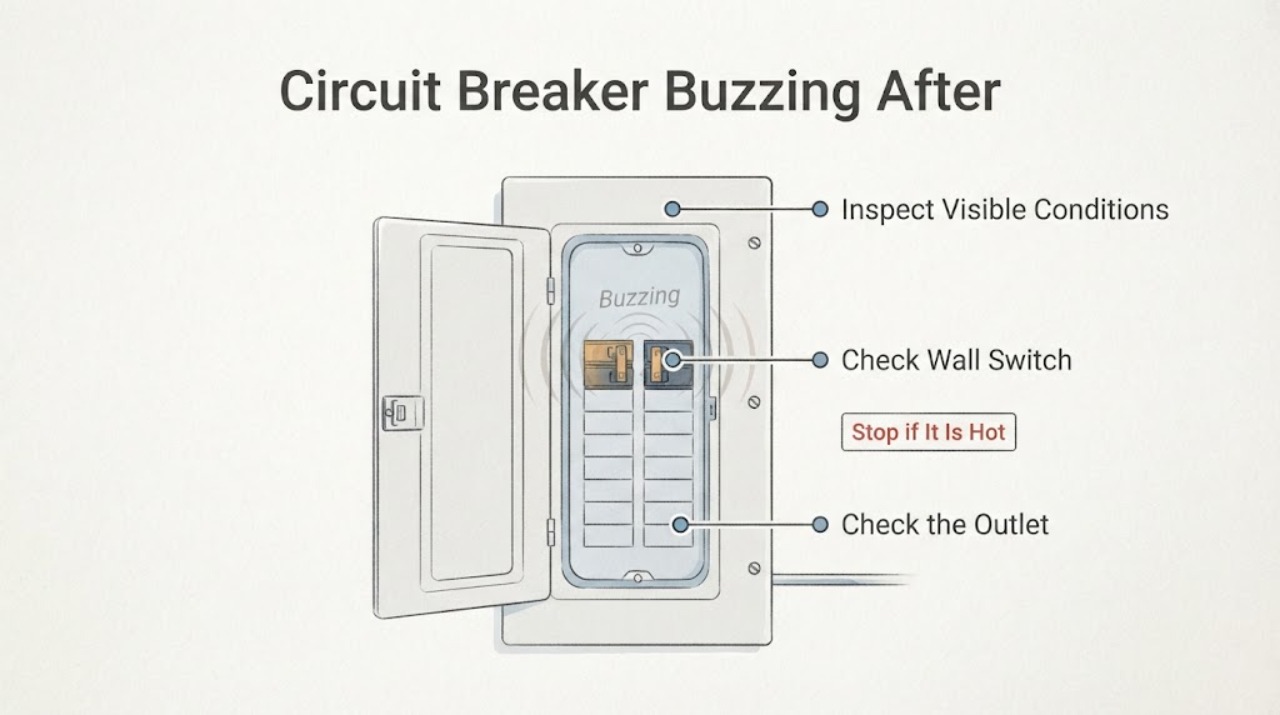
Circuit Breaker Buzzing After a Burning-Plastic Smell Near a Bathroom Switch
Buzzing together with a burning-plastic smell at a hall bathroom light switch is an electrical stop condition, not a switch to keep testing. From a safe distance, note whether there is smoke, flame, visible arcing, heat, or water; identify whether the odor is strongest at the switch, outlet, cord, appliance, or service panel; and note which circuit appears affected.
-
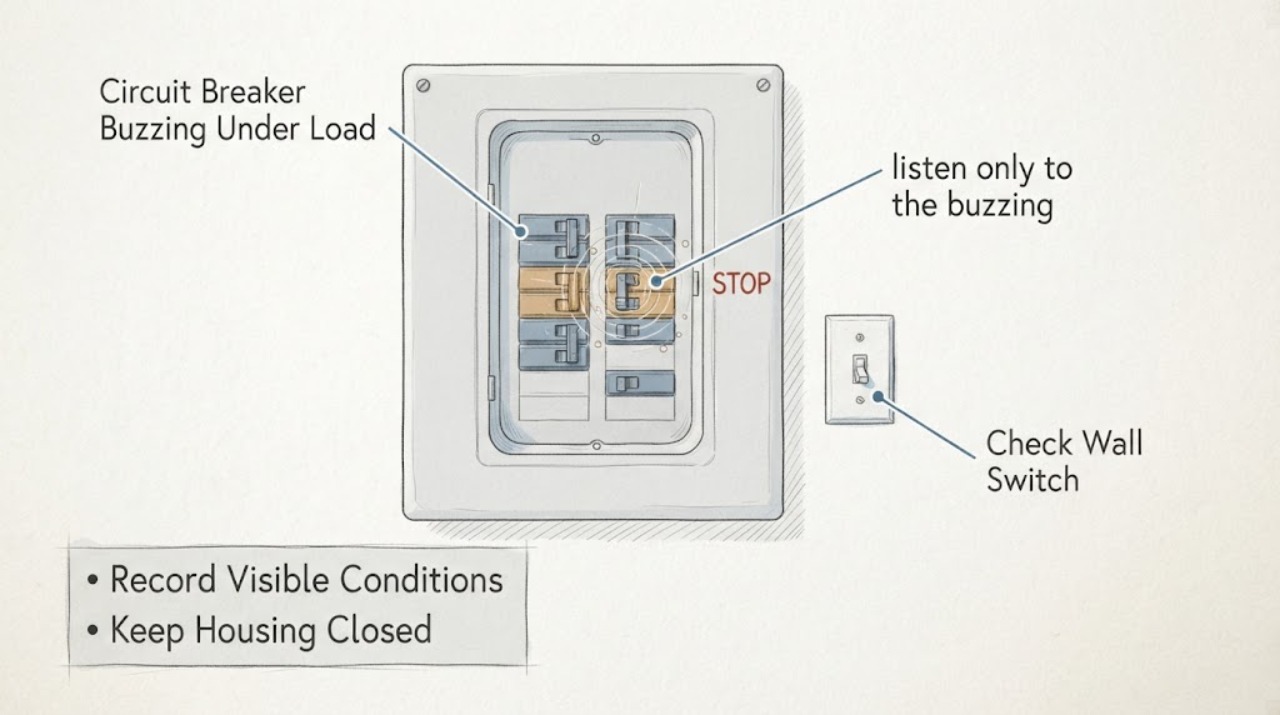
Circuit Breaker Buzzing Under Load: Safe Triage Before an Electrical Inspection
A circuit breaker that buzzes when there is a load on it should be treated as an electrical warning, not as a reason to add or repeat a load test. A brief sound already observed with one appliance is different from buzzing that continues with several known loads, but neither pattern can identify a safe household repair.
-
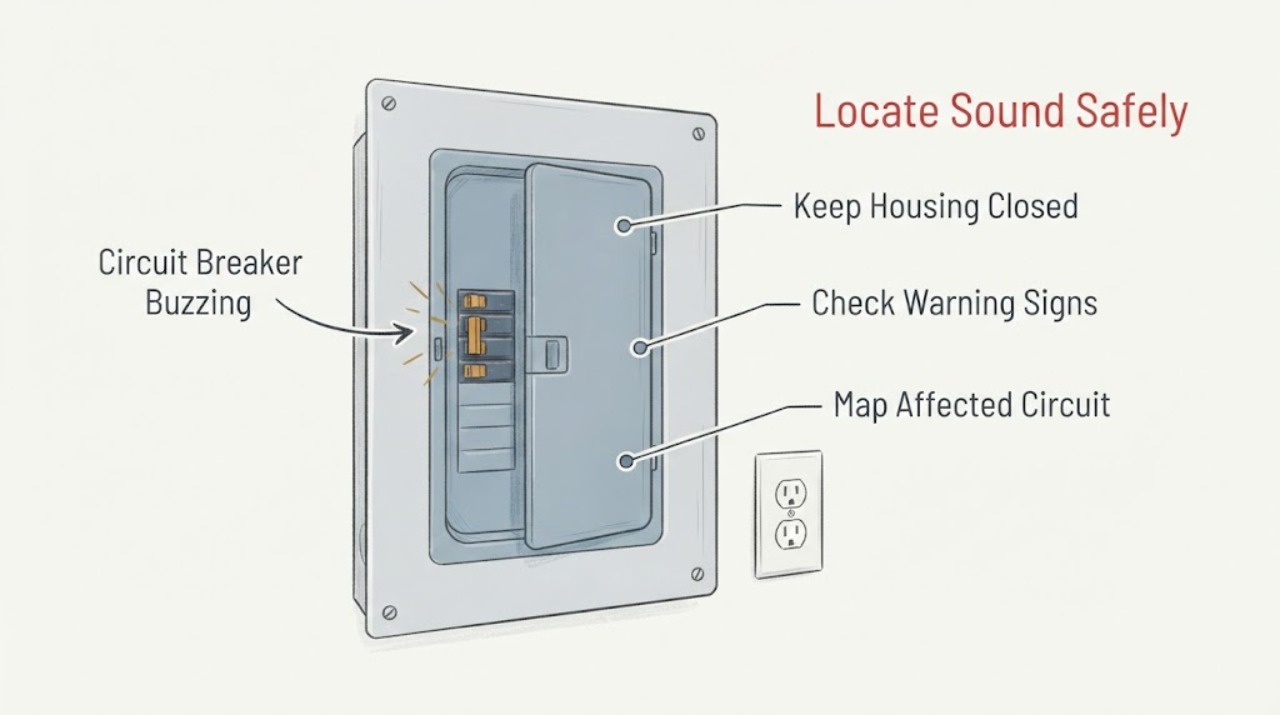
Circuit Breaker Buzzing: Treat Outlet Symptoms as an Electrical Warning
A buzzing circuit breaker or nearby outlet should not be declared normal from sound alone. From a safe distance, identify whether the sound is at the breaker panel, an outlet, a switch, or a device, and note whether it changes when a known load operates.
-
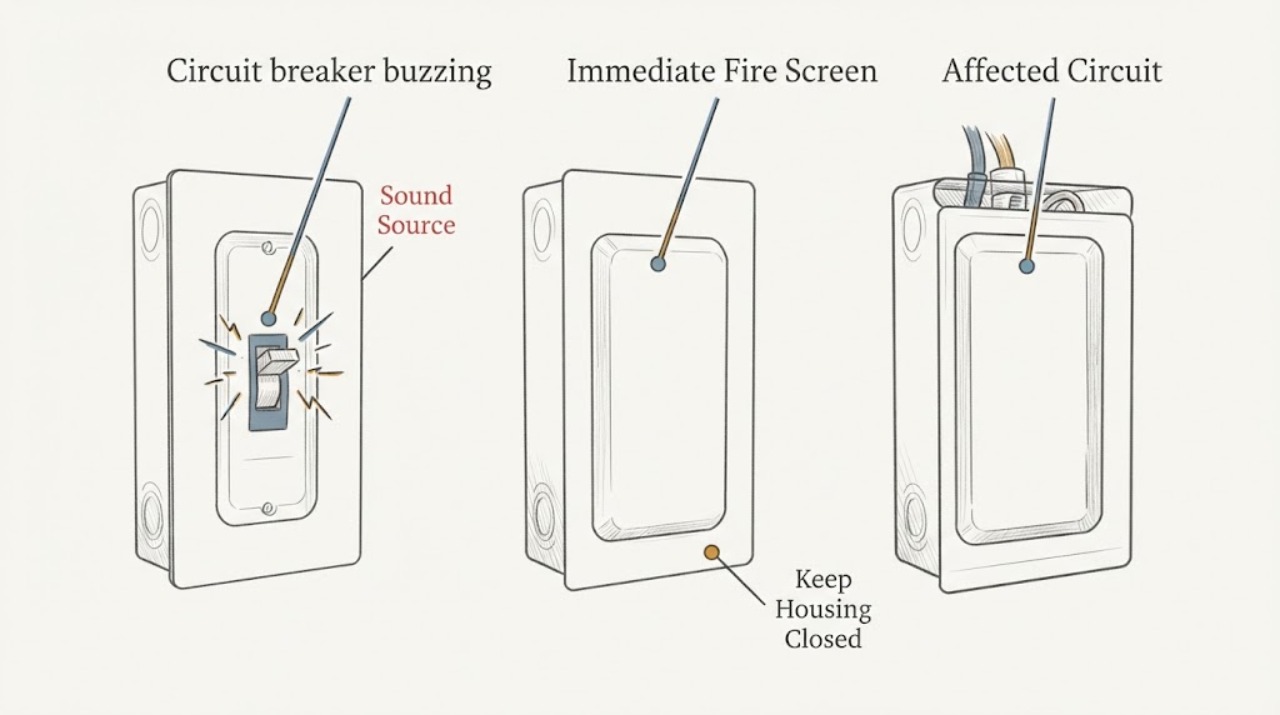
Circuit breaker buzzing
A faint, steady sound from some energized breakers can be normal for a particular device, but a new, loud, changing, or continuous buzz should be treated as an electrical-service issue. From outside the panel, note the exact sound source, affected circuit, load changes, flickering, trip behavior, heat, discoloration, odor, smoke, or arcing.
-
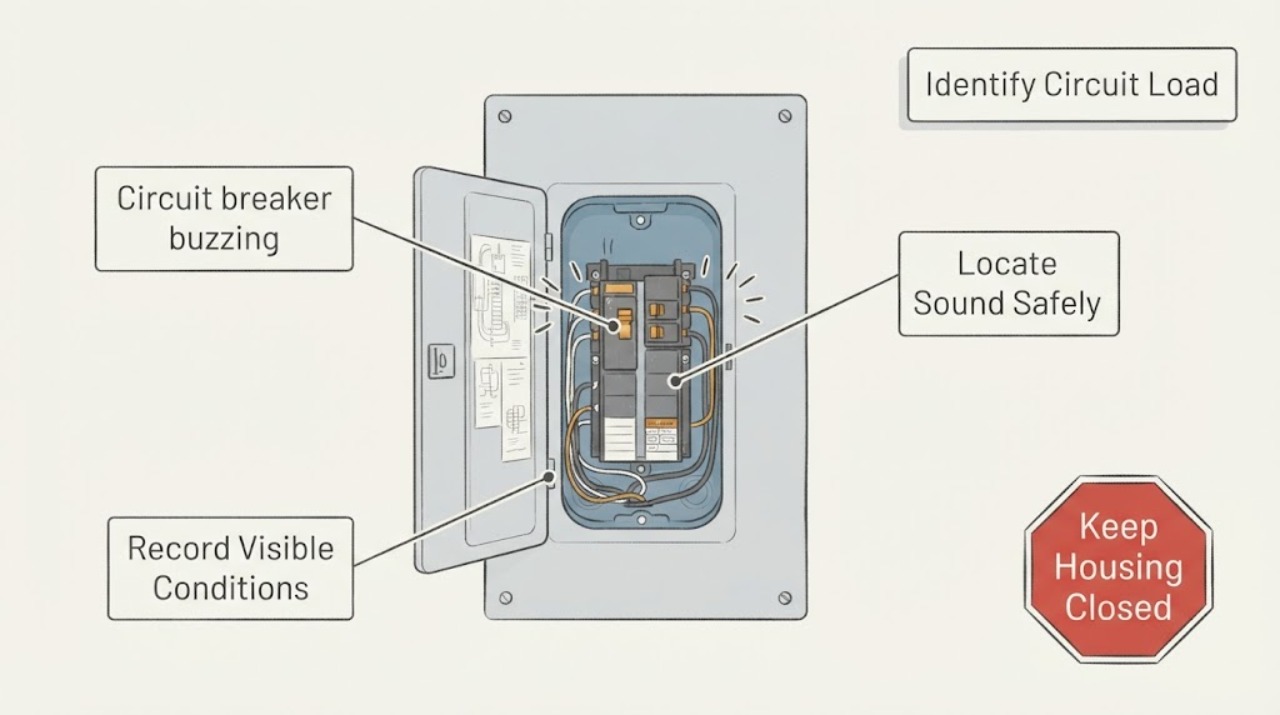
Circuit breaker buzzing: identify the affected circuit and stop safely
A circuit breaker that makes a new, loud, or persistent buzzing sound should be treated as an electrical warning until a qualified electrician identifies the cause. From a safe distance, determine whether the sound comes from one breaker, the panel door, a nearby switch, or an appliance on a particular circuit.
-
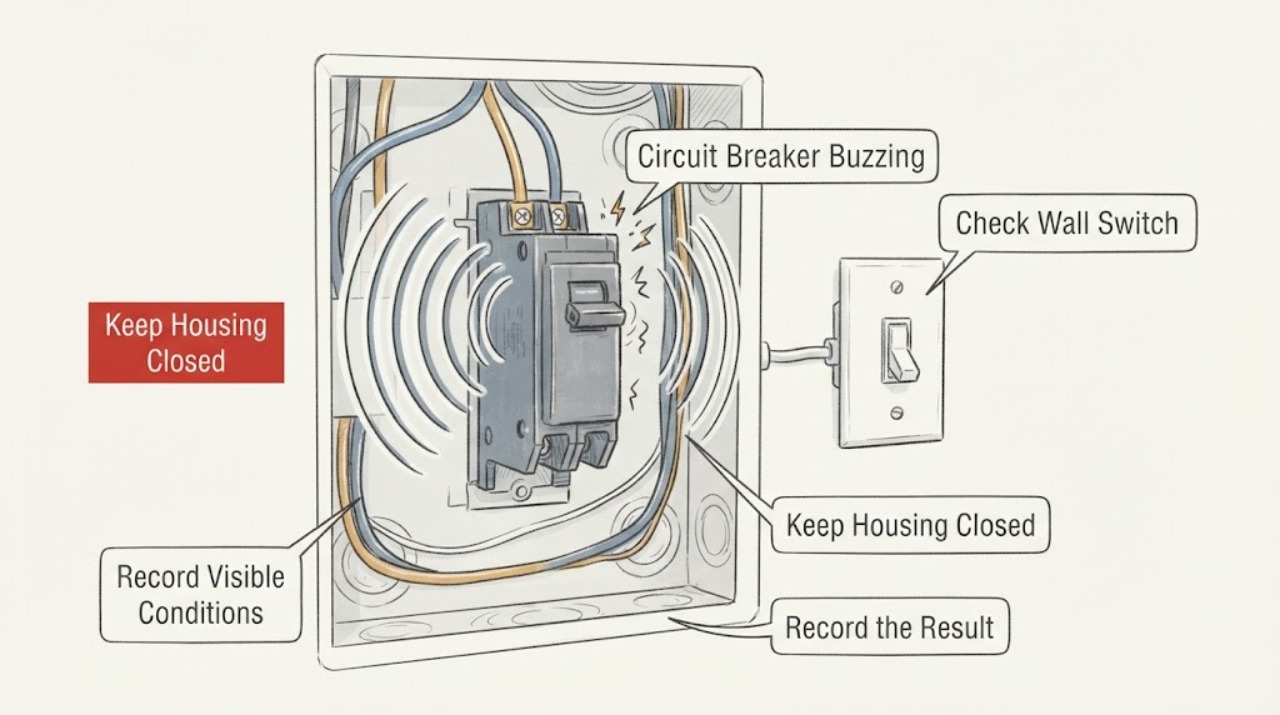
Circuit Breaker Buzzing: Stop Safely and Call an Electrician
A circuit breaker that produces a continuous buzz, hum, sizzle, or crackle is not a homeowner repair project. From a safe distance, note whether the sound is at the breaker panel, a switch or outlet, or an appliance; whether it changes when a known load starts; and whether there is heat, discoloration, burning odor, flickering, smoke, arcing, or a trip.
-
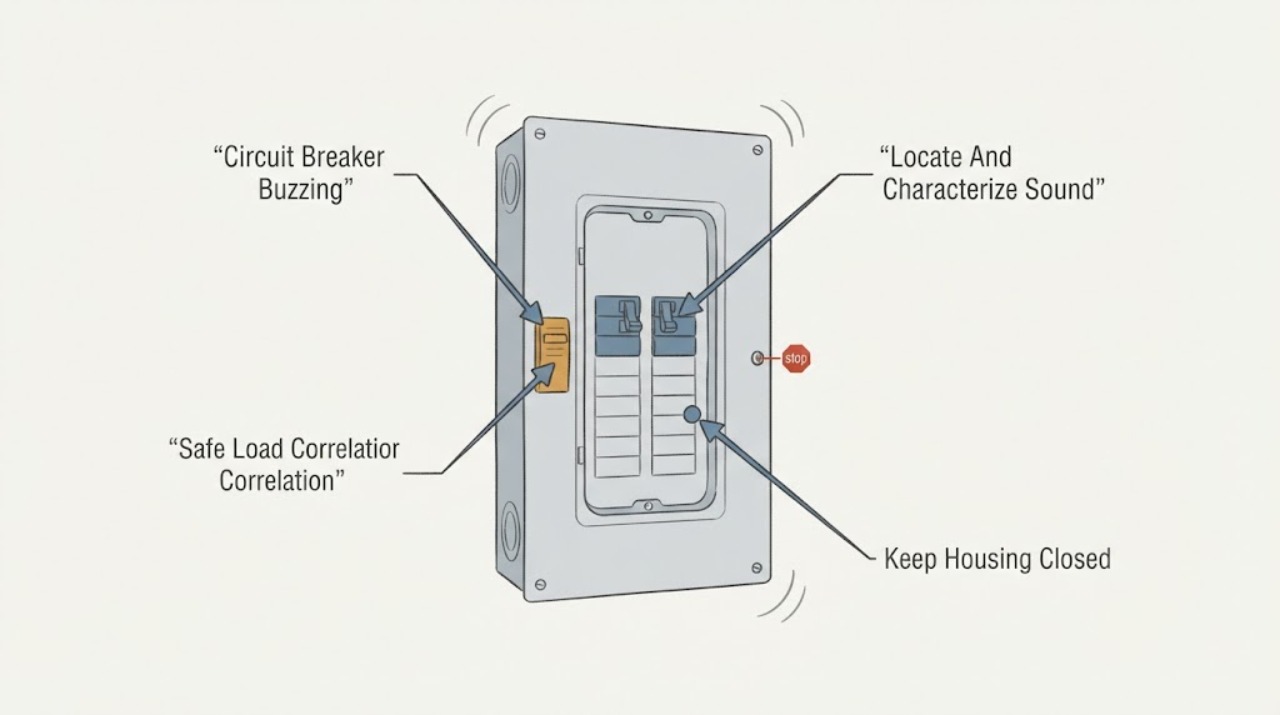
Circuit Breaker Buzzing: Safe Checks and When to Call an Electrician
An unusual buzzing or sizzling sound from a circuit breaker, panel, outlet, or nearby electrical device should be treated as a warning sign, not a noise to test by opening the panel. From a safe, dry position, identify where the sound comes from, whether it changes with a known load, and whether you can see flickering, discoloration, smoke, sparks, moisture, or signs of heat without touching anything.
-
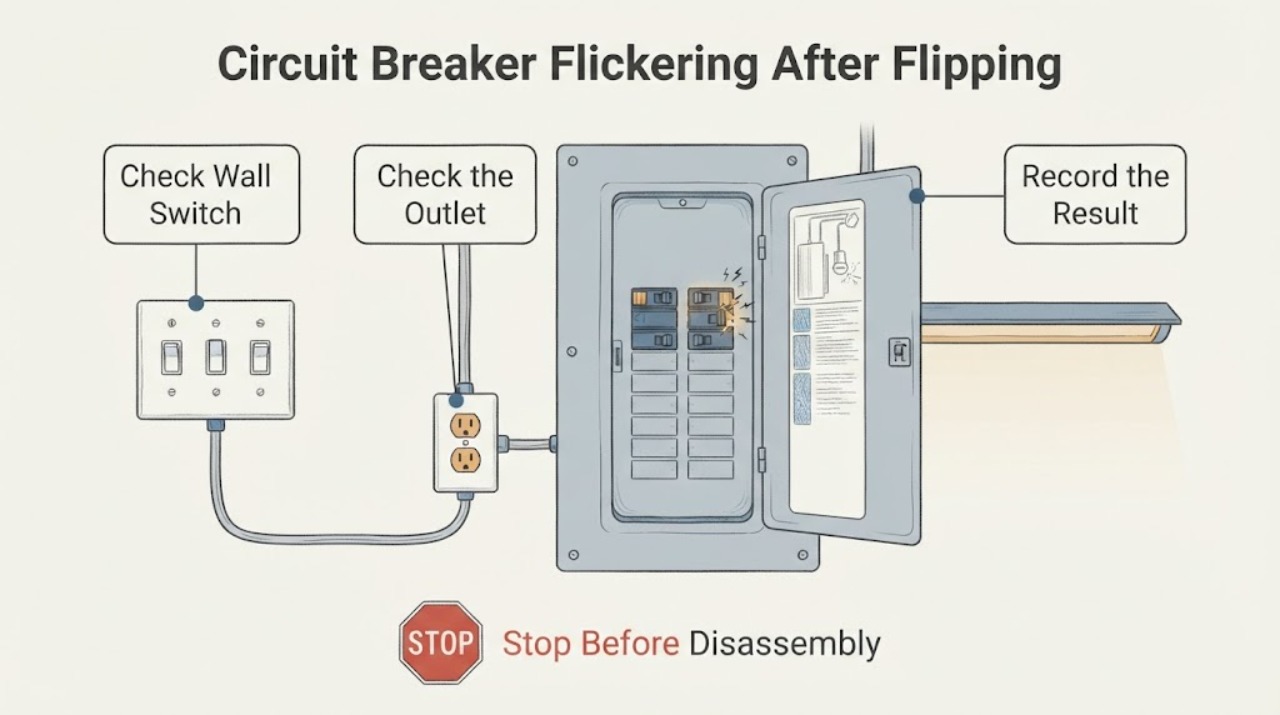
Circuit Breaker Flickering After Flipping a Breaker: Safe Triage
Flickering after a breaker was flipped does not prove that the breaker itself is defective. First separate a flickering light or whole-home symptom from a breaker indicator or a visible electrical arc, then stop using the affected circuit and observe only from a safe distance.
-
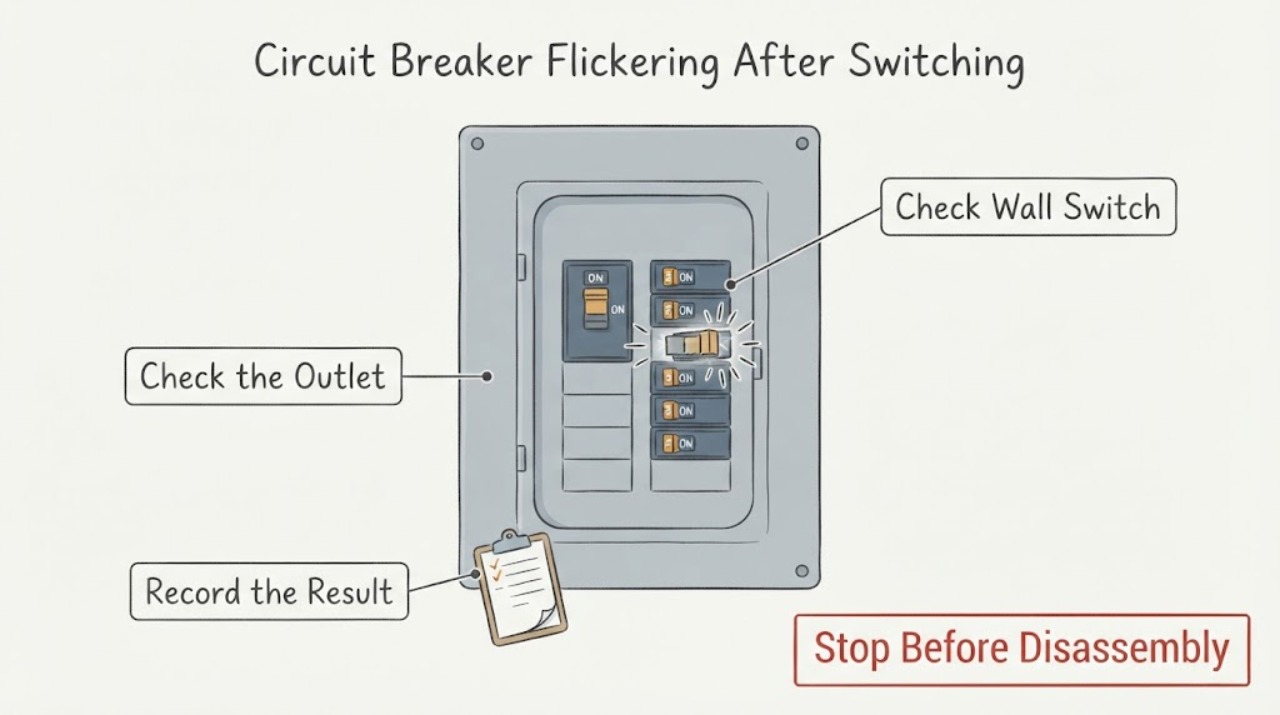
Circuit Breaker Flickering After Switching Breakers On and Off: Safe Triage
Flickering after switching breakers on and off should not be investigated by continuing to move the handles. First separate a flickering light or whole-home symptom from a breaker indicator or a visible arc, using only a safe-distance observation of what already happened.
-
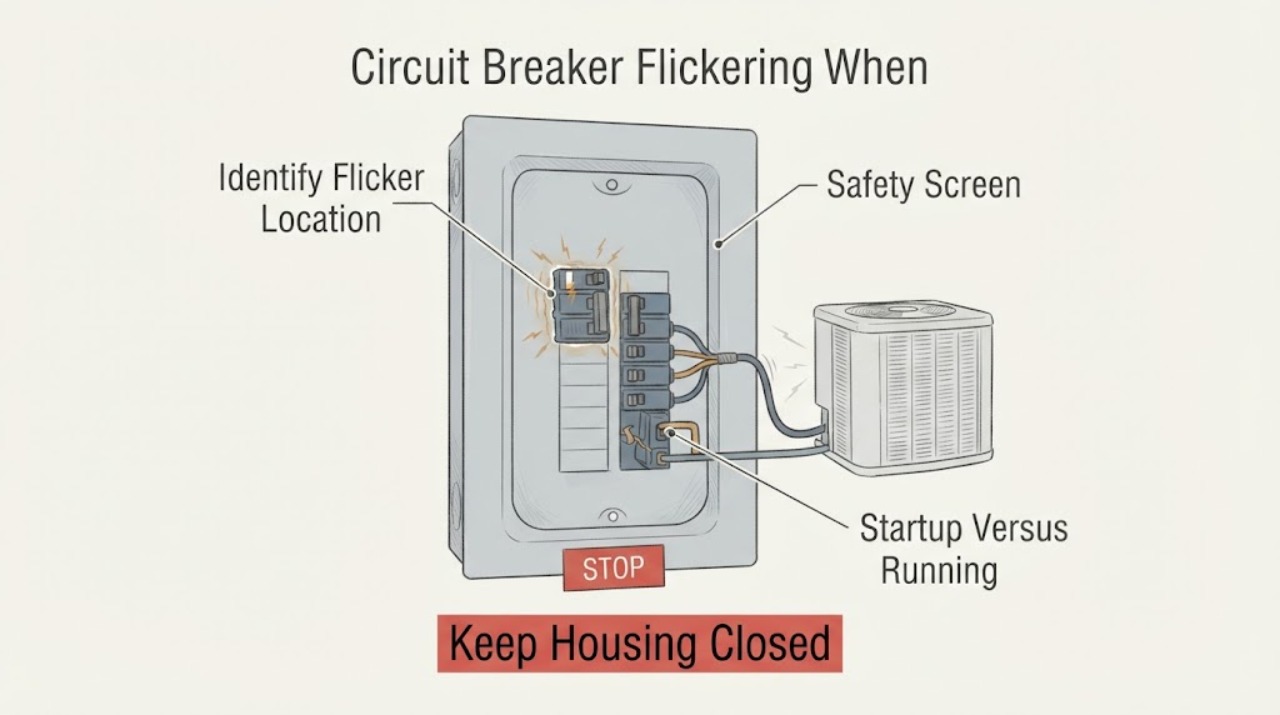
Circuit Breaker Flickering When the AC Turns On
If lights or a breaker indicator flicker exactly when an air conditioner starts, a brief startup load can cause a small momentary voltage change, but visible or repeated flicker is not something to diagnose by opening the panel. First identify whether the flicker is a light, the breaker handle or indicator, or power to the whole home.
-
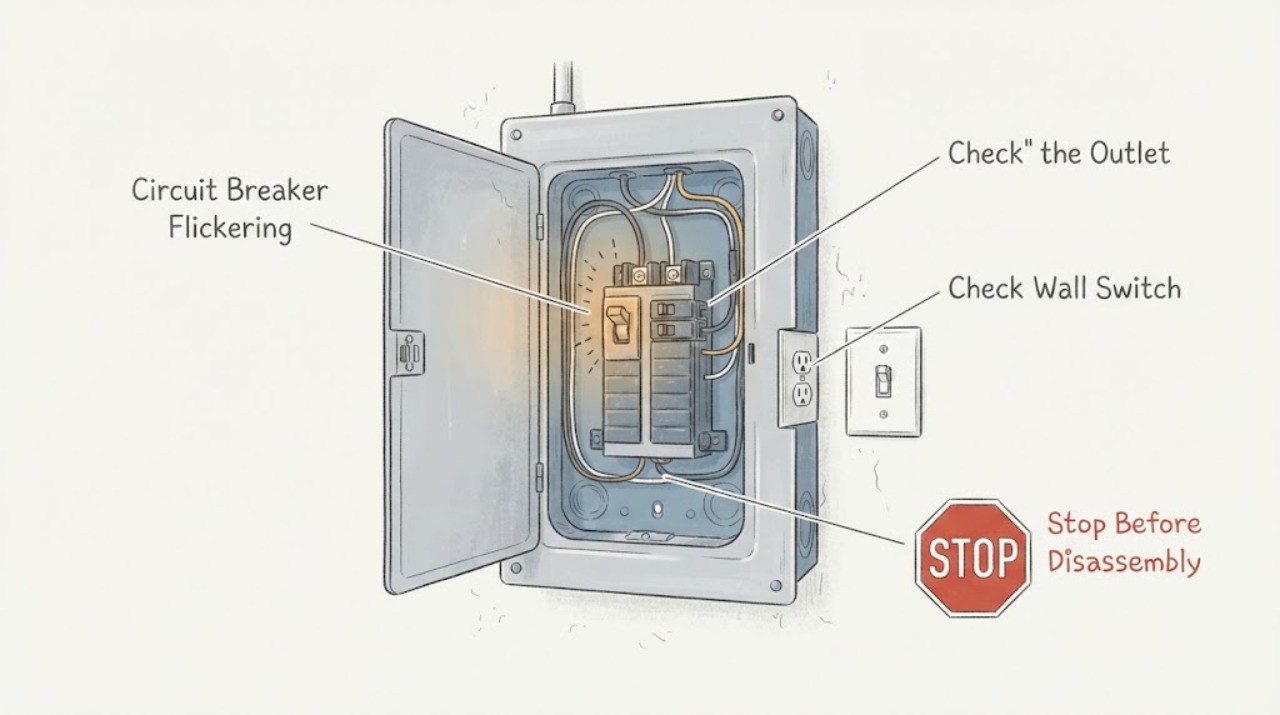
Circuit Breaker Flickering: Why Lights in the House Are Flickering
If lights in the house are flickering and you suspect a circuit breaker or wiring, first map the scope from a safe distance: one lamp, one room, several circuits, the whole house, or the breaker's own indicator. Do not open the panel, touch wiring, measure electrical values, repeatedly reset a breaker, or try to recreate the fault.
-
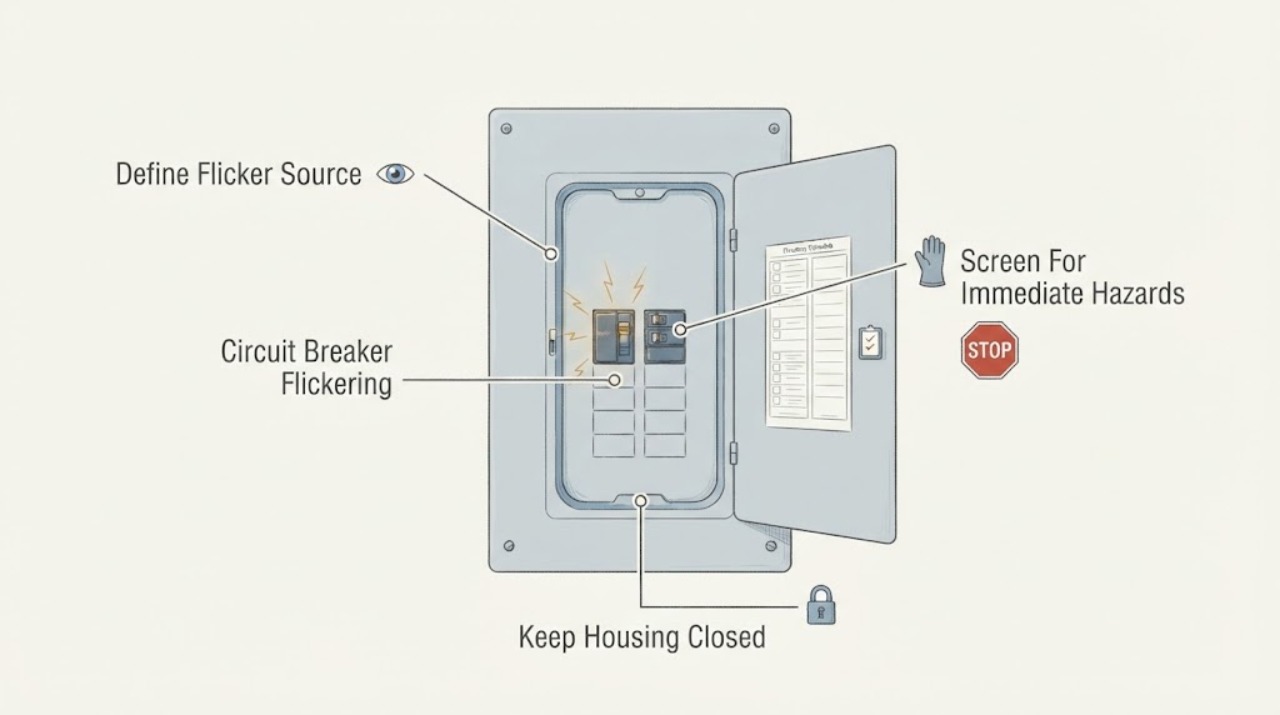
Circuit Breaker Flickering: Identify the Switch, Light, or Arc Safely
First clarify what is flickering: a breaker or indicator handle, lights on the circuit, or an actual flash at the panel or switch. Flickering lights can be an electrical warning, especially with buzzing, sizzling, heat, discoloration, burning odor, shocks, or repeated trips.
-
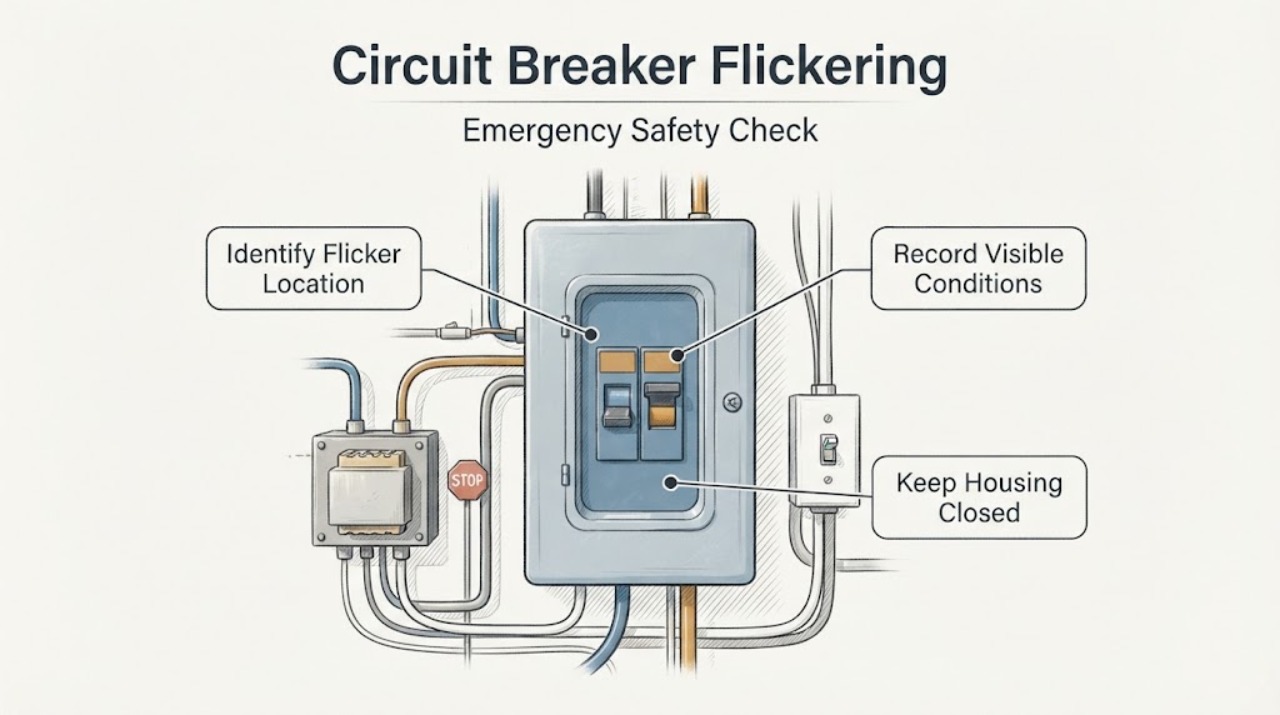
Circuit Breaker Flickering: Distinguish an Indicator from a Wiring Warning
A report that a circuit breaker is flickering may actually describe a breaker indicator, a nearby light or switch, whole-room or whole-home lights, or a visible electrical flash. First identify which item is flickering and whether the change affects one light, one circuit, several circuits, or the whole service.
-
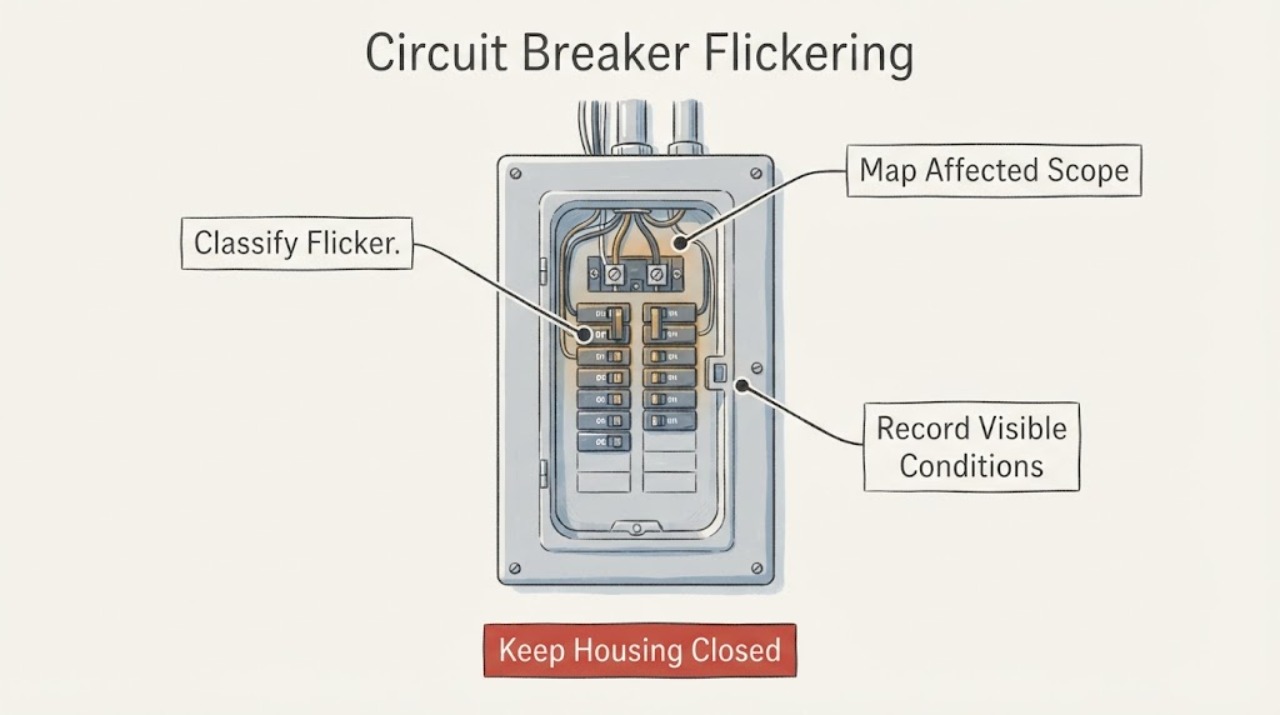
Circuit Breaker Flickering: Record the Scope and Stop Safely
A flickering report involving a circuit breaker can describe a breaker indicator, lights or devices on its circuit flickering, or an actual flash or arc near the panel or switch. Do not operate the breaker repeatedly or try to recreate the symptom.
-
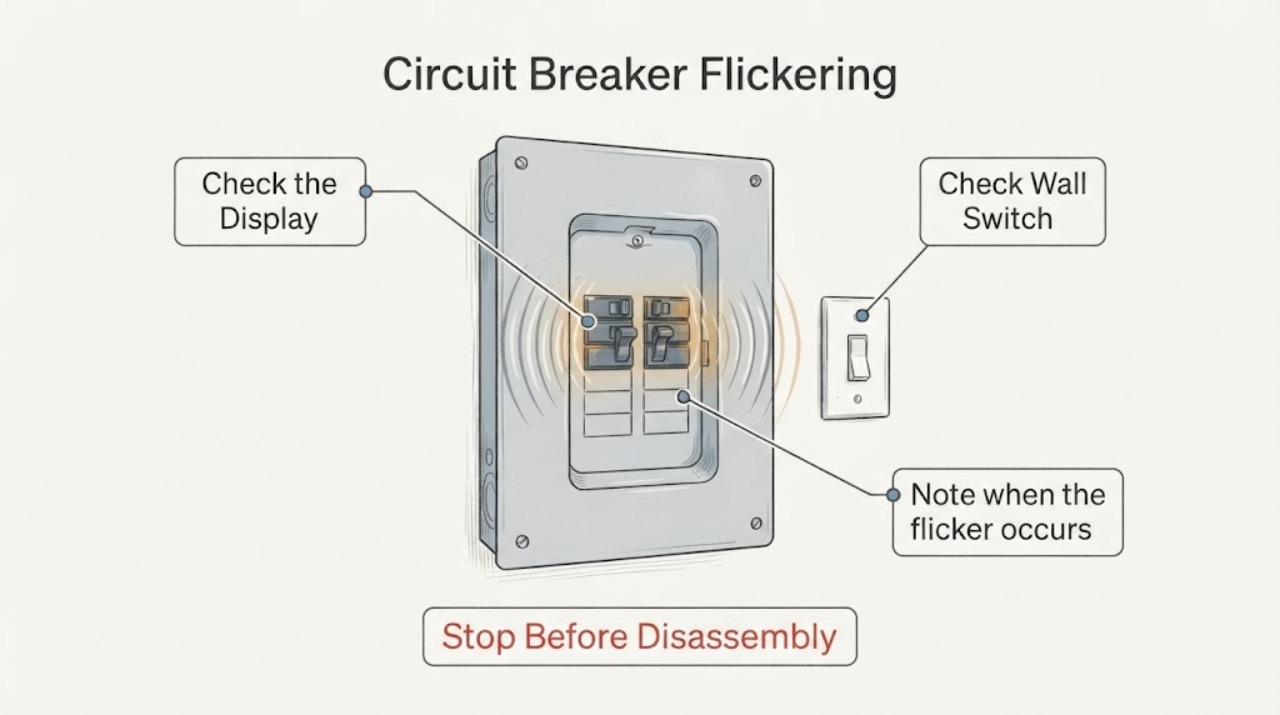
Circuit Breaker Flickering: Safe Checks for Wiring
Treat a flickering breaker indicator, nearby lights, or circuit as an electrical warning until you know exactly what is flickering. From a safe distance, note whether the change is only the breaker's indicator, one light, one circuit, the whole home, or an outside utility supply.
-
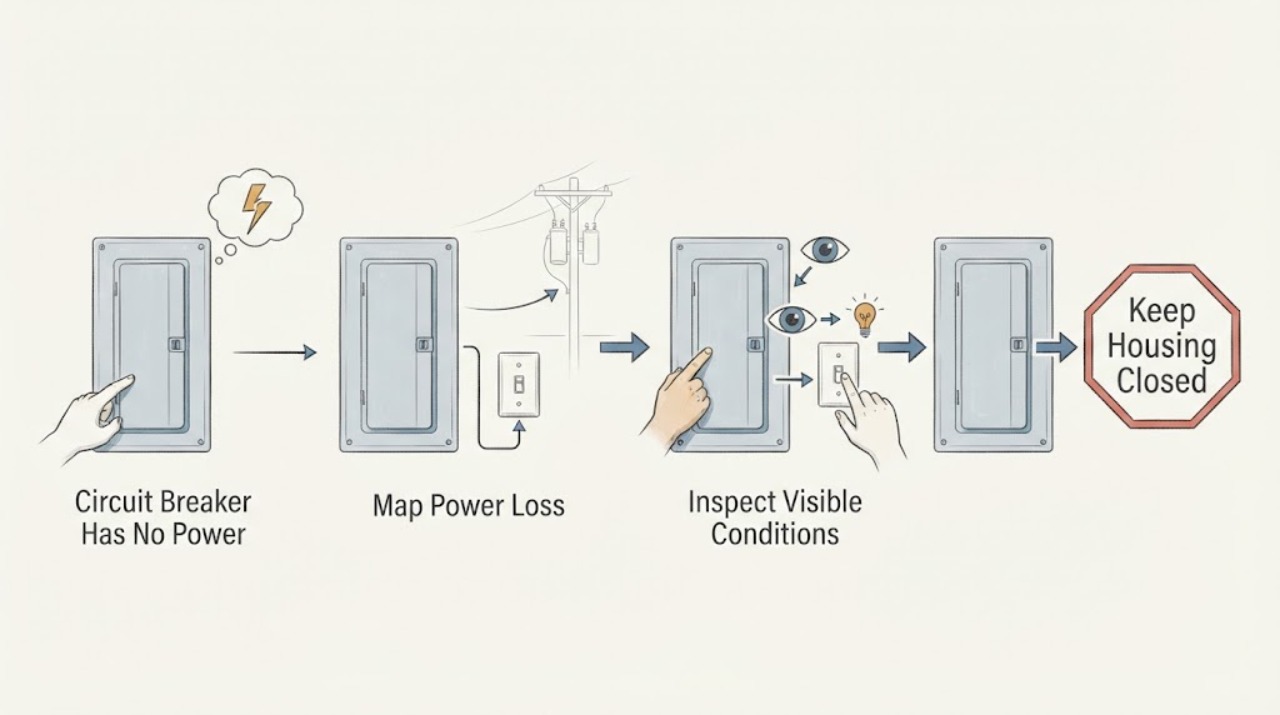
Circuit Breaker Has No Power at a Switch or Transformer: Safe Checks
If a switch or transformer downstream of a circuit breaker has no power, first determine whether the loss is limited to one load or affects a whole branch. From a dry, stable position, look at the breaker and visible labels, note whether other lights or outlets on that branch work, and inspect the switch, fixture, and transformer enclosure only from ordinary access.
-
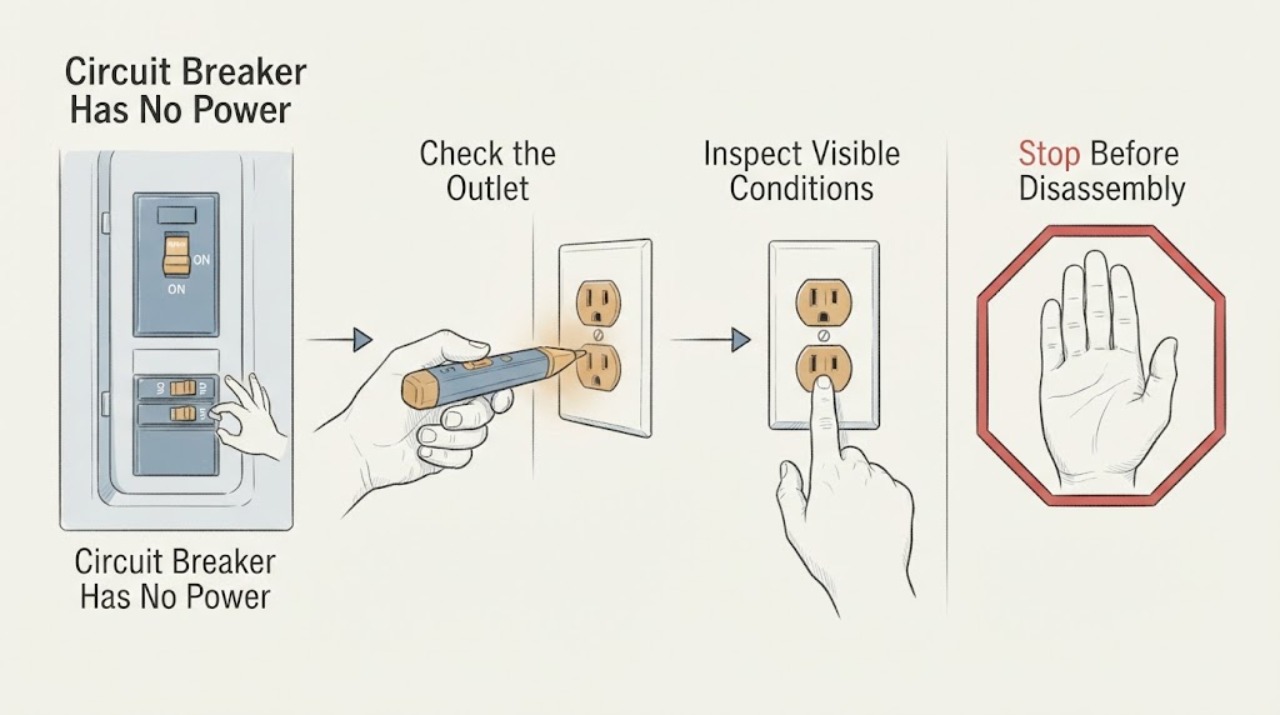
Circuit Breaker Has No Power at an Outlet: Safe Checks Before Calling an Electrician
No power at one outlet may be caused by a tripped breaker, an upstream GFCI outlet, a local outlet fault, a disconnected branch, or a failed device. From a dry position, check whether nearby outlets also lost power, inspect the breaker handle without opening the panel, and look for a GFCI with TEST and RESET buttons.
-
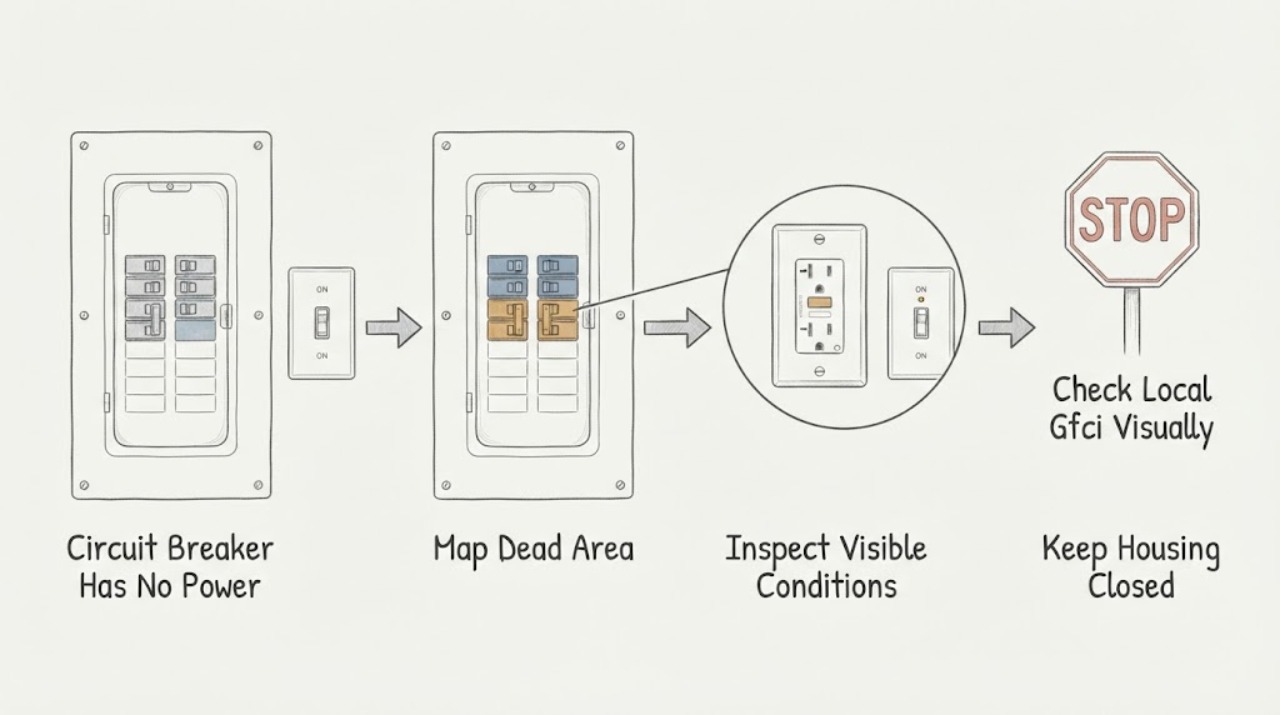
Circuit Breaker Has No Power: Check the Switch Safely
First determine whether power is missing from one outlet, one room, one breaker circuit, or the whole property. From a dry, safe position, record which lights and outlets are dead and whether the breaker handle or a nearby GFCI indicator appears tripped; do not remove a panel cover, touch wiring, measure voltage, bypass protection, or repeatedly reset the breaker.
-
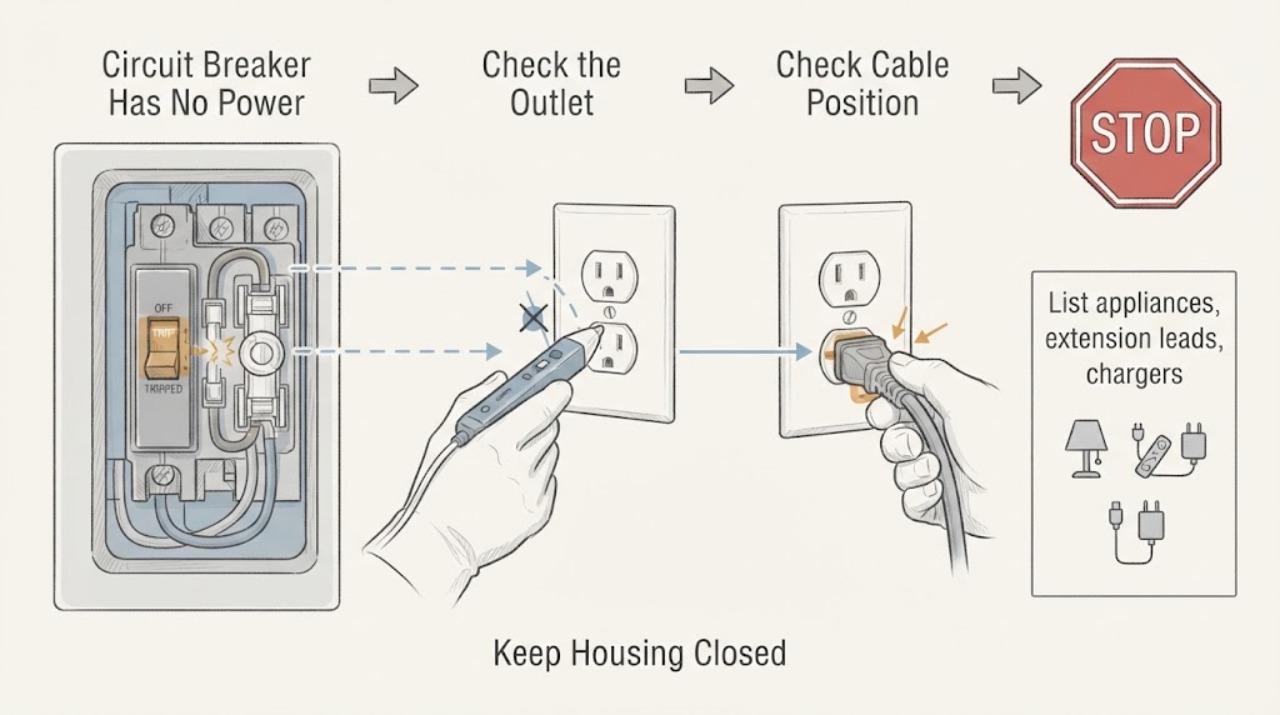
Circuit Breaker Has No Power: Safe Checks for a Fuse or Wiring Fault
When a circuit has no power, first determine whether the loss is limited to one outlet or room and look for a tripped breaker, an open fuse, a utility outage, or an obvious external hazard. Only use dry, accessible controls and disconnect a suspect appliance if it can be done without touching damaged equipment.
-
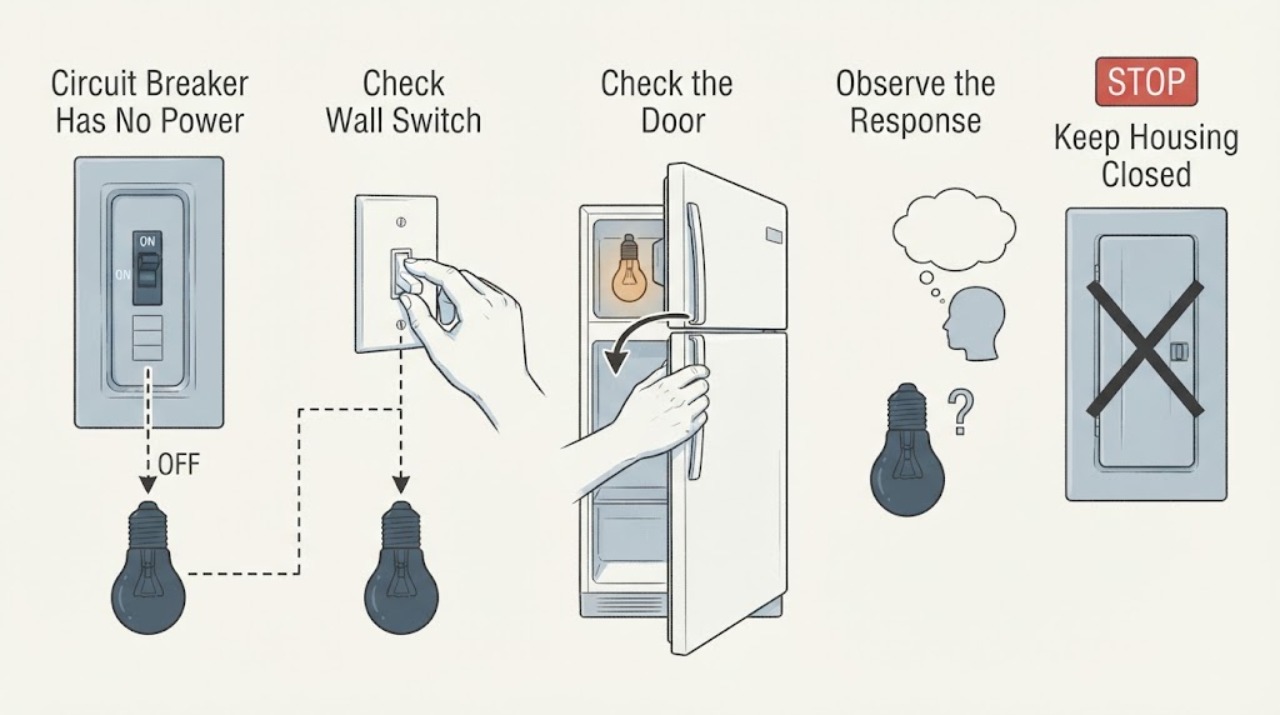
Circuit Breaker Has No Power: Safe External Checks
When a circuit breaker has no power at its outlets or lights, first determine whether the outage is limited to one circuit or affects the whole home. With the panel cover closed, you may observe a clearly tripped handle and, only if the enclosure is intact, dry, accessible, and shows no warning sign, make one external reset attempt after switching off or unplugging accessible loads.
-
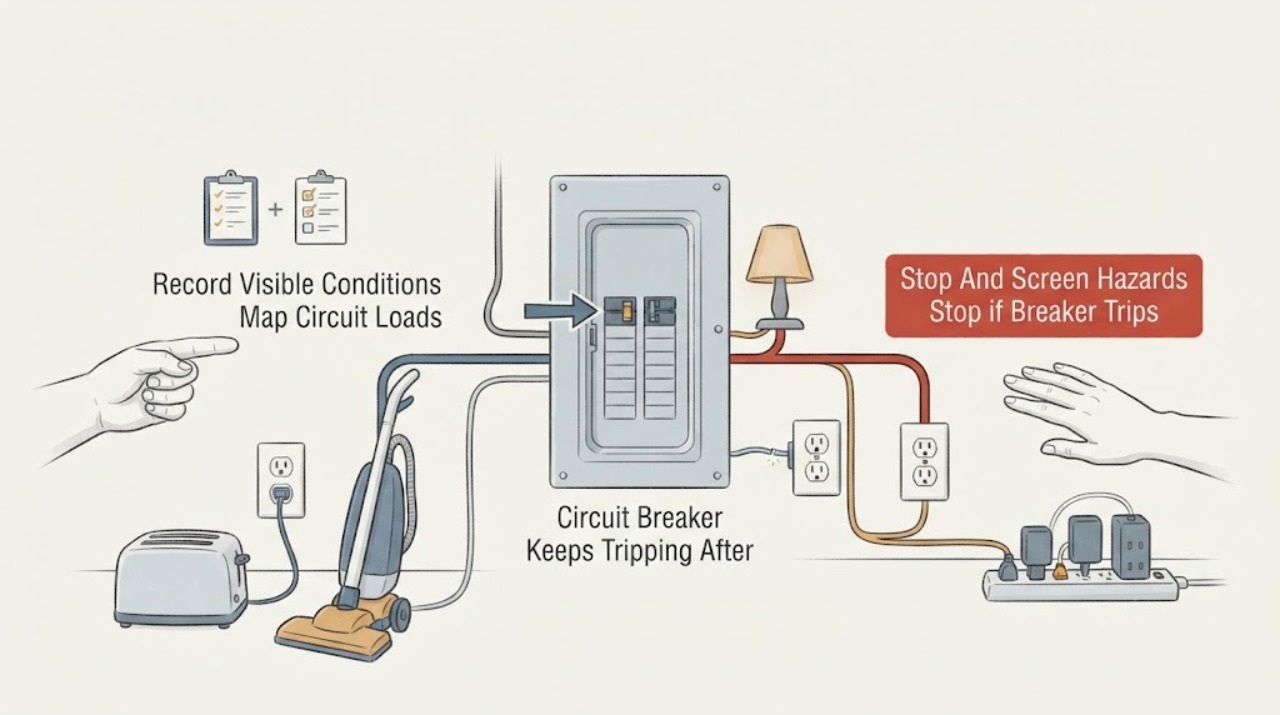
Circuit Breaker Keeps Tripping After 10 Minutes: Track the Load Before Resetting
A breaker that trips after about 10 minutes is responding to a time-dependent condition, but the timing alone does not prove overload, a defective appliance, a wiring fault, or a bad breaker. Stop repeatedly resetting it.
-
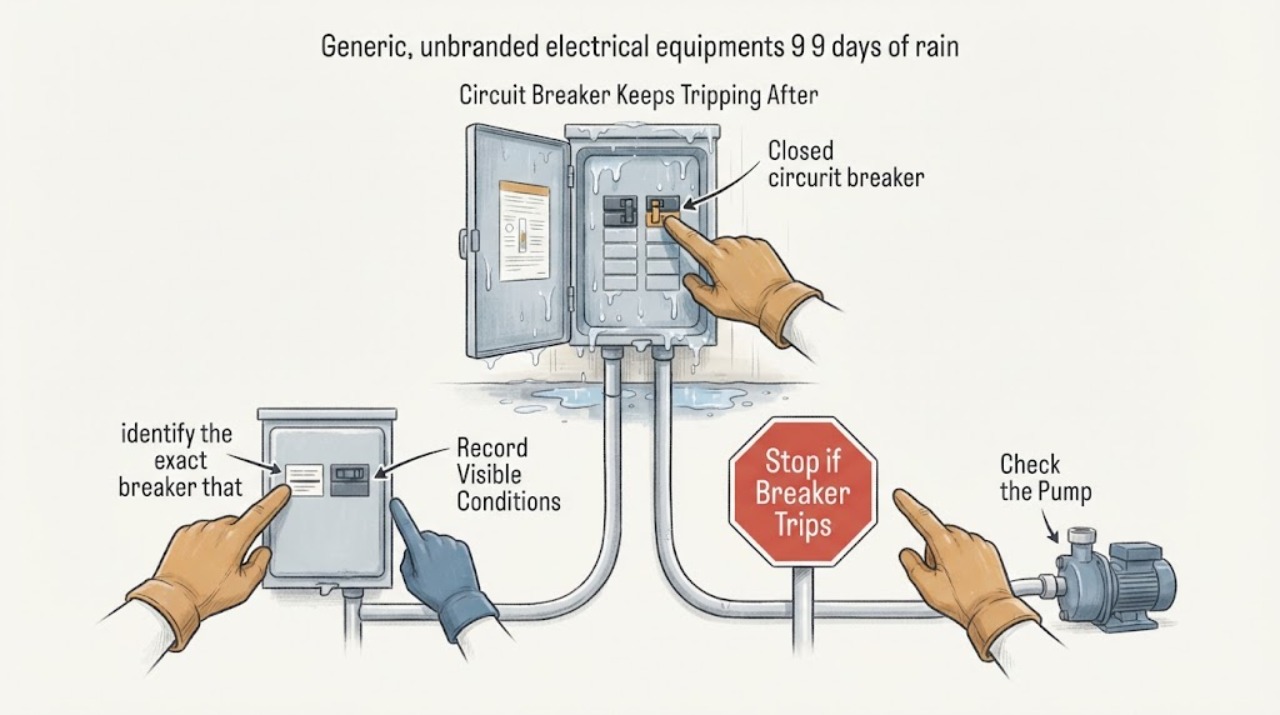
Circuit Breaker Keeps Tripping After 9 Days of Rain
A breaker that started tripping after nine days of rain should be treated as a possible moisture or water-intrusion fault until a qualified electrician rules that out. Do not keep resetting it. From a dry location, note which breaker and connected area are affected, look only for safe external signs such as wet outlets or water near equipment, and leave the circuit off if the trip repeats or any water, heat, odor, buzzing, or damage is present.
-
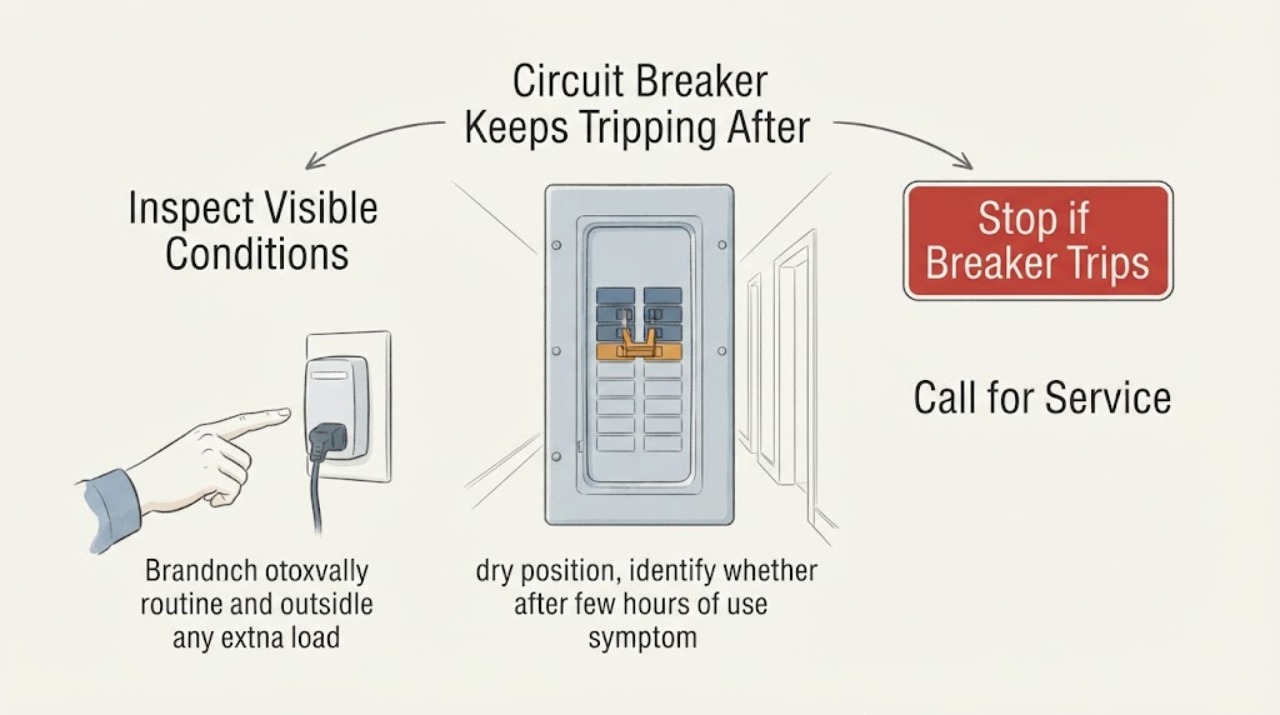
Circuit Breaker Keeps Tripping After a Few Hours of Use
A circuit breaker that trips only after a few hours is still signaling a fault or an overload; the delay can reflect a load that warms the circuit, an appliance that fails after running, or a connection or wiring problem that becomes unsafe with heat. Do not keep resetting it to restore service or leave the breaker energized while a warning sign is present.
-
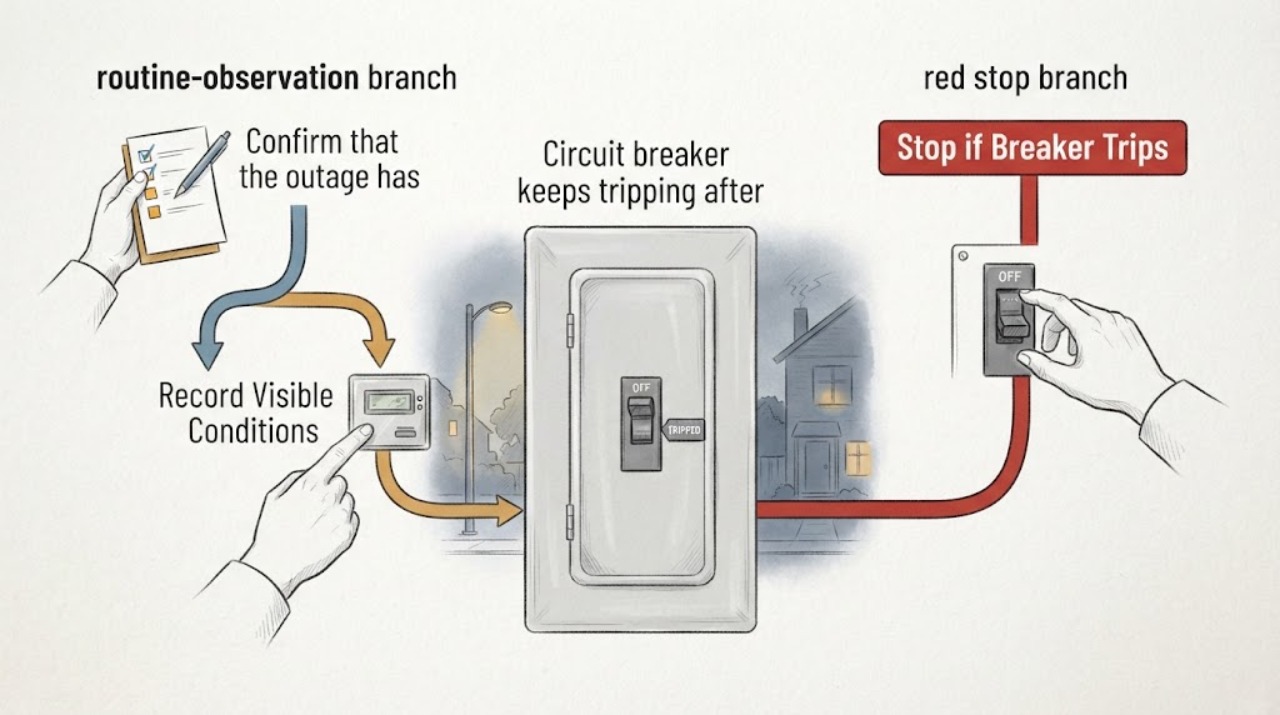
Circuit breaker keeps tripping after a power outage
A breaker that keeps tripping after an outage may be protecting against a fault, an overloaded circuit as appliances restart, damaged or wet equipment, or a problem with the utility supply. Wait until the outage is clearly over, then from a dry and safe position turn off or unplug accessible loads and note whether one circuit or the whole home is affected.
-
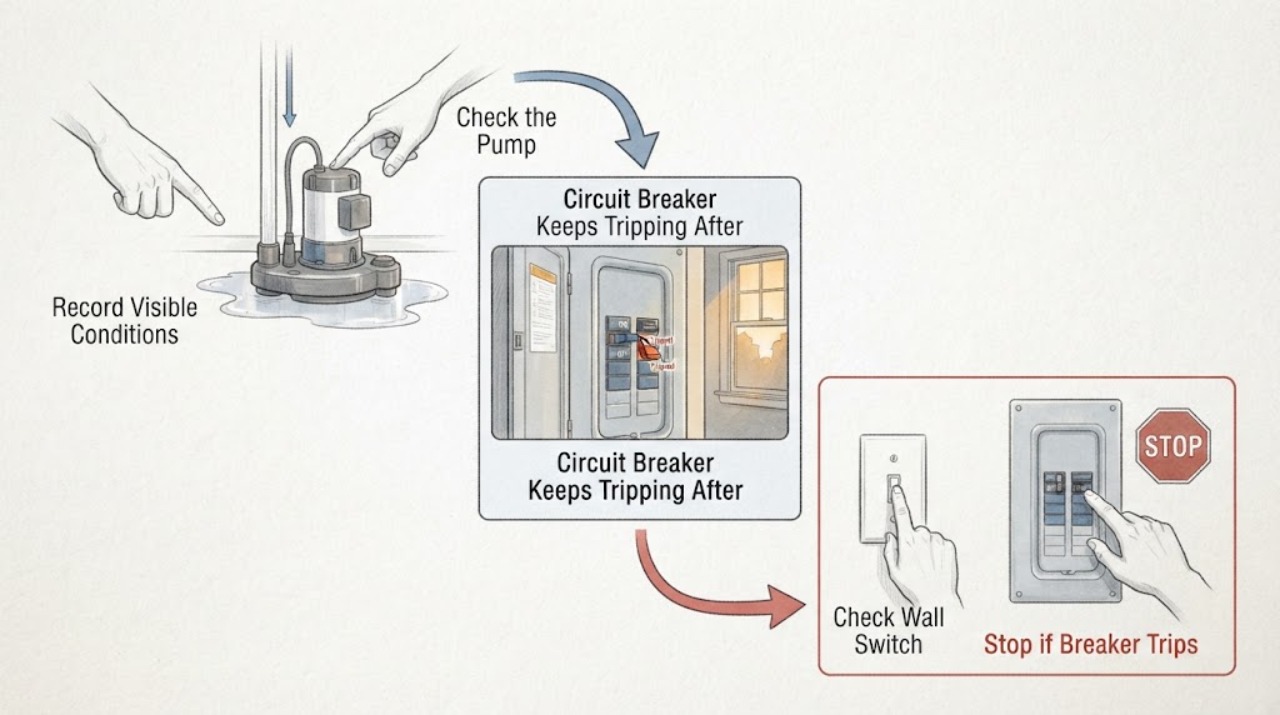
Circuit Breaker Keeps Tripping After Hours: Safe Diagnosis
A breaker that trips only after a circuit has run for hours often indicates heat building from an overload, a worn or damaged load, or a high-resistance connection; an immediate trip points to a different fault. Stop resetting it repeatedly.
-
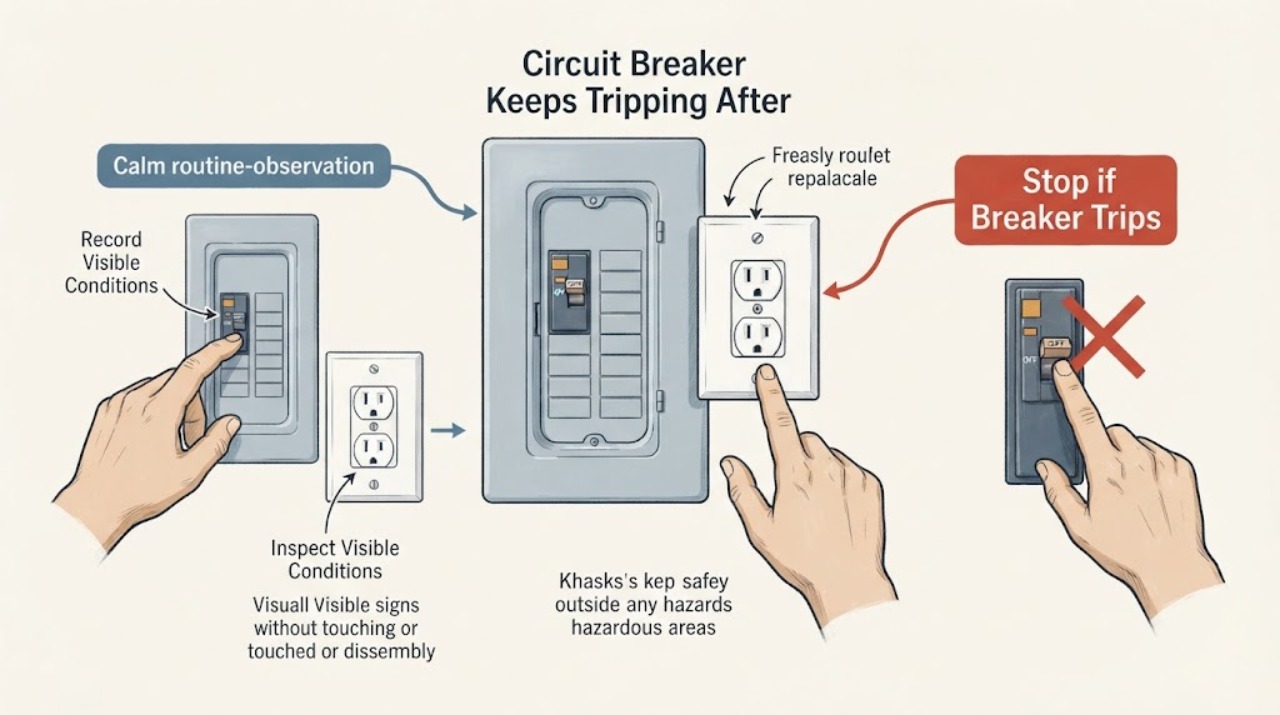
Circuit Breaker Keeps Tripping After Replacing an Outlet
If a circuit breaker keeps tripping after an outlet was replaced, leave that circuit off and treat the replacement, the connected wiring, or an existing appliance fault as unresolved. The new receptacle may be the wrong type or rating, have an incorrect or loose connection, be affected by a neutral, ground, or downstream fault, or simply have exposed an existing problem; the timing does not prove which one.
-
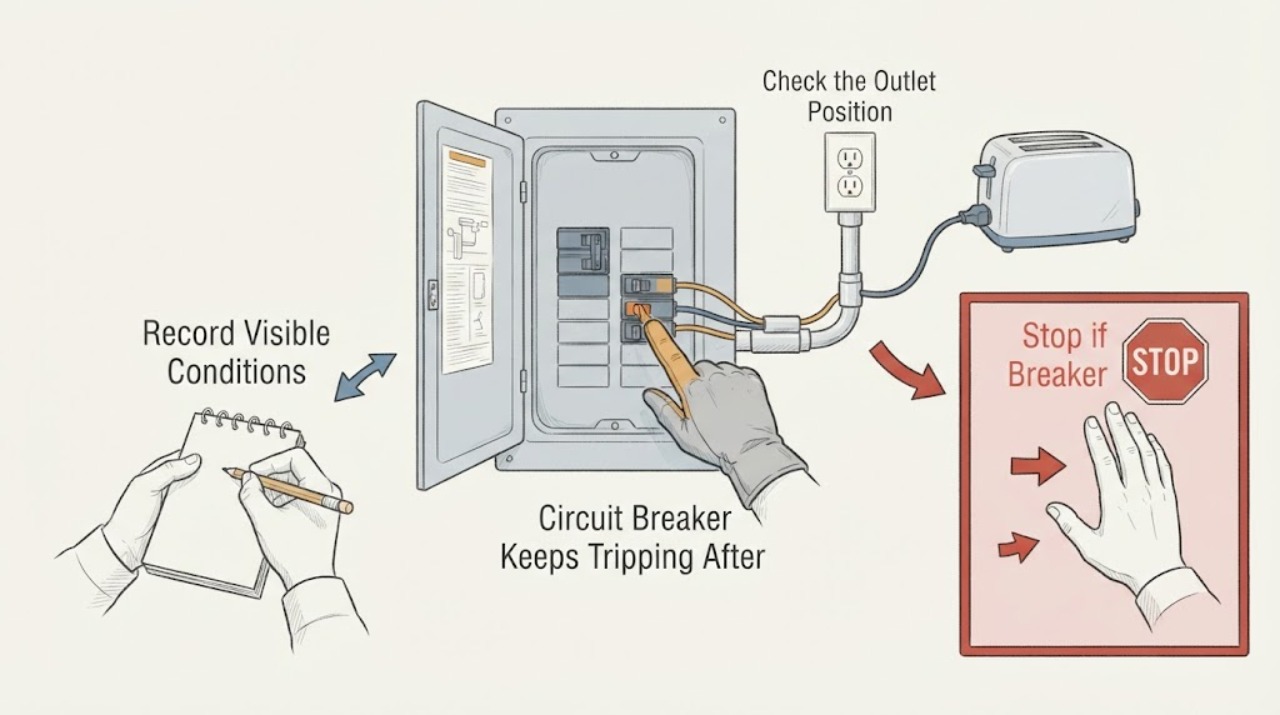
Circuit Breaker Keeps Tripping After Resetting It
If a circuit breaker trips again after it has been reset, stop resetting it. A breaker may be responding to an overload, short, ground fault, arc fault, failing appliance, or wiring problem; a second trip is not a safe invitation to keep trying.
-
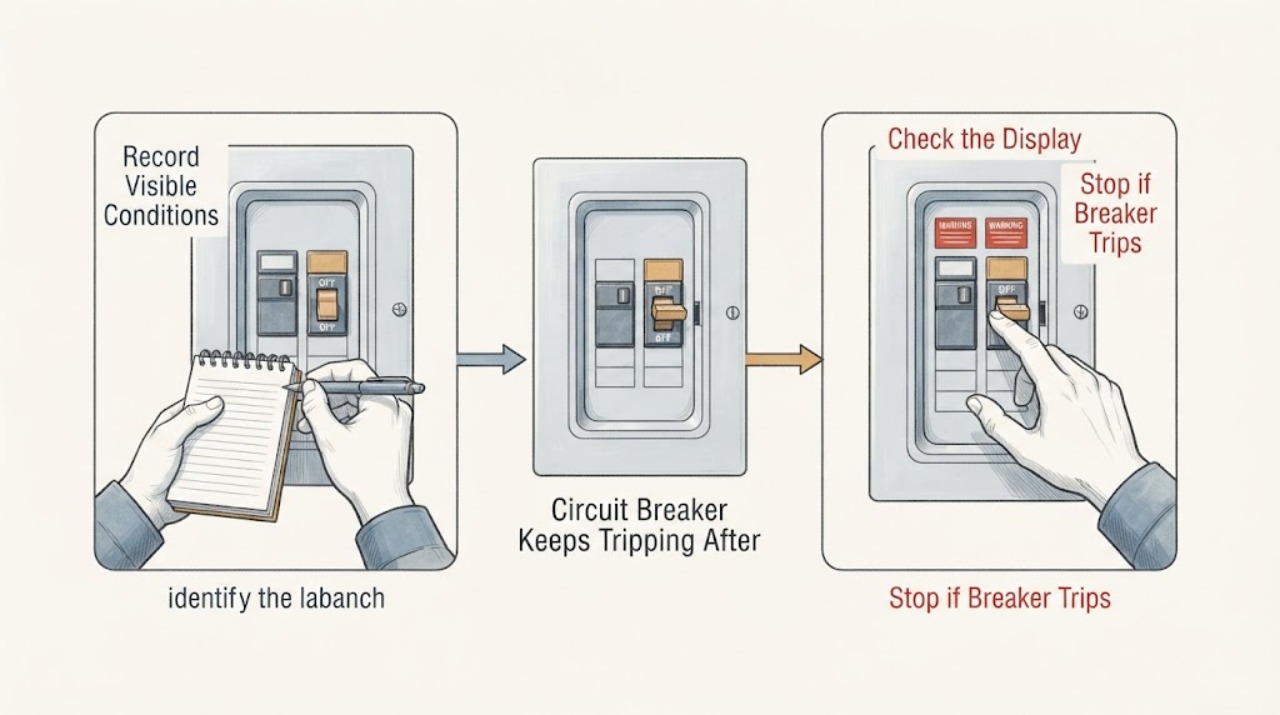
Circuit Breaker Keeps Tripping After Running Several Hours
A breaker that trips only after equipment has run for several hours often reflects heat building from a sustained or near-capacity load, but a worn appliance, loose or overheated connection, damaged wiring, or a faulty breaker can look the same. Treat the delayed timing as a thermal warning, not as permission to keep resetting the breaker.
-
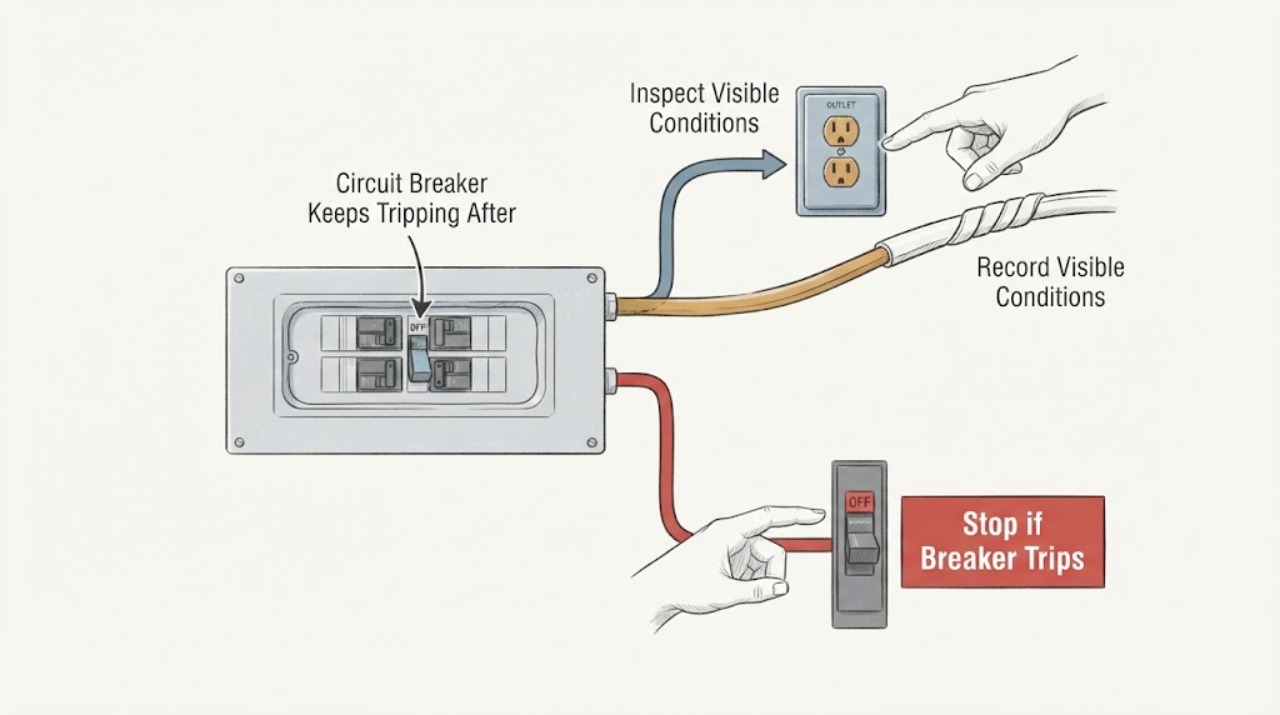
Circuit Breaker Keeps Tripping After Several Hours: Find the Load or Wiring Risk Safely
A breaker that trips only after a circuit has been on for several hours should be treated as a possible sustained overload, heat-related connection problem, or equipment fault—not as a nuisance to reset. Stop adding load and do not repeatedly restore the breaker.
-
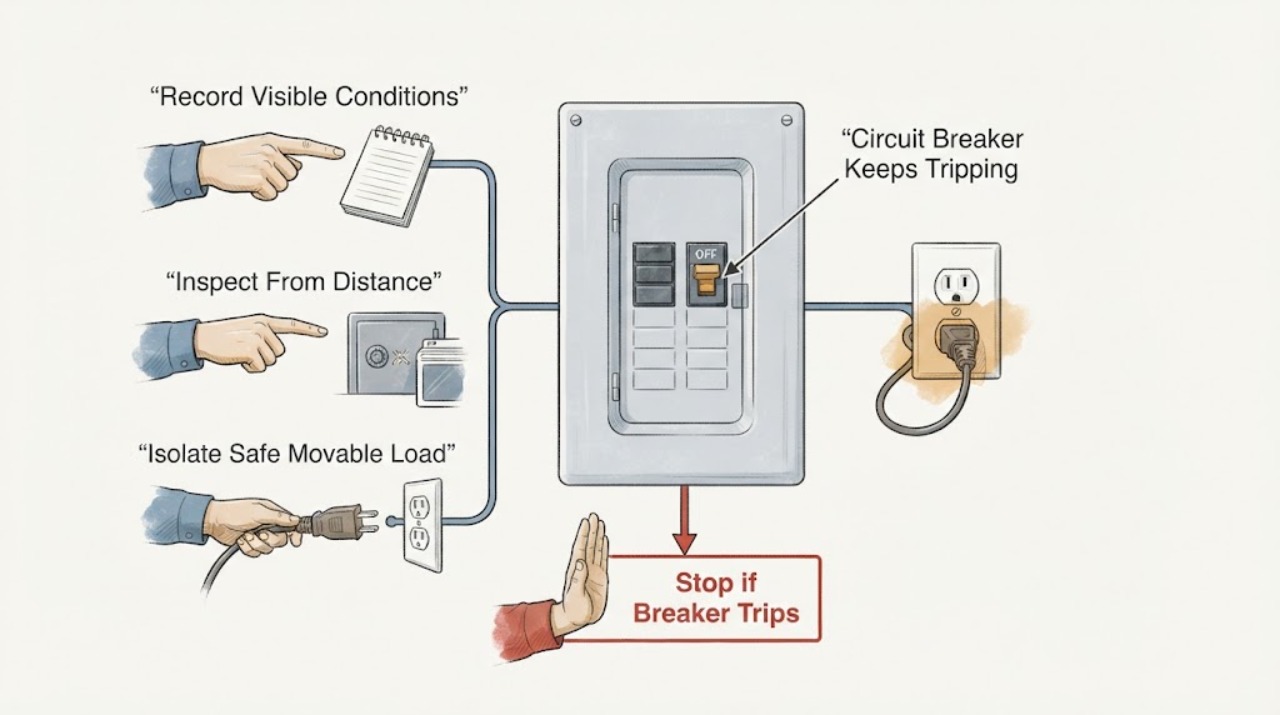
Circuit Breaker Keeps Tripping at an Outlet: Isolate the Load Safely
A breaker that keeps tripping is protecting against an overload, short circuit, ground fault, arc fault, or a problem with an appliance, cord, outlet, or wiring. First stop using the affected outlet and note whether the trip occurs when one device starts, when several loads run, immediately after reset, or across more than one circuit.
-
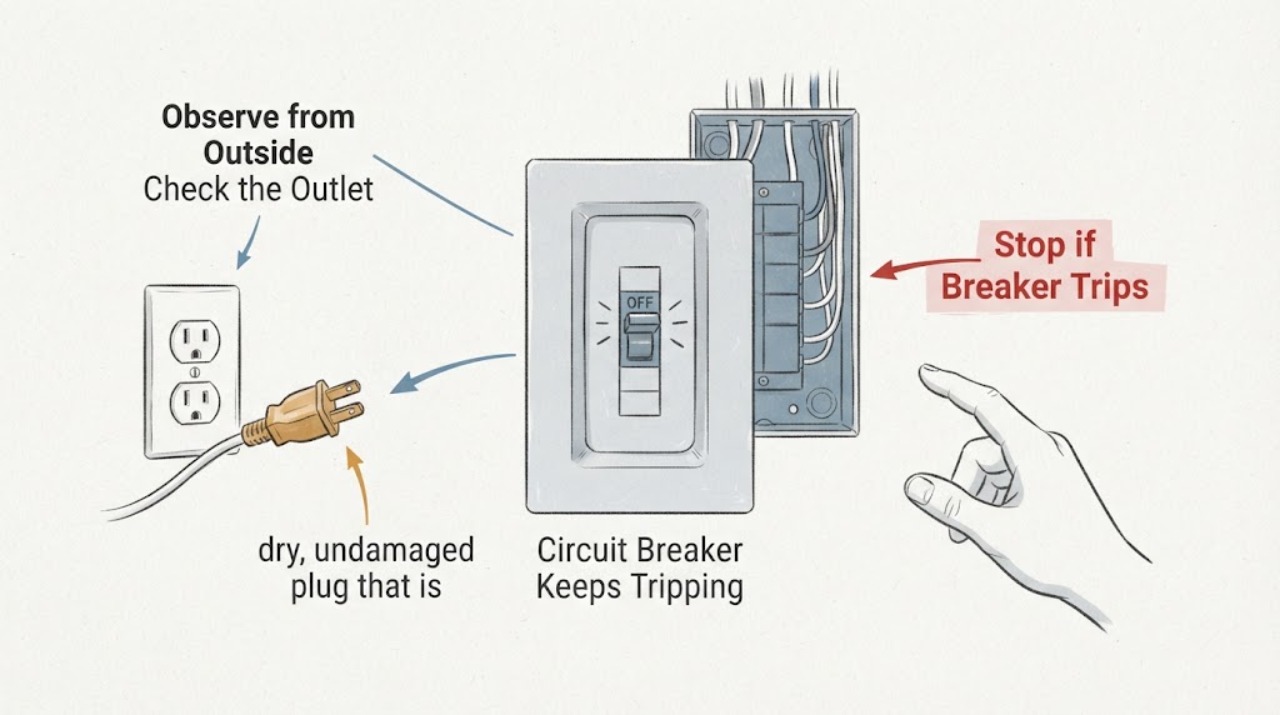
Circuit Breaker Keeps Tripping at Outlet Wiring: Safe Triage
A breaker that keeps tripping when outlet wiring is involved is protecting against an overload, a short or ground fault, a defective connected appliance, moisture, or an outlet or wiring defect. Stop repeatedly resetting it.
-
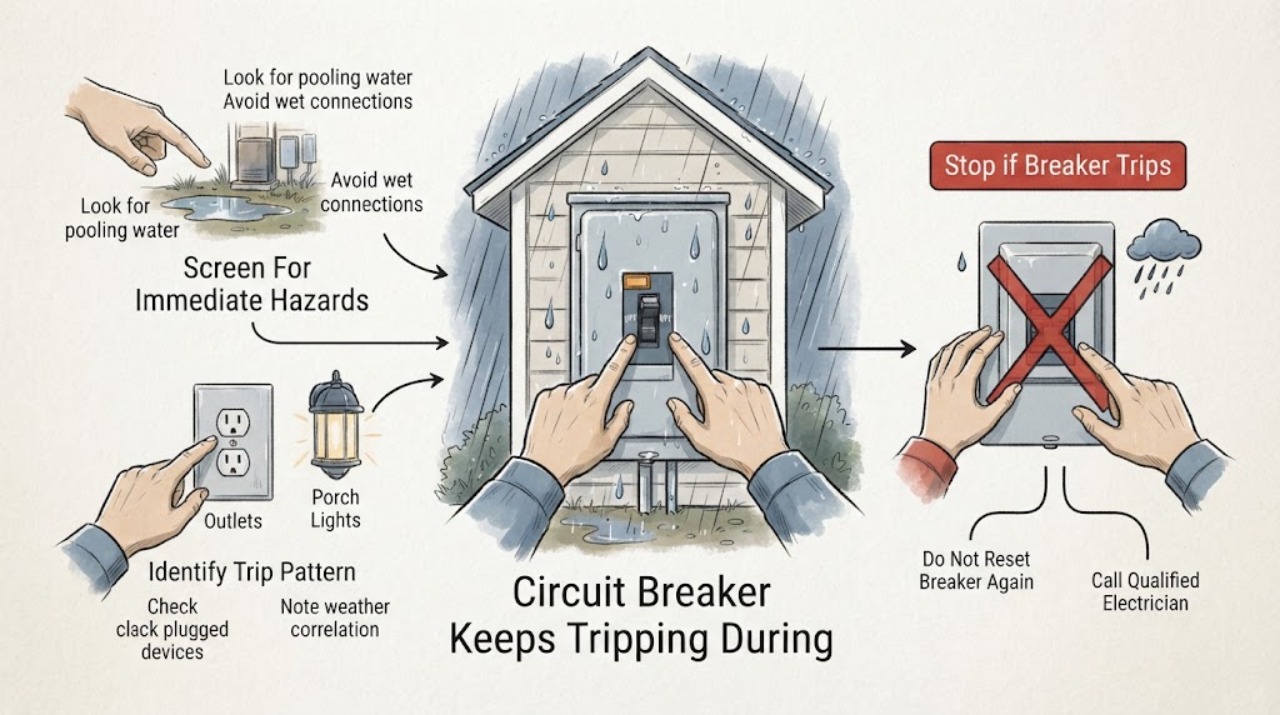
Circuit Breaker Keeps Tripping During Heavy Rain: Safe Checks
A breaker that trips during heavy rain may be responding to water entering an outdoor device, a damp receptacle or cable, a ground fault, a surge, or a separate circuit overload that happens at the same time. Treat the rain pattern as a safety clue, not proof of one cause.
-
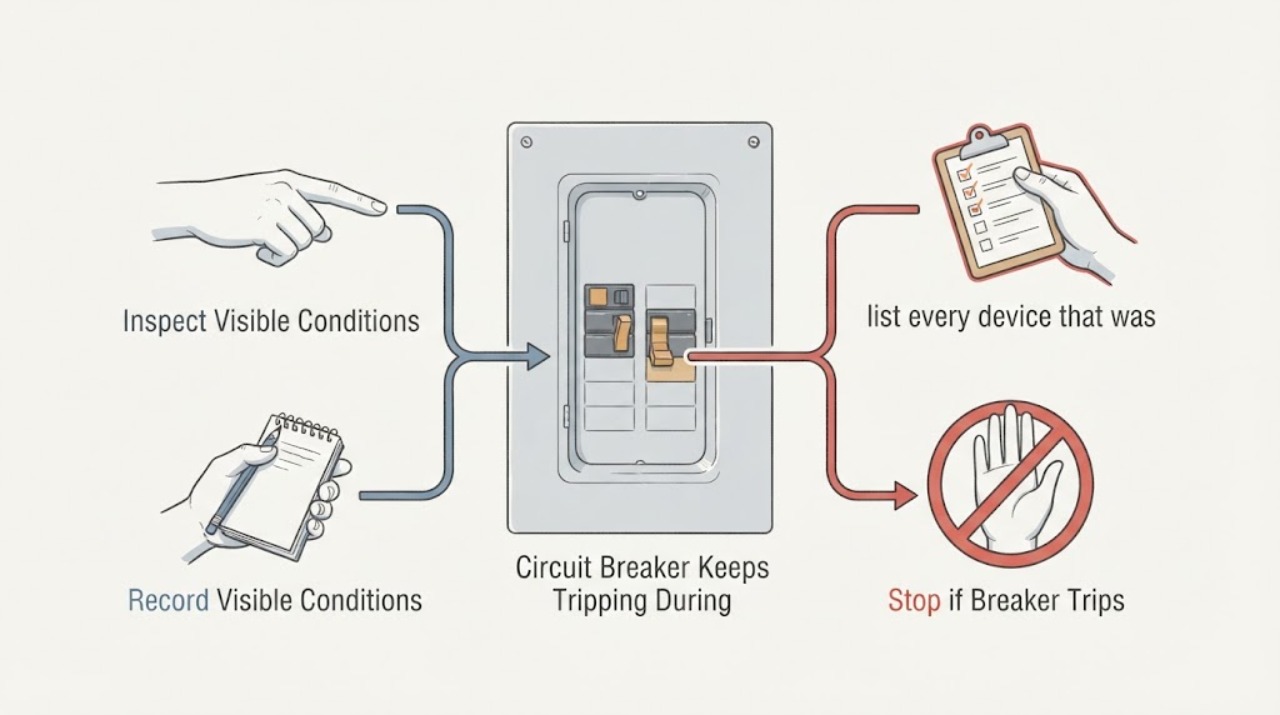
Circuit Breaker Keeps Tripping During Use: Safe Electrical Checks
A circuit breaker that trips while a device is operating is interrupting current because of an overload, short circuit, ground fault, arc-fault condition, wiring problem, or a failing appliance. Do not keep resetting it or raise its rating.
-
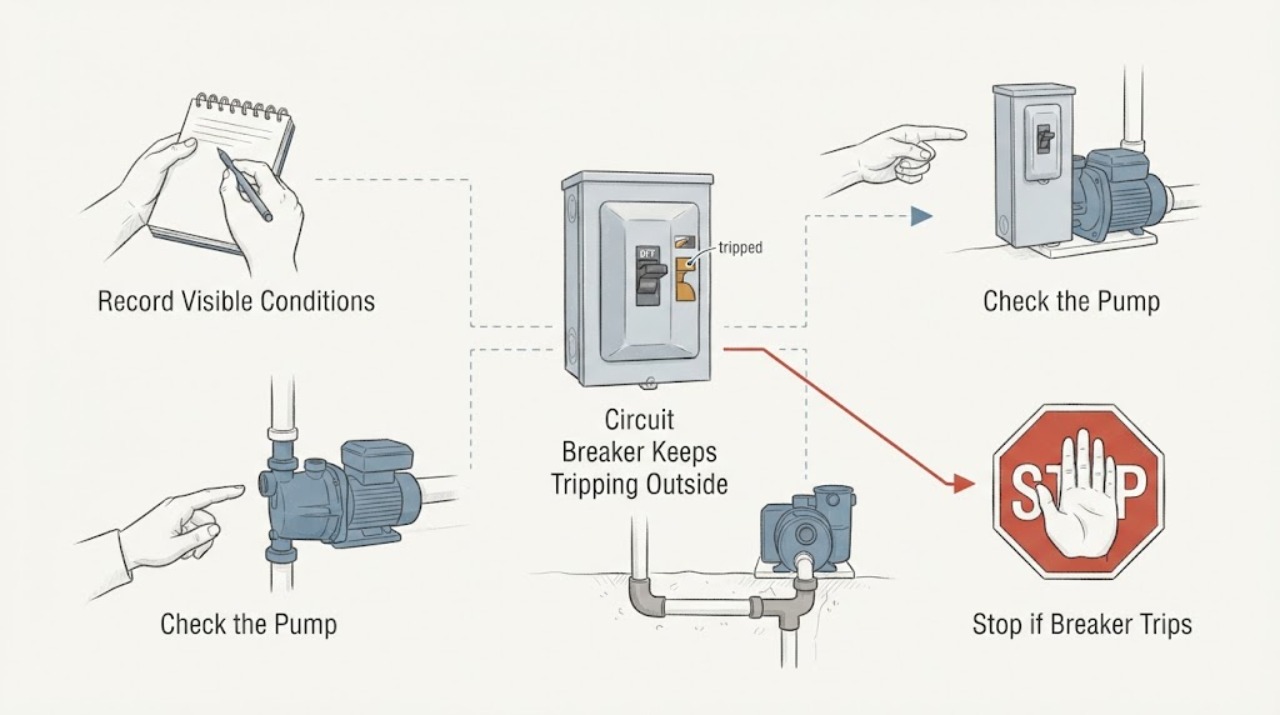
Circuit Breaker Keeps Tripping Outside: Weather, Moisture, and Load Checks
An outdoor breaker that keeps tripping can be reacting to an overloaded branch, a faulty outdoor appliance, moisture in an enclosure or connection, or a wider supply problem. Treat the outdoor location as a safety clue, not permission to open the box: from a dry position, identify the exact breaker, note whether trips follow rain, an appliance start, or a long run, and observe only visible signs.
-
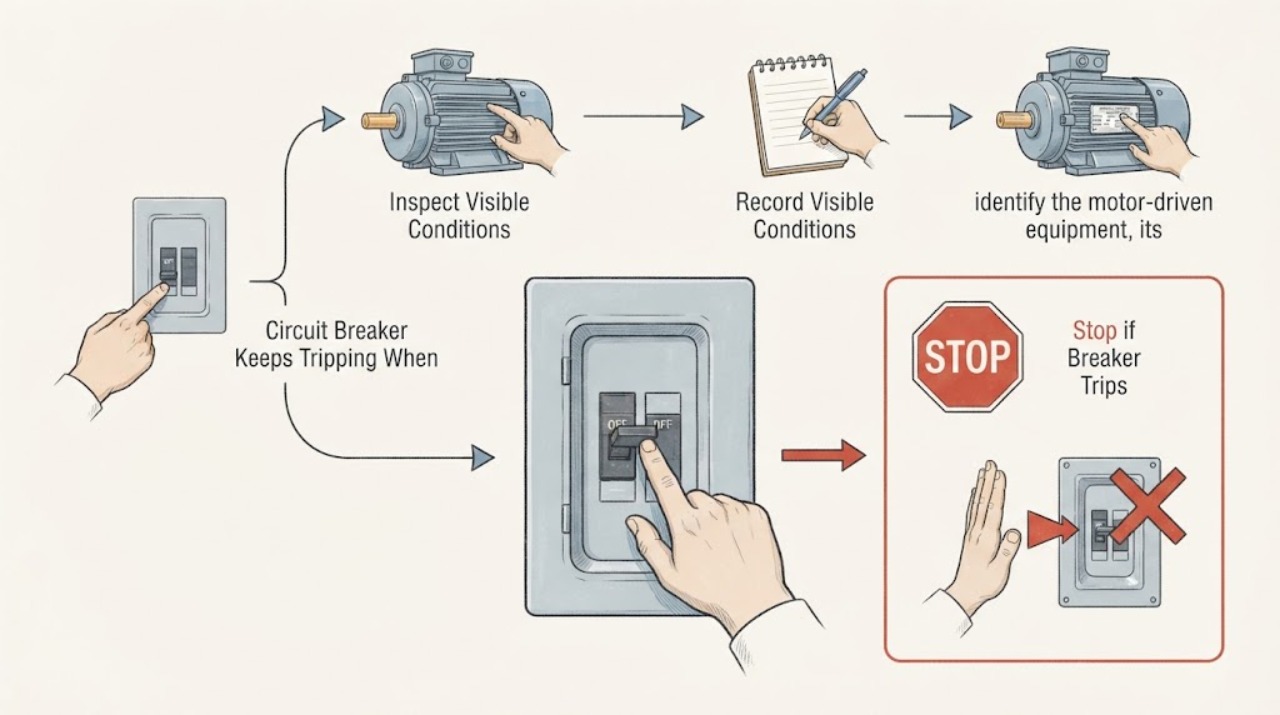
Circuit Breaker Keeps Tripping When a Motor Runs: Identify the Load Safely
If a breaker trips when a motor starts or runs, the motor's starting or running demand may be interacting with an overloaded branch, another load, a mechanical stall, a damaged cord, or a short or ground fault. The trip is a protection response, not proof that the breaker itself is bad.
-
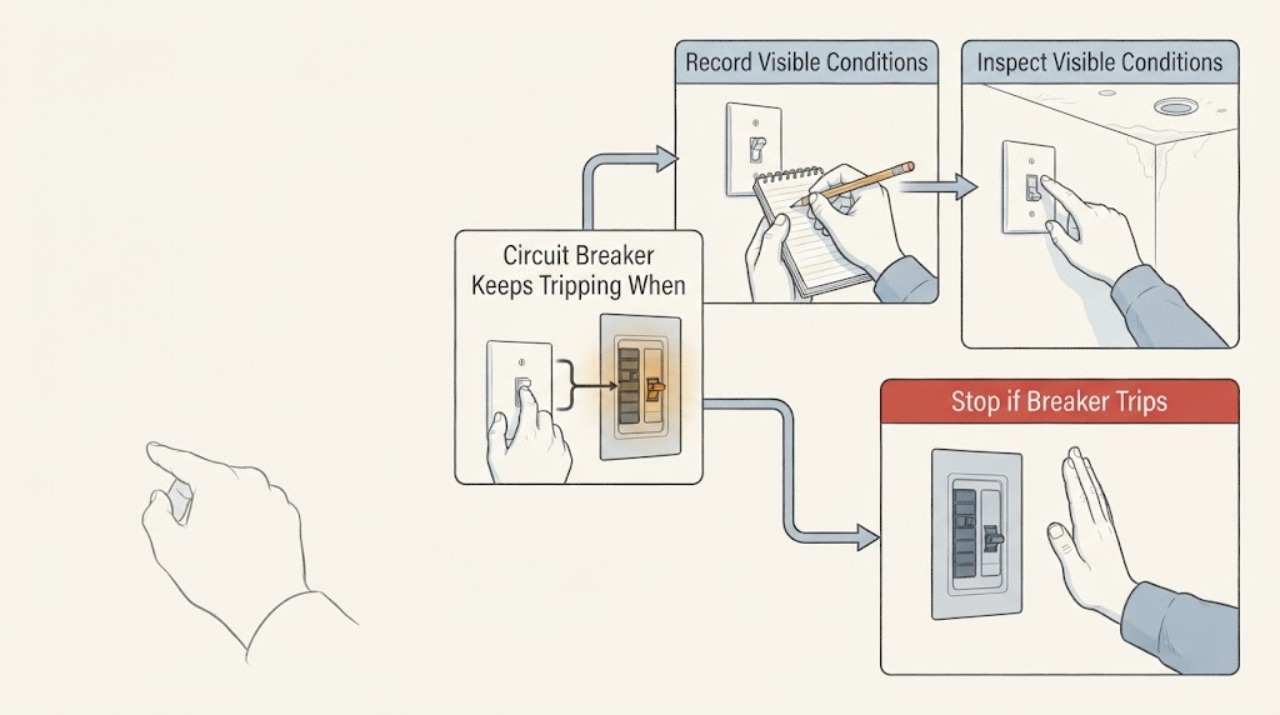
Circuit Breaker Keeps Tripping When a Newly Added Light Switch Is Turned Off
A breaker that trips when a newly added light switch is turned off is not normal switch behavior. Treat the new switch, light fitting, permanent wiring, or a shared circuit fault as unproven and leave the affected circuit out of service; do not keep resetting the breaker or open the switch box or panel.
-
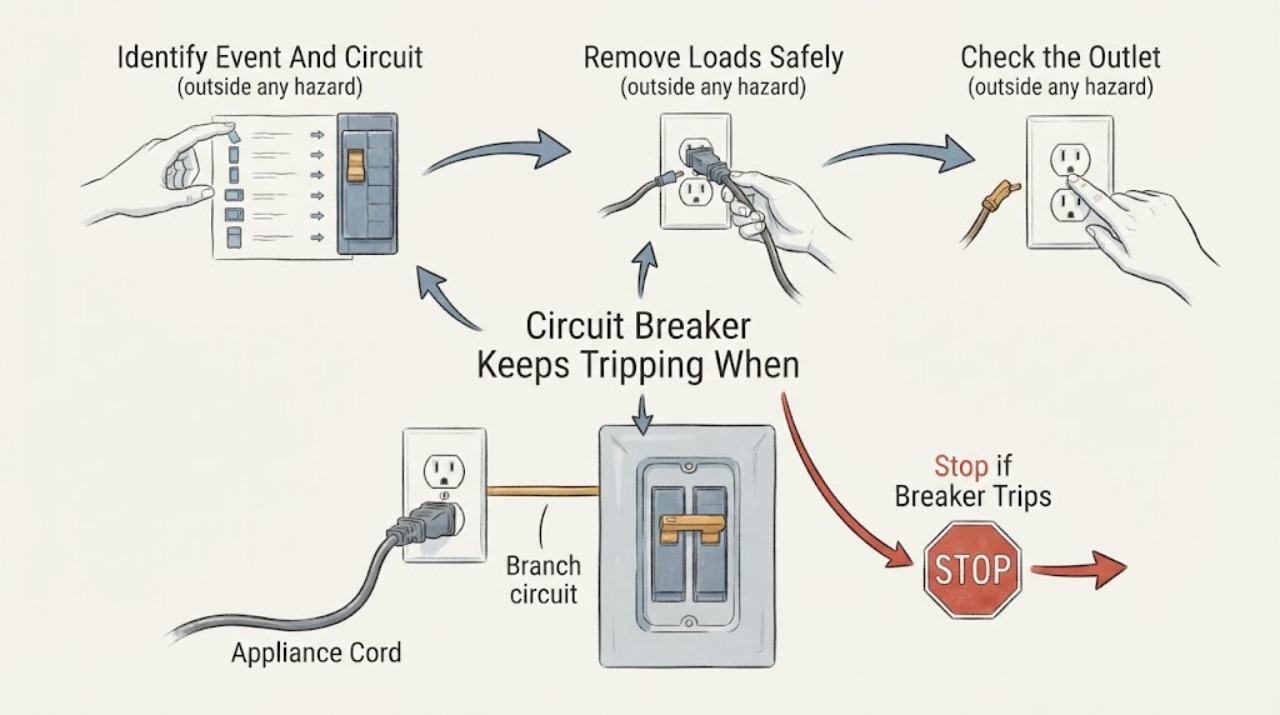
Circuit Breaker Keeps Tripping When an Appliance Is Plugged In
If a circuit breaker trips when one appliance is plugged in, leave that appliance disconnected and do not keep resetting the breaker. The pattern can indicate an appliance defect, a damaged cord or plug, a faulty receptacle, a ground-fault or arc-fault condition, or an overloaded branch circuit.