
On this page
Start here
Quick answer
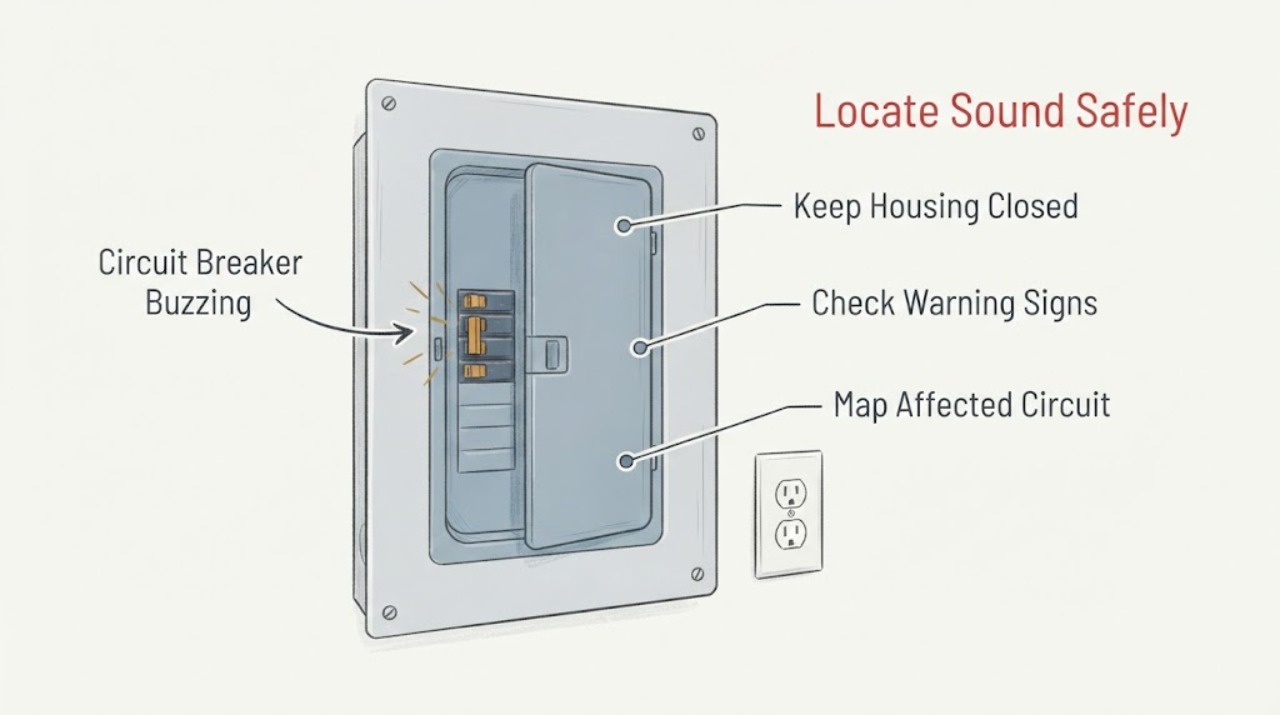
A buzzing circuit breaker or nearby outlet should not be declared normal from sound alone. From a safe distance, identify whether the sound is at the breaker panel, an outlet, a switch, or a device, and note whether it changes when a known load operates. Do not remove a panel cover, pull a hot plug, open an outlet, measure voltage, spray water, or keep resetting the breaker. A hot or discolored panel or outlet, burning odor, smoke, sparks, crackling, flickering, shock, or repeated trip is an urgent stop condition: leave the area as appropriate, avoid touching the equipment, and contact emergency help or a qualified electrician from a safe location. Even without those signs, persistent buzzing should be inspected by a licensed electrician.
Work through in order
Diagnostic checks
Use only checks that match the exact appliance or system and its official guide.
-
Check 1
From the floor and without touching the panel, breaker, outlet, switch, or plugged-in equipment, listen briefly from a safe distance and identify the apparent source: panel or breaker, wall outlet, switch, light fixture, or appliance. Note whether the sound is steady, intermittent, clicking, crackling, or changes with a known load.
Expected result: The sound is localized to the panel or breaker, the outlet or switch, a connected device, or cannot be localized; it may be accompanied by flicker, odor, heat, sparks, smoke, or a trip.
Next step: Use the matching branch below. Keep the equipment off and stop immediately if any heat, odor, sparks, smoke, flicker, shock, or abnormal movement appears.
Stop if: Do not approach or continue listening around smoke, flame, arcing, a rapidly heating enclosure, exposed conductors, water, or an electrical shock hazard.
Why this matters
Why: Location and change with load help an electrician separate a circuit-protection, receptacle, switch, wiring, or device investigation, but sound alone cannot prove that any part is safe.
-
Check 2
Without touching the electrical equipment, visually observe from a safe distance for a hot or discolored outlet or switch plate, scorch mark, smoke, visible spark, damaged cover, flickering or dimming lights, or a burning or unusual odor. Keep people away from the affected area.
Expected result: One or more warning signs is present, or the area is cool, dry, intact, and free of odor, smoke, spark, flicker, and visible damage.
Next step: For any warning sign, leave the circuit or area undisturbed and contact emergency help or a qualified electrician from a safe location. If no warning sign is present, continue only with the non-contact circuit observations below.
Stop if: Do not touch, pull plugs, open covers, use water, or attempt to silence or tighten anything when heat, odor, smoke, sparks, flicker, or shock is present.
Why this matters
Why: ESFI treats buzzing, warm or discolored plates, burning odor, flicker, and frequent trips as signs of an electrical problem. A quiet exterior does not clear a persistent buzz, but an active warning makes further user testing unsafe.
-
Check 3
From safe, dry locations, note which lights, outlets, and devices lose power or change behavior when the known affected circuit is off or when the suspected load is not operating. Do not add a device, unplug a hot device, or repeatedly operate the buzzing control as a test.
Expected result: Only one outlet or device is affected, several outlets or lights share the symptom, the sound changes when a known load operates, or the circuit has already tripped.
Next step: Record the affected rooms and load timing for the electrician. Leave the suspected device off and do not use an extension cord, multi-outlet adapter, or alternate outlet as a workaround.
Stop if: Stop if the sound becomes louder, the equipment warms, lights flicker, a breaker trips, or any odor, smoke, spark, or shock occurs.
Why this matters
Why: A local symptom keeps the receptacle, switch, device, or branch wiring in scope; a broader symptom points toward the circuit or panel. A load-related change does not distinguish overload from a loose or damaged connection without professional testing.
-
Check 4
From outside the panel and without opening its cover, note whether the known breaker is visibly in an off or middle position, whether a GFCI reset indicator has changed, and whether the buzzing began before or after the trip. Do not touch the breaker handle if the panel is hot, wet, smoking, sparking, or damaged.
Expected result: The protective device is visibly tripped and the area is cool and dry, it trips again, it is not tripped but buzzing continues, or the panel shows heat, odor, damage, or smoke.
Next step: Do not repeatedly reset. If the area is entirely safe and the user can identify the correct device, a single normal reset may be considered only to restore ordinary service; if the buzz returns or it trips again, leave it off and call an electrician. For any heat, smoke, spark, odor, wetness, or damage, do not reset and seek emergency or professional help from a safe location.
Stop if: Never open the panel, remove a deadfront, test voltage, bypass protection, or reset a wet, hot, smoking, sparking, or repeatedly tripping circuit.
Why this matters
Why: A trip is evidence that protection operated, not proof of the cause. A repeated trip or buzzing with no trip can still involve a dangerous fault. ESFI explains that breakers protect against overloads but directs persistent electrical warning signs to a qualified electrician.
-
Check 5
If the sound seems to come from a plug-in device rather than the outlet or panel, leave that device switched off and observe from a safe distance whether the outlet remains quiet. Do not pull a plug that is hot, stuck, damaged, wet, or showing an arc; do not move a burning or smoking device.
Expected result: The sound stops when the device is off and no outlet warning sign remains, the outlet itself continues buzzing, or the device and outlet both show heat, odor, damage, or flicker.
Next step: Leave the device disconnected only when it can be done without contact with a hazard, label it for the electrician, and have the outlet and circuit inspected before reuse. Do not substitute another high-load device to compare sounds.
Stop if: Stop for smoke, flame, sparks, burning odor, hot plug or outlet, shock, water, or a plug that will not come out without force; leave and seek appropriate emergency help.
Why this matters
Why: A device-related change narrows the service handoff but does not clear the receptacle or circuit. A persistent outlet sound or any warning sign keeps the electrical installation in scope.
-
Check 6
Prepare a service handoff without opening anything: record the apparent sound location, affected outlet or circuit, load timing, breaker or GFCI position, flicker or odor, heat or discoloration, recent electrical work, moisture exposure, and any safe photos taken from a distance.
Expected result: The electrician receives a repeatable description that distinguishes panel or breaker, outlet, device, or wider circuit symptoms and identifies whether an emergency warning is present.
Next step: Leave the buzzing circuit or outlet unused until the qualified electrician inspects it. Follow local emergency instructions instead of waiting for a routine visit when smoke, fire, arcing, strong odor, or rapid heating is present.
Stop if: Do not continue gathering information if the area becomes hot, smoky, wet, odorous, sparking, or otherwise unsafe.
Why this matters
Why: A clear history helps the professional choose a safe de-energized inspection and avoids repeated user tests that could worsen a fault.
Use your observations
Decision map
Find the observation that best matches what you see, then follow the next safe action.
-
PATH 01Next step
What you see
There is smoke, flame, arcing, sparks, a strong burning odor, rapid heating, or immediate electrical danger.
Do this next
Leave the area, keep others away, do not use water, and contact local emergency help from a safe location. Do not re-enter to reset or inspect the circuit.
-
PATH 02Next step
What you see
The panel, outlet, circuit, or nearby electrical equipment is wet or standing water blocks access.
Do this next
Do not touch or enter the water; have a qualified electrician make the system safe and do not restore power until inspected and dry.
-
PATH 03Next step
What you see
The breaker or protective device trips again, or buzzing returns after a single safe observation or reset.
Do this next
Leave the device or circuit off and arrange qualified electrician service. Do not keep resetting or add a substitute load.
-
PATH 04Next step
What you see
The buzz is localized to one outlet or switch and no emergency sign is visible.
Do this next
Do not open or pull the outlet; leave it unused and have an electrician inspect the receptacle, connections, branch wiring, and connected device.
-
PATH 05Next step
What you see
The panel or breaker buzzes persistently even without an obvious load or trip.
Do this next
Treat it as a professional electrical inspection condition and keep the affected circuit unused until assessed.
-
PATH 06Next step
What you see
The sound appears to stop with one device off, but the outlet and plug have not been proven safe.
Do this next
Leave the device off and provide its identity and timing to the electrician; do not substitute another device or reuse the outlet before inspection.
Helpful context
Understand the symptom
A sound is a location clue, not a safety clearance
Buzzing may be heard at a panel, a breaker, a wall outlet, a switch, or a connected device. The same room can contain several circuits, so do not assume the nearest breaker is the source. A faint sound from a device can change with its own operation, while a sound that comes from a panel or outlet, increases under load, or appears with heat or flicker is an electrical warning. Keep the cover closed and use only non-contact observations.
Why the outlet component still matters
This topic uses outlet as the component context because a buzzing receptacle can make a user describe the whole circuit or breaker as buzzing. A loose connection, overloaded circuit, damaged receptacle, or device fault cannot be distinguished safely by listening alone. ESFI lists unusual sounds, warm or discolored plates, odor, and repeated trips as reasons for qualified inspection; it does not authorize opening the outlet or panel.
Make an emergency distinction before any check
Smoke, flame, sparks, an arc, a strong burning odor, a rapidly heating panel or outlet, or an electrical shock changes this from troubleshooting to emergency safety. Leave the area and contact local emergency help when there is active fire or immediate danger. Never use water on energized electrical equipment. If electrical equipment is wet or standing water blocks access, do not approach it; CDC guidance says to have an electrician turn off power and not restore it until qualified inspection.
Safety boundary
Stop conditions
- Stop and leave the area for smoke, flame, sparks, arcing, strong burning odor, rapid heating, or an electrical shock hazard; contact local emergency help from a safe location.
- Do not touch wet equipment or enter standing water near electrical circuits; have a qualified electrician make the system safe and inspect it before power is restored.
- Leave the breaker or circuit off after a repeated trip or returning buzz. Do not repeatedly reset, overload, use an extension cord, or substitute a load.
- Do not remove a panel cover, open an outlet, pull a hot or stuck plug, measure voltage, bypass a protective device, or use water on an energized electrical fire.
When checks do not resolve it
Need a professional?
Request licensed electrician service for persistent buzzing at a circuit breaker, panel, outlet, or switch; any repeat trip; a local outlet symptom; flicker; heat; odor; or uncertainty about the affected circuit. Use local emergency response for smoke, fire, arcing, or immediate danger.
Have this ready
- Provide the apparent sound location, exact affected outlet or circuit, whether the sound changes with a known load, breaker or GFCI behavior, flicker, heat, discoloration, odor, sparks, moisture, recent electrical work, and safe external photos.
Common questions
FAQ
Is a buzzing circuit breaker always dangerous?
Sound alone cannot identify the cause or clear the circuit. Treat persistent buzzing as an electrical inspection condition, and stop immediately for heat, discoloration, odor, smoke, sparks, flicker, shock, or a repeated trip. Do not open the panel or try to silence the breaker.
What if the buzzing seems to come from an outlet?
Leave the outlet unused and observe only from a safe distance. A buzzing or sizzling outlet, especially with heat, discoloration, odor, flicker, or a trip, needs qualified electrician inspection. Do not open the receptacle, pull a hot plug, or use another device to compare it.
Can I reset a buzzing breaker once?
Do not reset a hot, wet, smoking, sparking, damaged, or repeatedly tripping breaker. If the area is cool and dry and you can safely identify the correct device, one normal reset may be considered; if buzzing returns or it trips again, leave it off and call an electrician.
Should I remove the electrical panel cover to find the buzzing?
No. Keep the panel closed and use only safe-distance observations. Panel interiors, breaker connections, outlet wiring, and energized testing require qualified electrical work; provide the sound location and timing to the electrician.
What should I do if buzzing is accompanied by smoke or a burning smell?
Stop using the circuit, leave the area when appropriate, keep people away, and contact local emergency help from a safe location. Do not use water on energized electrical equipment. If water is also present, do not enter it or touch the equipment; a qualified electrician must make the system safe.
Read the exact guide
Official sources
- Switch to SafetyElectrical Safety Foundation International · Official ESFI home-safety guidance for warning signs at switches, outlets, and lighting controls.
- What to Do to Protect Yourself From Electrical HazardsCenters for Disease Control and Prevention · Official CDC electrical-hazard guidance for wet equipment, standing water, sparks, and burning odor.
- Don't Overload Your HomeElectrical Safety Foundation International · Official ESFI residential electrical-safety guidance for identifying warning signs and avoiding overload workarounds.
Community feedback
Share a repair observation
Share a plain-text repair observation. Accepted observations are published automatically; this page may take a moment to update.