
Repair problem
Buzzing Troubleshooting Guides
Published FixGraph guidance for diagnosing and responding to buzzing.
Matching published guides
Choose a guide that matches the service, equipment, and conditions you are seeing.
-
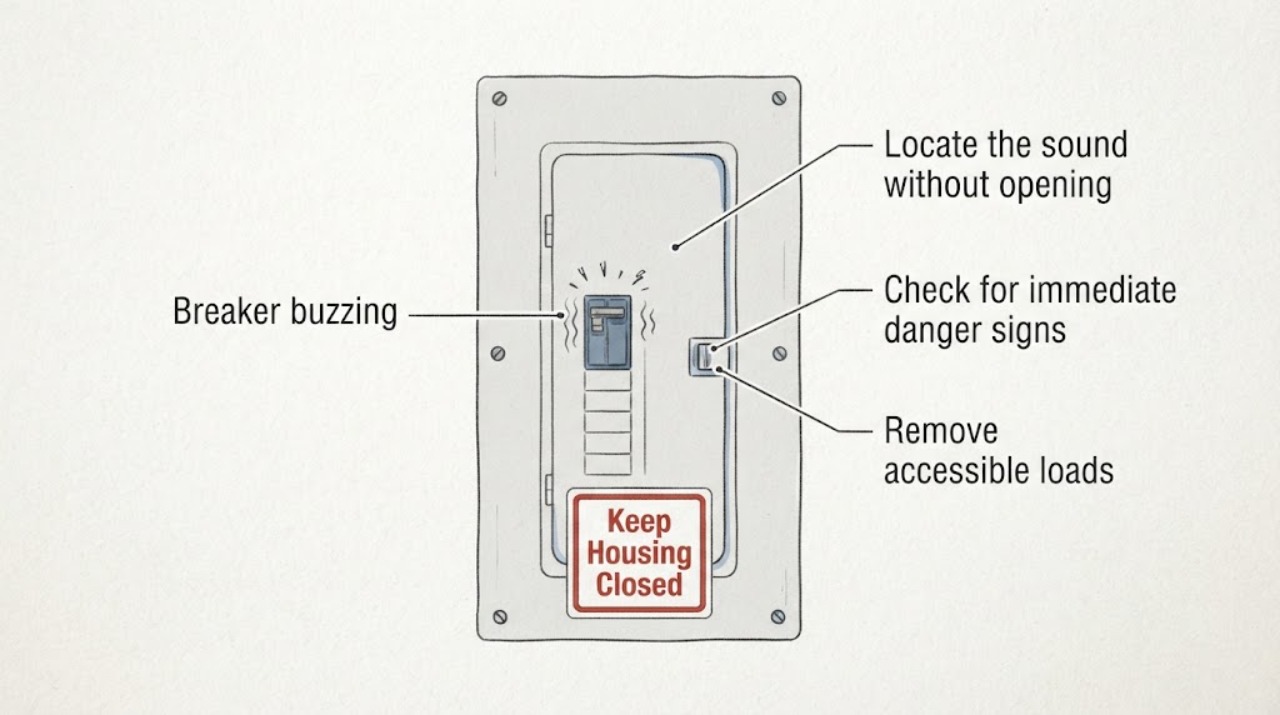
Breaker buzzing: What to Check and What to Do Next
A sustained buzz, hum, crackle, or sizzle from a circuit breaker or electrical panel is a warning sign, not a noise to mask or troubleshoot by opening the panel. Stop using the loads on that circuit, keep the panel cover closed, and arrange a qualified electrician to inspect it. If you notice heat, a burning smell, discoloration, smoke, sparks, or repeated tripping, leave the area and call for urgent electrical help; call emergency services if there is smoke or fire.
-
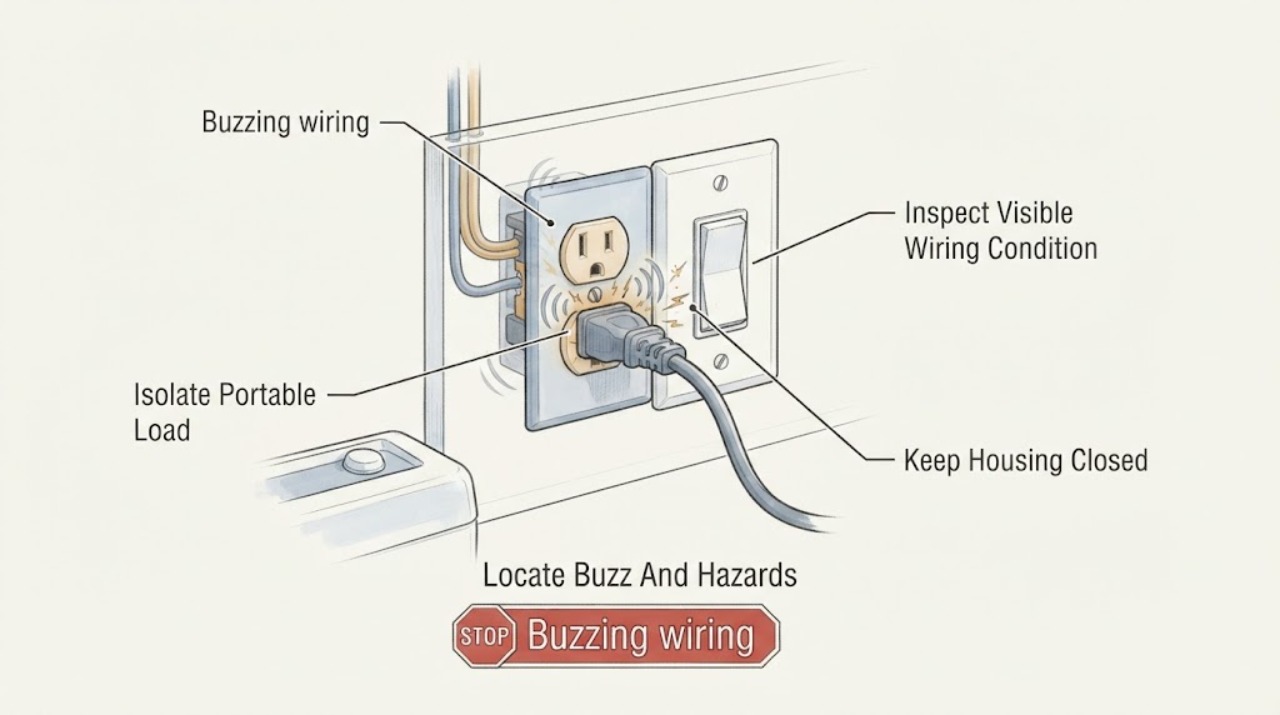
Buzzing wiring: safe checks before calling an electrician
Treat a new or unusual buzz from wiring, a switch, outlet, plug, or appliance as a possible electrical hazard, not as a noise to ignore. From a safe position, note exactly where it comes from and look without touching for sparks, smoke, burning or hot-plastic odor, scorch marks, melted plastic, a hot or discolored plate, flickering lights, shocks, or repeated breaker trips.
-
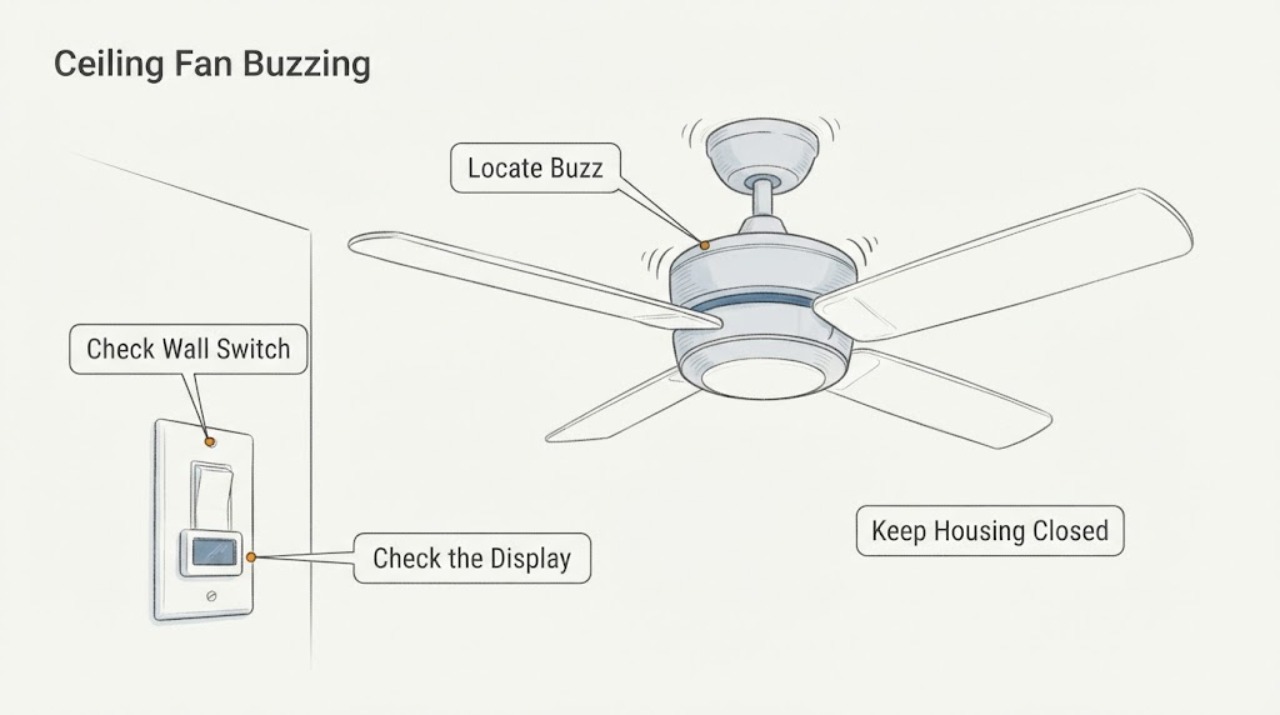
Ceiling Fan Buzzing at the Switch: Safe Checks Before Service
A ceiling-fan buzz that seems to come from the wall switch can be caused by an incompatible dimmer or fan-speed control, a control receiver, the fan light load, or a wiring or circuit problem. Turn the fan and light off, identify whether the sound is at the switch or at the fan, and use only ordinary visual checks and the exact fan manual.
-
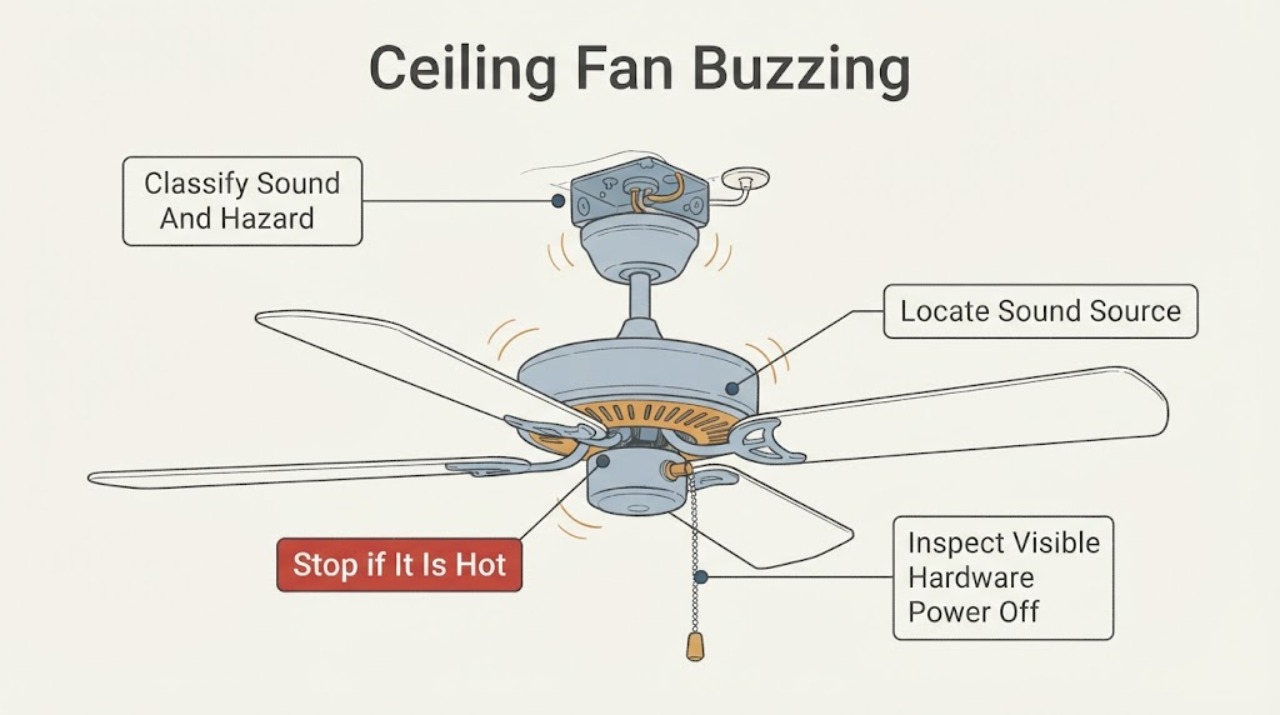
Ceiling Fan Buzzing: Locate the Sound Before It Becomes an Electrical Hazard
A ceiling fan's buzz can come from a compatible-control problem, light kit or bulb, a receiver, resonance against the ceiling, a loose visible part, or an internal motor or wiring fault. Turn the fan and light off.
-
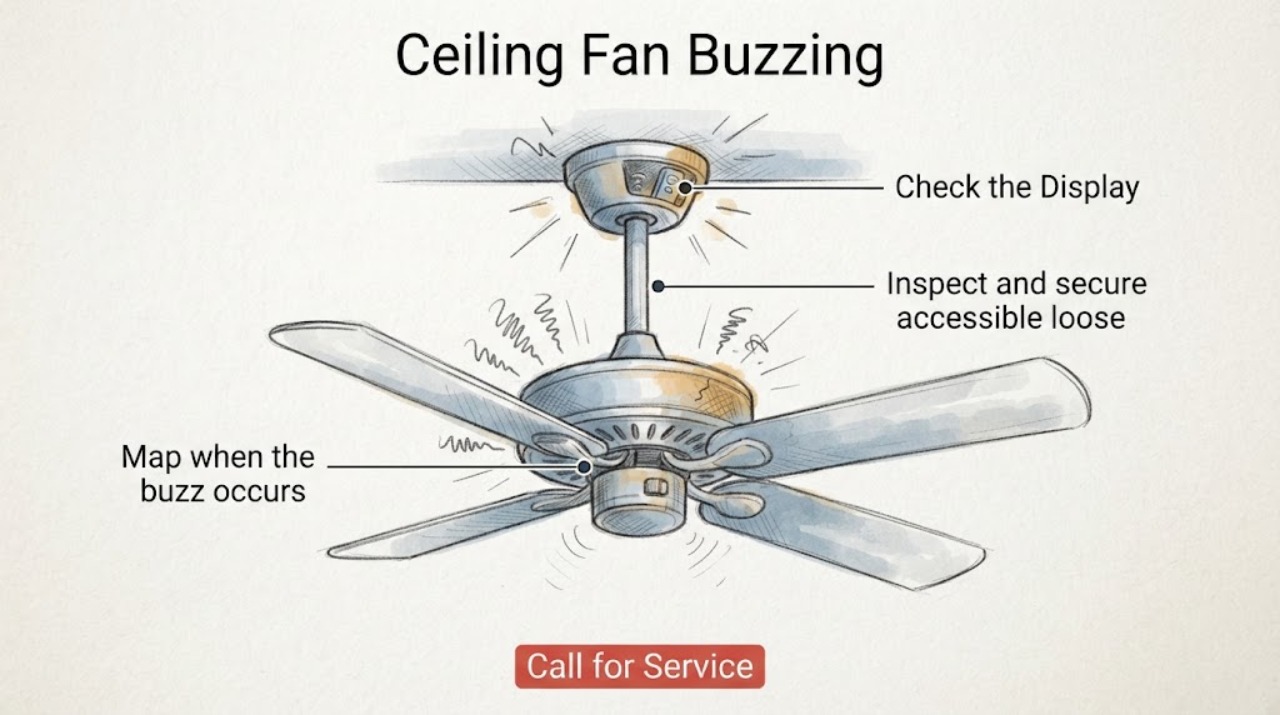
Ceiling Fan Buzzing
A ceiling fan that buzzes may have a loose blade, light kit, canopy, or mounting part, an incompatible wall control or dimmer, or an electrical or motor-control problem. First note whether the sound changes with speed and whether it starts only when the light or a wall control is used.
-
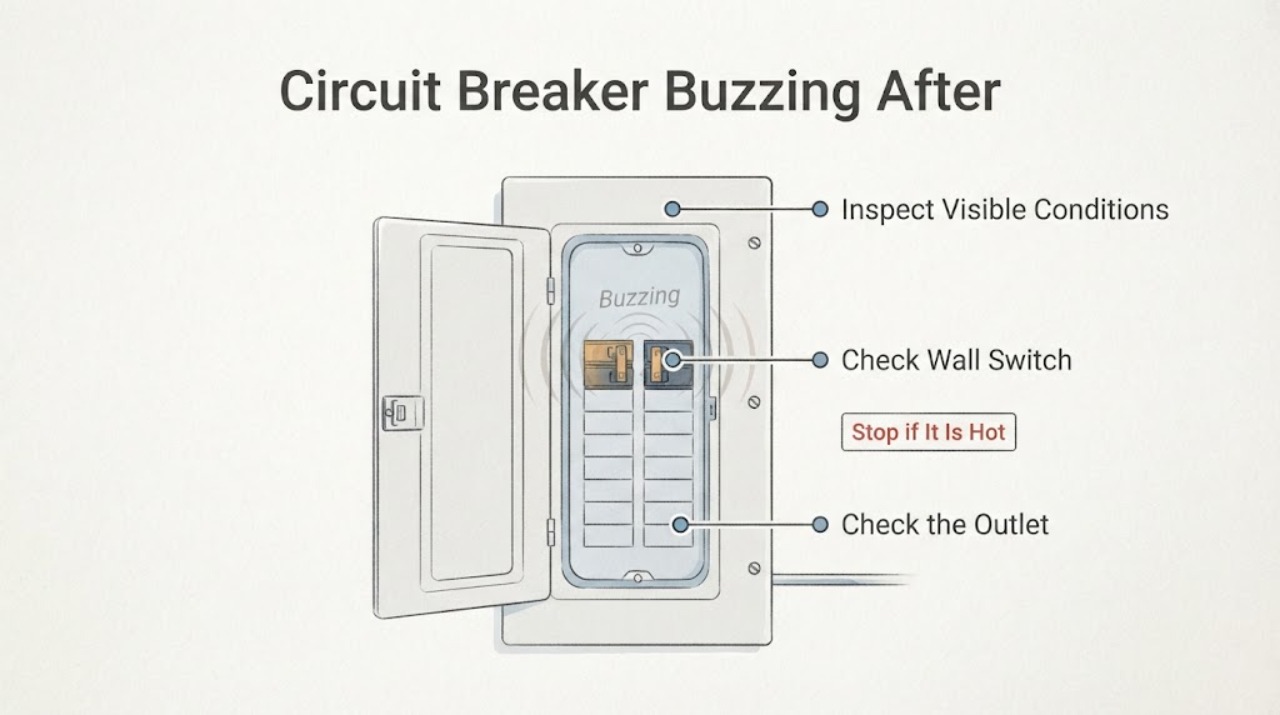
Circuit Breaker Buzzing After a Burning-Plastic Smell Near a Bathroom Switch
Buzzing together with a burning-plastic smell at a hall bathroom light switch is an electrical stop condition, not a switch to keep testing. From a safe distance, note whether there is smoke, flame, visible arcing, heat, or water; identify whether the odor is strongest at the switch, outlet, cord, appliance, or service panel; and note which circuit appears affected.
-
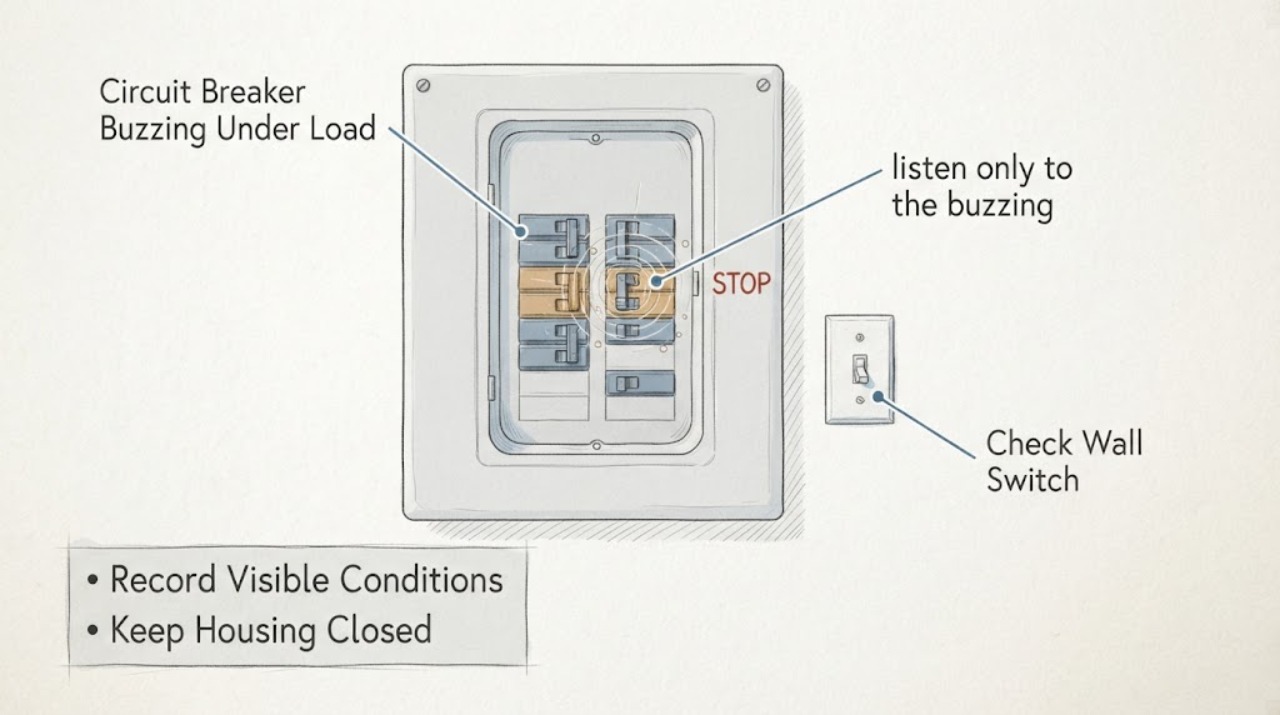
Circuit Breaker Buzzing Under Load: Safe Triage Before an Electrical Inspection
A circuit breaker that buzzes when there is a load on it should be treated as an electrical warning, not as a reason to add or repeat a load test. A brief sound already observed with one appliance is different from buzzing that continues with several known loads, but neither pattern can identify a safe household repair.
-
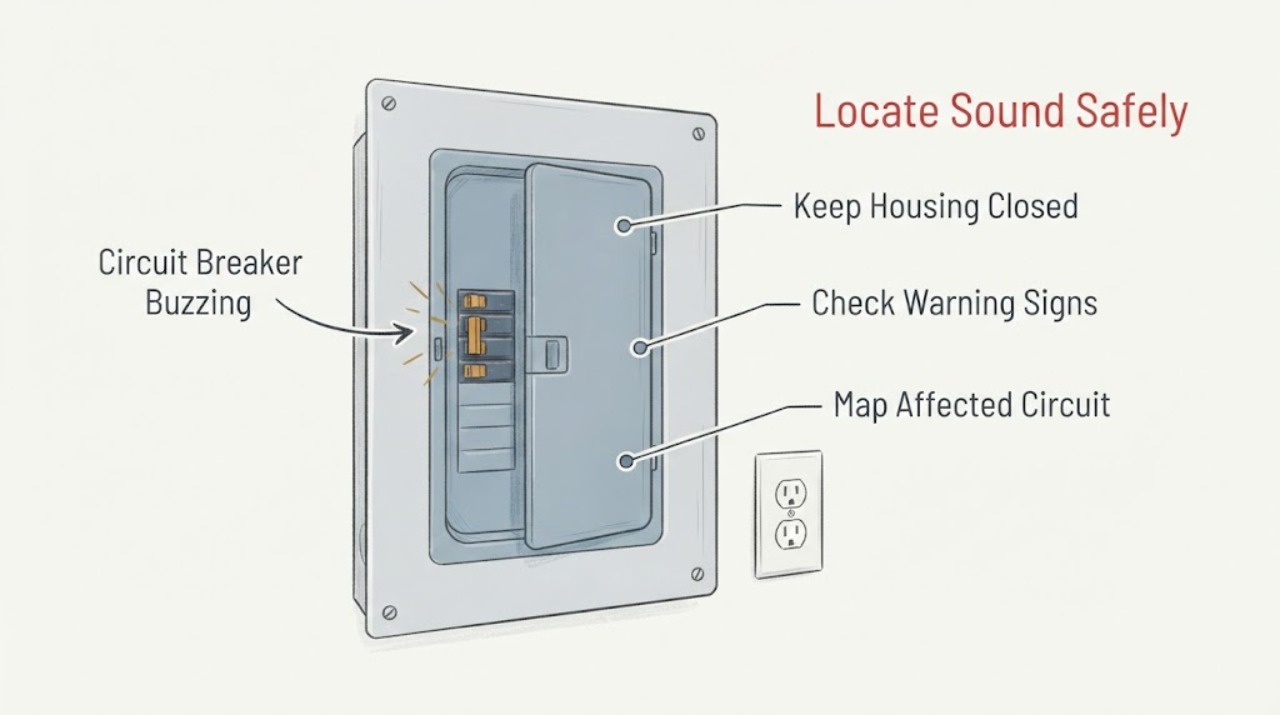
Circuit Breaker Buzzing: Treat Outlet Symptoms as an Electrical Warning
A buzzing circuit breaker or nearby outlet should not be declared normal from sound alone. From a safe distance, identify whether the sound is at the breaker panel, an outlet, a switch, or a device, and note whether it changes when a known load operates.
-
Circuit breaker buzzing
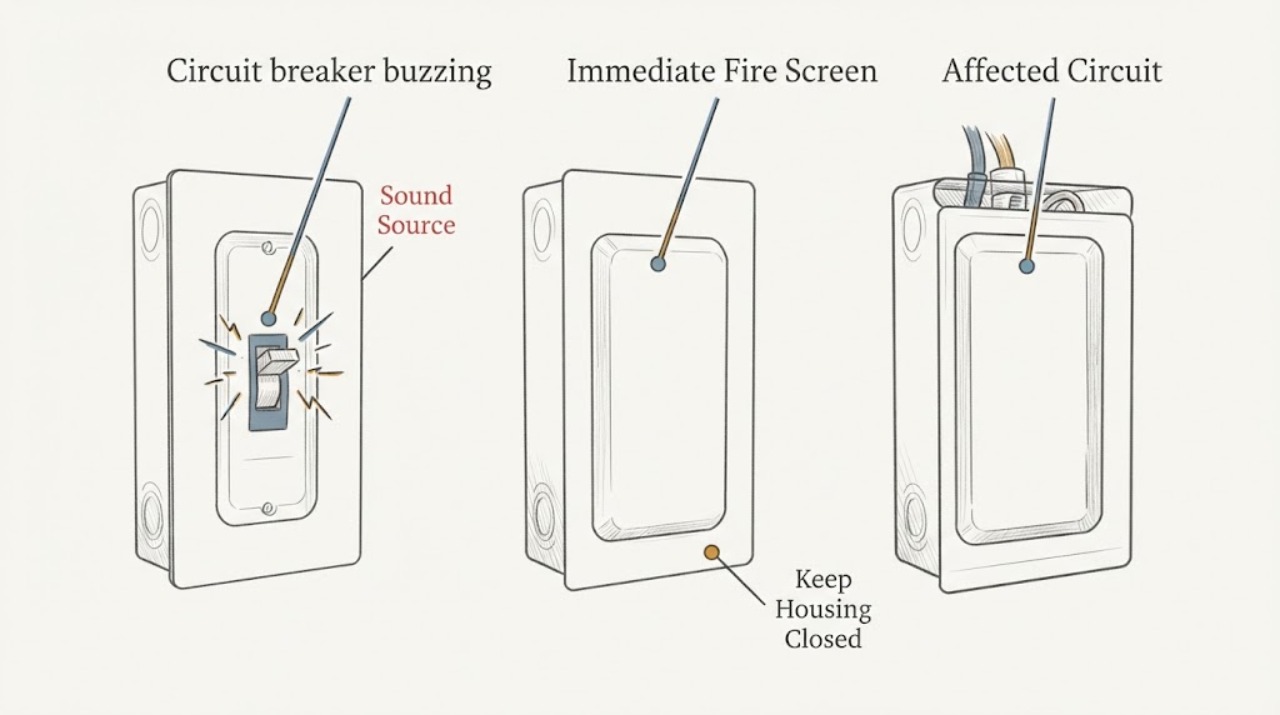
A faint, steady sound from some energized breakers can be normal for a particular device, but a new, loud, changing, or continuous buzz should be treated as an electrical-service issue. From outside the panel, note the exact sound source, affected circuit, load changes, flickering, trip behavior, heat, discoloration, odor, smoke, or arcing.
-
Circuit breaker buzzing: identify the affected circuit and stop safely
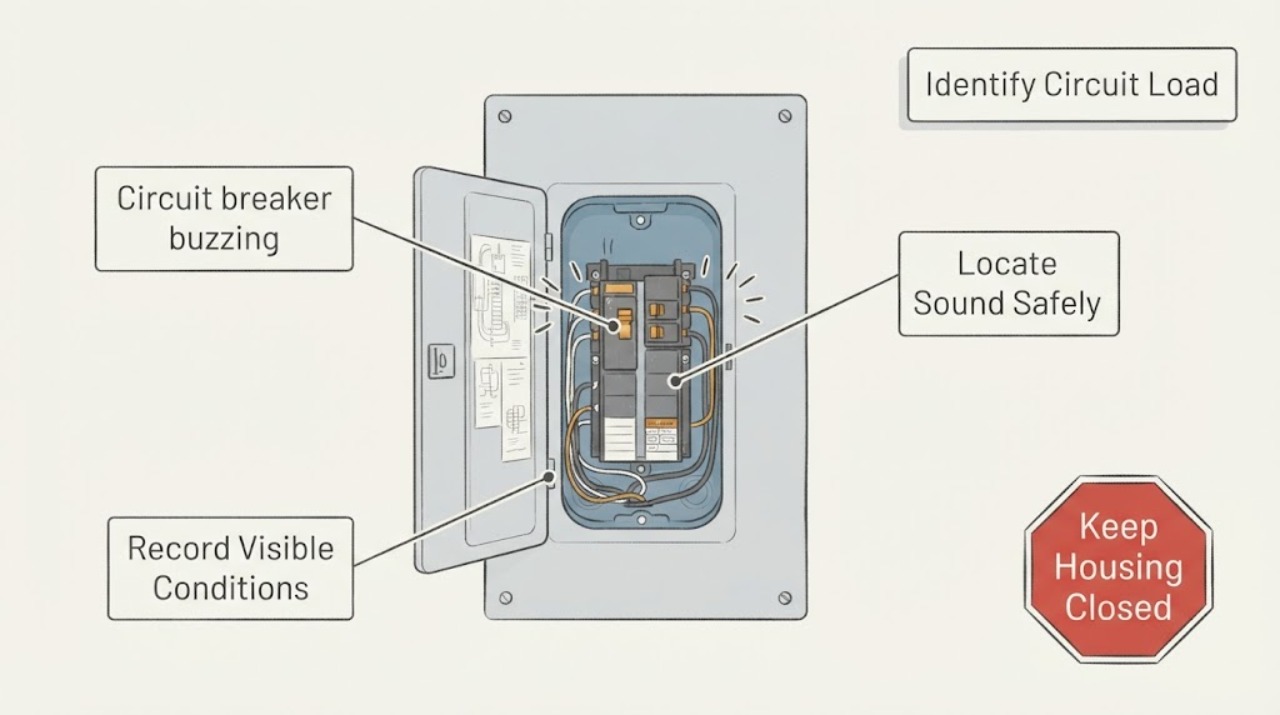
A circuit breaker that makes a new, loud, or persistent buzzing sound should be treated as an electrical warning until a qualified electrician identifies the cause. From a safe distance, determine whether the sound comes from one breaker, the panel door, a nearby switch, or an appliance on a particular circuit.
-
Circuit Breaker Buzzing: Stop Safely and Call an Electrician
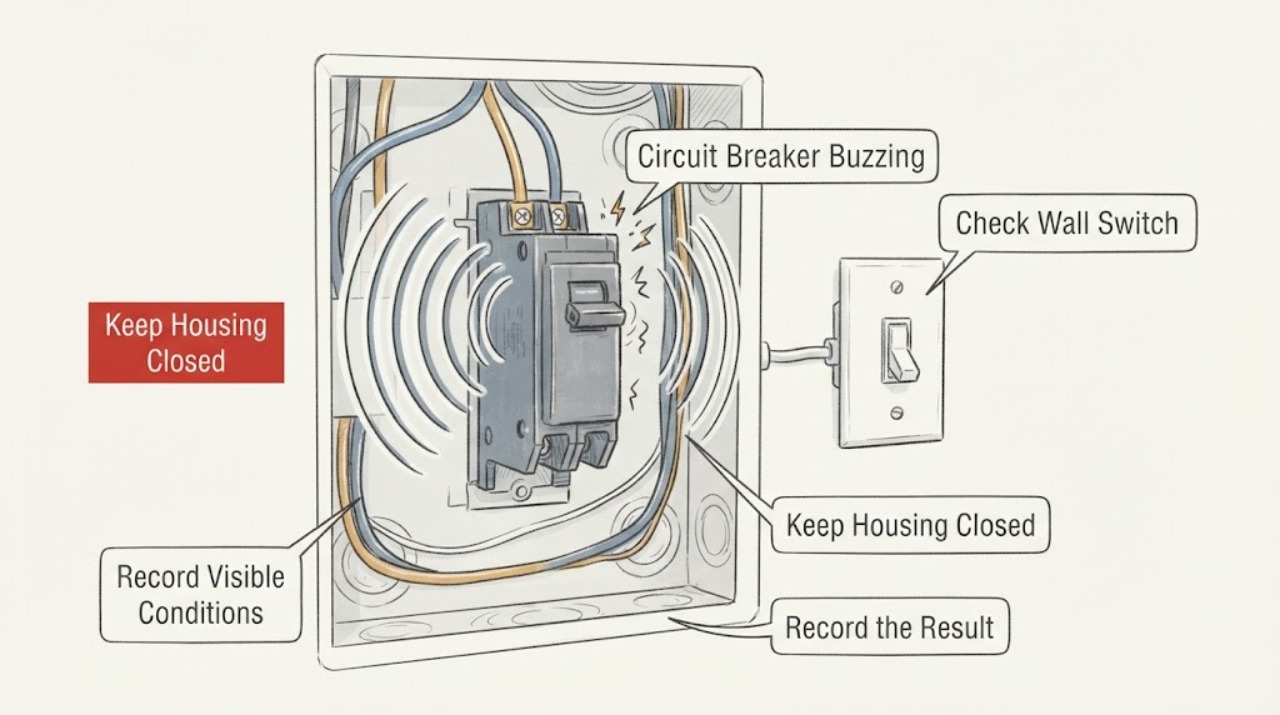
A circuit breaker that produces a continuous buzz, hum, sizzle, or crackle is not a homeowner repair project. From a safe distance, note whether the sound is at the breaker panel, a switch or outlet, or an appliance; whether it changes when a known load starts; and whether there is heat, discoloration, burning odor, flickering, smoke, arcing, or a trip.
-
Circuit Breaker Buzzing: Safe Checks and When to Call an Electrician
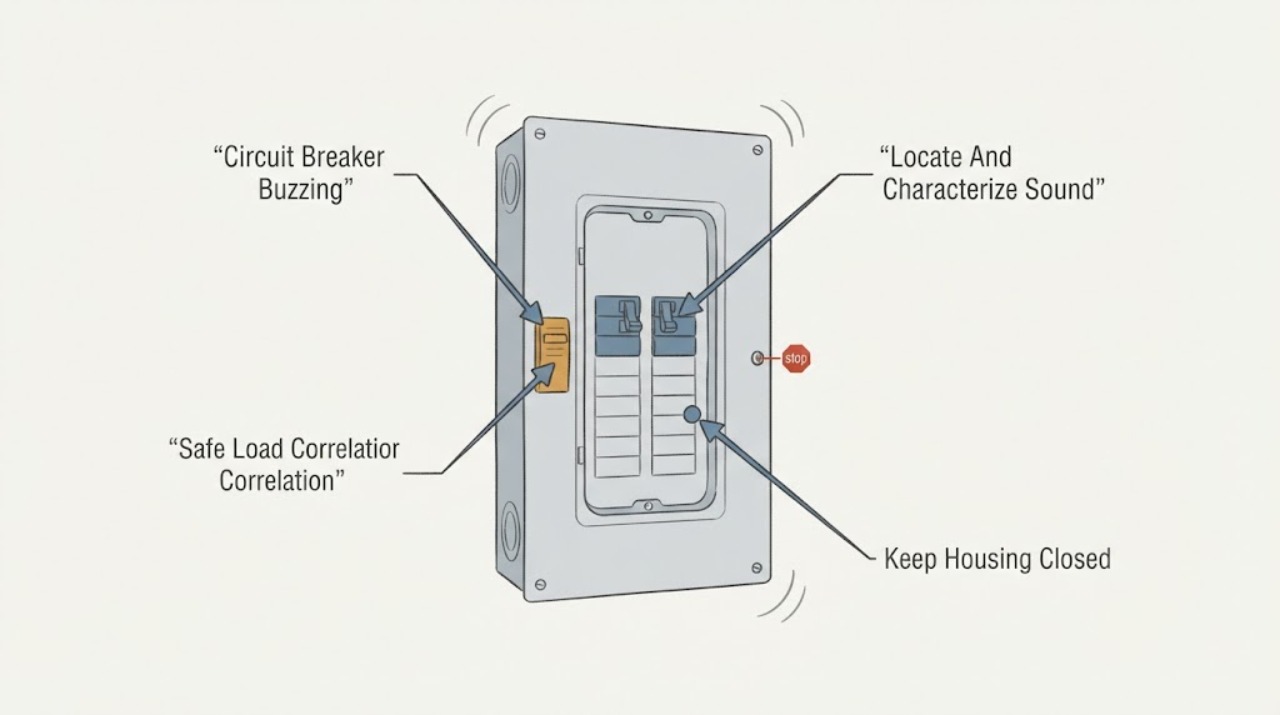
An unusual buzzing or sizzling sound from a circuit breaker, panel, outlet, or nearby electrical device should be treated as a warning sign, not a noise to test by opening the panel. From a safe, dry position, identify where the sound comes from, whether it changes with a known load, and whether you can see flickering, discoloration, smoke, sparks, moisture, or signs of heat without touching anything.
-
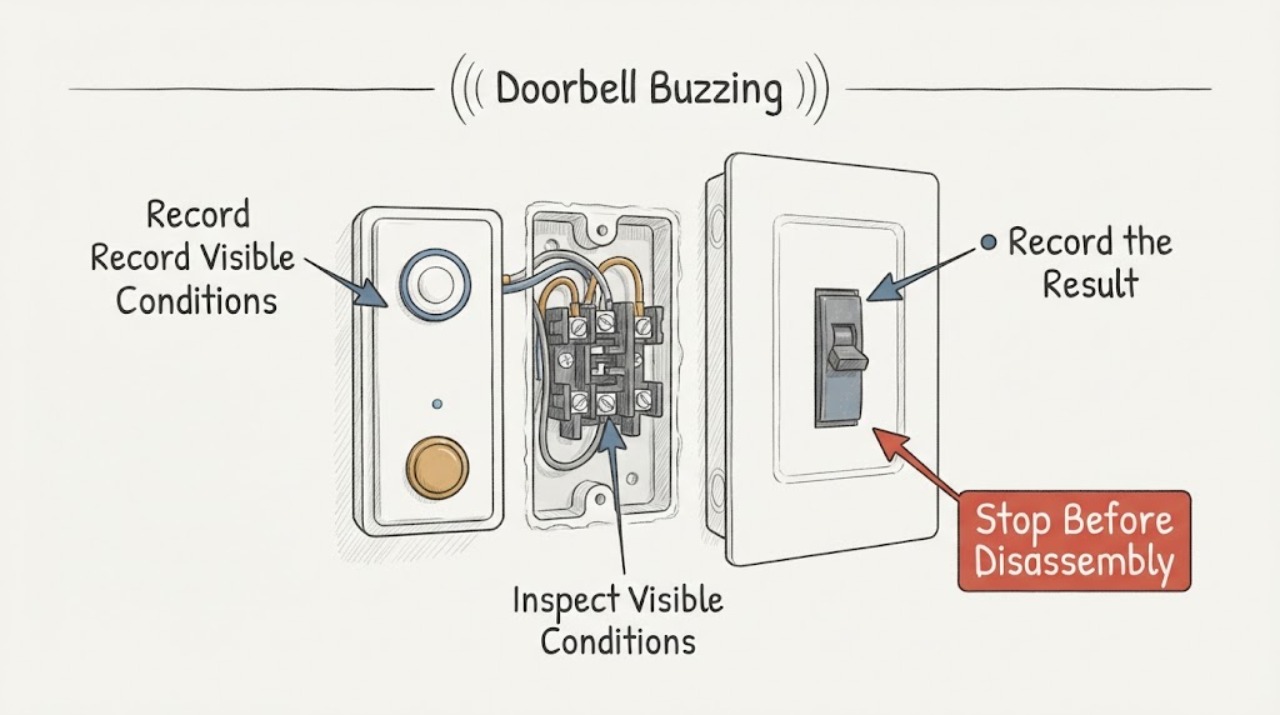
Doorbell Buzzing: Chime, Transformer, Button, and Wiring Checks
A doorbell buzz usually comes from the chime, its button circuit, or the low-voltage transformer, while a buzz at the breaker or wall can signal a separate electrical hazard. Listen from a safe position to locate the sound, note whether it changes when the button is pressed, and check only the outside of the chime, button, transformer area, plug, and breaker for heat, odor, damage, moisture, or arcing.
-
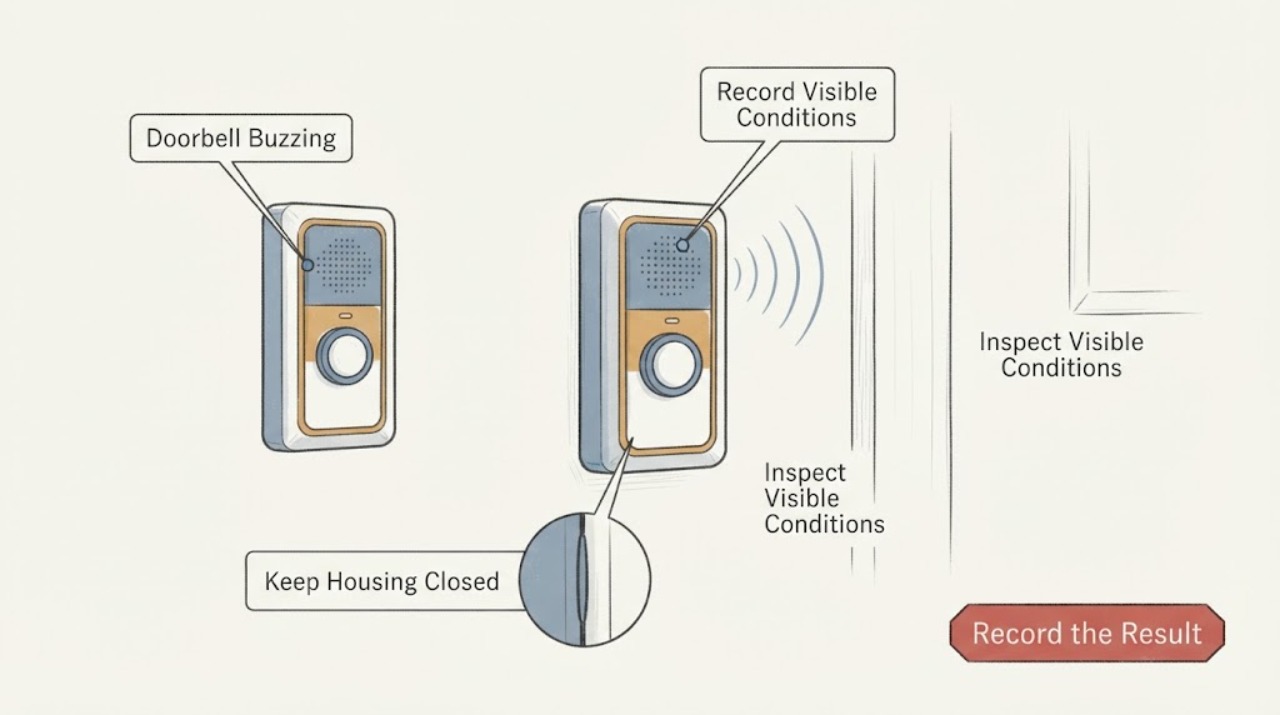
Doorbell Buzzing: Isolate the Button, Chime, and Transformer Safely
A doorbell that buzzes may have a button or switch that is stuck closed, a chime mechanism that is being held on, an incompatible or weak transformer, a misconfigured smart-doorbell chime, or a wiring fault. First identify where the sound comes from and whether it is continuous or only occurs when the button is pressed.
-
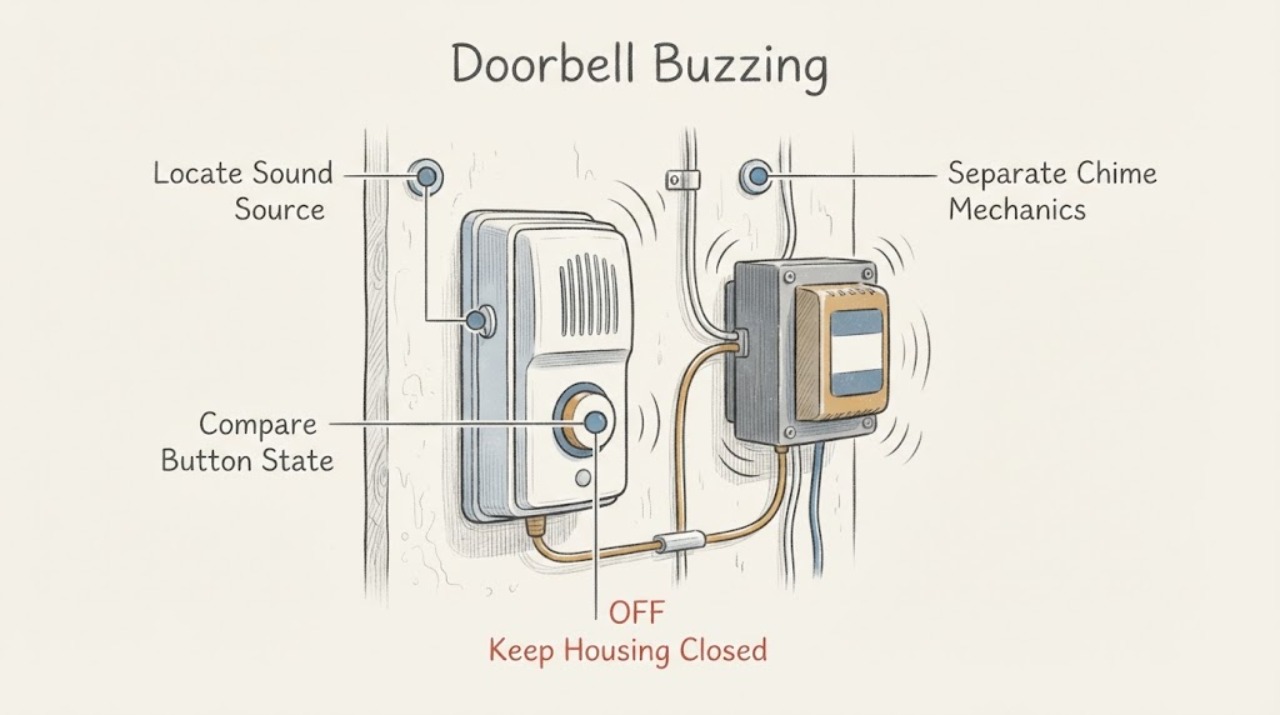
Doorbell Buzzing: Isolate the Chime, Button, and Transformer Safely
A doorbell buzz can come from the chime or button being held in its energized state, a doorbell transformer or chime that is vibrating normally but audibly, incompatible or overloaded connected equipment, or a wiring or component fault. First identify where the sound comes from and whether it continues after the button is released.
-
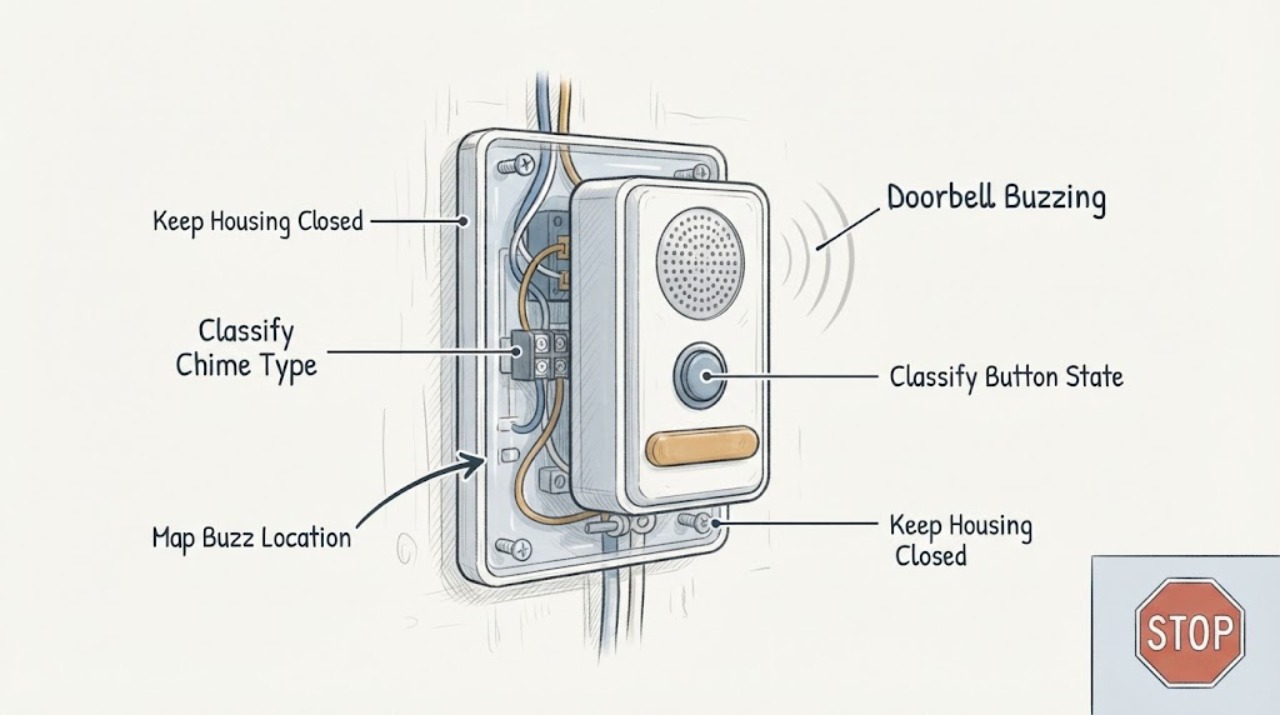
Doorbell Buzzing: Tell Whether the Chime, Button, Transformer, or Wiring Is Involved
A doorbell buzz can come from the chime, the button being held or sticking, a transformer or power mismatch, a chime connector or wire arrangement, or a fault in the low-voltage wiring. First listen from a safe position and record whether the sound is at the chime, button, or transformer, whether it starts only during a press, and whether the doorbell is wired or battery-powered.
-
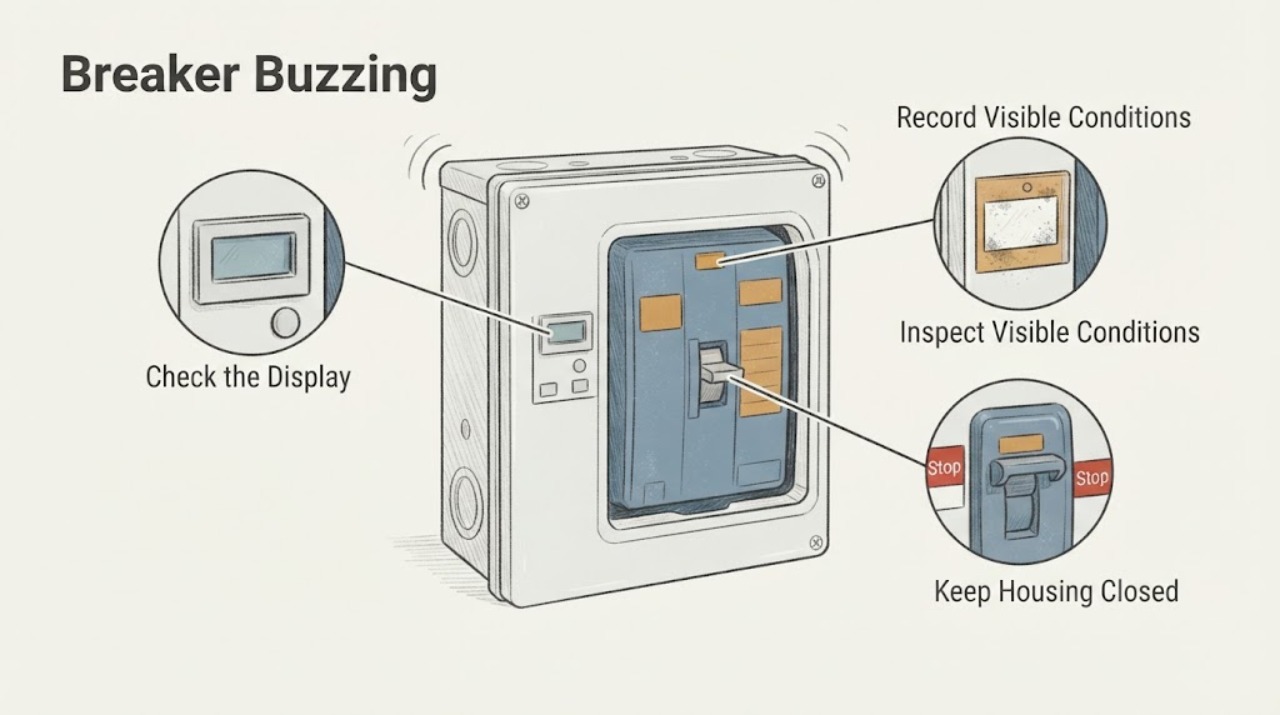
Eaton Breaker Buzzing: What to Check and What to Do Next
A faint sound from an energized Eaton breaker should not be dismissed, especially if it is new, getting louder, associated with a heavy load, or accompanied by warmth, odor, discoloration, flicker or tripping. Eaton's own troubleshooting guidance describes vibration noise during an overload as a condition that should reduce when the load is reduced, and says persistent noise at nominal load requires the equipment to be powered off and serviced.
-
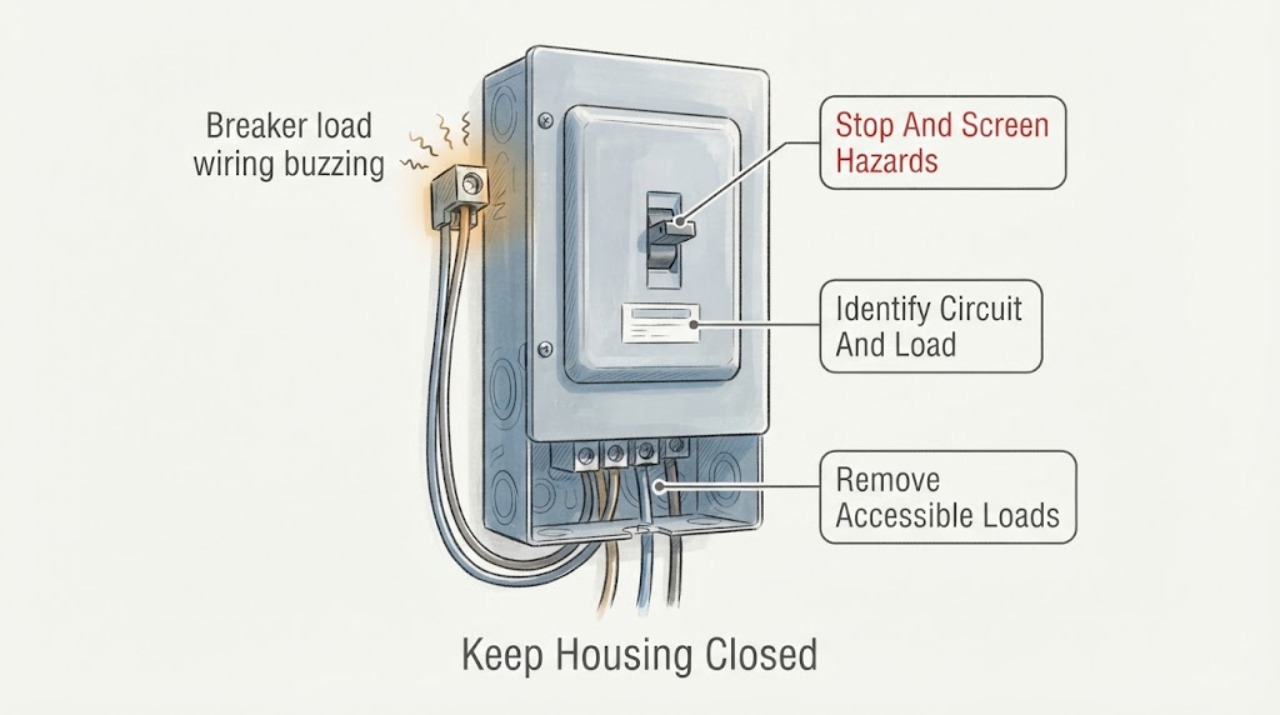
Eaton breaker load wiring buzzing: What to Check and What to Do Next
An Eaton breaker or its load wiring should not be treated as a harmless noise source when it buzzes, especially if the sound changes with a load, the breaker trips, the enclosure is warm or discolored, lights flicker, or there is a burning smell. From outside the closed panel, identify the exact breaker and the load it supplies, turn off or unplug only accessible loads if that can be done without approaching the panel, and note whether the sound stops.
-
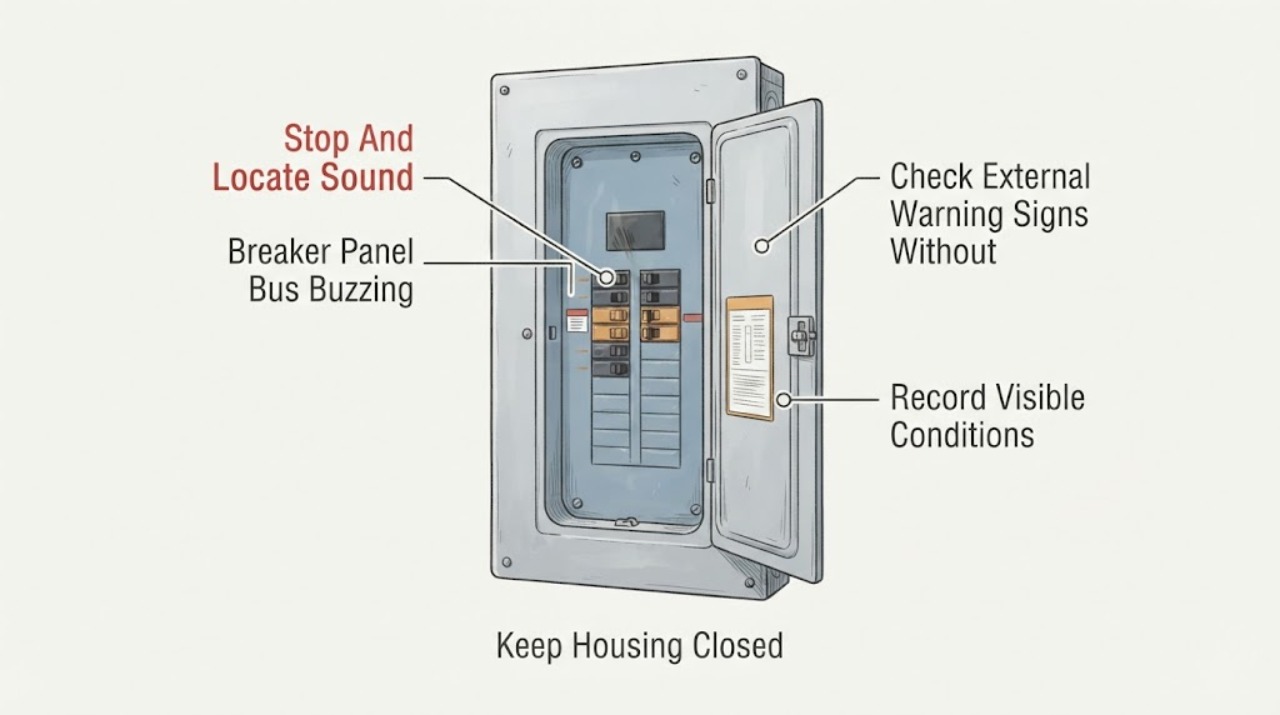
Eaton Breaker Panel Bus Buzzing: What to Check and What to Do Next
A buzzing sound that appears to come from an Eaton breaker panel or bus should be treated as an electrical warning, not as a DIY tightening or breaker-swap problem. From a dry position with the panel cover closed, note whether the sound is continuous or load-related and look without touching for a tripped breaker, flickering lights, heat, discoloration, melted plastic, smoke, or a burning-insulation odor.
-
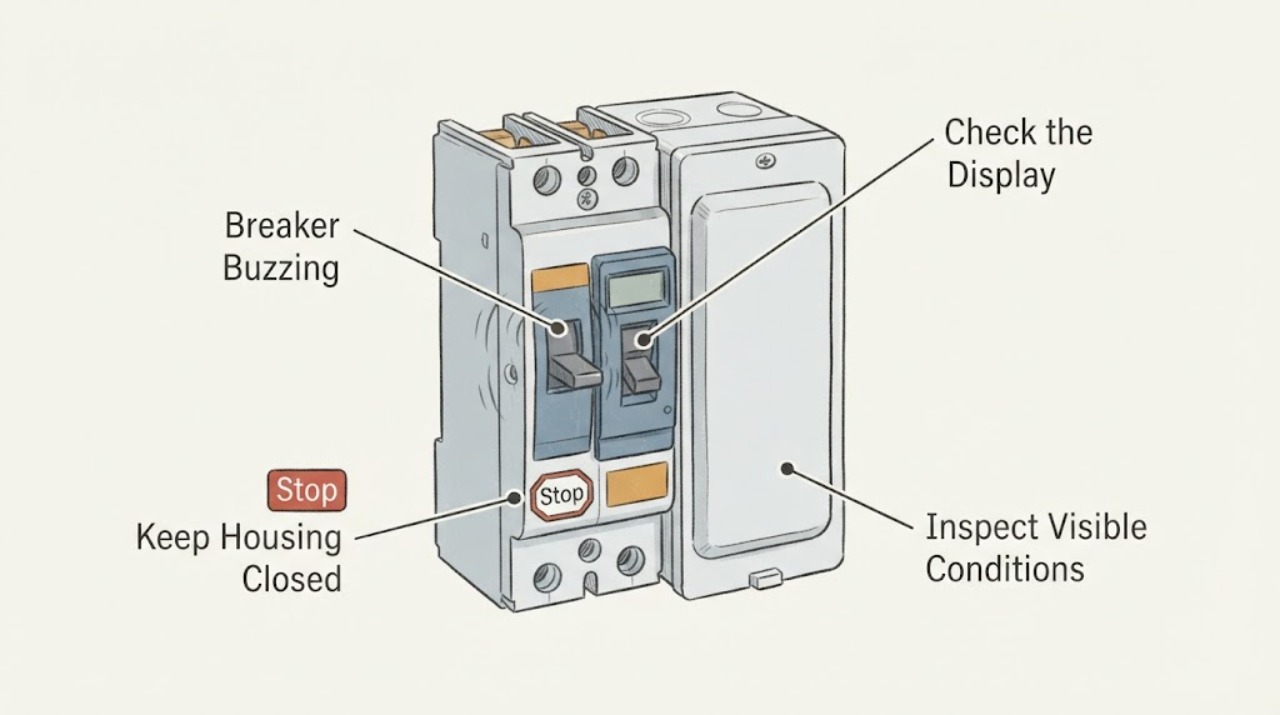
GE Breaker Buzzing: What to Check and What to Do Next
A new or clearly audible buzz from a GE circuit breaker should be treated as a warning until a qualified electrician identifies its cause. The sound may change with an overloaded or faulty appliance, but it can also come from a loose or damaged connection, breaker mechanism or arcing condition.
-
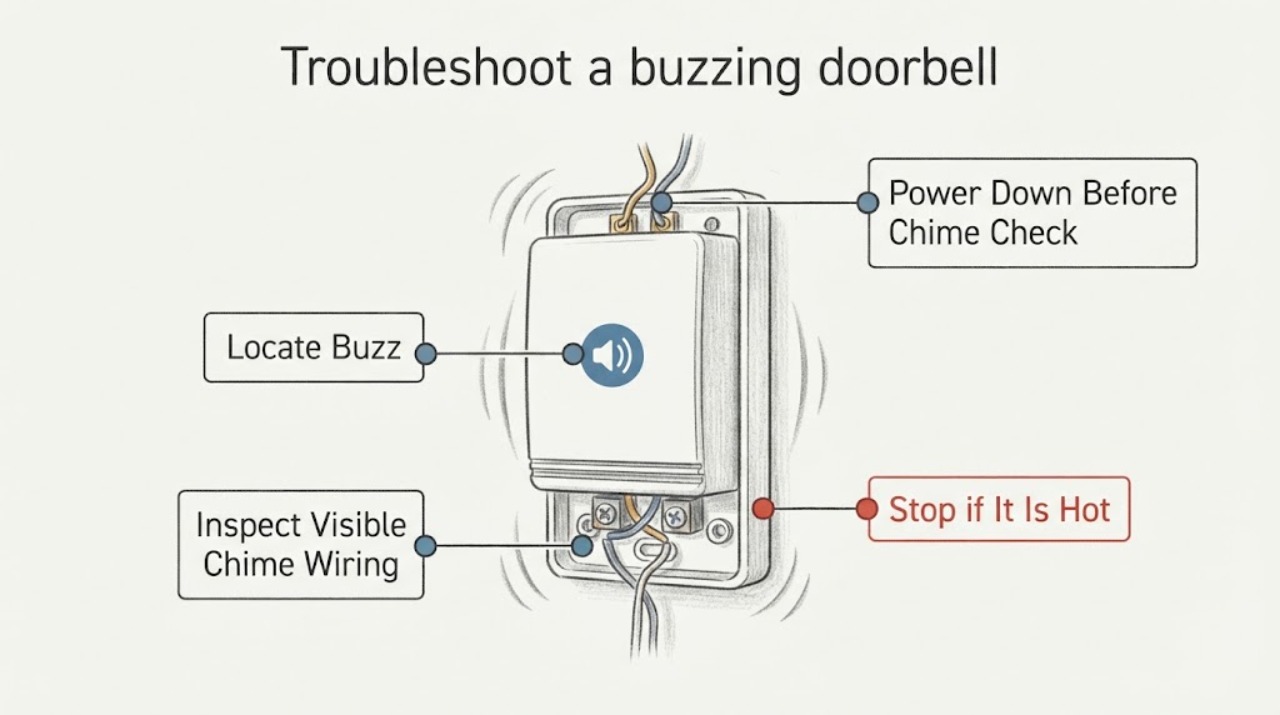
How to troubleshoot a buzzing doorbell
First identify whether the sound comes from the button, indoor chime, or transformer, and stop using the doorbell if any part is hot, smells burnt, smokes, or shows damaged wiring. For a wired smart doorbell, a buzzing chime can follow an incorrectly installed or missing chime connector, incompatible wiring, or an under-specified transformer; follow the exact device instructions.
-
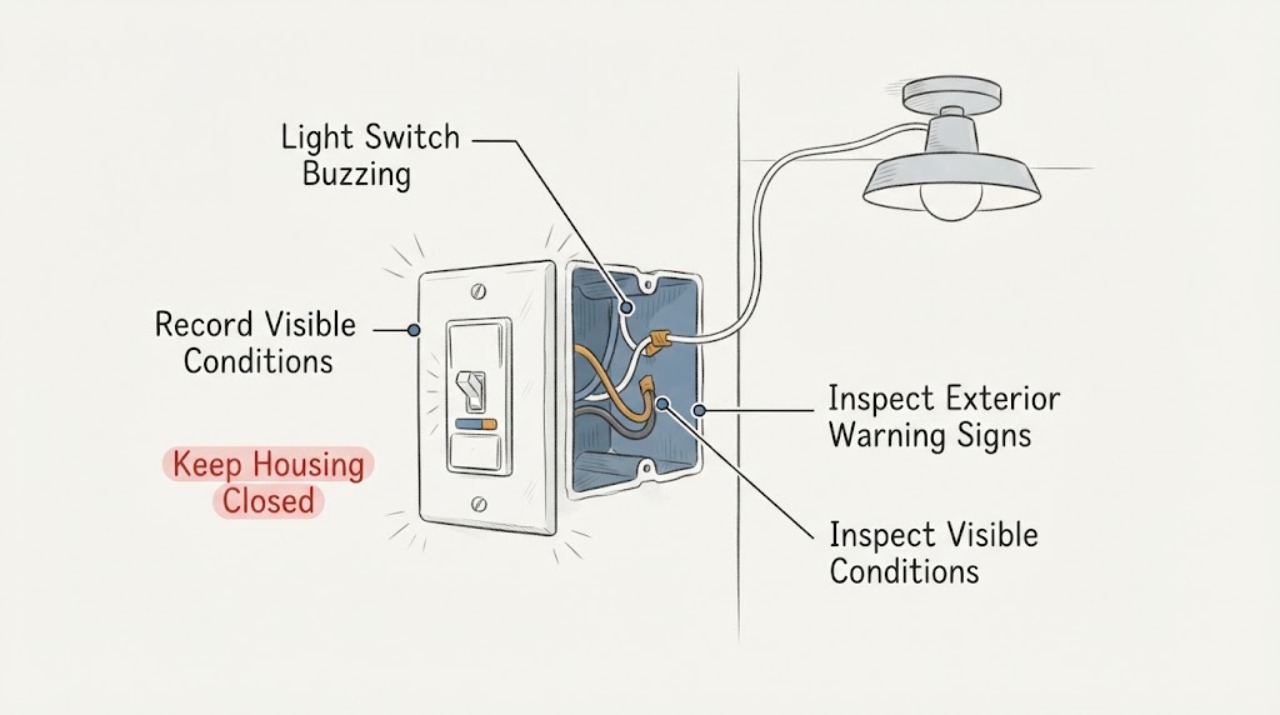
Light Switch Buzzing: Safe Electrical Checks
Treat a persistent buzz from a wall switch as an electrical warning, not a noise to ignore. Stop operating the switch and inspect only from outside for a hot or discolored plate, flickering light, burning-plastic odor, crackling, sparks, smoke, or a loose control.
-
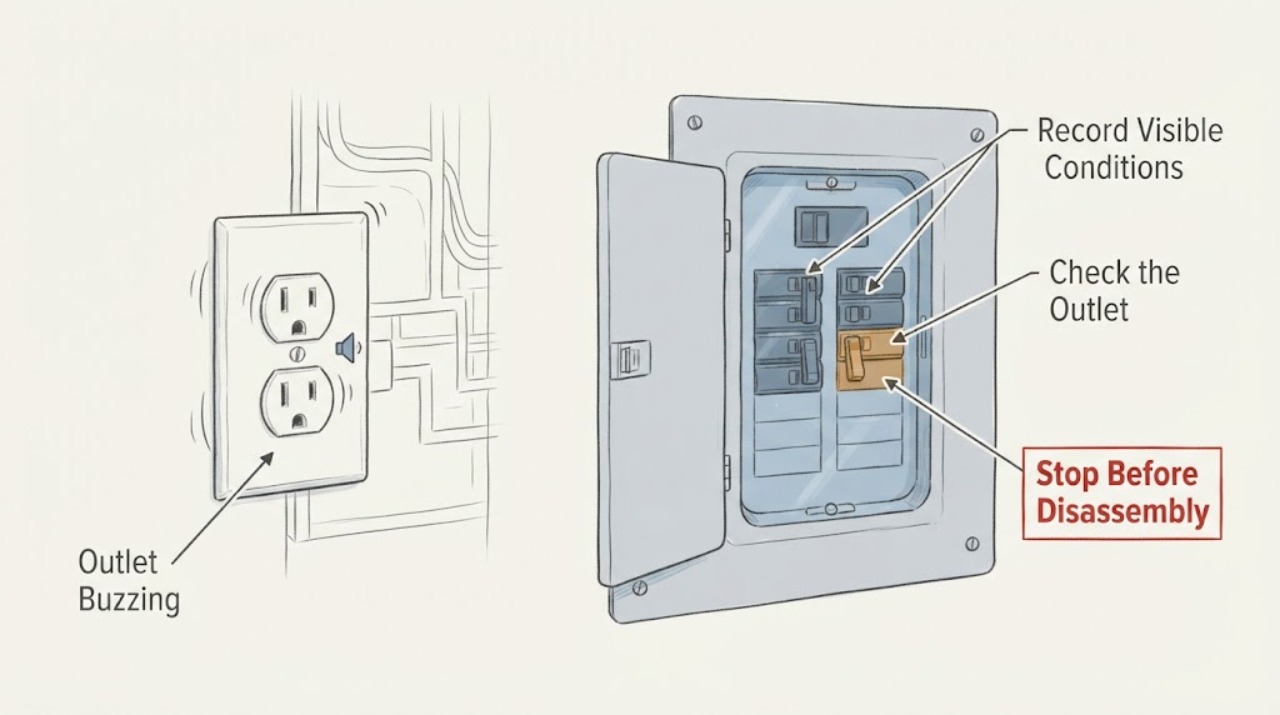
Outlet Buzzing: Treat the Circuit Breaker as a Safety Clue
A buzzing outlet is not a normal noise to test repeatedly, and the assigned circuit breaker is a possible clue rather than a confirmed source. From a safe distance, stop using the outlet, note whether the sound comes from the receptacle, a plugged-in cord or appliance, the wall, or the breaker panel, and record whether it changes with an existing load or nearby light.
-
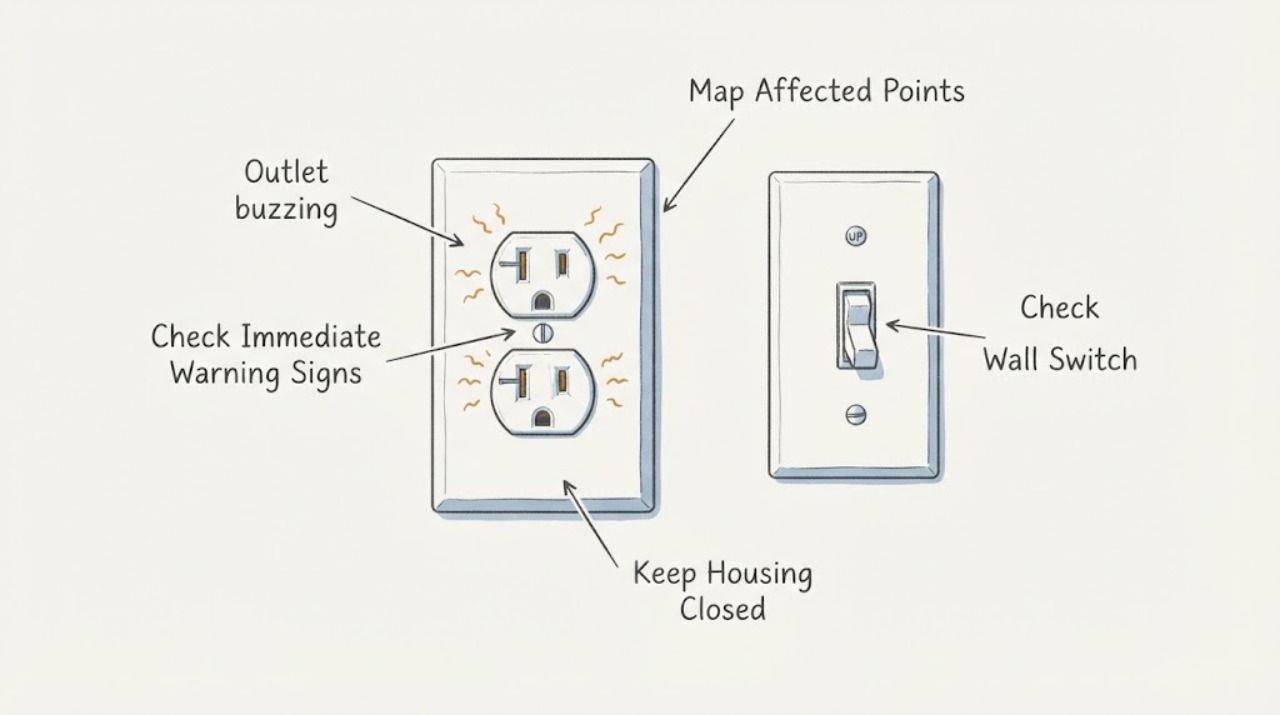
Outlet buzzing: stop use and identify the switch or circuit safely
A persistent buzz from an outlet, switch, wall plate, plug, light, or breaker area is not a normal user-repair signal. Stop using the point and connected load.
-
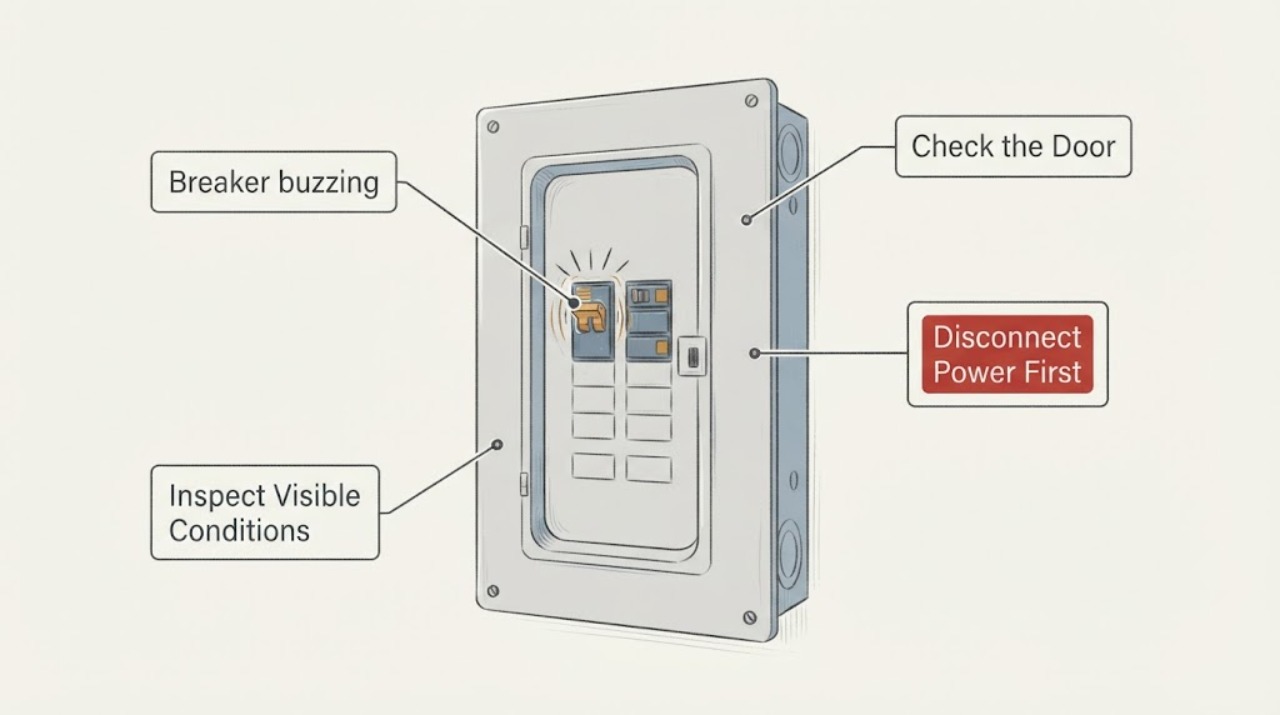
Siemens breaker buzzing: What to Check and What to Do Next
A faint, steady hum can occur in a loaded electrical panel, but a new, loud, raspy, crackling, or sizzling buzz is not a symptom to diagnose by touching the panel. Treat heat, burning odor, smoke, discoloration, flickering, or repeated tripping as an electrical safety warning.
-
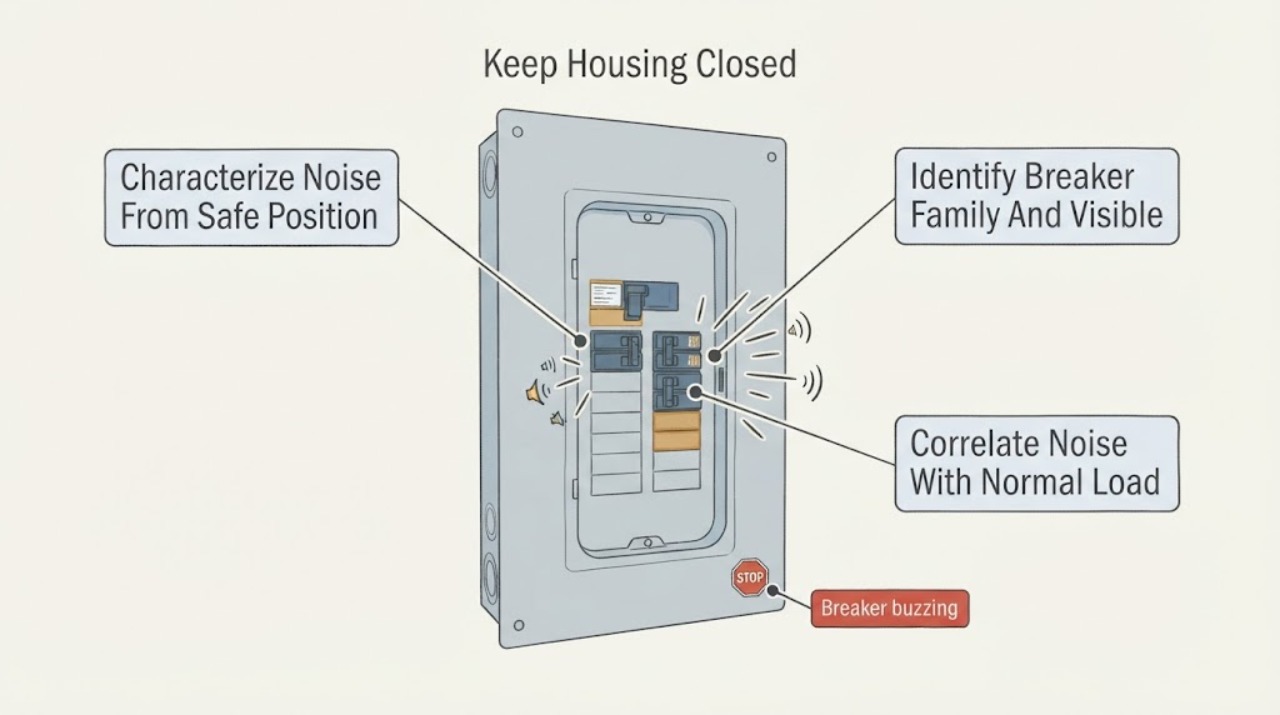
Square D breaker buzzing: What to Check and What to Do Next
A soft, steady hum from a Square D breaker can be normal for some QO or Homeline arc-fault breakers, but a new, louder, intermittent, crackling, or sizzling sound should be treated as a possible electrical fault until it is checked. Keep the panel closed and first note which breaker is noisy, whether the sound changes with a known load, whether the breaker trips, and whether there is heat, discoloration, odor, flickering, or smoke.
-
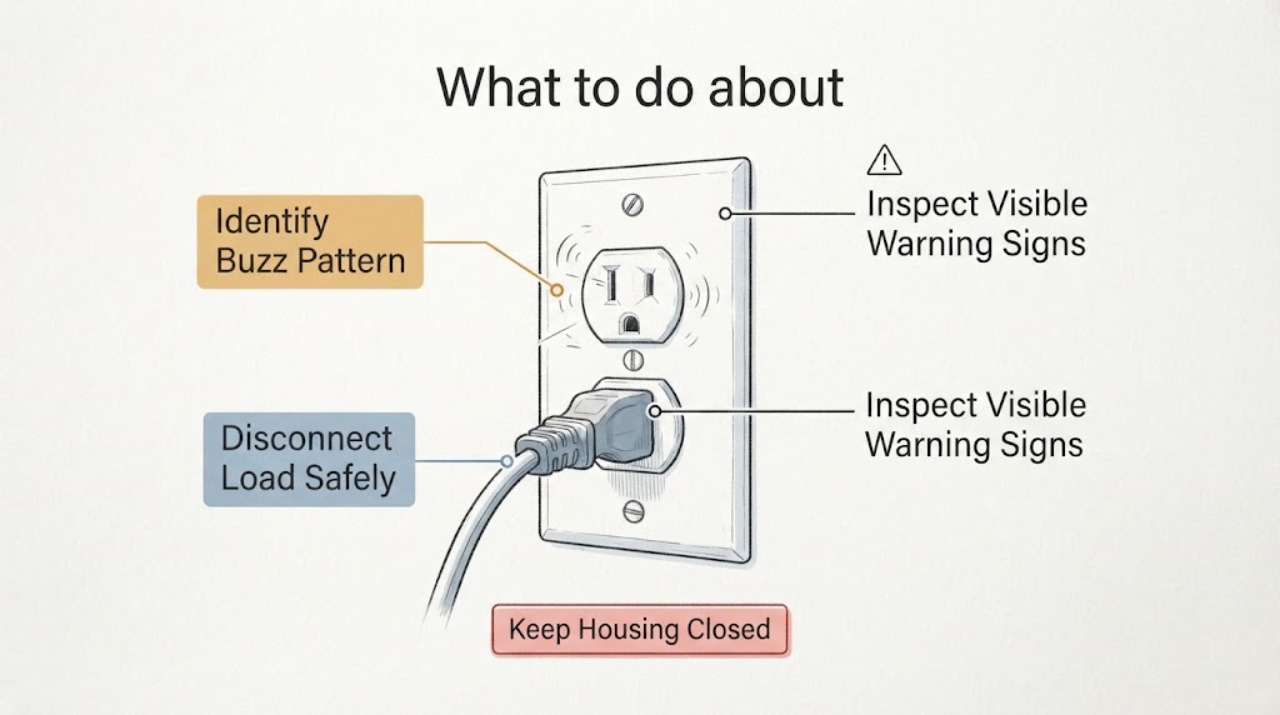
What to do about a buzzing electrical outlet
Treat a buzzing outlet as an electrical warning, not a harmless noise. Turn off and unplug the connected load if you can do so without touching heat, sparks, or exposed metal, then leave the outlet unused and arrange a qualified electrician's inspection.