
On this page
Start here
Quick answer
A buzzing or humming sound does not by itself prove a failed motor or pump. Electrolux's laundry washer noise guide lists a water valve as one possible source of humming, a drain pump as a source of low humming, door locking and water valves as sources of clicking, and filling or draining as normal operating events. First note when the sound occurs, then check only accessible installation details such as leveling, shipping materials on a newly installed unit and a drain hose that is slapping or rubbing. If a safe empty-cycle observation still produces a new or worsening sound, or if there is a leak, burning odor, smoke or repeated electrical trip, stop using the washer and arrange qualified service. Do not open the cabinet or diagnose a motor, pump or valve from sound alone.
Before you begin
Safety first
- Do not open panels, bypass the lid or door lock, reach into moving parts, test energized wiring, or replace a pump, valve or motor based on sound alone. If there is smoke, a burning odor, a damaged plug or water near electrical parts, stop use and isolate only when safe.
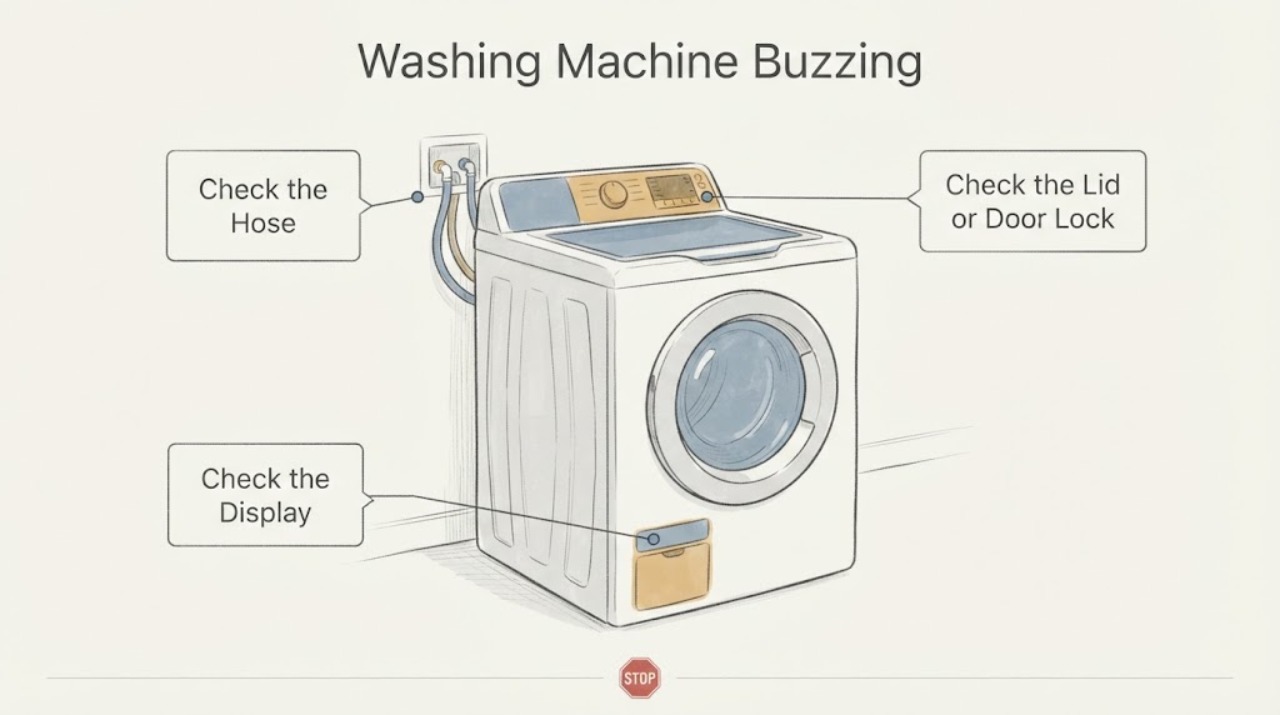
Work through in order
Diagnostic checks
Use only checks that match the exact appliance or system and its official guide.
-
Check 1
Record whether the buzz occurs during filling, draining, locking, agitation, spin or while the washer is idle; also note whether it is brief, pulsing or continuous.
Expected result: The sound matches a documented operating event such as water filling, drain-pump operation, valve activity or door/lid locking, or it has no clear timing and continues between stages.
Next step: If the sound is brief and tied to a normal stage with no other symptom, continue to the external checks. If it is continuous, new or worsening, record the timing and plan service rather than guessing a motor, pump or valve.
Why this matters
Why: Electrolux lists the water valve, drain pump, filling, draining and lock operation as possible sound sources. A continuous unexplained sound is not enough to identify a failed component.
-
Check 2
From outside the washer, check that a recently installed unit has no remaining shipping material, stands level on a solid floor and has no visible drain hose rubbing or slapping against the cabinet or wall.
Expected result: The machine rocks, sits on an unstable surface, retains installation material or has a hose contacting a surface, or those conditions are absent.
Next step: Correct only the accessible installation condition using the exact model instructions. If the unit is heavy or stacked, stop and use an installer or qualified service. If the installation is sound, continue with symptom isolation.
Why this matters
Why: Electrolux identifies shipping material, poor leveling and unsecured drain hoses as installation-related contributors to washer noise.
-
Check 3
Stop the washer using its normal controls, wait for moving parts to stop, and inspect the accessible drum for coins, fasteners or another loose object before any empty-load comparison.
Expected result: A loose object is present, or the drum is clear and the sound remains unexplained.
Next step: Remove only an accessible loose object without reaching into moving or energized parts. If the drum is clear and the washer is otherwise safe, follow the model instructions for an empty observation; stop if the sound persists or worsens.
Why this matters
Why: Electrolux says foreign objects and clothing fasteners can create washer noise; a clear drum removes that particular explanation but does not diagnose an internal part.
-
Check 4
Only when there is no leak, burning odor, smoke, damaged cord or electrical trip, use the exact model instructions for a short empty-cycle observation and note whether the buzz remains without laundry.
Expected result: The sound disappears without laundry, or it remains with an empty drum.
Next step: If the sound disappears, inspect loads and fasteners in future cycles. If it remains, stop troubleshooting and arrange qualified service with the recording and timing; do not repeat cycles to provoke a diagnosis.
Why this matters
Why: Electrolux uses an empty load to separate a noise caused by laundry from a sound that comes from the washer itself; persistence still does not identify a failed motor or pump.
-
Check 5
Stop using the washer for a visible leak, smoke, burning odor, damaged or hot plug, repeated breaker trip, or a buzzing sound that is rapidly worsening; preserve the model number and observations for service.
Expected result: A safety symptom is present, or the buzz continues after safe external checks without a documented operating explanation.
Next step: Use a safe isolation point if needed and arrange qualified appliance service; use a qualified electrician for a circuit or outlet concern. Do not open panels, bypass a lid or door lock, or test energized wiring.
Why this matters
Why: A sound report cannot safely distinguish an electrical, water, drive or pump fault without model-specific diagnosis. Electrolux routes unresolved washer problems to support and qualified service.
Use your observations
Decision map
Find the observation that best matches what you see, then follow the next safe action.
-
PATH 01Next step
What you see
The buzz or hum is brief and occurs only while water fills, the drain pump runs or the lid/door lock operates, with no leak or electrical warning.
Do this next
Monitor the timing and use the exact model manual if the sound changes; do not replace a component based on the sound alone.
Why this path and its safety boundary
Why it matters: Electrolux lists those events and components as normal possible sources of washer sounds.
-
PATH 02Next step
What you see
The washer rocks, has retained shipping material after installation, or its drain hose visibly rubs or slaps against the cabinet or wall.
Do this next
Correct only the accessible installation issue according to the model instructions; obtain help for a stacked or heavy unit and do not remove panels.
Why this path and its safety boundary
Why it matters: Electrolux identifies leveling, shipping material and unsecured hose placement as external contributors to noise.
-
PATH 03Next step
What you see
The noise disappears during a safe empty-load observation but was present with a particular load or loose object.
Do this next
Check pockets and fasteners before future loads. If the noise returns with an empty drum, arrange service.
Why this path and its safety boundary
Why it matters: The sound is more consistent with laundry contents or fasteners than with a continuously noisy appliance, although this is not a component diagnosis.
-
PATH 04Next step
What you see
The buzz remains with an empty drum, is new or worsening, or occurs with a leak, smoke, burning odor, damaged plug or repeated breaker trip.
Do this next
Stop use, isolate safely and arrange qualified appliance service; use a qualified electrician for a circuit or outlet concern. Do not bypass locks or open the cabinet.
Why this path and its safety boundary
Why it matters: The normal operating-sound and laundry explanations are insufficient, and the no-model task does not support a motor, pump, valve or electrical diagnosis.
Helpful context
Understand the symptom
A washer may make a brief buzz or hum while a water valve opens, the drain pump runs or the machine changes stages. The useful first distinction is timing: a sound tied to filling or draining is different from a continuous buzz that remains when the drum is empty. Electrolux's general guidance does not support identifying a failed motor, pump or valve from the sound alone.
Match the buzz to the washer's operating event
Record whether the buzz starts as water enters, while the washer drains, when the lid or door locks, during agitation or spin, or while the machine is idle. Electrolux identifies humming with the water valve, low humming with the drain pump, clicking with door locking or valve operation, and rushing water with filling. Those descriptions explain possible normal events; they do not establish which component is installed in an unspecified model or prove that any component has failed.
Check only accessible installation causes
If the washer was recently installed or moved, check from outside that shipping materials have been removed, the unit is level and on a solid floor, and any stacking kit and visible brackets are fitted as required by the model. Electrolux also says to secure a drain hose that is slapping or rubbing. Do not pull the appliance out alone, bend hoses or remove a panel to reach a pump or motor.
Separate laundry noise from a washer noise
Stop the cycle before checking the drum for coins, fasteners or another loose object. If the model's instructions allow an empty cycle and the machine is otherwise safe, compare the sound without laundry. Electrolux uses this empty-load observation to distinguish a noise caused by an item from a noise that persists in the appliance. An empty-cycle buzz that remains unexplained is a reason to document the timing and request service, not to purchase a guessed part.
Stop for water or electrical warning signs
If buzzing is accompanied by a visible leak, smoke, a burning odor, a hot or damaged plug, or a repeated breaker trip, stop the cycle and keep clear. Disconnect power only if it can be done without touching water or damaged electrical parts; otherwise use the appropriate safe isolation point and obtain qualified help. Electrolux advises contacting a qualified electrician for an overloaded circuit and contacting support when the washer cannot be safely returned to operation. Do not continue running it to identify the sound.
When checks do not resolve it
Need a professional?
Safety scope: Do not open panels, bypass the lid or door lock, reach into moving parts, test energized wiring, or replace a pump, valve or motor based on sound alone. If there is smoke, a burning odor, a damaged plug or water near electrical parts, stop use and isolate only when safe.
Have this ready
- Full model number, washer type, sound recording if safe, sound timing, whether the drum was empty, installation or movement history, hose and leveling observations, and any leak, odor, smoke, temperature or electrical symptoms.
Common questions
FAQ
Is a buzzing Electrolux washer always a failed motor or pump?
No. Electrolux lists the water valve and drain pump as possible sources of humming and describes filling, draining and lock operation as normal operating events. A persistent or worsening buzz still needs model-specific service rather than a sound-based parts diagnosis.
How can I tell whether laundry is causing the noise?
Stop safely and check for accessible coins, fasteners or other loose objects. Electrolux recommends an empty-load observation when appropriate; if the noise disappears without laundry, inspect loads and pockets, while a sound that remains with an empty drum should be referred for service.
What should I do if the buzz comes with a burning smell or water leak?
Stop the cycle and keep clear. Isolate power only if it can be done without touching water or damaged electrical parts, then arrange qualified appliance service; use a qualified electrician for a circuit or outlet concern. Do not keep running the washer to identify the sound.
Read the exact guide
Official sources
- What should I do if my washer does not start?Electrolux Owner Support · Opened the official Electrolux washer support page. It applies to washers and supports external checks for level, lid closure, plug connection, water supply and circuit conditions, plus qualified electrician/service escalation. It is not used to diagnose a buzzing component.
- Is it normal for my washer to make sounds or noises?Electrolux Owner Support · Opened the official Electrolux washer support page. It applies to washers and says loose objects or fasteners can cause noise; it recommends checking the drum and using an empty load to see whether a continuing sound comes from the washer or laundry.
- Laundry Washers Noises GuideElectrolux Owner Support · Opened the official Electrolux support page. It applies to all laundry washers and lists humming from the water valve, low humming from the drain pump, clicks from locking or valves, filling and draining sounds, shipping-material and leveling checks, and drain-hose vibration. It does not identify an internal failure for an unspecified model.
Community feedback
Share a repair observation
Share a plain-text repair observation. Accepted observations are published automatically; this page may take a moment to update.