
On this page
Start here
Quick answer
A stuck Electrolux washer cycle is best diagnosed by the stage where the timer, display, or drum stops: filling, washing, draining, spinning, or releasing the door. First note the displayed code, water level, sounds, and whether the door is locked; press Cancel only as your model permits and do not force the door. Electrolux's guidance points to hot and cold supply, hose routing, and inlet screens for a fill stall; excess suds can add rinse time; humming or gurgling can identify water-valve or drain-pump activity; and an unbalanced load can interrupt spin. A locked door or E42 means the lock is not recognized, while LOC means the control lock is active. Do not open a filter or door against standing water, bypass a lock, reach inside an energized machine, or repeatedly unplug it. If the stage-specific external checks do not restore the cycle, keep the washer safe and arrange qualified service.
Before you begin
Safety first
- Keep the washer off and close water valves for a leak or persistent stall. Do not bypass the door lock, open a full-tub filter, work inside the cabinet, or test energized components.
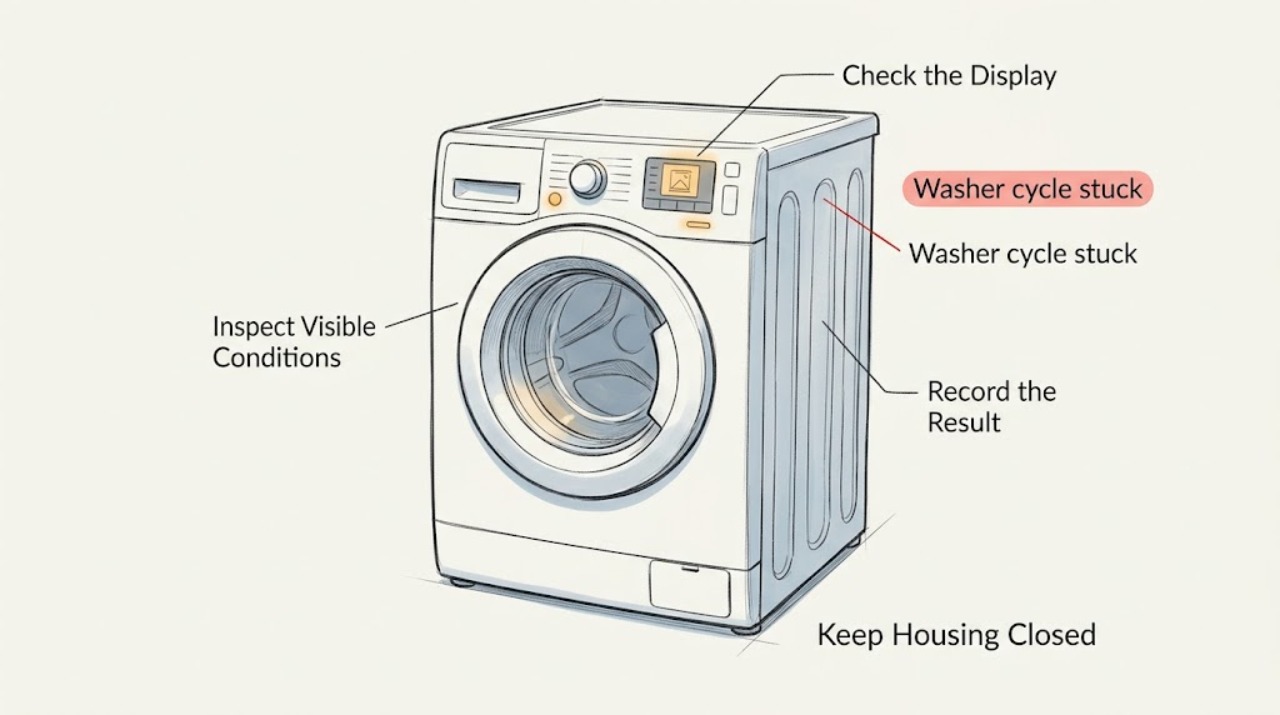
Work through in order
Diagnostic checks
Use only checks that match the exact appliance or system and its official guide.
-
Check 1
Pause or cancel the Electrolux washer using the normal control, without forcing the door or lid. Note the cycle name, displayed code or remaining time, whether the drum is full or empty, whether water is entering or leaving, whether the drum moves, and whether the door or lid is locked.
Expected result: The stall is at fill, wash or tumble, drain, spin, or door release; the display shows E11, SU dS, LOC, E42, another code, or no code; and the tub is empty, partly full, or full.
Next step: Keep the machine still while observing. Do not force the door, reach into the drum, or reset repeatedly. Continue with the external check for the identified stage only if there is no leak, smoke, burning odor, damaged cord, or other hazard.
Why this matters
Why: The last completed stage narrows the likely cause. A full tub after a drain stage needs water-containment precautions, while a locked door or named code may be a safety state rather than a dead timer. A code not listed here must be handled by the exact model guide.
-
Check 2
If the washer stops while filling, verify from outside that both hot and cold supply valves are open, the inlet hoses are not kinked or pinched, and the hot and cold hoses are connected to their matching inlets. Look for an E11 or reversed-hose indication; do not disconnect a hose while the water valves are open.
Expected result: No water enters, only one temperature supply flows, hoses are reversed or restricted, an inlet connection leaks, or water begins filling within the expected start period.
Next step: Correct only a clearly closed valve, visible kink, or model-confirmed hose routing issue, then use the documented cancel or restart sequence once. If supply is present but filling still stalls, or a connection leaks, stop and arrange service; do not open the inlet valve assembly.
Why this matters
Why: Electrolux identifies closed or restricted supply, reversed hoses, low supply, and blocked inlet screens as fill causes. An E11 state can lock the unit for up to six minutes, and unplugging can restart that period. Normal filling shifts attention away from the inlet path toward the next stage or a control/sensor fault.
-
Check 3
If the machine remains in wash, tumble, or rinse, listen without opening the cabinet and check whether the drum intermittently moves, the display time changes, or an SU dS or similar suds indication appears. Confirm that only the model-recommended amount of high-efficiency detergent was used; do not add chemicals or manually agitate the load.
Expected result: The washer tumbles intermittently, continues extra rinses, shows SU dS, has excessive visible suds, or is completely silent and unchanged during the wash stage.
Next step: Allow a documented suds-clearing routine to finish if the machine is stable and not leaking. If the drum never moves, the display is frozen, the washer repeatedly stalls without suds, or a burning odor or abnormal noise appears, stop use and arrange service.
Why this matters
Why: Electrolux says oversudsing can require additional rinse cycles and add about five minutes per extra rinse, so a delayed finish can be protection rather than a frozen control. A silent, unchanged washer without a suds pattern makes a door, motor, sensor, control, or power issue more likely.
-
Check 4
If the cycle stops at drain, observe the external drain hose and standpipe for a kink, displacement, overflow, or visible blockage. Note whether you hear gurgling or low humming from the drain pump and whether water remains in the tub; do not open a pump filter or remove a hose with standing water unless the model guide gives a safe procedure.
Expected result: Water drains and the cycle advances, water remains with pump humming or gurgling, the hose is kinked or out of position, the standpipe overflows, or the machine is silent at the drain stage.
Next step: Stop the cycle and close the water valves if there is a leak. Correct only a visible external hose position problem without reaching into the machine. Keep the tub closed and arrange service for remaining water, repeated drain stalls, or any pump/filter access not explicitly covered by the model guide.
Why this matters
Why: Electrolux describes gurgling as draining and low humming as pump operation. A full tub with pump activity suggests a restricted drain path or pump problem; overflow or hose displacement points to the external drain installation. A silent pump with water remaining may involve power, control, or pump failure.
-
Check 5
If the washer stops before or during spin, leave the door or lid closed and note whether the load is visibly bunched, the cabinet is level and stable, or a high-pitched spin sound ever begins. Do not reach into a moving drum; use the model's pause and unlock behavior before any load adjustment.
Expected result: The washer shakes or thumps, the load is concentrated on one side, the machine is level and quiet, shipping material may remain after installation, or spin never starts.
Next step: Turn power off and wait for the lid or door to unlock before redistributing laundry, and do so only if the model permits safe access. If the tub remains locked or full, do not force it; arrange service. Verify shipping material only after installation-specific instructions and without dismantling the washer.
Why this matters
Why: Electrolux links vibration and shaking to an unbalanced load or an unlevel machine, while a high-pitched jet-engine sound corresponds to spinning. A stable, level machine that never enters spin points toward a drain, lock, motor, sensor, or control condition rather than balance alone.
-
Check 6
If the door or lid remains locked, check from outside that it is fully closed and that no garment or debris is visibly preventing the latch from engaging. Note whether the display shows LOC or E42, whether a lock click occurred, and whether the tub still contains water; do not pull the door or bypass the interlock.
Expected result: LOC is displayed, E42 is displayed, the lock clicks and the door closes fully, debris is visible at the opening, or the door remains locked with water inside.
Next step: Use the model's documented control-lock release or cancel sequence once. Remove only clearly accessible debris with power off and no water hazard. If the lock remains engaged, the tub is full, or E42 returns, keep the washer off and arrange qualified service; never defeat the lock.
Why this matters
Why: Electrolux defines LOC as control lock active and E42 as the door lock not being recognized. A blocked latch can prevent progression, while a locked door with water inside may be a deliberate safety state. An unrecognized lock after external checks suggests the latch, striker, lock, wiring, or control needs service.
Use your observations
Decision map
Find the observation that best matches what you see, then follow the next safe action.
-
PATH 01Next step
What you see
The timer appears stuck at the fill stage, E11 is shown, and no water enters or the hot and cold hoses are reversed or restricted.
Do this next
Verify open valves, matching hose connections, visible hose routing, and the model's supply requirements. Do not repeatedly unplug during the lock period; arrange service if the supply is present but the fill stage still does not progress.
Why this path and its safety boundary
Why it matters: The water-supply path or a fill-sensing condition is more likely than a drain or spin fault. Electrolux notes that E11 may lock the unit temporarily.
-
PATH 02Next step
What you see
The display remains in wash or rinse, the drum moves intermittently, and SU dS or abundant suds is present.
Do this next
Use the recommended high-efficiency detergent amount and allow the documented suds-clearing sequence if the washer is stable and leak-free. Escalate for a silent, unchanged machine or repeated stalls without suds.
Why this path and its safety boundary
Why it matters: Oversudsing protection and extra rinses are more likely than a frozen timer; Electrolux says the washer may continue rinsing until suds clear.
-
PATH 03Next step
What you see
The washer stops at drain with water in the tub, low humming or gurgling, and a visibly kinked hose, overflowing standpipe, or no external flow.
Do this next
Stop the cycle, close water valves if there is a leak, and correct only a plainly displaced external hose. Keep the door and pump access closed and arrange service for standing water or repeated drain stalls.
Why this path and its safety boundary
Why it matters: A restricted external drain path or drain-pump problem is more likely than a wash-stage control problem, but standing water makes user access hazardous.
-
PATH 04Next step
What you see
The washer reaches spin, shakes or thumps, and the load is bunched or the machine is not level; it unlocks safely after power is turned off.
Do this next
Wait for the lock to release, redistribute the load according to the model guide, and verify the washer rests firmly and level. Arrange service if spin still will not start or the machine remains locked or full.
Why this path and its safety boundary
Why it matters: An unbalanced load or level problem is more likely than a failed control, motor, or drain path.
-
PATH 05Next step
What you see
LOC remains displayed, E42 returns, the latch does not click with a closed door, or the door remains locked with water inside.
Do this next
Use only the model's documented lock-release or cancel control. Do not force or bypass the door; arrange service if the lock remains engaged, the tub is full, or the code returns.
Why this path and its safety boundary
Why it matters: Control-lock state, latch/striker alignment, door-lock recognition, wiring, or a deliberate water-safety lock is more likely than a simple timing delay.
-
PATH 06Next step
What you see
The washer is silent and unchanged at any stage, repeatedly stalls after external checks, leaks, smells of burning, trips power, or shows an unrecognized code.
Do this next
Stop use, unplug or isolate power only if safe and there is no need to approach a hazard, close water valves for a leak, and arrange qualified Electrolux service. Preserve the code and stage history; do not open panels or probe live circuits.
Why this path and its safety boundary
Why it matters: A control board, pump, water-level sensor, door lock, motor, wiring, or power-supply issue may be involved and is beyond safe observation-only troubleshooting.
Helpful context
Understand the symptom
The stage of the stall is the most useful clue
A washer that pauses before water enters has a different decision path from one that leaves a tub full, tumbles indefinitely, or stops before spin. Read the display and note the water level, door state, and last sound. Water rushing suggests filling, low humming or gurgling suggests pump activity, and a high-pitched spin sound identifies a different stage. A long displayed time is not always a failed control: Electrolux says excess suds can trigger extra rinses and add time.
Keep water, the door lock, and power within safe limits
Do not pull a locked door, reach through a door seal, or open a drain filter while the tub may contain hot or standing water. Do not bypass the door lock or disconnect wiring. If a hose is leaking, stop the washer and close the water valves if safe. Unplugging during an Electrolux E11 lock period can restart that lock period, so repeated power cycling is not a useful first response.
Model details matter
Electrolux front-load and top-load washers differ in controls, door or lid locks, drain access, and error-code behavior. Record the complete model, exact display text, cycle and stage, water level, and whether the machine is front-load or top-load. Use the model's Use and Care Guide for any cancel, drain, or unlock sequence rather than applying a generic procedure.
Safety boundary
Stop conditions
- Do not force a locked washer door or lid, bypass the interlock, or reach into a moving drum. If water is inside, keep the door closed unless the model guide provides a safe release procedure.
- Close the water valves and isolate power from a safe external control for a leak, damaged cord, smoke, burning odor, repeated breaker trip, or water approaching electrical components. Do not handle wet plugs or wiring.
- Do not open a drain filter, remove hoses, or tip the washer with standing or hot water unless the exact model guide gives a safe procedure and the appliance is isolated. Do not probe a pump, valve, sensor, or control board.
- Do not repeatedly unplug to defeat an E11 lock period, repeatedly restart a stalled cycle, add chemicals to clear suds, or dismantle the cabinet. Arrange qualified service for persistent stalls, recurring codes, or an uncertain stage.
Only after diagnosis
Potential parts
- washer control board
Consider this only after qualified diagnosis confirms that the washer receives correct power and the stage-specific water, drain, lock, motor, and sensor checks do not explain the repeated stall.
Control boards are model- and revision-specific and require correct programming and safe electrical isolation. Do not select one from the symptom or appearance alone. - washer drain pump
Consider this only when water remains at drain and qualified testing identifies a failed or obstructed pump after external hose and safe drain-path checks.
Pump type, filter housing, wiring, and mounting vary by Electrolux model. Standing-water access is a service task unless the model guide gives a safe procedure. - washer water level sensor
Consider this only when fill or overfill behavior persists with correct water supply and qualified diagnosis identifies an incorrect level signal or sensor fault.
Sensor type, hose routing, calibration, and connector differ by Electrolux model. Confirm the complete model and diagnosis before selection.
When checks do not resolve it
Need a professional?
Request service for a persistent cycle stall, recurring fill or drain problem, full tub, unrecognized door lock, repeated control code, pump or valve noise without progress, or any leak or electrical hazard.
Safety scope: Keep the washer off and close water valves for a leak or persistent stall. Do not bypass the door lock, open a full-tub filter, work inside the cabinet, or test energized components.
Have this ready
- Provide the complete Electrolux model, front-load or top-load type, cycle and exact stage, display code and remaining time, water level, door or lid-lock state, supply-hose observations, detergent and suds condition, drain sound, spin or balance behavior, recent move or installation, and photos of safe external leaks or damage.
Common questions
FAQ
Why is my Electrolux washer cycle stuck?
The cause depends on the stage: fill stalls point to water supply or inlet sensing, wash delays can be oversuds protection, drain stalls leave water and may involve the hose or pump, spin stalls can follow imbalance, and a locked door can involve LOC or E42. Identify the stage before choosing a part.
What should I check if my Electrolux washer is stuck filling?
Verify both hot and cold valves are open, hoses are not kinked, and hot and cold lines are connected to matching inlets. Electrolux says E11 can temporarily lock the machine; repeated unplugging can restart that period. Arrange service if supply is present but filling still does not progress.
Can too much detergent make an Electrolux washer seem stuck?
Yes. Electrolux says SU dS oversudsing can make the washer perform additional rinses until suds clear, extending the cycle. Use the recommended high-efficiency detergent amount and escalate if the machine is silent, unchanged, or repeatedly stalls without suds.
What if my Electrolux washer is stuck with water inside?
Do not force the door or open a pump filter with standing water. Observe the external hose and any drain-pump humming or gurgling, close water valves if there is a leak, and use only the model guide's safe drain procedure. Arrange service for a full tub or repeated drain stall.
Why does my Electrolux washer stop before spin?
A bunched load, unstable floor, or unlevel washer can interrupt spin. Turn power off and wait for the door or lid to unlock before redistributing laundry if the model allows it. If the tub stays locked or full, or a balanced load still will not spin, arrange service.
What does LOC mean on an Electrolux washer?
LOC indicates that the control lock is active, so cycles will not run. Use the model's control-lock option to unlock it. If the display stays locked or another code appears, use the exact model guide and arrange service if the control remains unresponsive.
What does E42 mean on an Electrolux washer?
Electrolux defines E42 as the door lock not being recognized. Check from outside that the door is fully closed and free of clothing or debris and listen for the lock click; do not force or bypass the lock. A returning code needs service.
Should I replace the Electrolux washer control board when the cycle is stuck?
Not from the symptom alone. A fill valve or sensor, drain pump, door lock, load balance, suds condition, wiring, or control may cause a stall. Consider a control board only after qualified diagnosis and model confirmation rule out the stage-specific causes.
Read the exact guide
Official sources
- Laundry front loading washer displaying Error Code E11 long fill time.Electrolux · Electrolux front-load washer E11 fill-stage behavior, temporary lock, hose routing, and service escalation
- Laundry front loading washer displaying Error Code LOC control lock activator.Electrolux · Electrolux front-load washer LOC control-lock state and unlocking controls
- Laundry front loading washer displaying Error Code E42 door lock device failure.Electrolux · Electrolux front-load washer E42 door-lock recognition, latch checks, and service escalation
- Laundry Washers Noises GuideElectrolux · Electrolux washer sounds corresponding to filling, draining, spinning, locks, unbalanced loads, and service escalation
- Laundry front loading washer displaying Error Code SU dS too many suds.Electrolux · Electrolux front-load washer oversuds protection, extra rinse behavior, detergent guidance, and cycle-time extension
- Laundry Water Supply GuideElectrolux · Electrolux front- and top-load washer water supply, hose routing, inlet filters, and visible leak checks
Community feedback
Share a repair observation
Share a plain-text repair observation. Accepted observations are published automatically; this page may take a moment to update.