
Repair problem
Cycle Stuck Troubleshooting Guides
Published FixGraph guidance for diagnosing and responding to cycle stuck.
Matching published guides
Choose a guide that matches the service, equipment, and conditions you are seeing.
-
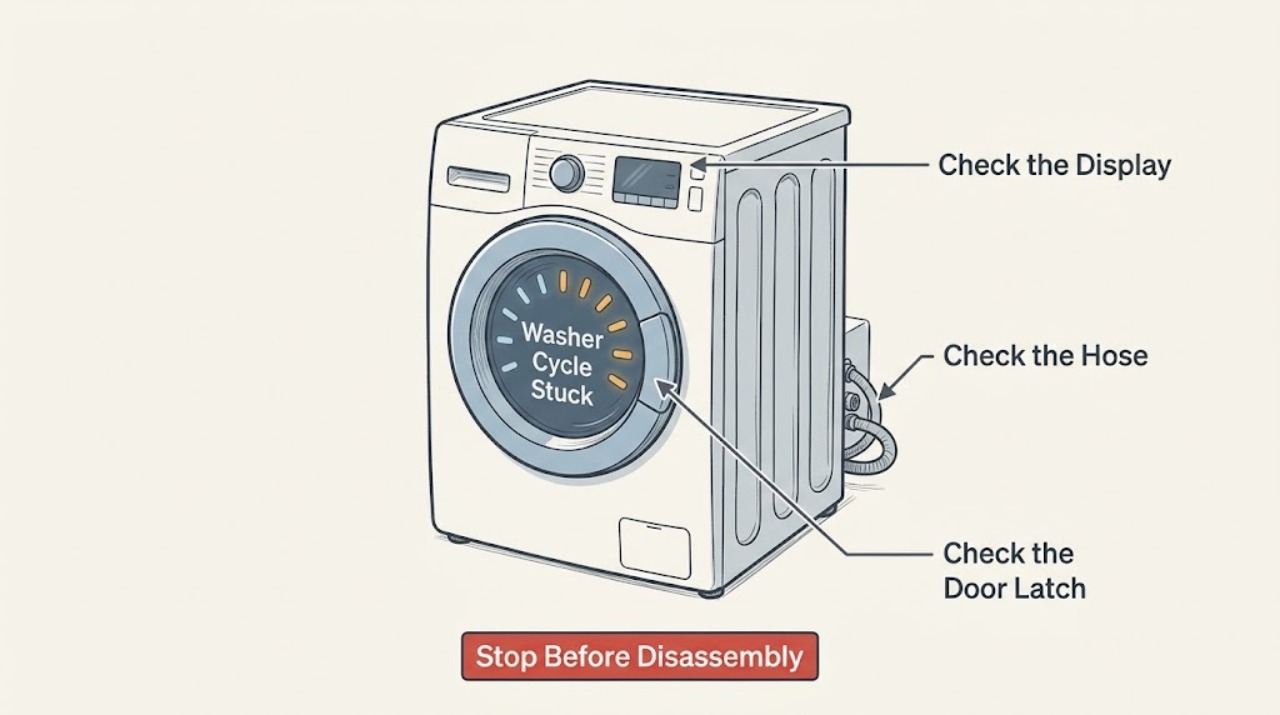
Amana Washer Cycle Stuck: What to Check and What to Do Next
An Amana washer can appear stuck during a normal pause or sensing period, but the stage where it stops is the fastest way to narrow the cause. Record whether it is filling, washing or sensing, draining, spinning, or waiting for the lid or door to lock.
-
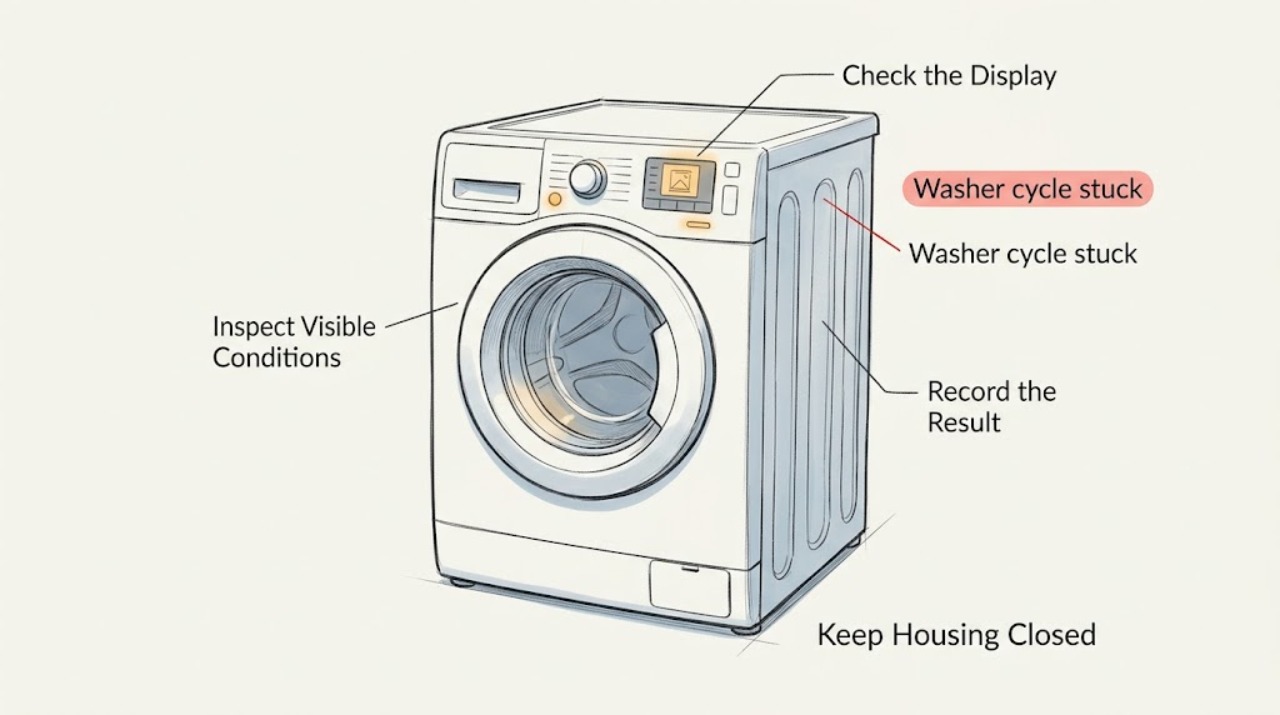
Electrolux washer cycle stuck: What to Check and What to Do Next
A stuck Electrolux washer cycle is best diagnosed by the stage where the timer, display, or drum stops: filling, washing, draining, spinning, or releasing the door. First note the displayed code, water level, sounds, and whether the door is locked; press Cancel only as your model permits and do not force the door.
-
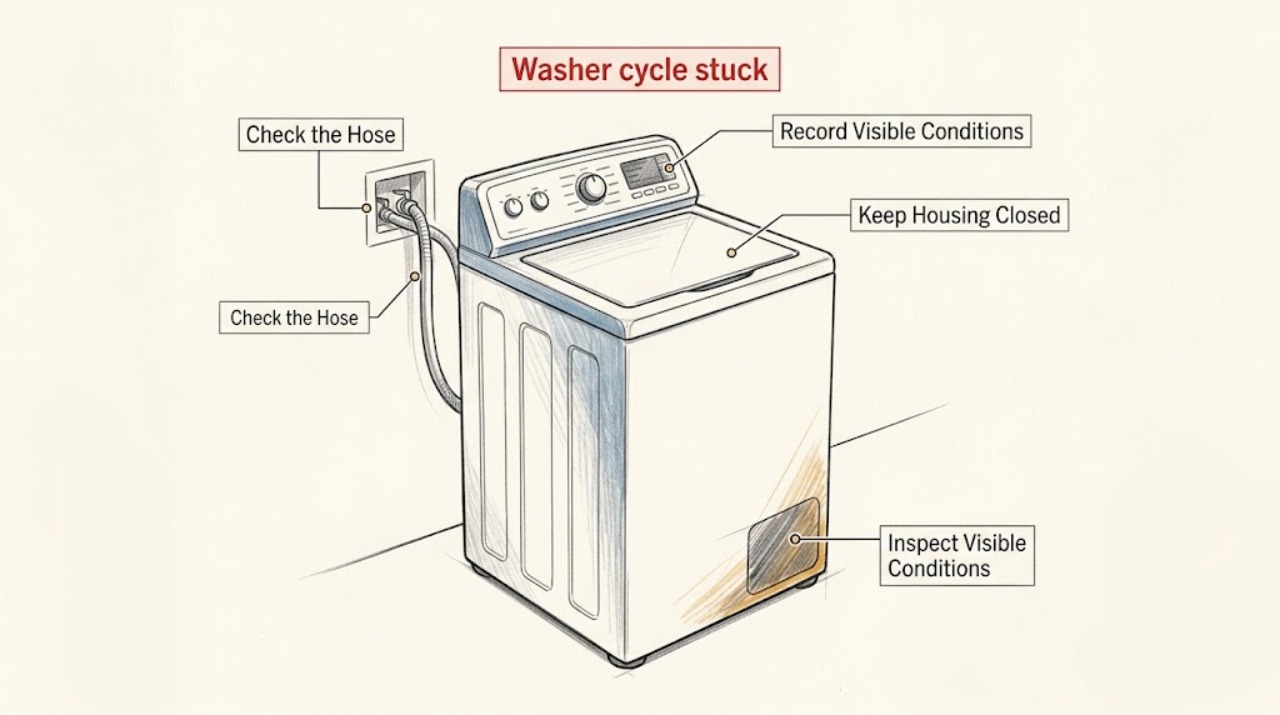
GE washer cycle stuck: What to Check and What to Do Next
A GE washer that appears stuck may be in a normal pause, sensing or soak period, waiting for a closed lid or door, unable to fill or drain, correcting an unbalanced load, or locked up after an interrupted cycle. First stop and record the exact stage—fill, wash or agitate, rinse, drain, spin, or door-lock state—along with any display text and whether water remains.
-
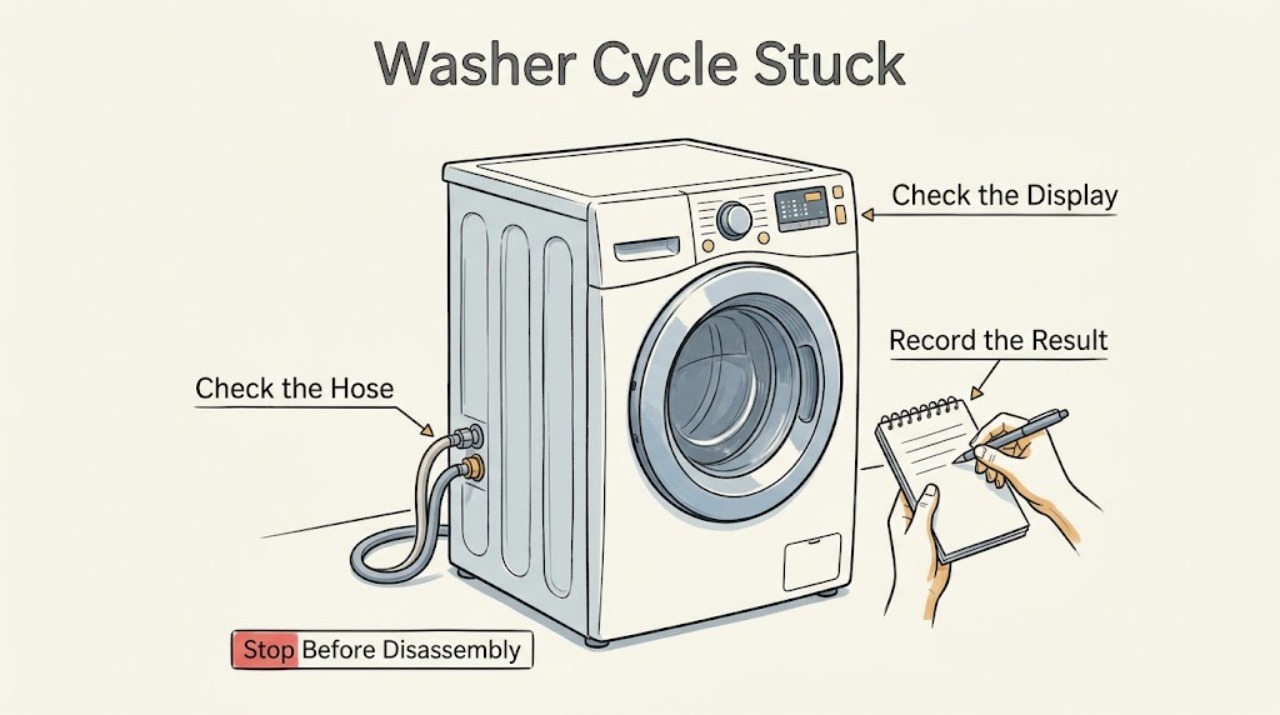
Hotpoint Washer Cycle Stuck: What to Check and What to Do Next
A Hotpoint washer that appears stuck should be diagnosed by the phase where it stopped: filling, washing or heating, draining, spinning, or waiting for the door or lid lock. Check the corresponding indicator or code, keep the door or lid closed while the drum moves, and inspect only accessible water-supply, drain, and load conditions.
-
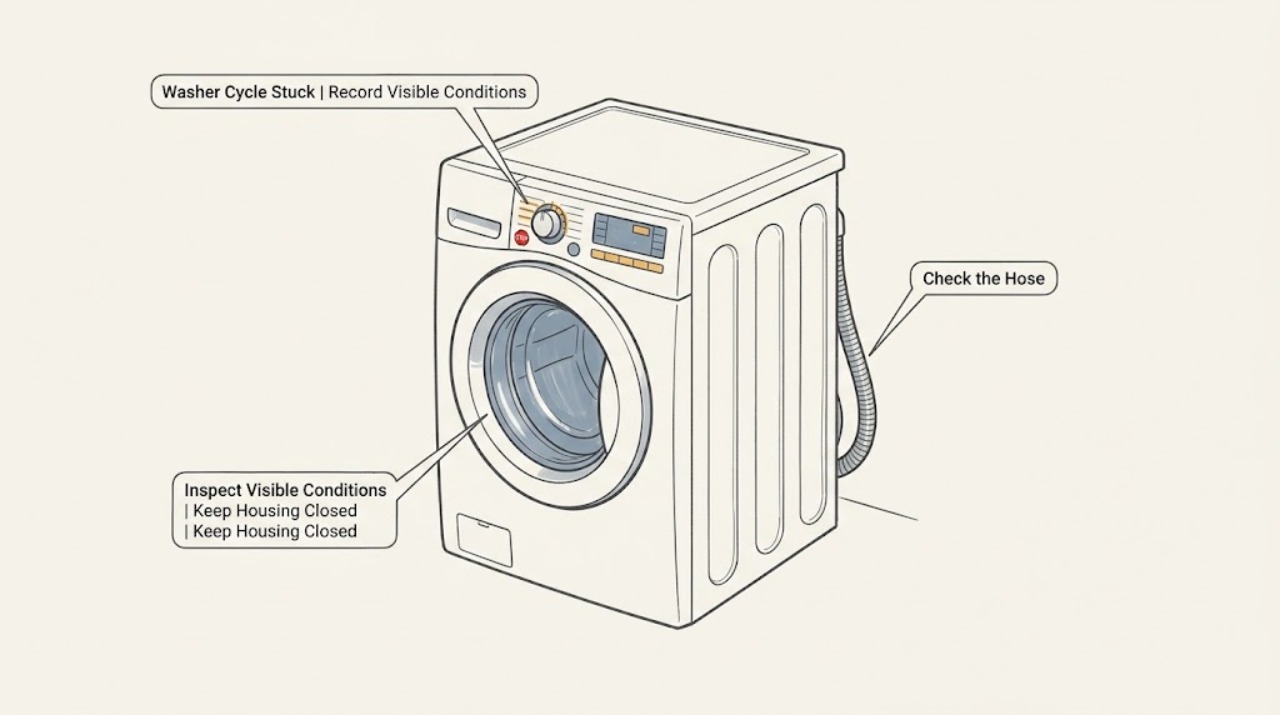
Kenmore Washer Cycle Stuck: What to Check and What to Do Next
A Kenmore washer that appears stuck may be waiting for water, unable to drain, pausing for balance, waiting for a door or lid lock, or experiencing a cycle-control or component fault. First record the exact model, the displayed stage, and any code or flashing light; do not apply a code meaning from another Kenmore model.
-
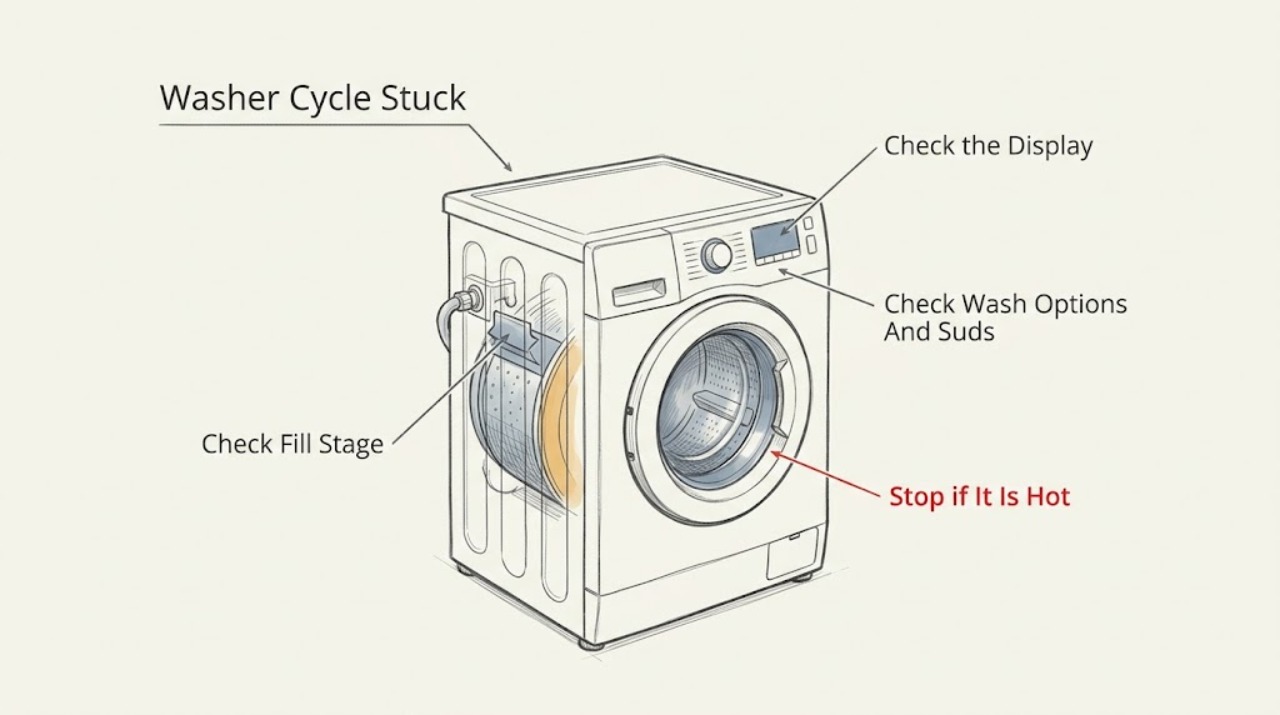
LG Washer Cycle Stuck: What to Check and What to Do Next
An LG washer may look stuck because its timer is extending for a selected option, heavy load, excess suds, slow filling, slow draining, or an unbalanced spin; it may also be stopped by a real code or a door/lid condition. First record the exact display or blinking pattern, model, selected cycle, and stage: fill, wash, rinse, drain, or spin.
-
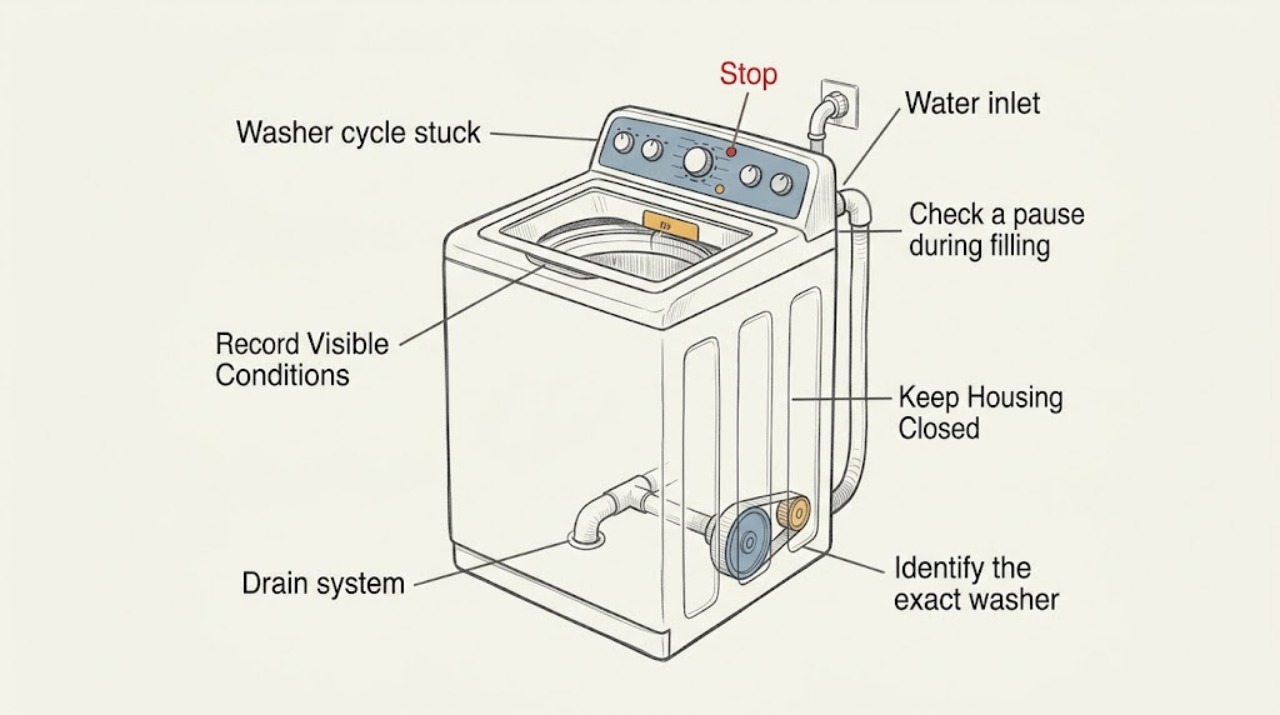
Maytag washer cycle stuck: What to Check and What to Do Next
A Maytag washer can look stuck when its displayed time is only an estimate, it is balancing a load, heating water, reducing suds, or waiting for a lid or door lock. First record the exact model, cycle stage, display, water level, and whether the basket is moving.
-
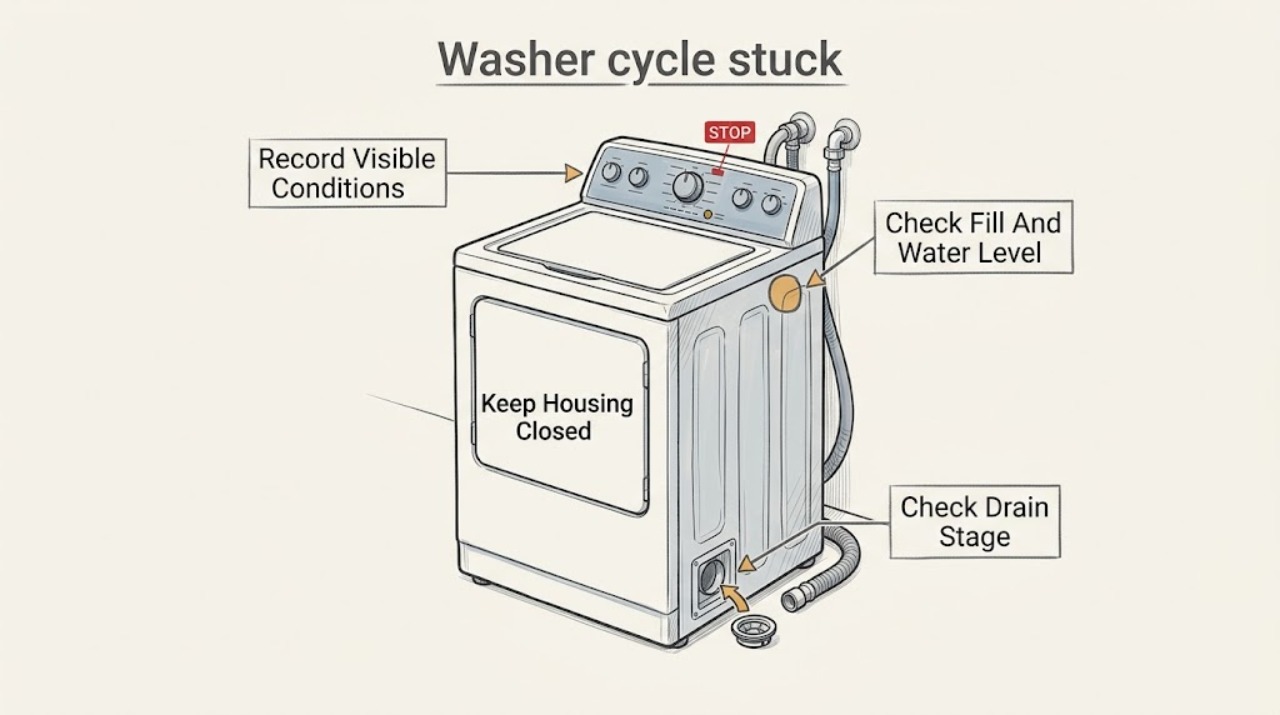
Samsung washer cycle stuck: What to check and what to do next
A Samsung washer that appears stuck is usually waiting for a stage to complete, not necessarily frozen electronics. Note the displayed stage, remaining time, icons, water level, and whether the tub is filling, washing, draining, or trying to spin.
-
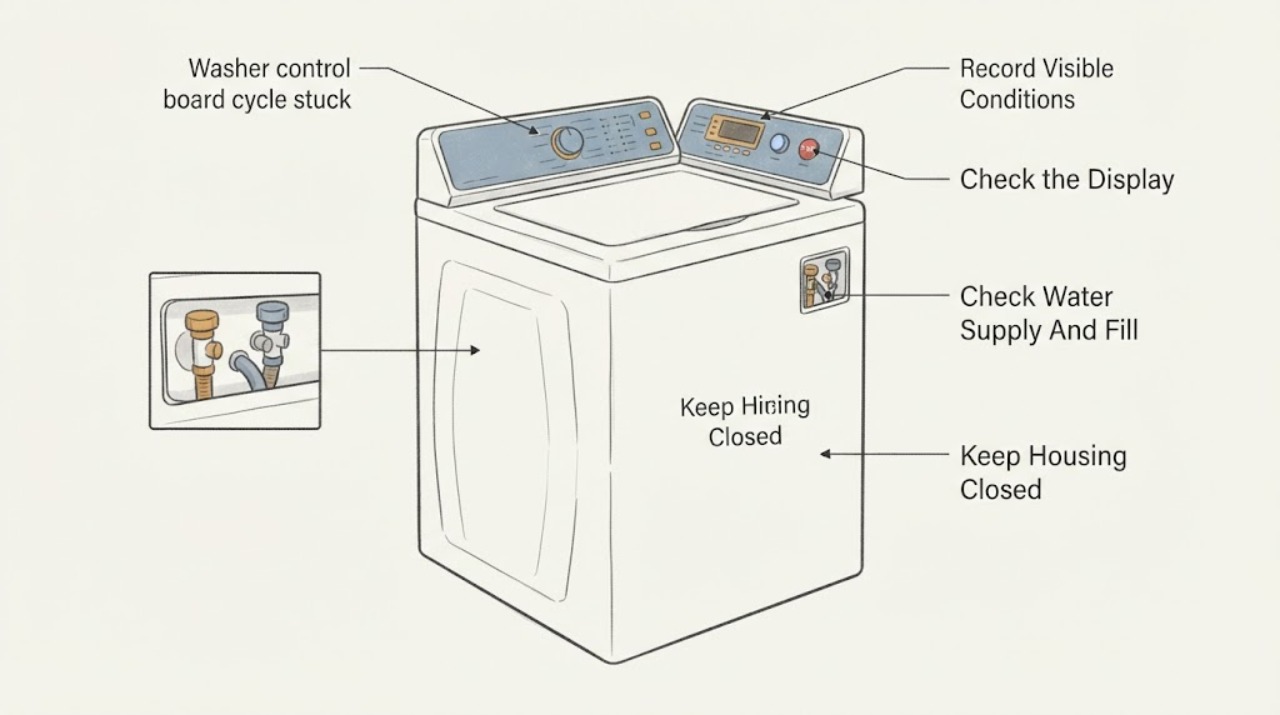
Washer control board cycle stuck: What to Check and What to Do Next
A washer that appears stuck is not proof that the control board has failed. A normal soak or sensing pause, control lock, door or lid-lock feedback, unbalanced load, excess suds, water-supply or drain problem, or a power interruption can keep the cycle from advancing.
-
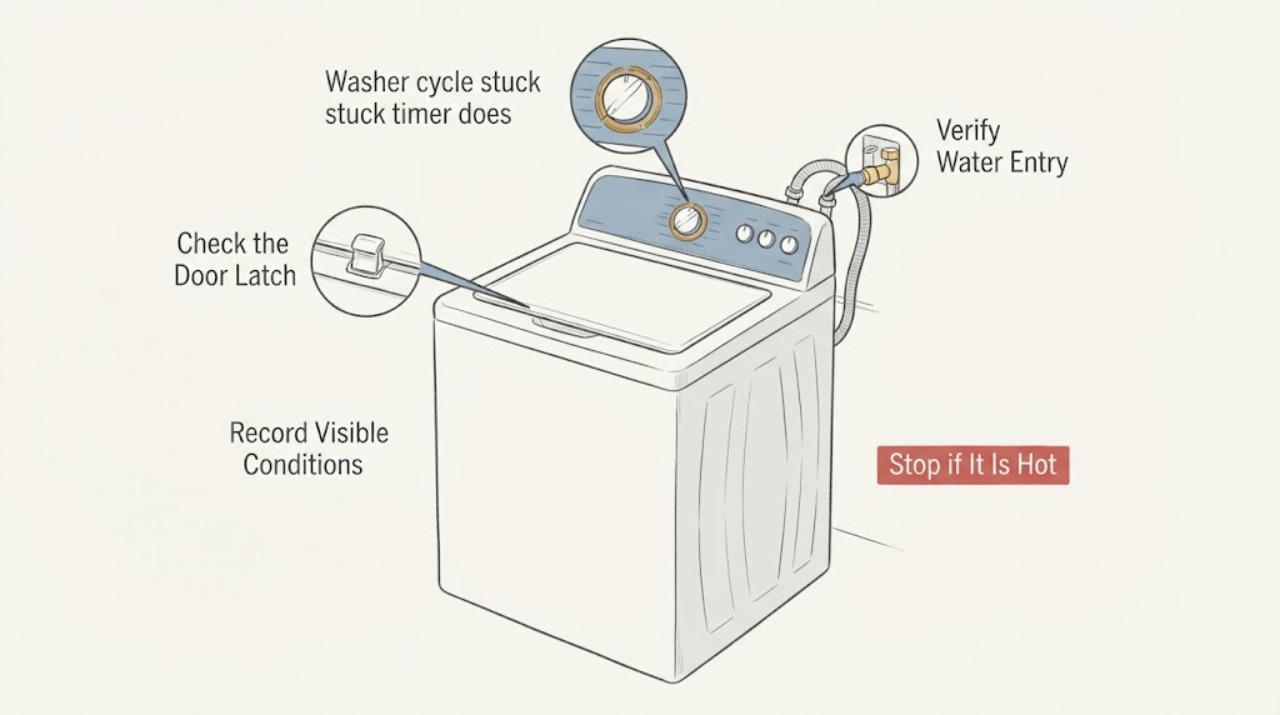
Washer cycle stuck timer does not advance: What to Check and What to Do Next
A washer timer that does not advance may be waiting for a normal condition rather than failed: the displayed time is an estimate and can hold while the machine balances a load, heats water, or reduces excessive suds. It can also stop progressing when the lid or door is not latched, water is not entering, the washer cannot drain, an unbalanced load prevents spin, or a control fault interrupts the cycle.
-
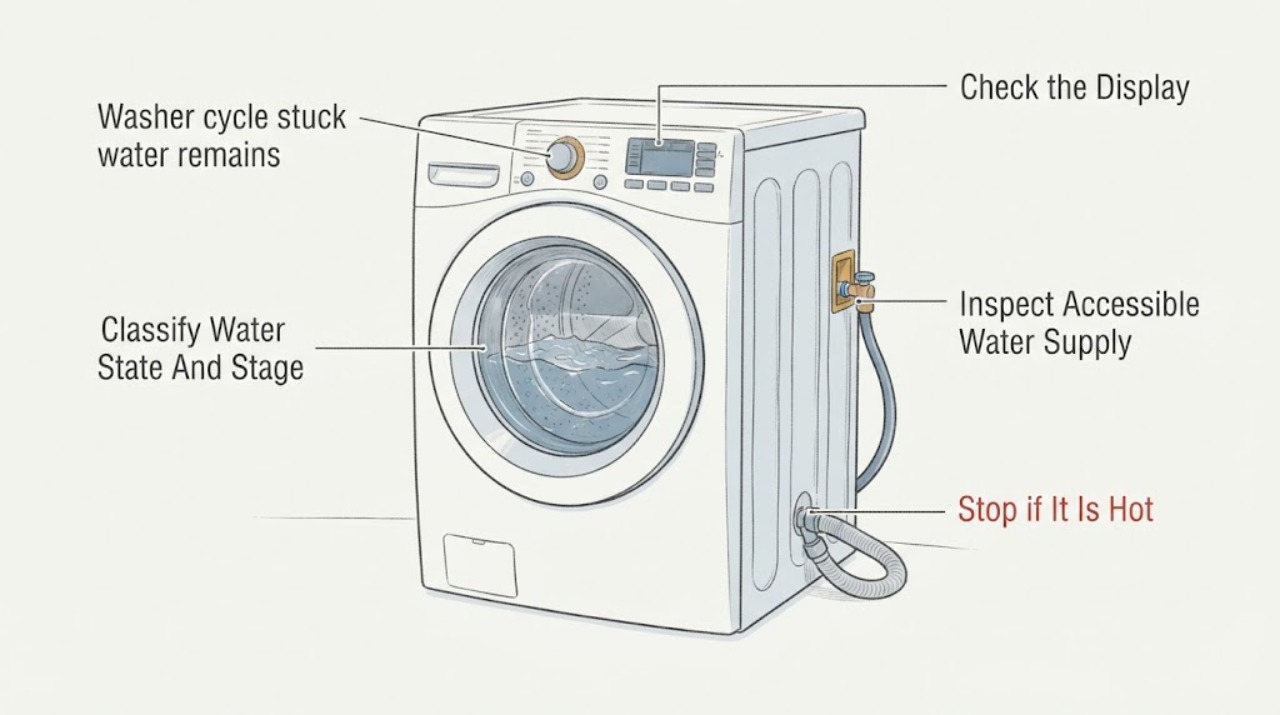
Washer cycle stuck water remains or is absent: What to Check and What to Do Next
First separate a washer that has water left in the tub from one that never filled. If a completed cycle leaves water or very wet clothing, keep hands out of the tub, check the display and load, and use the model-approved Drain & Spin option only when the washer is stable and there is no leak or other hazard.
-
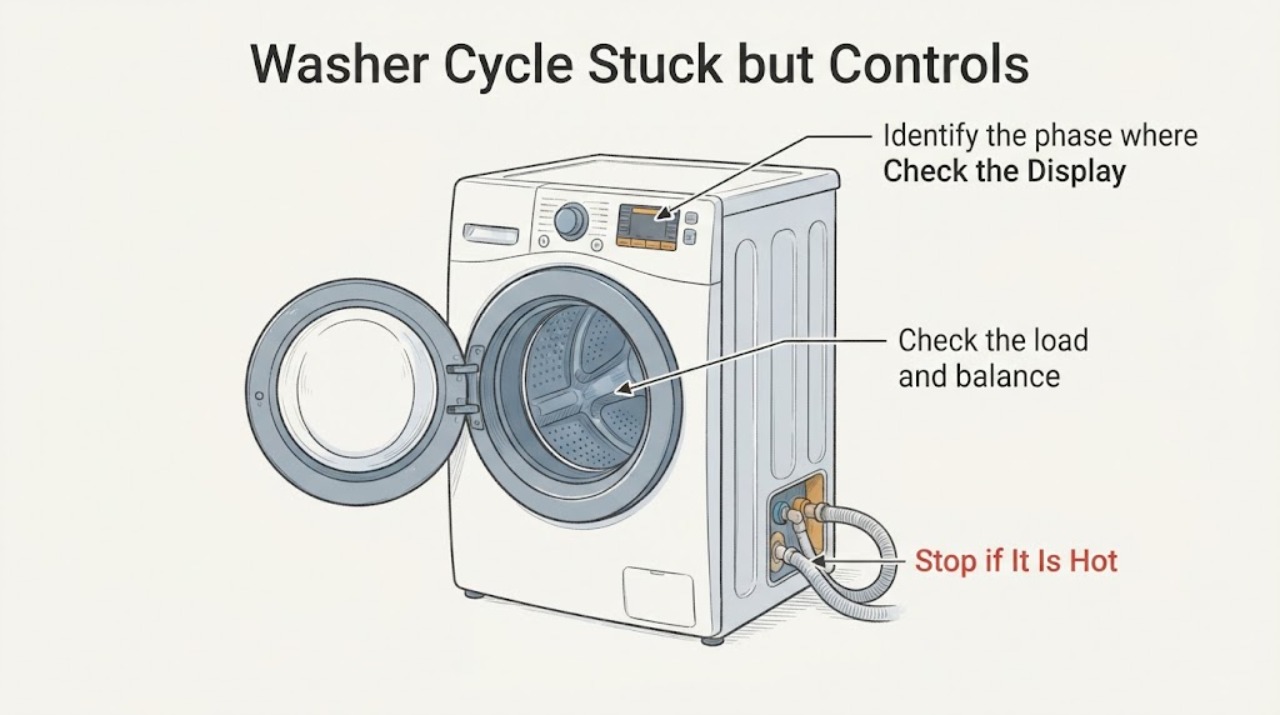
Washer Cycle Stuck but Controls Respond: What to Check and What to Do Next
A washer that appears stuck while its controls still respond may be extending the cycle to balance a load, absorb water, reduce suds, heat water, or complete a drain and spin step. First record the displayed phase and whether the washer is filling, tumbling, draining, spinning, or simply pausing.
-
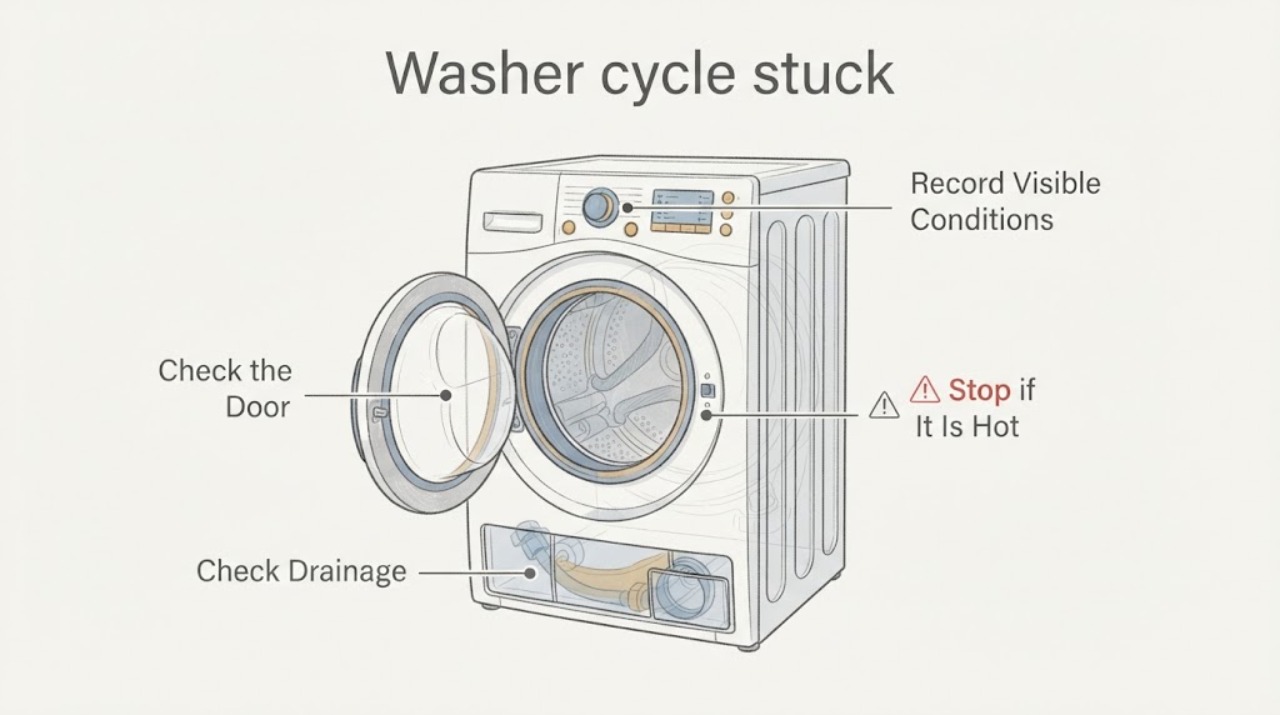
Washer cycle stuck: What to Check and What to Do Next
A washer that appears stuck may be holding its displayed time while it balances the load, heats water, handles excess suds, or waits for filling or draining. First record the displayed phase and whether the tub is filling, draining, or spinning; then make only safe visual checks of the load, lid or door, visible hose, water valves, and any leak.
-
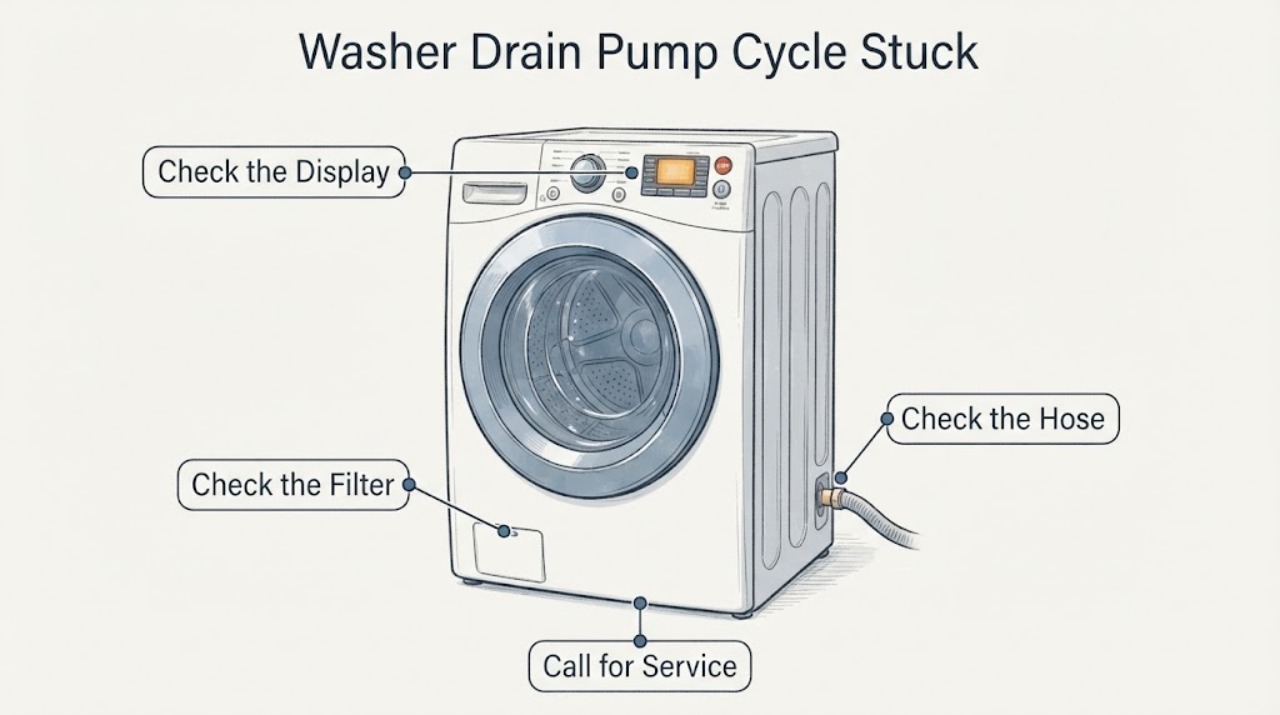
Washer Drain Pump Cycle Stuck: What to Check and What to Do Next
A washer that stays in a drain-pump portion of the cycle may be trying to remove water but not reaching its empty-level check. Stop the cycle, allow recently hot water to cool, and disconnect power before any filter check.
-
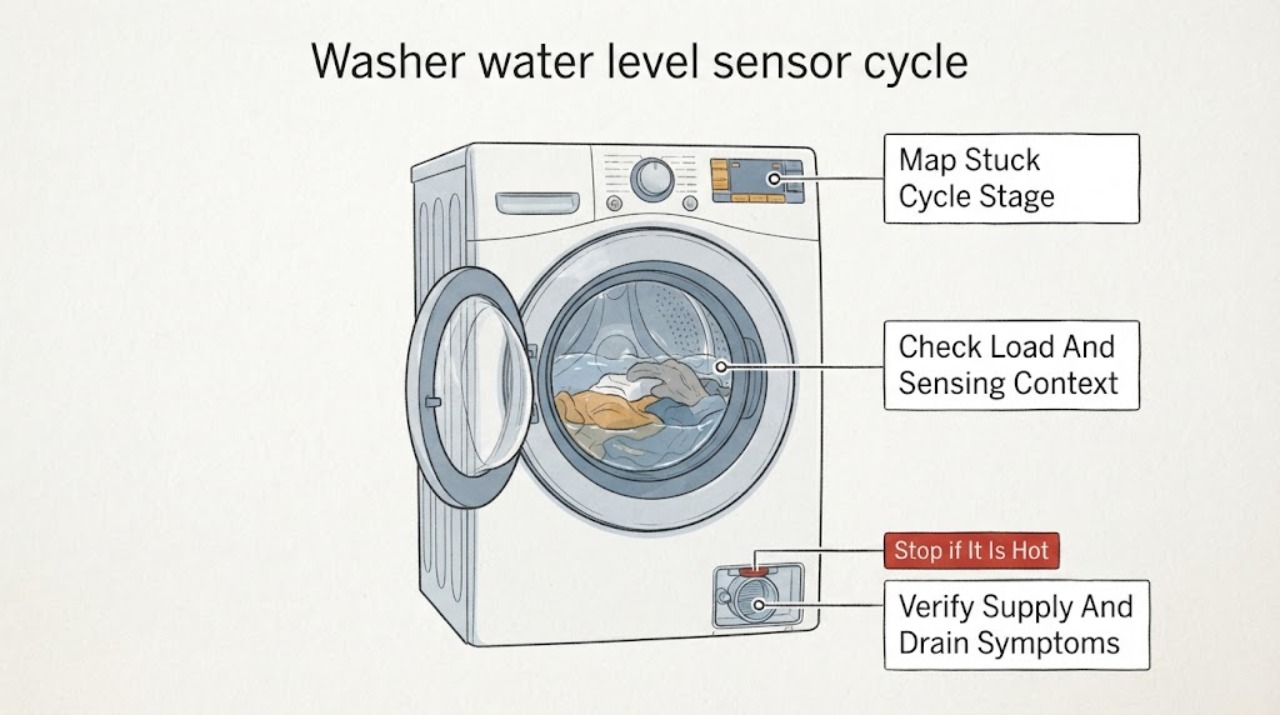
Washer water level sensor cycle stuck: What to Check and What to Do Next
A washer can appear stuck while it is sensing load size, waiting for water, pausing with the lid or door open, removing excess suds, or waiting for a drain. First note where the cycle stops, whether water is entering or leaving, and what the display says.
-
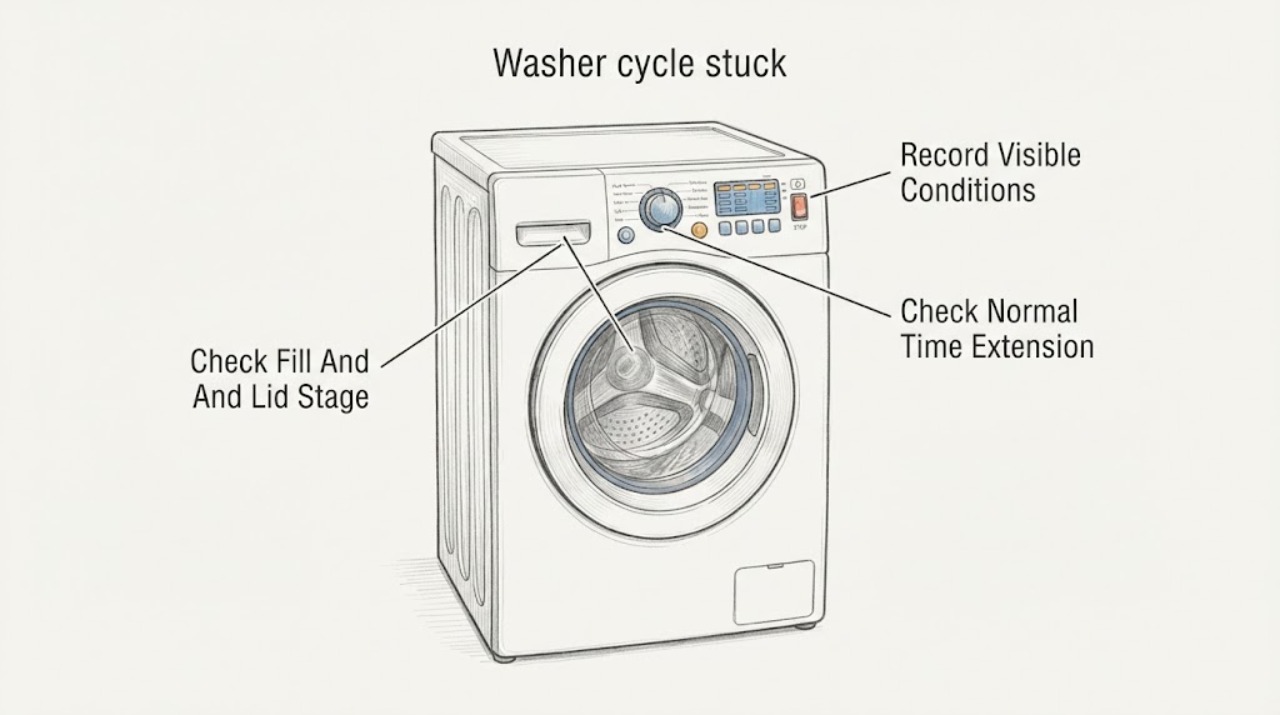
Whirlpool washer cycle stuck: What to Check and What to Do Next
First record the exact Whirlpool model, selected cycle, stage where the washer appears to stop, display or blinking lights, water level, lid or door state, and whether the tub is moving. A time display that holds can be normal while a heated or Sanitize cycle warms water, while excess suds or an unbalanced load can extend the cycle.