
On this page
Start here
Quick answer
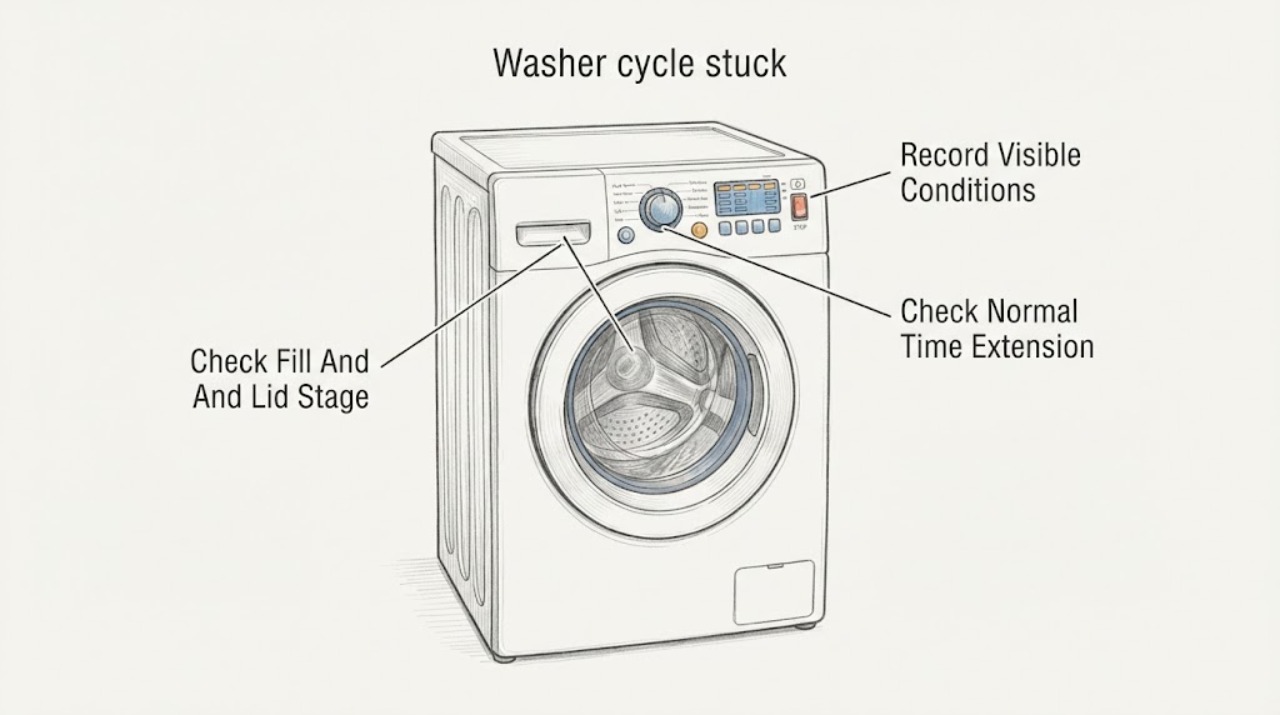
First record the exact Whirlpool model, selected cycle, stage where the washer appears to stop, display or blinking lights, water level, lid or door state, and whether the tub is moving. A time display that holds can be normal while a heated or Sanitize cycle warms water, while excess suds or an unbalanced load can extend the cycle. A fill stop points toward the water supply or lid lock; a drain stop points toward standing water, the drain hose, or a pump path; a spin stop points toward imbalance, load type, spin selection, level, or drain status. Do not force the lid or door. If the manual permits, cancel the cycle using the model's Start/Pause or Power/Cancel control so water can drain, then use one model-approved power reset. Leave the washer off and arrange service for a returning error, a persistent stuck stage, no drain, repeated lid-lock failure, smoke, burning odor, electrical sparking, a major leak, or any need to open the cabinet or bypass a safety lock.
Before you begin
Safety first
- This article supports recording the stage, checking accessible water, hose, drain, load, level, and lock conditions, and using one model-approved cancel or reset when safe. It does not authorize cabinet disassembly, live electrical testing, pressurized plumbing work, door-lock bypass, or reaching into a moving or hot tub.
Work through in order
Diagnostic checks
Use only checks that match the exact appliance or system and its official guide.
-
Check 1
Record the Whirlpool model and serial information, selected cycle and options, displayed time or code, exact stage where the cycle appears stuck, lid or door state, water level, tub movement, load type, and any noise, leak, heat, odor, or power interruption.
Expected result: The time is counting down, the time is fixed, the washer is filling, tumbling, draining, balancing, spinning, waiting on a lock, or showing a code or blinking light.
Next step: Use the exact model manual and the matching stage check. Keep the washer stopped for smoke, burning odor, sparking, a major leak, hot water or steam, violent movement, or a lock that cannot safely release.
Stop if: Stop immediately for smoke, fire, electrical sparking, burning insulation odor, uncontrolled water, a damaged cord, violent shaking, or any need to reach into a moving or hot tub.
Why this matters
Why: Whirlpool says estimated time depends on load, cycle, options, household water temperature and pressure, and unbalanced-load detection. Stage and model identify whether the delay may be normal or points to water, drain, balance, lock, or control trouble.
-
Check 2
If the display is holding during wash or rinse but the machine is safely active, observe whether it is heating water, adding rinse water, managing suds, or repeatedly rotating to balance the load; do not interrupt a hot or moving tub just to make the time change.
Expected result: A heated or Sanitize/Steam option is selected, excess suds are visible, a single bulky item is present, a bulk dispenser added detergent, or the washer is quietly balancing without a safety symptom.
Next step: Allow the safe stage to finish if there is no hazard. For future loads, use only the model-approved HE detergent amount and a cycle suited to the load; if the timer never advances or the stage stops with an error, continue to the matching fill, drain, or spin check and arrange service if it persists.
Stop if: Do not add detergent mid-cycle, open a locked lid or door, touch hot water, or continue if the washer leaks, overheats, smells burned, or shakes violently.
Why this matters
Why: Whirlpool says heated cycles can hold the estimate while water warms, and excess suds can create a suds lock that adds water and time. A single bulky or unbalanced load can require extra balancing before final spin. These patterns can be normal delay rather than a frozen control.
-
Check 3
If the washer is stuck before or during fill, verify only the external water valves are open, the accessible inlet hoses are not kinked, and the lid or door is fully closed and latched as the exact model requires; do not reach into the tub or defeat the lock.
Expected result: The water supply is closed or restricted, an inlet hose is kinked, the lid or door does not latch, the lock light is flashing, the machine fills and drains at once, or the external checks are clear.
Next step: Correct only the clearly external condition named by the model manual, close the lid or door, and retry once. If the washer will not latch, repeatedly unlocks, does not fill with clear supplies, or shows an error, cancel safely and arrange service.
Stop if: Do not bypass the lid or door lock, loosen pressurized connections while running, pull the machine out over wet flooring, or run another cycle with an uncontrolled fill or leak.
Why this matters
Why: Whirlpool says the lid must be closed for the washer to fill, wash, drain, rinse, and spin on many models, while features vary by model. A lock or supply condition can prevent advancement; a fill-and-drain pattern can indicate a drain installation or siphoning issue rather than a control freeze.
-
Check 4
If the cycle is stuck at drain or spin, note whether water remains, inspect the externally accessible drain hose and household standpipe for a kink or obvious blockage, and assess whether the load is single, bulky, wet, or visibly bunched; do not reach into a moving basket.
Expected result: Water stands in the tub, the drain hose is kinked or poorly positioned, clothes are wet and bunched, the washer shakes or retries, a low/no-spin option was selected, the washer is not level, or the external conditions are clear.
Next step: Follow the exact model's approved drain or load-redistribution procedure and select Drain & Spin only when safe and appropriate. If water remains, the machine cannot reach spin, the error returns, or the washer vibrates abnormally, stop and arrange service.
Stop if: Do not force the door or lid, remove an internal pump, tip a water-filled washer, reach below the basket, or continue spinning with violent shaking or a leak.
Why this matters
Why: Whirlpool links standing water to drain-hose installation or blockage and links spin delays to unbalanced loads, bulky items, low/no spin selection, level, and prior drain status. A clear hose does not rule out a pump, motor, control, or internal obstruction.
-
Check 5
If no safe external check resolves the stuck stage and the manual permits interruption, hold the model's Start/Pause or Power/Cancel control as directed to cancel and drain, then perform one model-approved five-minute power reset only when there is no active leak, heat, smoke, odor, sparking, or mechanical hazard.
Expected result: The washer cancels and drains, the display clears, the lid or door releases after the tub is safe, the same stuck stage returns, water remains, or the controls do not respond.
Next step: Leave the washer off and arrange qualified Whirlpool service. Provide the model, stage, display, water level, load, external checks, cancel/reset result, and any lock, leak, heat, odor, noise, or power symptoms.
Stop if: Do not reset repeatedly, force the door, bypass the lock, open the cabinet, test live wiring, or restore operation after smoke, sparking, uncontrolled water, overheating, or violent movement.
Why this matters
Why: Whirlpool says cancellation is model-dependent and may drain the water; its reset guidance says a five-minute power disconnect can clear some incomplete-cycle or control concerns. A returning stage, locked door with water or heat, or unresponsive control indicates an unresolved fault.
Use your observations
Decision map
Find the observation that best matches what you see, then follow the next safe action.
-
PATH 01Safety boundary
What you see
The remaining-time display holds while the washer is safely heating, rinsing, managing suds, or balancing a load, with no leak, unusual heat, violent movement, or persistent error.
Do this next
Allow the safe stage to finish. For the next load, use model-approved HE detergent and a suitable load or cycle; arrange service if the washer never advances or repeats the behavior without those conditions.
Why this path and its safety boundary
Why it matters: Whirlpool describes heated cycles, excess suds, and unbalanced loads as causes of added time or a fixed estimate.
Safety stop: Do not open a locked lid or door, touch hot water, or keep waiting if smoke, burning odor, sparking, leaking, or violent shaking appears.
-
PATH 02Safety boundary
What you see
The washer does not advance from fill or sensing, the lid or door does not latch, the lock light flashes, or the machine fills and drains at the same time.
Do this next
Verify only the external valves, hose condition, drain installation, and closed lid or door that the exact manual identifies. Cancel and arrange service if the lock or fill problem persists.
Why this path and its safety boundary
Why it matters: A water-supply, hose-routing, siphoning, lid/door-lock, or model-specific sensing condition is more likely than a generic frozen timer.
Safety stop: Do not defeat the lock, loosen water connections during operation, or continue with a leak or uncontrolled fill.
-
PATH 03Safety boundary
What you see
The washer tumbles or adds water but the time remains fixed during a heated or Sanitize cycle, or excess suds are visible and the machine is extending the rinse.
Do this next
Let the safe cycle manage the condition. Use only the correct HE detergent amount on future loads; if an error remains or the same delay occurs with a suitable load and no suds, arrange service.
Why this path and its safety boundary
Why it matters: Whirlpool says incoming water temperature, heater time, excess detergent, and suds lock can extend the wash and make the estimate appear stuck.
Safety stop: Do not add products mid-cycle, touch hot water, or continue if the unit leaks, overheats, smells burned, or shows a persistent error.
-
PATH 04Safety boundary
What you see
The washer stops at drain or rinse-to-spin with water standing in the tub, a drain error, or a drain hose that is kinked, blocked, or improperly routed.
Do this next
Follow the model's safe drain or filter procedure and inspect the external hose or household drain. If water remains or the condition returns, leave the washer off and arrange service.
Why this path and its safety boundary
Why it matters: Whirlpool identifies drain-path restrictions, hose installation, and pump or filter conditions as causes of slow or absent draining; the exact accessible check varies by model.
Safety stop: Do not force the door, tip the washer, reach into the pump, or handle hot or contaminated water without the exact manual's safe procedure.
-
PATH 05Safety boundary
What you see
The washer reaches spin but repeatedly slows, rotates back and forth, shakes, or ends with wet clothes and a fixed time, especially with one bulky or bunched load.
Do this next
When the basket has stopped and the lid or door is safely released, redistribute the load and use the model's recommended cycle or spin option. Service is needed for repeated imbalance with ordinary loads, severe vibration, or a clear level and drain path.
Why this path and its safety boundary
Why it matters: Whirlpool says an uneven or bulky load, low/no spin selection, an unlevel machine, or undrained water can reduce or stop spin and extend cycle time.
Safety stop: Do not hold the basket, open a lock while moving, continue a violent spin, or operate on a visibly unstable floor.
-
PATH 06Safety boundary
What you see
The wash appears complete but the lid or front door stays locked, or a paused cycle will not release it.
Do this next
Wait for the basket to stop and the water or temperature condition to become safe, then use only the model's cancel or drain procedure. If the lock remains after the safe conditions clear, disconnect power as the manual directs and arrange service.
Why this path and its safety boundary
Why it matters: Whirlpool says water remaining in the tub, a Tumble Fresh option, dry mode, high water level, or water temperature can delay a safe unlock; top-load models also keep the lock engaged while the basket is moving.
Safety stop: Do not pry the door or lid, insert tools into the lock, pull the appliance forward, or reach into a tub with water or moving parts.
Helpful context
Understand the symptom
A stopped countdown is not always a failed cycle
Whirlpool's displayed time is an estimate. It can remain unchanged while the washer heats water, manages excess suds, or repeatedly balances a load before the final spin. The first question is not only whether the number moved, but which stage is active and whether the washer is still safely filling, tumbling, draining, or balancing.
Use the stage to narrow the next check
A cycle that never advances past fill may involve a water supply or lid-lock condition. A cycle that stops with water in the tub belongs to the drain path. A cycle that pauses near spin with wet clothes and shaking points toward balance, drain, level, or spin selection. A locked lid or door after washing may be waiting for water level, water temperature, or a dry mode to become safe; it is not permission to pry it open.
Cancel and reset only within the model's safe procedure
Whirlpool provides a model-dependent Start/Pause or Power/Cancel method for interrupting a wash cycle, and its reset guidance uses a five-minute power disconnect for some washer concerns. A cancellation may initiate draining, and a reset may clear a temporary control state, but neither repairs a blocked drain, failed lock, water-supply fault, motor problem, or damaged wiring.
Do not bypass the lid or door lock
Whirlpool describes the lid lock as a safety feature because the basket can spin at high speed. Different models may fill with an open lid yet refuse to advance, or may not start until the lid is latched. Front-load and all-in-one door behavior also depends on water level, temperature, or a dry mode. Keep hands out of the tub and let the lock follow its normal safe release or have it serviced.
Safety boundary
Stop conditions
- Record the exact Whirlpool model, cycle, stage, display or lights, water level, and lid or door state; do not assume a procedure from a different washer model.
- Stop for smoke, fire, sparking, burning odor, uncontrolled water, hot water or steam, violent shaking, damaged wiring, or a tub or door that cannot safely stop or unlock.
- Do not force a lid or door, bypass a lid lock or sensor, reach into a moving basket, open the cabinet, or work on live electrical or pressurized plumbing components.
- Do not reset repeatedly, continue a heated or spinning cycle after a safety symptom, or use a drain or spin command when water, heat, vibration, or lock conditions make it unsafe.
- Arrange qualified Whirlpool appliance service for a persistent stuck stage, repeated lock or fill failure, unresolved drain or spin problem, returning error, unresponsive control, or any internal repair need.
Only after diagnosis
Potential parts
- Whirlpool washer lid lock or front-load door-lock assembly
Consider this category only when service confirms a lock or latch fault after the lid or door is correctly closed and the exact model's external checks are complete.
Confirm the exact Whirlpool model and lock design; do not bypass or replace a safety lock from symptoms alone. - Whirlpool washer drain pump, filter, or drain hose
Consider this category only when a matching drain-stage diagnosis persists after the model-approved external hose and household drain checks.
Confirm the exact model and drain configuration; isolate water and power before any qualified internal work. - Whirlpool washer water inlet valve or pressure-sensing component
Consider this category only when service confirms a fill, water-level, or pressure-sensing fault beyond the external supply and hose checks.
Confirm the exact model, valve configuration, and connector arrangement; do not open pressurized or energized components as a user repair. - Whirlpool washer drive, suspension, motor, or control board
Consider this category only when qualified diagnosis confirms repeated spin, balance, motor, or control failure after load, level, drain, and cycle settings are excluded.
Confirm the exact model and fault evidence; do not test live circuits or substitute parts by appearance.
When checks do not resolve it
Need a professional?
Arrange qualified Whirlpool appliance service when the washer remains stuck after the exact model's safe external checks and one permitted reset, when a lid or door will not safely lock or unlock, when water will not drain, when ordinary loads repeatedly fail to balance or spin, or when a code or control fault returns. Give service the model, cycle and options, exact stage, display or lights, water level, load and detergent details, hose and drain observations, cancel/reset result, and any lock, leak, heat, odor, noise, or power symptoms. Stop immediately for smoke, fire, sparking, burning odor, uncontrolled water, hot water or steam, violent movement, or an unsafe door and seek emergency help when appropriate.
Safety scope: This article supports recording the stage, checking accessible water, hose, drain, load, level, and lock conditions, and using one model-approved cancel or reset when safe. It does not authorize cabinet disassembly, live electrical testing, pressurized plumbing work, door-lock bypass, or reaching into a moving or hot tub.
Common questions
FAQ
Why is my Whirlpool washer time stuck on one minute?
The time is an estimate. Whirlpool says balancing a load, heating water, excess suds, and other load or water conditions can make the display hold while the washer continues working. If the machine is not safely active, has water standing, shakes violently, shows an error, or repeats the stop, cancel it using the model procedure and arrange service.
What should I check if a Whirlpool washer is stuck filling?
Record the model and stage, then check only the external water valves and accessible inlet hoses for the condition named by the manual. Confirm the lid or door is fully closed and latched. Do not bypass the lock. If the washer still will not advance or fills and drains at once, stop and arrange service.
Why is my Whirlpool washer stuck before spin?
Standing water, a kinked or poorly routed drain hose, an unbalanced or bulky load, low/no spin selection, an unlevel washer, or a power interruption can delay or prevent spin. When the basket has fully stopped, follow the model's safe load and drain checks. Do not reach into a moving basket or force a locked lid.
Can I cancel a Whirlpool washer cycle that is stuck?
If the model permits it and there is no safety hazard, Whirlpool says to hold the model's Start/Pause or Power/Cancel control as directed; cancellation may drain the washer. Do not force the door or lid. If the controls do not respond, water remains, or the code returns, disconnect power only as the model manual directs and arrange service.
Why is my Whirlpool washer door or lid still locked?
Top-load locks can stay engaged while the basket moves, and an all-in-one door can wait for water to drain or cool or for Dry Mode or Tumble Fresh to finish. Wait for the safe release condition and use the model's cancel or drain procedure. Never pry the lock or reach into a moving or water-filled tub.
Read the exact guide
Official sources
- Not Spinning - WasherWhirlpool Product Help · Use for Whirlpool top-load spin behavior; front-load and model-specific drive and balance logic can differ.
- Door is Locked at the End of the Wash Cycle - All-In-One Washer DryerWhirlpool Product Help · Use only for Whirlpool all-in-one front-door behavior; do not apply these reasons to every top-load washer lid.
- Lid Locking on a Top Load High Efficiency WasherWhirlpool Product Help · Use for Whirlpool top-load lid-lock behavior only; front-load door behavior and exact operations vary by model.
- How to Reset a WasherWhirlpool Product Help · Use for Whirlpool washer reset guidance only when no active hazard exists; exact reset options vary by model.
- Not Starting - WasherWhirlpool Product Help · Use for Whirlpool top-load start and lock checks; exact button behavior varies by model.
- How to Cancel a Cycle - WasherWhirlpool Product Help · Use for the concept of canceling a started Whirlpool wash cycle; the exact control and safety state must be confirmed in the model manual.
- Cycle Time is Not Advancing - Front Load WasherWhirlpool Product Help · Use for Whirlpool front-load cycle-time behavior and general diagnostic distinctions; exact model controls the selected cycle and options.
- Cycle Time is Not Advancing - Compact Front Load WasherWhirlpool Product Help · Use only as corroborating Whirlpool guidance for cycle-delay mechanisms; do not transfer compact-model buttons or codes to another model.
Community feedback
Share a repair observation
Share a plain-text repair observation. Accepted observations are published automatically; this page may take a moment to update.