
On this page
Start here
Quick answer
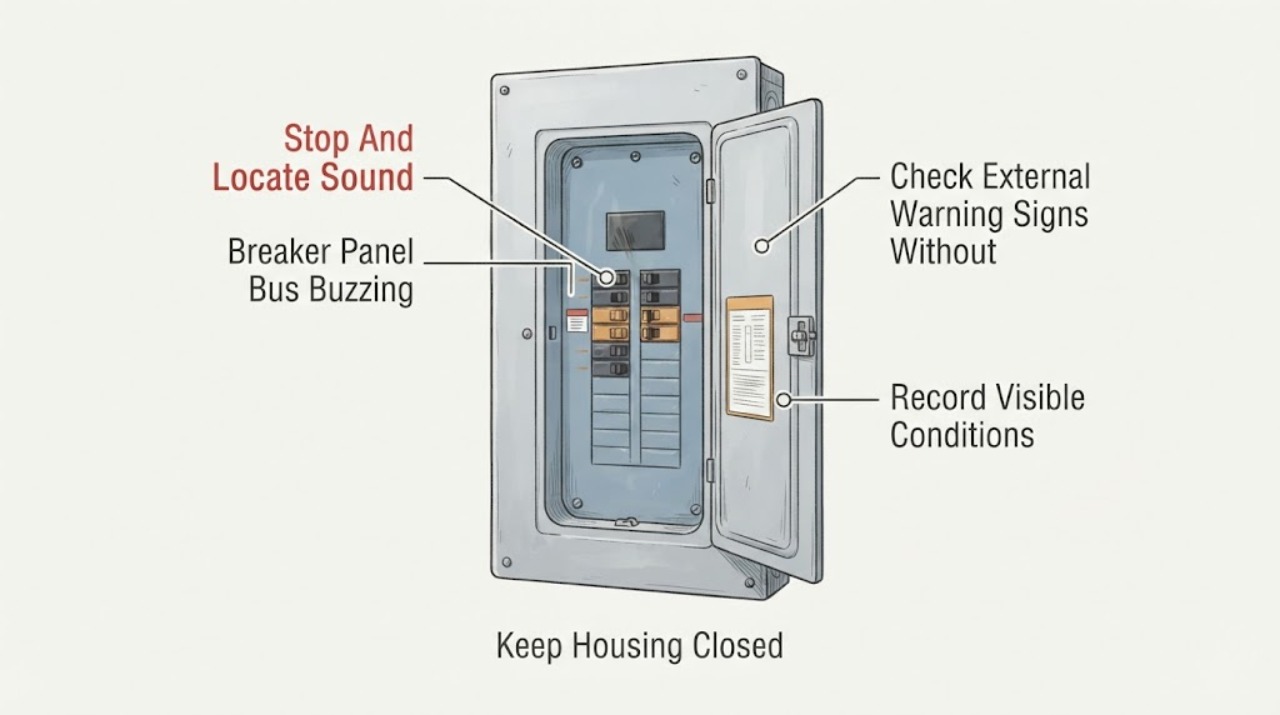
A buzzing sound that appears to come from an Eaton breaker panel or bus should be treated as an electrical warning, not as a DIY tightening or breaker-swap problem. From a dry position with the panel cover closed, note whether the sound is continuous or load-related and look without touching for a tripped breaker, flickering lights, heat, discoloration, melted plastic, smoke, or a burning-insulation odor. Stop using the affected circuit and arrange a licensed electrician promptly if the noise is persistent, gets louder with a load, or comes with any of those signs; use emergency guidance for smoke, fire, or a strong burning odor. Eaton loadcenters contain branch breakers connected to a bus and are intended to keep people away from energized parts. Do not remove the deadfront or cover, touch the bus, tighten terminals, press a breaker into place, test voltage, substitute a breaker, or keep resetting a tripping circuit. Only a qualified electrician can determine whether the source is a breaker, bus connection, wiring, load, or panel defect and make a safe repair.
Work through in order
Diagnostic checks
Use only checks that match the exact appliance or system and its official guide.
-
Check 1
Stand on a dry floor in front of the closed Eaton panel and listen briefly without touching the cover, handle openings, conduit, or nearby wiring. Compare the sound with other normal household equipment from a distance and note whether it is a steady hum, a raspy buzz, crackling, popping, or a sound that changes when a large load starts.
Expected result: The sound clearly comes from the closed panel, comes from a nearby appliance or wall, is continuous with loads off, or changes when one identifiable circuit or appliance operates.
Next step: Stop operating the suspected high-load appliance and arrange a licensed electrician for a panel-area sound. If smoke, a strong burning odor, visible arcing, or rapid heating is present, leave the area and follow local emergency guidance rather than continuing to listen.
Stop if: Do not press an ear or tool against the panel, remove its cover, insert anything through openings, or use a screwdriver, non-contact tester, or camera as a reason to approach energized parts.
Why this matters
Why: A sound that is truly at the panel or follows a branch load needs electrical evaluation; the sound alone cannot distinguish a vibrating breaker, bus connection, conductor, or connected equipment. Crackling or popping is more urgent than a stable low hum. A nearby appliance source may be separate, but it should not be assumed harmless if the panel also shows warning signs.
-
Check 2
With the panel closed and power untouched, look from a safe distance for a breaker handle that is in an unusual or tripped position, cover or trim discoloration, melted plastic, scorch marks, smoke, condensation, damaged conduit, or a hot-insulation odor. Do not touch the panel, cover, breaker, or surrounding wall to test temperature.
Expected result: There is no visible or odor warning, the panel or one breaker is discolored or melted, the area is hot or smells of burning insulation, or smoke/arcing is visible.
Next step: If any heat, odor, smoke, arc, spark, or melted/discolored material is present, keep away and seek appropriate emergency or licensed electrical help. Do not open the panel to confirm the source; provide the electrician with the exact location and what you observed.
Stop if: Do not touch a hot or discolored panel, spray it, wipe it, remove trim, open the deadfront, or attempt to cool an electrical fault with water or a fan placed nearby.
Why this matters
Why: A clean exterior does not clear a hidden bus or terminal fault, but discoloration, melting, overheating, smoke, or an odor indicates a possible fire or shock hazard. Electrical-safety guidance treats unusual buzzes together with heat, arcs, sparks, and damaged insulation as reasons for licensed inspection.
-
Check 3
From the panel directory or household records, note which labeled circuits serve the area and what was running when the buzz began: for example, heating, cooking, laundry, motor, EV charging, or other high-demand equipment. Record whether lights dim or flicker, appliances slow down, or the same breaker trips, without opening the panel or changing breaker positions.
Expected result: The buzz follows one known load, follows several loads together, occurs with flickering or dimming, or occurs independently of household demand.
Next step: Stop using the load that reliably triggers the sound and arrange an electrician to inspect the complete circuit and Eaton panel. Keep a written timeline and appliance list so the electrician can reproduce the decision pattern safely.
Stop if: Do not add or move loads to another circuit as a workaround, use extension cords for major equipment, repeatedly start the noisy load, or replace a tripped breaker with a higher rating.
Why this matters
Why: A load-linked sound can reflect a problem in the appliance, branch wiring, breaker, or bus connection; a panel fault cannot be ruled out because the sound stops when the load stops. Flicker, underpowered appliances, or repeated trips increase the urgency. A demand-independent buzz makes a persistent panel, breaker, or connection issue more concerning.
-
Check 4
Ask whether other rooms show flickering or dimming lights, unusual appliance behavior, shocks or tingles, frequent breaker trips, or a second buzzing outlet or switch. Keep hands off the panel and do not open receptacles; record which symptoms occur together and whether they started after renovation, a new appliance, water intrusion, or storm activity.
Expected result: The panel buzz is isolated, several circuits show flicker or underpower, another device buzzes, a mild shock or tingle occurred, or the issue follows water or recent electrical work.
Next step: Stop using affected equipment and arrange licensed electrical inspection. If water is entering the panel or anyone receives a shock, keep away and use emergency or utility guidance as appropriate; do not investigate by opening the enclosure.
Stop if: Do not test outlets with improvised tools, touch metal equipment after a shock, remove receptacle plates, or re-energize circuits after water intrusion without professional evaluation.
Why this matters
Why: Multiple circuits, shocks, flicker, or recent wiring changes can indicate a broader supply, grounding, connection, or panel problem rather than one replaceable breaker. Water intrusion adds a separate shock and corrosion concern. An isolated buzz is still not normal proof of safety; it only narrows the information to share with the electrician.
-
Check 5
Before service, photograph or transcribe only the readable exterior labels and the Eaton panel/catalog information that can be obtained without opening the enclosure. Note the breaker position, circuit directory label, sound timing, affected loads, visible warnings, and any recent work. Leave the cover, breaker mounting, bus, and terminal connections untouched.
Expected result: The panel brand or catalog information is visible, the breaker type is unknown, the directory is incomplete, or the panel has no safe readable identification from outside.
Next step: Give the notes and exterior photos to the licensed electrician. Let the electrician de-energize, inspect, torque, test, or replace components according to the specific Eaton equipment and applicable requirements.
Stop if: Do not remove the deadfront to read a catalog number, pull a breaker, tighten a terminal, test a bus, or install an Eaton-looking replacement yourself.
Why this matters
Why: Eaton has different loadcenter and breaker families, and secure bus engagement and torque are product-specific installation matters. Exterior identification helps a professional choose the correct procedure, but a label cannot establish compatibility, a loose connection, or a safe repair.
Use your observations
Decision map
Find the observation that best matches what you see, then follow the next safe action.
-
PATH 01Next step
What you see
Buzzing is accompanied by heat, discoloration, melted plastic, smoke, sparks, crackling, a burning-insulation odor, or visible arcing.
Do this next
Keep away from the panel and follow local emergency or utility guidance for smoke, fire, or strong burning odor. Arrange licensed electrical service and do not reopen or re-energize the equipment to test it.
Why this path and its safety boundary
Why it matters: An energized connection, breaker, conductor, or load may be overheating or arcing; this is an immediate safety boundary, not a routine panel adjustment.
-
PATH 02Next step
What you see
The buzz changes when one known appliance or branch load runs, especially if the same circuit trips, lights flicker, or equipment seems underpowered.
Do this next
Stop using the trigger load and have an electrician inspect the appliance connection, branch circuit, breaker, and bus interface as one system.
Why this path and its safety boundary
Why it matters: The load, branch wiring, breaker, or Eaton bus connection may be involved; stopping the load does not prove the panel is safe.
-
PATH 03Next step
What you see
A steady or intermittent buzz appears to originate in the closed panel even when the household load pattern is unclear and no exterior damage is visible.
Do this next
Avoid unnecessary panel loads and arrange a licensed electrician for inspection. Preserve the timing and sound description instead of opening the enclosure.
Why this path and its safety boundary
Why it matters: A hidden breaker, bus, terminal, conductor, or supply issue remains possible; a clean cover does not clear energized interior parts.
-
PATH 04Next step
What you see
Buzzing occurs with flickering or dimming across rooms, multiple tripped breakers, shocks or tingles, water intrusion, or another electrical warning.
Do this next
Stop using affected circuits and arrange prompt licensed electrical inspection; use emergency or utility guidance for shock, smoke, fire, or water-related danger.
Why this path and its safety boundary
Why it matters: A broader service, grounding, panel, or wiring problem is more likely than an isolated breaker replacement.
-
PATH 05Next step
What you see
The only available clue is an Eaton label or breaker type, with no safe exterior way to confirm the source or condition of the bus.
Do this next
Share the exterior identification and symptom record with an electrician. Require the professional to verify the exact Eaton equipment before any inspection, torque, test, or replacement.
Why this path and its safety boundary
Why it matters: Brand or catalog identity does not establish that a breaker fits, that the bus connection is sound, or that the noise is safe to ignore.
Helpful context
Understand the symptom
Why bus-area buzzing deserves caution
A breaker panel distributes power through branch breakers and bus connections. The sound may come from a breaker, its connection, a conductor, a connected load, or another part of the enclosure, so hearing it near the bus does not identify the failed component. Eaton's loadcenter guidance treats the enclosure as protection from energized parts and describes a secure breaker-to-bus connection as part of installation. That is why the useful homeowner contribution is to preserve clues and reduce exposure, not to open the panel and hunt for the noise.
Separate harmless appliance noise from panel noise
A transformer, dimmer, appliance, or ventilation fan can make a sound elsewhere in the home that travels through walls. Confirm the apparent location from outside the closed panel without leaning on it or touching the cover. If the sound disappears when a known load stops, that still does not prove the load is safe; it gives the electrician a useful timing clue. A buzz that remains with loads off, changes with one circuit, or is accompanied by heat or flicker should be handled as a panel or wiring warning.
Only after diagnosis
Potential parts
- Eaton circuit breaker
Only consider a breaker after a qualified electrician confirms that the existing breaker is defective and that replacement is appropriate; buzzing alone cannot identify the breaker as the cause.
Breaker family, bus design, rating, interrupting capability, and panel listing must match the exact Eaton loadcenter. Do not substitute a visually similar breaker or change the rating. - Eaton loadcenter bus or connection component
Only consider this category when qualified inspection confirms bus damage or a connection component requiring repair or replacement; a panel buzz is not sufficient evidence.
Bus and enclosure components are model-specific and may require panel replacement or listed service procedures. Only a qualified electrician should determine and perform this work.
When checks do not resolve it
Need a professional?
Arrange a licensed electrician promptly for any buzzing that appears to come from the Eaton panel or bus, especially when it is persistent, load-linked, or accompanied by flicker, tripping, heat, discoloration, odor, sparks, shocks, water, or underpowered equipment. Use emergency or utility guidance for smoke, fire, strong burning odor, or immediate shock danger. Keep the panel closed; do not remove the deadfront, touch the bus, tighten terminals, press a breaker into place, test live voltage, move wires, change breaker ratings, substitute a breaker, or repeatedly reset a tripping circuit. Eaton's model-specific bus engagement and torque work belongs to qualified electrical service.
Common questions
FAQ
Is a buzzing Eaton breaker panel dangerous?
It can be. A panel-area buzz does not identify the failed component, but unusual electrical buzzing—especially with heat, discoloration, flicker, odor, sparks, or trips—is a warning sign. Keep the enclosure closed and arrange licensed electrical inspection rather than tightening or swapping parts.
Can I tighten the buzzing breaker or bus connection?
No. Eaton breaker-to-bus engagement and terminal torque are model-specific work around energized equipment. Do not remove the deadfront or touch the bus; have a licensed electrician de-energize, inspect, and repair the panel using the exact Eaton documentation.
What should I check without opening an Eaton panel?
From a dry, safe position, listen briefly with the cover closed, note whether a known load triggers the sound, and look without touching for a tripped handle, heat, discoloration, smoke, or damaged surrounding material. Record flicker, odor, and timing for the electrician. Do not use the panel as a test instrument.
Should I reset a breaker that is buzzing or tripping?
Do not repeatedly reset it. If the breaker trips again or the buzz returns, stop using the suspected circuit and arrange electrical inspection. A trip can reflect overload, short circuit, wiring, breaker, or bus trouble, and the handle position alone cannot diagnose it.
Can I replace a buzzing Eaton breaker with another Eaton breaker?
Not based on brand or appearance alone. Breaker family, rating, bus design, listing, and panel compatibility must be verified, and buzzing may originate in wiring, the load, or the bus. Have a qualified electrician diagnose the cause and select any replacement.
Read the exact guide
Official sources
- Home Wiring Safety TipsElectrical Safety Foundation International · Electrical warning signs including unusual buzzing, flickering, overheating, arcs, damaged insulation, shocks, and licensed-electrician escalation
- Load centers: Fundamentals of electrical load centersEaton · Eaton residential loadcenter purpose, branch circuit protection, enclosure of energized parts, and breaker-to-bus function
- AbleEdge Smart Breaker FAQEaton · Eaton breaker protection behavior, trip states, wiring fault indications, and qualified installation boundary
- CPSC Guide to Home Wiring HazardsU.S. Consumer Product Safety Commission · Home electrical panel warnings, breaker overload protection, sizzles or buzzes, arcs, flicker, and qualified repair boundaries
- Installation tips for BR & CH plug-on neutral productsEaton · Eaton BR and CH loadcenter installation, secure breaker-to-bus engagement, deadfront installation, and model-specific torque
Community feedback
Share a repair observation
Share a plain-text repair observation. Accepted observations are published automatically; this page may take a moment to update.