
On this page
Start here
Quick answer
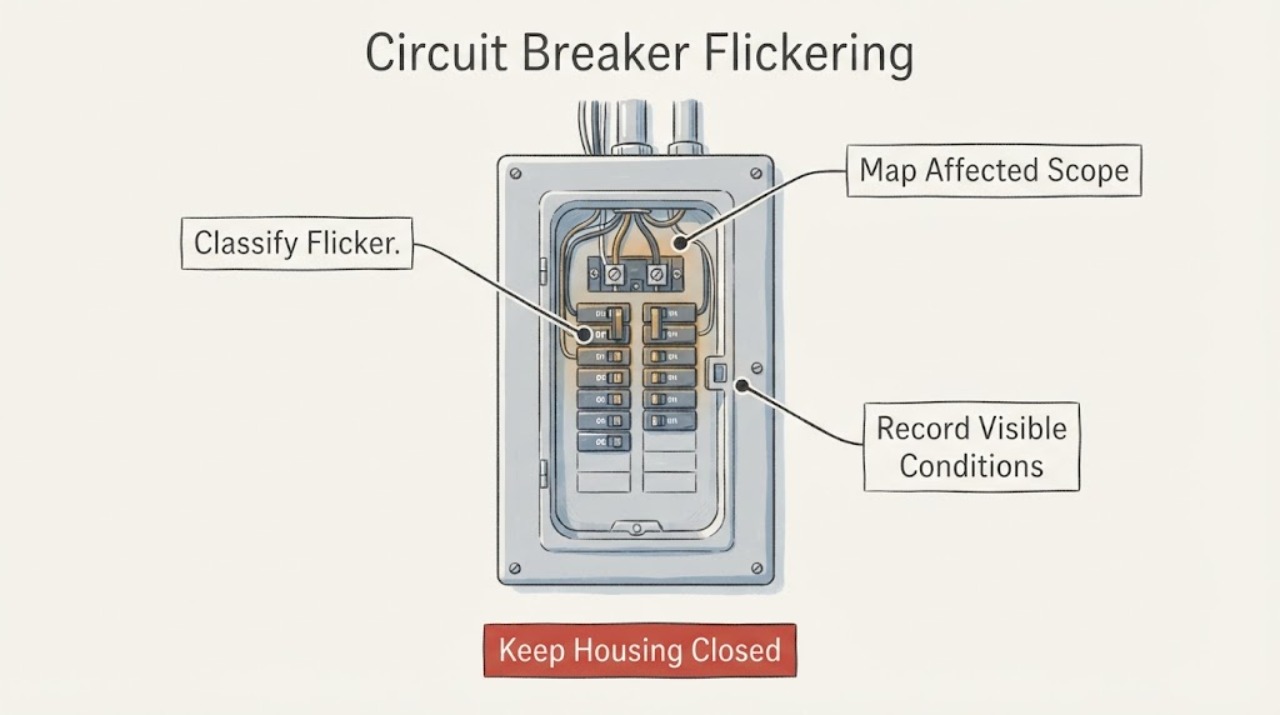
A flickering report involving a circuit breaker can describe a breaker indicator, lights or devices on its circuit flickering, or an actual flash or arc near the panel or switch. Do not operate the breaker repeatedly or try to recreate the symptom. From a safe distance, record exactly what flickers, whether one room or multiple circuits are affected, and whether there is heat, buzzing, smoke, burning odor, sparks, or a trip. Any arc, smoke, burning smell, hot or discolored panel or switch, shock, or repeated trip is an immediate stop condition: leave the area as appropriate and contact emergency help, the utility, or a licensed electrician from a safe location. Even without a visible emergency, unexplained flicker associated with a breaker or switch-wiring concern needs professional electrical inspection.
Work through in order
Diagnostic checks
Use only checks that match the exact appliance or system and its official guide.
-
Check 1
From a safe distance, observe without touching the panel, breaker, switch, outlet, wiring, or device. Record whether the flicker is a breaker indicator, one lamp or fixture, several lights or outlets on one circuit, multiple circuits, or a visible flash or arc.
Expected result: The event is a brief light dip, repeated light flicker, a panel or breaker indication, a flash, or an arc; note whether it is accompanied by buzzing, heat, odor, smoke, sparks, or a trip.
Next step: Stop and use the emergency branch for smoke, flame, sparks, arcing, strong odor, rapid heat, or shock. Otherwise document the symptom and continue only with non-contact scope observations.
Stop if: Do not move closer, operate the control again, or attempt to reproduce the flicker when an arc, smoke, odor, heat, shock, or exposed conductor is present.
Why this matters
Why: The apparent source determines whether the electrician should start with a fixture or device, branch circuit, switch and wiring, service panel, or utility-supply history. A visible arc or any emergency sign overrides further diagnosis.
-
Check 2
Without adding or switching loads, record which room, outlet, light, appliance, or known circuit is affected and whether neighboring circuits remain stable. Use only normal daily observations; do not turn equipment on and off to provoke a change.
Expected result: Only one fixture or outlet flickers, one known circuit changes, several outlets on one circuit change, or lights across separate circuits change together.
Next step: Write down the affected locations and the time or circumstances already observed. Leave the suspect circuit or device unused when practical and arrange electrician or utility assessment according to scope.
Stop if: Stop observing if the flicker is accompanied by buzzing, crackling, heat, discoloration, odor, smoke, sparks, shock, or a breaker trip.
Why this matters
Why: A local symptom keeps the fixture, outlet, switch, and branch wiring in scope; several circuits suggest a panel, service, or utility issue. ESFI identifies flickering or dimming without a known cause as a warning sign rather than a normal operating condition.
-
Check 3
Using the symptom as it occurs naturally, record whether the flicker was noticed when an existing motor, heater, large appliance, or lighting group started or stopped. Do not plug in a test appliance, unplug a warm device, or repeatedly toggle a switch.
Expected result: The flicker has no known load relationship, follows one existing load, changes when other equipment operates, or is accompanied by sound or heat at the switch or panel.
Next step: Leave unusual or high-load equipment off if it can be done without touching a hazard and provide the timing to the electrician. Do not use an extension cord or alternate receptacle as a workaround.
Stop if: Do not operate the load again if it produces flicker with buzzing, odor, heat, sparks, smoke, a shock, or a trip.
Why this matters
Why: Load timing helps the electrician consider an overloaded circuit, voltage disturbance, device fault, or loose connection, but it cannot identify a safe cause from observation alone. ESFI says reliance on extension cords or overload symptoms warrants qualified inspection.
-
Check 4
From outside the panel, note whether the known breaker or GFCI is visibly in an off or middle position and whether the flicker preceded or followed that change. Do not touch or reset the device, open the panel, or inspect its interior.
Expected result: The protective device appears tripped, remains on while flicker continues, shows damage or heat, or cannot be identified safely.
Next step: Leave the state unchanged and tell the electrician exactly what was observed. If the device is hot, wet, smoking, sparking, damaged, or has tripped repeatedly, leave the area or circuit off when safe and use the appropriate emergency or professional path.
Stop if: Never repeatedly reset, force, remove, or bypass a breaker or GFCI; do not open a panel or perform live measurements.
Why this matters
Why: A trip records that protection operated but does not reveal whether the cause is overload, device, wiring, or a protective-device fault. A normal handle position does not clear a continuing flicker or switch-wiring concern.
-
Check 5
From a safe distance, look at the exterior of the suspected switch or outlet without touching it. Record a loose or leaning plate, discoloration, scorch mark, visible gap, crack, odor, or evidence of moisture; do not remove the cover.
Expected result: The plate is cool, intact, dry, and stable, or it is warm, discolored, loose, cracked, odorous, wet, or visibly damaged.
Next step: Leave a suspect switch or outlet unused and arrange electrician service. For wet equipment or water access problems, do not touch or enter the water; an electrician must make it safe before power returns.
Stop if: Do not press, tighten, remove, tape, cover, clean, or otherwise handle the plate or wiring when any warning sign is present.
Why this matters
Why: ESFI identifies hot, discolored, loose, odorous, buzzing, or shocking switch and outlet conditions as warning signs for electrical inspection. A clean exterior cannot verify hidden switch wiring.
-
Check 6
Prepare a handoff without opening anything: record the exact visual symptom, locations, timing, known loads, breaker or GFCI state, switch or outlet appearance, recent work, moisture, flicker frequency already observed, and any safe external photos.
Expected result: The electrician receives a repeatable distinction between indicator flicker, one-circuit light change, multi-circuit change, switch or outlet symptom, and visible arc or emergency condition.
Next step: Leave the suspected equipment or circuit unused until qualified inspection. Contact the utility when multiple circuits or the whole property change without a local warning, and use emergency response when fire or immediate danger is present.
Stop if: Stop documenting and leave if smoke, flame, arcing, strong odor, rapid heating, shock, flooding, or another immediate hazard appears.
Why this matters
Why: A clear history supports safe de-energized diagnosis and prevents risky repeat tests. Flicker associated with switch or wiring remains a professional fault-isolation issue even if it stops temporarily.
Use your observations
Decision map
Find the observation that best matches what you see, then follow the next safe action.
-
PATH 01Next step
What you see
There is an arc, visible flash at electrical equipment, flame, smoke, strong burning odor, rapid heating, or shock.
Do this next
Leave the area, keep others away, do not use water, and contact local emergency help from a safe location. Do not return to reset or inspect the circuit.
-
PATH 02Next step
What you see
The panel, switch, outlet, wiring, or nearby electrical equipment is wet or standing water blocks access.
Do this next
Do not touch or enter the water. Have a qualified electrician make the system safe and do not restore power until inspection and drying are complete.
-
PATH 03Next step
What you see
The breaker or GFCI trips again, flicker returns, or the protective state changes without a clear safe explanation.
Do this next
Leave the affected circuit off and arrange licensed electrician service. Do not repeatedly reset or actively reproduce the event.
-
PATH 04Next step
What you see
One fixture, outlet, switch, or known circuit flickers while other areas remain stable and no emergency sign is visible.
Do this next
Leave the suspect point unused and provide the location and load timing to an electrician for switch, wiring, device, and branch-circuit inspection.
-
PATH 05Next step
What you see
Lights or devices across multiple circuits or the property flicker together without a local warning sign.
Do this next
Do not add loads or test repeatedly; document the time and scope and contact the utility or electrician for service-supply assessment.
-
PATH 06Next step
What you see
Only a breaker indicator or display appears to flicker, with no known light change and no external warning sign.
Do this next
Do not touch the breaker or open the panel. Record the exact indication and have the protective device and panel assessed by a qualified electrician.
Helpful context
Understand the symptom
Clarify what is flickering before interpreting it
A breaker handle usually does not flicker like a lamp, so describe the exact visual symptom: an indicator or display on the breaker, lights or devices supplied by one circuit, lights across several circuits, or a brief flash or arc at the panel, switch, or outlet. A normal-looking breaker does not rule out a loose or damaged connection, and a light flicker does not prove the breaker itself has failed. The safe goal is to document scope and timing, not to reproduce the event.
Why switch and wiring are professional service clues
The assigned component is switch and wiring, but no homeowner repair is implied. A loose switch connection, branch-circuit fault, overloaded circuit, failing protective device, or upstream utility issue can produce overlapping symptoms. ESFI treats flicker, unusual sound, heat, odor, and repeated trips as warning signs that call for qualified inspection. Keep covers closed and do not touch wiring or a protective device to identify the source.
Separate an electrical emergency from a routine observation
A visible arc or flame, smoke, strong burning odor, rapidly heating panel or switch, shock, or repeated trip is not a troubleshooting opportunity. Leave the area and contact local emergency help when there is immediate fire danger. If circuits or equipment are wet or standing water blocks access, do not approach or operate them; CDC guidance says to have an electrician make the system safe and not restore power until inspection.
Safety boundary
Stop conditions
- Stop and leave the area for visible arc or flash, smoke, flame, strong burning odor, rapid heating, or shock; contact local emergency help from a safe location.
- Do not touch wet electrical equipment or enter standing water. Have a qualified electrician isolate and inspect it before power is restored.
- Leave the breaker or circuit off after a repeat trip or returning flicker. Do not repeatedly reset, overload, or use an extension cord as a workaround.
- Do not remove panel or switch covers, touch wiring, measure voltage, bypass protection, pull a hot plug, or use water on energized electrical equipment.
When checks do not resolve it
Need a professional?
Request licensed electrician service for persistent or unexplained flicker at a breaker, panel, switch, outlet, or circuit, for any repeated trip, or for a recent wiring or control change. Contact the utility for multi-circuit or property-wide flicker; use local emergency response for fire, smoke, or arcing.
Have this ready
- Provide the exact visual symptom, apparent source, affected rooms or circuits, timing with existing loads, breaker or GFCI state, switch or outlet condition, warning signs, recent work, moisture, and safe external photos.
Common questions
FAQ
What does it mean if lights flicker when a circuit breaker is involved?
First identify whether the breaker indicator itself, one circuit's lights, or multiple circuits are flickering. Record scope and load timing without recreating the event. Flicker with heat, buzzing, odor, sparks, or a trip is an immediate stop condition; otherwise unexplained flicker still needs electrician inspection.
Should I reset a breaker that is associated with flickering?
Do not repeatedly reset or actively test a breaker associated with flicker. Leave it unchanged or off when safe, especially if it is hot, wet, damaged, smoking, sparking, or has tripped again, and arrange qualified electrician service.
How can I tell whether the flicker is one circuit or the utility?
Use only ordinary observations: note whether one room or circuit is affected or whether separate circuits and the property change together. Do not add loads or toggle equipment to compare. Give the scope and time to an electrician or utility for safe assessment.
Is a flickering breaker indicator safe if there is no smoke?
No conclusion of safety can be made from a quiet, cool exterior. Do not open the panel or touch the breaker; record the exact indication and arrange electrician inspection. Any heat, odor, buzzing, arc, spark, shock, or repeated trip raises the urgency immediately.
What should I do if flickering comes with smoke or a burning smell?
Stop using the affected area, keep people away, and contact local emergency help from a safe location. Do not use water on energized equipment. If water is also present, do not enter it or touch the equipment; a qualified electrician must make it safe before power returns.
Read the exact guide
Official sources
- What to Do to Protect Yourself From Electrical HazardsCenters for Disease Control and Prevention · Official CDC electrical-hazard guidance for wet circuits and equipment, sparks, and burning odor.
- Don't Overload Your HomeElectrical Safety Foundation International · Official ESFI residential electrical-safety guidance for recognizing overload and wiring warning signs.
- Switch to SafetyElectrical Safety Foundation International · Official ESFI home-safety guidance for switches, outlets, lighting controls, and electrical warning signs.
Community feedback
Share a repair observation
Share a plain-text repair observation. Accepted observations are published automatically; this page may take a moment to update.