
Repair problem
Flickering Troubleshooting Guides
Published FixGraph guidance for diagnosing and responding to flickering.
Matching published guides
Choose a guide that matches the service, equipment, and conditions you are seeing.
-
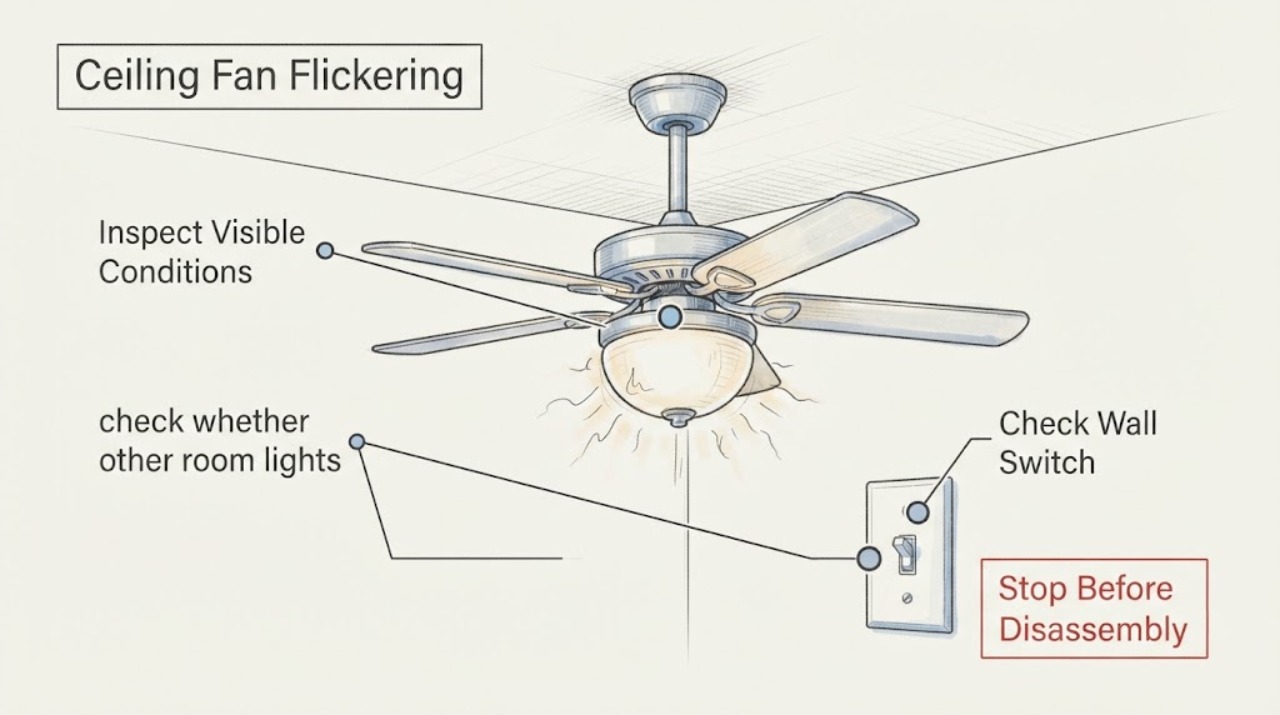
Ceiling Fan Flickering at the Switch: Safe Checks for a Wiring Fault
A ceiling fan that flickers when its wall switch is used can have an incompatible control, a loose connection, a failing switch, or a fault elsewhere on the circuit. Turn the fan off, note whether only this fixture or other lights flicker, and inspect the switch plate without opening energized wiring.
-
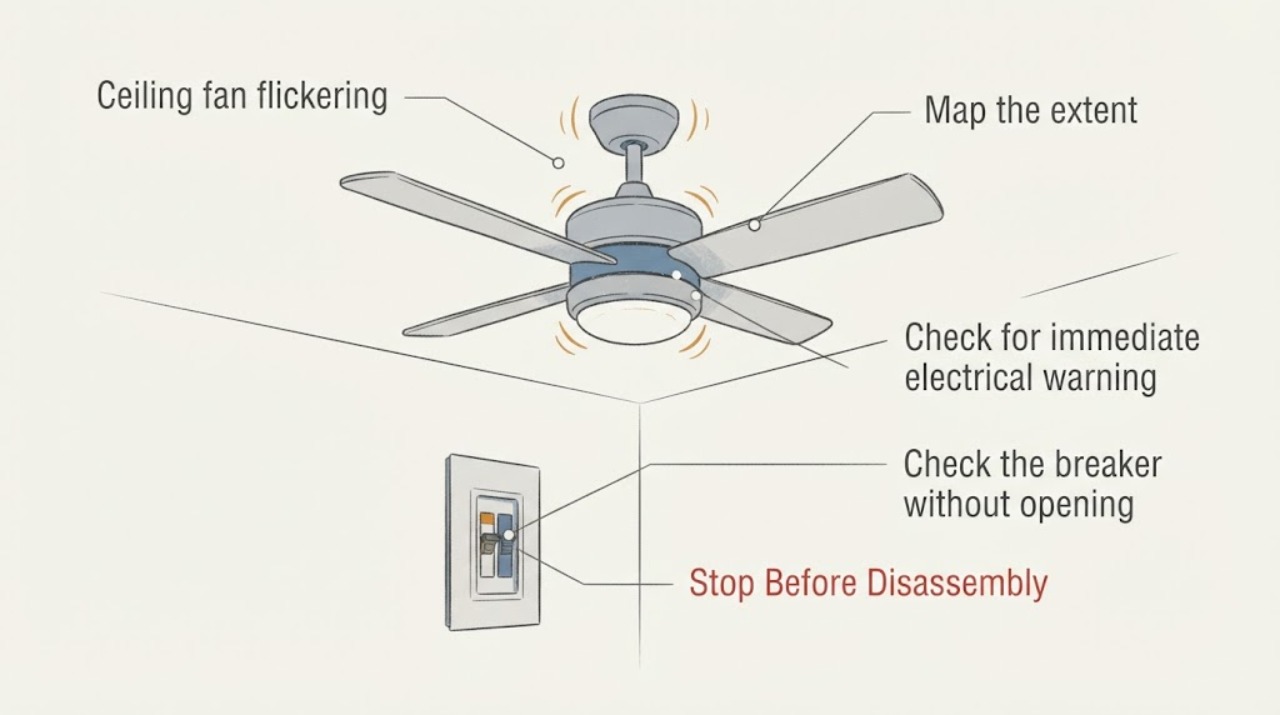
Ceiling fan flickering
If a ceiling fan's light flickers, first determine whether only that fixture flickers or other lights do too. Turn the fan off and check the breaker and visible switch or outlet condition from a safe, dry position.
-
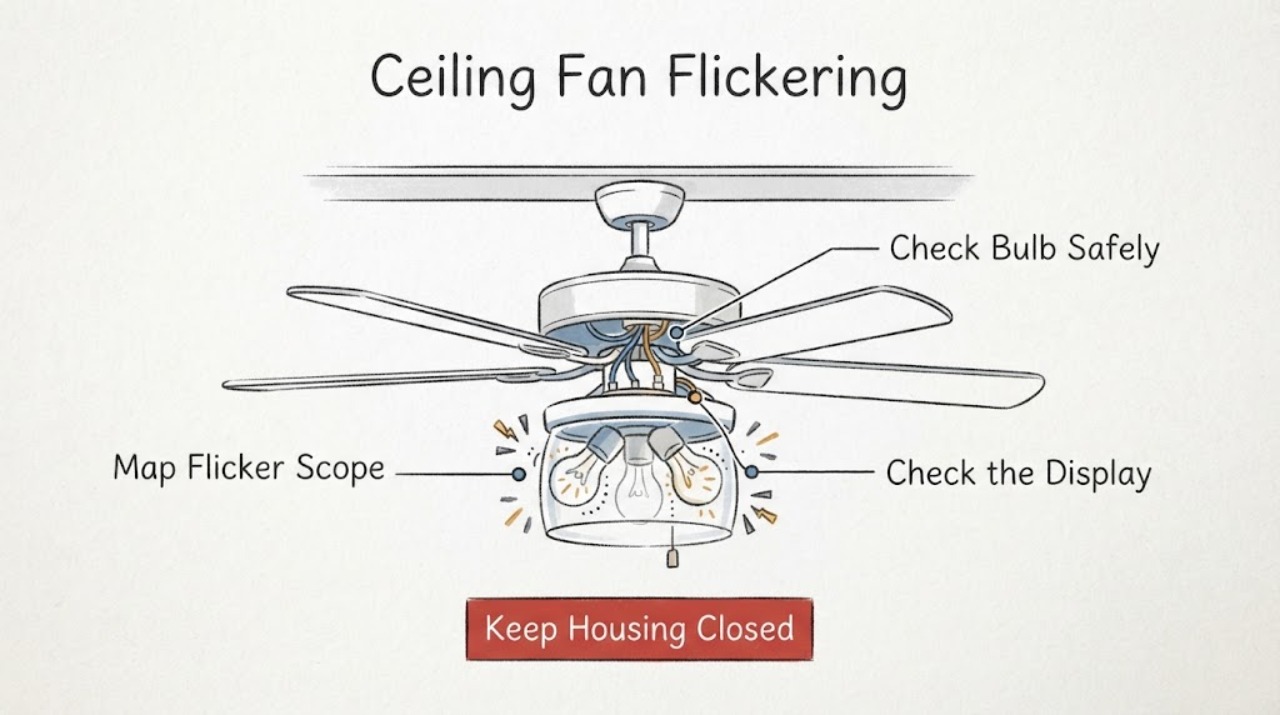
Ceiling Fan Flickering: Isolate the Light, Control, or Wiring Problem Safely
First determine whether the ceiling fan's light flickers, the fan motor cuts out, or other room lights flicker at the same time. A light-only issue can come from a loose or incompatible bulb, dimming control, remote receiver, or light-kit connection; a whole-room flicker, crackle, warm or discolored switch, burning odor, shock, arc, or repeated breaker trip can indicate a wiring hazard.
-
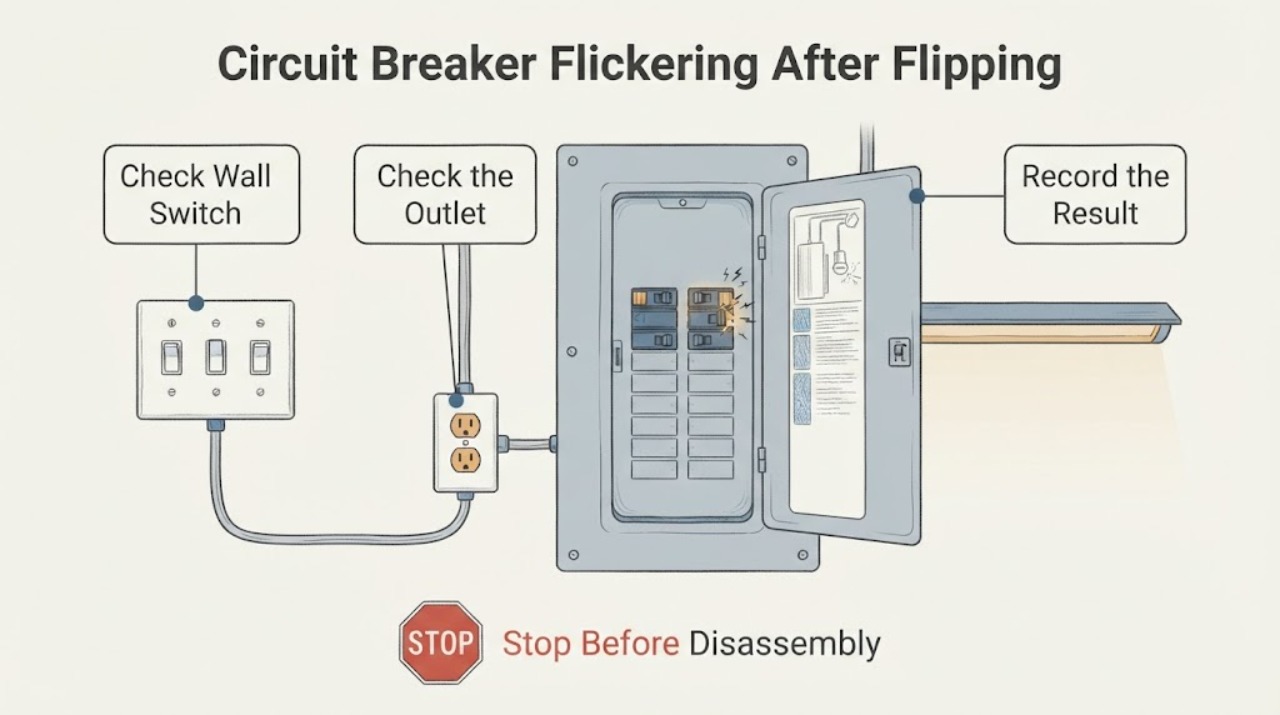
Circuit Breaker Flickering After Flipping a Breaker: Safe Triage
Flickering after a breaker was flipped does not prove that the breaker itself is defective. First separate a flickering light or whole-home symptom from a breaker indicator or a visible electrical arc, then stop using the affected circuit and observe only from a safe distance.
-
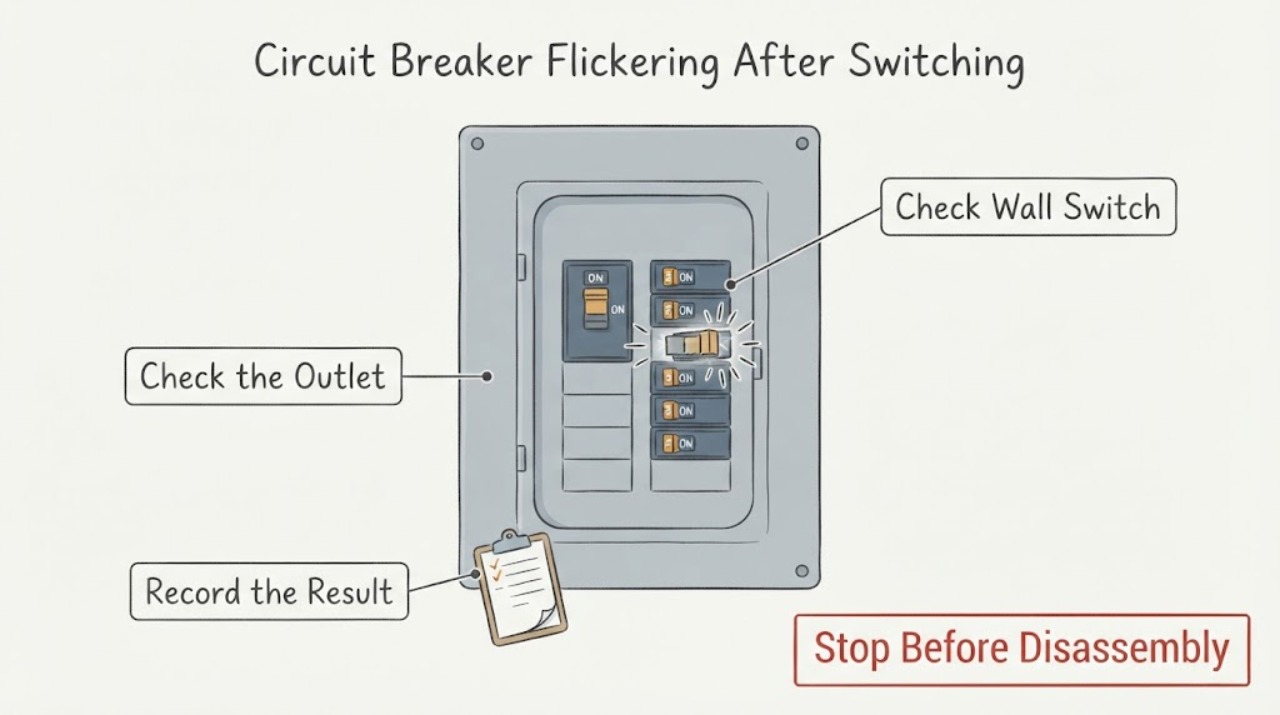
Circuit Breaker Flickering After Switching Breakers On and Off: Safe Triage
Flickering after switching breakers on and off should not be investigated by continuing to move the handles. First separate a flickering light or whole-home symptom from a breaker indicator or a visible arc, using only a safe-distance observation of what already happened.
-
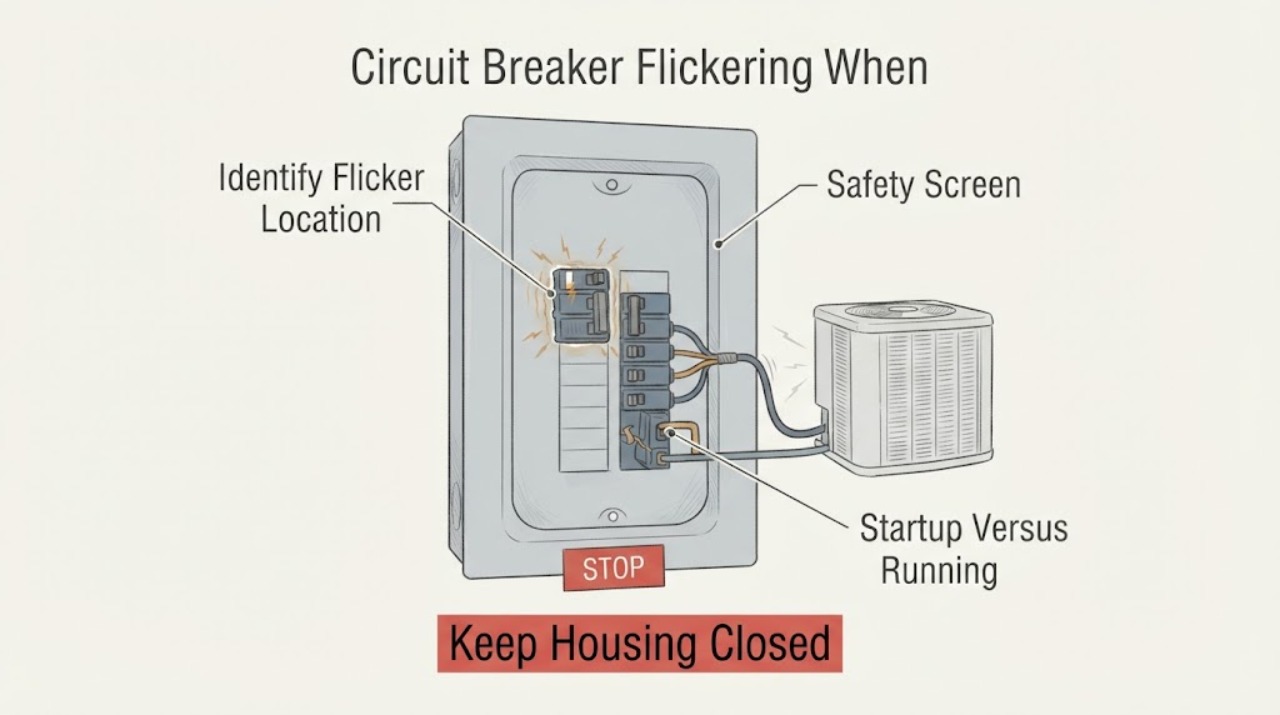
Circuit Breaker Flickering When the AC Turns On
If lights or a breaker indicator flicker exactly when an air conditioner starts, a brief startup load can cause a small momentary voltage change, but visible or repeated flicker is not something to diagnose by opening the panel. First identify whether the flicker is a light, the breaker handle or indicator, or power to the whole home.
-
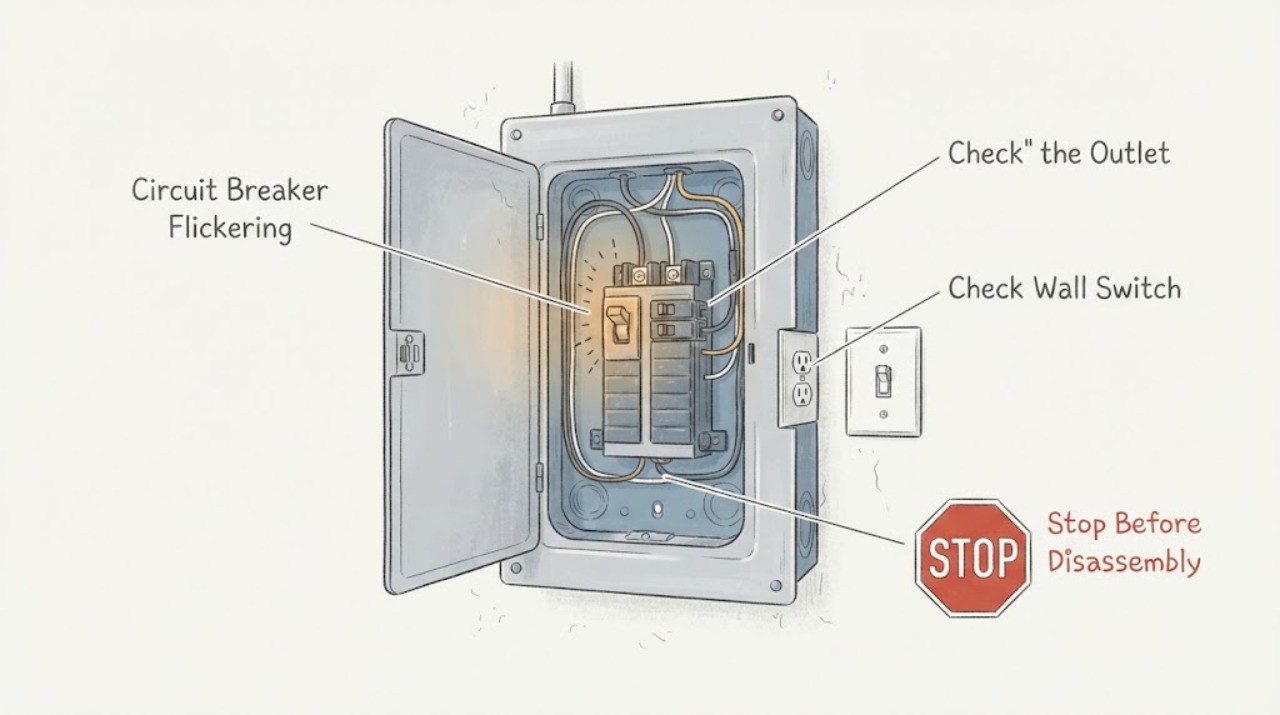
Circuit Breaker Flickering: Why Lights in the House Are Flickering
If lights in the house are flickering and you suspect a circuit breaker or wiring, first map the scope from a safe distance: one lamp, one room, several circuits, the whole house, or the breaker's own indicator. Do not open the panel, touch wiring, measure electrical values, repeatedly reset a breaker, or try to recreate the fault.
-
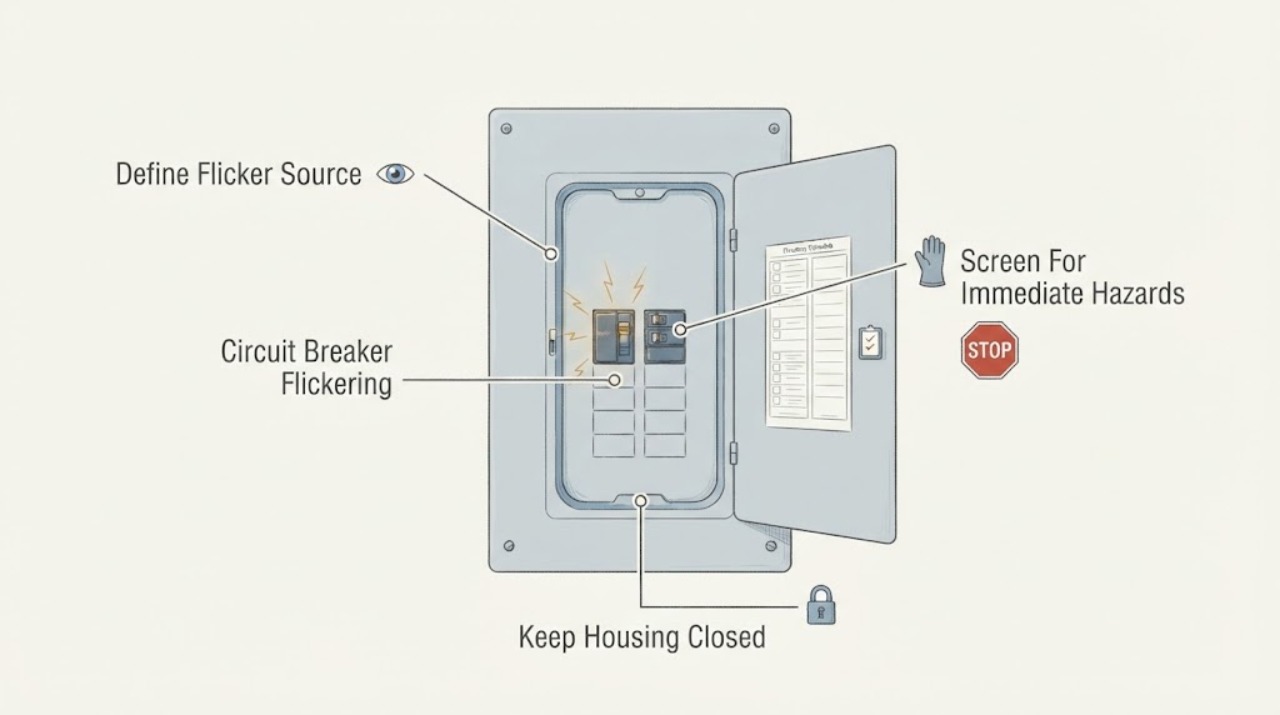
Circuit Breaker Flickering: Identify the Switch, Light, or Arc Safely
First clarify what is flickering: a breaker or indicator handle, lights on the circuit, or an actual flash at the panel or switch. Flickering lights can be an electrical warning, especially with buzzing, sizzling, heat, discoloration, burning odor, shocks, or repeated trips.
-
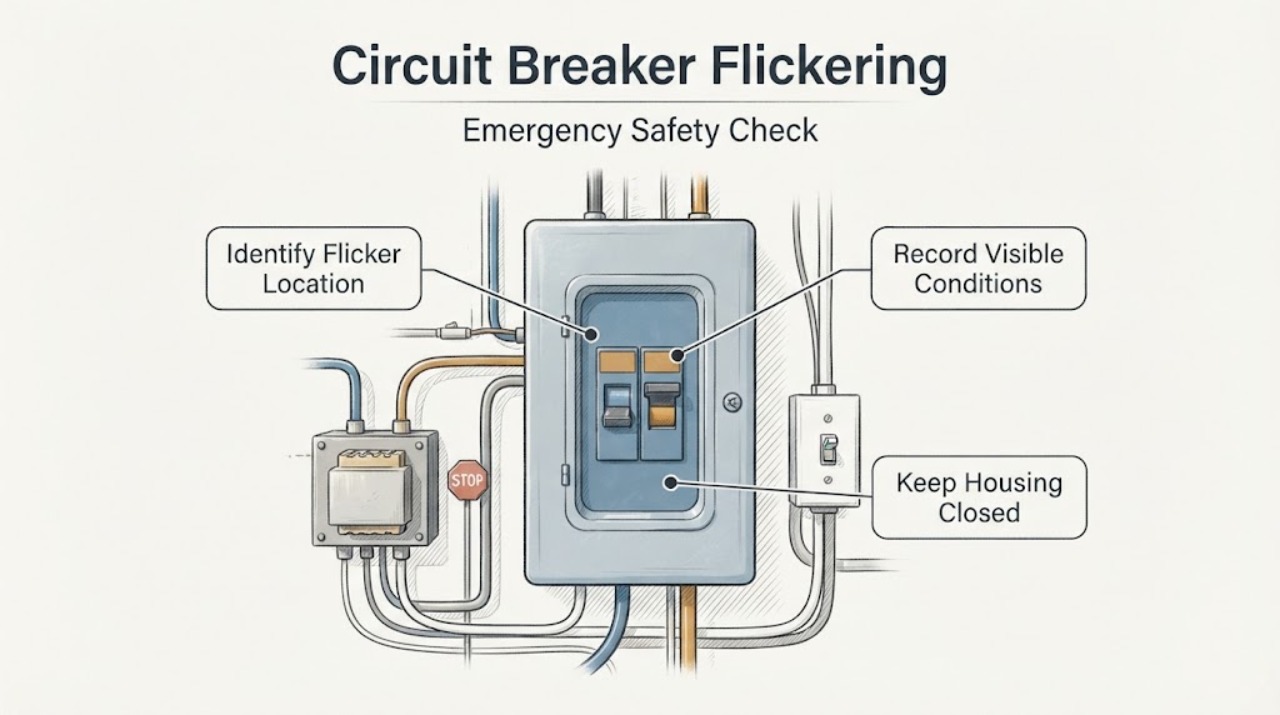
Circuit Breaker Flickering: Distinguish an Indicator from a Wiring Warning
A report that a circuit breaker is flickering may actually describe a breaker indicator, a nearby light or switch, whole-room or whole-home lights, or a visible electrical flash. First identify which item is flickering and whether the change affects one light, one circuit, several circuits, or the whole service.
-
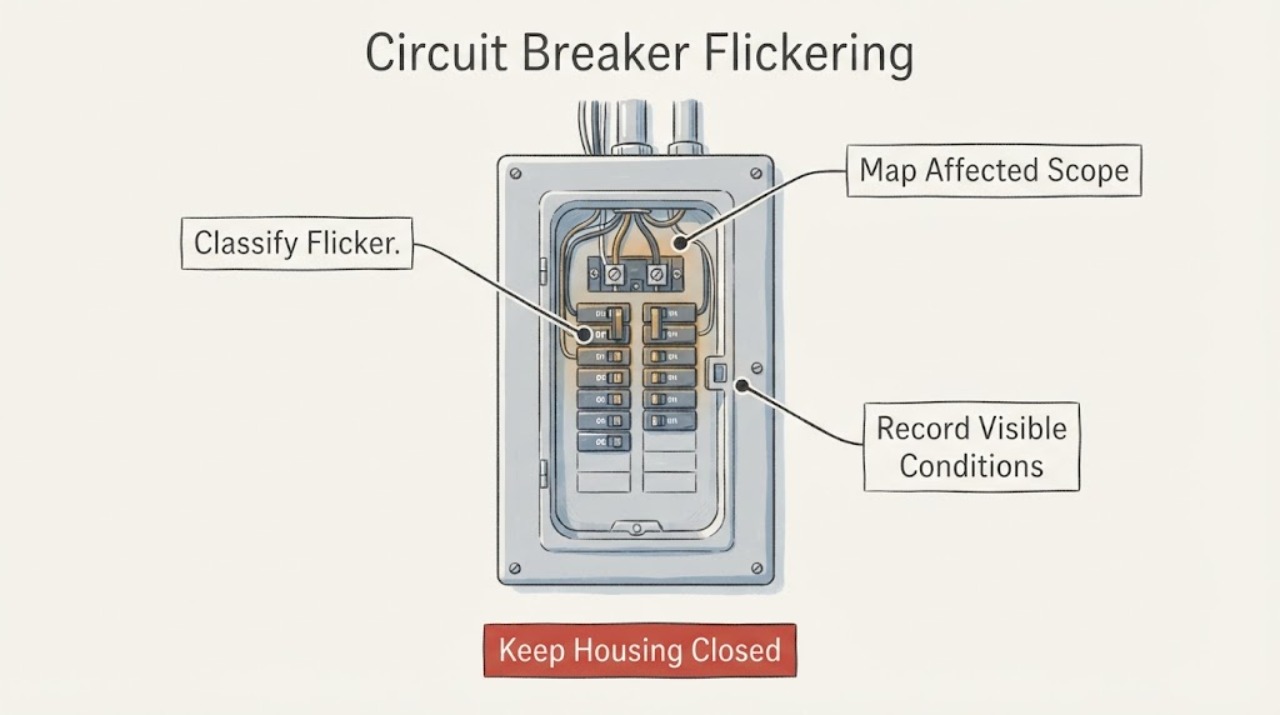
Circuit Breaker Flickering: Record the Scope and Stop Safely
A flickering report involving a circuit breaker can describe a breaker indicator, lights or devices on its circuit flickering, or an actual flash or arc near the panel or switch. Do not operate the breaker repeatedly or try to recreate the symptom.
-
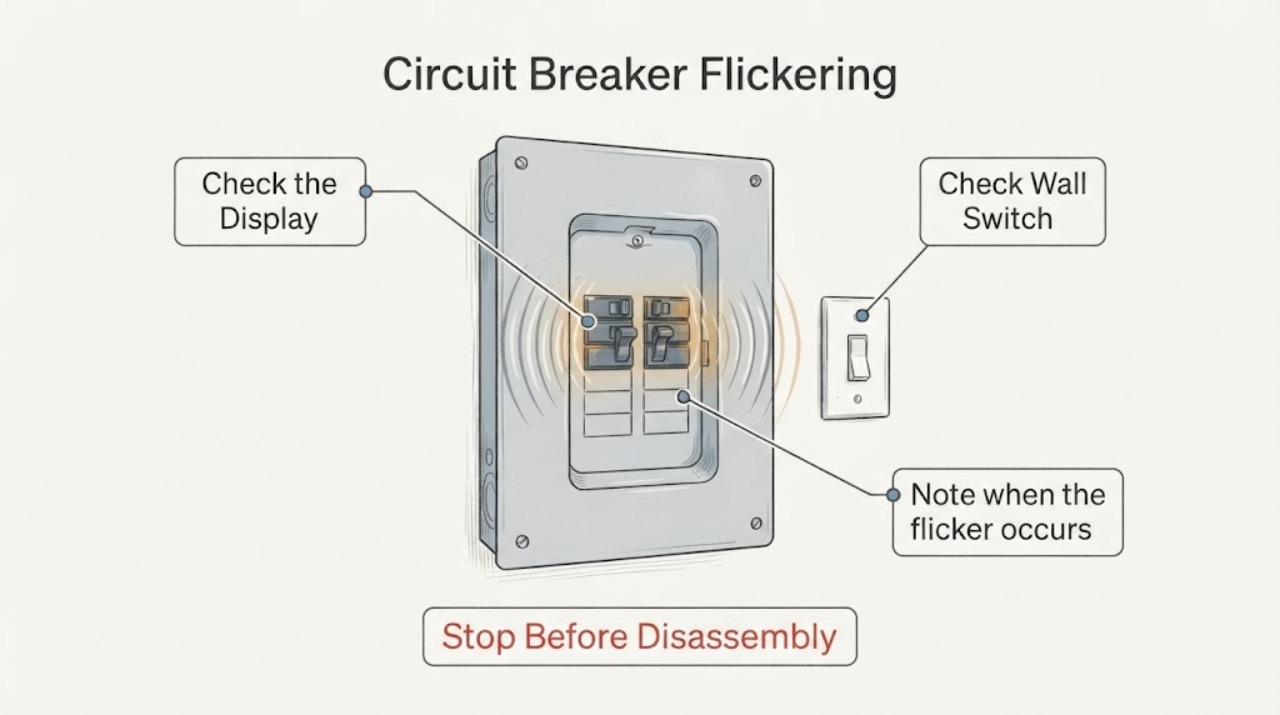
Circuit Breaker Flickering: Safe Checks for Wiring
Treat a flickering breaker indicator, nearby lights, or circuit as an electrical warning until you know exactly what is flickering. From a safe distance, note whether the change is only the breaker's indicator, one light, one circuit, the whole home, or an outside utility supply.
-
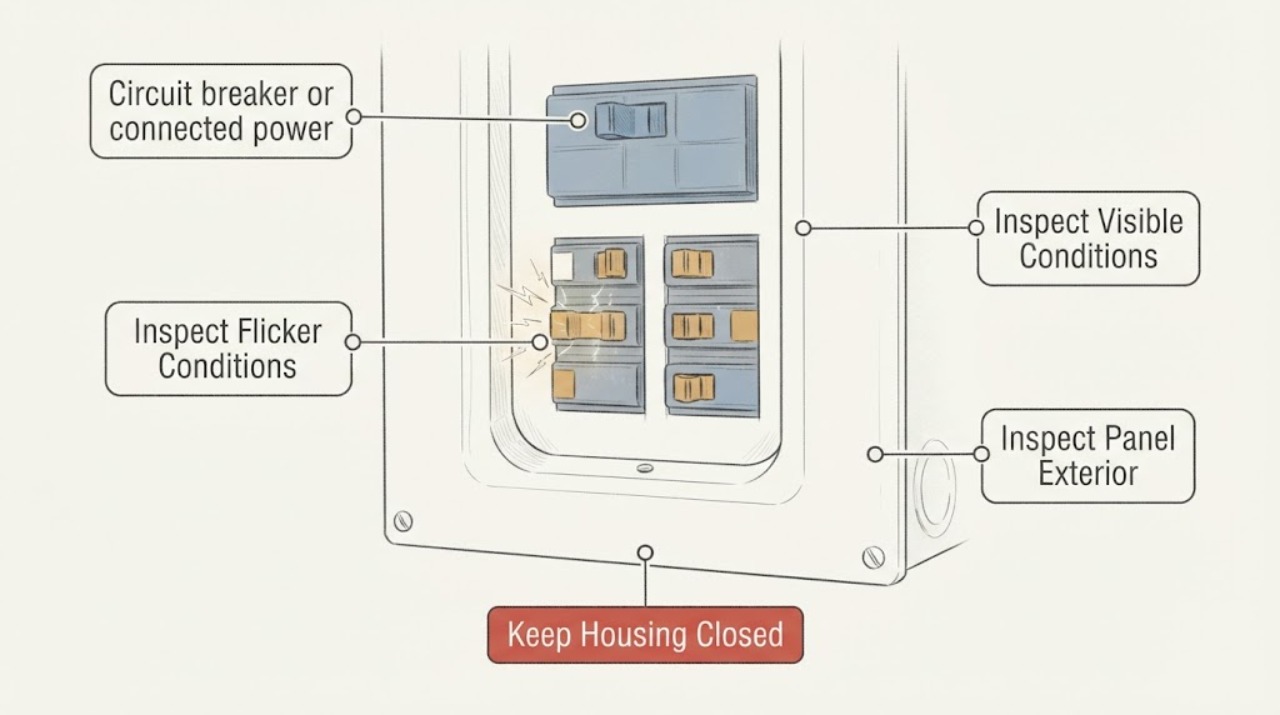
Circuit breaker or connected power is flickering: What to Check and What to Do Next
A circuit breaker should not be treated as a harmless flickering symptom. First determine whether the breaker handle or panel is visibly moving, or whether lights and devices on the breaker’s circuit are blinking, dimming, or losing power.
-
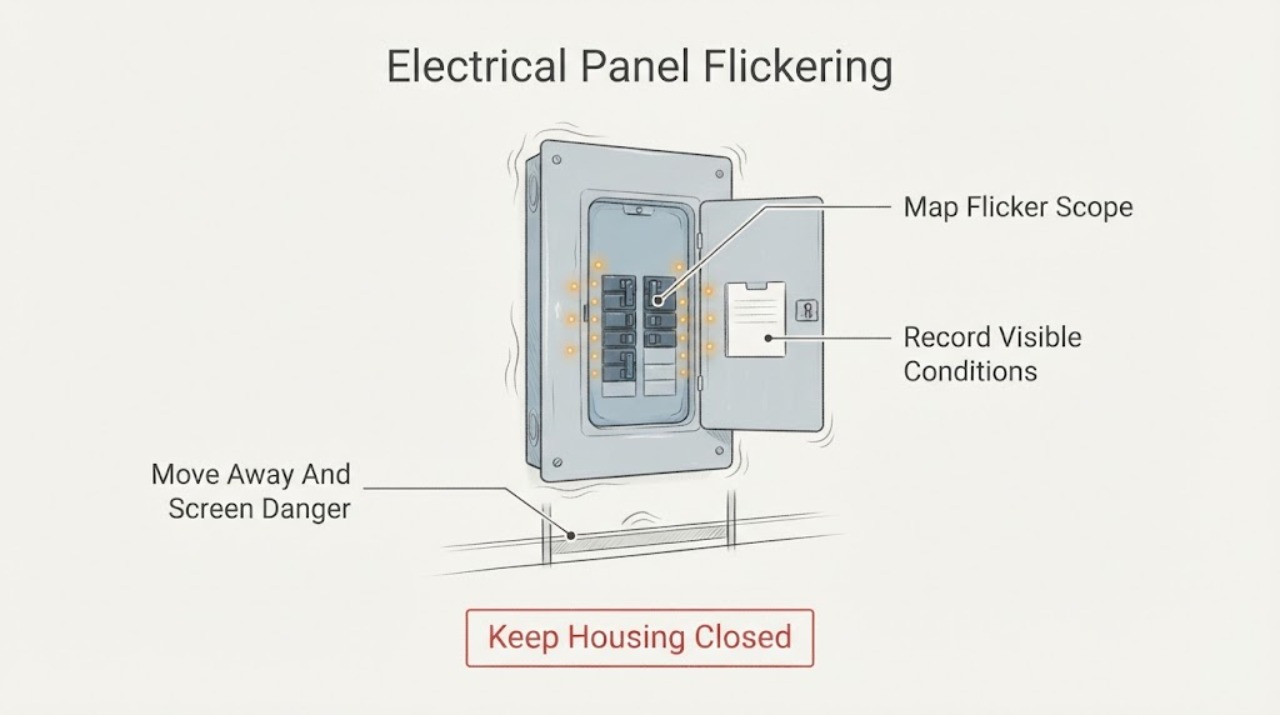
Electrical Panel Flickering: Observe the Circuit Safely and Stop Before Opening It
Flickering at or around an electrical panel can reflect a loose connection, an overloaded or failing circuit, a utility-side problem, or a normal-looking light or appliance issue elsewhere. Treat it as a safety symptom, not a reason to open the panel or move a breaker.
-
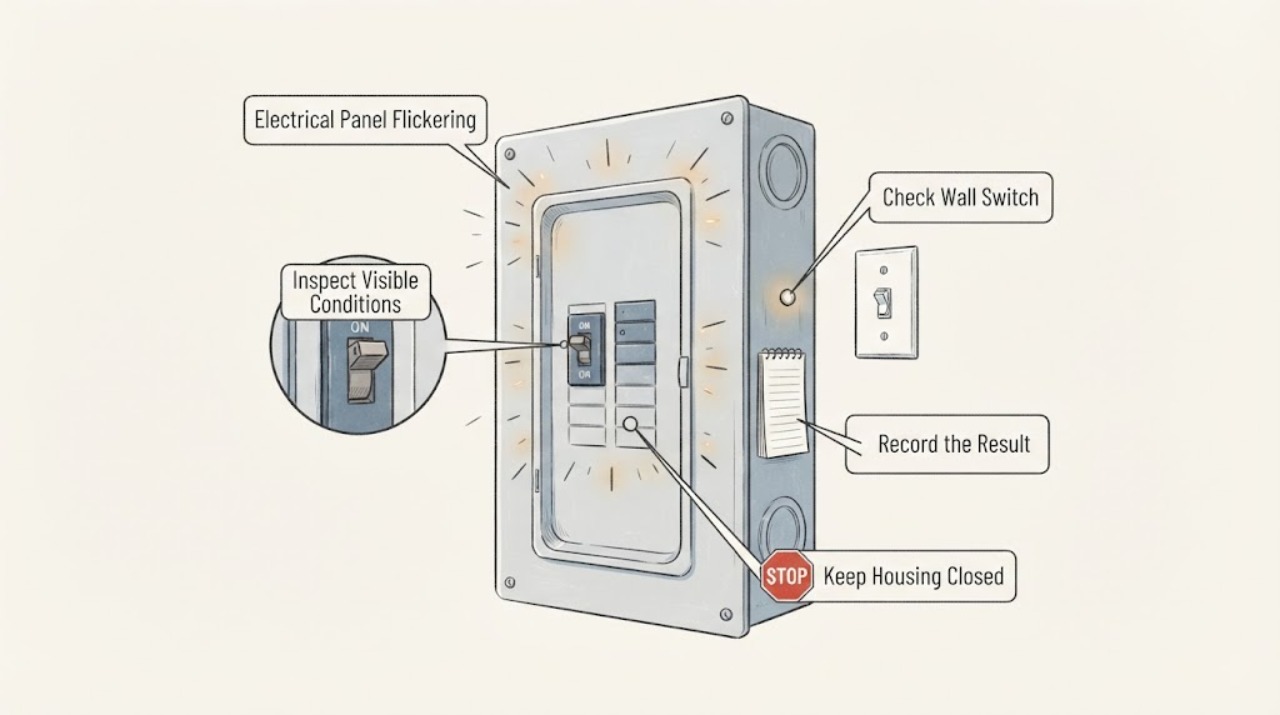
Electrical Panel Flickering: Safe Observations Before Calling an Electrician
Treat flickering associated with an electrical panel, circuit breaker, or switch as a wiring warning rather than a switch-adjustment problem. From a safe, dry location, observe whether the flicker affects one light, several circuits, or the whole home; note buzzing, visible flashes, smoke, discoloration, heat, odor, or a breaker that trips.
-
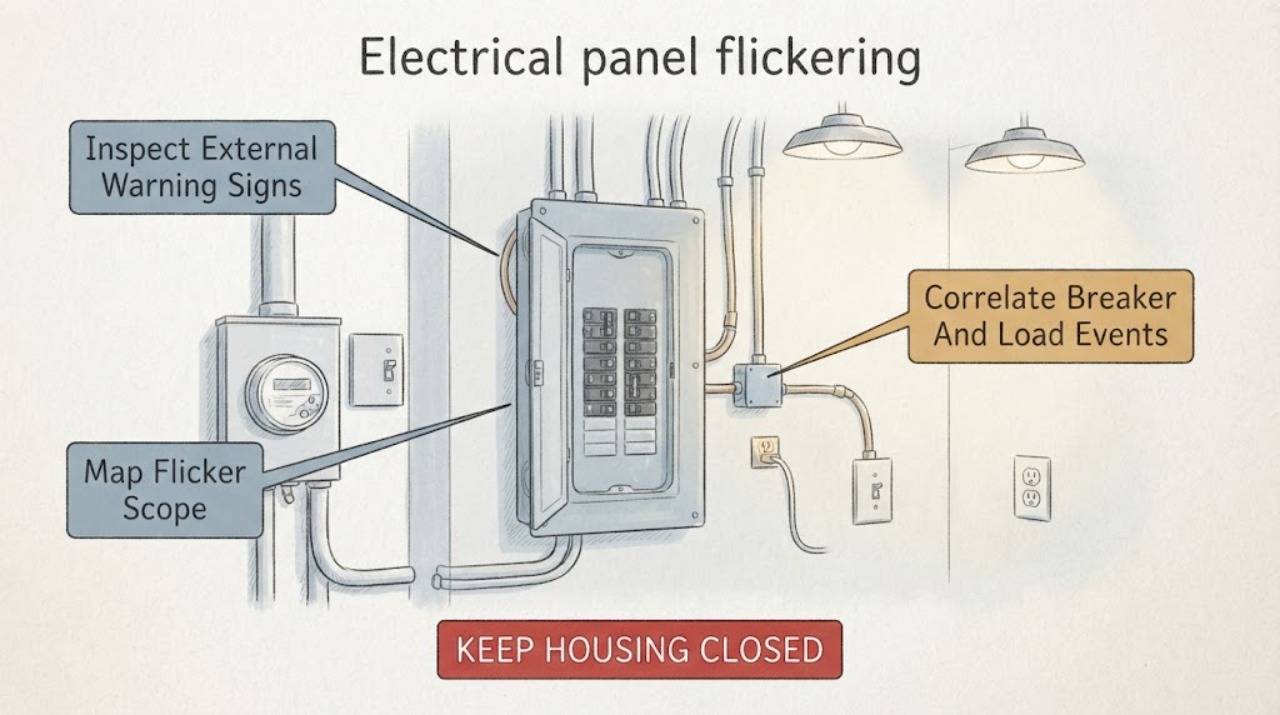
Electrical panel flickering: distinguish a local light issue from a wiring or service hazard
Flickering near an electrical panel or flickering lights in the home can come from one lamp, a loose connection, an overloaded or failing branch circuit, a panel connection, or utility service equipment. First determine whether one light flickers or multiple circuits change together, and whether the change follows a particular appliance, breaker, wind, or utility event.
-
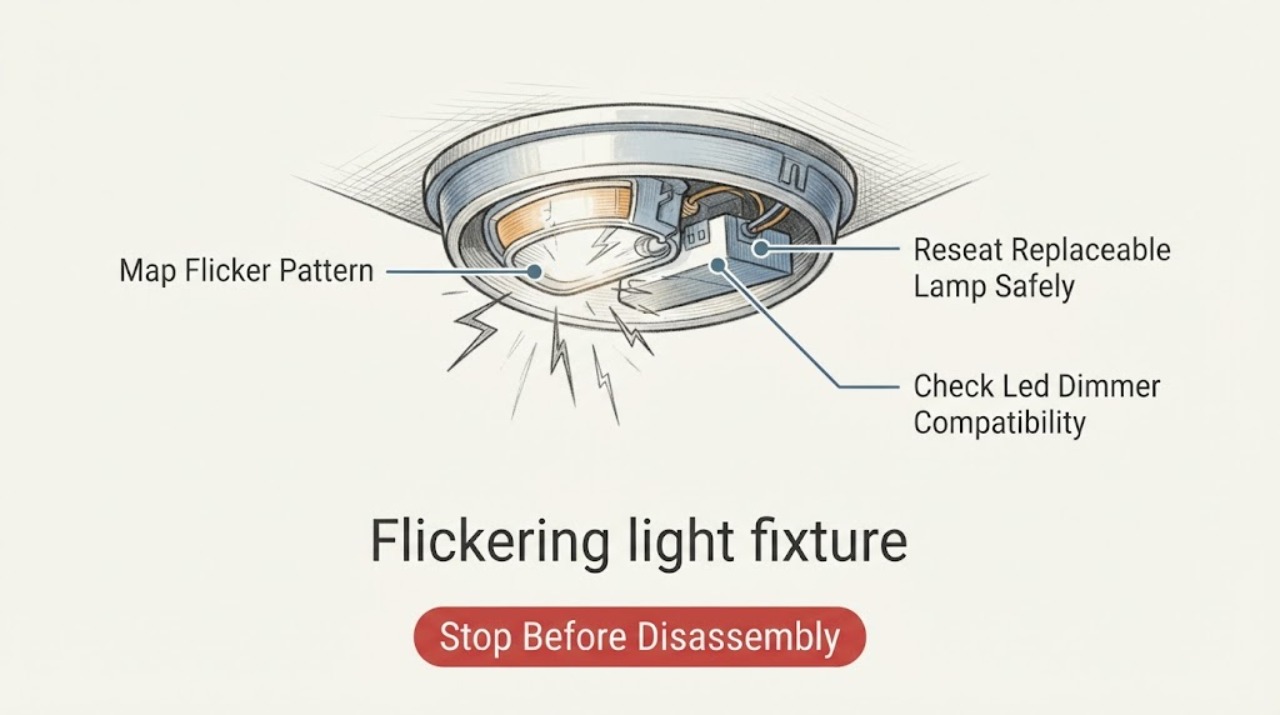
Flickering light fixture: Safe checks and when to call an electrician
A flickering light fixture can be a loose or failing lamp, an LED-and-dimmer compatibility issue, or an electrical connection or circuit problem. First note whether only one fixture flickers, whether it happens only while dimming or when another load starts, and whether the fixture still flickers with a correctly rated, compatible lamp.
-
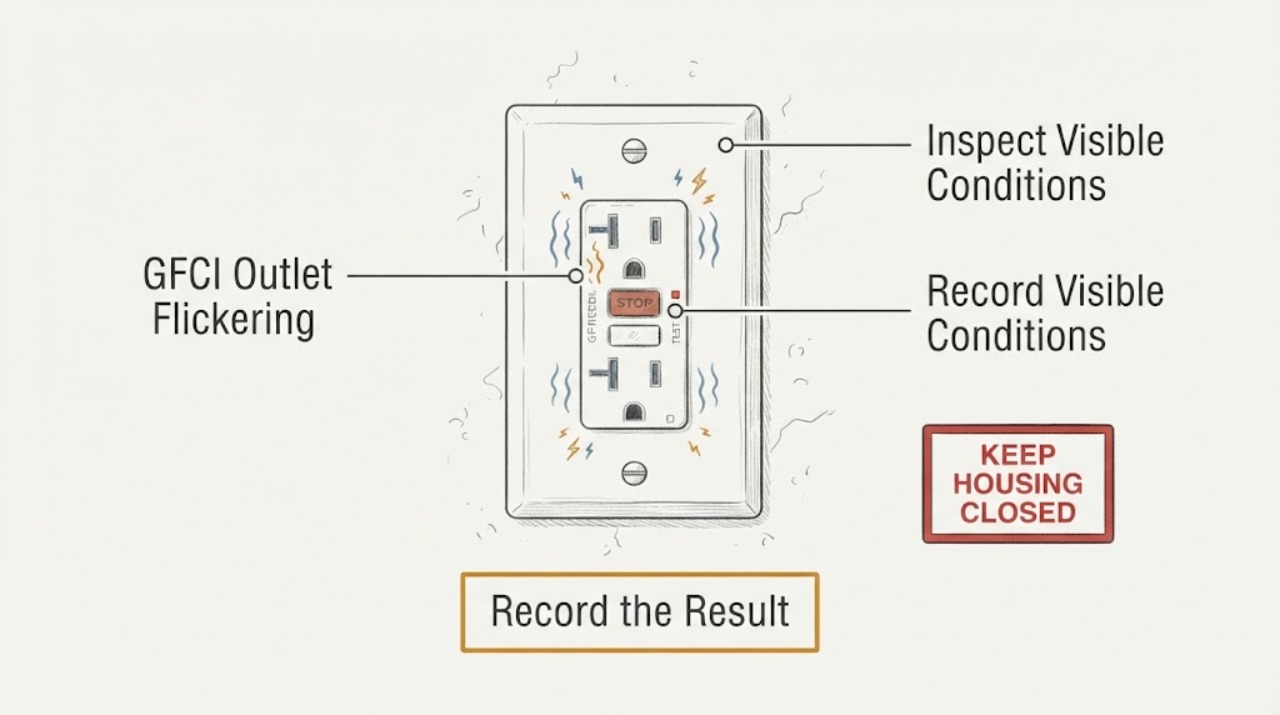
GFCI Outlet Flickering: Safe Non-Contact Checks Before Calling an Electrician
A GFCI outlet that flickers may be showing a model-specific status or self-test indication, losing power, responding to a fault, or experiencing a wiring or receptacle problem. First determine whether the GFCI's indicator, a plugged-in load, nearby lights, or all of them are flickering.
-
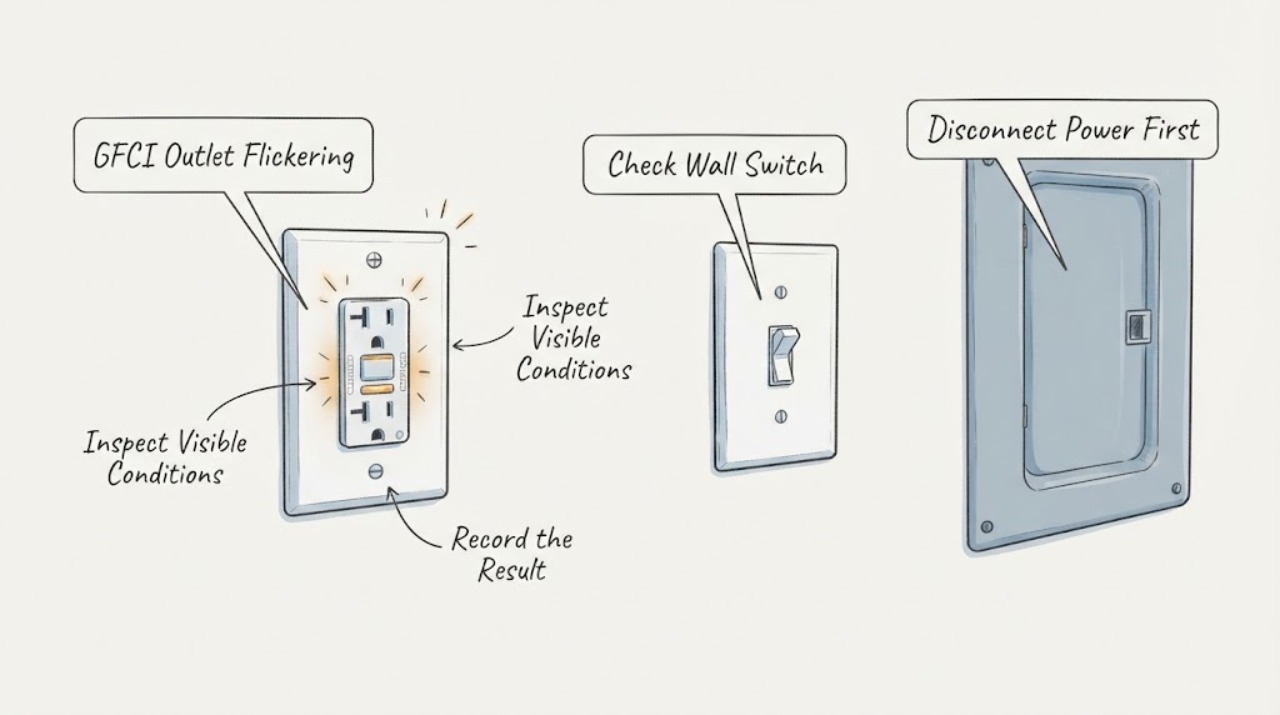
GFCI Outlet Flickering: Safe Checks for the Outlet and Switch
Treat a flickering GFCI outlet or its associated switch as an electrical warning until you know whether only a status light is changing or power is actually unstable. From a dry, safe position, note the exact flicker, the outlet's model and indicator pattern, whether nearby lights or outlets also change, and whether moisture, warmth, discoloration, buzzing, odor, smoke, or arcing is present.
-
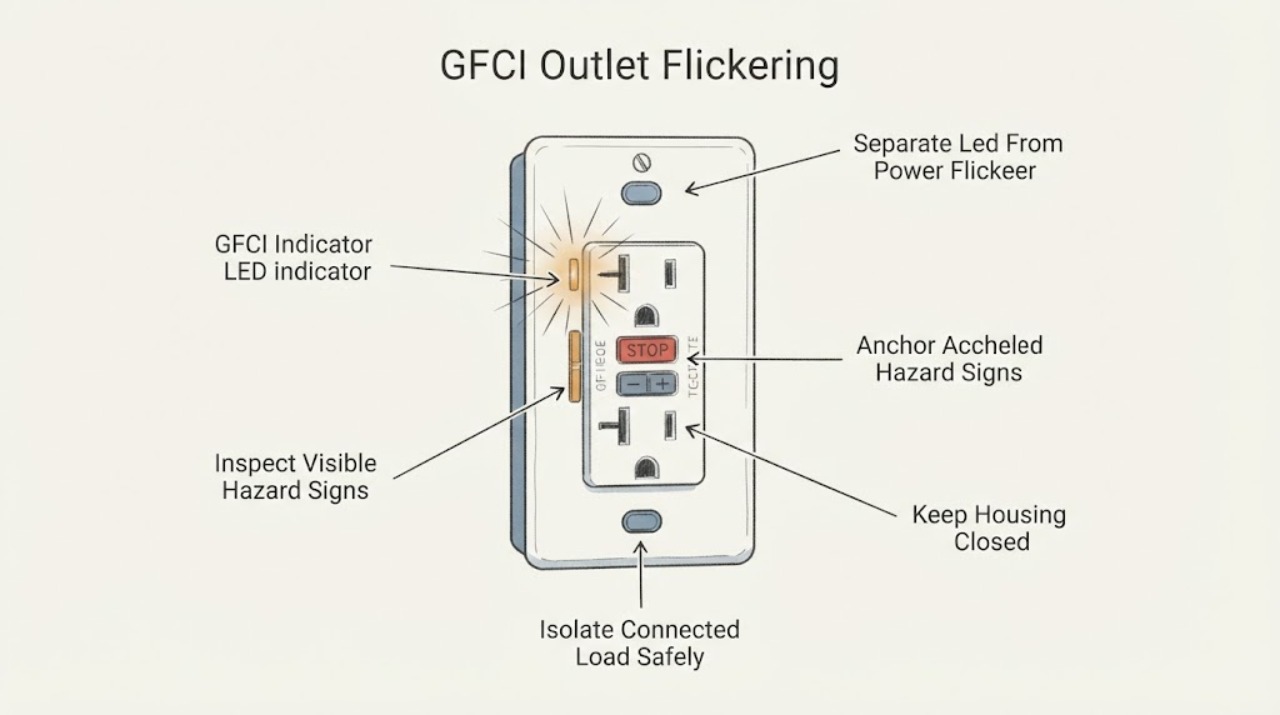
GFCI Outlet Flickering: Separate the Status Light from a Circuit Fault
First determine whether only the GFCI indicator is blinking or whether power at the receptacle is actually flickering. Indicator behavior is model-specific: Leviton describes some blinking colors as setup or fault indications, and a red indication that remains after TEST and RESET or a device that will not reset needs an electrician.
-
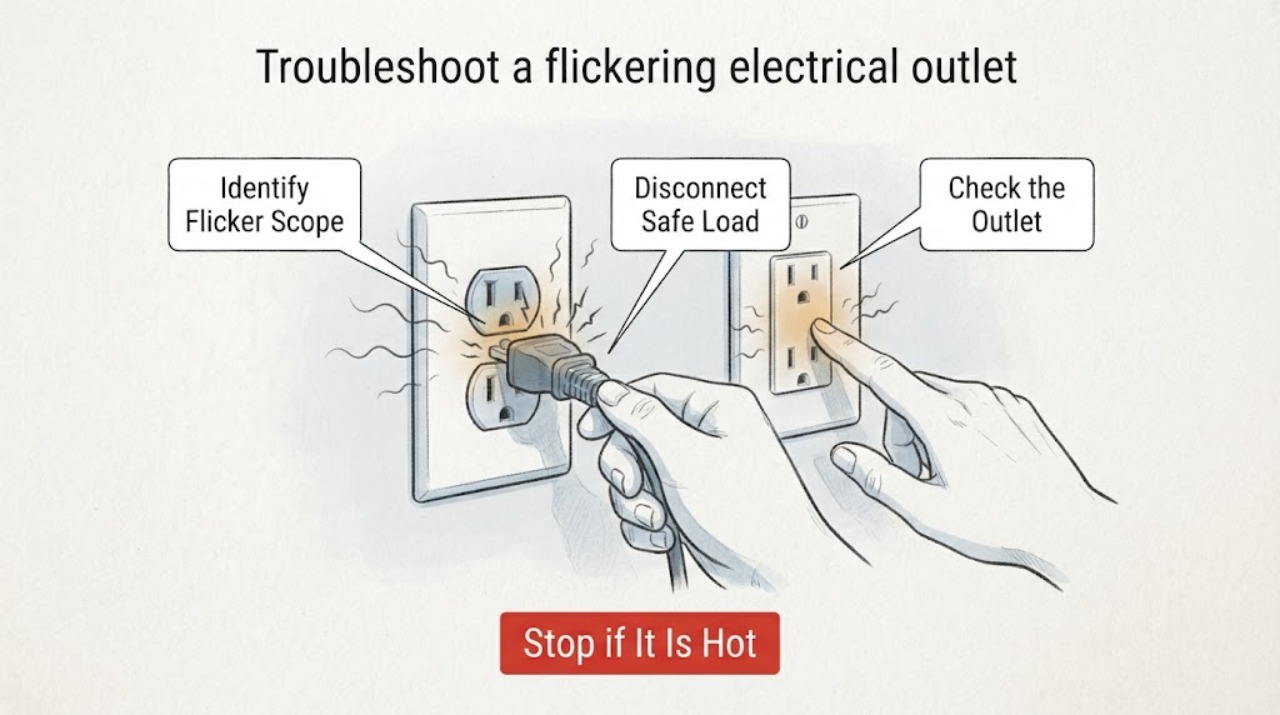
How to troubleshoot a flickering electrical outlet
A flickering outlet or a light plugged into it should be treated as an electrical warning. Turn off the connected device and unplug it only if the plug and outlet are cool, dry, intact, and easy to reach; then leave the outlet unused while you note whether the flicker follows that device or affects other points on the circuit.
-
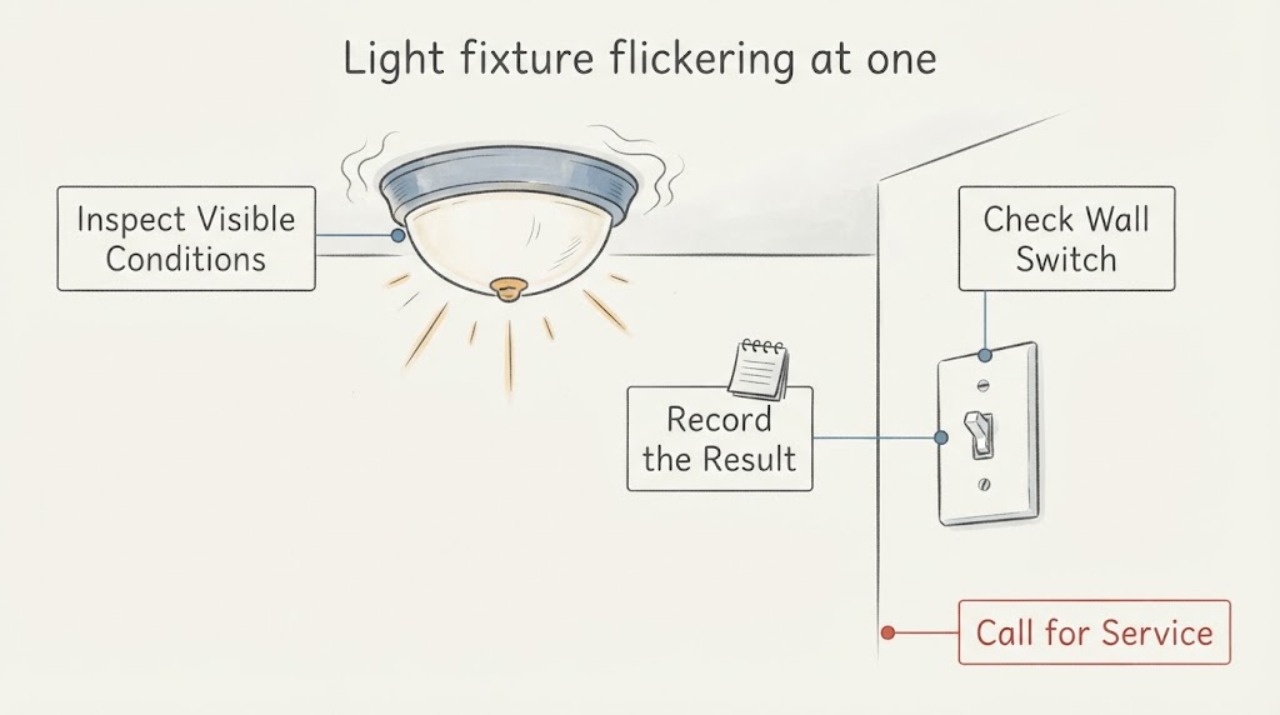
Light fixture flickering at one switch: What to Check and What to Do Next
A light fixture that flickers when controlled by one switch may have a lamp or LED driver issue, a switch or dimmer compatibility problem, a loose local connection, or a branch-circuit or service-supply fault. First observe whether only one fixture flickers, whether the pattern changes with the switch or dimmer, and whether the lamp is an LED, fluorescent, incandescent, or integrated fixture.
-
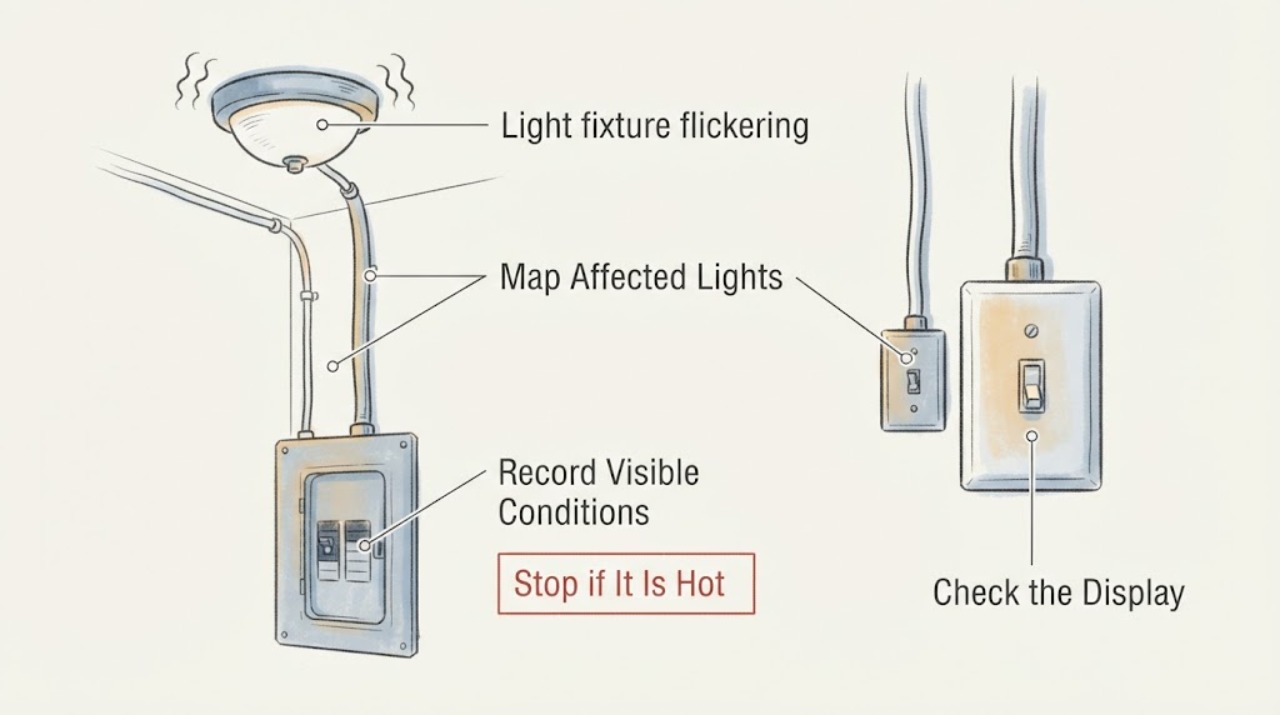
Light fixture flickering: How to Tell a Local Lamp Issue from a Circuit Problem
A flickering light fixture can be a local lamp or LED-driver issue, but it can also signal a switch, dimmer, loose connection, branch-circuit, breaker, or service-supply problem. From a safe distance, first determine whether one fixture or several are affected and whether flicker follows a dimmer, switch, appliance load, weather, or recent electrical work.
-
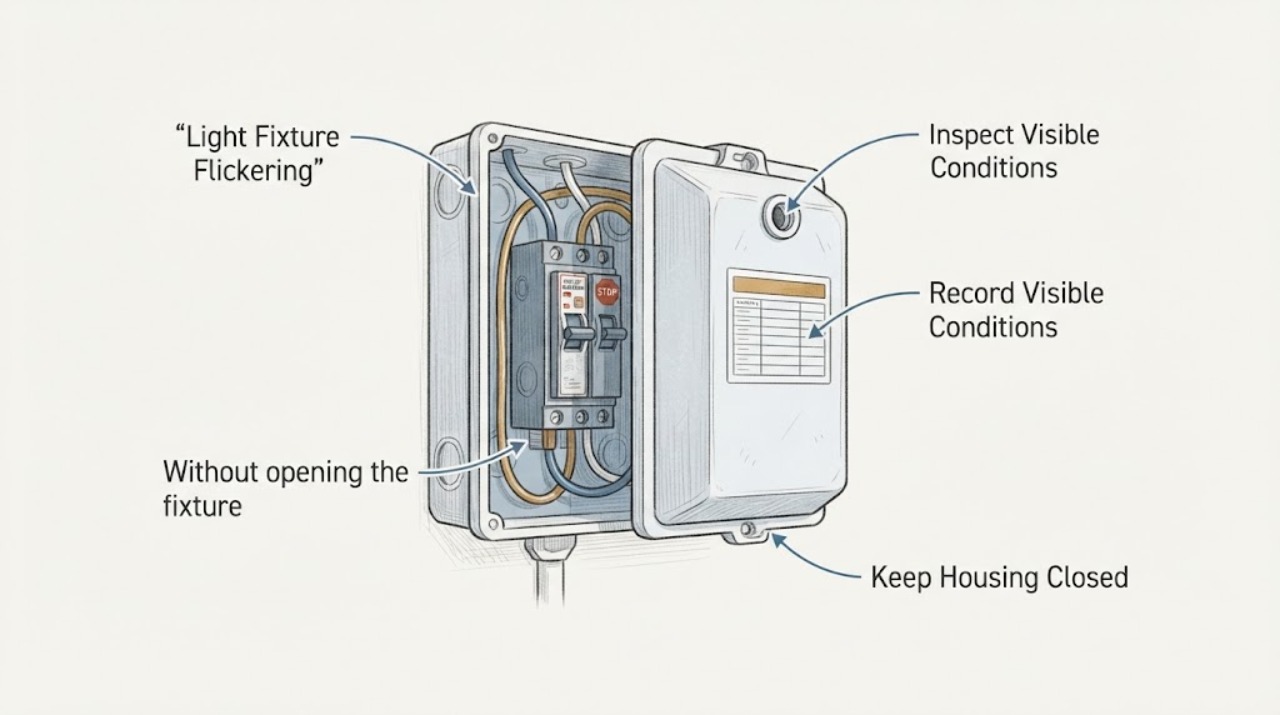
Light Fixture Flickering: Safe Checks for the Breaker and Wiring
A flickering light fixture can be caused by the bulb or lamp holder, a switch, a loose connection, a circuit overload, a breaker problem, or a supply issue. Do only non-contact observations: note whether one fixture or several lights flicker, whether a large load triggers it, and whether the plate or fixture shows heat, discoloration, noise, odor, moisture, or sparks.
-
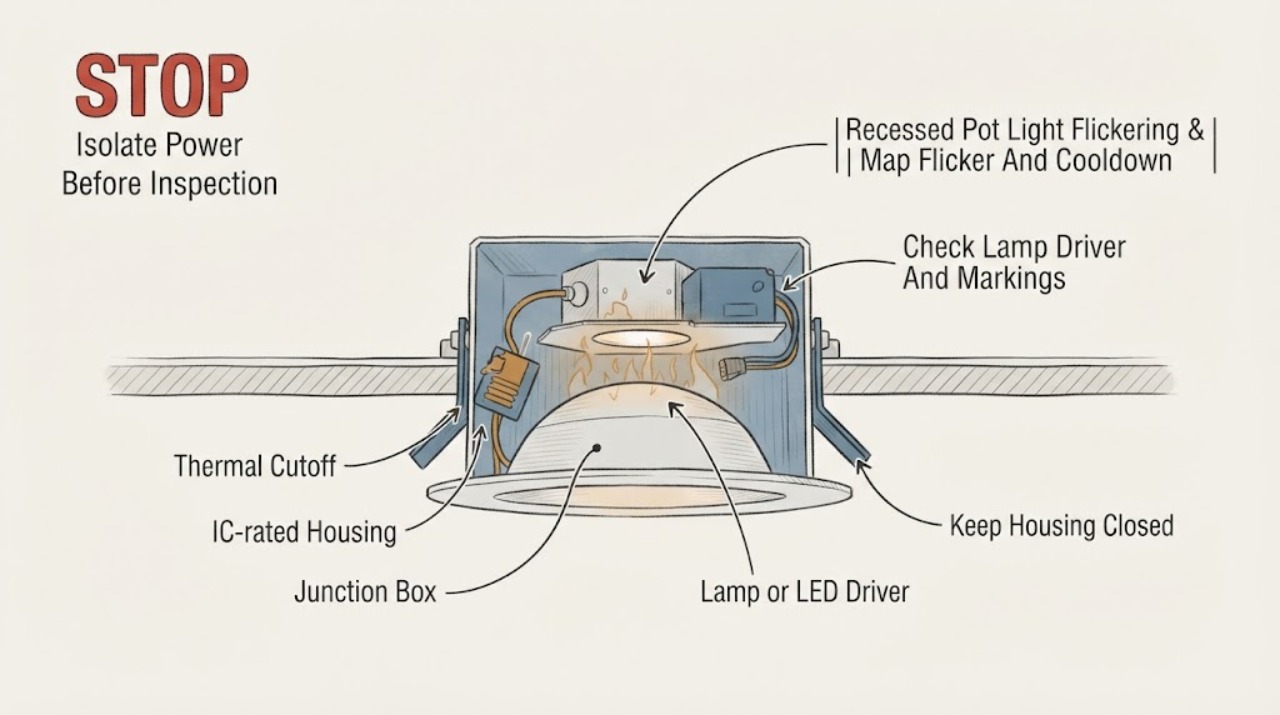
Recessed Pot Light Flickering & Shutting Off: Thermal Cutoff Switch Troubleshooting
A recessed pot light that flickers, shuts off, then returns after cooling may be cycling its thermal protector. Overheating can follow an incorrect lamp, blocked heat path, insulation or other material used contrary to the fixture marking, a failed protector, or a driver or wiring fault.
-
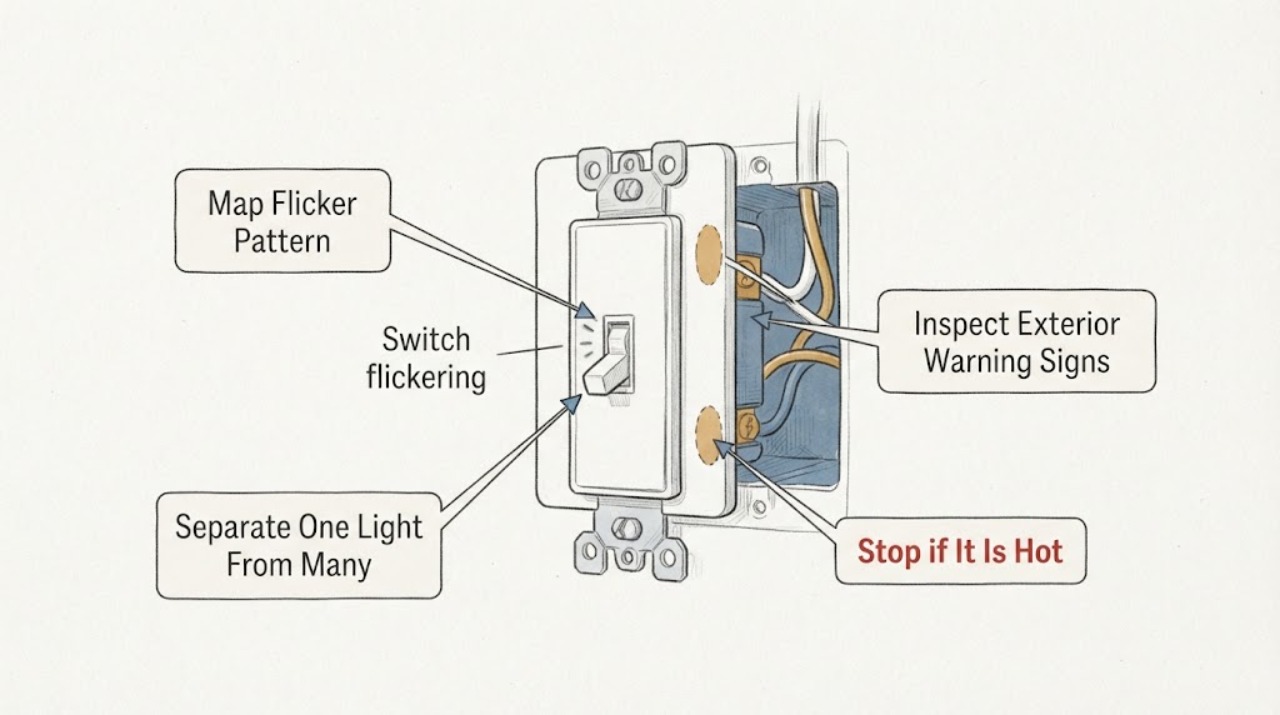
Switch flickering: separate a lamp problem from a wiring warning
Flickering controlled by a wall switch is not automatically a bad bulb. It may be a failing switch or dimmer, an incompatible LED and control combination, a loose lamp or fixture connection, or a broader circuit or wiring problem.
-
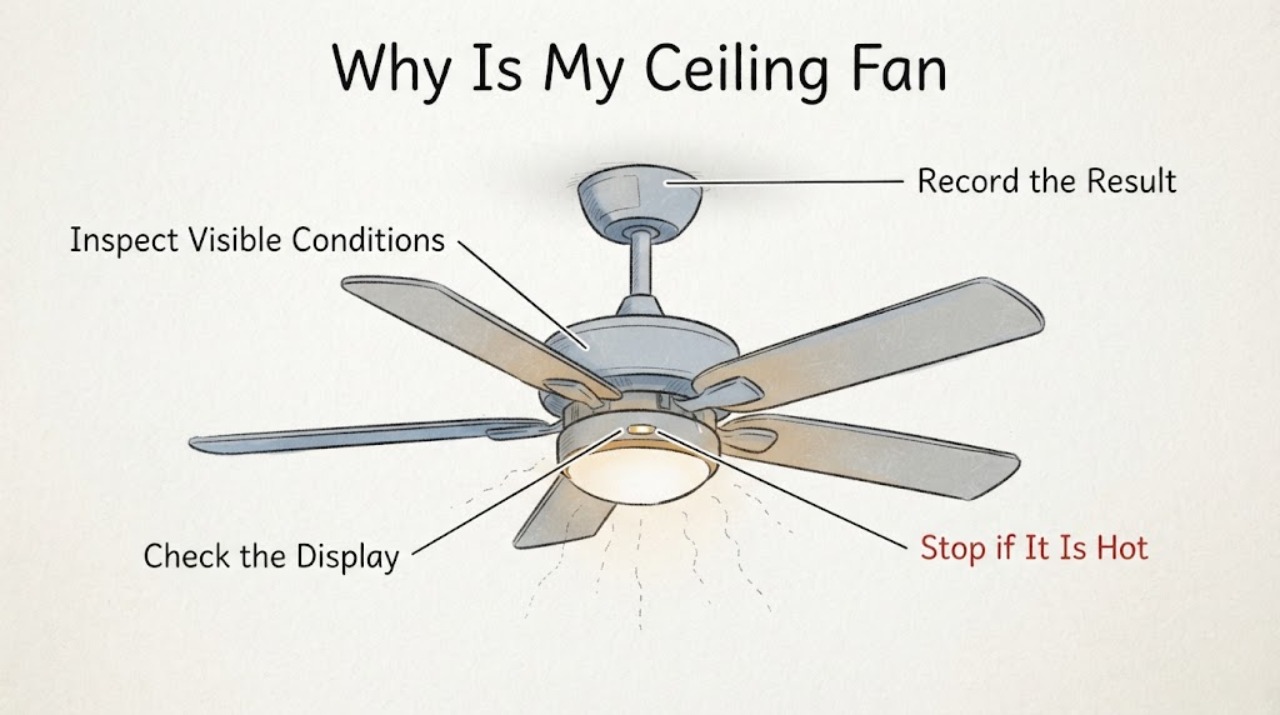
Why Is My Ceiling Fan Flickering?
First determine whether only the ceiling fan's light flickers or other lights flicker too. A problem limited to the fan light is commonly related to a loose or failing replaceable bulb, an integrated light module, or a bulb-and-control mismatch, especially when it happens while dimmed. If other room lights flicker, the fan makes electrical noise, a switch or outlet feels hot, or a breaker trips, stop using the fan and have a licensed electrician investigate the circuit.
-
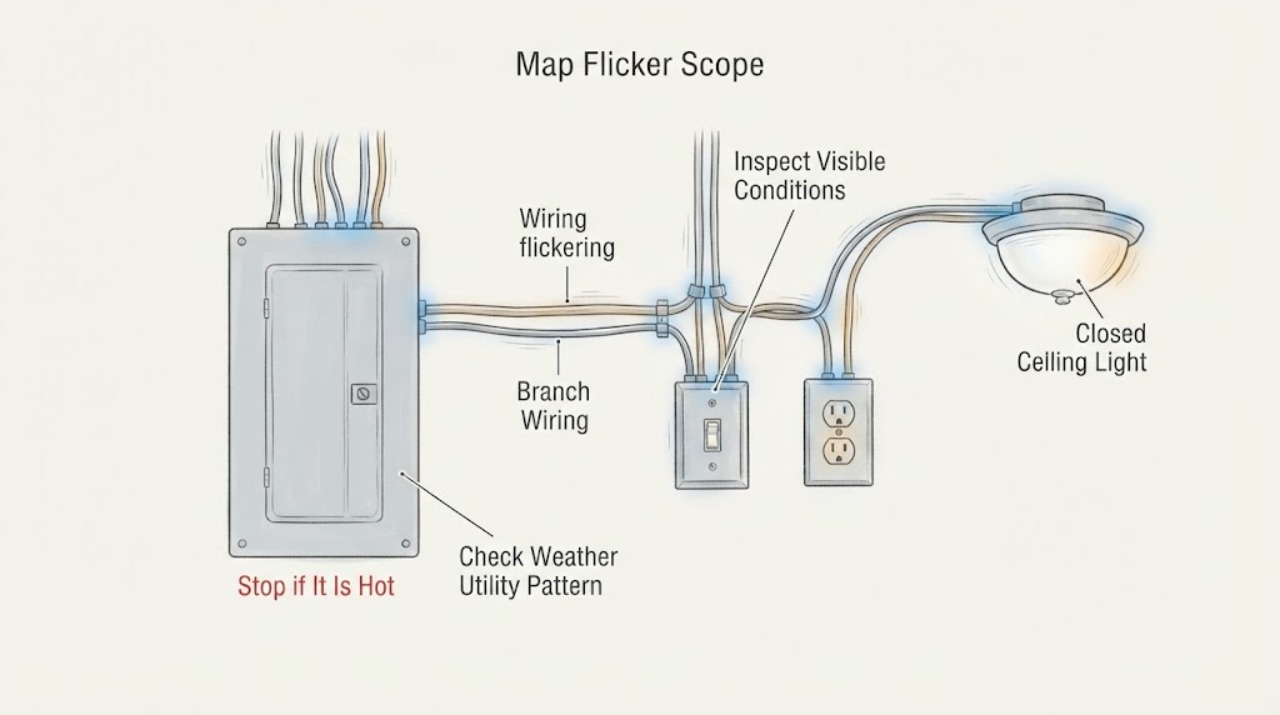
Wiring flickering: Map the symptom without opening the panel
Flickering or dimming lights can come from a lamp or fixture, a switch or receptacle connection, a branch-circuit load, service equipment, or the utility supply; the symptom alone does not identify the fault. From a safe position, map whether one light, one room, several rooms, or the whole property flickers and whether it changes when a particular appliance starts or when wind or weather changes.