
On this page
Start here
Quick answer
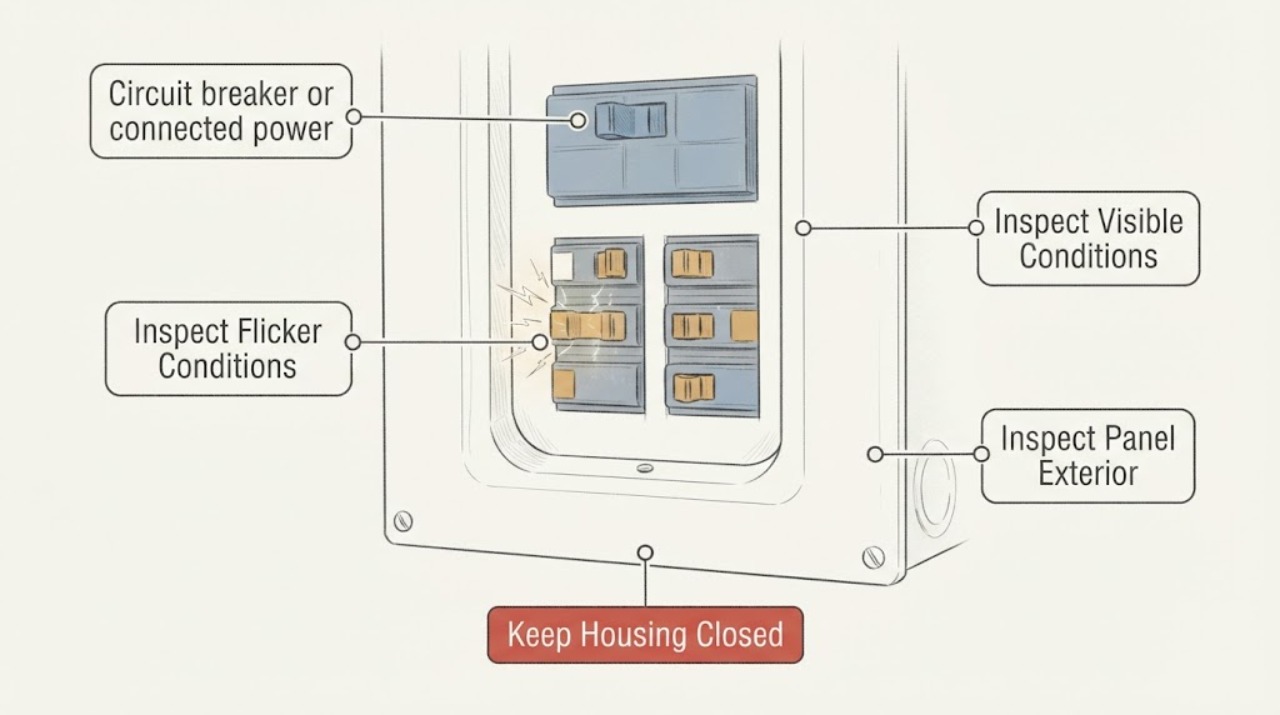
A circuit breaker should not be treated as a harmless flickering symptom. First determine whether the breaker handle or panel is visibly moving, or whether lights and devices on the breaker’s circuit are blinking, dimming, or losing power. From a safe position, note whether the symptom affects one branch or the whole home and whether it coincides with a load, but do not recreate the fault. Look at the outside of the panel only for a tripped handle, buzzing or sizzling, heat, discoloration, smoke, water, or burning odor. Leave the circuit alone and call a qualified electrician for flickering lights, a repeatedly tripping breaker, a vibrating or noisy breaker, or any panel, arc, or burning sign. Never remove the panel cover, touch a hot or wet panel, repeatedly reset a breaker, or attempt internal electrical repair.
Before you begin
Safety first
- User work is limited to safe observation from outside the panel and recording normal-use timing. Do not remove covers, touch or reset an active fault, open switches or outlets, perform live testing, bypass protection, or recreate the flicker.
Work through in order
Diagnostic checks
Use only checks that match the exact appliance or system and its official guide.
-
Check 1
From a safe standing position, identify whether the flicker is the breaker handle or panel itself, lights on one branch, several rooms, or the whole home; do not touch the breaker or intentionally cycle loads.
Expected result: Only one circuit flickers, several circuits flicker, the whole home flickers, the handle visibly moves, or the panel itself is noisy or vibrating.
Next step: Record the affected rooms, fixtures, timing, and visible panel behavior and arrange qualified electrical inspection; stop immediately for any heat, odor, arc, or smoke.
Stop if: Do not approach or touch the panel for a closer look if it is wet, hot, smoking, sparking, buzzing loudly, or otherwise damaged.
Why this matters
Why: A single-branch symptom and a whole-home or visibly moving-panel symptom require different electrical investigation. A breaker or panel that moves, buzzes, or vibrates is not cleared by the absence of smoke.
-
Check 2
Without adding or switching on a test load, note whether the flicker happens when an existing appliance, heater, motor, or other normal load starts or stops, and whether it stops when that load is not being used.
Expected result: The flicker follows one load, occurs randomly with no identified load, follows multiple loads, or continues when loads are off.
Next step: Stop using the suspected load if doing so is safe, do not use extension-cord workarounds, and provide the timing and device list to the electrician.
Stop if: Stop for a hot or discolored plug, outlet, switch, cord, appliance, burning odor, buzzing, sizzling, shock, or any need to open equipment.
Why this matters
Why: A repeatable load relationship can help an electrician trace an overloaded, shared, device, or connection path; no relationship does not make the symptom safe and may point to wiring, panel, or service equipment.
-
Check 3
From outside the panel and without removing its cover, observe the breaker handle position, panel door, labels, visible discoloration, water, smoke, and any sound or odor; do not press, tighten, or reset anything while the symptom is active.
Expected result: The breaker appears firmly on and the panel is cool and quiet, or a handle is tripped or between positions, the panel is hot, discolored, wet, noisy, smoking, or smells burnt.
Next step: Keep people away and call a qualified electrician; use emergency services for smoke, flames, active arcing, or an immediate fire threat. Do not open the panel.
Stop if: Do not touch a hot, wet, smoking, sparking, melted, buzzing, or discolored panel, and do not remove the cover or use water on an electrical fire.
Why this matters
Why: A tripped or intermediate handle can indicate that the protective device opened, while heat, discoloration, noise, water, smoke, or odor indicates a higher-risk panel condition. An apparently normal exterior does not rule out an internal fault.
-
Check 4
Record whether the breaker has tripped before, whether the flicker began after a new appliance, renovation, storm, water event, or electrical work, and which devices and rooms were operating at the time.
Expected result: The symptom is new after a change, repeats with a particular device or weather event, follows a recent panel or wiring change, or has no known trigger.
Next step: Keep the breaker and affected equipment in a safe state, do not repeat the event to test it, and give the timeline to electrical service.
Stop if: Stop for water intrusion, a damaged cable, exposed conductor, shock or tingle, smoke, arcing, or any instruction that would require internal panel access.
Why this matters
Why: Recent loads, work, water, or weather can change the electrician's inspection path, but history alone cannot distinguish an overload from a wiring, breaker, or service fault.
-
Check 5
Keep occupants away from the panel and affected outlets or switches, and check from a safe position that lighting and exit paths remain usable without entering a suspected electrical hazard.
Expected result: A safe alternate area or route is available, or the flicker affects essential lighting, an exit path, medical equipment, or a room that cannot be safely occupied.
Next step: Use a safe alternate area if available and request prompt electrical inspection; use emergency services if smoke, fire, or active arcing is present.
Stop if: Stop for fire, smoke, active arc, electric shock, or any need to cross a wet or electrically affected area to reach the panel or exit.
Why this matters
Why: Loss or instability in essential circuits increases urgency even without visible panel damage. Do not substitute extension cords or relocate equipment into a way that adds overload or trip hazards.
Use your observations
Decision map
Find the observation that best matches what you see, then follow the next safe action.
-
PATH 01Next step
What you see
The panel or breaker is hot, smoking, sparking, visibly arcing, melted, wet, discolored, loudly buzzing or sizzling, or smells burnt.
Do this next
Do not touch or open the panel and do not reset the breaker. Keep people away and use emergency services for smoke, flames, or active arcing; otherwise arrange urgent qualified electrical service.
-
PATH 02Next step
What you see
The breaker repeatedly trips, will not remain on, or flickering returns after a reset or normal load change.
Do this next
Stop repeated resets and stop using the suspected load if safe. Leave the circuit in a safe state and have a qualified electrician diagnose overload, equipment, wiring, breaker, or panel causes.
-
PATH 03Next step
What you see
Flickering is limited to one room or branch while the panel appears cool and quiet and no warning sign is visible.
Do this next
Request prompt electrical inspection and provide the affected fixtures, outlets, device timing, and breaker history. Do not open switches, outlets, or the panel to find a loose connection.
-
PATH 04Next step
What you see
Several circuits or the whole home flicker, or the symptom changes with wind, service load, or no identifiable device.
Do this next
Treat the issue as a possible service, panel, or shared-connection problem and request urgent electrical evaluation. Do not touch service equipment or attempt a panel repair.
-
PATH 05Next step
What you see
Flickering affects an exit route, essential lighting, medical equipment, or a space that cannot safely be vacated.
Do this next
Move to a safe alternate area if possible and obtain prompt electrical help; use emergency services for smoke, fire, arcing, or shock. Do not create an extension-cord workaround.
Helpful context
Understand the symptom
Separate a flickering load from a moving breaker
People use “circuit breaker flickering” to describe different observations: lights on one branch may blink, power may drop when a load starts, or a breaker handle may appear to chatter or sit between positions. Those paths are not interchangeable. CPSC and ESFI identify dim or flickering lights, frequent breaker trips, unusual electrical sounds, arcing, heat, and odor as warning signs that warrant electrical inspection. The symptom does not identify whether the fault is in a device, branch wiring, breaker, panel, or service connection.
Inspect only from outside the panel
A homeowner can record the panel label, breaker position, affected rooms, and visible warning signs without opening the cover. Do not touch a breaker that is hot, wet, buzzing, sparking, damaged, or discolored. Do not remove the dead-front cover or use a meter on exposed conductors. A qualified electrician must establish whether the breaker, connection, branch circuit, or service equipment is safe.
A reset is not a flicker repair
Circuit breakers are protective devices that open when current exceeds a safe level. If a breaker has tripped, repeated resets can re-energize an unresolved fault. Do not bypass it, install a higher-rated device, or keep cycling it to see whether the flicker changes. Record what happened and leave the fault for electrical diagnosis.
Safety boundary
Stop conditions
- Do not remove the panel cover, touch internal conductors, tighten connections, or perform live testing.
- Do not repeatedly reset a breaker, bypass protection, install a higher-rated breaker, or create an extension-cord workaround.
- Stop for a moving or chattering handle, buzzing or sizzling, heat, discoloration, burning odor, smoke, water, exposed wiring, arc, spark, shock, or tingle.
- Do not approach or touch a hot, wet, smoking, sparking, melted, or damaged panel; use emergency services for smoke, flames, active arcing, or immediate fire danger.
When checks do not resolve it
Need a professional?
Call a qualified electrician for any persistent flickering, a breaker that repeatedly trips or will not remain on, a visibly moving or noisy breaker, flickering across multiple circuits, or a symptom that began after electrical work, a new load, water, or a storm. Seek urgent help for heat, discoloration, burning odor, buzzing or sizzling, smoke, sparks, arc, exposed wiring, shock, or a wet or damaged panel; use emergency services for smoke, flames, active arcing, or immediate fire danger. Provide the affected rooms, load timing, breaker history, panel observations, and safe stop point.
Safety scope: User work is limited to safe observation from outside the panel and recording normal-use timing. Do not remove covers, touch or reset an active fault, open switches or outlets, perform live testing, bypass protection, or recreate the flicker.
Common questions
FAQ
Can a circuit breaker itself flicker?
A visible moving or chattering breaker handle is not a normal user-adjustment problem. First observe from a safe distance without touching the panel. If it moves, buzzes, heats, smells burnt, or sits between positions, leave it alone and request urgent qualified electrical assessment.
What does it mean if lights flicker but the breaker is not tripped?
A breaker that appears on does not clear the branch circuit, device, connection, panel, or service. Note which rooms and loads are affected and whether the symptom repeats, then request electrical inspection without opening switches, outlets, or the panel.
Should I keep resetting a flickering breaker?
No. Repeated resets can re-energize an unresolved overload or fault. Do not bypass protection or install a higher-rated device. Stop using the suspected load if safe, leave the circuit alone, and have a qualified electrician diagnose it.
Is a buzzing breaker always dangerous?
A faint sound cannot be diagnosed safely by a homeowner, and loud buzzing, sizzling, heat, discoloration, arcing, or burning odor is a stop condition. Do not remove the panel cover; keep people clear and call a qualified electrician, using emergency services for smoke or active fire signs.
What should I tell the electrician about flickering?
Provide the affected rooms and fixtures, whether one or several circuits are involved, timing with normal loads, breaker position and trip history, recent work or water events, and any observed sound, heat, odor, discoloration, arc, or shock. Do not recreate the fault to collect more data.
Read the exact guide
Official sources
- Home Wiring Safety TipsElectrical Safety Foundation International · Electrical-safety organization guidance used for flickering, arc, sound, heat, odor, and shock stop conditions; a licensed electrician determines the local repair scope.
- Don’t Overload Your HomeElectrical Safety Foundation International · Electrical-safety guidance used to route flicker and load correlation; it does not establish that a particular breaker is overloaded.
- CPSC Guide to Home Wiring HazardsU.S. Consumer Product Safety Commission · Government consumer-safety reference for recognizing electrical warning signs and the boundary against panel or wiring repair; it does not diagnose a particular home's breaker.
Community feedback
Share a repair observation
Share a plain-text repair observation. Accepted observations are published automatically; this page may take a moment to update.