
Electrical guides
Switches Repair Guides
Switch guidance for intermittent operation, wiring symptoms, dimmers, and controls.
Published switches guides
Choose the guide that best matches the equipment and symptom you are seeing.
-
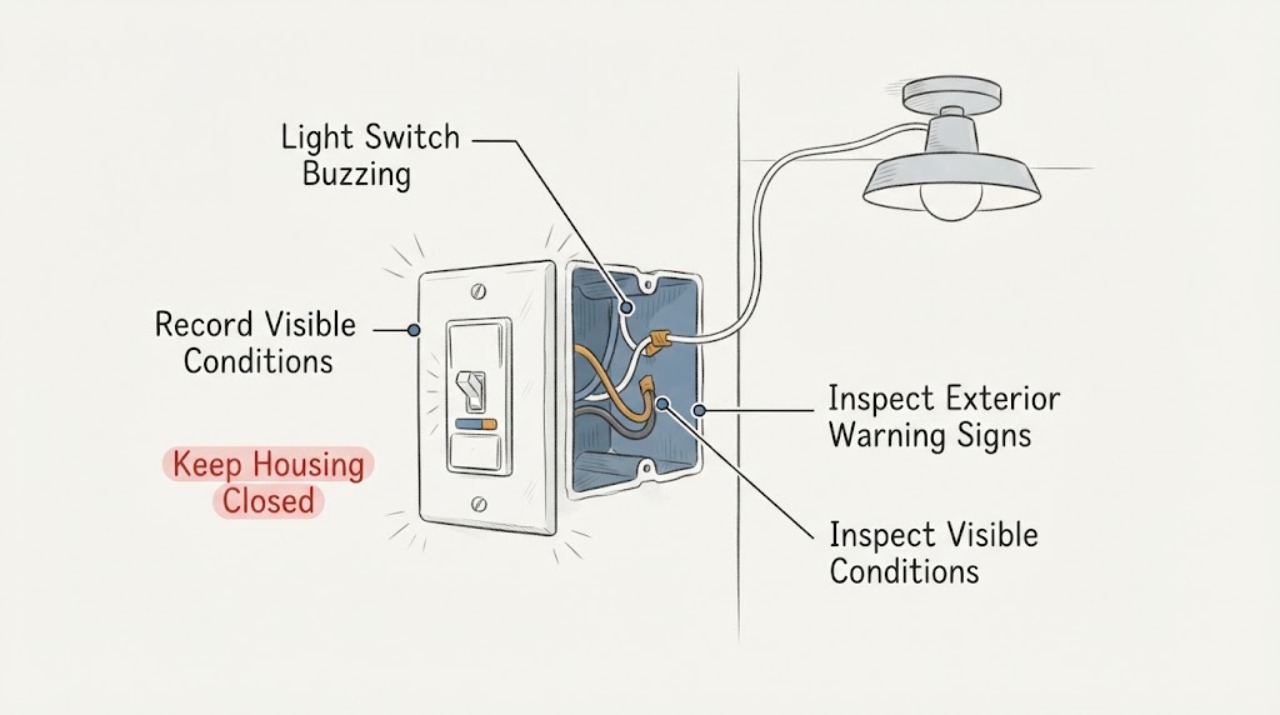
Light Switch Buzzing: Safe Electrical Checks
Treat a persistent buzz from a wall switch as an electrical warning, not a noise to ignore. Stop operating the switch and inspect only from outside for a hot or discolored plate, flickering light, burning-plastic odor, crackling, sparks, smoke, or a loose control.
-
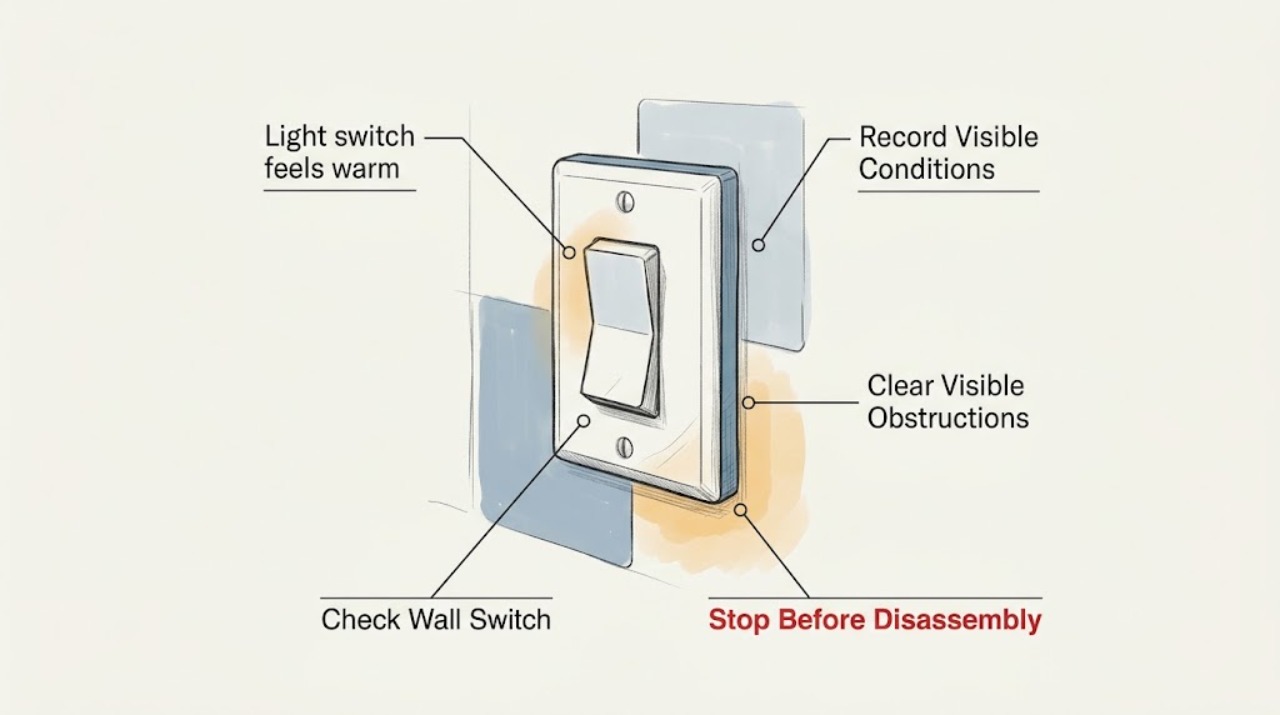
Light switch feels warm: What to Check and What to Do Next
For a switch feels warm problem, first identify the exact model and symptom, then follow the opened manufacturer guidance for the accessible check. Observe whether the condition clears after one documented retry; a returning fault or any hazard needs qualified service.
-
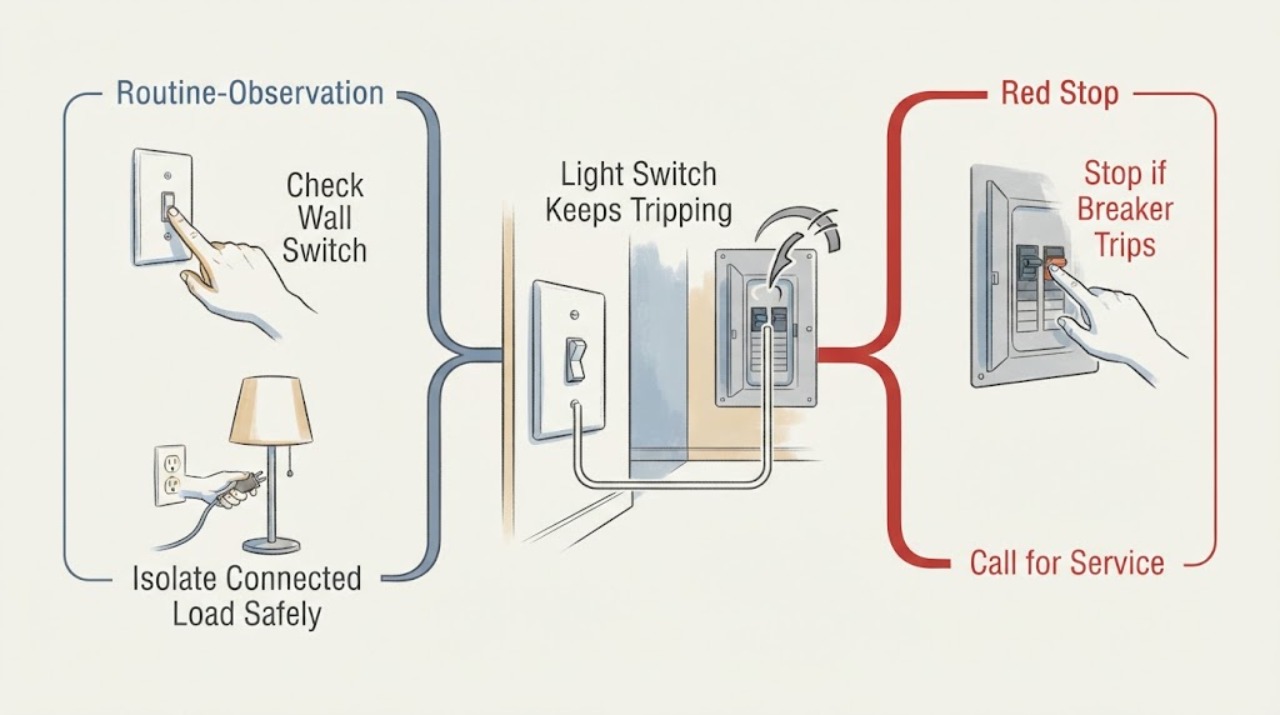
Light Switch Keeps Tripping the Breaker: Safe Next Steps
If turning a wall switch on repeatedly trips a breaker or fuse, leave the switch off and do not keep resetting the protection. Unplug or turn off the connected light or appliance only from a safe location, and inspect the switch plate and fixture externally for heat, discoloration, buzzing, sparks, odor, moisture or damage.
-
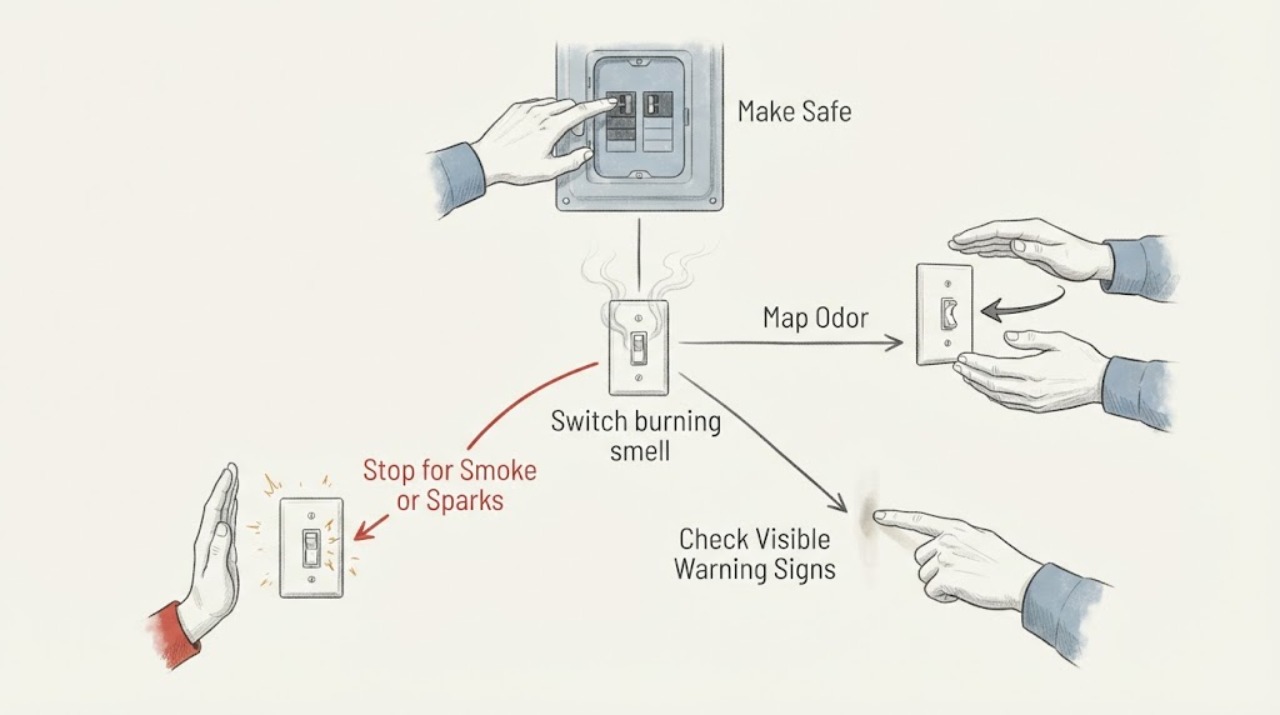
Switch burning smell: stop using it and have the circuit inspected
A burning smell at a wall switch is a warning sign, not a normal operating odor. If the switch is cool, dry, and operates normally enough to turn off without touching a hot or damaged surface, turn it off and leave that circuit or load unused; otherwise leave it alone.
-
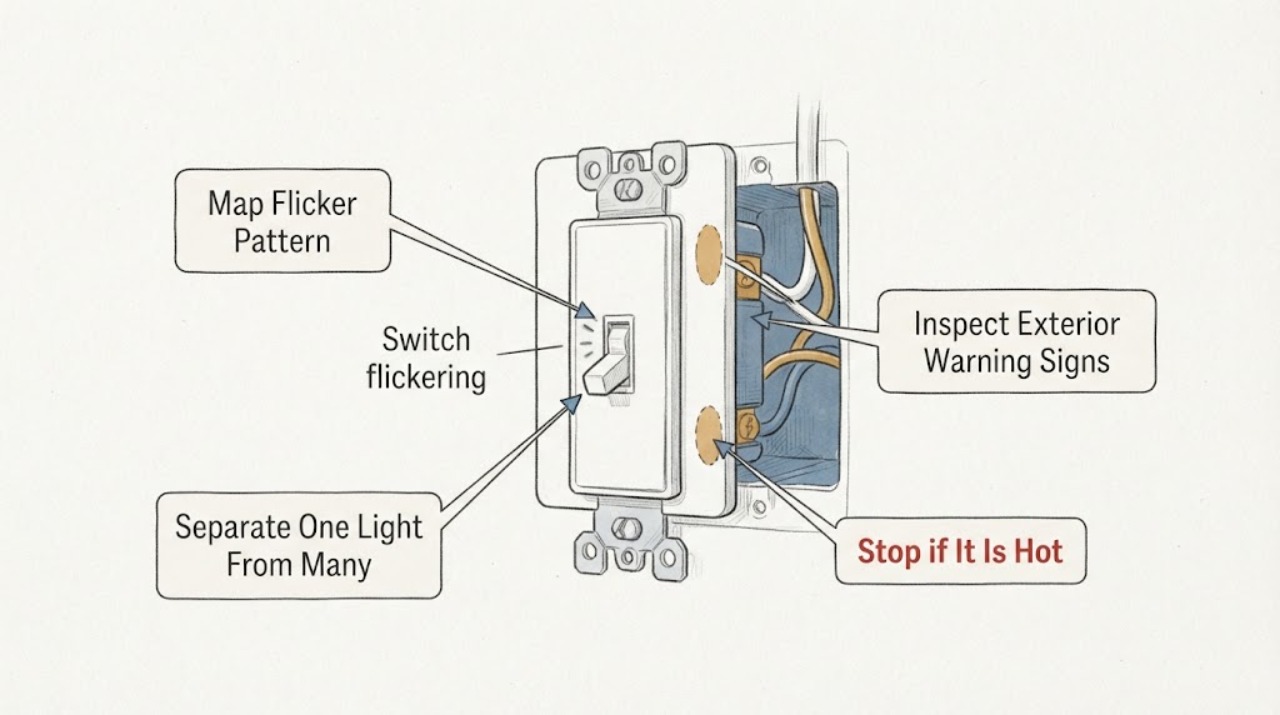
Switch flickering: separate a lamp problem from a wiring warning
Flickering controlled by a wall switch is not automatically a bad bulb. It may be a failing switch or dimmer, an incompatible LED and control combination, a loose lamp or fixture connection, or a broader circuit or wiring problem.
-
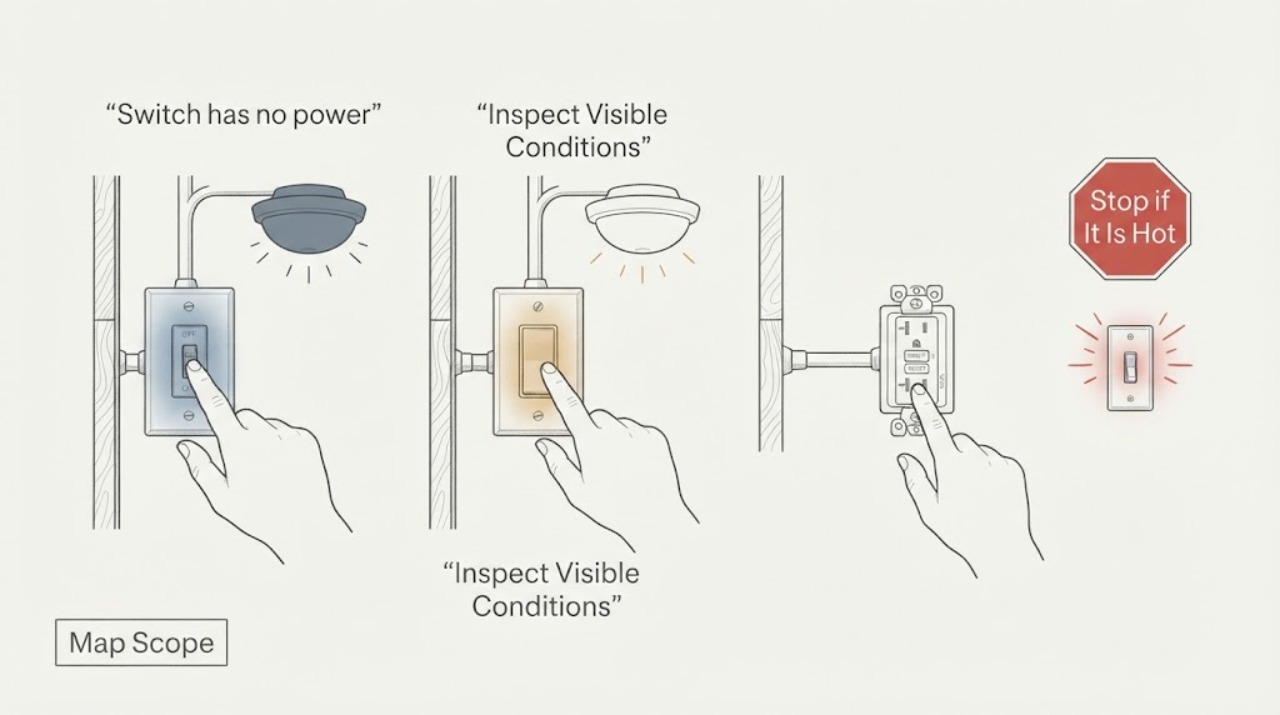
Switch has no power: check the circuit safely before calling an electrician
When a wall switch has no power, first determine whether only its light is out or whether other devices on the circuit are also dead. A failed switch, bulb or fixture, tripped breaker, upstream GFCI, loose connection, or wider wiring fault can all produce the same symptom.
-
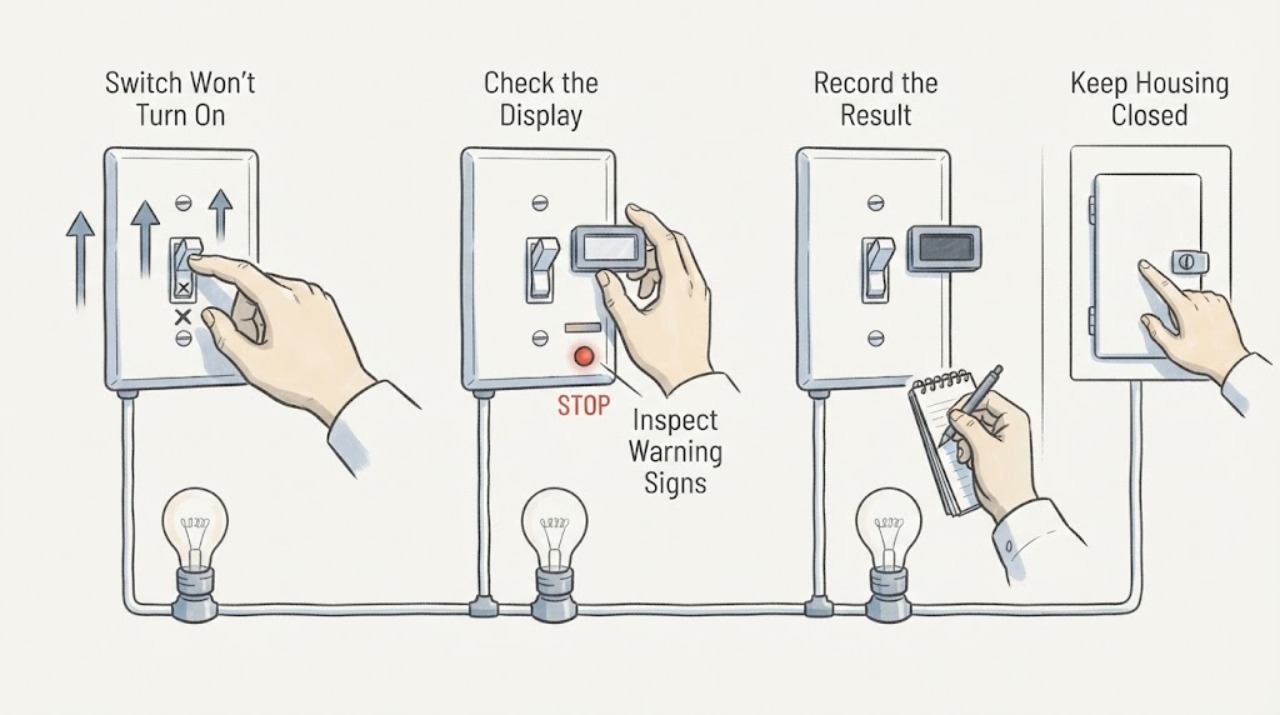
Switch Won't Turn On: Safe Checks and Next Steps
If a switch will not turn on, first identify whether it is a wall switch, pushbutton, or appliance control, then check only the external behavior: whether the control moves normally, whether the controlled light or appliance is the only thing without power, and whether a nearby breaker or protective device has tripped. Stop immediately for heat, discoloration, burning odor, crackling, sparks, shock, water, exposed wiring, or a breaker that trips again.