
On this page
Start here
Quick answer
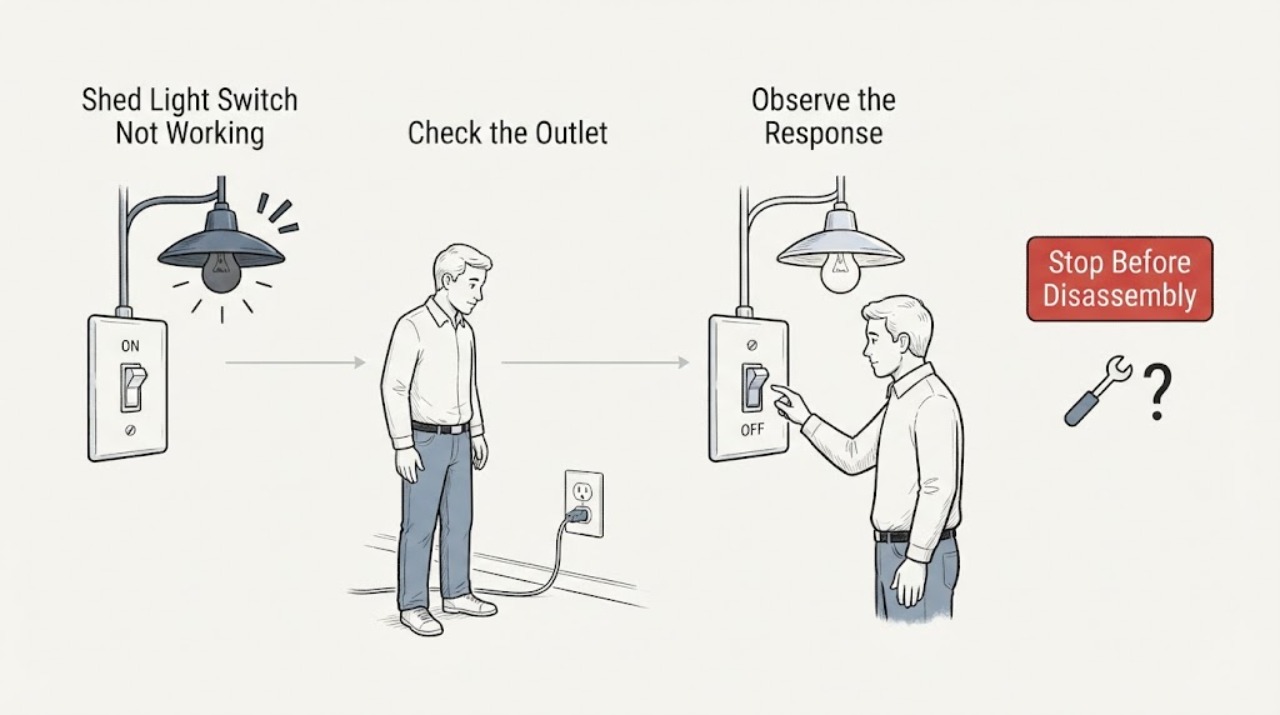
If a shed light switch does not turn on the light, stop first for wet conditions, a burning smell, buzzing, heat, sparks, smoke, damaged wiring, or a shock. From a dry position, note whether the shed's other outlets or lights also lost power and whether a clearly labeled shed breaker or GFCI is tripped; a breaker that trips again needs a licensed electrician. If the fitting is cool, dry, and designed for a user-replaceable bulb, turn the switch off and replace only the bulb with the fixture's specified type and wattage. A dead bulb or dead circuit may explain the symptom, but a working bulb with a nonworking switch, a warm or loose switch plate, flicker, buzzing, arcing, or repeated trips requires the circuit to stay out of use and a qualified electrician; do not remove the switch cover or work inside the box.
Work through in order
Diagnostic checks
Use only checks that match the exact appliance or system and its official guide.
-
Check 1
Before touching the switch or fixture, look and listen from a dry, stable position for water or condensation, smoke, a burning odor, buzzing or sizzling, sparks, a hot or discolored plate, exposed or frayed wiring, shock, or a loose/damaged fitting. Leave the switch off and keep people away if any sign is present.
Expected result: The area is dry and intact, or there is water, a burning or electrical warning sign, damaged wiring, a shock, or visible damage.
Next step: If any warning sign is present, do not operate the switch or enter standing water. If power can be shut off without entering water, follow the local safe shutoff procedure; otherwise have a qualified electrician do it. Do not restore power until the equipment is inspected and dry.
Why this matters
Why: Wet equipment can energize water and electrical warning signs can indicate an electrical fire or shock hazard; the symptom is outside a safe bulb-only check.
-
Check 2
From outside the electrical enclosure and without opening the switch or fixture, check whether another shed light or a known-good outlet works. Observe the clearly labeled breaker, fuse, or GFCI serving the shed only if it is accessible from a dry position and your local installation provides one; do not repeatedly reset a device that trips.
Expected result: Only this light is dead, or the whole shed is dead and the protective device is tripped or trips again.
Next step: For a wider outage or any repeated trip, leave the protective device in its safe state and arrange an electrician. If other shed power works and there is no hazard, continue only with the cool, dry bulb check.
Why this matters
Why: A single dark light points toward the bulb, fixture, switch, or branch wiring; a wider outage or a repeated trip points to a circuit or fault that cannot be isolated from the symptom alone.
-
Check 3
If the fitting is cool and dry and clearly accepts a user-replaceable bulb, turn the light switch off, allow the bulb to cool, and fit one known-good bulb of the type and wattage specified on the fixture. Do not remove the fixture, touch the socket contacts, or alter wiring.
Expected result: The replacement bulb works, remains dark, or the fitting has no user-replaceable bulb or has visible damage.
Next step: If the light works, use only the specified bulb rating. If it remains dark or the fitting is not a simple safe bulb replacement, leave the circuit unused and have a qualified electrician inspect the fixture and switch.
Why this matters
Why: A working replacement makes the original bulb a likely explanation; a dark replacement leaves the switch, fixture, supply, or wiring unresolved. An unmarked, sealed, wet, damaged, or unusual fitting is outside this simple check.
-
Check 4
With the power left off, inspect only the outside of the switch and plate. Note whether the switch feels loose, warm, cracked, discolored, noisy, intermittently responsive, or causes flicker when operated; do not remove the cover or reach into the box.
Expected result: The switch or plate is warm, loose, cracked, discolored, buzzing, sparking, flickering, or still does nothing after the bulb and circuit observations.
Next step: Stop operating the switch, keep the circuit out of use, and contact a licensed electrician with the shed location, the other-power result, breaker/GFCI behavior, and bulb result. Do not open the box or attempt wiring work.
Why this matters
Why: CPSC identifies a nonworking switch, hot faceplate, and visible arcing as warning conditions that require qualified electrical attention; the exterior observation cannot identify a safe replacement or internal cause.
-
Check 5
Give the electrician a concise symptom record: whether only the light or the whole shed is affected, whether a bulb change altered it, whether a breaker/GFCI tripped, and whether moisture, heat, odor, buzzing, flicker, or sparks were observed. Keep the exact switch, fixture, and circuit identity available without dismantling anything.
Expected result: The symptom is persistent, the protective device trips, the fixture is damaged or unusual, or the switch remains nonfunctional after the safe external checks.
Next step: Leave diagnosis and any switch, fixture, panel, or wiring work to a qualified electrician. Do not perform energized tests, bridge a protective device, or substitute a higher-rated fuse or breaker.
Why this matters
Why: The remaining possibilities include fixed wiring, a switch, a fixture, or a protective-device issue, and the official guidance does not support choosing among them from a symptom alone.
Use your observations
Decision map
Find the observation that best matches what you see, then follow the next safe action.
-
PATH 01Next step
What you see
The shed or electrical equipment is wet, someone feels a shock, or there is smoke, a burning odor, sparks, exposed wiring, or a hot/discolored switch.
Do this next
Keep clear and leave the switch off. Shut power off only from a dry, safe location; if that is not possible, call a qualified electrician or emergency service as appropriate. Do not return the equipment to service until it has been inspected and dried.
Why this path and its safety boundary
Why it matters: This is an electrical safety fault rather than a bulb-selection problem, and restoring power or touching the equipment can increase shock or fire risk.
-
PATH 02Next step
What you see
The shed's other power is also absent, or the labeled protective device is tripped and will not remain on.
Do this next
Do not repeatedly reset it or install a larger fuse/breaker. Leave the circuit in its safe state and arrange qualified electrical service.
Why this path and its safety boundary
Why it matters: The symptom is wider than one wall switch and may involve the shed branch circuit or a fault that caused protective operation.
-
PATH 03Next step
What you see
Other shed power works, the area is dry and intact, and a correctly specified replacement bulb restores the light.
Do this next
Use the fixture's stated bulb type and wattage, keep combustible material away from the lamp, and stop using it if heat, odor, buzzing, flicker, or discoloration develops.
Why this path and its safety boundary
Why it matters: The original bulb was a plausible cause; the switch and branch circuit have not been proven defective by that result.
-
PATH 04Next step
What you see
The correct bulb does not restore the light, or the switch remains loose, warm, noisy, damaged, intermittent, or nonfunctional.
Do this next
Leave the switch and circuit unused and have a qualified electrician inspect the exact shed installation. Do not remove the faceplate, open the box, or perform live electrical testing.
Why this path and its safety boundary
Why it matters: The safe external checks cannot distinguish a switch, fixture, or fixed-wiring fault, and the CPSC treats a nonworking switch as a warning that should not be ignored.
Helpful context
Understand the symptom
Separate a bulb problem from a switch or circuit problem
A dark shed light does not identify the failed part. First record whether other shed outlets or lights still work, whether the lamp is a standard replaceable-bulb fitting, and whether the switch or fixture shows any heat, smell, sound, flicker, cracking, or visible damage. Those observations can narrow the next safe step without opening the switch box or making a live measurement.
Shed moisture changes the safety decision
Sheds can expose lighting equipment to rain, condensation, leaks, and damp floors. If the switch, fixture, wiring, or panel is wet or near standing water, do not operate it or enter water to reach a breaker. CDC guidance says wet electrical equipment must be inspected and completely dry before returning to service; use an electrician if the safe shutoff cannot be reached from a dry position.
When checks do not resolve it
Need a professional?
Immediately for water near the electrical equipment, smoke, a burning odor, visible sparks, a shock, exposed or frayed wiring, or a hot/discolored switch or fixture., When the shed breaker, fuse, or GFCI trips again, when other shed power is also out, or when the protective device will not stay in its normal state., When a correct bulb does not restore the light, the fitting is sealed or damaged, or the switch remains loose, warm, buzzing, flickering, intermittent, or dead., Before removing a switch cover, opening a fixture or electrical box, changing wiring, or making any energized electrical measurement.
Common questions
FAQ
Is a dead shed light always a bad switch?
No. The light can be affected by a bulb, a wider shed power loss, a protective device, a fixture, the switch, or fixed wiring. First record whether other shed power works and, only for a cool, dry, standard fitting, try a correctly specified replacement bulb. A persistent dead light needs qualified inspection.
Can I reset the shed breaker or GFCI?
Do not repeatedly reset a device that trips. A protective device that trips again indicates an electrical problem; leave the circuit in its safe state and arrange qualified service, especially if the shed is wet or there are sparks, odor, heat, or damaged wiring.
Can I remove the switch plate to see if a wire is loose?
This page stops at the outside of the switch. Electrical work on or near energized parts belongs to qualified persons, and the CPSC routes a nonworking switch, hot plate, or arcing switch to qualified electrical help. Keep the switch off and do not open the box.
What if the shed is damp or has standing water?
Do not operate the switch or enter standing water to reach power controls. CDC guidance says wet electrical equipment must be inspected and completely dry before returning to service; have an electrician handle a shutoff that cannot be reached safely from a dry position.
Read the exact guide
Official sources
- Electrical Safety in the WorkplaceNational Institute for Occupational Safety and Health, CDC · Used to define the professional boundary for switch-box work and energized electrical testing; it is not a shed-specific repair manual.
- What to Do to Protect Yourself From Electrical HazardsCenters for Disease Control and Prevention · Used for the shed's wetness and emergency stop boundary; it does not identify a component fault or authorize work inside an electrical box.
- CPSC Guide to Home Wiring HazardsU.S. Consumer Product Safety Commission · Used for general residential switch and lighting warning signs; it supports external symptom recognition and qualified-service boundaries, not a shed-specific wiring layout or repair.
- Appliance and Electrical Fire SafetyU.S. Fire Administration · Used for matching the bulb to the fixture rating and keeping combustible material away from lamps; it does not diagnose the unspecified shed switch.
Community feedback
Share a repair observation
Share a plain-text repair observation. Accepted observations are published automatically; this page may take a moment to update.