
Electrical guides
GFCI Outlets Repair Guides
GFCI guidance for reset failures, nuisance trips, upstream protection, and testing.
Published gfci outlets guides
Choose the guide that best matches the equipment and symptom you are seeing.
-
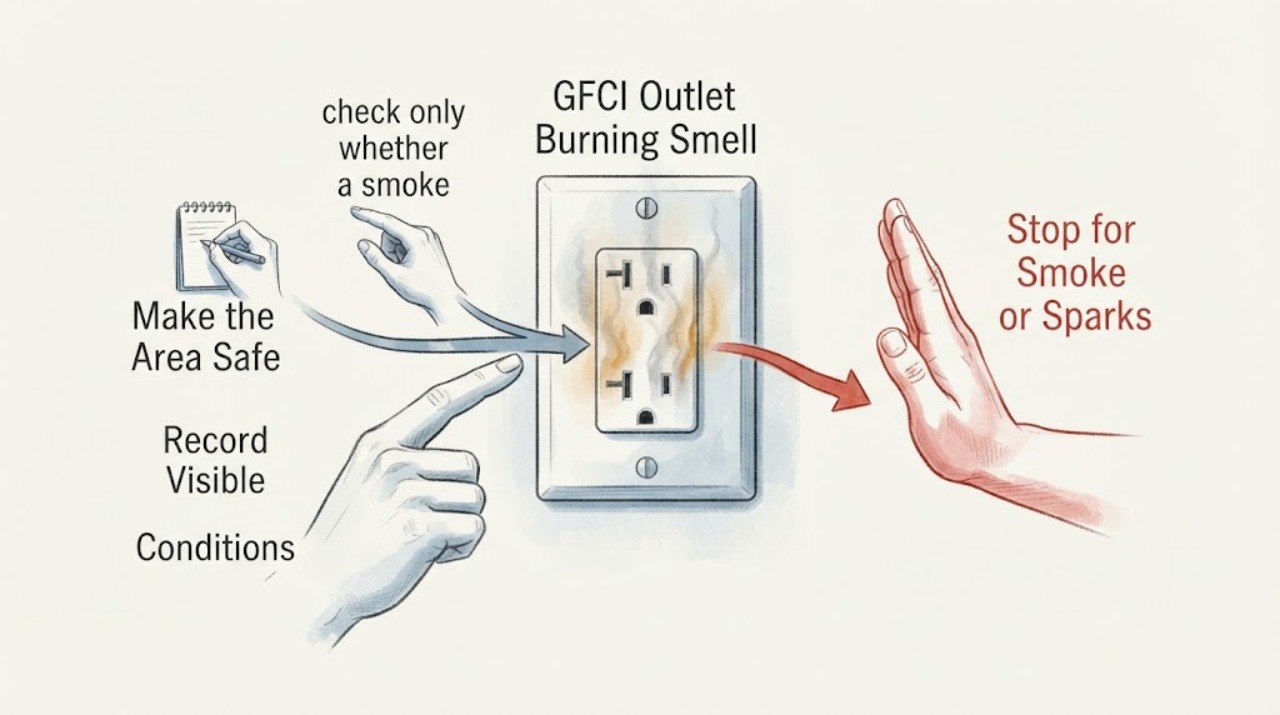
GFCI Outlet Burning Smell: Stop Using It and Get Electrical Help
A burning smell from a GFCI outlet is an electrical-fire warning, not a reason to press TEST or RESET. Stop using the outlet and keep people away without touching the receptacle, plug, cord, switch, breaker panel, or nearby equipment.
-
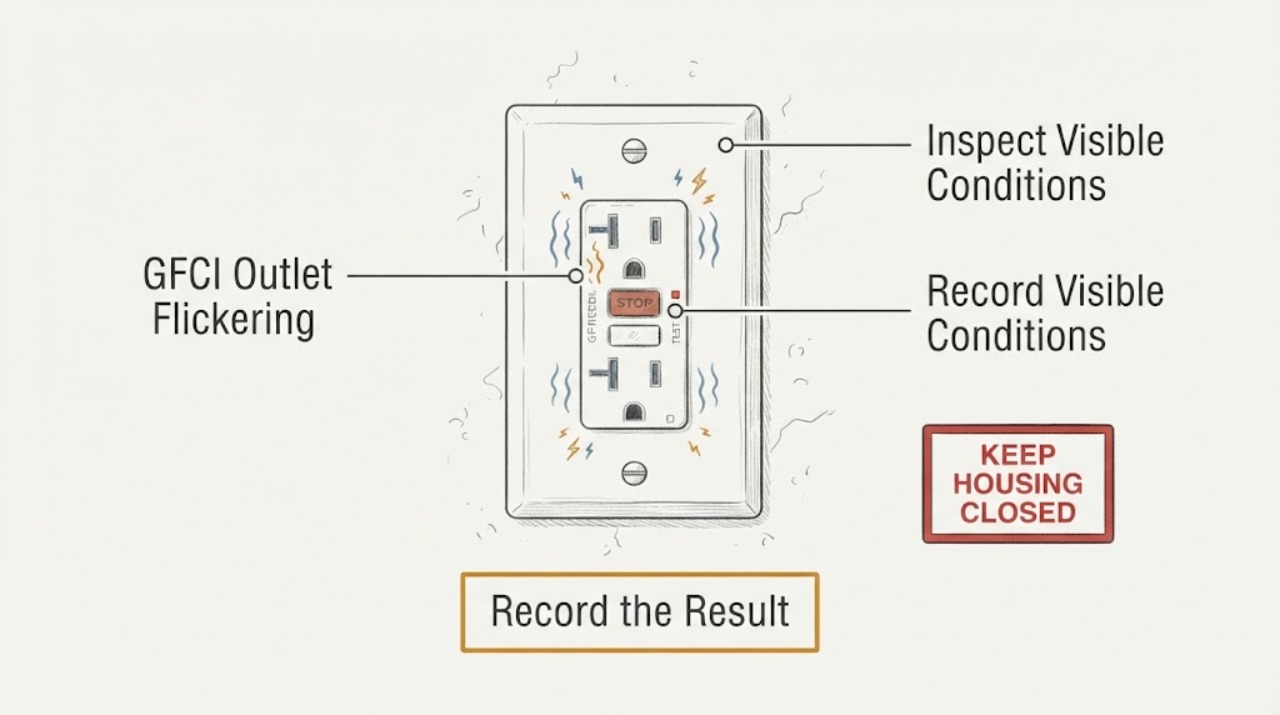
GFCI Outlet Flickering: Safe Non-Contact Checks Before Calling an Electrician
A GFCI outlet that flickers may be showing a model-specific status or self-test indication, losing power, responding to a fault, or experiencing a wiring or receptacle problem. First determine whether the GFCI's indicator, a plugged-in load, nearby lights, or all of them are flickering.
-
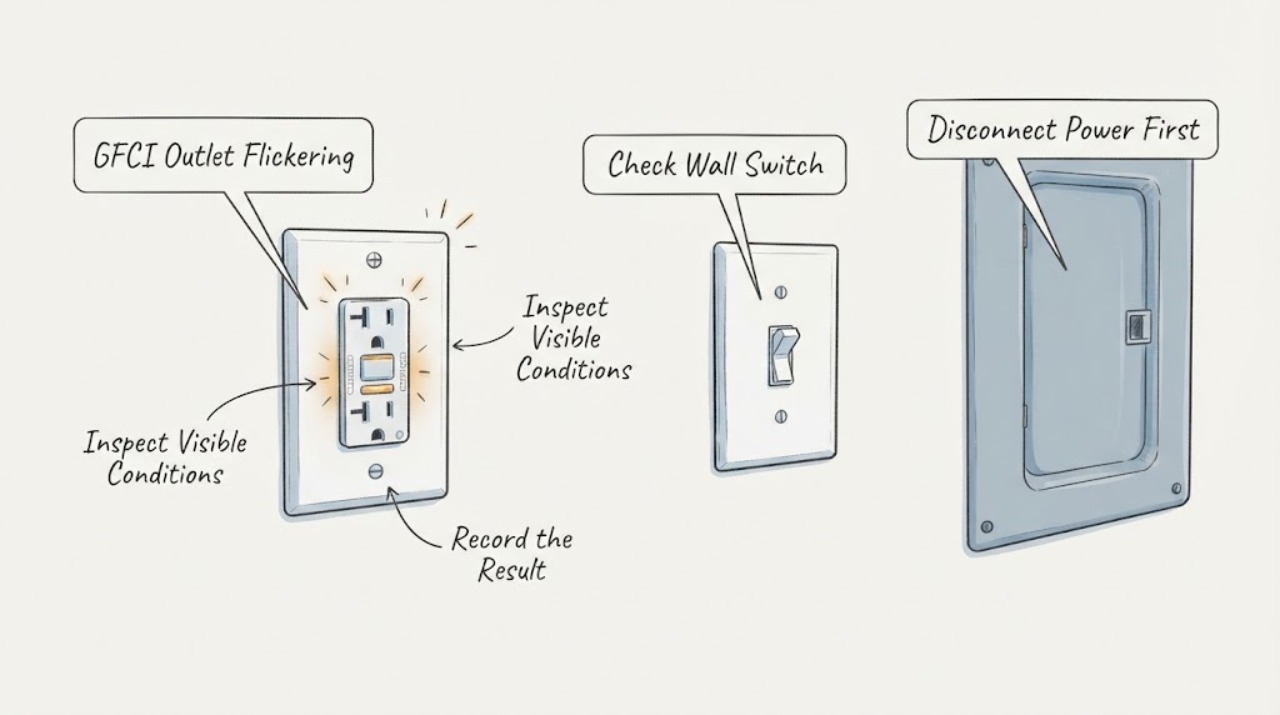
GFCI Outlet Flickering: Safe Checks for the Outlet and Switch
Treat a flickering GFCI outlet or its associated switch as an electrical warning until you know whether only a status light is changing or power is actually unstable. From a dry, safe position, note the exact flicker, the outlet's model and indicator pattern, whether nearby lights or outlets also change, and whether moisture, warmth, discoloration, buzzing, odor, smoke, or arcing is present.
-
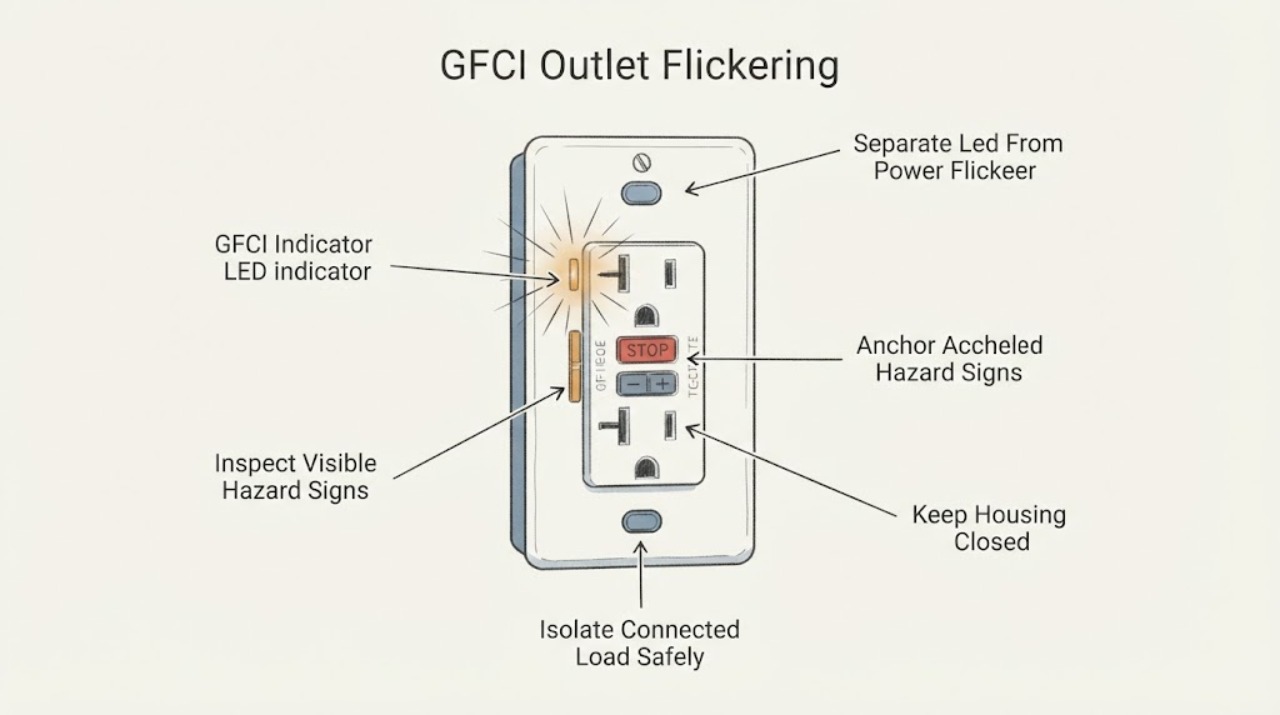
GFCI Outlet Flickering: Separate the Status Light from a Circuit Fault
First determine whether only the GFCI indicator is blinking or whether power at the receptacle is actually flickering. Indicator behavior is model-specific: Leviton describes some blinking colors as setup or fault indications, and a red indication that remains after TEST and RESET or a device that will not reset needs an electrician.
-
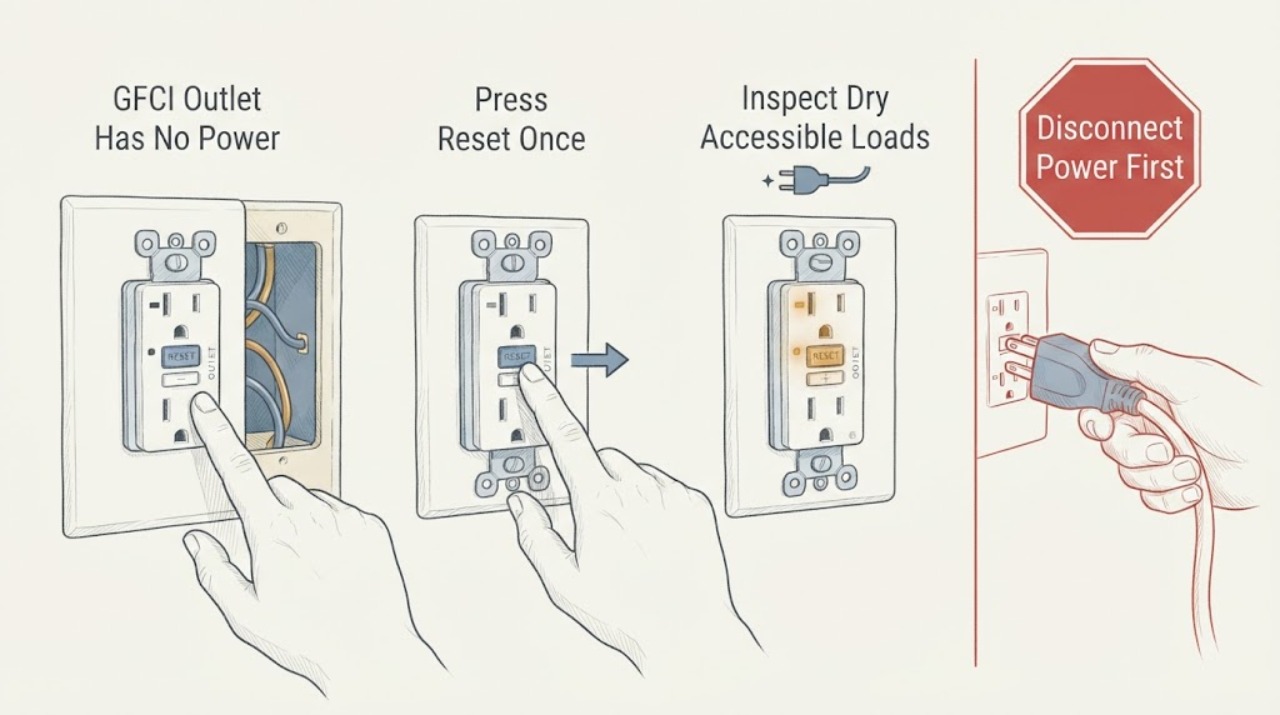
GFCI Outlet Has No Power: Check Circuit Wiring Safely
A GFCI outlet with no power may simply be tripped, may be downstream of another tripped GFCI or breaker, or may be unable to reset because there is no upstream supply, a continuing ground fault, damaged wiring, a failed device, or a line/load installation issue. From a dry, safe position, look for water, heat, discoloration, looseness, smoke, sparks, or exposed damage.
-
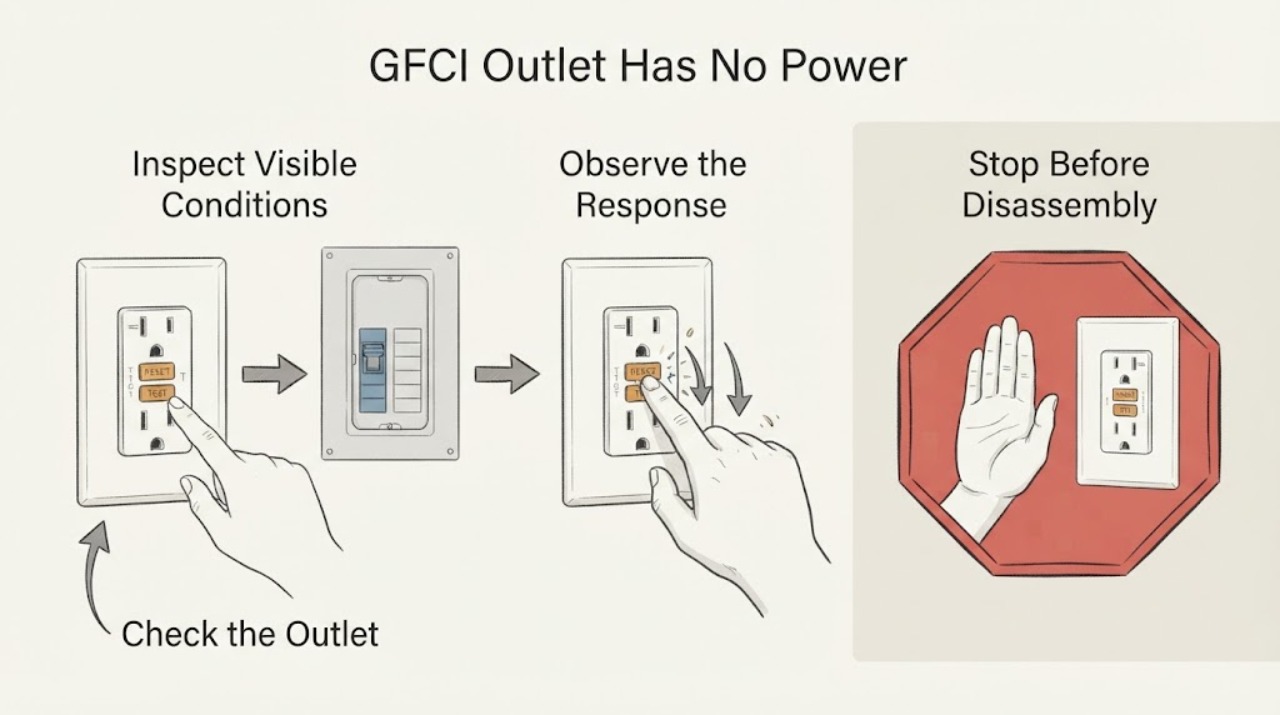
GFCI Outlet Has No Power: Check the Circuit Breaker Safely
A GFCI outlet with no power may have a popped RESET button, a tripped circuit breaker, another GFCI upstream that opened, a disconnected or failed load path, or a wiring or device fault. From a dry position, inspect the outlet's TEST and RESET buttons, check nearby and downstream outlets, and look only at the external position of a clearly labeled breaker.
-
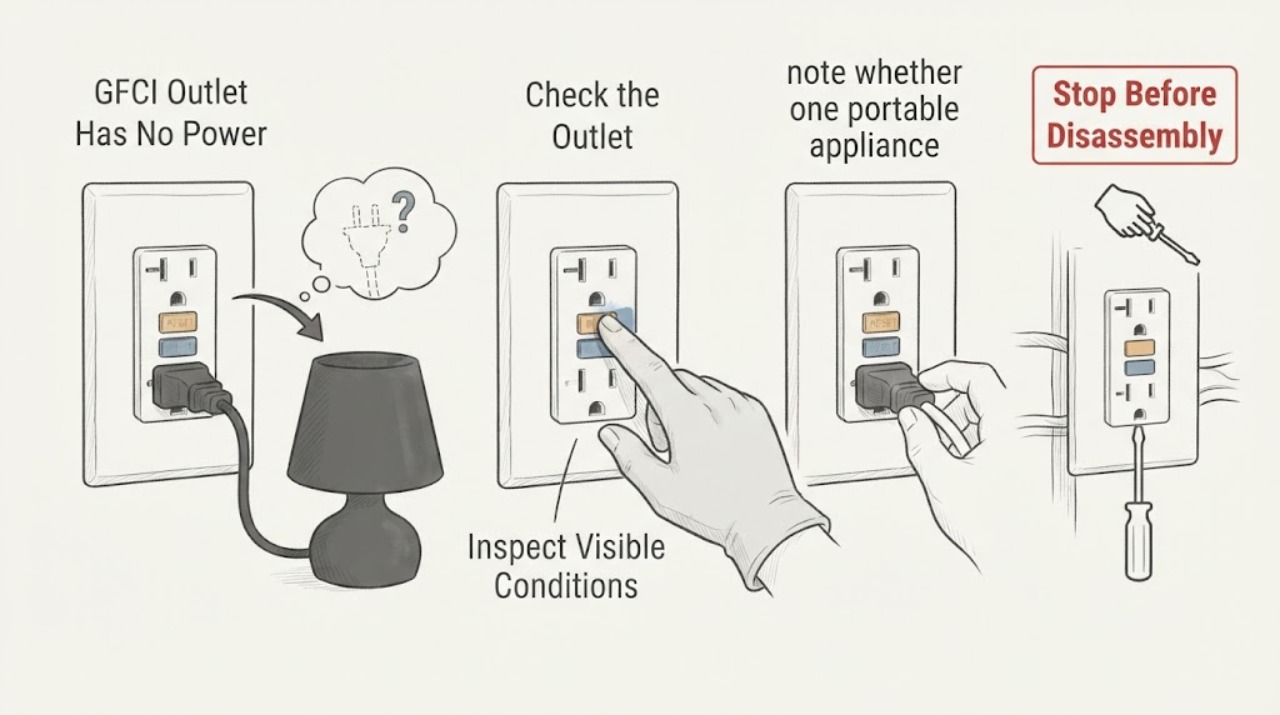
GFCI Outlet Has No Power: Check the Outlet and Wiring
A GFCI outlet with no power may be tripped, may have lost upstream power, or may be locked out because it detects a fault, is damaged, or was wired incorrectly. Do not open the outlet or panel.
-
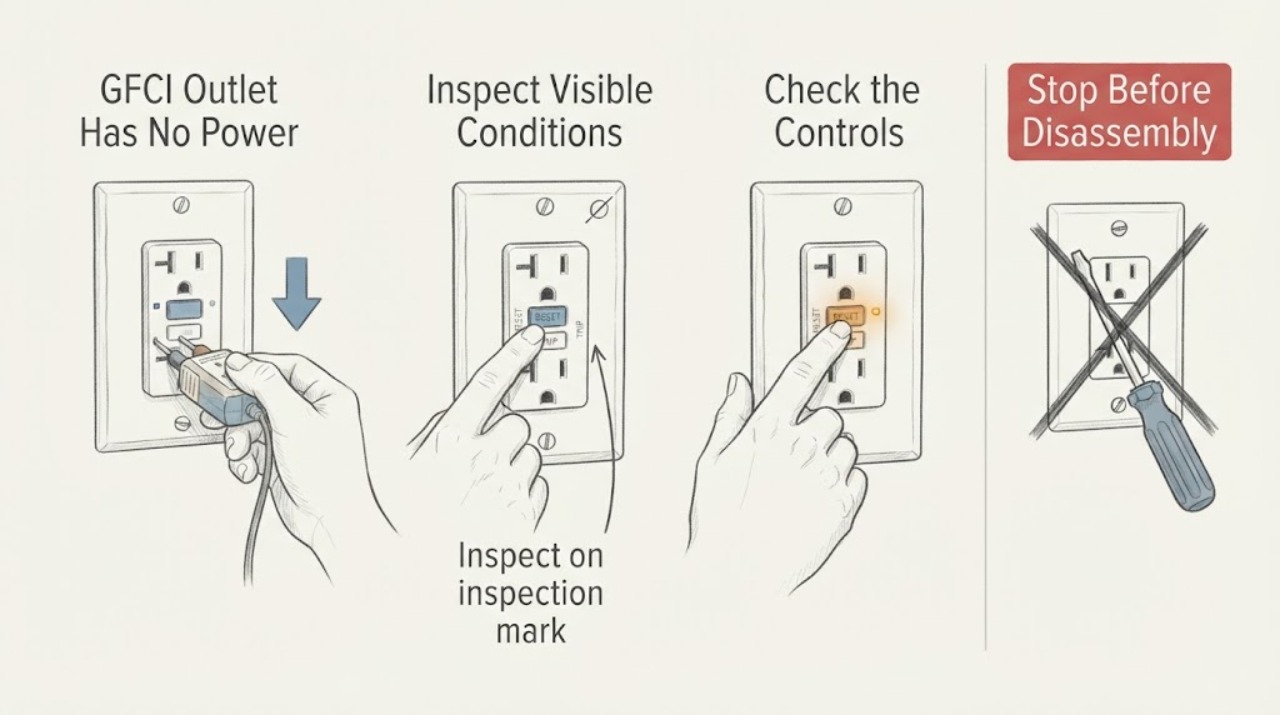
GFCI Outlet Has No Power: Check the Outlet Safely
A GFCI outlet with no power may have opened because of a ground fault, may be controlled by another upstream GFCI, or may have lost supply at the circuit breaker. From a dry position, look at the TEST and RESET buttons, check whether nearby or downstream outlets are also dead, and inspect the outlet, plug, cord, and surrounding area for visible damage or moisture.
-
GFCI Outlet Has No Power: Check the Visible Circuit Clues Safely
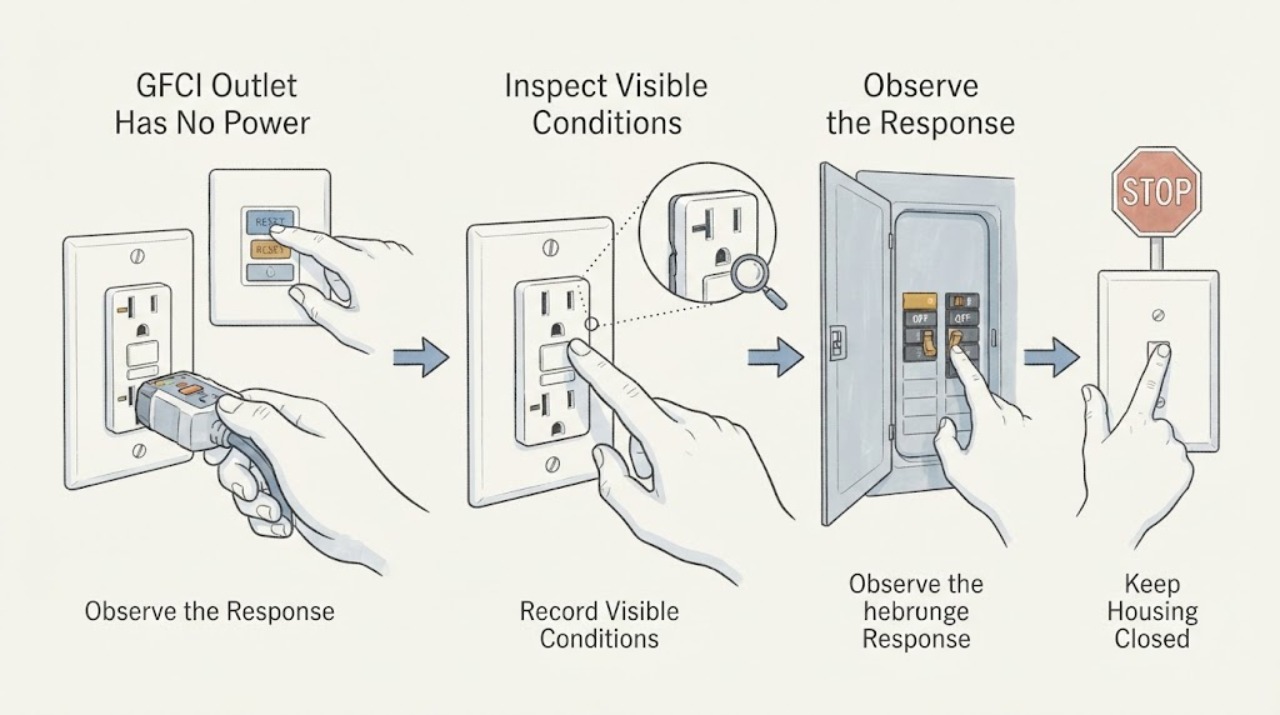
When a GFCI outlet has no power, the cause may be a tripped GFCI, an upstream GFCI protecting this outlet, an open circuit breaker, a failed receptacle, a connected-load fault, or a wiring problem. From a dry, safe position, observe the outlet's indicator and button position, nearby outlets and lights, the visible state of the labeled breaker, moisture or damage, and what was connected when power disappeared.
-
GFCI Outlet Has No Power: Reset It Safely and Find the Fault
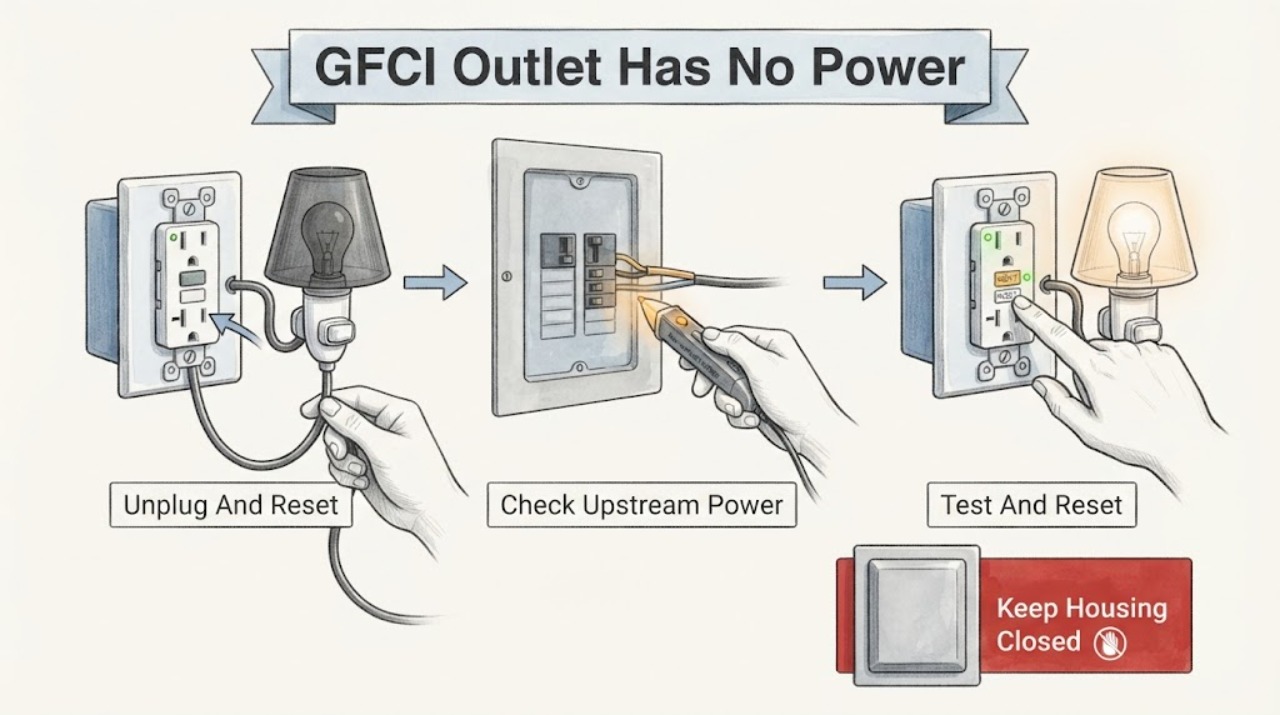
A GFCI outlet with no power is commonly tripped, without incoming power, protecting against a continuing ground fault, or unable to reset because the device or its wiring has a problem. With dry hands and no cover removal, unplug connected loads, press RESET once, check for a tripped breaker and other upstream GFCIs, then test the receptacle with a small lamp or nightlight.
-
GFCI Outlet Has No Power: Safe Checks for the Fuse and Outlet
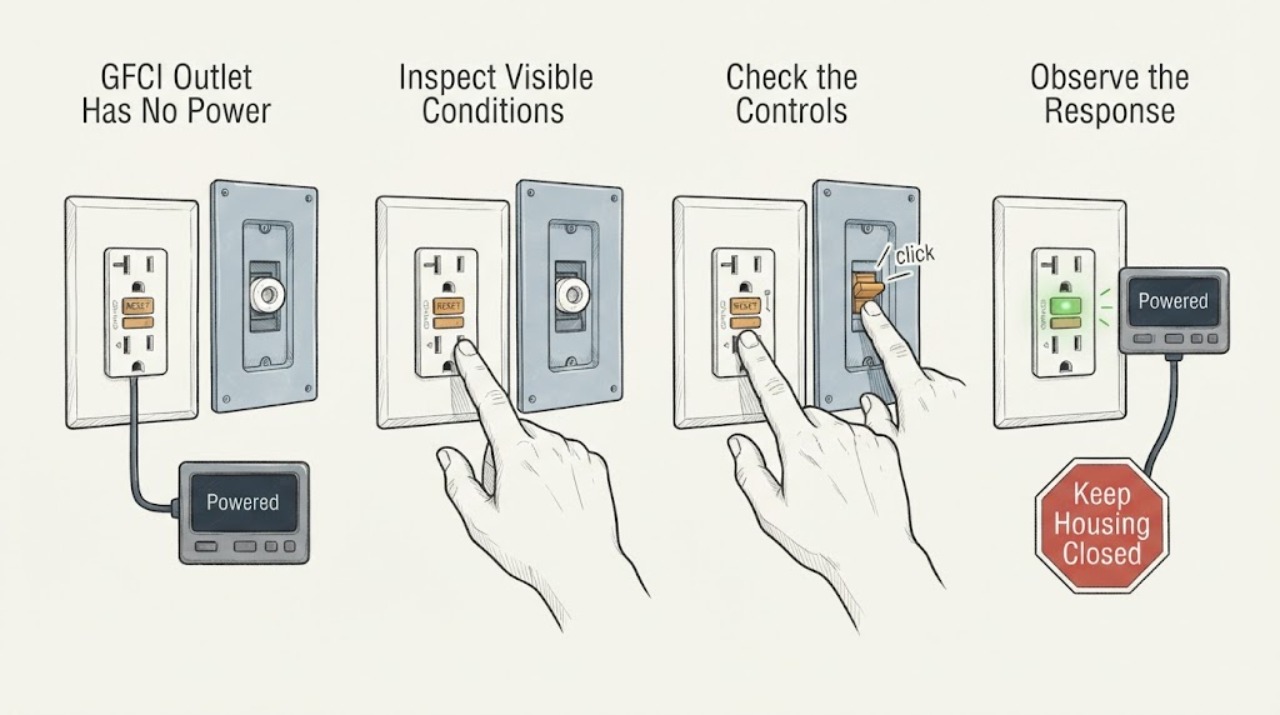
A GFCI outlet with no power may be tripped, unpowered because of an upstream device or fuse, locked out by its self-test protection, or defective. From a dry position, unplug loads, inspect only the visible RESET and TEST state, and perform at most one manufacturer-appropriate reset when there is no damage or moisture.
-
GFCI Outlet Has No Power: Safe Checks for the Outlet and Switch
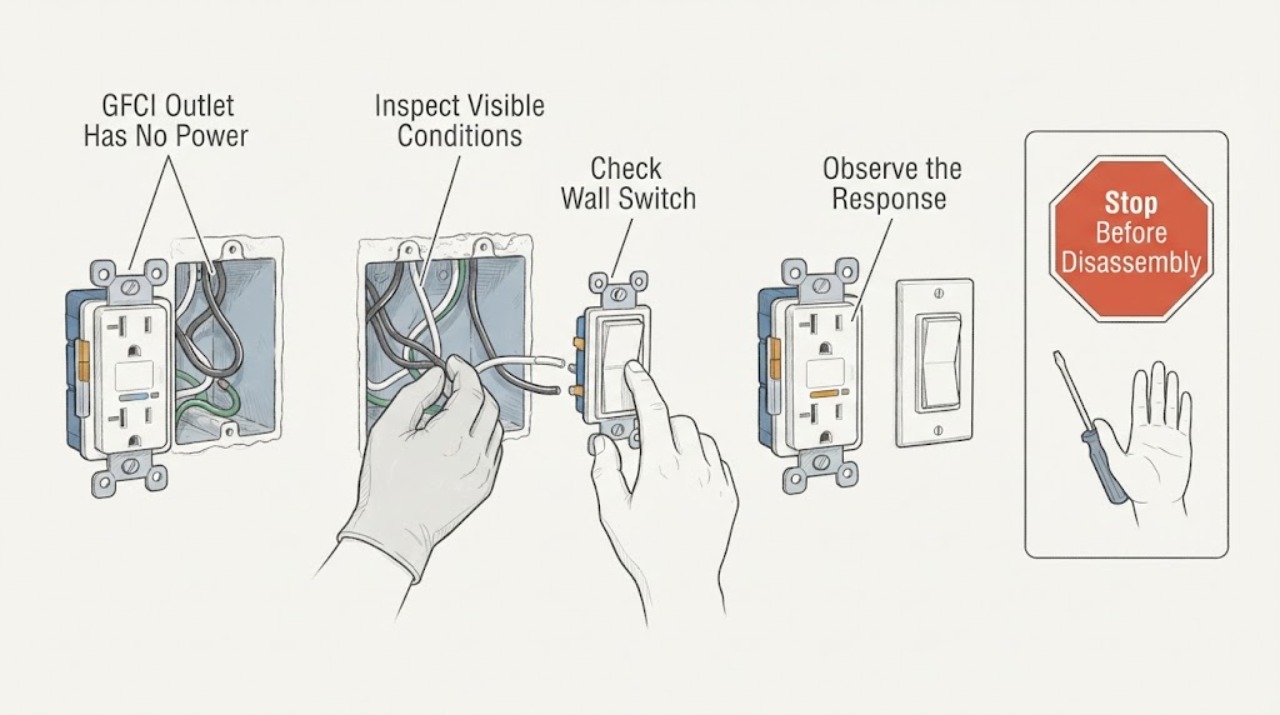
A GFCI outlet with no power may be tripped, unpowered because an upstream breaker is off, affected by a switch or upstream GFCI, unable to reset because of a continuing ground fault, or faulty or incorrectly wired. From a dry, safe position, record the RESET position and indicator, map which outlets or lights are affected, and check only the visible state of the related breaker.
-
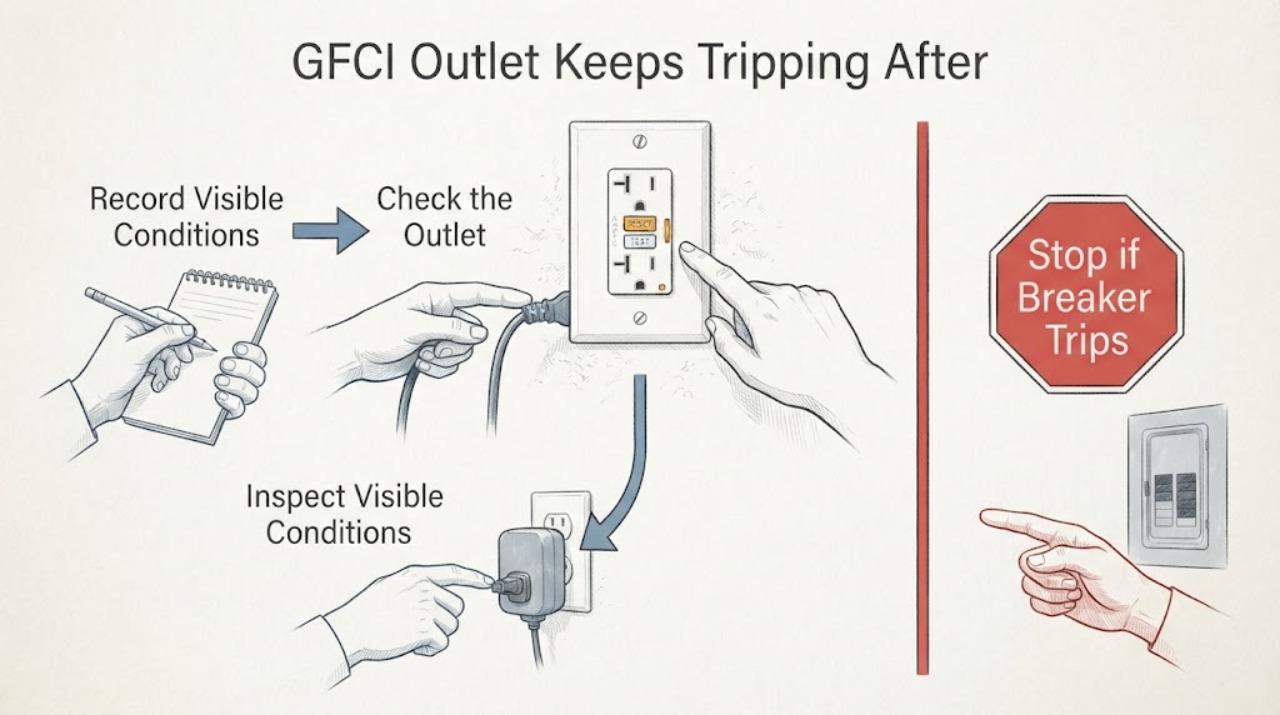
GFCI Outlet Keeps Tripping After Several Hours: Safe Electrical Checks
A GFCI circuit that trips only after several hours is still detecting a fault or overload condition; the delay does not make it safe to keep resetting. First record whether the GFCI outlet, the panel breaker, or both have opened, what was running, and whether the event follows moisture, heat, or a particular appliance cycle.
-
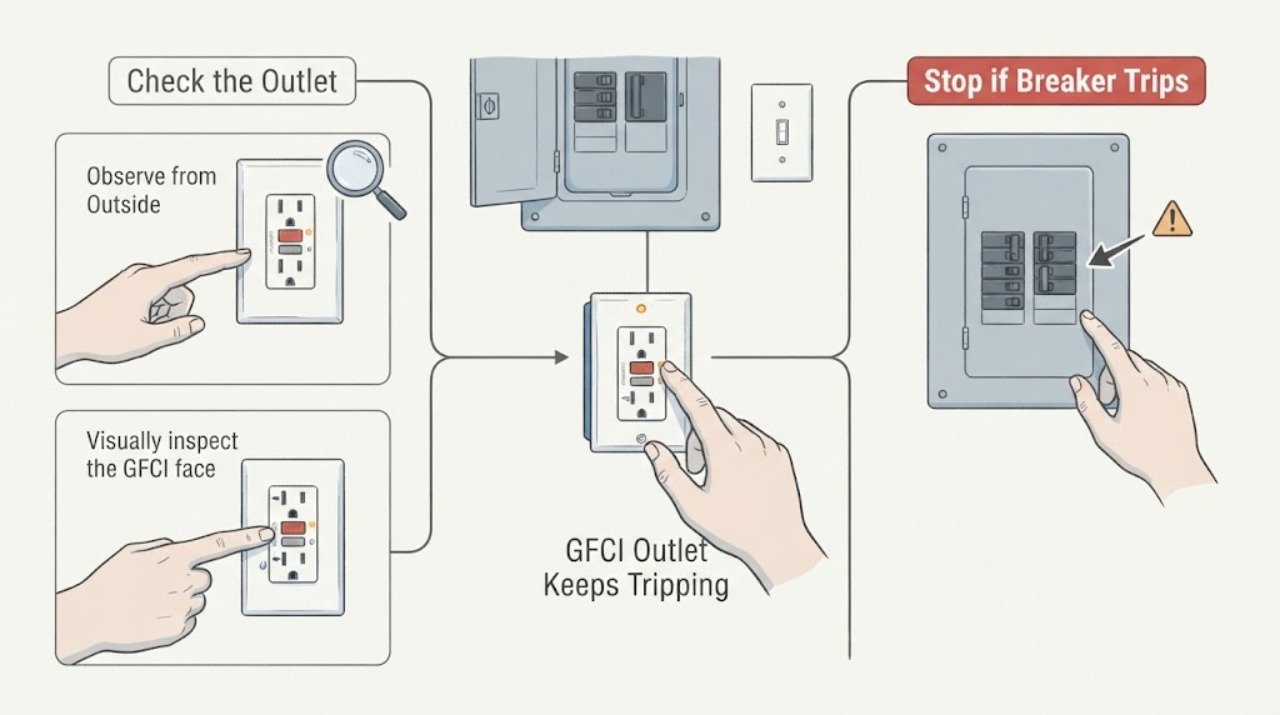
GFCI Outlet Keeps Tripping: Safe Non-Contact Checks
A GFCI outlet keeps tripping because it is detecting a ground-fault condition, a wet or damaged load, a downstream problem, an installation or wiring fault, or a failed device. Start with non-contact observations: identify whether the GFCI outlet or the GFCI breaker trips, note the indicator and RESET position, unplug accessible loads by their plug bodies if everything is dry, and inspect the outlet, cords, and downstream area for visible damage.
-
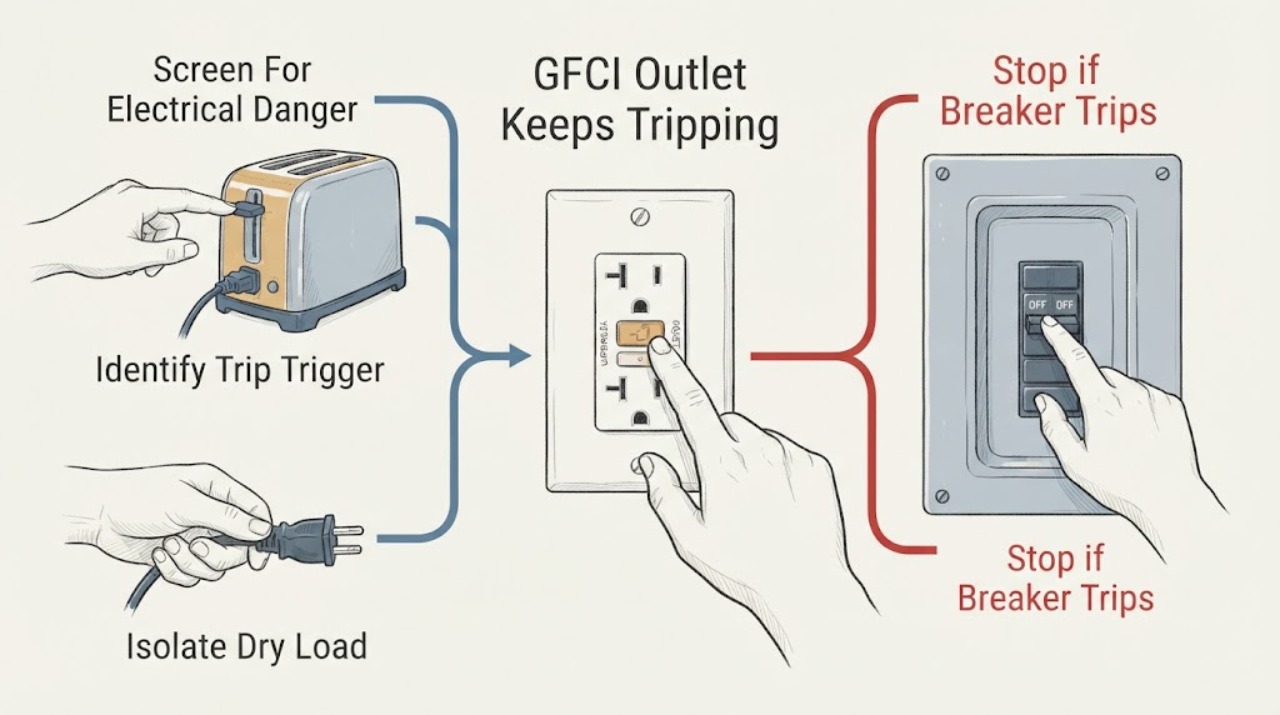
GFCI Outlet Keeps Tripping: Isolate the Load Without Opening the Wiring
A GFCI outlet keeps tripping when it detects current leaving the intended circuit path. Moisture, a damaged cord or appliance, a downstream outlet or load, a defective GFCI, or wiring trouble can all be involved.
-
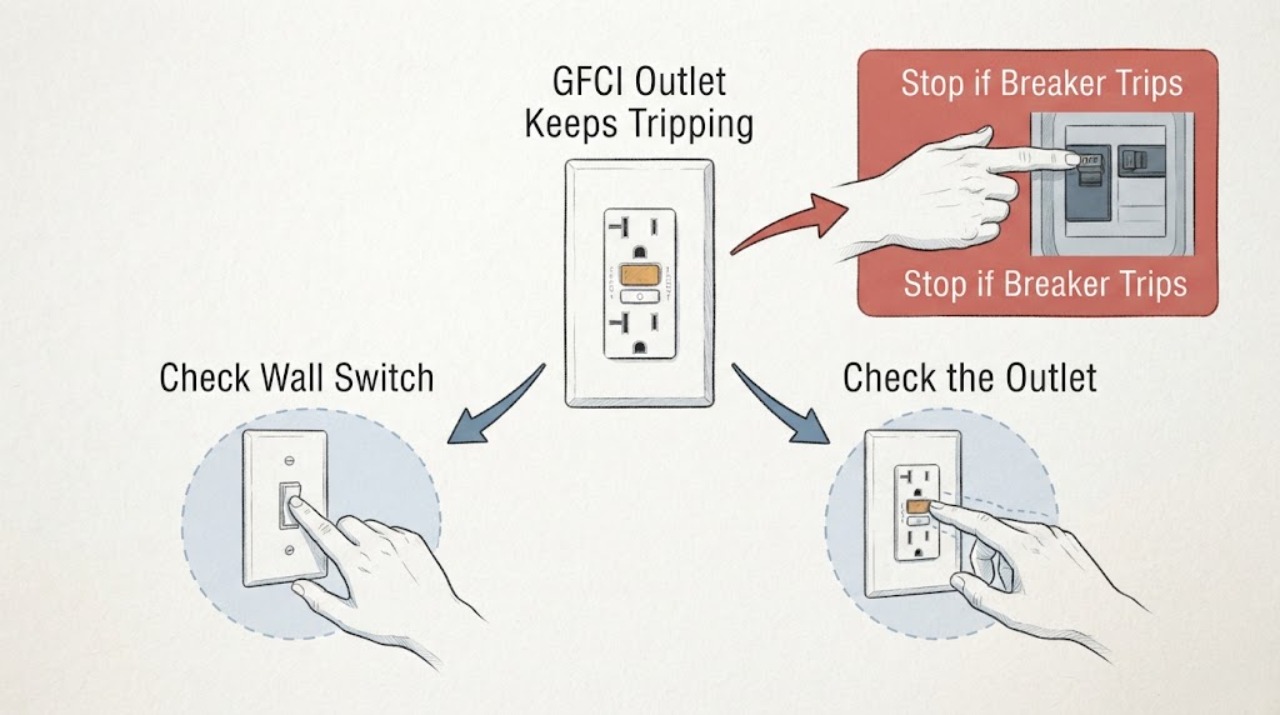
GFCI Outlet Keeps Tripping: Safe Checks for the Breaker and Wiring
A GFCI outlet keeps tripping when it detects current taking an unintended path. Moisture, a damaged cord or appliance, a downstream load, a GFCI device fault, a breaker issue, or wiring trouble can all be involved.
-
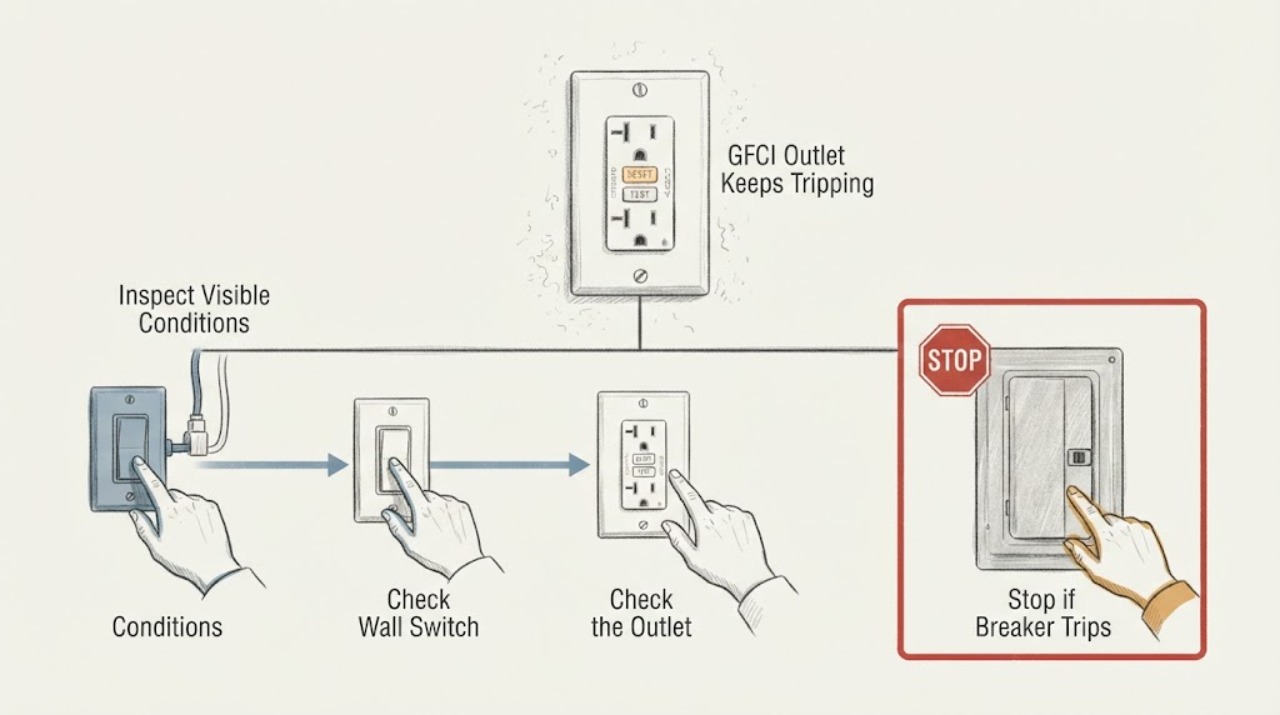
GFCI Outlet Keeps Tripping: Safe Receptacle Checks
A GFCI outlet keeps tripping because it is detecting a possible ground fault, often involving moisture, a damaged cord or appliance, a downstream load, or a fault in the receptacle or circuit. From a dry, safe position, record the RESET position, visible indicator, what was plugged in, and which downstream outlets lost power.
-
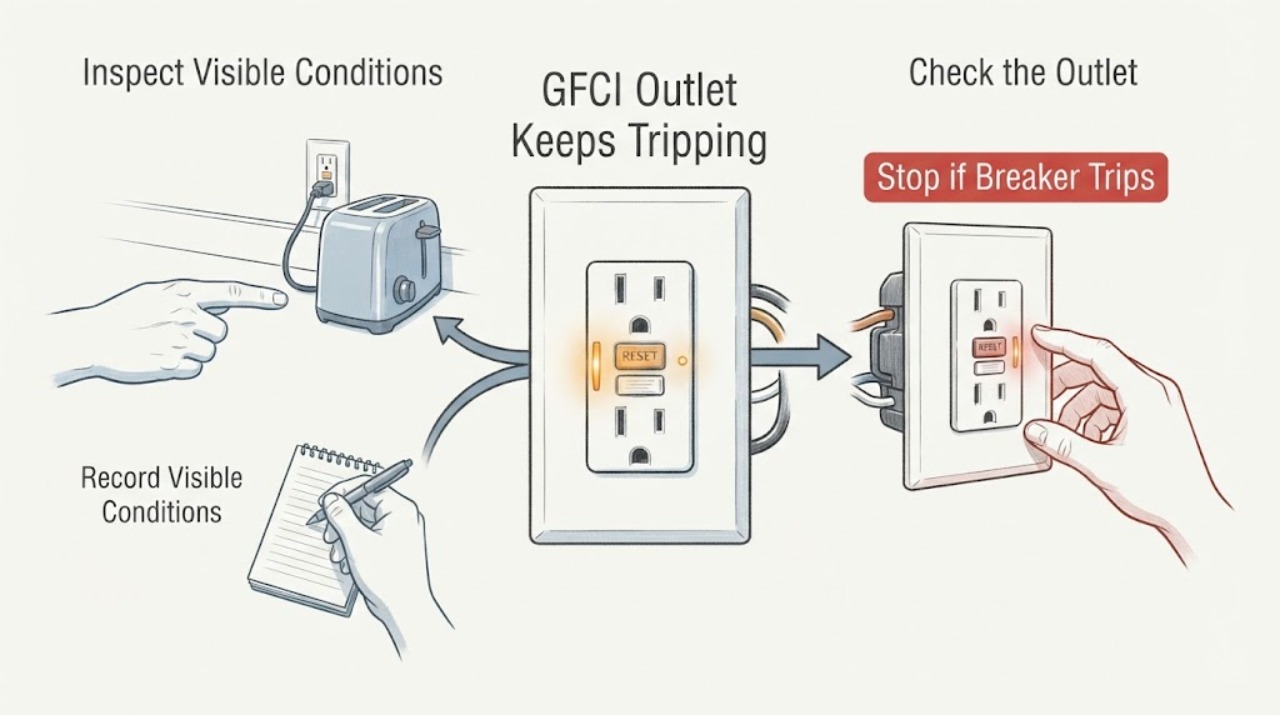
GFCI Outlet Keeps Tripping: Safe Checks Before Electrical Service
A GFCI that keeps tripping is detecting a possible ground fault, moisture path, damaged load, wiring problem, overload interaction, or a failed device. Do not repeatedly press RESET, open the outlet or panel, touch wiring, unplug equipment, or measure voltage.
-
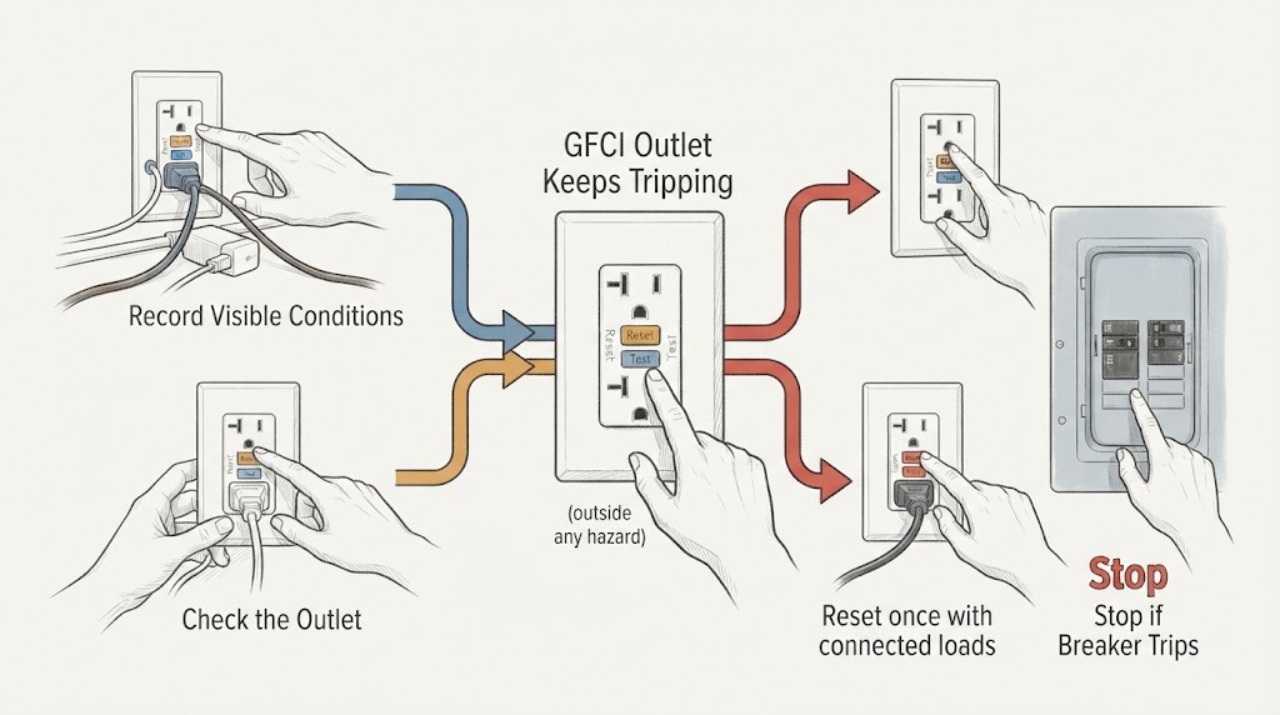
GFCI Outlet Keeps Tripping: Reset, Load, and Safety Checks
A GFCI outlet keeps tripping because it is detecting a ground fault or another condition it cannot safely clear; common clues include moisture, a damaged appliance or cord, a downstream device, incorrect wiring, or a worn outlet. Note what was plugged in and inspect the outlet, plugs, cords, and nearby area without touching exposed conductors.
-
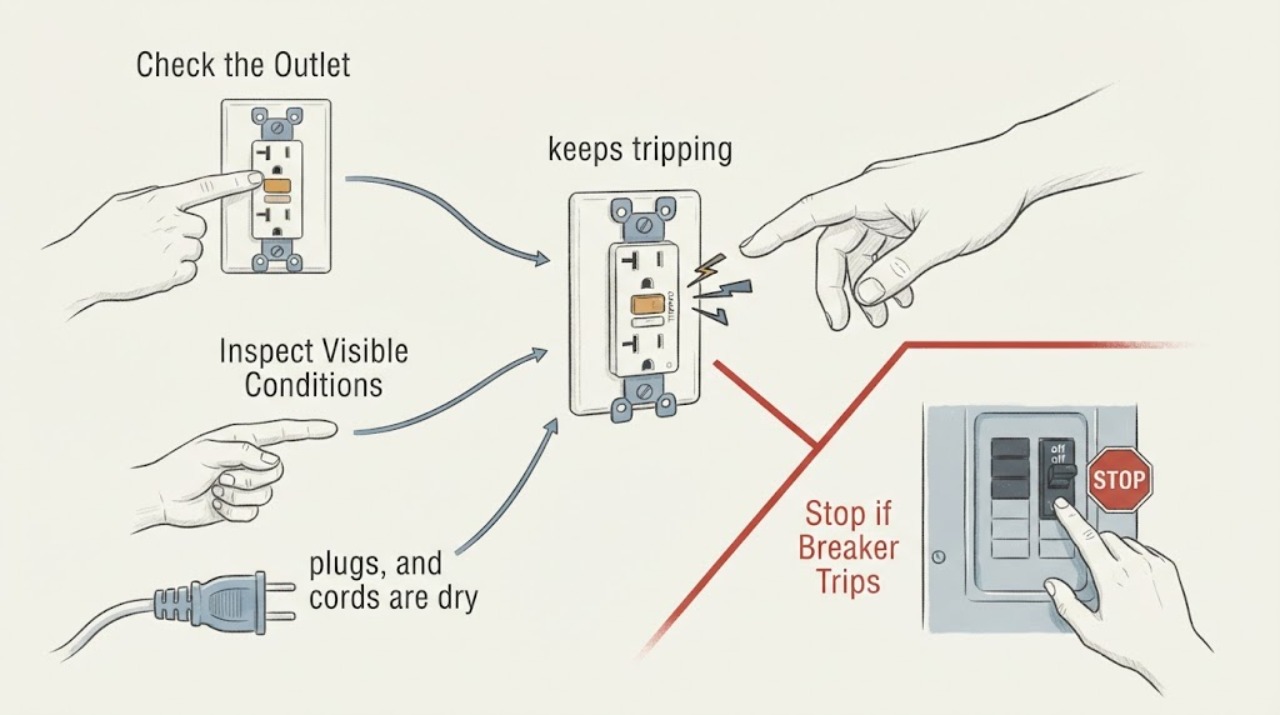
GFCI Outlet Trips the Circuit Breaker: Safe Checks
A GFCI outlet trips when it detects current taking an unintended path, including through water or damaged equipment. Treat repeated trips as a protective warning: first identify whether the reset button is on the outlet or at the panel, then inspect from a safe distance for moisture, heat, discoloration, loose plugs, damaged cords, or a device that was in use when the trip occurred.
-
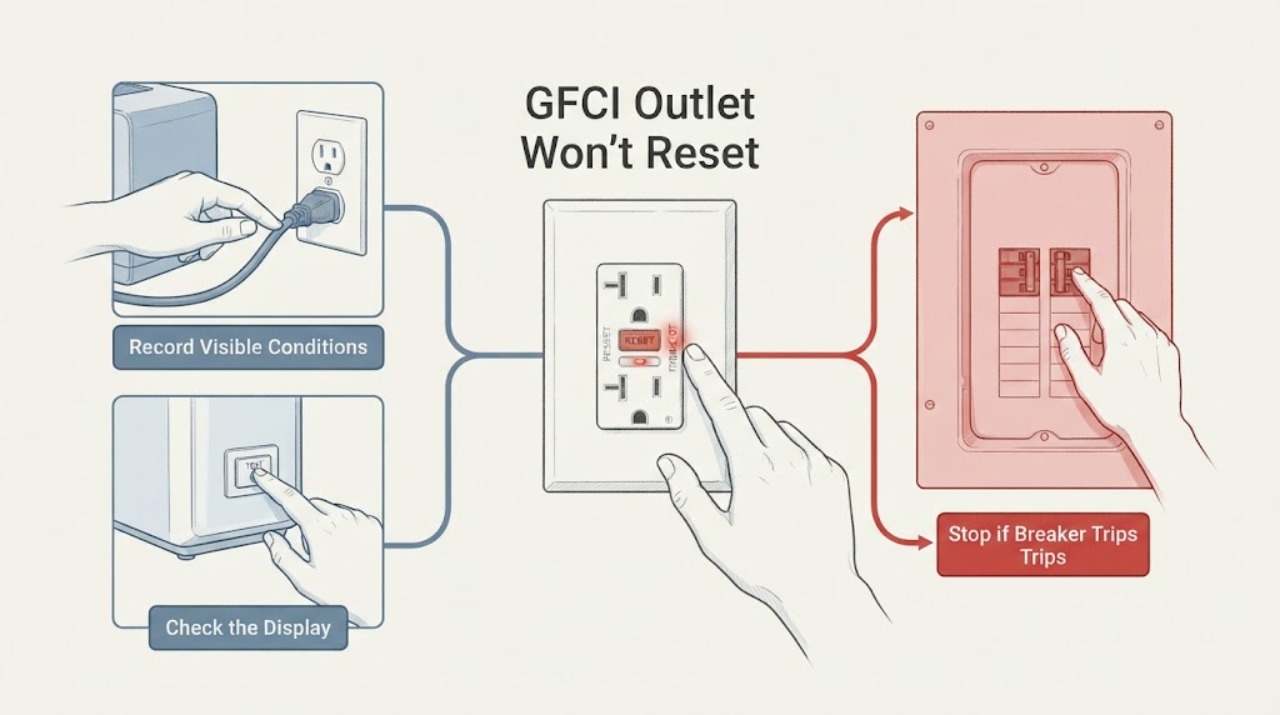
GFCI Outlet Won’t Reset: Isolate a Downstream Ground Fault Safely
A GFCI outlet that trips and will not reset is protecting against a possible ground fault, has no upstream power, is miswired, or has reached a failed or end-of-life condition. From a dry position, note the indicator state, unplug visible downstream appliances only if their plugs and the area are dry, and identify whether another GFCI or breaker upstream is off.
-
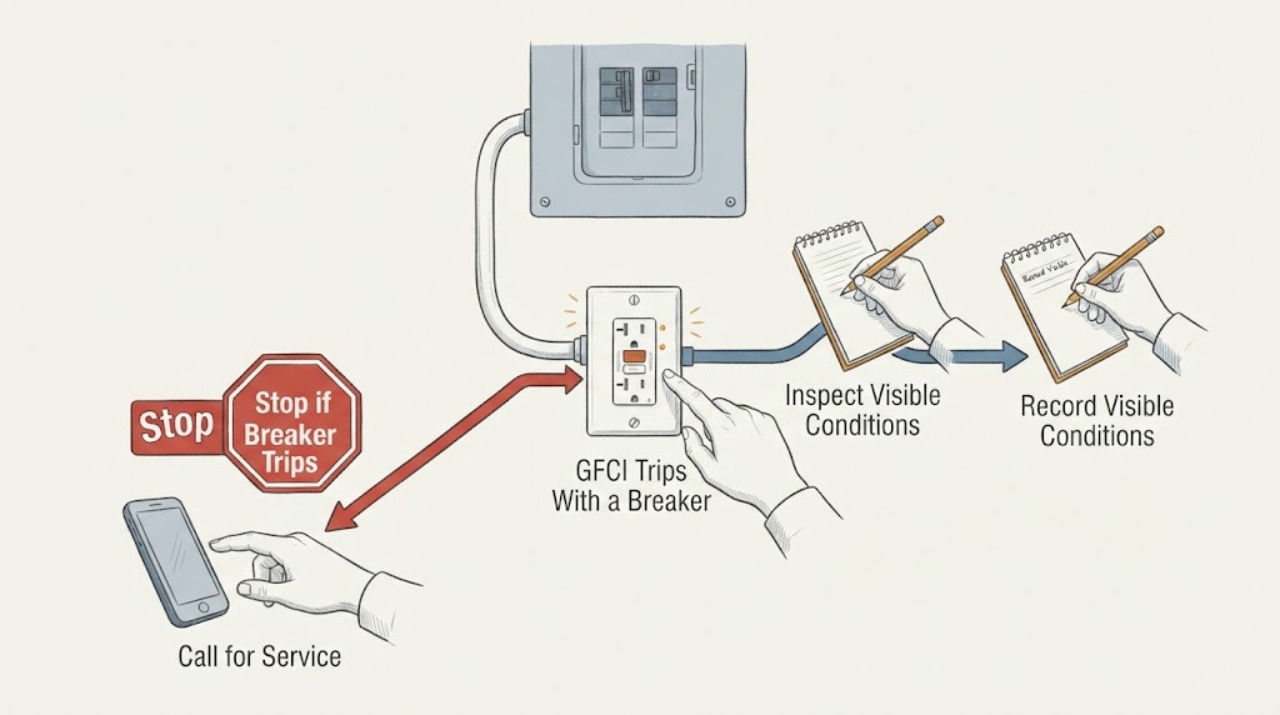
GFCI Trips With a Breaker or Outlet: What to Check
Treat a GFCI outlet that keeps tripping as a protective warning, not an inconvenience to defeat. From a dry position, note whether the trip happens with no device connected, with one appliance, or after moisture appears; inspect only the plug, cord, outlet face, nearby water, and visible breaker position.
-
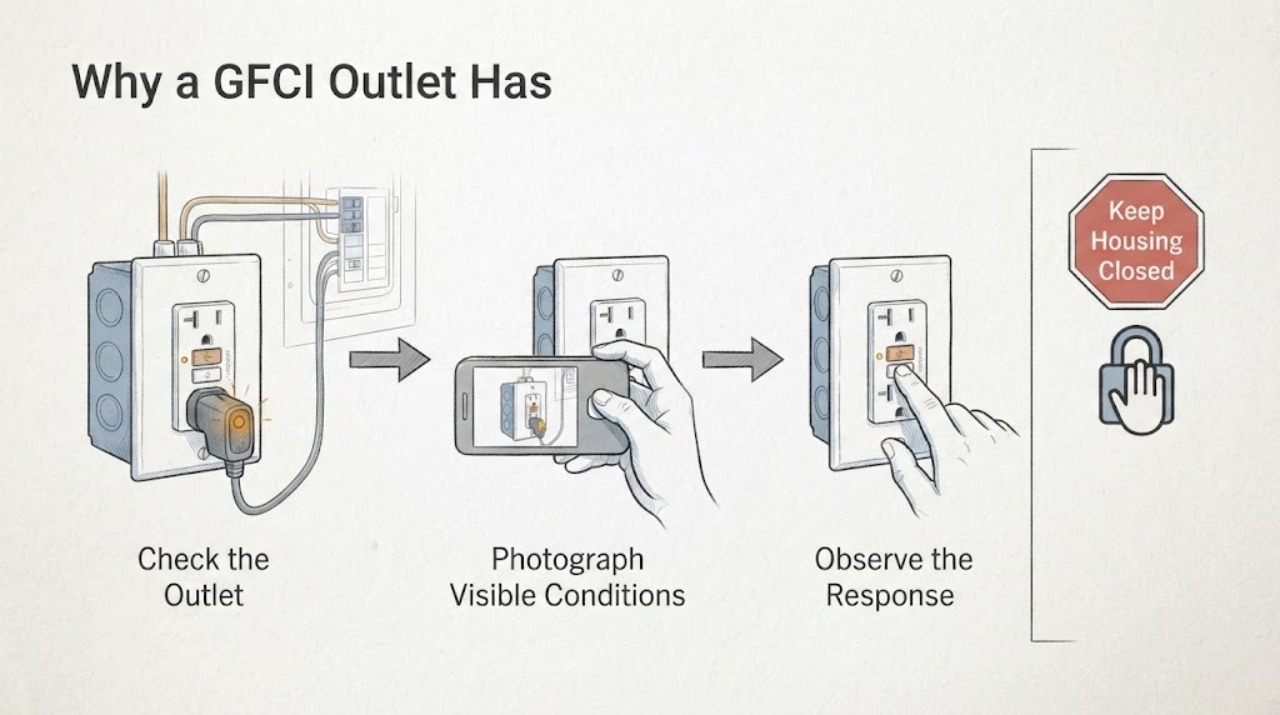
Why a GFCI Outlet Has No Power
A GFCI outlet with no power may be tripped, supplied by a tripped upstream breaker or GFCI, affected by moisture or a damaged connected device, incorrectly wired after recent work, or internally failed. Treat the loss of power as a protective response: do not remove a cover, touch wiring, measure voltage, bypass protection, or keep resetting devices.