
Electrical guides
Outlets Repair Guides
Outlet guidance for lost power, loose connections, heat, damage, and circuit checks.
Published outlets guides
Choose the guide that best matches the equipment and symptom you are seeing.
-
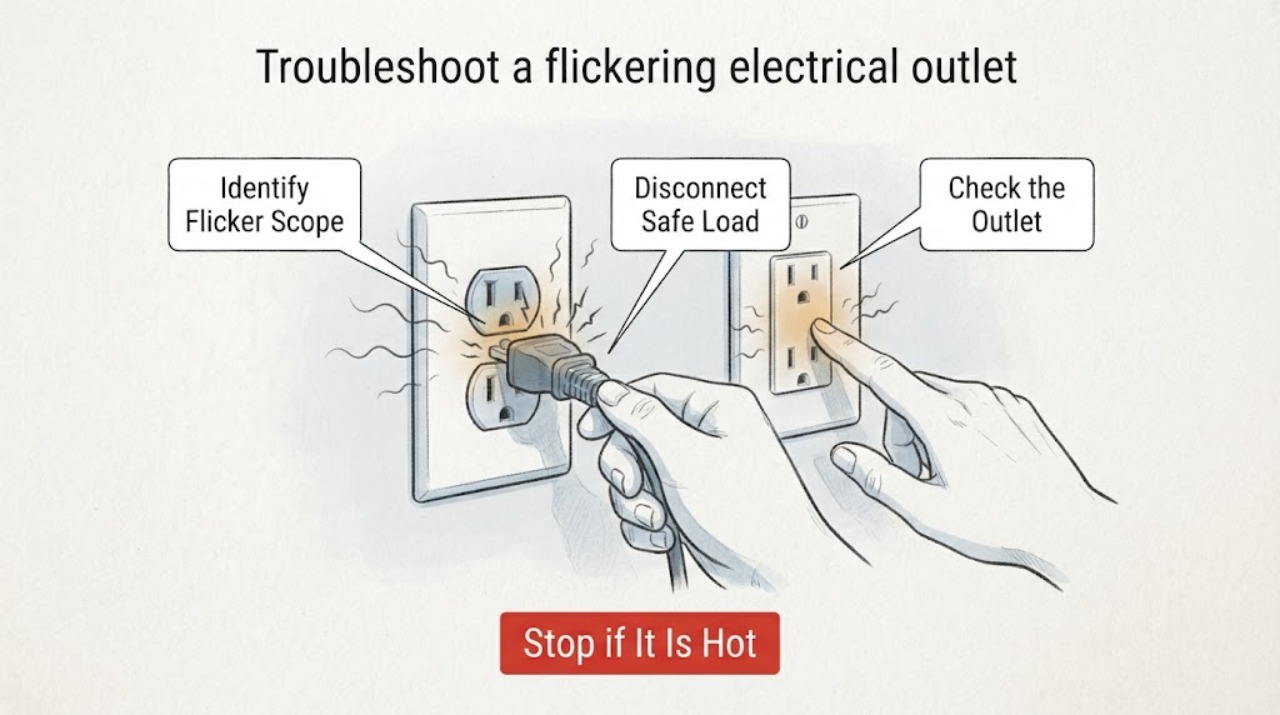
How to troubleshoot a flickering electrical outlet
A flickering outlet or a light plugged into it should be treated as an electrical warning. Turn off the connected device and unplug it only if the plug and outlet are cool, dry, intact, and easy to reach; then leave the outlet unused while you note whether the flicker follows that device or affects other points on the circuit.
-
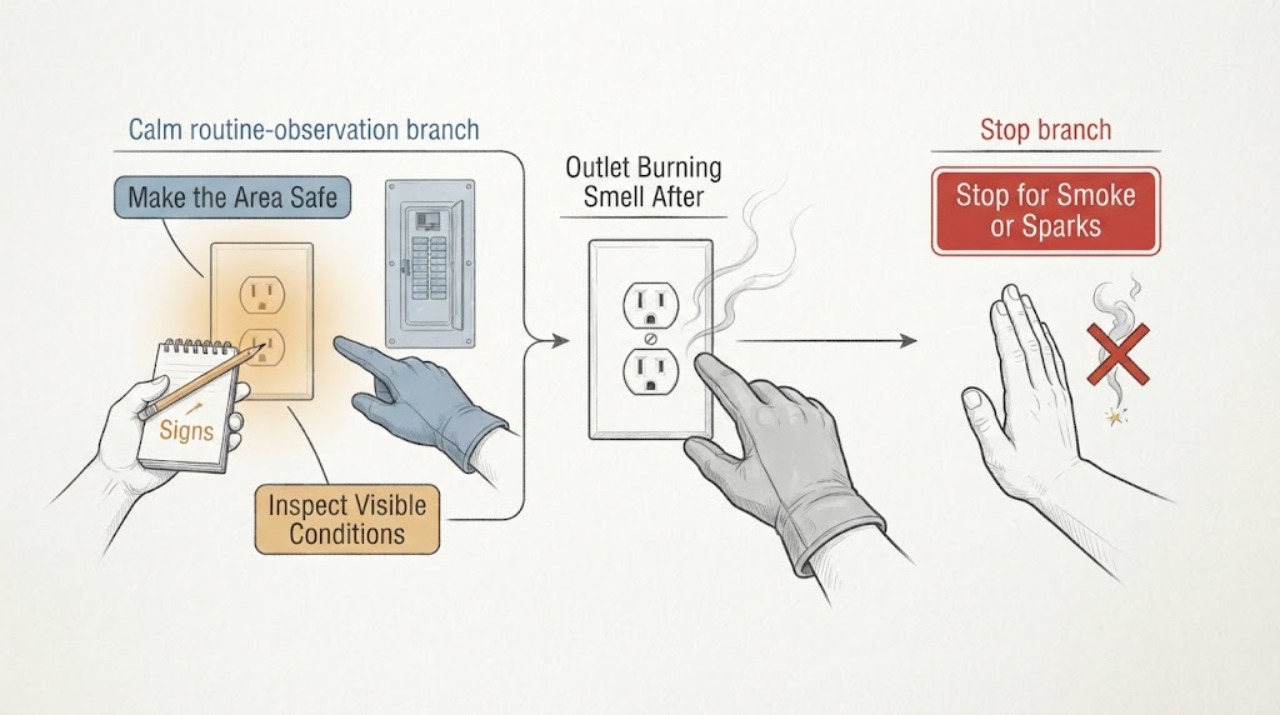
Outlet Burning Smell After an Outlet Change: Stop and Have It Inspected
A burning smell that appears after an outlet change is an immediate stop-use signal. Do not operate the new outlet or switch, plug in a test load, remove the faceplate, touch wiring, reset a breaker repeatedly, or try to correct the installation yourself.
-
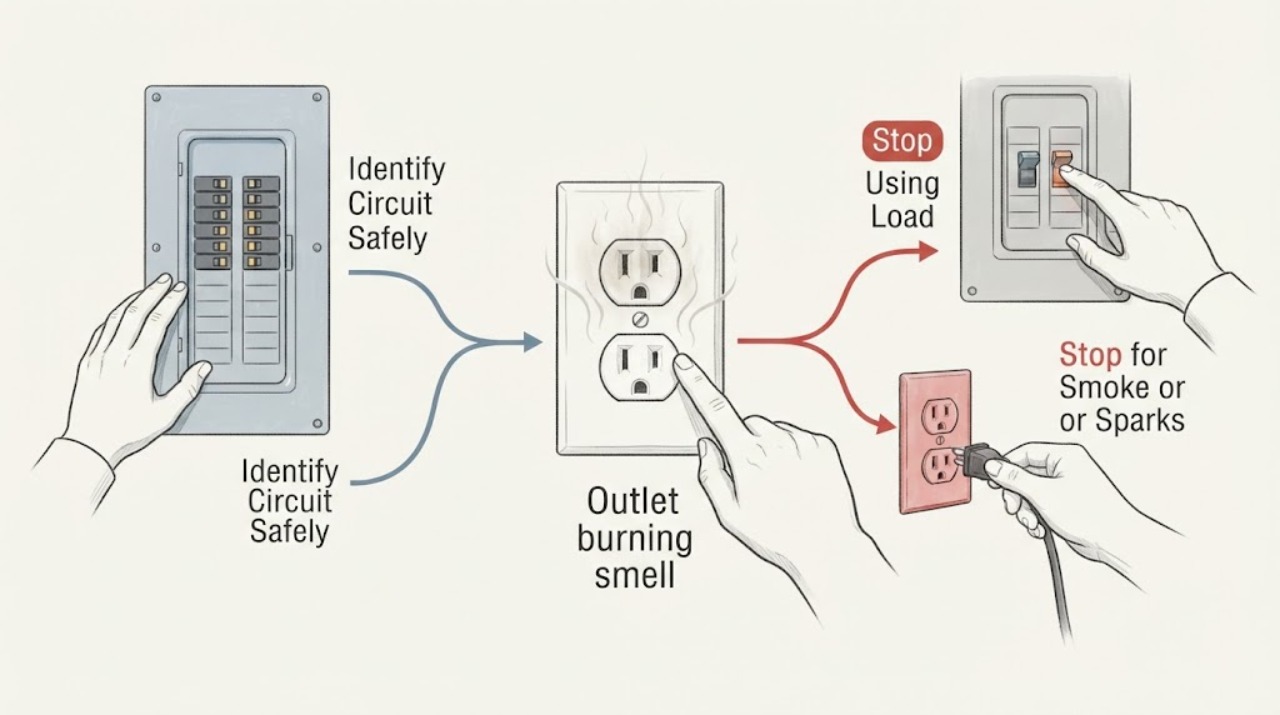
Outlet burning smell: shut it down and trace the circuit safely
Treat a burning or rubbery smell from an outlet, plug, appliance cord, wall plate, or breaker area as an electrical fire warning. Stop using the outlet and do not unplug a hot, loose, smoking, or discolored plug.
-
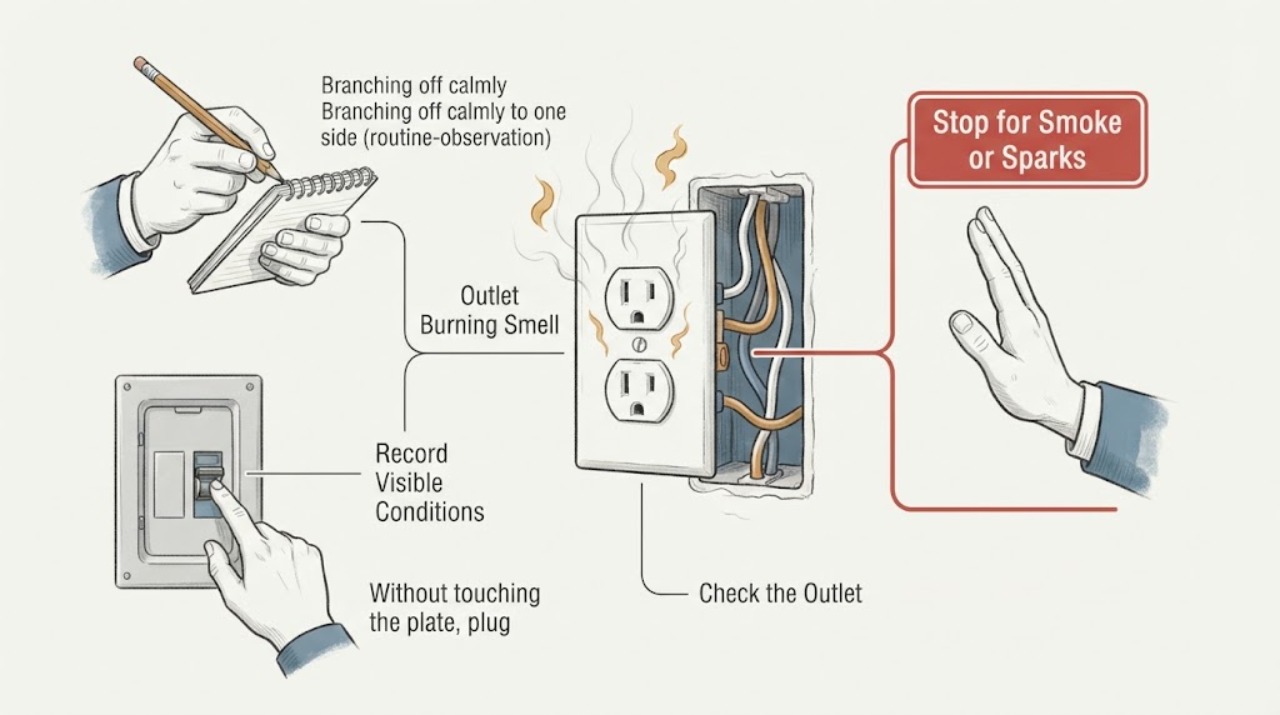
Outlet Burning Smell: Safe Steps for a Possible Wiring or Breaker Fault
A burning or hot-plastic smell at an outlet is a stop-use warning, not a symptom to reproduce. From a safe, dry position, note the outlet location, whether there is smoke, heat, discoloration, buzzing, crackling, sparking, moisture, or a tripped breaker, and whether other outlets or lights are affected.
-
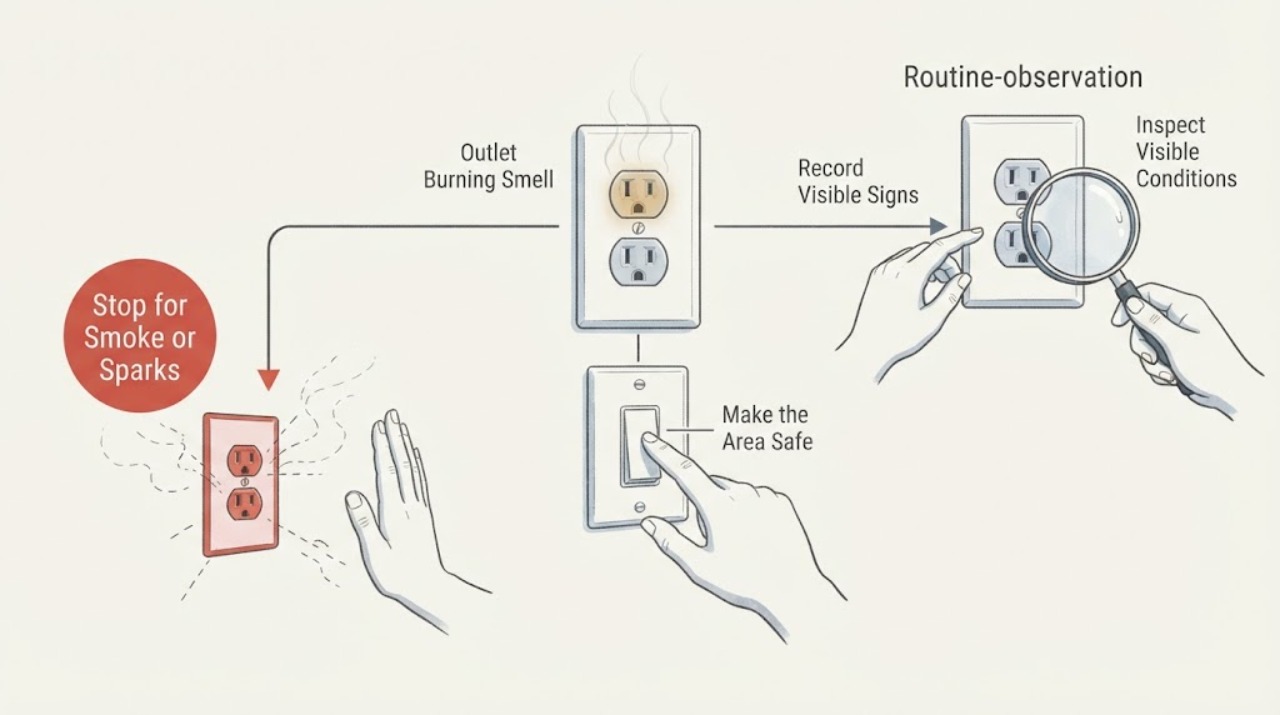
Outlet Burning Smell: Stop Using the Switch and Check the Risk Safely
A burning smell from an outlet, wall switch, plug, or nearby wall is a warning of overheating or an electrical fault, not a normal operating odor. Stop using the switch and outlet immediately, keep people away, and do not plug in another device, operate the switch to test it, reset a tripped breaker repeatedly, remove the cover, or take live measurements.
-
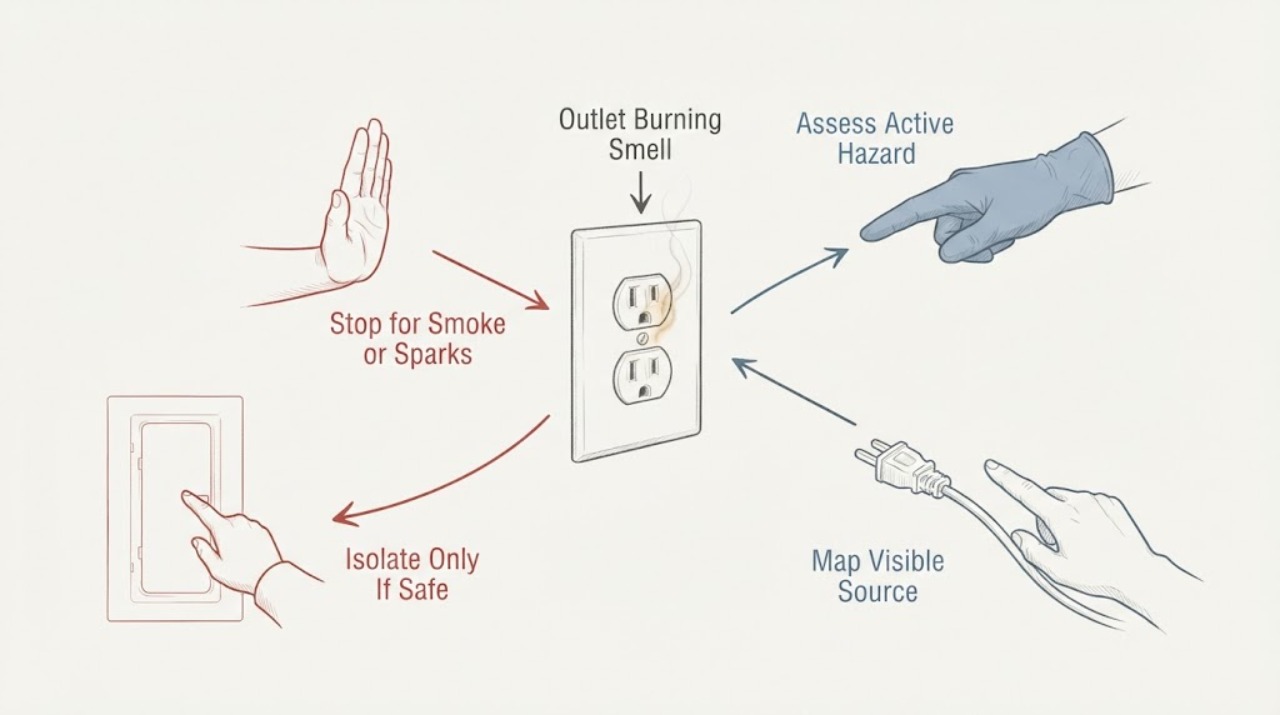
Outlet Burning Smell: Stop Using It and Set a Safe Service Boundary
A burning smell from a wall outlet, plug, or nearby wiring is a stop-use warning, not a fault to test by plugging the appliance back in. Keep people away and do not touch a hot, discolored, loose, wet, sparking, or damaged outlet, plug, cord, or faceplate.
-
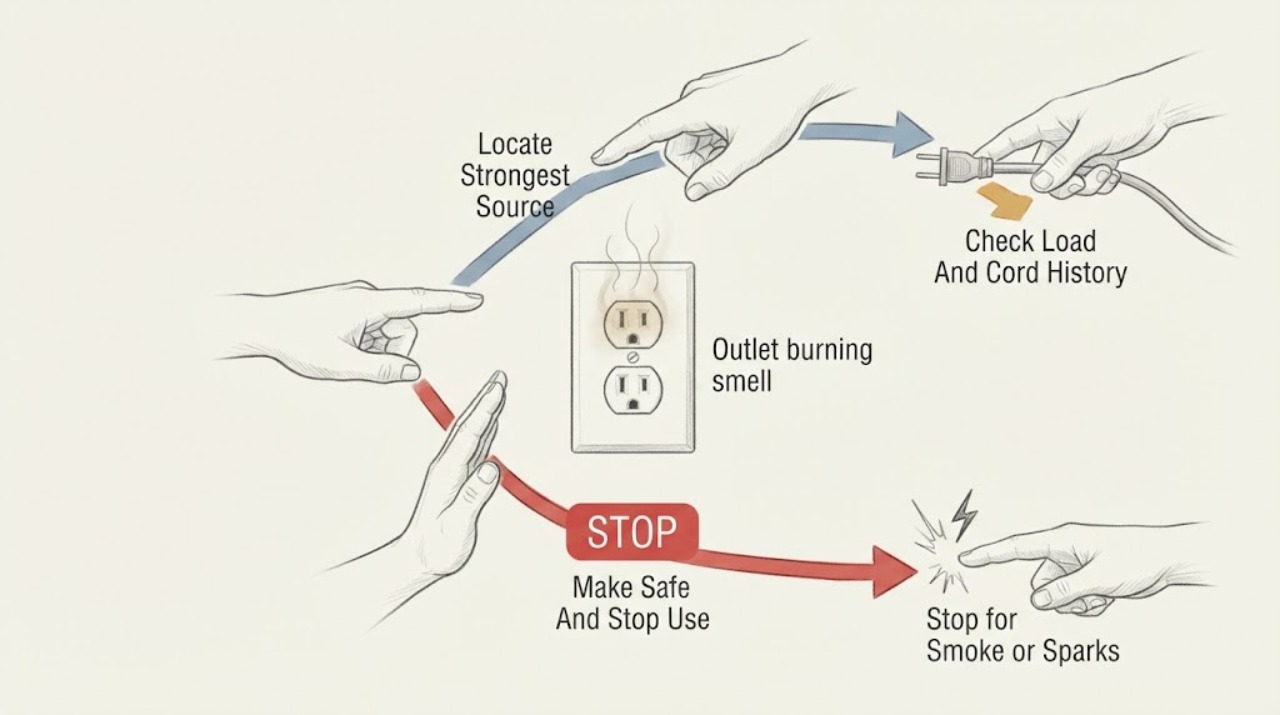
Outlet burning smell: stop using it and identify the source safely
A burning smell from an outlet is a warning of overheating, a loose or arcing connection, an overloaded circuit, or a failing plug or appliance—not a condition to test by plugging something else in. Turn off and stop using the appliance or outlet if you can do so without touching anything hot, smoking, wet, sparking, or damaged; keep people away, never use water on an electrical fire, and call emergency services if there is smoke or fire.
-
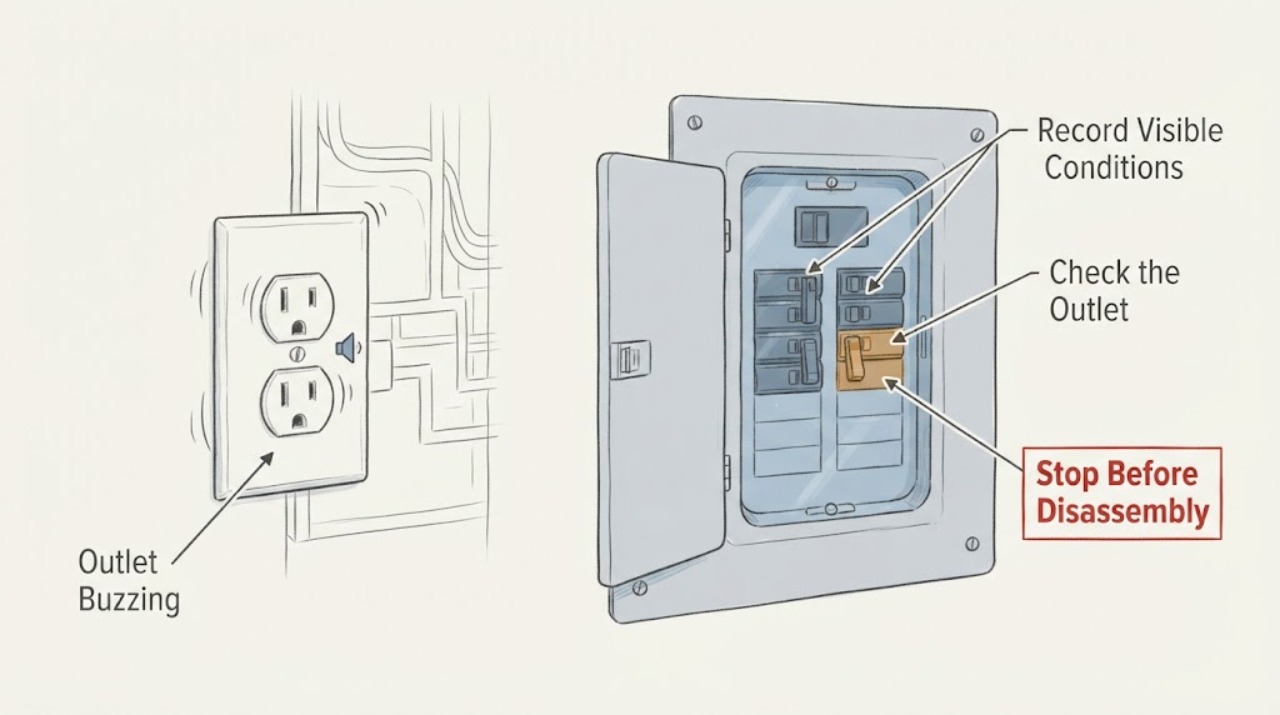
Outlet Buzzing: Treat the Circuit Breaker as a Safety Clue
A buzzing outlet is not a normal noise to test repeatedly, and the assigned circuit breaker is a possible clue rather than a confirmed source. From a safe distance, stop using the outlet, note whether the sound comes from the receptacle, a plugged-in cord or appliance, the wall, or the breaker panel, and record whether it changes with an existing load or nearby light.
-
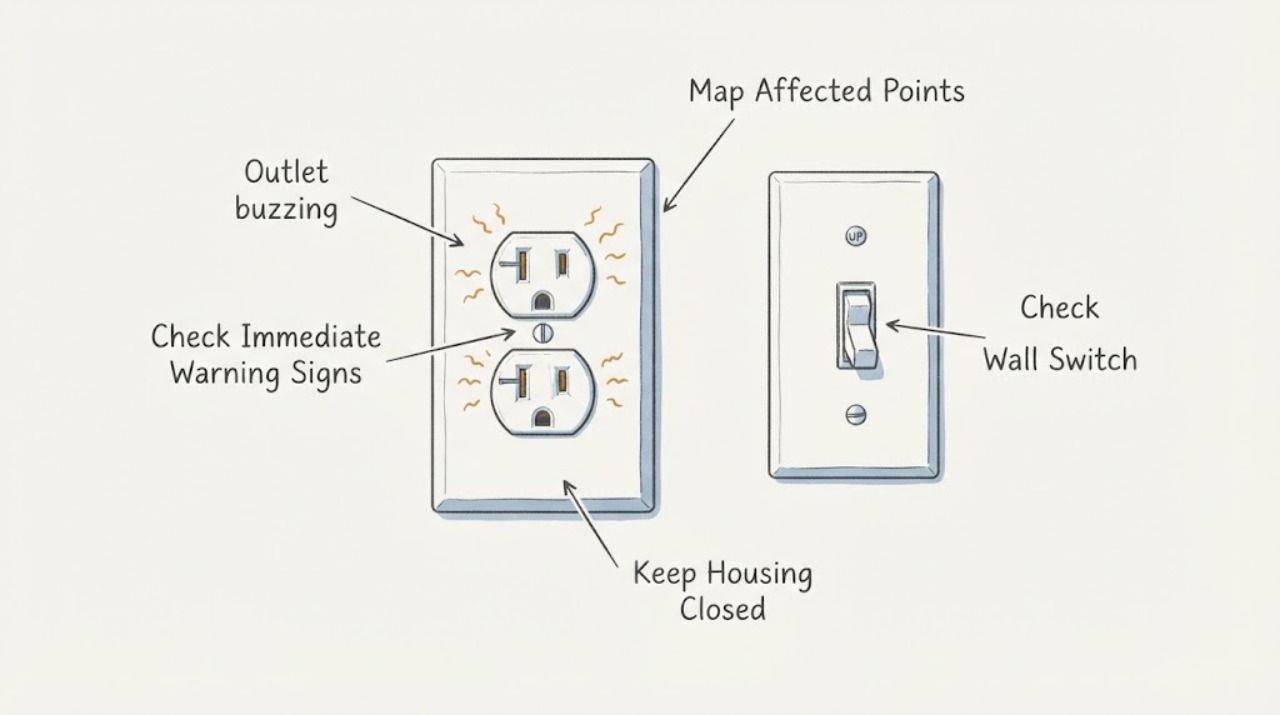
Outlet buzzing: stop use and identify the switch or circuit safely
A persistent buzz from an outlet, switch, wall plate, plug, light, or breaker area is not a normal user-repair signal. Stop using the point and connected load.
-
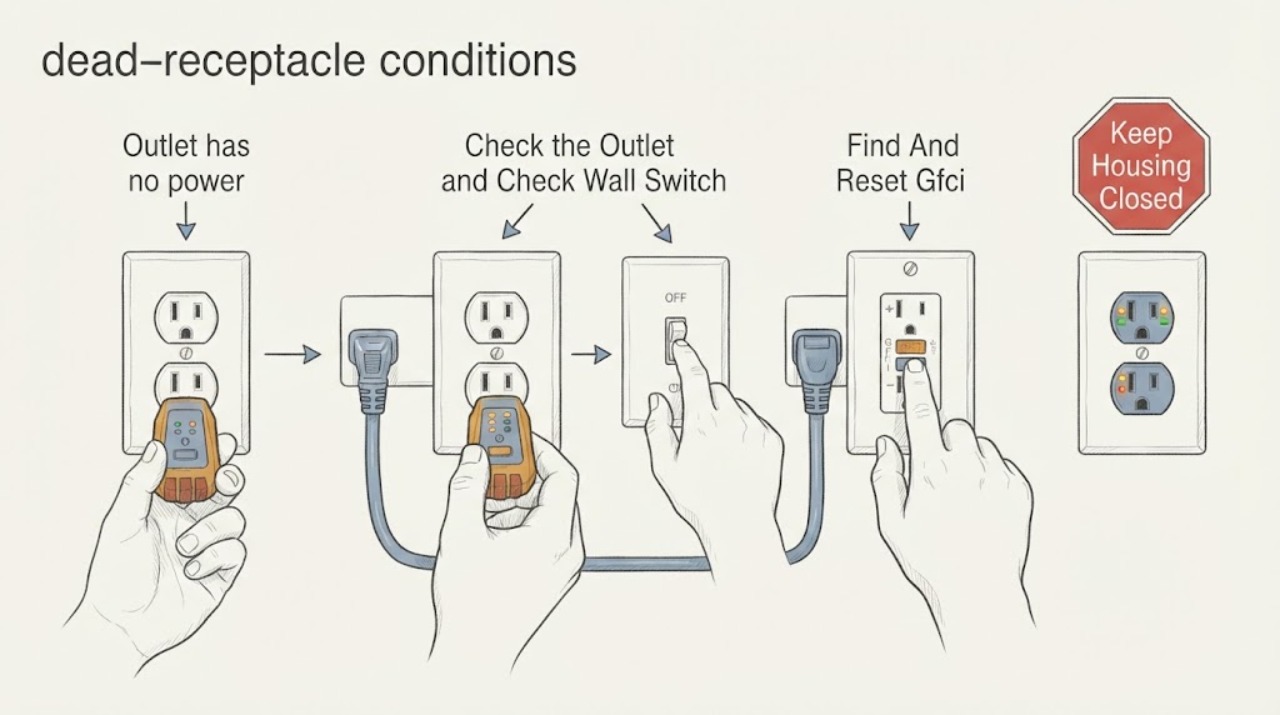
Outlet has no power: check the GFCI and circuit before calling an electrician
An outlet with no power may be a tripped GFCI, a tripped breaker, a switched or controlled receptacle, a failed upstream outlet, a loose connection, or a damaged branch circuit. First compare the dead outlet with a known-working device and nearby outlets, and note whether the room is wet or whether other outlets lost power.
-
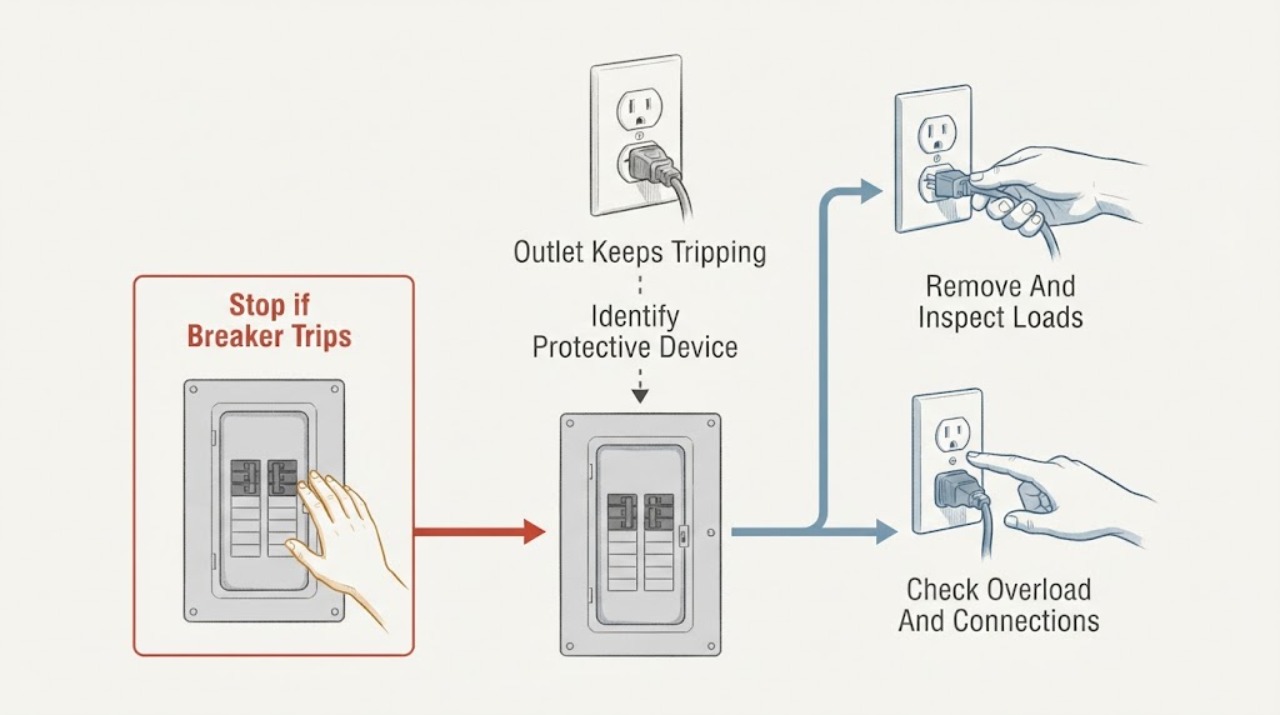
Outlet Keeps Tripping: Safe Checks Before Calling an Electrician
If an outlet keeps tripping, first determine whether its reset button is a GFCI device or whether a circuit breaker trips at the panel. Unplug every device from the affected outlet and any outlets that lost power, then check cords, plugs, moisture and obvious overloads without removing the outlet cover.
-
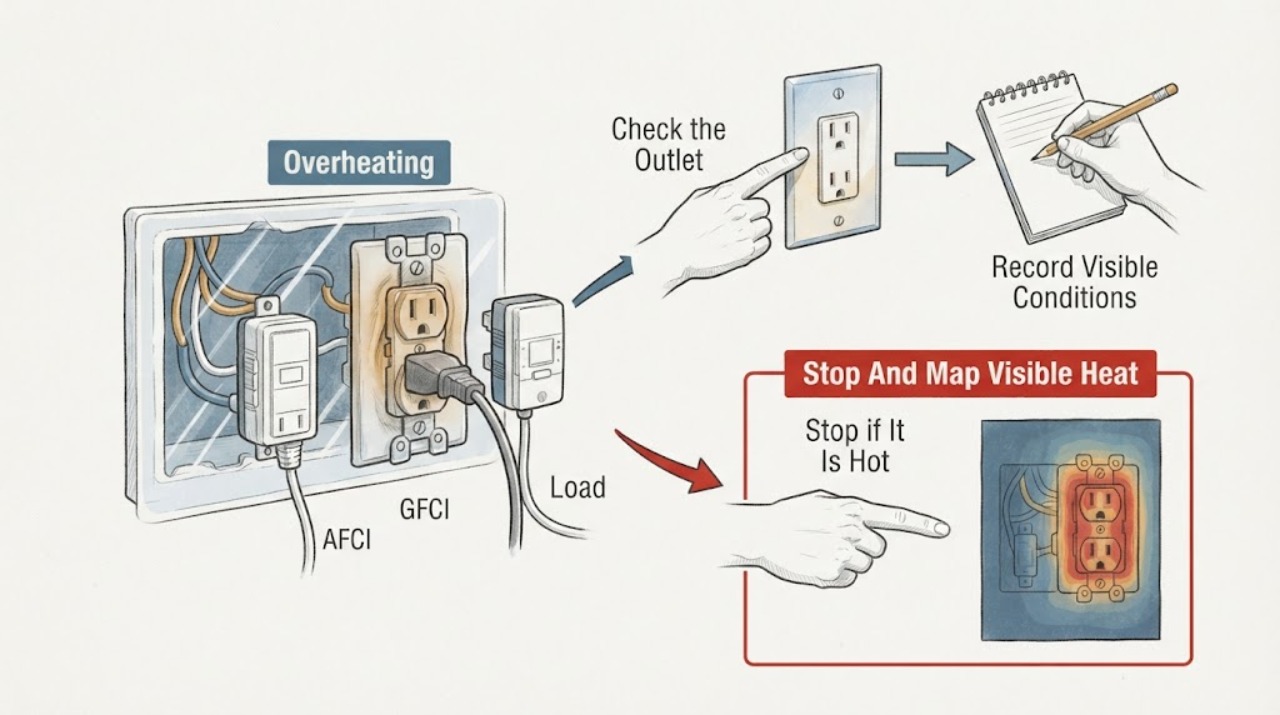
Outlet overheating: stop using it and identify the circuit hazard safely
An overheating outlet is a safety warning, not a normal appliance symptom. Stop using the receptacle immediately and keep people away if it is hot, discolored, cracked, sparking, smoking, or producing a burning or rubbery smell.
-
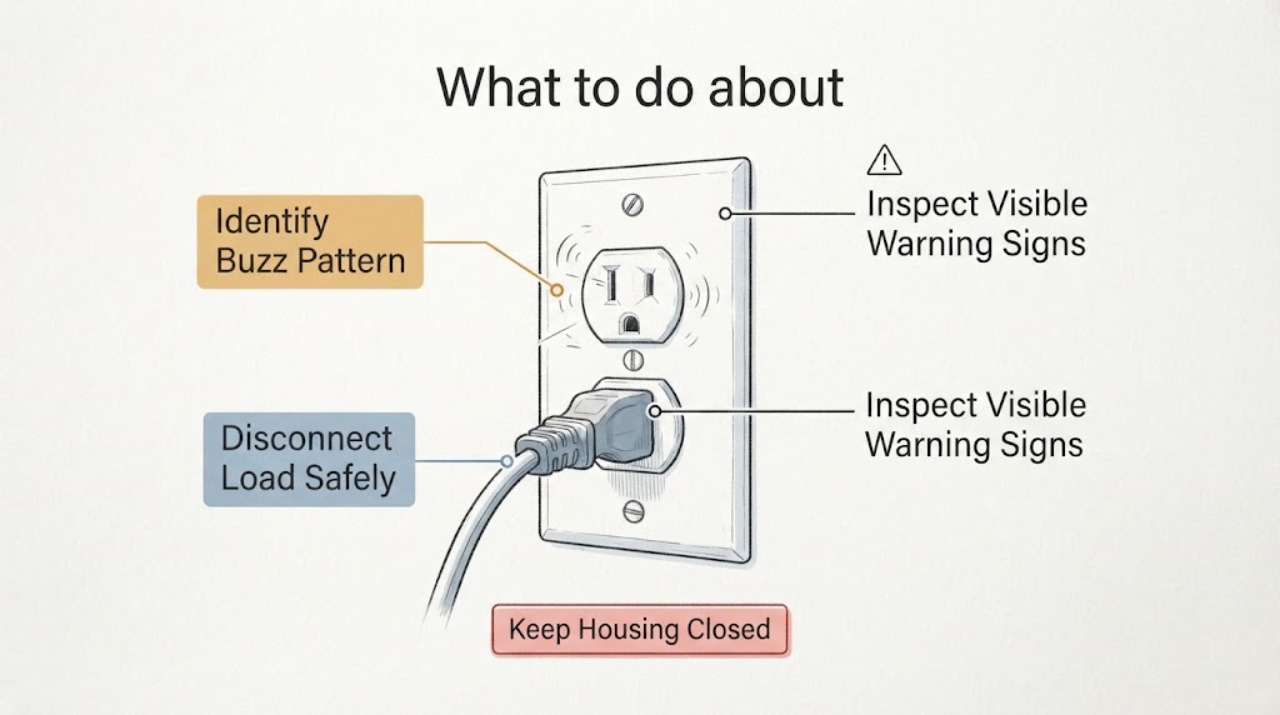
What to do about a buzzing electrical outlet
Treat a buzzing outlet as an electrical warning, not a harmless noise. Turn off and unplug the connected load if you can do so without touching heat, sparks, or exposed metal, then leave the outlet unused and arrange a qualified electrician's inspection.