
On this page
Start here
Quick answer
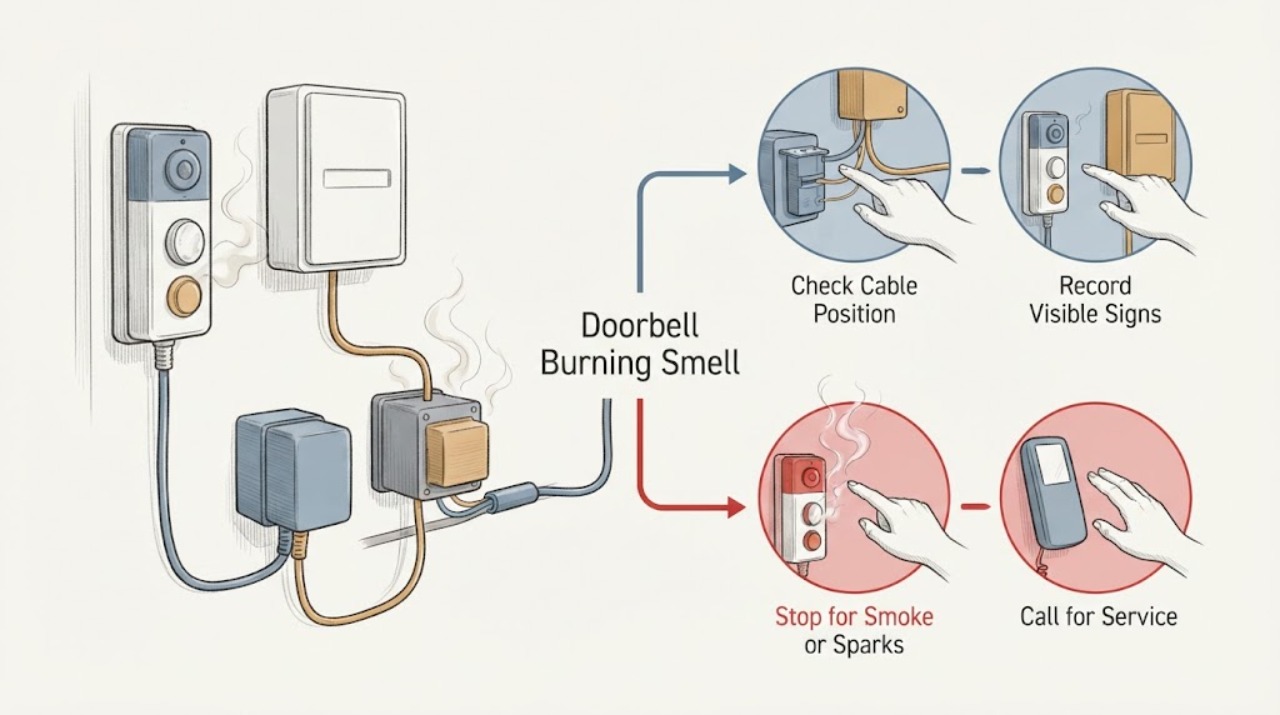
A burning smell from a doorbell is not a normal troubleshooting symptom. It can come from the outdoor button or camera, an indoor chime, a plug-in adapter or transformer, a damaged cable, moisture, or a battery-powered unit that is overheating. Stop pressing or charging the doorbell immediately. From a safe, dry position, disconnect only a cool, undamaged plug or other clearly accessible power source if doing so does not put you near smoke, sparks, heat, water, exposed conductors, or a damaged battery; otherwise move away and get urgent help. Do not remove the doorbell cover, open the chime or transformer, disconnect low-voltage wires, test voltage, or re-energize the system to see whether the smell returns. Keep it out of use and have a qualified electrician or the manufacturer's authorized service provider inspect it.
Work through in order
Diagnostic checks
Use only checks that match the exact appliance or system and its official guide.
-
Check 1
Stop using the doorbell and identify the smell's location from a safe distance without pressing the button or touching the device. Note whether it is strongest at the outdoor doorbell, an indoor chime, a plug-in adapter or transformer area, a visible cable, or a battery compartment, and whether there is smoke, heat, discoloration, or a hissing or buzzing sound.
Expected result: The odor is localized to one component, the location cannot be distinguished, or any component is smoking, hot, melted, sparking, wet, swollen, or making an abnormal sound.
Next step: For any active hazard, move away and keep others clear; call emergency responders for smoke, flame, or immediate danger. Otherwise continue only with the safe power-isolation decision and do not open any doorbell, chime, adapter, or transformer enclosure.
Why this matters
Why: A localized smell narrows what the electrician or authorized service provider should inspect, but it does not identify the failed part. Smoke, heat, melting, sparks, moisture, swelling, or abnormal noise indicates an active hazard rather than a routine doorbell fault.
-
Check 2
If the smell has stopped and there is no smoke, heat, water, sparking, or damaged battery, disconnect only a cool, dry, undamaged plug-in doorbell adapter by its plug if it is safely reachable without moving furniture into a hazard. If the system is hardwired, use only a clearly labeled, normal-access disconnect or breaker if it can be operated without opening the panel or approaching a hazard; do not pull doorbell wires.
Expected result: Power can be safely removed at an accessible plug or labeled disconnect, only a hardwired connection is present, or power isolation would require entering a hot, wet, smoky, damaged, or uncertain area.
Next step: Leave the doorbell unused after safe isolation and contact a qualified electrician or authorized service provider. If isolation is not clearly safe, do not attempt it; move away and request professional or emergency assistance.
Why this matters
Why: Removing safely accessible power prevents continued operation while the fault is assessed, but it does not prove the source is safe or de-energized. A hardwired doorbell can have a separate transformer and household-wiring supply, and an unsafe or uncertain disconnect is itself a reason to stop.
-
Check 3
From outside the assembly, inspect only visible surfaces and cable sections for melted plastic, brown or black marks, cracked insulation, a loose or displaced cover, corrosion, water entry, a damaged plug, or a swollen battery. Use a flashlight without removing a plate, opening a chime, lifting a camera from its mount, or handling a suspect part.
Expected result: Visible heat damage, water, corrosion, damaged insulation, a loose cover, or battery swelling is present; or the visible exterior looks normal.
Next step: Keep power disconnected where it was safely isolated and photograph or describe the visible evidence from a safe position. Arrange professional inspection; do not tape, glue, bend, clean, dry with heat, or replace a cover as a repair.
Why this matters
Why: Visible damage makes continued use and self-repair unsafe and gives the professional a useful location clue. A normal exterior does not clear concealed wiring, the transformer, chime electronics, or the device battery because overheating can occur inside a closed assembly.
-
Check 4
Determine the doorbell arrangement without opening anything: note whether it is battery-only, wired to an existing chime, or powered by an indoor adapter, and whether the smell began after installation, charging, rain, a power interruption, or a change to the chime or transformer. Use the product label or app only; do not check wire voltage or compare terminals.
Expected result: The odor followed recent wiring or charging, wet weather, a new accessory, a power event, or no identifiable change.
Next step: Record the arrangement, timing, and last known normal operation, then keep the system out of service. Do not reconnect a new adapter, substitute a transformer, or test the doorbell to reproduce the smell.
Why this matters
Why: The timing helps a professional focus on installation, moisture, charging, accessory compatibility, or an internal failure, but it cannot establish a safe cause without electrical and device testing. No identifiable trigger is not reassurance when a burning smell occurred.
-
Check 5
After safe isolation, monitor from a distance for recurrence without restoring power: look for renewed smoke, growing discoloration, leaking or swelling from a battery unit, heat spreading to the wall, or a continuing odor. Do not touch the device to see whether it is warm and do not charge or reset it.
Expected result: The smell or heat continues after isolation, a battery swells or leaks, smoke or flame appears, or all signs stop once power is safely removed.
Next step: For smoke, flame, active sparking, a leaking or damaged battery, or worsening heat, leave the area and contact emergency responders. Otherwise keep the system isolated and arrange a qualified electrician or authorized service inspection before any use.
Why this matters
Why: A continuing sign after isolation can indicate stored battery energy, a hot concealed component, or a nearby electrical source and needs urgent professional assessment. Signs that stop after isolation still indicate a fault; they do not justify reconnecting the doorbell.
Use your observations
Decision map
Find the observation that best matches what you see, then follow the next safe action.
-
PATH 01Next step
What you see
Smoke, flame, active sparks, rapidly increasing heat, or a strong odor is present
Do this next
Do not touch, press, unplug, spray, or open the doorbell system. Move people away and contact emergency responders for immediate danger; arrange qualified electrical service after the area is safe.
-
PATH 02Next step
What you see
The smell is at a cool, dry, undamaged plug-in adapter and the plug is safely reachable
Do this next
Stop using the doorbell and disconnect the adapter by its plug without handling a hot or damaged cord. Keep it disconnected and have an electrician or authorized service provider inspect the adapter, outlet, and doorbell before replacement or reuse.
-
PATH 03Next step
What you see
The doorbell is hardwired, the smell is near the chime, transformer, wall, or visible cable, or safe isolation is uncertain
Do this next
Do not remove the doorbell, chime, or transformer cover and do not test the wiring. If a clearly labeled, dry, normal-access disconnect can be operated without approaching the hazard, leave it off; otherwise stay clear and call a qualified electrician.
-
PATH 04Next step
What you see
A battery-powered doorbell is swollen, leaking, unusually hot, damaged, or smells burnt while charging
Do this next
Stop charging and do not press, puncture, remove, cool with water, or transport the battery. Keep people away and contact the manufacturer or an authorized service provider; use emergency help if there is smoke, fire, or immediate danger.
-
PATH 05Next step
What you see
The odor stops after safe isolation and no visible exterior damage is present
Do this next
Keep the doorbell out of service. A hidden adapter, transformer, chime, wiring, moisture, or device fault can remain; arrange professional inspection and do not reconnect it merely to confirm the smell.
Helpful context
Understand the symptom
Treat the smell as an overheating warning
A doorbell may be battery powered, connected to an existing low-voltage doorbell circuit, or supplied by an indoor plug-in adapter. Those arrangements have different parts, but a burning or melted-plastic smell can indicate overheating, a damaged cable, moisture, a failing device, or a problem at the transformer or chime. A low-voltage label does not make a hot or damaged assembly safe to open, and the supply side can still involve household wiring.
Make the area safe before looking closer
Stop pressing the button, using the chime, charging the doorbell, or repeatedly reconnecting power. Observe from a safe standing position with the covers in place. If there is smoke, flame, active sparking, rapidly increasing heat, a swollen or damaged battery, or water near electrical equipment, leave the area and contact emergency responders; do not touch or spray the equipment.
Only after diagnosis
Potential parts
- doorbell transformer
Consider this only after a qualified electrician confirms that the transformer is the failed source and that the existing doorbell, chime, wiring, and supply are otherwise suitable.
Confirm the installed doorbell and chime requirements, transformer type, enclosure, circuit, and local electrical rules; never substitute a transformer based only on a burning smell or appearance. - doorbell power adapter
Consider this only if an electrician or authorized service provider confirms that a cool, isolated plug-in adapter has failed and the outlet and doorbell are safe.
Match the exact doorbell model and approved adapter requirements, connector, output, weather location, and safety listing; do not reconnect an overheated or wet adapter.
When checks do not resolve it
Need a professional?
Use professional service for every recurring or unexplained burning smell, any hardwired system, visible heat or water damage, a failed adapter or chime, a swollen or damaged battery, or work involving the transformer, panel, outlet, wiring, or device enclosure.
Common questions
FAQ
Is a burning smell from a doorbell normal?
No. Stop pressing, charging, or using it. The smell may come from the outdoor device, chime, transformer, adapter, wiring, moisture, or battery. Observe the source from a safe distance, isolate only a cool and safely reachable power source, and arrange professional inspection.
Can I unplug a doorbell adapter that smells burnt?
Only if the adapter and cord are cool, dry, undamaged, and the plug is safely reachable without approaching smoke, sparks, water, or heat. Otherwise move away and get urgent help. Do not handle a hot or damaged adapter and do not reconnect it after unplugging.
Can I remove the doorbell to inspect the wires?
No. Do not remove the doorbell, chime, transformer, or cover, disconnect low-voltage wires, or test voltage. A wired doorbell can still connect back to household supply through its transformer, and an overheated battery or device can be damaged by disassembly. Use a qualified electrician or authorized service provider.
What if the burning smell stops after I disconnect power?
Keep the doorbell out of service. The fault may be inside the adapter, transformer, chime, device, battery, or concealed wiring, and restoring power could reproduce the hazard. Document where the smell was strongest and have the system inspected before reuse.
Read the exact guide
Official sources
- Safety & Regulatory Guide for Google Nest Doorbell (battery)Google · The opened Google safety guide is model-specific, but its warnings support the general boundary that a doorbell or battery that is damaged, wet, overheated, or not working should not be disassembled or self-repaired.
- Nest camera or doorbell gets hotGoogle Home and Nest Help · The opened Google support page explains that some warmth can be normal but excessive heat can reduce features or shut down a doorbell, and that ventilation and intended use matter.
- CPSC Guide to Home Wiring HazardsU.S. Consumer Product Safety Commission · The opened CPSC guide states that hot or odorous plugs, smoke, sparks, damaged insulation, and nonworking outlets should not be ignored and may require qualified repair or electrical inspection.
- Electrical Fire SafetyU.S. Fire Administration · The opened USFA fire-safety handout covers damaged cords, avoiding overloaded outlets, and having all home electrical work performed by a qualified electrician.
Community feedback
Share a repair observation
Share a plain-text repair observation. Accepted observations are published automatically; this page may take a moment to update.