
On this page
Start here
Quick answer
A burning smell from a dryer that has been unused for two years is not a reason to keep restarting it to see whether the odor clears. Turn the dryer off and isolate power from a safe position; if it is a gas dryer and you smell gas, leave the building and contact emergency services. Once the appliance is cool and disconnected, inspect only the lint screen, visible lint around the door and rear connection, the vent hose for crushing or kinks, and the exterior exhaust hood for lint, debris or an animal nest. In an apartment, have the landlord or a qualified vent-cleaning/service professional inspect the full exhaust route and dryer before reuse. Smoke, an electrical or plastic smell, scorched wiring, a hot outlet, or a continuing burning odor requires service rather than a no-heat or empty-drum test.
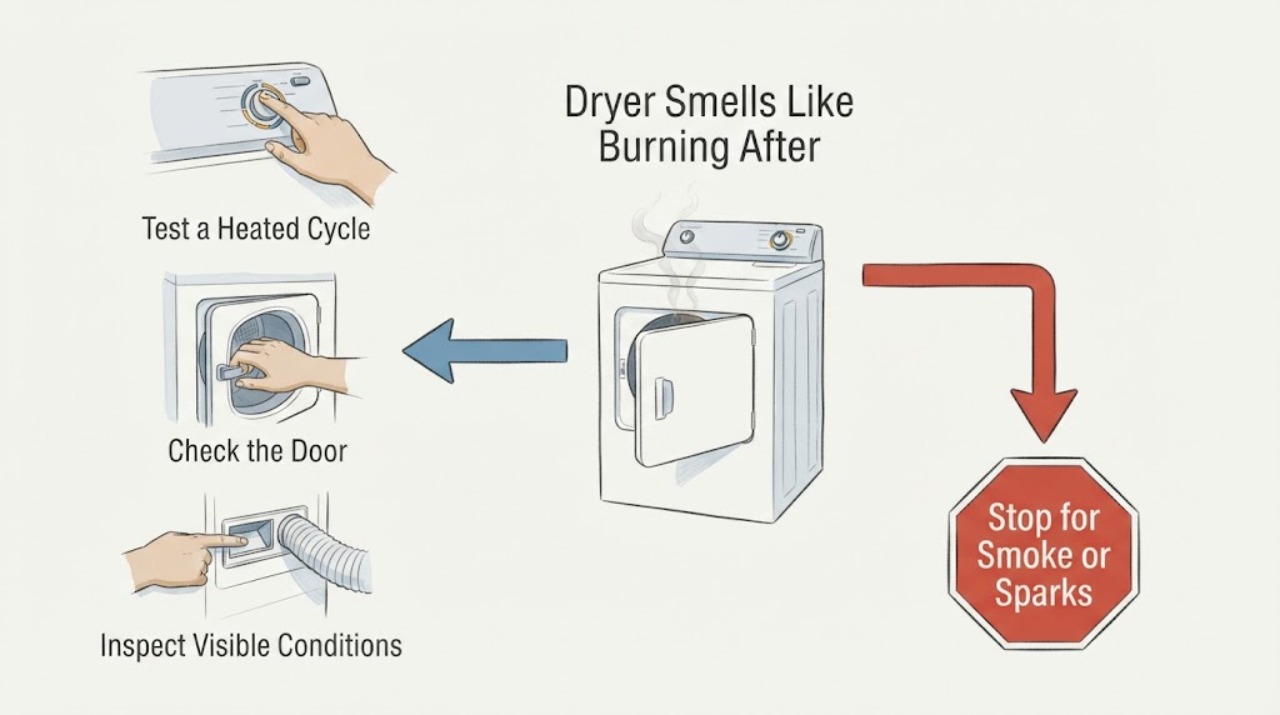
Work through in order
Diagnostic checks
Use only checks that match the exact appliance or system and its official guide.
-
Check 1
Stop the dryer immediately and leave it off. From a safe, dry position, switch it off and disconnect power or turn off the dedicated breaker if needed; do not restart it empty, on air-only, or on a heated cycle to identify the smell. If it is a gas dryer and gas is suspected, do not operate switches or appliances.
Expected result: There is visible smoke, a gas odor, a strong electrical or plastic smell, a hot outlet or cord, or only an unexplained burning odor.
Next step: For gas odor or active smoke, leave the apartment/building and contact emergency or building response from outside. Otherwise keep the dryer disconnected and contact apartment maintenance or qualified appliance service.
Why this matters
Why: Samsung treats smoke, an electrical smell and a burning smell that continues as service conditions. Gas odor requires leaving the building and contacting emergency services, while an unexplained burning smell remains unsafe to investigate by repeated operation.
-
Check 2
After the dryer is cool and disconnected, remove and inspect the lint screen and look only at visible lint or residue around the screen opening, door rim and the accessible rear vent connection. Do not remove panels, reach into the heater or motor area, or use a blower that could move lint into the cabinet.
Expected result: The screen or visible openings contain heavy lint, burned residue, melted material or an unknown object, or they look clear.
Next step: Leave the dryer off. Photograph the visible condition for maintenance; have a qualified person determine whether any internal cleaning or repair is needed rather than opening the cabinet yourself.
Why this matters
Why: Lint and debris can contribute to odors and restricted airflow, but a clear lint screen does not prove that the dryer’s internal air path or electrical parts are safe. Burned or melted material is a stop-and-service signal.
-
Check 3
Inspect the visible vent hose behind the dryer without pulling the appliance through a tight apartment installation. Look for a crushed or sharply kinked section, loose connection or lint escaping around the joint.
Expected result: The hose is crushed, kinked, disconnected, visibly packed with lint, or appears intact.
Next step: Do not straighten, replace or disconnect a shared or inaccessible apartment duct without authorization. Give the observation to the landlord or a vent-cleaning professional and keep the dryer out of service until the route is assessed.
Why this matters
Why: Whirlpool identifies crushed or kinked ductwork, lint and other obstructions as restricted-airflow causes; poor airflow can keep heat inside the dryer and create a fire hazard. An intact short section does not prove the full building vent is clear.
-
Check 4
From outside the apartment, if the exhaust hood is safely visible, check whether its flap is blocked by lint, debris, vegetation or an animal nest. Do not enter a roof, crawl space or shared duct, and do not run the dryer to test airflow.
Expected result: The exterior hood is blocked, has nesting/debris, the flap cannot be seen safely, or it appears clear.
Next step: Report any obstruction to building maintenance or a vent professional. If the hood is inaccessible or the smell persists despite a clear exterior, arrange service before any further use.
Why this matters
Why: Whirlpool identifies the exterior hood and animal or debris obstruction as part of the vent path. A clear hood does not rule out a blockage between the dryer and the hood or an internal dryer fault.
-
Check 5
Give maintenance or the technician the dryer’s model and serial information, the two-year idle period, the apartment installation details, the smell description and any photos. Ask for the full exhaust route and the dryer’s electrical/heating area to be evaluated by a qualified professional; do not request a part based on smell alone.
Expected result: The smell is gone with the dryer disconnected, or visible smoke, scorch marks, heat damage or the odor remains unexplained.
Next step: Keep the dryer out of service until the responsible professional clears both the dryer and vent path. Do not accept repeated trial runs as the diagnosis.
Why this matters
Why: A symptom disappearing while power is off does not identify a safe cause. Continuing odor, smoke or heat damage needs diagnosis, and apartment venting may be outside the tenant’s control.
Use your observations
Decision map
Find the observation that best matches what you see, then follow the next safe action.
-
PATH 01Next step
What you see
There is gas odor or visible smoke, or the dryer is hot around the cord, outlet or cabinet.
Do this next
Leave the building for gas odor or active smoke and contact emergency/building response from outside. For electrical heat or smoke without gas, keep clear, isolate power only from a safe position and request urgent qualified service.
Why this path and its safety boundary
Why it matters: This is an immediate fire, gas or electrical hazard, not an odor to burn off.
-
PATH 02Next step
What you see
The lint screen, rear connection or exterior hood has heavy lint, debris, a kinked hose or an animal nest.
Do this next
Keep the dryer off and have apartment maintenance or a vent-cleaning professional clear and inspect the complete route. Do not restart it to compare the smell.
Why this path and its safety boundary
Why it matters: The vent path has a documented airflow and fire-risk concern, but the observation does not prove that it caused every burning smell or that the dryer itself is sound.
-
PATH 03Next step
What you see
The external vent path looks clear, but the burning, electrical or plastic odor continues or returns whenever power is applied.
Do this next
Leave the dryer disconnected and arrange qualified appliance service. Do not remove panels, bridge a safety device or replace a thermostat, heater, motor or belt based only on odor.
Why this path and its safety boundary
Why it matters: An internal electrical, heating or mechanical fault remains possible, and the official guidance directs service for a continuing burning or electrical smell.
-
PATH 04Next step
What you see
The smell was only from a surrounding room source or laundry item, and the dryer itself has no odor after it remains disconnected.
Do this next
Have the apartment maintenance contact inspect the dryer and vent before use; keep potentially affected laundry separate until the source is identified.
Why this path and its safety boundary
Why it matters: Samsung notes that some odors can come from the washer, water or laundry rather than the dryer, but this cannot be confirmed by a powered trial when a burning smell has already occurred.
Helpful context
Understand the symptom
Do not burn off this smell by running the dryer
Manufacturer guidance treats a continuing burning odor, visible smoke and an electrical smell as service conditions. Samsung mentions a short empty run only for a new dryer burning off shipping oil; that exception does not establish that an older dryer that sat unused for two years is safe to test repeatedly. The move into an apartment also means the exhaust route or exterior hood may be shared or inaccessible, so the tenant should not modify the duct or move the appliance without permission.
What can be checked without opening the dryer
With the dryer off, cool and disconnected, the useful external checks are the lint screen, visible lint around the door and rear connection, the short vent connection for crushing or kinks, and the outside hood for lint, debris or nesting. These checks can reveal airflow and fire-risk conditions, but a clear visible vent does not rule out an internal electrical or heating fault.
When checks do not resolve it
Need a professional?
Keep the dryer out of service and call apartment maintenance or qualified appliance/vent service for any continuing or unexplained burning smell, visible smoke, gas odor, electrical or plastic smell, scorching, hot cord/outlet, restricted vent, or inaccessible shared duct. Do not run the dryer empty, on no heat, or with panels removed to test the cause.
Common questions
FAQ
Can a dryer smell like burning after sitting unused for two years?
It may have accumulated lint, debris or a vent restriction, but the manufacturer’s limited first-use oil-residue explanation is for a new dryer. An older dryer that smells burning should remain off while the dryer and full apartment exhaust route are inspected.
Should I run the dryer on air-only to see if the smell goes away?
No. Do not use a no-heat or empty-drum run as a test after a burning smell. Isolate power safely and arrange maintenance or qualified service; a clear external vent does not rule out an internal fault.
What external dryer vent checks are safe?
When the dryer is off and cool, inspect the accessible lint screen, rear hose for crushing or kinks, and the exterior hood for lint, debris or nesting. Do not open the dryer or enter a shared duct, and ask apartment maintenance or a vent professional to handle inaccessible sections.
What if I smell gas from the dryer?
Do not operate switches or appliances. Leave the building and contact emergency services from outside.
Read the exact guide
Official sources
- Dryer Vent may be Blocked or RestrictedWhirlpool Product Help · Supports external observation of lint, debris, crushed or kinked ductwork, airflow symptoms and exterior hood blockage. It does not authorize opening an unmodelled dryer or a tenant’s shared apartment duct.
- Samsung dryer smells or smokesSamsung Support US · Supports the stop-use and service boundary for smoke, gas odor, continuing burning smell and electrical smell, and identifies lint trap and exhaust vent as external inspection points. The source does not establish a specific fault for an unmodelled dryer that sat unused.
Community feedback
Share a repair observation
Share a plain-text repair observation. Accepted observations are published automatically; this page may take a moment to update.