
On this page
Start here
Quick answer
If you smell gas around a GE dryer, stop the dryer, extinguish open flames only if it is safe, avoid operating electrical switches, ventilate or leave the area as appropriate, and contact the gas supplier or emergency service from a safe location. Do not restart the dryer to see whether the smell clears. GE notes that a slight gas odor can result from an incorrect flame size or color, and a yellow flame requires repair; that does not make a persistent or strong odor safe. Do not open the burner or gas connection. After the gas hazard has been cleared, a qualified technician can inspect the flame, gas path, ignition, and vent. Also stop for smoke, burning or melting odor, sparking, unusual heat, or lint buildup. [Source: ge-dryer-odor; ge-dryer-venting; ge-gas-dryer-manual; ge-dryer-troubleshooting]
Work through in order
Diagnostic checks
Use only checks that match the exact appliance or system and its official guide.
-
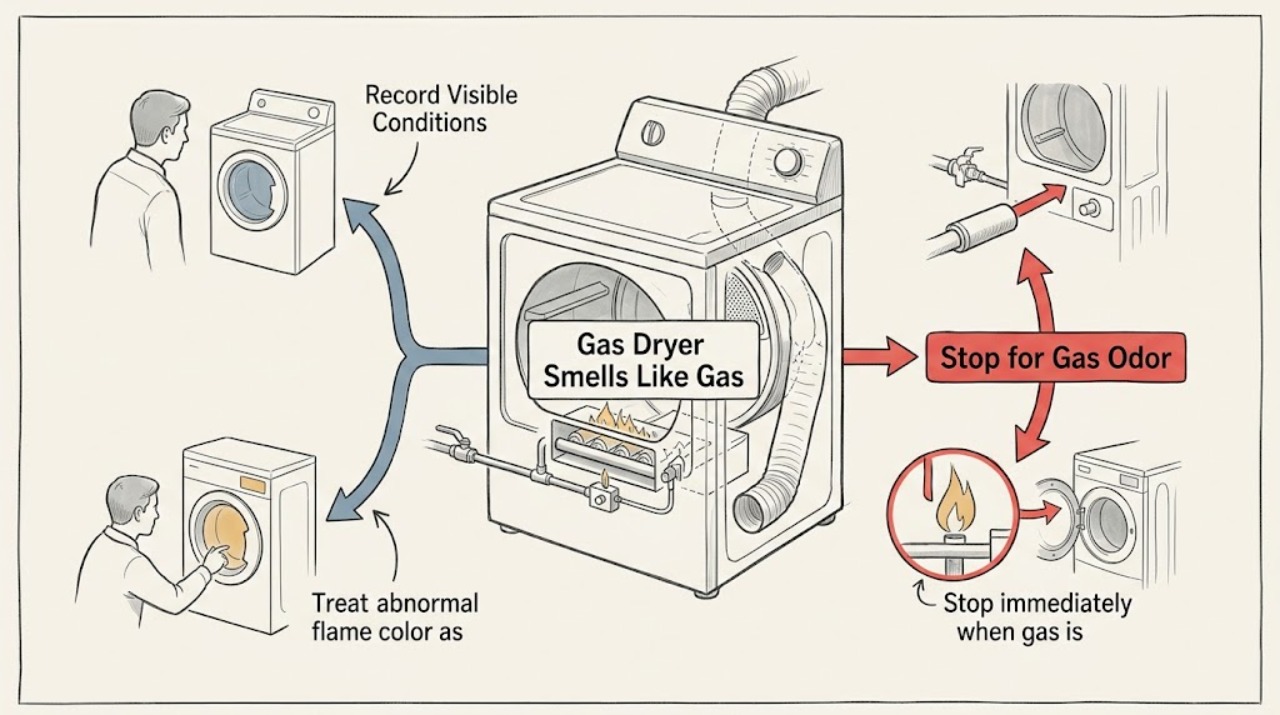
Stop immediately when gas is suspected
Stop the dryer and keep it off. Do not turn electrical switches on or off, create a flame, or use a phone in the suspected-gas area; if safe, ventilate without creating a spark, leave the area, and contact the gas supplier or emergency service from a safe location.
Expected result: The gas odor is strong or spreading, the room is not safely ventilated, an open flame or spark is present, anyone feels unwell, or the odor is faint and has cleared after the dryer is off.
Next step: Do not re-enter or restart until the appropriate gas or emergency professional has cleared the situation. Preserve the dryer model, odor timing, and any visible flame symptom for service.
Why this matters
Why: Natural gas can ignite, and a gas appliance can also create combustion-fume risk. A smell that clears does not prove the dryer is safe; a persistent or strong odor requires gas-service assessment before any restart.
-
Record when and where the odor occurs
Only after the gas hazard has been cleared, record whether the smell appeared at startup, while the burner was cycling, after the dryer stopped, or when the vent discharged. Note whether it smelled like gas, burning lint, oil or dust, melting plastic, or an electrical odor; do not run another cycle to reproduce it.
Expected result: The odor is unmistakably gas, appears only on first use, follows a hot or long cycle, comes from the vent, or remains after the dryer is off.
Next step: Give the exact timing and odor description to the technician. Keep the dryer out of service for any gas, burning, electrical, or lingering odor rather than selecting a different cycle.
Why this matters
Why: GE distinguishes initial oily or dusty odor from gas odor and points to flame appearance for a gas-odor diagnosis. Burning lint or restricted venting can create heat and smell, while a lingering gas odor needs immediate gas-service escalation.
-
Treat abnormal flame color as a repair symptom
Do not remove panels or reach toward the burner. If a flame is already visible through the normal observation path described by the exact model manual, note only its appearance from a safe distance; never adjust flame size, gas pressure, burner parts, or the gas shutoff yourself.
Expected result: The flame appears yellow, unusually large, unstable, or otherwise abnormal, or no flame can be safely observed.
Next step: Turn the dryer off, do not relight it, and arrange qualified gas-appliance repair. If the odor is present outside the burner cycle or any flame escapes its normal area, use the gas-emergency branch immediately.
Why this matters
Why: GE states that incorrect flame size and color can cause a slight gas odor and specifically directs repair for a yellow flame. The appearance alone cannot identify whether the cause is burner, gas supply, conversion, or combustion air.
-
Check accessible vent and lint conditions after clearance
Only after the gas concern has been cleared and the dryer is cool, inspect the accessible exhaust hose for a kink, collapse, or disconnection and check the exterior wall cap for an obstruction. Clean the lint filter and accessible vent path according to the model instructions; do not disconnect the vent and run a gas dryer as a test.
Expected result: The vent is restricted, kinked, disconnected, or lint-loaded; airflow at the wall cap is weak; the lint filter is obstructed; or the accessible vent path is clear.
Next step: Correct only an accessible lint or routing issue using the model guide and arrange vent cleaning when the duct is obstructed. If odor, heat, or gas symptoms return, stop immediately and request service.
Why this matters
Why: GE says poor airflow can trap heat and humidity, and lint buildup can produce burning or musty odor. GE also warns not to operate a gas dryer without its vent because combustion fumes can enter the room.
-
Remove flammable or contaminated laundry risks
Keep the dryer off and check whether the load or nearby materials contain gasoline, solvents, degreasers, oils, or other flammable vapors, or whether lint and combustible items have accumulated around or beneath the dryer. Do not place contaminated items in the dryer and do not store flammable liquids near it.
Expected result: The load or nearby area contains a flammable substance, lint accumulation, melted material, or no obvious combustible source.
Next step: Keep contaminated laundry and flammable materials away until fully handled according to their safety instructions. For melted material, smoke, or any fire symptom, leave the area and use emergency service; do not restart the dryer.
Why this matters
Why: GE's dryer safety guidance warns that flammable vapors and solvent-contaminated items can ignite, and that lint must be kept from accumulating in or around the dryer. A gas odor combined with a combustible source increases the fire risk.
-
Arrange qualified gas-dryer diagnosis
Give the qualified technician the exact GE model and serial details, gas or odor timing, flame observation, vent and lint findings, recent installation or gas-conversion history, and any smoke, heat, or electrical symptom. Keep the dryer off until the gas path, burner, ignition, vent, and surrounding area have been assessed.
Expected result: The odor returns after clearance, a yellow or unstable flame is observed, venting is restricted, the gas supply or connection is uncertain, or no cause is visible.
Next step: Use GE-authorized appliance service or a qualified gas professional. Do not substitute an electric-dryer test, alter the gas connection, or operate without the exhaust vent.
Why this matters
Why: A gas smell cannot safely be reduced to a single replaceable part. GE's support guidance routes flame concerns and unresolved dryer symptoms to repair, while its safety guidance reserves appliance servicing and gas work for qualified people.
Use your observations
Decision map
Find the observation that best matches what you see, then follow the next safe action.
-
PATH 01Safety boundary
What you see
A gas odor is strong, persists after the dryer is off, or is accompanied by a flame, spark, or anyone feeling unwell.
Do this next
Do not operate electrical switches or the dryer. Leave the area and contact gas or emergency service from a safe location; do not return or restart until cleared.
Why this path and its safety boundary
Safety stop: Keep the dryer off and document the odor and timing without running another cycle.
-
PATH 02Safety boundary
What you see
The dryer is new and the smell is oily or dusty rather than gas-like, with no flame or safety symptom.
Do this next
After confirming the vent is installed and the area is safe, follow the model manual and GE guidance for the initial-use odor; stop if the odor is gas-like, burning, electrical, or persistent.
Why this path and its safety boundary
Safety stop: Use the gas-odor and qualified-service branch.
-
PATH 03Safety boundary
What you see
A visible flame is yellow, unusually large, unstable, or linked to the odor.
Do this next
Turn the dryer off, do not adjust the burner, and schedule qualified gas-appliance repair.
Why this path and its safety boundary
Safety stop: Continue with vent, lint, load, and service documentation; a normal-looking flame does not clear a persistent odor.
-
PATH 04Safety boundary
What you see
Lint or venting is restricted, kinked, collapsed, or disconnected.
Do this next
Keep the dryer off until the accessible restriction is corrected and the full vent path is safe; never run a gas dryer without its vent.
Why this path and its safety boundary
Safety stop: Do not use the clear vent as proof that the gas odor is safe; arrange qualified diagnosis if the odor returns.
-
PATH 05Safety boundary
What you see
Smoke, burning or melting odor, unusual heat, sparking, a damaged cord, or a fire symptom is present.
Do this next
Stop immediately, leave the area if needed, and use the appropriate emergency or electrical service channel. Do not restart the dryer.
Why this path and its safety boundary
Safety stop: Keep the dryer off until gas odor and flame concerns have been cleared by qualified service.
Helpful context
Understand the symptom
A gas odor is a safety symptom, not an invitation to compare burners or repeat a cycle. A brief odor during an ignition event and a smell that remains in the room are both reasons to stop and identify the source from a safe location. Only qualified professionals should inspect a gas dryer burner, valve, regulator, or supply connection.
Do not confuse a new-dryer oily or dusty break-in smell with natural gas, burning lint, or melting plastic. If the odor is uncertain, treat it as gas until the area has been made safe. Never run a gas dryer without its vent: GE warns that combustion fumes, including carbon monoxide, can enter the room.
The owner checks below are limited to stopping the dryer, safe observation, model information, and accessible lint or vent observations after the gas risk is cleared. Do not remove panels, test gas pressure, adjust the flame, disconnect the gas line, or bypass an ignition or door safety.
Safety boundary
Stop conditions
- Stop immediately for gas odor, smoke, flame outside its normal path, sparking, burning or melting odor, unusual heat, a damaged cord, or anyone feeling unwell.
- Do not operate electrical switches in a suspected-gas area, relight the burner, restart the dryer to reproduce the smell, or use an open flame to locate a leak.
- Do not remove panels, test gas pressure, adjust flame size, open gas connections, bypass ignition or door safety, or run a gas dryer without its exhaust vent.
- Do not dry laundry contaminated with gasoline, solvents, degreasers, oils, or other flammable substances, and do not store flammable vapors or liquids near the dryer.
When checks do not resolve it
Need a professional?
Use gas or emergency service immediately for a strong or persistent gas odor, uncontrolled flame, smoke, or anyone feeling unwell. Otherwise request GE-authorized appliance service or a qualified gas professional for any yellow or unstable flame, recurring odor, uncertain gas connection, restricted vent with heat or odor, or odor that remains after the dryer is off.
Have this ready
- Exact GE model and serial details
- Whether the odor is gas-like, oily or dusty, burning lint, melting plastic, or electrical
- When it appears: startup, burner cycling, after the dryer stops, or at the exhaust
- Visible flame color or instability, without opening the dryer
- Vent, lint-filter, wall-cap, and airflow observations
- Recent installation, gas conversion, cleaning, spill, contaminated load, smoke, heat, sparking, or cord damage
Common questions
FAQ
What should I do if my GE gas dryer smells like gas?
Stop the dryer, avoid electrical switches and open flames, leave the area as appropriate, and contact gas or emergency service from a safe location. Do not restart the dryer until the situation is cleared.
Can a yellow flame cause a gas smell in a GE dryer?
GE says incorrect flame size or color can cause a slight gas odor and directs repair for a yellow flame. Turn the dryer off and arrange qualified gas-appliance service; do not adjust the burner yourself.
Can a blocked vent cause a GE gas dryer odor?
A restricted vent can trap heat and lint and create a burning or musty smell. Check only accessible vent and lint conditions after gas risk is cleared, and never operate a gas dryer without its vent. A gas-like odor still requires gas-service assessment.
Read the exact guide
Official sources
- Dryer - OdorGE Appliances · GE gas and electric dryers; manufacturer guidance for initial-use oily or burning odor, gas odor, flame color, and repair
- Dryer - Things To Check For A Venting IssueGE Appliances · GE dryers, including gas dryers; manufacturer guidance for vent restrictions, lint, airflow, heat buildup, and the prohibition on operating a gas dryer without its vent
- GE Gas Dryer Use and Care BookGE Appliances · GE gas dryer user manual; gas-smell emergency instructions, electrical-switch warning, flammable-vapor safety, venting, lint, and service guidance
- GE Appliances Dryer Troubleshooting TipsGE Appliances · GE gas and electric dryer troubleshooting; manufacturer guidance for gas service, heat, venting, lint, noise, and service escalation
Community feedback
Share a repair observation
Share a plain-text repair observation. Accepted observations are published automatically; this page may take a moment to update.