
On this page
Start here
Quick answer
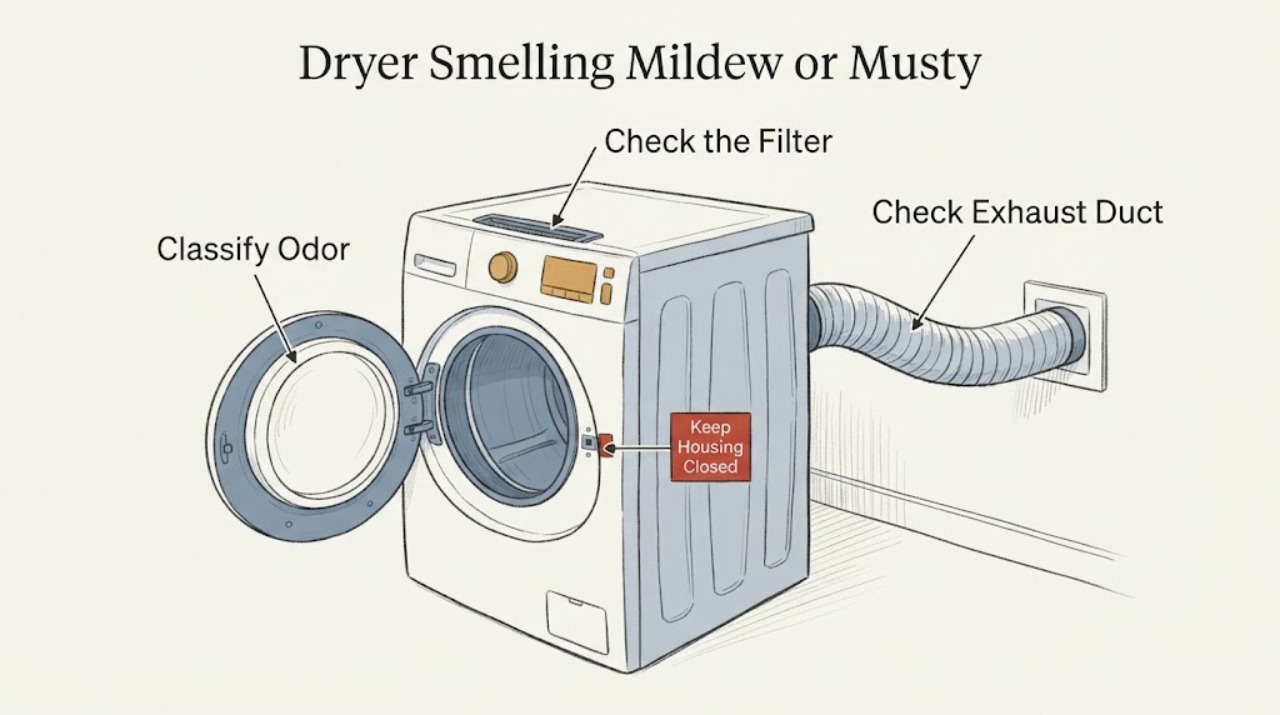
A musty dryer smell is not proof of mold inside the machine. GE says lint buildup in the venting can produce a burning or musty scent, and it recommends inspecting and cleaning the exhaust duct at least yearly because restricted airflow and accumulated lint create a fire hazard. First classify the odor: a gas smell, burning/electrical odor or smoke is an immediate stop-use condition; turn the dryer off, leave the area for a gas concern and obtain qualified help. For a cool, safe dryer, clean the lint filter and inspect the visible exhaust path and outside hood without opening the cabinet. GE's duct guidance says to disconnect the electrical supply before duct maintenance. If the smell persists, returns with heat, or the vent cannot be safely cleaned, keep the dryer off and arrange qualified service; do not spray cleaners into the drum or guess an internal part.
Before you begin
Safety first
- Limit owner checks to odor classification, a cool accessible lint filter and the visible exhaust path after electrical power is isolated. Do not open the dryer cabinet, reach past sharp edges, spray chemicals into the drum or vent, adjust gas components, run a dryer with restricted airflow or perform energized tests.
Work through in order
Diagnostic checks
Use only checks that match the exact appliance or system and its official guide.
-
Check 1
Without running the dryer again, record whether the odor is musty, oily, burning, electrical or gas-like, and whether it occurs only during heat or is present while the dryer is idle.
Expected result: The smell is musty, burning/electrical, gas-like, or unclear.
Next step: For gas, smoke, burning or electrical odor, stop use and obtain qualified help. For a musty odor with no hazard sign, continue only after the dryer is cool and power is safely isolated.
Why this matters
Why: GE describes several distinct odor patterns; lint-related mustiness is not the same safety condition as gas, smoke or electrical odor.
-
Check 2
With the dryer cool and disconnected from power, clean the accessible lint filter using the exact model's care instructions and look for excessive lint around the filter opening without reaching past sharp edges.
Expected result: The filter or opening contains heavy lint, or the accessible area is clean.
Next step: Continue to the visible exhaust-path check. Keep the dryer off if lint is excessive, hot, scorched or inaccessible.
Why this matters
Why: Lint accumulation can contribute to musty or burning odor and restricted airflow, but a clean filter does not prove the concealed duct or dryer interior is clear.
-
Check 3
After disconnecting electrical supply, inspect the visible exhaust duct for lint buildup, crushing or disconnection and check outside that the vent hood flap moves freely and is not blocked by lint, insects or nesting material.
Expected result: The duct or hood is restricted/damaged, or the visible exhaust path appears clear.
Next step: Clean only the accessible duct path using the documented vacuum method. Arrange vent or appliance service for concealed, damaged or unsafe ducting.
Why this matters
Why: GE says a partially clogged vent can lengthen drying and heavy lint can create a fire hazard; outside blockage can reduce airflow and contribute to odor.
-
Check 4
After a safe, documented vent correction and only if no hazard odor is present, observe whether normal airflow and drying time return; do not run repeated cycles to test a persistent smell.
Expected result: Drying and exhaust airflow improve, or the odor/long drying remains.
Next step: Keep the vent maintained when improved. If the odor or heat issue remains, stop use and arrange qualified service rather than diagnosing a heater or motor.
Why this matters
Why: Improvement supports an airflow-related contribution but does not prove the source was mold; persistent odor needs further assessment.
-
Check 5
Give the servicer the exact model, fuel type, odor description and timing, lint-filter/duct findings, drying-time change and any smoke, heat or gas symptoms.
Expected result: The odor returns, appears with heat, airflow is restricted, or internal access would be required.
Next step: Keep the dryer off and request qualified service or vent cleaning; do not open the cabinet, bypass a safety device or change gas settings.
Why this matters
Why: GE's public guidance does not establish a specific internal part from a mildew or musty smell alone.
Use your observations
Decision map
Find the observation that best matches what you see, then follow the next safe action.
-
PATH 01Next step
What you see
The odor is musty and lint or restriction is found in the filter, visible duct or outside hood.
Do this next
Isolate power and clean only the accessible exhaust path using GE's documented method; use qualified vent service for concealed or damaged ducting.
Why this path and its safety boundary
Why it matters: GE says lint buildup can emit a musty scent and a clogged exhaust can lengthen drying and create a fire hazard.
-
PATH 02Next step
What you see
The odor is burning or electrical, smoke is visible, or the dryer becomes unusually hot.
Do this next
Turn the dryer off, isolate power only from a safe location and arrange qualified service; do not repeat a heated test.
Why this path and its safety boundary
Why it matters: This is a fire or electrical stop-use condition, not a mildew-cleaning problem.
-
PATH 03Next step
What you see
The odor is gas-like or a gas dryer's flame is visibly yellow.
Do this next
Leave the area without operating switches or trying to relight the dryer, contact the gas supplier or emergency service safely, and arrange qualified gas-appliance service.
Why this path and its safety boundary
Why it matters: GE says incorrect gas flame size or color can cause gas odor and directs a yellow flame to repair.
-
PATH 04Next step
What you see
The visible filter and exhaust path are clear, but the musty smell returns with operation or drying time is getting longer.
Do this next
Keep the dryer off and request qualified appliance or vent service; do not spray chemicals into the drum or diagnose a heater, belt or motor.
Why this path and its safety boundary
Why it matters: The public GE guidance no longer narrows the source to an external lint condition; concealed venting or an internal issue remains possible.
-
PATH 05Next step
What you see
A check would require opening the cabinet, reaching past sharp edges, changing gas settings or working on energized equipment.
Do this next
Stop and obtain qualified service; do not continue operating the dryer to reproduce the smell.
Why this path and its safety boundary
Why it matters: The condition is outside safe owner-level odor and vent checks.
Helpful context
Understand the symptom
Identify the smell before calling it mildew
Record whether the odor is damp or musty, oily, burning, electrical, or like gas, and whether it appears only when the dryer heats. GE says an oily or burning odor can occur during initial use, while lint buildup in venting can produce a burning or musty scent. A musty description alone does not prove mold or a contaminated drum.
Stop immediately for gas, smoke or electrical odor
Turn the dryer off for smoke, burning or electrical odor. If the smell is gas, do not relight, test or adjust the appliance; leave the area and contact the gas supplier or emergency service from a safe location. GE says gas flame size and color are service concerns, so do not open the burner area or change gas settings.
Clean the lint filter and check the vent path
After the dryer is cool and power is isolated, clean the lint filter according to the exact model instructions. Inspect the visible duct and outside hood for lint accumulation, a blocked outlet, restricted flaps or nesting debris. GE recommends exhaust-duct inspection and cleaning at least yearly; do not run the dryer with a restricted or damaged vent.
Use only the documented duct-cleaning boundary
GE's public vent guidance describes disconnecting the duct, vacuuming it with a hose attachment and reconnecting it after the electrical supply is off. It does not authorize opening the dryer cabinet, dismantling the blower path or spraying a disinfectant into the drum. For a concealed, crushed or inaccessible duct, use qualified service or a vent professional.
Watch for airflow and drying changes
Note whether loads are taking longer, the outside hood has weak airflow, or the odor is strongest near the exhaust outlet. GE says a partially clogged vent can lengthen drying time and heavy lint can create a fire hazard. Do not keep running cycles to mask a smell when airflow is restricted or the dryer becomes unusually hot.
Escalate a persistent odor
If the musty odor returns after the visible filter and duct checks, appears with heat, or comes with unusual heat, smoke, a gas smell or electrical odor, keep the dryer off and arrange qualified service. The public GE guidance does not identify a specific internal motor, belt, heater or sensor from a smell report alone.
When checks do not resolve it
Need a professional?
Use GE support, a qualified appliance servicer or a qualified vent professional for persistent odor, restricted or concealed ducting, abnormal heat, smoke, electrical odor, gas odor or any suspected internal cause.
Safety scope: Limit owner checks to odor classification, a cool accessible lint filter and the visible exhaust path after electrical power is isolated. Do not open the dryer cabinet, reach past sharp edges, spray chemicals into the drum or vent, adjust gas components, run a dryer with restricted airflow or perform energized tests.
Common questions
FAQ
Does a musty GE dryer smell prove there is mildew inside the dryer?
No. GE says lint buildup in the venting can emit a burning or musty scent. Classify the odor and inspect the accessible lint and exhaust path before assuming mold or an internal part.
Can I keep using the dryer while it smells musty?
Do not keep running it if the smell is burning, electrical or gas-like, if smoke or unusual heat appears, or if airflow is restricted. Isolate power safely and arrange qualified service or vent cleaning.
What should I do before cleaning a GE dryer vent?
GE says to turn off the electrical supply, disconnect the duct, vacuum it with a hose attachment and reconnect it. Check the outside hood for free-moving flaps and nesting debris; use a professional for concealed or damaged ducting.
Read the exact guide
Official sources
- Dryer - OdorGE Appliances · Official GE odor guidance; used for distinguishing initial-use/oily odor, musty scent from lint buildup and gas-odor service boundary.
- Dryer - How to Clean Exhaust / Vent DuctGE Appliances · Official GE exhaust-duct maintenance guidance; used for power isolation, vacuum cleaning, outside hood inspection and lint/fire boundary.
- Dryer - NoisesGE Appliances · Used only for the general safety instruction to unplug before maintenance and to discontinue use when abnormal operation persists; no noise diagnosis is assigned to the mildew topic.
Community feedback
Share a repair observation
Share a plain-text repair observation. Accepted observations are published automatically; this page may take a moment to update.