
On this page
Start here
Quick answer
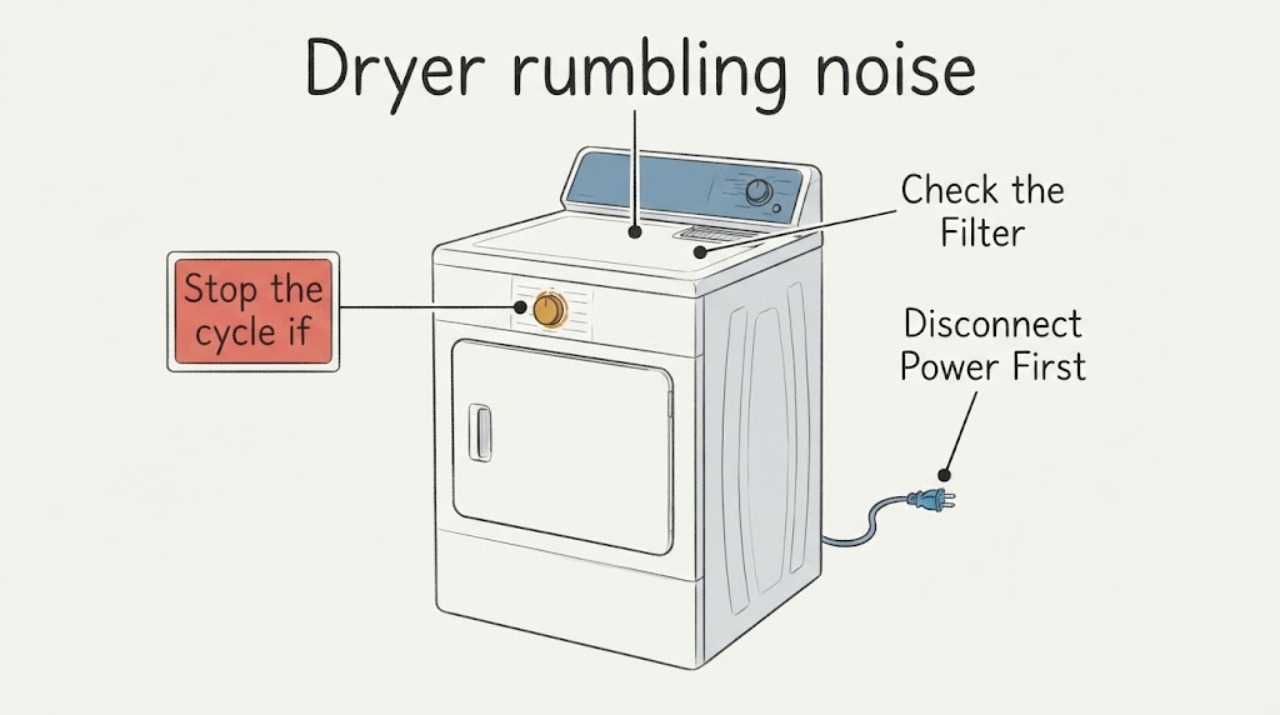
A GE dryer can normally make the sound of the drum turning, and a startup squeak should fade after the first few seconds. A rumble that is really thumping, humming, scraping, or a heat-related or repeating squeak is not something to explain away as a roller or motor problem. Stop the cycle if the sound is abnormal, unplug before any cleaning or inspection, check the load and visible drum/lint-filter opening for foreign objects, and check that the dryer is level on a solid floor with nothing leaning against it. If the noise persists, discontinue use and arrange qualified service; the GE guidance does not support identifying an internal part from sound alone.
Before you begin
Safety first
- This is limited to a stopped, unplugged dryer and visible external checks. Do not operate the dryer with a suspected damaged belt or scraping part, reach into a moving drum, remove panels, probe wiring, or select/replace a roller, motor, belt, or drum slide without model-specific service and qualified help.
Work through in order
Diagnostic checks
Use only checks that match the exact appliance or system and its official guide.
-
Check 1
Stop the cycle if the sound is loud, repeated, metallic, or accompanied by heat, odor, smoke, or unusual vibration, and note when it occurs.
Expected result: The sound is only a brief startup squeak or ordinary drum-turning sound, or it continues as thumping, humming, scraping, a heated squeak, or a repeating chirp.
Next step: For the abnormal pattern or any safety symptom, stop using the dryer and arrange qualified service.
Stop if: If it is only the normal pattern and the dryer is stable, continue to monitor without attempting internal repair.
Why this matters
Why: GE distinguishes the brief startup/drum sounds from the listed abnormal noise patterns; sound alone does not identify a specific internal component.
-
Check 2
Unplug the dryer before cleaning or inspecting it, then check the stopped drum for coins, paper clips, buttons, zippers, or other loose objects.
Expected result: A foreign object is visible in the drum, or the drum is clear.
Next step: Remove only the visible object with the drum stopped, then stop and seek service if the sound persists or there is damage.
Stop if: Continue to the installation and lint-filter-opening checks; do not open panels.
Why this matters
Why: GE says objects in the drum can cause rattling or scraping as they roll around; this is an external observation, not proof of a failed part.
-
Check 3
With power disconnected, inspect the lint-filter opening only as far as is safe for a visible object; use work gloves because the edges may be sharp.
Expected result: An object is visible below the lint filter, or no object is visible without reaching into a sharp or obstructed opening.
Next step: Remove a safely reachable visible object only; if it is obstructed, deep, or the noise remains, leave the dryer out of service for qualified service.
Stop if: Do not probe farther or dismantle the lint housing; proceed to the floor and cabinet check.
Why this matters
Why: GE identifies foreign objects below the lint filter as a possible noise source but warns about sharp edges.
-
Check 4
Check from outside that the dryer is level, sits on a solid secure floor, and has nothing leaning against it; do not improvise a support.
Expected result: The cabinet rocks, the floor is not solid/level, or another object touches the dryer; alternatively it is stable and clear.
Next step: Stop use if the dryer can tip or move; correct installation only according to the exact manual or have service correct it.
Stop if: If the dryer is stable but the abnormal rumble continues, do not infer a roller or motor failure; arrange qualified service.
Why this matters
Why: GE says leveling helps prevent vibration and tipping, and its leveling article says the exact model installation instructions govern the legs.
-
Check 5
Stop all further use when the sound remains after the external checks or becomes scraping, sustained thumping/humming, heat-related squeaking, or a repeating chirp.
Expected result: The sound persists, changes with heating, or is accompanied by smoke, burning odor, overheating, or visible damage.
Next step: Keep the dryer unplugged and arrange qualified service; do not open panels or select a belt, roller, or motor from the symptom alone.
Stop if: If the sound has fully stopped and no safety symptom exists, document the conditions and monitor; stop again if it returns.
Why this matters
Why: GE routes persistent unusual noise and examples such as drum-front scraping or a damaged belt to qualified service; continued operation can cause more wear.
Use your observations
Decision map
Find the observation that best matches what you see, then follow the next safe action.
-
PATH 01Next step
What you see
The sound is only the drum turning, or a startup squeak that disappears within the first few seconds.
Do this next
Monitor the dryer while keeping it level and clear of contact with nearby objects; do not turn a normal sound into a parts diagnosis.
Why this path and its safety boundary
Why it matters: GE lists those sounds as normal operating sounds.
-
PATH 02Next step
What you see
The noise is a rattle or scrape that appears with loose items in the drum or below the lint filter.
Do this next
Unplug first, remove only safely visible objects, and stop for qualified service if the sound or damage remains.
Why this path and its safety boundary
Why it matters: GE identifies foreign objects in those locations as possible causes of rattling or scraping.
-
PATH 03Next step
What you see
The dryer rocks, vibrates against something, or sits on a floor that is not solid and level.
Do this next
Keep it out of use if it can move or tip, then follow the exact installation instructions or use qualified service to correct the installation.
Why this path and its safety boundary
Why it matters: Installation instability can contribute to vibration, and GE says leveling also helps prevent tipping.
-
PATH 04Next step
What you see
The rumble persists independently of the visible checks, or becomes sustained thumping, humming, metal scraping, heat-related squeaking, or a repeating chirp.
Do this next
Discontinue use and unplug it; do not attempt to identify or replace an internal roller, belt, motor, slide, or other part from sound alone.
Why this path and its safety boundary
Why it matters: GE classifies these as abnormal patterns and says persistent unusual noise should be checked by a qualified servicer.
Helpful context
Understand the symptom
Start by describing the sound precisely. GE treats the drum-turning sound as normal, and a startup squeak should go away after the first few seconds. “Rumbling” is not enough to identify a failed component: note whether it is a brief startup sound, a load-dependent rattle, floor vibration, or a continuing thump, hum, scrape, or heat-related squeak.
Keep the checks external and safe. Stop the dryer and unplug it before cleaning or maintenance. With the drum stopped, remove visible objects from the load and look for foreign objects in the drum and below the lint filter. Check that the cabinet is level on a solid floor and that nothing is leaning against it. Use the exact model installation instructions for any leveling adjustment.
Do not diagnose a roller, motor, belt, drum slide, or other internal part from the sound. GE routes persistent unusual noise, metal scraping, and specified damaged-part symptoms to qualified service. Discontinue use if the abnormal sound remains, or immediately if there is smoke, burning odor, overheating, visible damage, or a risk of the dryer moving.
When checks do not resolve it
Need a professional?
Use qualified appliance service for persistent abnormal noise, visible damage, metal scraping, or any suspected internal fault. Follow the exact GE model installation instructions for leveling; do not improvise supports.
Safety scope: This is limited to a stopped, unplugged dryer and visible external checks. Do not operate the dryer with a suspected damaged belt or scraping part, reach into a moving drum, remove panels, probe wiring, or select/replace a roller, motor, belt, or drum slide without model-specific service and qualified help.
Common questions
FAQ
Is a rumbling sound from a GE dryer always a bad roller or motor?
No. GE says the drum-turning sound can be normal, while the word “rumbling” does not identify a part. Check the safe external causes and stop for service if the sound matches GE’s abnormal patterns or persists.
Can an uneven floor make a GE dryer vibrate or rumble?
It can contribute to vibration. GE says the dryer should be level on a solid secure floor and that leveling helps prevent vibration and tipping. Use the exact model installation instructions rather than adding improvised supports.
Should I keep running the dryer to see whether the rumble goes away?
Do not continue a cycle when the sound is sustained, metallic, heat-related, or accompanied by smoke, odor, overheating, or unusual movement. GE says to discontinue use if unusual noise remains after its checks.
What if I find a coin or zipper in the drum?
Unplug first and remove only visible loose objects with the drum stopped. GE says buttons and zippers can rattle or scrape; if the sound remains or there is damage, use qualified service rather than opening the dryer.
Read the exact guide
Official sources
- Dryer - NoisesGE Appliances · Family-level classification of normal and abnormal dryer sounds, visible foreign-object and installation checks, and service boundary; no model-specific part diagnosis
- Dryer - Leveling LegsGE Appliances · Family-level leveling and anti-tip guidance; exact model installation instructions remain controlling
Community feedback
Share a repair observation
Share a plain-text repair observation. Accepted observations are published automatically; this page may take a moment to update.