
On this page
Start here
Quick answer
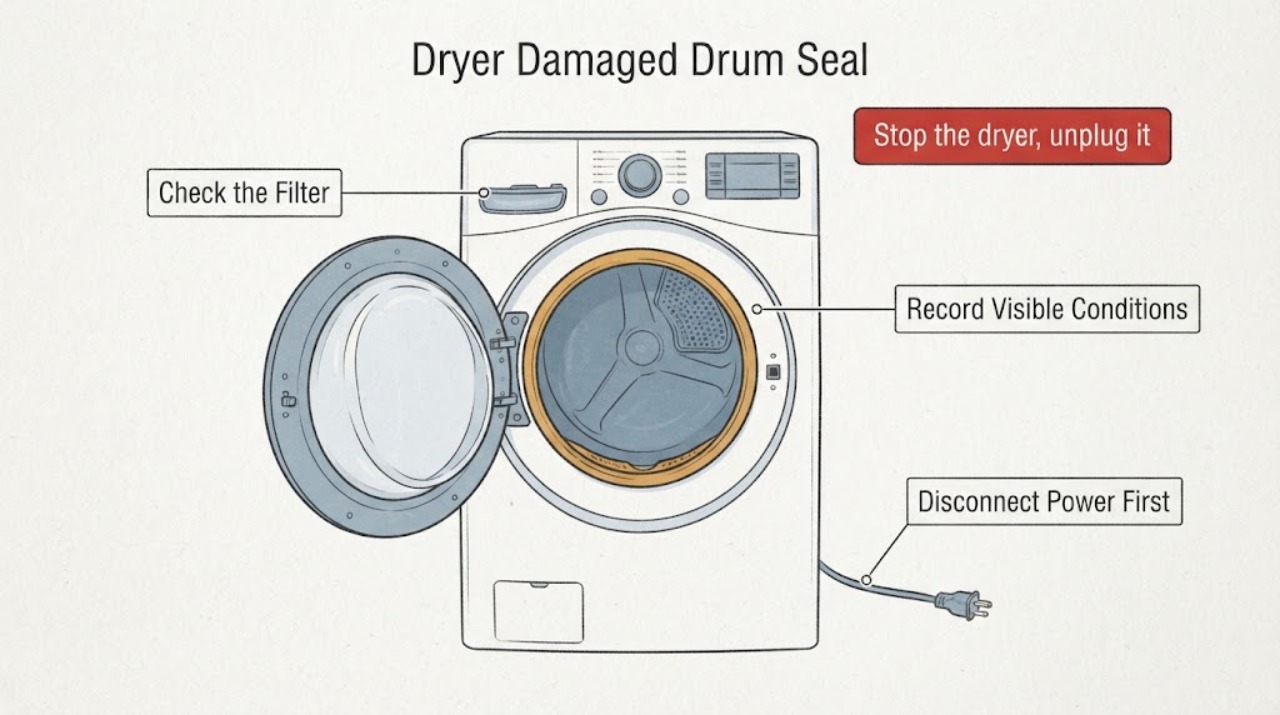
A reported damaged drum seal should be treated as a stop-and-inspect-for-service condition, not as permission to open the dryer or order a generic felt. GE says foreign material in the drum front seal or worn or loose drum slides can create metal scraping, and that clothes catching under the drum edge or black marks on clothing can require repair. Unplug the dryer before any cleaning or visual inspection, let it cool, and inspect only the visible drum opening and lint-filter area for a foreign object or clothing damage. Do not reach past sharp edges, remove panels, rotate a powered drum, or continue using the dryer when scraping, snagging, black marks, smoke, burning odor or visible seal damage is present. Record the full model number and arrange qualified service; GE's official parts pages show that felt seals are model-specific products.
Before you begin
Safety first
- Unplug before maintenance or cleaning. Do not run the dryer with a torn or visibly displaced seal, scraping drum, caught clothing, smoke, burning odor, damaged cord or gas concern. Do not remove panels, reach past sharp edges, rotate a powered drum, bypass a safety device or select a replacement part without model-specific confirmation.
Work through in order
Diagnostic checks
Use only checks that match the exact appliance or system and its official guide.
-
Check 1
Stop the dryer, unplug it, and allow it to cool before any cleaning or visual inspection.
Expected result: The dryer is cool and disconnected, or there is smoke, burning odor, arcing, a damaged cord, gas odor or another immediate hazard.
Next step: Keep the dryer out of service. Use a qualified appliance professional, electrician or gas emergency/service route as appropriate; do not restart it to reproduce the symptom.
Why this matters
Why: A powered or hot dryer is not a safe place to test a suspected seal. GE specifically calls for unplugging before maintenance or cleaning, while smoke, fire, gas and electrical hazards require an immediate stop rather than troubleshooting.
-
Check 2
From the normal loading opening, visually inspect the front edge of the drum and the lint-filter opening for a foreign object or obvious loose material; do not remove panels or reach into sharp edges.
Expected result: A foreign object is visible, or there is no safe visible object but the drum edge appears damaged or the scrape remains documented.
Next step: Remove only an object that is plainly accessible without reaching past sharp edges. If the object is trapped, the seal is visibly torn, or the sound remains, leave the dryer unplugged and arrange service.
Why this matters
Why: GE says foreign objects caught in the drum front seal can cause metal scraping and directs owners to service for that condition. A clear opening does not prove that the seal or slides are sound.
-
Check 3
Inspect recently dried items for tears, holes, snags or black marks, and record whether the symptom occurs at the drum edge or on collars and cuffs.
Expected result: Clothing is being caught or damaged, black marks are present, or no clothing damage is present.
Next step: Stop using the dryer for catching, damage or recurring marks and provide the affected item and photos to service. Do not compensate by changing the load or buying a generic seal.
Why this matters
Why: GE says clothing caught under the drum edge can produce tears, holes or snags, and that black marks may involve drum slides or a mispositioned or defective felt seal. These clues support repair but do not identify a specific part.
-
Check 4
Record the sound without restarting the appliance: whether it was scraping, thumping, humming, a brief start-up squeak, or a repeated chirp, and whether it began after heating.
Expected result: The reported sound matches metal scraping, a thump, an ongoing squeak or another unusual noise, or it was only a brief normal start-up squeak.
Next step: For ongoing or unusual noise, discontinue use and schedule qualified service. Do not use a noise pattern to select a seal, slide, belt or bearing.
Why this matters
Why: GE lists normal start-up squeak separately from abnormal sounds and says a front-seal foreign object or worn slides can cause metal scraping; a belt can cause thumping. A sound label alone does not diagnose the seal.
-
Check 5
Record the full GE model number, serial information if available, dryer type, symptom timing, affected clothing and any visible front-edge damage for the service request.
Expected result: The model is known and the exact symptom is documented, or the model and part location remain unknown.
Next step: Give the model and evidence to qualified service. Keep the dryer unplugged for recurring scrape, snagging, black marks or visible seal damage; do not open the cabinet or install an unverified seal.
Why this matters
Why: GE's opened upper and lower felt pages are separate model-specific product pages and require model compatibility confirmation; a generic “drum seal” label is not enough to choose a part or repair procedure.
Use your observations
Decision map
Find the observation that best matches what you see, then follow the next safe action.
-
PATH 01Next step
What you see
The dryer has smoke, a burning odor, arcing, a damaged cord, gas odor or heat damage.
Do this next
Stop using the dryer, keep clear of the hazard and use the appropriate emergency or qualified service route. Do not restart it for testing.
Why this path and its safety boundary
Why it matters: The condition exceeds a drum-seal inspection and may present an immediate fire, electrical or gas hazard.
-
PATH 02Next step
What you see
A foreign object is visible at the drum front edge, or the dryer produces metal scraping while clothing catches or shows black marks.
Do this next
Remove only a plainly accessible object without disassembly; otherwise leave the dryer unplugged and schedule qualified repair. Bring the model and affected clothing or photos.
Why this path and its safety boundary
Why it matters: GE identifies the front seal, drum slides and felt-seal position as possible repair-related areas, but the result does not establish which component is defective.
-
PATH 03Next step
What you see
The drum opening looks clear but unusual scraping, thumping, repeated squeaking or clothing damage continues or returns.
Do this next
Discontinue use and arrange qualified service. Do not run more cycles to localize the sound and do not diagnose or replace an internal part from sound alone.
Why this path and its safety boundary
Why it matters: A clear visual opening does not rule out worn slides, a mispositioned felt, belt or another internal drum-support issue.
-
PATH 04Next step
What you see
A replacement felt seal is being considered but the full GE model is missing or the available part page does not confirm compatibility.
Do this next
Pause part selection, recover the model number and use qualified service or the model-specific manual. Do not substitute a generic seal or open the cabinet based on this page.
Why this path and its safety boundary
Why it matters: GE's upper and lower felt products are separate model-specific listings; the assigned no-model topic cannot establish fit or installation method.
Helpful context
Understand the symptom
“Damaged drum seal” describes a suspected condition rather than a confirmed repair diagnosis. The same area can be involved when clothing catches, black marks appear, or the dryer scrapes, but GE's support material leaves the distinction between a foreign object, drum slides, a felt seal and other drum components to service. The safe goal is to stop further wear, document the evidence and avoid model-mismatched parts.
Make the dryer safe before checking the drum opening
Unplug the dryer before cleaning or maintenance and wait for hot surfaces to cool. If there is smoke, a burning odor, visible arcing, a damaged cord or a gas concern, stop immediately and use the appropriate electrical or gas emergency/service route. Do not run another cycle just to reproduce a scrape or to see whether clothing catches.
Use visible symptoms to document the problem
With power disconnected, look from the normal loading opening for a foreign item at the drum front edge and look down through the lint-filter opening only as far as the owner instructions allow. Do not reach into a sharp opening without appropriate hand protection, and do not remove the front panel. Note whether the sound is metal scraping, thumping or something else, and whether clothing has snags, holes or black marks. These observations help a technician without proving that the felt seal itself is defective.
Keep the seal and part decision model-specific
GE's official parts pages distinguish upper and lower felt products and tell owners to confirm the model number for compatibility. The pages do not make either listed product universal, and they do not establish that a seal is the cause of every scrape or clothing mark. Give the technician the full model number, serial information if requested, symptom timing and a photograph of any visible damage; do not order a seal from a generic search result.
Know when to stop using the dryer
GE recommends qualified service when foreign material in the front seal, worn slides, belt damage, or clothing-catching symptoms are involved, and says to discontinue use for unresolved unusual noise. Continuing to tumble can enlarge clothing damage or wear other parts. Leave the appliance unplugged until it has been assessed when the seal is visibly torn, the drum scrapes, fabric is caught, or the issue returns after a visible obstruction is removed.
When checks do not resolve it
Need a professional?
Schedule qualified service before further use when the seal is visibly damaged, clothing catches or is marked, the dryer scrapes or thumps, unusual noise persists, a foreign object is trapped, or the model-specific felt part cannot be confirmed.
Safety scope: Unplug before maintenance or cleaning. Do not run the dryer with a torn or visibly displaced seal, scraping drum, caught clothing, smoke, burning odor, damaged cord or gas concern. Do not remove panels, reach past sharp edges, rotate a powered drum, bypass a safety device or select a replacement part without model-specific confirmation.
Have this ready
- Full model number, dryer type, sound pattern, when it occurs, affected clothing or black marks, visible front-edge damage, and the result of the safe visual check.
Common questions
FAQ
Does a scraping sound prove that the GE dryer drum seal is damaged?
No. GE lists a foreign object in the front seal and worn or loose drum slides as possible causes of metal scraping, and other noises can come from a belt or cabinet condition. Stop using the dryer for ongoing unusual noise and let service identify the cause.
Can black marks or snags confirm a bad felt seal?
They are useful evidence but not a component diagnosis. GE says black marks may involve drum slides or a mispositioned or defective felt seal, while clothing caught under the drum edge can cause tears, holes or snags. Those symptoms require repair assessment.
Can I order a GE drum seal using only the phrase ‘felt seal’?
No. GE's official parts pages show separate upper and lower felt products and require checking the appliance model for compatibility. Recover the model number before any part decision and do not use a generic replacement or unverified installation procedure.
Read the exact guide
Official sources
- Dryer - Black Marks on Collars and CuffsGE Appliances · Opened the official GE Appliances support article. It states that black marks may result from clothing rubbing between the drum and slides and may occur when a felt seal is mispositioned or defective; it routes the condition to repair. It does not specify a universal part or repair method.
- Dryer - NoisesGE Appliances · Opened the official GE Appliances support article. It supports unplugging before maintenance, checking visible foreign objects and level/cabinet conditions, the front-seal/drum-slide scraping distinction, and discontinuing use for unresolved unusual noise. It does not identify a damaged seal on an unspecified model.
- Dryer - Clothes Catching Around Filter, Sensor or DrumGE Appliances · Opened the official GE Appliances support article. It supports treating clothes caught under the drum edge, tears, holes and snags as a repair condition; it does not establish that a felt seal is the cause on an unspecified model.
- DRYER UPPER FELTGE Appliances · Opened the official GE Appliances product page for model WE09X10013. It identifies an upper dryer felt product, says to check the appliance model for compatibility, and says to unplug the dryer and wear work gloves before installing that part. It is not used as a universal fit or as permission for this no-model user to perform installation.
- Lower front drum dryer felt sealGE Appliances · Opened the official GE Appliances product page for model WE9M30. It identifies a lower-front dryer felt seal and provides model-support/compatibility controls. It is used only to show that seal position and model fit vary, not to recommend the part for the assigned no-model dryer.
Community feedback
Share a repair observation
Share a plain-text repair observation. Accepted observations are published automatically; this page may take a moment to update.