
On this page
Start here
Quick answer
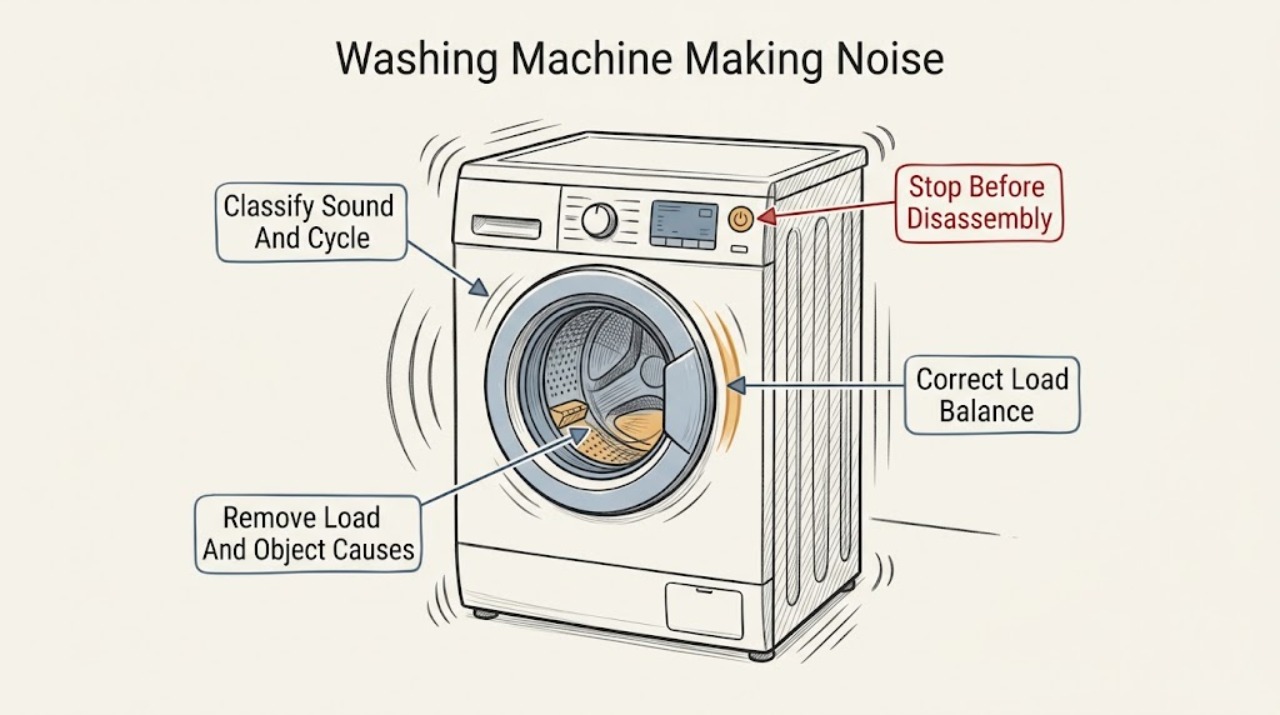
Some Frigidaire washer sounds are normal: a click can be the lid lock or water valve, a gurgle can be draining, a low hum can be the drain pump, and a brief thump can occur when a heavy load starts spinning. Rattling or clanking may come from coins, fasteners, or other loose items, while knocking can come from an unsecured drain hose. Stop the washer safely, identify whether the sound follows the load or the machine, then check the load balance, shipping materials, leveling, hose, and drum. If an empty cycle still produces a persistent grinding, scraping, loud banging, burning smell, smoke, water leak, or electrical symptom, stop using the washer and arrange qualified service. Do not remove panels or make live electrical measurements.
Work through in order
Diagnostic checks
Use only checks that match the exact appliance or system and its official guide.
-
Check 1
Note whether the sound is a click, double click, water rush, gurgle, low hum, high-pitched spin sound, rattle, clank, thump, or knock, and record whether it occurs during filling, washing, draining, or spinning. Stop the cycle and wait for the lid or door to unlock before inspecting anything inside.
Expected result: The sound is brief and occurs at a normal transition such as locking, filling, draining, or spin; it follows the load; or it is continuous and present across more than one part of the cycle.
Next step: If the sound matches one brief operation, continue with the load and installation checks. If it is continuous, becomes much louder, or is accompanied by a leak, odor, smoke, or poor operation, stop using the washer and arrange service.
Why this matters
Why: Frigidaire lists clicks, water rushing, draining sounds, low pump hum, and some spin sounds as normal operations. A sound that follows clothing or occurs continuously is more likely to need an object, hose, balance, or service check.
-
Check 2
After the tub stops and the lid or door unlocks, remove the load and inspect pockets, fasteners, belt buckles, and the visible drum or tub for coins or other loose objects. Close or turn garments inside out as appropriate, then run one empty cycle only if there are no safety symptoms.
Expected result: The sound disappears when the load is removed, a coin or other object is found, fasteners contact the tub, or the same sound remains during the empty cycle.
Next step: Remove only loose objects that are safely accessible and secure or reorient clothing fasteners. If the empty cycle reproduces the noise, stop repeated testing and continue only with visible installation checks before requesting service.
Why this matters
Why: Frigidaire says rattling or clanking can come from clothing fasteners or foreign objects and recommends an empty cycle to distinguish the load from the appliance. A sound that remains empty is coming from the machine or installation rather than the clothing.
-
Check 3
If the noise is thumping, shaking, or walking during spin, stop the machine using its controls and wait for the lid or door to unlock. Redistribute the clothes evenly; for a small load, add one or two similar items only if the model instructions allow it, then observe whether the tub reaches spin without violent movement.
Expected result: The tub becomes stable after redistribution, the noise occurs only with one heavy or small load, or the washer still shakes with a balanced load.
Next step: Use smaller, evenly distributed loads while checking the installation. If the washer remains unstable or bangs with a balanced load, stop the cycle and do not compensate by adding excessive weight; inspect leveling and shipping materials next.
Why this matters
Why: Frigidaire identifies an unbalanced load as a cause of vibration and says heavier loads can occasionally thump at the beginning of spin. Continued shaking with a reasonable load points toward leveling, shipping material, flooring, or a mechanical issue.
-
Check 4
With the washer empty and stationary, check that it sits firmly on a hard, stable floor, is level front-to-back and side-to-side, and has each foot contacting the floor. If it was recently installed, confirm from the exact installation instructions that shipping materials were removed; do not tilt a heavy machine alone.
Expected result: The cabinet rocks, one foot is not firmly planted, the floor is soft or unstable, the machine is not level, or shipping material remains; or the installation is stable and the noise persists.
Next step: Follow the model-specific leveling instructions and tighten the lock nuts after the feet are firmly seated. Have another adult help with any movement. If shipping material requires disassembly, the floor is unsuitable, or vibration remains, stop and contact the installer or qualified service.
Why this matters
Why: Frigidaire says an unlevel or unsupported washer can vibrate and recommends a sturdy hard floor. It also calls out shipping materials on a newly installed unit. A stable, correctly installed machine with persistent noise needs service-level diagnosis.
-
Check 5
From outside the cabinet, observe the drain hose during a drain or spin event and check that it is secured as the installation instructions require, without rubbing or striking the rear panel. Do not remove panels or reach near the pump, motor, belt, or wiring.
Expected result: The hose visibly slaps or rubs the cabinet, the noise is a low hum during draining, the hose is secure, or the machine makes grinding, scraping, repeated hard banging, or an electrical or burning symptom.
Next step: Secure only an accessible hose as directed by the exact installation instructions, then observe one drain event. If the hose is secure or the sound is unsafe, stop using the washer, disconnect power and water only when safe, and arrange qualified service.
Why this matters
Why: Frigidaire identifies an unsecured drain hose as a cause of knocking and a low hum as possible pump operation. A secure hose with persistent mechanical noise, a leak, or an electrical symptom cannot be safely diagnosed from outside.
Use your observations
Decision map
Find the observation that best matches what you see, then follow the next safe action.
-
PATH 01Next step
What you see
A click, water rush, gurgle, low hum, or brief spin sound occurs only during the matching cycle operation and the washer otherwise works normally.
Do this next
Treat it as a likely normal operating sound, continue to monitor it, and use the exact model manual if the pattern changes.
-
PATH 02Next step
What you see
Rattling or clanking stops when clothing is removed, or a coin, fastener, or other loose object is found.
Do this next
Remove the accessible object and secure or reorient clothing fasteners. Do not reach into a moving tub; request service if the object cannot be safely retrieved or damage is visible.
-
PATH 03Next step
What you see
Thumping or shaking occurs only with an uneven load and improves after the load is redistributed.
Do this next
Use evenly distributed loads and avoid overloading. If vibration returns with a balanced load, check the feet, floor, and shipping materials.
-
PATH 04Next step
What you see
The washer rocks, one foot is not planted, shipping material remains, or the floor is soft or unstable.
Do this next
Follow the exact installation and leveling instructions with help from another adult. If the machine cannot be made stable without moving or disassembly, involve the installer or qualified service.
-
PATH 05Next step
What you see
A knock is synchronized with the drain event and the drain hose hits or rubs the rear of the cabinet.
Do this next
Secure the accessible hose according to the installation instructions and observe one drain event. If the sound continues with a secure hose, request service.
-
PATH 06Next step
What you see
An empty cycle reproduces a persistent grind, scrape, hard bang, or loud mechanical noise, or the washer leaks, smells burnt, smokes, trips a breaker, or exposes damaged wiring.
Do this next
Stop using the washer, disconnect power and water only when safe, keep clear of the cabinet, and arrange qualified service. Do not remove panels or make live electrical measurements.
Helpful context
Understand the symptom
Identify the sound before assuming a failed part
Frigidaire washers make different sounds at different points in a cycle. A click can occur when the lid locks or a water valve opens, gurgling can be draining, and a high-pitched sound can accompany spinning. The useful distinction is whether the sound is brief and tied to a documented operation, follows clothing or an object in the tub, or continues with an empty machine.
Load, installation, and hoses are the first checks
An unbalanced load can shake the cabinet at spin, while a washer that is not level or firmly supported can vibrate even with a reasonable load. Newly installed machines also need their shipping materials removed. A drain hose that is not secured can strike the rear of the cabinet. These checks are model- and installation-dependent, so use the exact Frigidaire manual for details.
Know when to stop
Stop the cycle before reaching into the tub, and wait for the lid or door to unlock. Do not continue a test cycle if there is smoke, a burning odor, exposed wiring, a damaged cord, a water leak near electrical parts, repeated breaker operation, or a persistent grinding or scraping sound. Keep the washer unplugged only when safe and have a qualified technician inspect internal components.
Only after diagnosis
Potential parts
- drain pump
Consider this category only if qualified service confirms that a persistent noise occurs during draining after the hose is secure and the drain path is clear.
Confirm the complete Frigidaire model information and authorized fitment before ordering or installing any pump component. - tub suspension or support components
Consider this category only if qualified service confirms repeated out-of-balance movement or banging with a balanced load and a correctly leveled cabinet.
Support components vary by model and load design; verify the full model information and installation procedure before replacement. - drive motor or bearing assembly
Consider this category only when service confirms a persistent mechanical noise during an empty cycle after load, hose, leveling, and shipping causes are excluded.
Motor and bearing assemblies are model-specific and require qualified diagnosis and installation; do not open the cabinet to test them while energized.
When checks do not resolve it
Need a professional?
Arrange qualified service when a Frigidaire washer continues making noise during an empty cycle, remains unstable after a balanced load and correct leveling, or has a persistent grinding, scraping, or hard-banging sound. Stop immediately for smoke, burning odor, exposed or damaged wiring or cord, a water leak near electrical parts, repeated breaker operation, or any unsafe movement. Disconnect power and water only when safe; do not remove panels, bypass a lid or door lock, or make live electrical measurements.
Common questions
FAQ
Why is my Frigidaire washer making a clicking sound?
A click can occur when the lid lock engages or disengages or when a water valve opens. If clicking is continuous, unusually loud, or occurs with poor operation, stop testing and arrange service.
Why does my Frigidaire washer rattle during spin?
Check for coins, fasteners, or other loose objects and run an empty cycle only after the machine is safe to operate. If the sound remains empty, check balance and leveling, then request service if it persists.
Can an unbalanced load make a Frigidaire washer thump?
Yes. Frigidaire says heavy loads may thump at the start of spin and an unbalanced load may vibrate. Stop safely, wait for the lid or door to unlock, redistribute the clothes, and stop if the washer still moves violently.
When should I stop using a noisy Frigidaire washer?
Stop for persistent grinding, scraping, or hard banging, a noise that remains during an empty cycle, a leak, smoke, burning odor, damaged wiring or cord, repeated breaker operation, or unsafe movement. Disconnect power and water only when safe and arrange qualified service.
Read the exact guide
Official sources
- Is it normal for my washer to make sounds or noises?Frigidaire · Frigidaire washer thumping, clothing fastener, foreign-object, and empty-cycle guidance
- Top Load Washers - What may cause my washer to vibrate?Frigidaire · Frigidaire washer stability, leveling, floor, shipping-material, and unbalanced-load checks
- Laundry Washers Noises GuideFrigidaire · Frigidaire laundry washer normal sounds, installation, load balance, hose, object, and service guidance
Community feedback
Share a repair observation
Share a plain-text repair observation. Accepted observations are published automatically; this page may take a moment to update.