
On this page
Start here
Quick answer
First match the noise to the part of the cycle: GE lists clicks at lid lock, water sounds and hum during fill, pulsing or grinding during agitation, pump hum and water sounds during drain, slurping near the end of drain, and motor ramping during spin as potentially normal on applicable models. A new loud bang, scraping, squeal, repeated metal strike, or washer that walks is different. Pause the machine, redistribute the load, and check that it is level and that an accessible drain hose is not striking the cabinet. If the noise remains with a balanced or empty test, appears with leaks or burning odor, or requires moving the machine, removing panels, or electrical work, stop using it and arrange service.
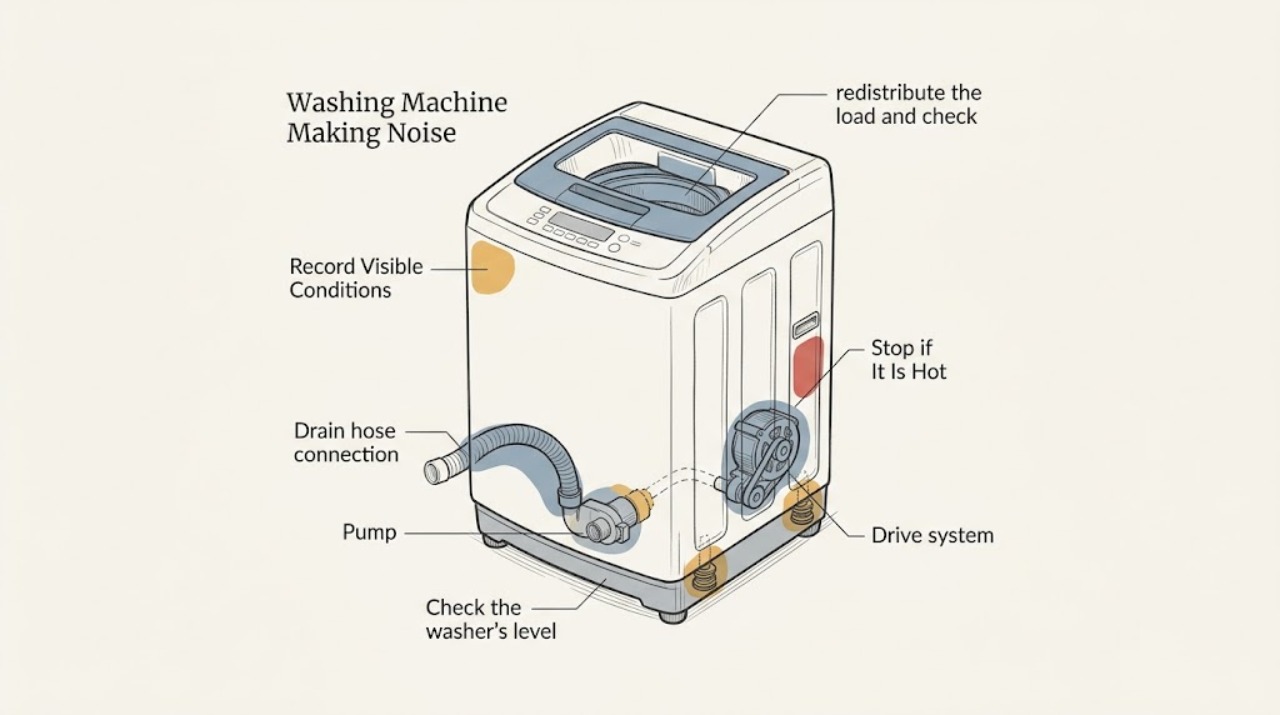
Work through in order
Diagnostic checks
Use only checks that match the exact appliance or system and its official guide.
-
Check 1
Pause the washer and record the exact sound, cycle stage, and whether the cabinet moves or strikes anything.
Expected result: Note whether it is a click at lid lock, waterfall or hum during fill, pulsing or grinding during agitation, pump hum or gurgling during drain, ramping during spin, or a new bang, scrape, squeal, or repeated impact. Record whether it occurs with water, only with clothes, or while the basket changes speed.
Next step: If the sound matches a listed normal stage and the washer stays stable, monitor it for change. If the sound is an impact, scrape, squeal, or harsh grinding, stop the cycle and continue only with safe external checks.
Stop if: Stop immediately for a burning odor, smoke, exposed wiring, water near electrical parts, violent movement, or metal-on-metal noise that could damage the tub or cabinet.
Why this matters
Why: GE describes several cycle-linked sounds as normal on applicable models. A sound that is new, harsh, continuous, or unrelated to a normal transition is more likely to need a separate check.
-
Check 2
With the washer stopped, redistribute the load and check whether the tub or cabinet is visibly out of balance during spin.
Expected result: Look for one heavy item, a tightly wrapped load, clothing collected on one side, a basket striking the cabinet, or the washer walking across the floor. A flashing or changing spin indication may accompany redistribution on some top-load models.
Next step: Pause or power off as the controls permit, wait for the lid to unlock, spread the items evenly, and run the model's drain-and-spin or equivalent cycle. If a balanced load still bangs or the cabinet moves, check level and installation rather than repeating heavy loads.
Stop if: Do not hold the lid open, reach into a moving basket, place hands under the washer, or continue if it walks, tips, or strikes the cabinet violently.
Why this matters
Why: GE says an unbalanced load can make the tub hit the cabinet and can trigger automatic redistribution. Small or mixed loads can become uneven as items absorb water.
-
Check 3
Check the washer's level and installation history from the outside, especially if the noise began after delivery, a move, or floor work.
Expected result: Notice whether the cabinet rocks when gently tested while empty and off, whether the floor is firm, and whether installation material may still be present on a model that uses it. Do not pull the washer out or remove shipping hardware without the exact installation instructions.
Next step: Use the exact owner or installation guide to confirm shipping-material removal and leveling. If the washer is inaccessible, stacked, or connected in a way that makes movement unsafe, stop and request installation or appliance service.
Stop if: Do not tip, drag, lift, or disassemble the washer to inspect shipping material or suspension parts.
Why this matters
Why: GE links noise and vibration to an unleveled washer, a poor or soft floor, and shipping material left after installation or movement. The correct hardware and leveling process vary by model.
-
Check 4
Inspect only the accessible water and drain hoses for a loose hose that can strike the cabinet during fill, drain, or spin.
Expected result: A banging sound that starts during drain or spin may coincide with the drain hose tapping the rear panel. Look for an unsecured or kinked hose, a hose pulled tight, or water leaking from a connection. Do not reach behind a wet machine or alter drain depth without the installation guide.
Next step: If the hose is safely accessible and the floor is dry, follow the exact model installation instructions for routing and securing it. If the hose is damaged, the drain backs up, or access requires moving the machine, keep the washer off and arrange service or plumbing help.
Stop if: Stop for any water leak, drain overflow, wet electrical area, or need to pull the washer out or remove its rear panel.
Why this matters
Why: GE identifies an unsecured drain hose as a cause of banging during drain or spin. A leak, backup, or hose damage changes the issue from noise-only to a water-safety concern.
-
Check 5
When the washer is dry, stable, correctly loaded or empty, and free of safety signs, run one appropriate test to see whether the noise follows the load.
Expected result: If the sound disappears on an empty or balanced test, it follows the load or the installation response to that load. If it remains empty, occurs in more than one cycle, or becomes louder, it points away from a simple load imbalance. Note any water left behind, spin failure, or new vibration.
Next step: Stop testing when the result is clear and provide the technician a short recording, cycle stage, load condition, model number, and installation history. Keep the washer out of service if the noise is harsh, worsening, or accompanied by leaks or movement.
Stop if: Do not continue test cycles for a persistent internal noise, or attempt live electrical, pump, drive, suspension, or bearing diagnosis.
Why this matters
Why: A persistent empty-load noise can involve the pump, drive, suspension, bearings, or another internal assembly, but the sound alone cannot identify a replacement part.
Use your observations
Decision map
Find the observation that best matches what you see, then follow the next safe action.
-
PATH 01Next step
What you see
The sound matches a normal cycle-linked click, water sound, hum, gurgle, or controlled speed change and the washer remains stable.
Do this next
Continue to monitor it and compare with the exact model's normal-sounds guidance. Arrange service if the sound changes, becomes harsh, or is joined by a leak or poor operation.
-
PATH 02Next step
What you see
The noise is a banging or cabinet strike during spin and the load is uneven.
Do this next
Pause safely, redistribute the load, and check level. If banging continues with a balanced load, inspect the accessible drain hose and arrange service if unresolved.
-
PATH 03Next step
What you see
The noise began after installation or a move, or the washer rocks or walks.
Do this next
Stop the washer and use the model-specific installation guide to check leveling and shipping material. Do not move or disassemble it if access is unsafe.
-
PATH 04Next step
What you see
The noise remains with an empty or balanced test, is worsening, or occurs with a leak, burning odor, drain problem, or poor spin.
Do this next
Keep the washer out of service and arrange qualified appliance repair. Provide the model, recording, cycle stage, load condition, and any water or movement symptoms.
Helpful context
Understand the symptom
The cycle and sound together are the clue
A washer can click, hum, pulse, gurgle, and change speed as it locks the lid, fills, agitates, drains, and spins. Those sounds are not automatically a failed part. The useful distinction is whether the sound matches the cycle and fades or changes normally, or whether it is a new impact, scrape, squeal, or movement that persists after the load and installation are checked.
Do not chase a noise by moving a full washer
Stop the cycle before reaching around the machine. Keep hands away from a moving basket and do not tip or drag the washer to inspect a hose, shipping material, suspension, pump, or drive component. If the rear or underside is inaccessible, record the sound and use the model's installation guide or a technician rather than forcing access.
A repeatable empty test narrows the path
When there is no leak, burning smell, electrical concern, or violent movement, an empty rinse or spin test can separate a load-related bang from a machine-related noise. If the noise disappears empty, focus on load distribution and installation. If it remains empty, do not keep running cycles to make the sound louder; arrange service with the timing and recording.
Only after diagnosis
Potential parts
- drain hose or hose support
Consider this category only if the accessible hose is confirmed to be damaged or improperly routed and the noise or leak follows that condition.
Confirm the exact GE model and installation requirements before ordering or changing hose routing. - washer suspension or leveling component
Consider this category only after a qualified diagnosis confirms persistent movement with a balanced load and correct leveling.
Match the exact model and use the manufacturer's service information; do not select a suspension part from noise alone. - washer drain pump or drive component
Consider this category only when the noise persists during the relevant drain or drive operation and a qualified diagnosis identifies the internal component.
Confirm the exact model and diagnosis before ordering; internal appliance work should be performed by a qualified technician.
When checks do not resolve it
Need a professional?
Stop and arrange service for a persistent empty-load noise, harsh grinding or scraping, violent banging, a washer that walks or tips, a water leak or drain backup, burning odor or smoke, exposed wiring, or any diagnosis requiring the washer to be moved, tilted, opened, or electrically tested.
Common questions
FAQ
Are clicking and grinding sounds normal on a GE washer?
Some clicks, pulsing, and grinding-like sounds can be normal during lid sensing or agitation on applicable models. The cycle stage matters. A new harsh sound, scrape, repeated impact, or sound that persists when empty needs service assessment.
Why does my GE washer bang during spin?
GE says an unbalanced load can make the tub strike the cabinet. A drain hose that is not secured can also bang during drain or spin. Pause safely, redistribute the load, and check hose routing only if it is accessible without moving the machine.
What should I check if the washer walks across the floor?
Stop the cycle and check the load, level, firm floor, and installation history. GE also says shipping material can cause noise and vibration after installation or a move; use the exact installation instructions before changing anything.
Should I keep running the washer to locate the noise?
No. One safe observation can be useful, but do not repeat cycles when the noise is harsh, worsening, or accompanied by movement, water, smoke, or an odor. Record the symptom and arrange service instead.
Read the exact guide
Official sources
- Top Load Washer - Walking or VibratingGE Appliances · GE top-load washer movement, shipping material, level, solid floor, and load redistribution guidance
- Top Load Washer - Normal SoundsGE Appliances · GE top-load washer cycle-linked normal sound descriptions and service boundary
- Washer - Normal Noise When DrainingGE Appliances · GE washer normal drain sounds and drain-hose banging context
- Washer - Banging Noise During Spin CycleGE Appliances · GE washer banging during drain or spin, load balance, drain hose routing, and service guidance
Community feedback
Share a repair observation
Share a plain-text repair observation. Accepted observations are published automatically; this page may take a moment to update.