
GE appliance guidance
GE Washing Machine Repair Guides
Troubleshooting and repair guidance for published GE Washing Machine problems, symptoms, and maintenance questions.
Published GE Washing Machine guides
Choose the guide whose symptom or condition most closely matches what you are seeing.
-
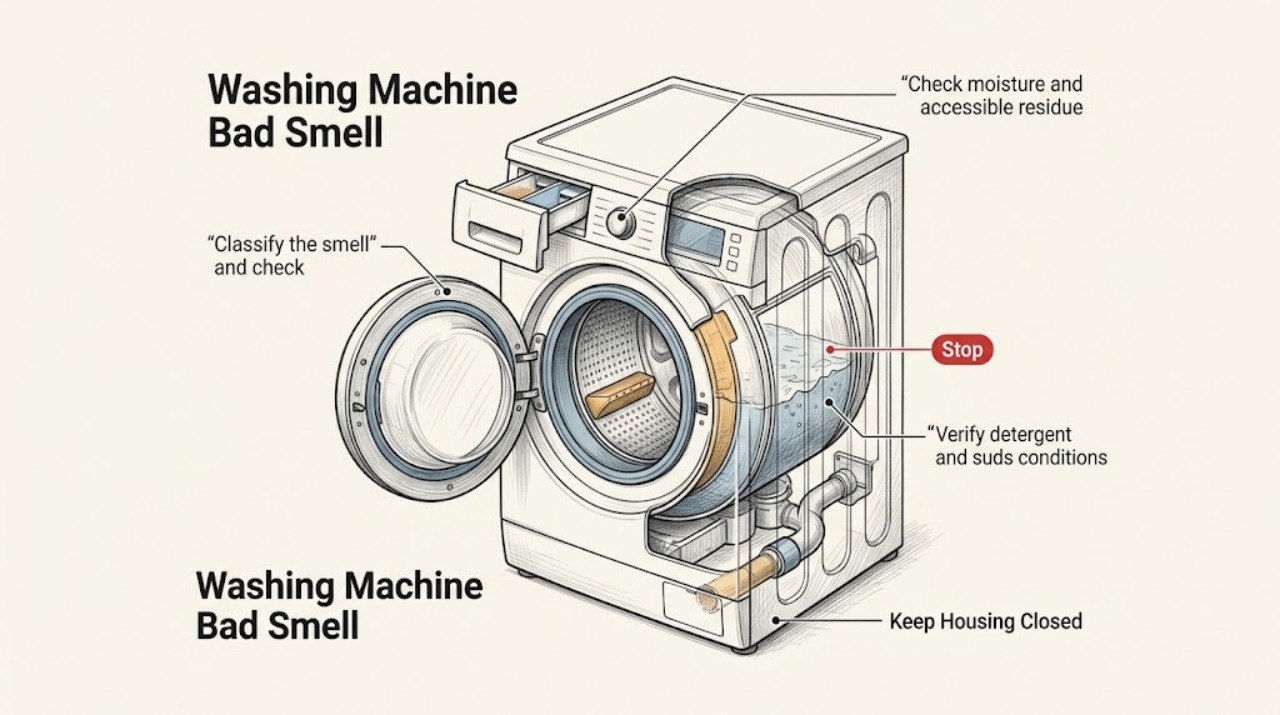
GE Washing Machine Bad Smell: Clean the Tub and Drain Path
A bad smell from a GE washing machine is commonly caused by retained moisture, detergent residue, or water that is not draining completely. First separate a musty or detergent odor from a hot electrical, burning-plastic, chemical, or sewage-like odor; the latter symptoms, smoke, sparking, a leak, or a repeated breaker trip are stop conditions.
-
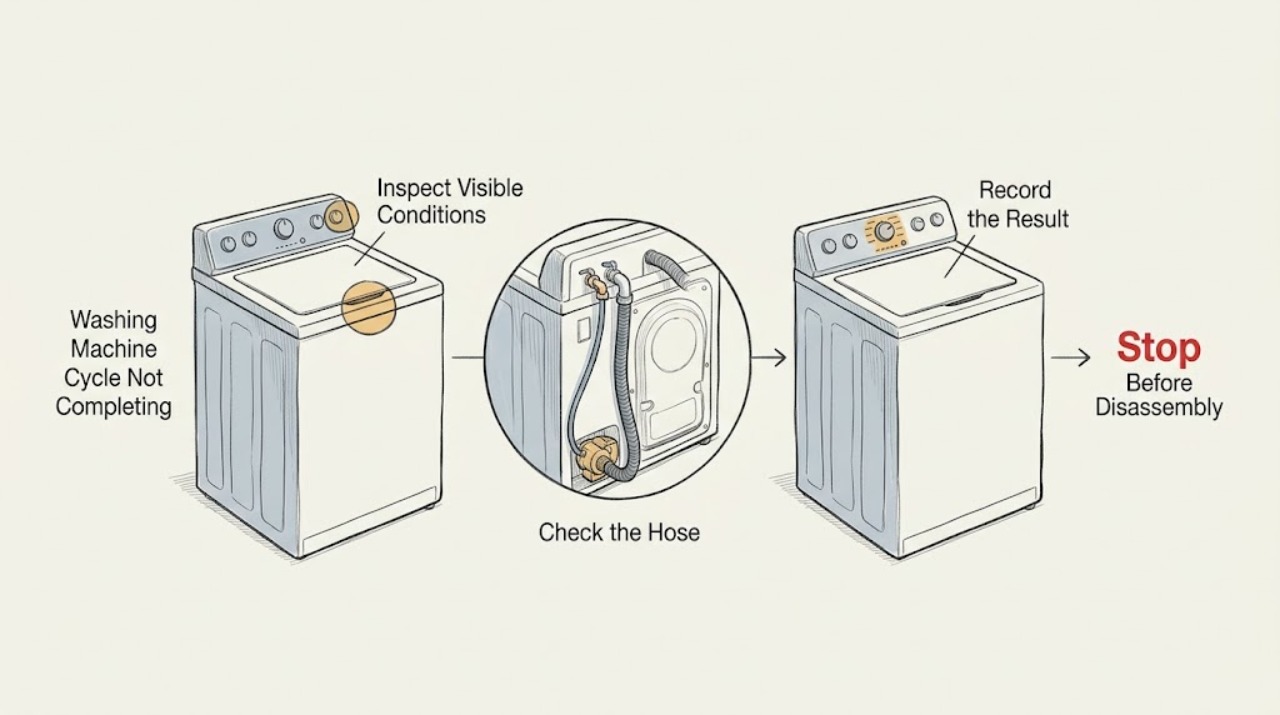
Ge Washing Machine Cycle Not Completing
A GE washer that appears stuck may be in a normal pause, correcting an unbalanced load, waiting to drain, or holding a control lock after an interruption. Note the stage, display message, water level, and whether the basket is spinning before changing anything.
-
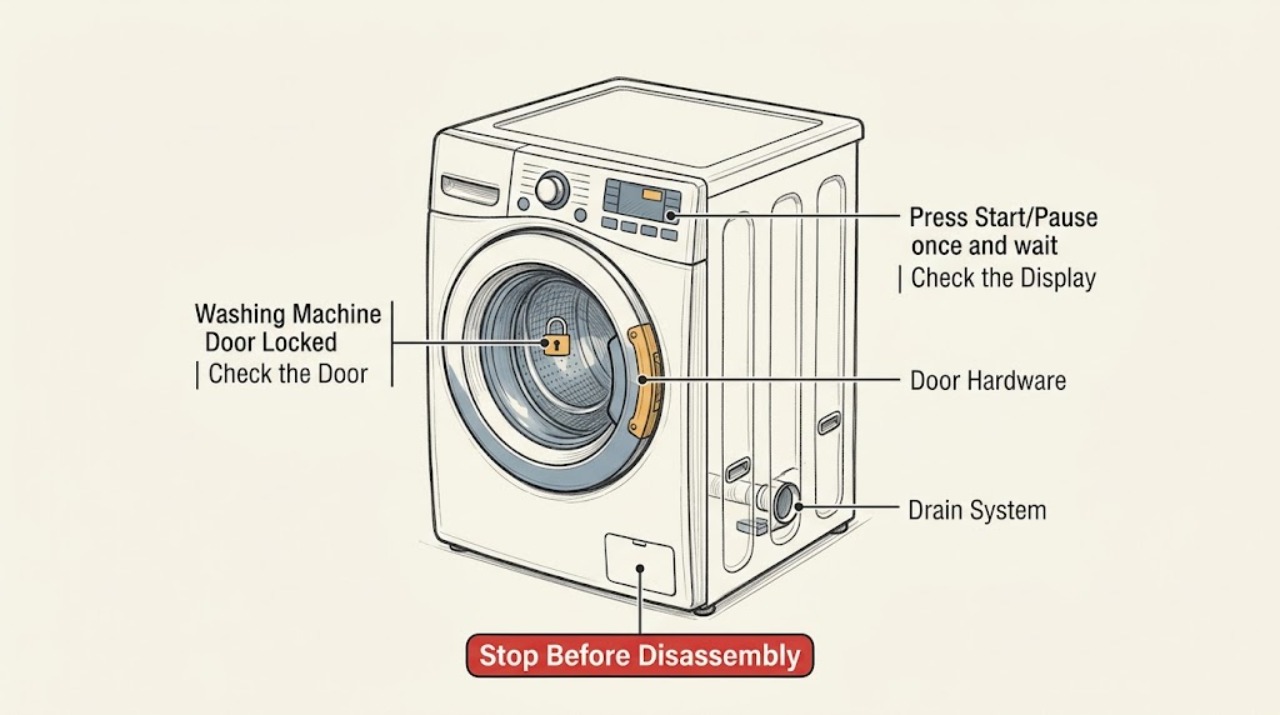
GE Washing Machine Door Locked: Pause Safely, Check Water, and Do Not Force It
A GE washer door or lid normally locks during portions of a cycle for safety. Press Start/Pause once and wait for the basket to stop and the lock to open; a front-load model may drain before opening, while a top-load lid may remain locked briefly after spin.
-
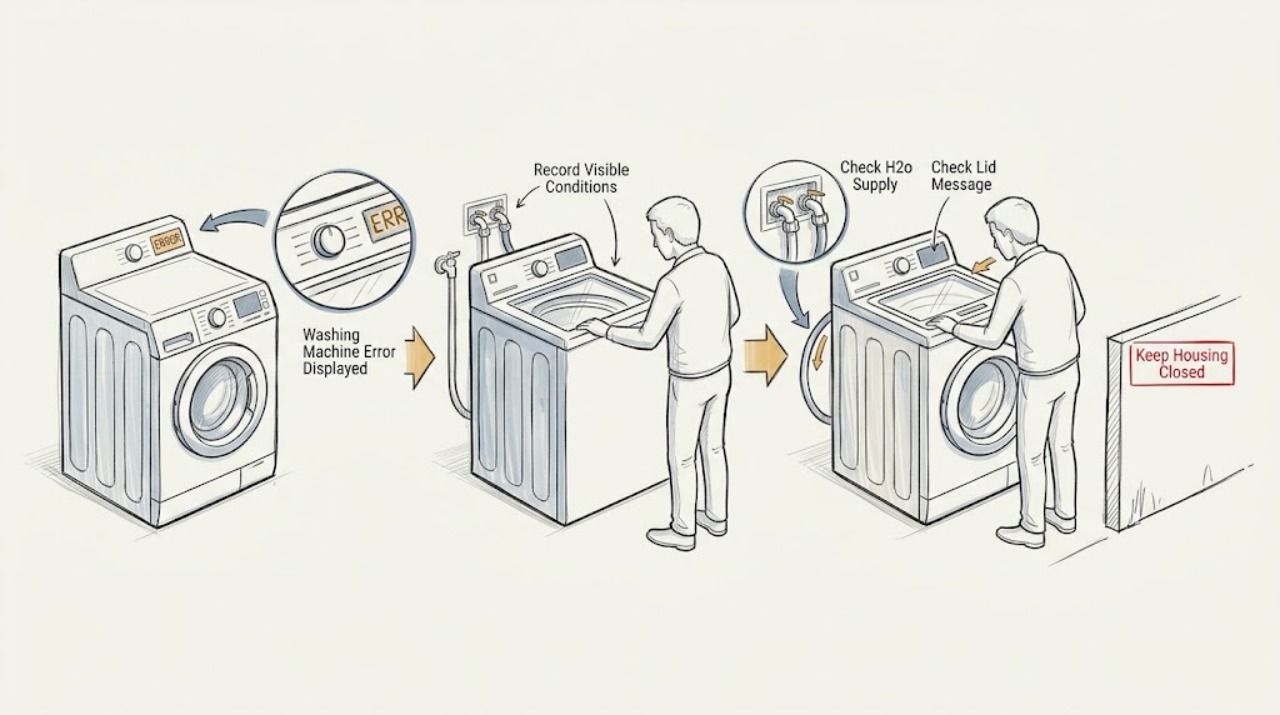
GE Washing Machine Error Displayed
First photograph the complete message and model tag, because GE display messages and remedies vary by washer model. A message such as H2O SUPPLY or IE points first to the household water supply and inlet path; dE or LId points to the lid being open; UE or a flashing Spin light points to an unbalanced load.
-
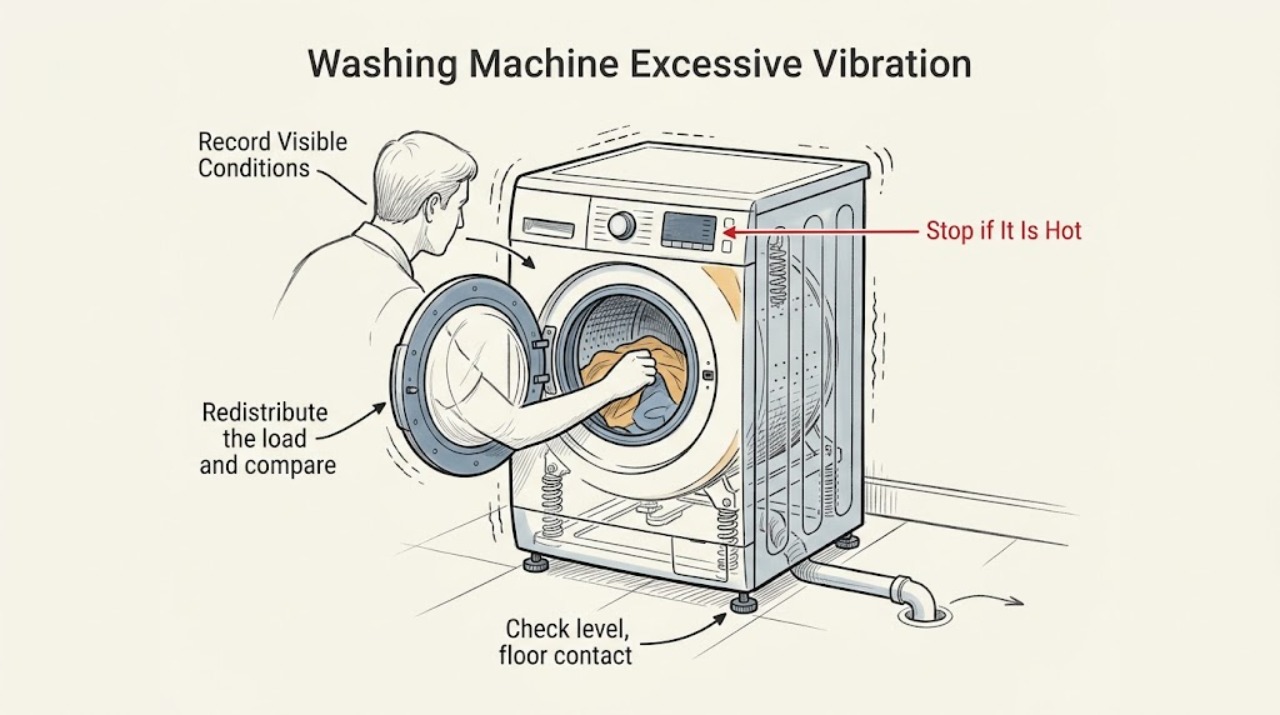
GE Washing Machine Excessive Vibration: Balance the Load, Level the Unit, and Check Shipping Hardware
When a GE washing machine shakes, walks, or vibrates excessively, stop the cycle and first determine whether the movement follows one load, started after installation or moving, or occurs with an empty drum. Redistribute an unbalanced load, then confirm the washer is level, all feet are firmly on a solid floor, and the leg lock nuts are secured as the model instructions require.
-
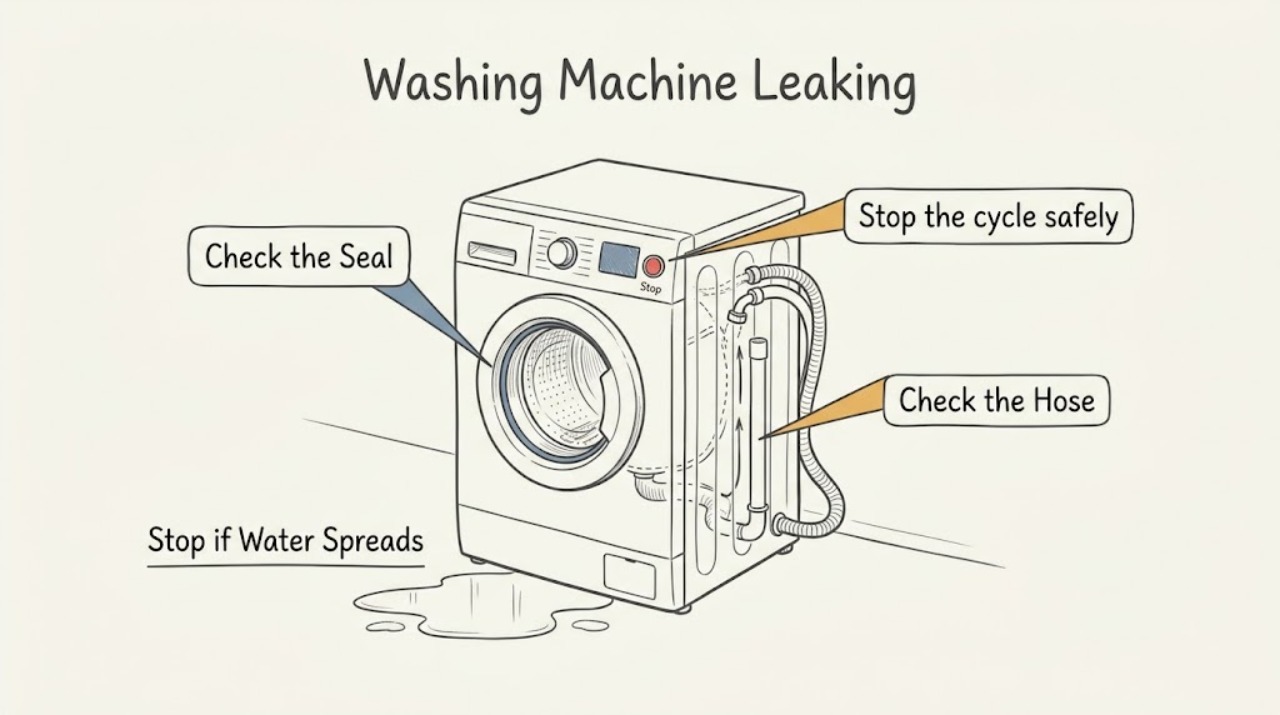
GE Washing Machine Leaking: Find the Source, Shut Off Water, and Check the Seal
When a GE washing machine leaks, stop the cycle and identify whether water is coming from the front door or dispenser, the rear hoses or drain, underneath the cabinet, or a top-load overflow path. For flooding, GE says to pause or turn the washer off at the controls or breaker—never unplug while standing in water—then shut off the household water valves once power is safely off.
-
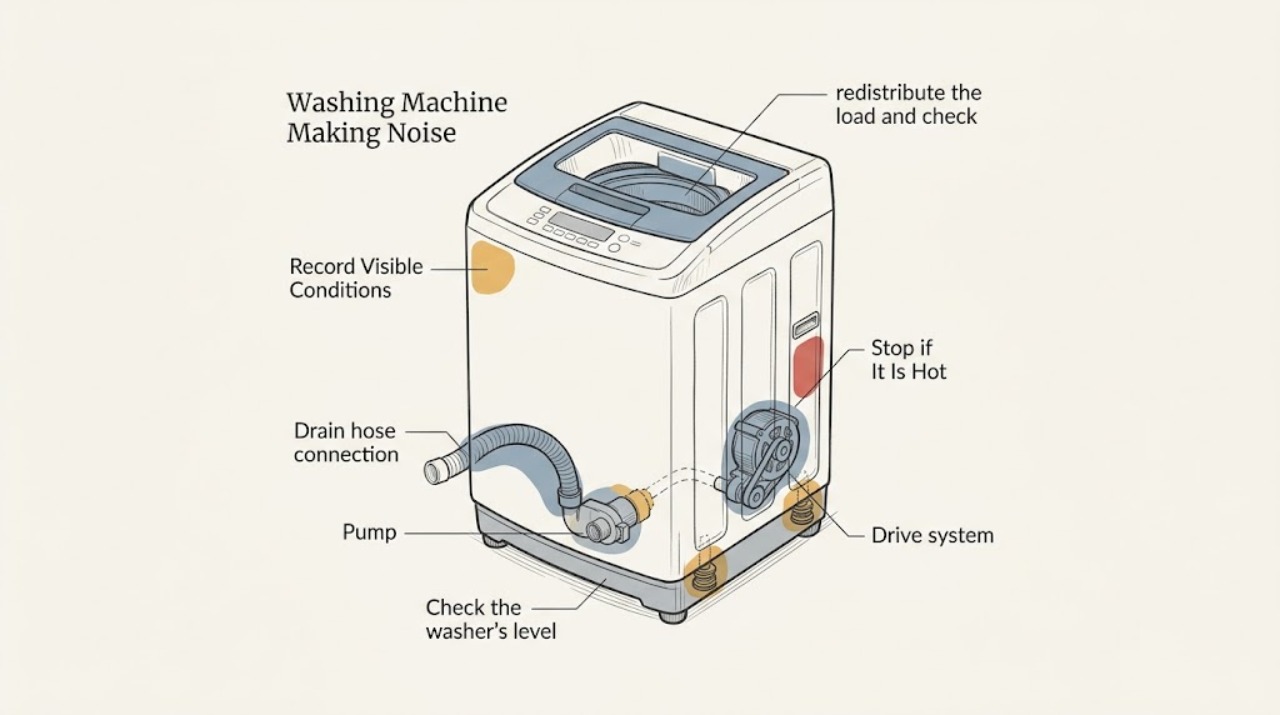
GE Washing Machine Making Noise: Identify the Sound Safely
First match the noise to the part of the cycle: GE lists clicks at lid lock, water sounds and hum during fill, pulsing or grinding during agitation, pump hum and water sounds during drain, slurping near the end of drain, and motor ramping during spin as potentially normal on applicable models. A new loud bang, scraping, squeal, repeated metal strike, or washer that walks is different.
-
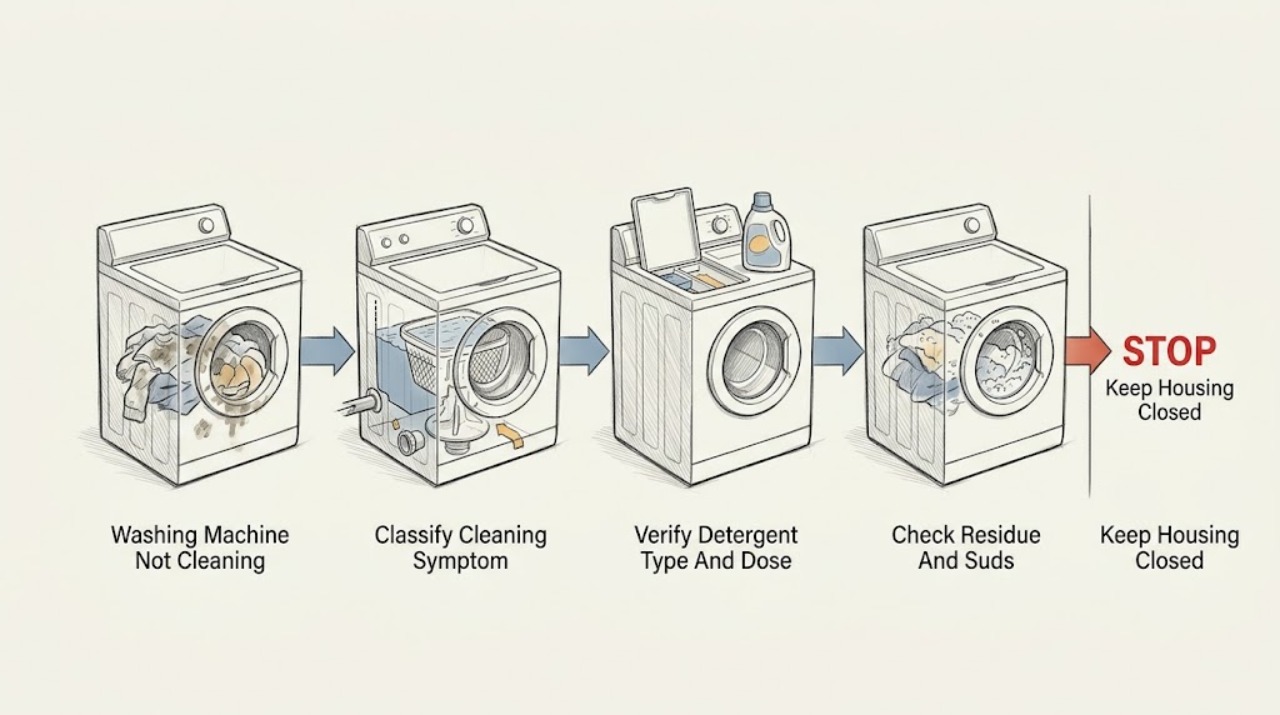
GE Washing Machine Not Cleaning
Start with the load and detergent before assuming a failed washer. Use the detergent type and measured amount specified for the exact GE model, avoid excess suds, load dry clothing loosely so it can move, and match the water level to the load.
-
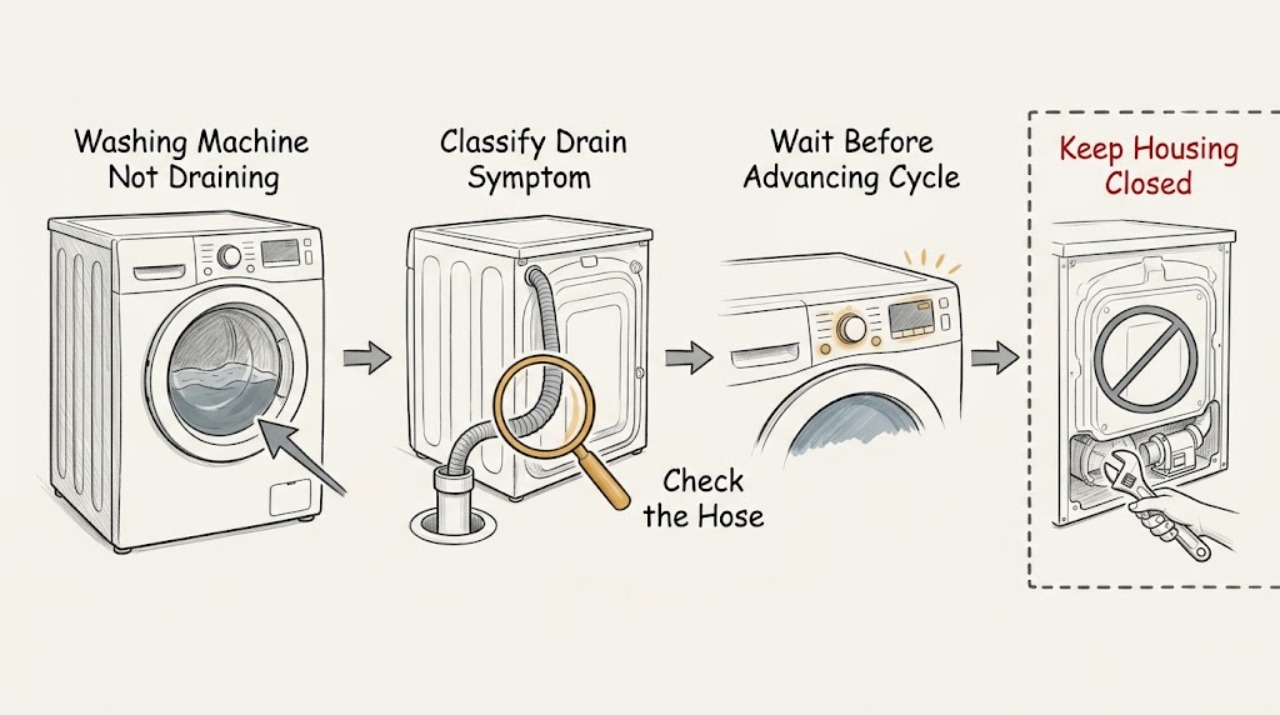
GE Washing Machine Not Draining
Wait through the model's normal pause before changing a timer or control. Then identify the washer style and check the visible drain hose for kinks, crushing, clogging, excessive height, or incorrect standpipe routing.
-
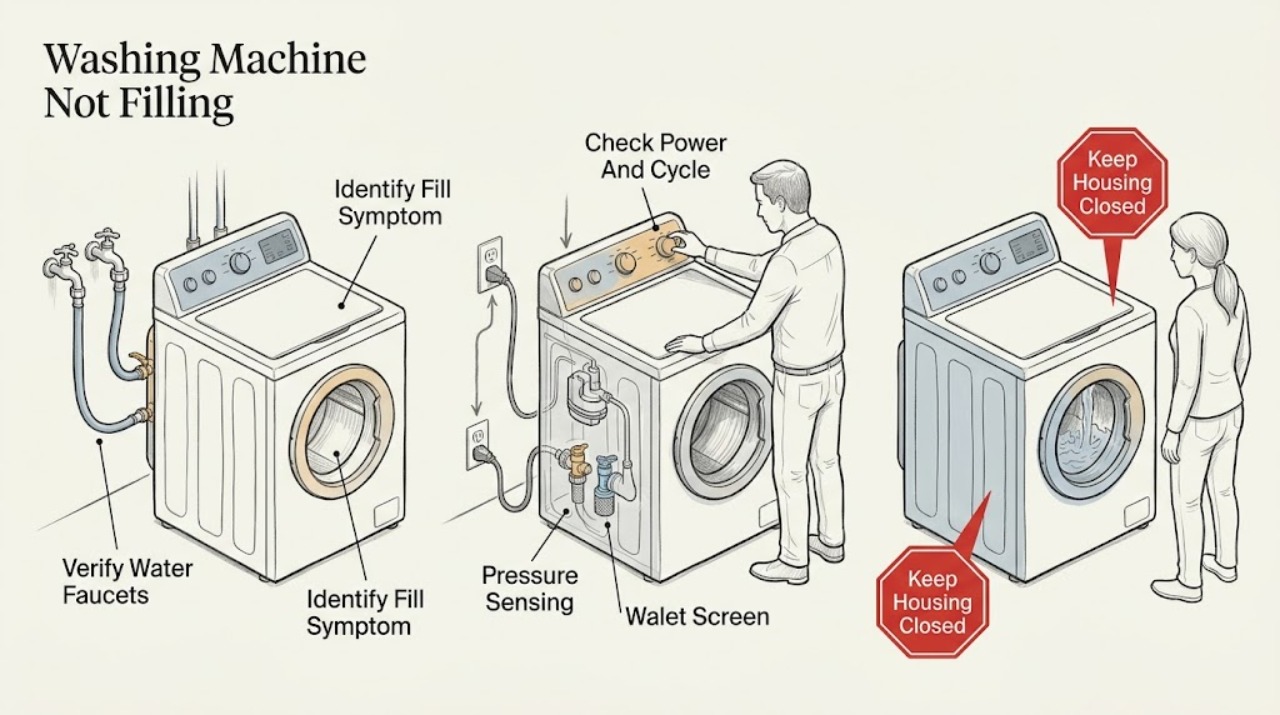
GE Washing Machine Not Filling: Check Water Supply, Controls, and Inlet Screens
If a GE washing machine does not fill, first check that power is present, the cycle was actually started, and both hot and cold supply faucets are fully open. If it fills slowly or shows a fill-related message, check the accessible inlet hoses and screens only after unplugging the machine and shutting off both faucets.
-
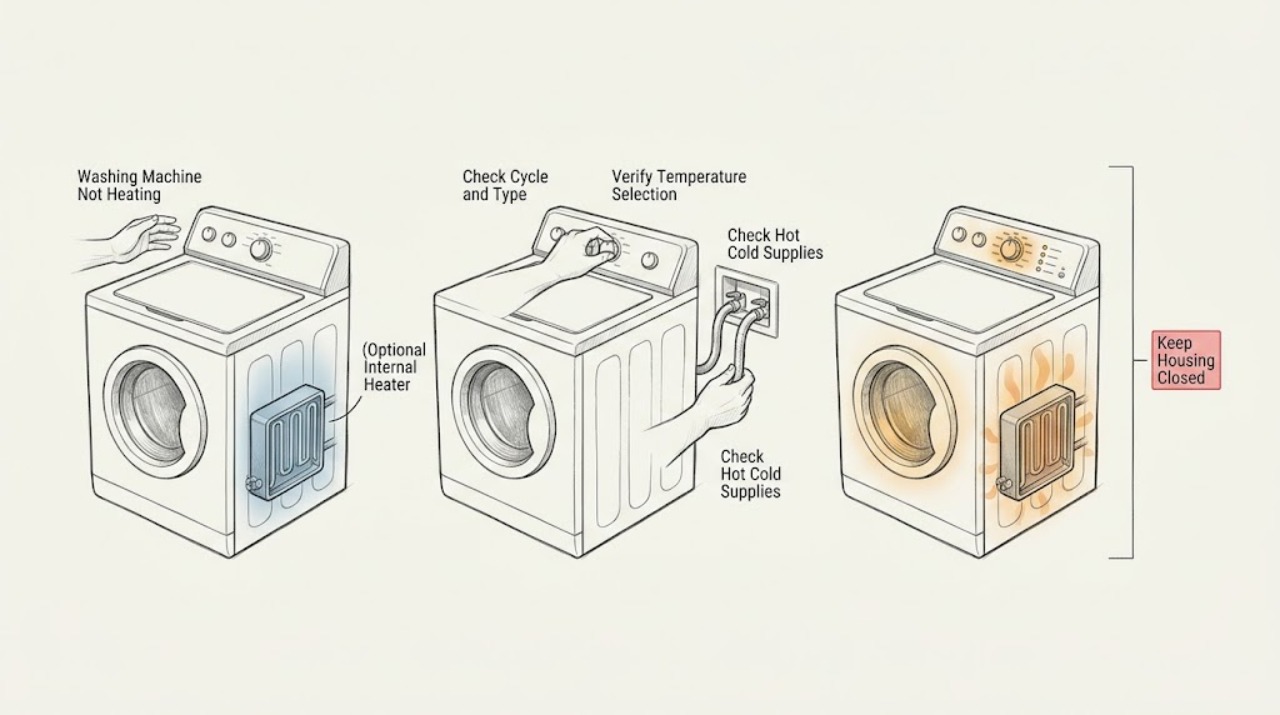
GE Washing Machine Not Heating: Check the Water Path Before the Washer
A GE washing machine that seems not to heat may be receiving normal mixed-temperature water rather than failing: GE says many washers mix hot and cold water even when HOT is selected, and WARM depends on both incoming supplies. First confirm the selected cycle and compare the hot and cold supply hoses and valves without opening the appliance.
-
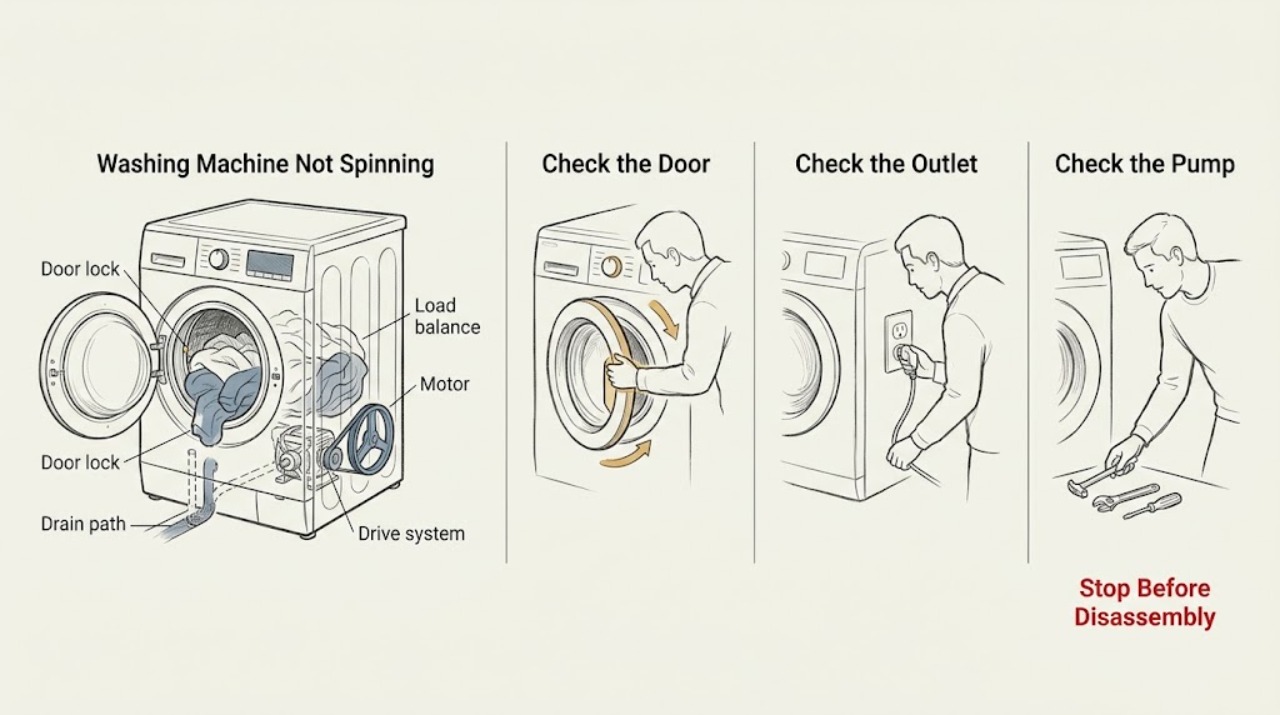
GE Washing Machine Not Spinning: Check Pauses, Drainage, and Load Balance
A GE washer may pause before pumping out and spinning, so do not manually advance a timer immediately. If it remains stuck, check that the washer has power, the lid or loading door and any dispenser drawer are fully closed, and the drain hose and household drain are clear.
-
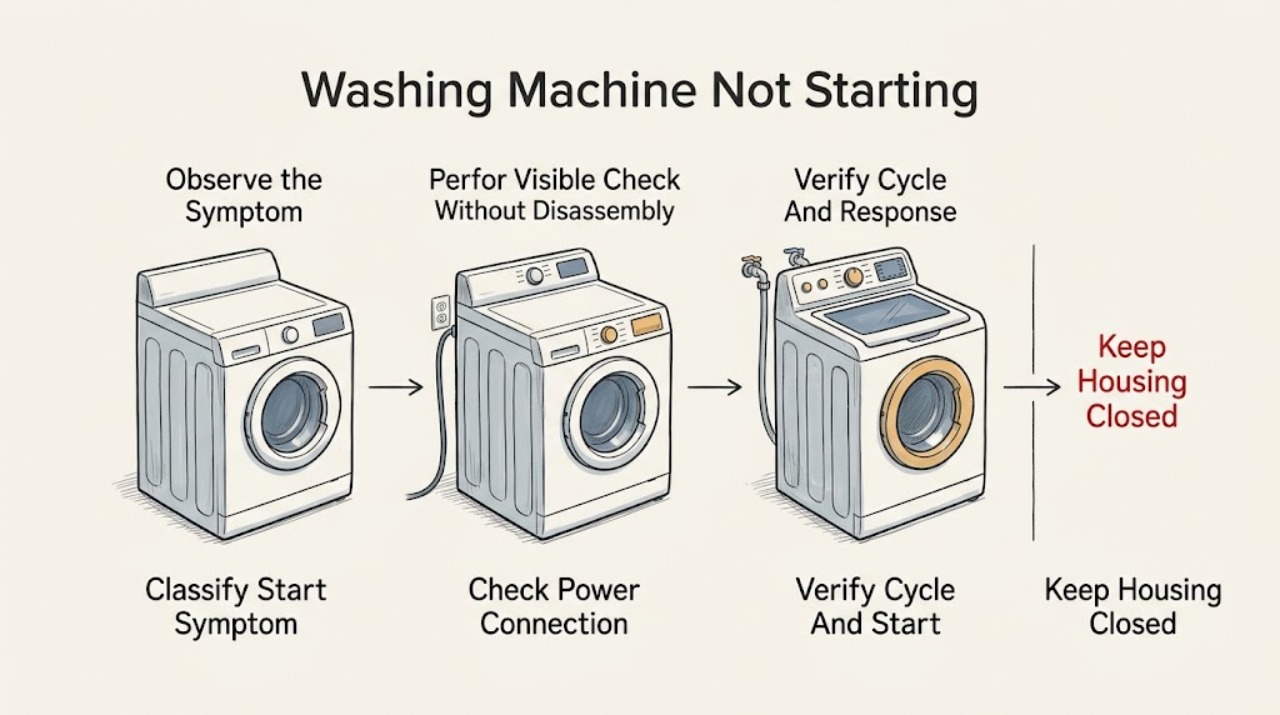
GE Washing Machine Not Starting: Check Power, Controls, Lid, and Water Safely
If a GE washing machine will not start, first check the plug, breaker or fuse, selected cycle, and Start control, then make sure the lid or door is fully closed and both hot and cold faucets are open. A top-load washer may pause or refuse to start when the lid is not sensed, while a front-load model may wait for its door lock or a model-specific control sequence.
-
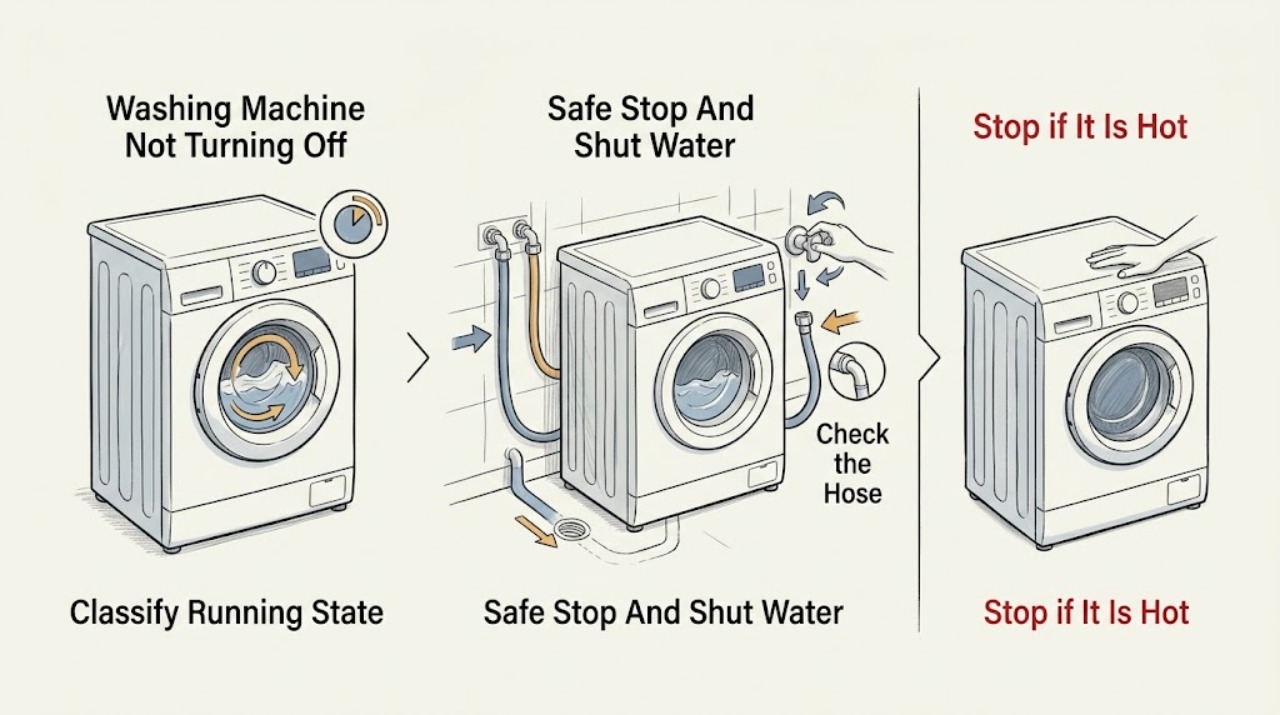
GE Washing Machine Not Turning Off: Stop Safely and Find the Cause
If a GE washing machine will not stop, press Stop or Start/Pause once, keep clear of moving parts, and close both hot and cold supply faucets if the washer is still filling. If water is on the floor, a hose is spraying, the cabinet is overheating, you smell burning, or a breaker trips, stop using it and use only a safe, dry disconnect or the home's water shutoff; arrange qualified service.
-
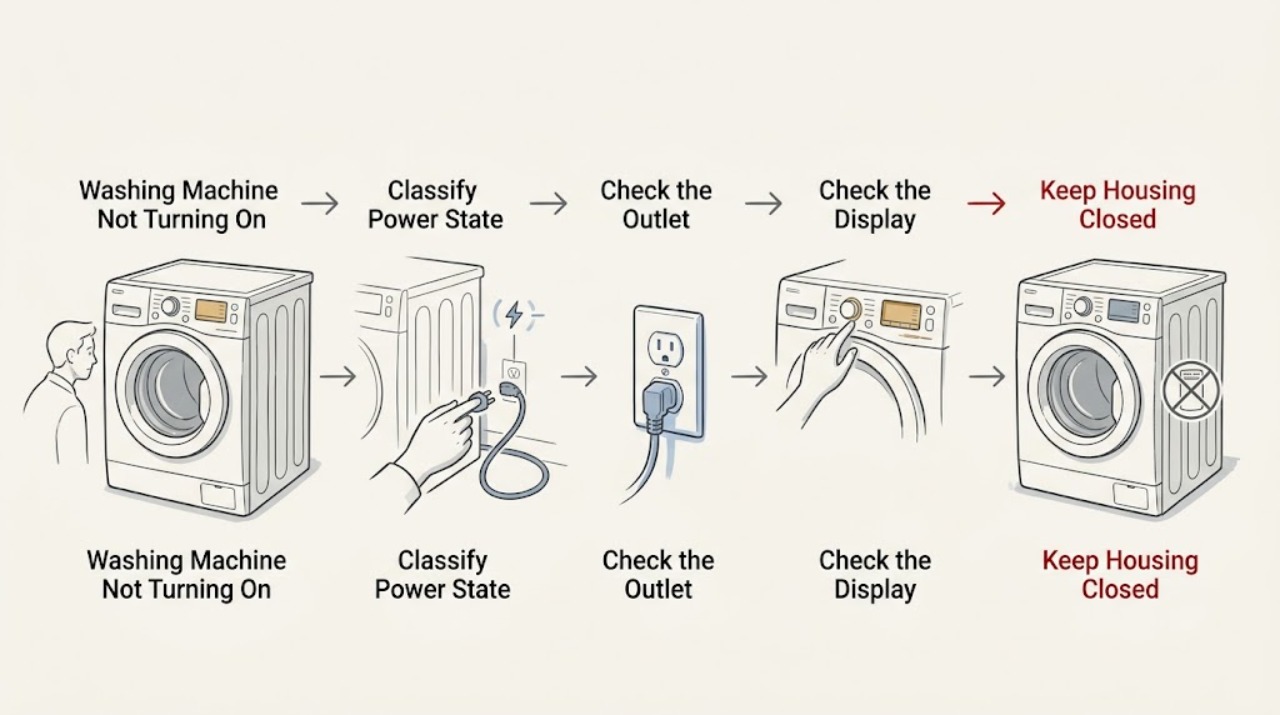
GE Washing Machine Not Turning On: Check Power, Controls, and the Lid or Door
When a GE washing machine will not turn on, first decide whether the washer has no display or response at all, or has power but will not start a cycle. From a dry, stable position, check the dedicated outlet with a small lamp, inspect the breaker without repeatedly resetting it, and make sure the washer's controls are set and the Control Lock is not preventing inputs.
-
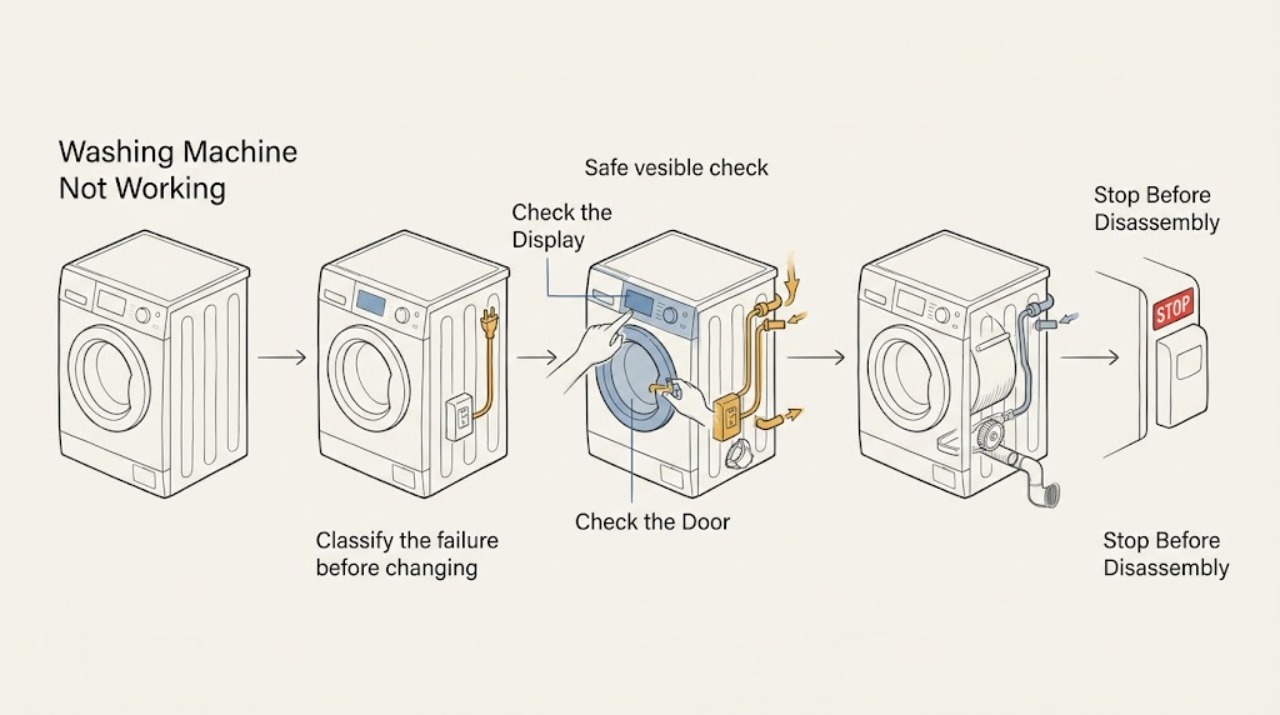
Ge Washing Machine Not Working
Separate a completely dead GE washing machine from one that has power but stops at a particular stage. From a dry, safe position, check the outlet, plug, breaker, controls, and lid or door closure.
-
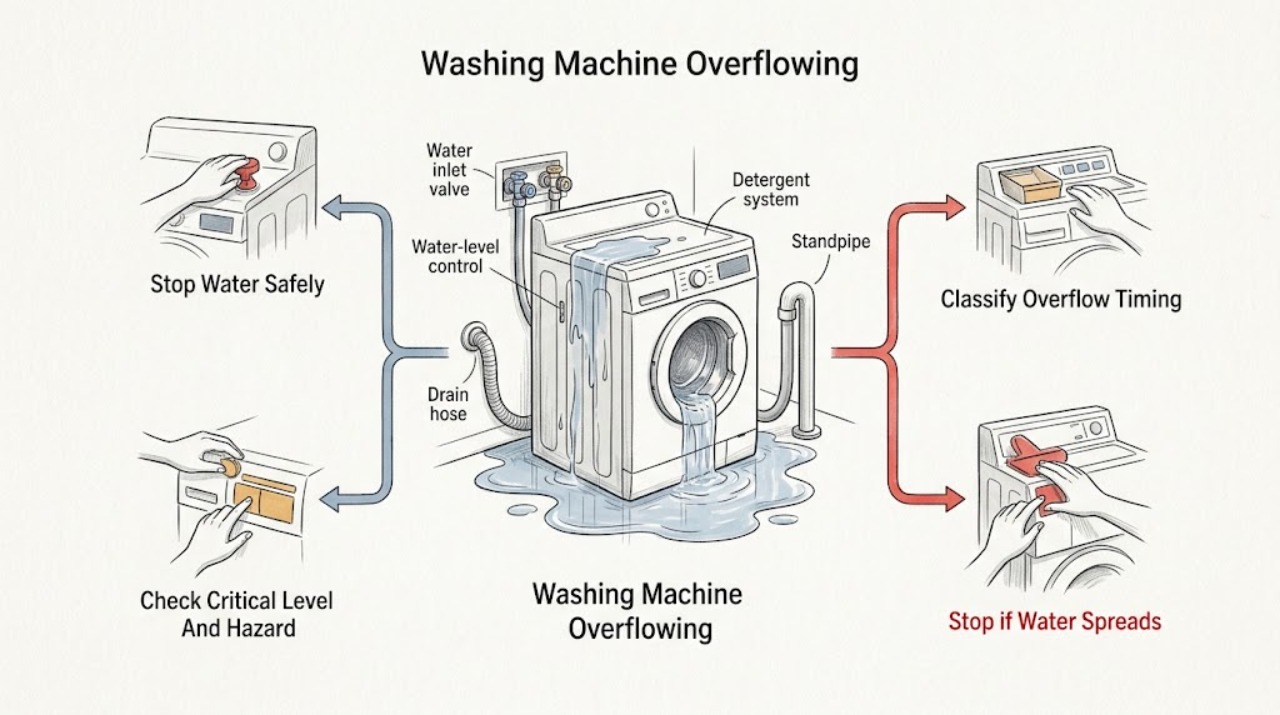
Ge Washing Machine Overflowing
Stop the fill or wash cycle immediately from a dry position. Press Pause or turn the washer off at its controls; if water is still flowing and the shutoff valves are safely reachable without standing in water or touching wet electrical parts, close both hot and cold supply valves, or shut off the home's water supply.
-
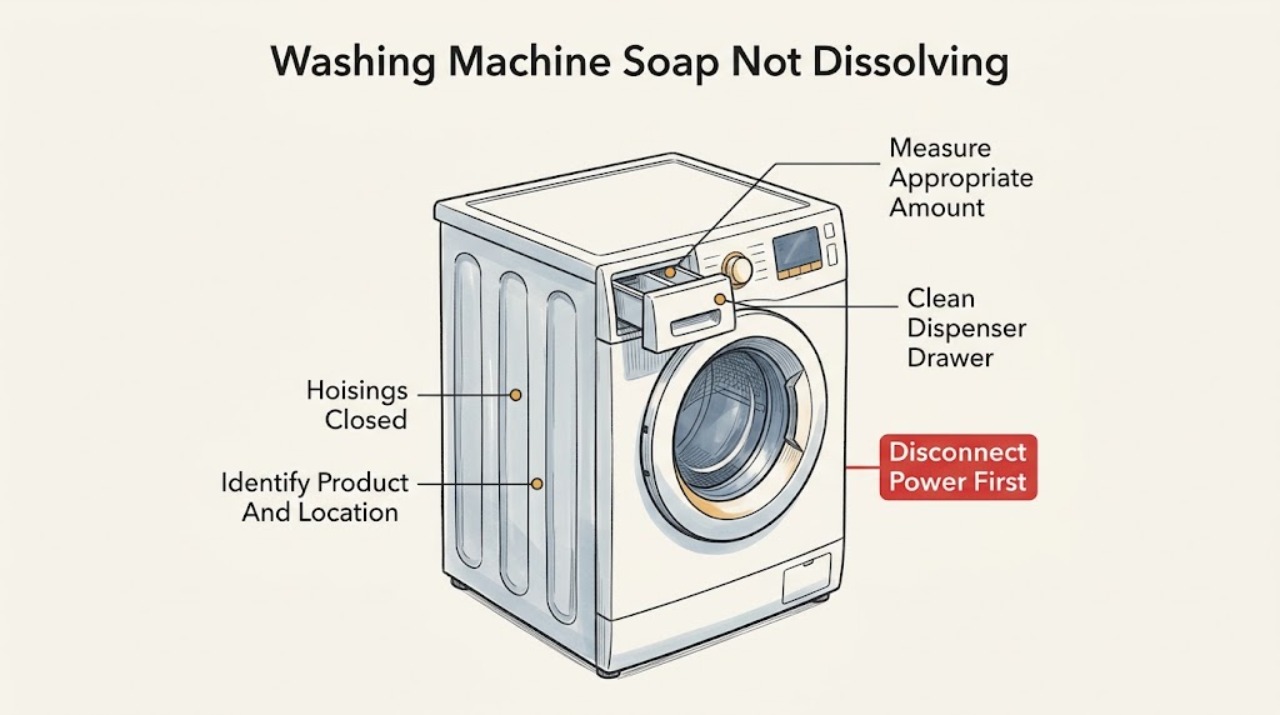
GE Washing Machine Soap Not Dissolving: Check Detergent, Dispenser, and Water Flow
If soap or detergent remains undissolved in a GE washing machine, first identify whether it is a powder, liquid, pod, sheet, or bulk-dispenser product and follow the exact model manual. GE says pods belong in the basket unless the washer has a dispenser designed for them; powder in a drawer may need the liquid insert or box removed, while liquid requires the insert to be in place.
-
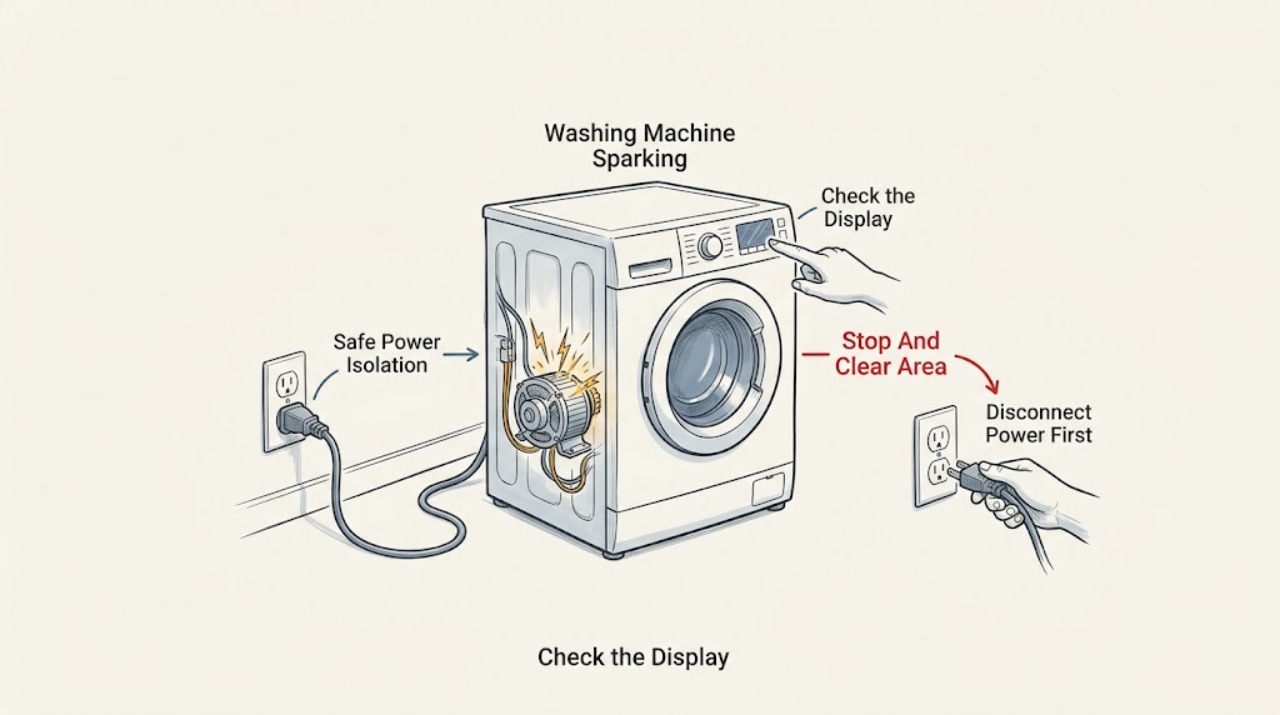
GE Washing Machine Sparking: Stop Using It and Make the Area Safe
If a GE washing machine is sparking, stop the cycle immediately and keep people away. Do not run it again, touch the cord, plug, receptacle, water, or exposed metal, and do not stand in water to reach a disconnect.
-
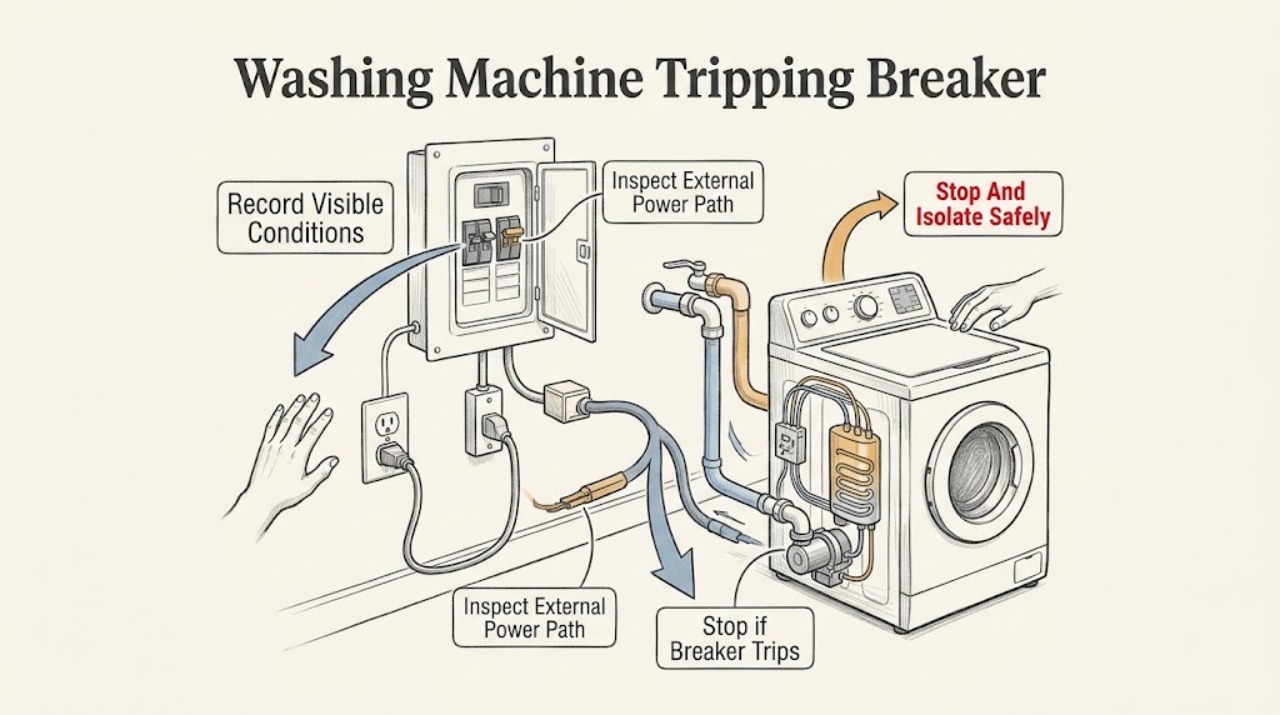
GE Washing Machine Tripping Breaker: Safe Isolation and External Checks
If a GE washing machine trips the breaker, stop treating it as a normal reset. From a dry, safe position, stop the washer, keep away from standing water, and turn off the washer's water valves if a leak or unwanted filling is present.