
On this page
Start here
Quick answer
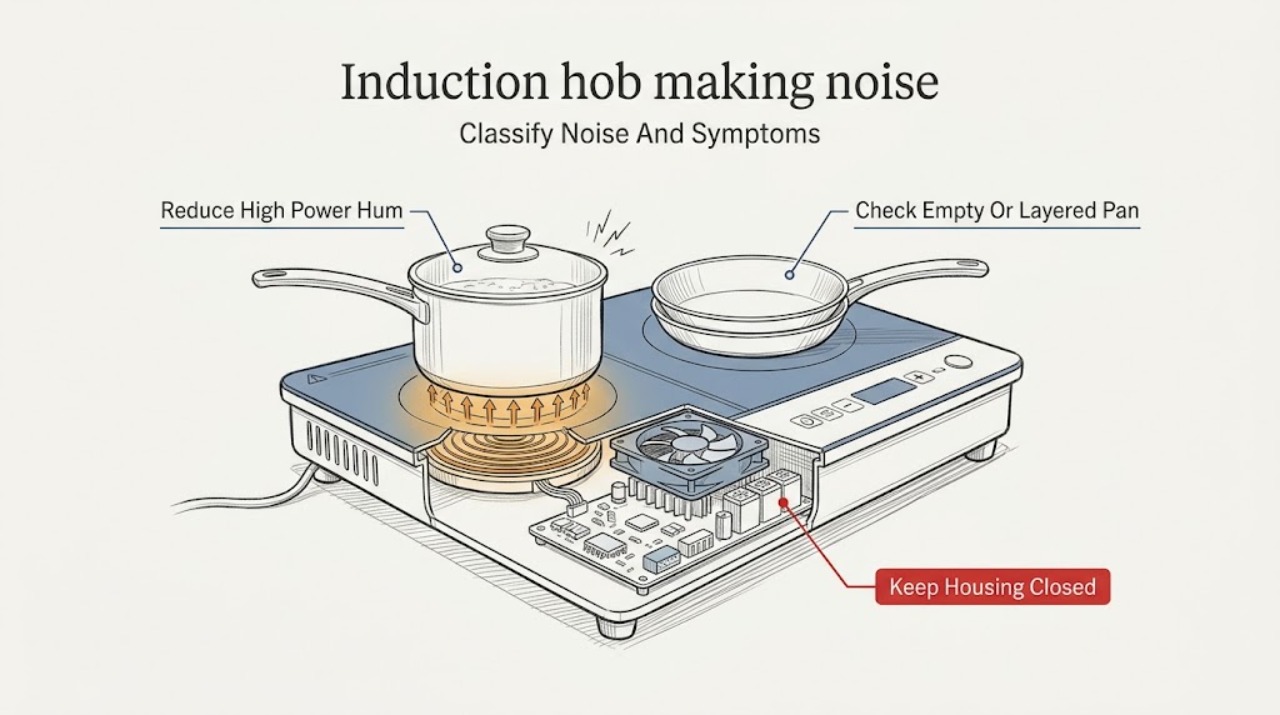
Most Bosch induction-hob noises are normal and come from the pan, the power level, or the cooling fan. First identify whether the sound follows one pan or one cooking zone. Reduce a high heat setting for transformer-like humming, add food or water to an empty pan if it whistles, move or replace unsuitable or small cookware, and reduce power when two zones are running at maximum. Occasional clicking and a fan that continues briefly after cooking can also be normal. Stop using the hob and arrange qualified Bosch or electrical service if the noise is accompanied by smoke, a burning or electrical smell, sparking, a cracked glass surface, repeated breaker trips, an error that returns, or abnormal heating; do not open the hob or attempt an electrical repair.
Work through in order
Diagnostic checks
Use only checks that match the exact appliance or system and its official guide.
-
Check 1
From a dry, safe position, listen and record whether the sound is a low hum, quiet or high-pitched whistle, crackle, click, or fan-like airflow; note the active zone, power level, pan, and any display message or heating change.
Expected result: The sound follows a particular pan or power level, occurs only with two zones, starts with an empty pan, occurs as occasional clicks, continues after switch-off, or is accompanied by an error, poor heating, smell, smoke, or sparking.
Next step: Use the matching pan, power, zone, or fan branch below; stop immediately for a hazardous symptom and do not remove a cover.
Stop if: Stop using the hob for smoke, burning or electrical smell, visible sparking, a cracked glass surface, hot or damaged wiring, liquid entering the controls, or repeated breaker trips.
Why this matters
Why: A pan- or power-linked sound is consistent with Bosch's described induction noises. A fan-like sound can be temperature control. A sound with electrical, thermal, glass, or functional symptoms needs a safety stop rather than more testing.
-
Check 2
If the sound is a low transformer-like hum, reduce the affected cooking zone by one or more power settings while keeping the pan stable and observing from outside the cooking area.
Expected result: The hum becomes quieter or disappears as the power setting is reduced, or it stays unchanged and is present even with no active heating.
Next step: Cook at the lowest setting that provides the required heat if the sound is reduced; if it does not change, turn the hob off and continue with a safe single-pan test only when there are no warning symptoms.
Stop if: Do not continue testing if the hum is accompanied by abnormal heating, an error, smell, smoke, sparking, or a power trip.
Why this matters
Why: A hum that tracks high power matches Bosch's explanation that energy transfer can make this sound. An unchanged sound is less clearly tied to induction power and should be isolated with the pan and zone checks.
-
Check 3
If the sound is a quiet whistle or crackle, switch the zone off before moving the pan, then check whether the pan is empty and whether its base is visibly layered, uneven, or made from mixed materials; do not heat an empty thin-based pan to test it.
Expected result: The whistle stops after food or water is added, the crackle changes with the pan or food quantity, or the sound remains with a suitable pan containing food.
Next step: Use a suitable, stable pan with food or water and monitor normal heating; if the sound remains, try the single-zone and second-pan comparison once without opening the hob.
Stop if: Stop if the pan overheats, the glass is damaged, the pan base is deforming, or the hob shows an error or loses normal control.
Why this matters
Why: Bosch associates an empty pan with quiet whistling and layered or mixed cookware with crackling; the sound comes from the cookware and can vary with cooking conditions. A persistent noise independent of the pan needs further isolation and may require service if other symptoms exist.
-
Check 4
For a quiet hum or intermittent noise that seems tied to one vessel, switch the zone off, allow the pan to become safe to handle, then center a larger, flat-bottomed pan that is suitable for induction on the usable cooking area; compare without touching the controls with wet hands.
Expected result: The noise becomes quieter with the larger or different pan, a pan symbol or detection indication changes, or the same noise occurs with every suitable pan and position.
Next step: Use the pan and position that give stable heating and acceptable sound; if every suitable pan behaves the same, proceed to the two-zone and fan checks and preserve the result for service.
Stop if: Do not use a cracked, unstable, empty thin-based, or visibly deformed pan, and do not scrape or lift cookware across a damaged glass surface.
Why this matters
Why: Bosch explains that a pan can hum when it is too small or unsuitable for the cooking position. A change with pan size or material points to cookware interaction, while a repeatable sound across suitable pans is not explained by one pan alone.
-
Check 5
If the sound is high-pitched and occurs while two cooking positions are at their highest setting, reduce one zone or switch it off, keeping both pans safely positioned.
Expected result: The whistle becomes quieter when one zone is reduced or stopped, or it remains with one zone at a moderate setting.
Next step: Use lower settings or stagger the zones if that removes the sound; if it remains with one suitable pan at moderate power, stop cooking if heating or controls are abnormal and arrange support.
Stop if: Stop for an error, overheating indication, loss of control, smoke, electrical smell, sparking, or a breaker trip.
Why this matters
Why: Bosch lists high-pitched whistling with two positions at maximum power and says reducing power should lessen it. Persistence with one zone at moderate power is not the same normal two-zone condition and should be documented.
-
Check 6
If the noise sounds like airflow or a small motor, switch the hob off normally after cooking and observe whether the sound fades as the hob cools; do not block vents or reach underneath the appliance.
Expected result: The sound starts at higher temperatures and fades after switch-off, or it persists while the hob is cool, becomes rough or scraping, or is accompanied by an overheat or error display.
Next step: Allow a normal fan run-on to finish with the hob clear and powered as designed; arrange qualified service if the sound persists when cool or comes with an error, overheating, or loss of heating.
Stop if: Do not dismantle the hob, obstruct ventilation, spray liquid into openings, or continue using it with burning smell, smoke, sparking, or repeated power trips.
Why this matters
Why: Bosch says the hob fan starts automatically at high temperatures and may continue after switch-off while the detected temperature is still high. A rough, persistent, or symptom-linked fan noise is not established as normal by that guidance.
-
Check 7
If the noise occurs with an error, flashing display, automatic shutoff, poor heating, or repeated recurrence, write down the complete code or symbol, affected zone, pan, power setting, and whether the symptom returns after the hob cools; consult the exact Bosch model documentation without opening the appliance.
Expected result: The code is a documented temporary overheat or cookware condition and clears after the model-specific safe action, the code is unknown, or it returns after cooling or resetting.
Next step: Follow only the model-specific external instruction once; if the code or noise returns, leave the hob off and provide the recorded details to qualified Bosch or electrical service.
Stop if: Do not repeatedly reset a returning fault, change wiring or supply connections, remove the glass, or test live electrical parts.
Why this matters
Why: Bosch's error guidance distinguishes conditions such as wet or obstructed controls, overheated electronics, and incorrect supply voltage, but the correct meaning depends on the model and exact code. A returning or unlisted error with noise needs professional diagnosis.
Use your observations
Decision map
Find the observation that best matches what you see, then follow the next safe action.
-
PATH 01Safety boundary
What you see
The sound changes when the pan, its contents, position, or power setting changes, and there are no hazard symptoms.
Do this next
Use a suitable flat pan with food or water, center it, and select the lowest effective power; this is consistent with normal cookware-related induction noise.
Why this path and its safety boundary
Safety stop: Stop if the sound is accompanied by damaged glass, overheating, smell, smoke, sparking, abnormal heating, or a returning error.
-
PATH 02Safety boundary
What you see
A high-pitched whistle appears only when two cooking positions are used at maximum power.
Do this next
Reduce one power setting or use the zones at different times; the sound should lessen according to Bosch's noise guidance.
Why this path and its safety boundary
Safety stop: Arrange service if the whistle remains with one suitable pan at moderate power or if an error, overheating, or electrical symptom appears.
-
PATH 03Safety boundary
What you see
The sound is airflow-like, starts after high heat, and fades after the hob is switched off while the electronics cool.
Do this next
Leave the hob undisturbed and keep its ventilation clear while the normal run-on finishes.
Why this path and its safety boundary
Safety stop: Seek service if the sound is rough, persists while cool, or is paired with overheating, an error, loss of heating, smell, smoke, or a power trip.
-
PATH 04Safety boundary
What you see
The noise occurs with an error, flashing display, repeated shutdown, abnormal heating, damaged glass, smell, smoke, sparking, or a breaker trip.
Do this next
Switch the hob off; if it is safe and accessible, isolate its supply without removing covers, then arrange qualified Bosch appliance or electrical service with the exact code and symptom record.
Why this path and its safety boundary
Safety stop: Do not use or reset the hob again until the hazard or recurring fault has been assessed.
-
PATH 05Safety boundary
What you see
The same noise remains with different suitable pans, one zone at moderate power, and no ordinary cookware or fan explanation.
Do this next
Stop repeated experiments, document the zone, timing, temperature, and display behavior, and arrange model-specific qualified service; an internal component cannot be identified safely from sound alone.
Why this path and its safety boundary
Safety stop: Stop immediately if any electrical, thermal, glass, or power symptom develops.
Helpful context
Understand the symptom
The sound pattern matters more than loudness alone
Induction transfers energy into the pan, so the same hob can sound different with different bases, food quantities, power levels, and zone combinations. A low hum that changes when power changes, a whistle from an empty pan, crackling from layered cookware, and occasional clicks are described by Bosch as normal. A fan may also run while the electronics cool and can continue after the hob is switched off. Begin by noting when the sound starts, whether it follows a pan, and whether cooking and display behavior remain normal.
Use isolation checks before suspecting the hob
Change one variable at a time: lower the power, add food or water, move the pan, try one known suitable pan, or switch off the other cooking zone. If the noise changes with that variable, the result points toward the cookware or normal induction operating condition. Do not place an empty thin-based pan on the hob merely to reproduce a sound; Bosch warns that empty cookware can heat rapidly and damage the pan or glass.
Know when a normal sound becomes a service symptom
A noise by itself does not prove a failed component. The decision changes when it comes with an error display, loss of heating, repeated shutdown, damaged glass, smoke, an electrical smell, sparking, or a breaker trip. Keep the hob off in those conditions and give the technician the model, exact sound pattern, display code, cooking zone, pan used, and whether the sound continued after switch-off.
Safety boundary
Stop conditions
- Stop immediately for smoke, burning or electrical smell, visible sparking, liquid entering the controls, a cracked glass surface, exposed or hot wiring, or repeated breaker trips.
- Stop using the hob when a noise is paired with abnormal heating, repeated automatic shutdown, loss of touch control, or an error that returns after the model-specific external check.
- Do not open the hob, remove the glass, bypass safety controls, block ventilation, or test live electrical components; electrical and internal repairs require a competent technician.
Only after diagnosis
Potential parts
- cooling fan assembly
Only consider this component if a qualified diagnosis finds that a rough or persistent fan noise remains when the hob is cool and the cookware-related checks are negative.
Confirm the exact Bosch model or E-number and the manufacturer's fit information before ordering; do not infer fit from appearance or sound.
When checks do not resolve it
Need a professional?
Arrange qualified Bosch appliance or electrical service when the noise persists with different suitable pans and one zone at moderate power, a fan-like noise remains when the hob is cool, an error or overheat condition returns, heating or controls are abnormal, the glass or wiring is damaged, or any smoke, smell, sparking, or breaker trip occurred.
Common questions
FAQ
Is a humming Bosch induction hob always faulty?
No. Bosch describes a low transformer-like hum at high power as a normal induction sound that should lessen when the power setting is reduced. If it remains with different suitable pans at moderate power or comes with an error, abnormal heating, smell, smoke, sparking, or a breaker trip, stop and arrange qualified service.
Why does the pan whistle on an induction hob?
Bosch links quiet whistling to empty cookware and high-pitched whistling to using two cooking positions at maximum power. Add food or water to an empty pan, or reduce one zone, and see whether the sound lessens. Do not heat an empty thin-based pan just to reproduce the noise.
Why does my Bosch hob crackle with some pans?
Bosch says crackling can occur with cookware made from layers of different materials or with different pan sizes and materials used together. Compare one stable, suitable pan at a moderate setting; a sound that changes with the cookware is usually a pan interaction rather than proof of a failed hob.
Is it normal for a Bosch induction hob fan to run after switch-off?
Yes, Bosch says the fan can continue after switch-off while the detected temperature remains high. Keep ventilation clear and allow the hob to cool. A rough sound that persists while cool, or one paired with overheating, an error, or loss of heating, needs service.
Should I reset a noisy Bosch induction hob?
Only follow the exact model's external reset guidance when there is no smell, smoke, sparking, damaged glass, wet control, or power fault. Bosch's error guide describes a limited power-cycle step for some errors; a returning code or noise is a reason to stop repeating resets and arrange support.
Can I open the hob to find the source of the noise?
No. Bosch directs repairs involving electrical components to a competent technician. Keep the checks external and limited to safe observation, cookware, and power settings; do not remove the glass, access wiring or the fan, or test live parts.
Read the exact guide
Official sources
- Bosch Induction Cooktop Error CodesBosch Home Appliances · The guide explains model-support error categories, wet or obstructed controls, overheating protection, supply-voltage warnings, and a limited external power-cycle path; exact codes remain model-dependent.
- Frequently Asked Questions (FAQ)Bosch Home Appliances · Bosch's model documentation describes normal low humming, quiet and high-pitched whistling, crackling, fan noise, and occasional clicking during induction-hob operation.
- Induction hobBosch Home Appliances · Bosch's support page directs minor hob troubleshooting to model-specific resources and states that electrical or gas-component repairs should be performed by a competent technician.
Community feedback
Share a repair observation
Share a plain-text repair observation. Accepted observations are published automatically; this page may take a moment to update.