
On this page
Start here
Quick answer
A BBQ noise must be classified by fuel type, sound, timing, and smell. A quiet hum or whistle from a gas regulator can be normal when there is no gas smell and the flame is stable, while a hiss with gas odor, lifting flame, popping, or a loose grate needs an immediate stop. Turn controls off, keep clear of hot parts, and use qualified gas service for leaks or persistent abnormal noise.
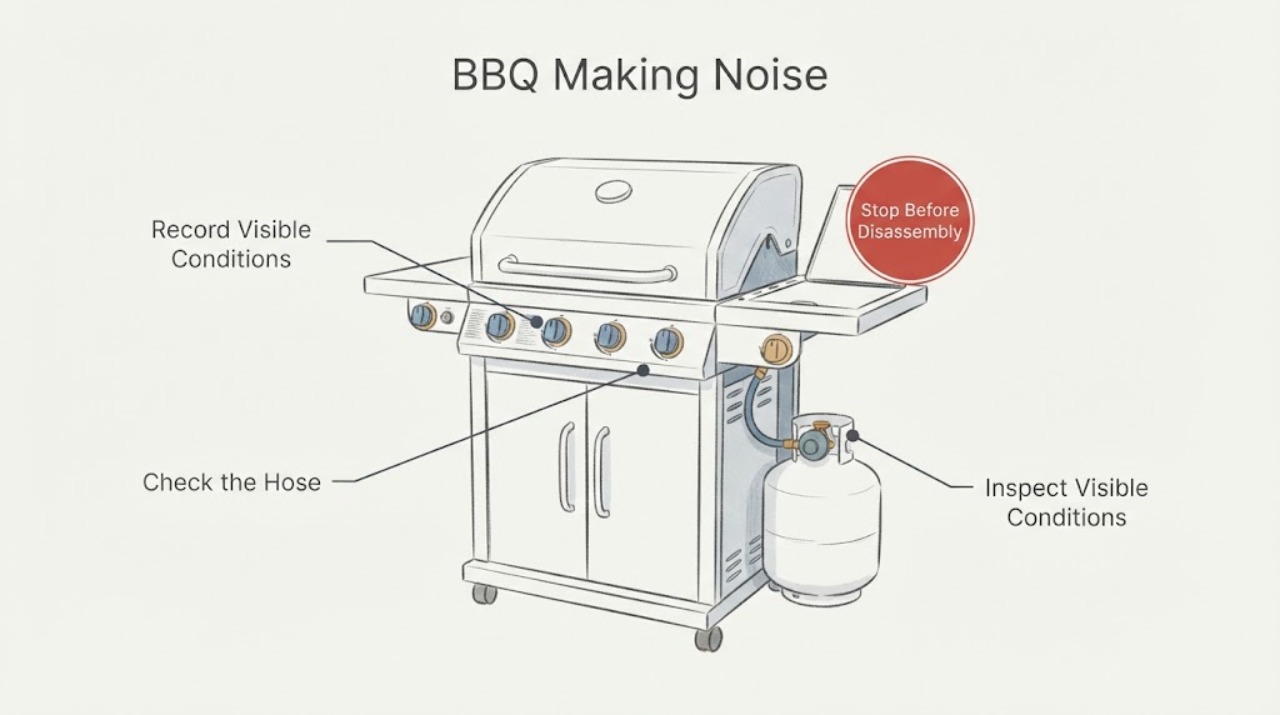
Work through in order
Diagnostic checks
Use only checks that match the exact appliance or system and its official guide.
-
Check 1
Turn the controls off and identify whether the BBQ is gas, charcoal, or electric. Record hum, whistle, hiss, pop, bang, rattle, or fan sound, and whether there is gas smell, smoke, or visible flame lift.
Expected result: A gas sound with odor or unstable flame is a safety hazard; charcoal crackle and a loose grate have different causes.
Next step: If gas is suspected, turn off the cylinder supply if safe, move away from ignition sources, and do not relight until inspected.
Why this matters
Why: This observation narrows the likely cause but does not identify an internal part by itself.
-
Check 2
For a gas grill only, inspect the accessible hose, regulator, cylinder connection, and burner area from outside for damage, frost, loose fittings, or odor. Never use a flame to test leaks or tighten hot fittings.
Expected result: Odor, damaged hose, or frost around a connection raises leak/regulator concern; no odor with a quiet hum and stable flame is more consistent with regulator vibration.
Next step: Keep the cylinder off and arrange qualified gas-grill service for leak signs, damaged fittings, or uncertainty.
Why this matters
Why: This observation narrows the likely cause but does not identify an internal part by itself.
-
Check 3
If there is no gas smell and the flame is stable, observe whether the hum/whistle changes with weather, cylinder condition, or burner setting. Do not disassemble the regulator.
Expected result: A conditional hum that varies with weather or gas supply can be normal regulator vibration; a persistent worsening sound remains unresolved.
Next step: Monitor only while supervised and within the manual’s limits; call service if it persists, changes to a hiss/pop, or affects flame stability.
Why this matters
Why: This observation narrows the likely cause but does not identify an internal part by itself.
-
Check 4
With the BBQ cool and fuel isolated, check that grates, heat plates, trays, and accessible fasteners are seated and not contacting the lid or frame. Remove grease buildup only by the model’s safe cleaning method.
Expected result: A rattle that changes when an accessible part is secured points to mechanical vibration; grease or ash can contribute to flare-ups and popping.
Next step: If the sound comes from a burner, regulator, fan, or concealed area, stop at the exterior check and arrange service.
Why this matters
Why: This observation narrows the likely cause but does not identify an internal part by itself.
-
Check 5
Record fuel type, regulator/cylinder details, sound timing, flame appearance, odor, weather, and what changed after controls were turned off.
Expected result: This evidence separates normal regulator behavior, leak risk, burner combustion, grease flare-up, and loose hardware.
Next step: Give it to qualified BBQ/gas service rather than ordering a part from sound alone.
Why this matters
Why: This observation narrows the likely cause but does not identify an internal part by itself.
Use your observations
Decision map
Find the observation that best matches what you see, then follow the next safe action.
-
PATH 01Next step
What you see
A gas grill makes a quiet hum/whistle, has no gas smell, and the flame remains stable.
Do this next
Monitor under supervision and use the manufacturer support path if the sound persists or worsens.
Why this path and its safety boundary
Why it matters: Regulator vibration is more likely and can vary with weather or cylinder conditions.
-
PATH 02Next step
What you see
There is gas smell, a hissing sound, flame lift, frost, or damaged hose/fitting.
Do this next
Turn off the cylinder if safe, keep ignition sources away, leave the area, and call qualified gas service.
Why this path and its safety boundary
Why it matters: A gas leak or combustion fault is possible; this is not normal regulator noise.
-
PATH 03Next step
What you see
The noise is popping or banging with grease, ash, flare-ups, or unstable flame.
Do this next
Turn off the grill, let it cool, clean only as directed, and arrange service if flame behavior persists.
Why this path and its safety boundary
Why it matters: Combustion/grease or airflow conditions are more likely than a simple rattle.
-
PATH 04Next step
What you see
The noise is a rattle that disappears when a cool grate, tray, or plate is seated.
Do this next
Secure the part only when cool and monitor; service any damaged or heat-distorted component.
Why this path and its safety boundary
Why it matters: Loose accessible hardware is more likely than a regulator or burner defect.
Helpful context
Understand the symptom
A gas regulator hum is different from a gas leak hiss, burner pop, fan noise, loose grate rattle, or charcoal crackle. Fuel type and smell change the safety decision; the sound alone does not identify a regulator or burner part.
BBQ designs vary across gas, charcoal, and electric units. Use brand/model instructions for burner access, cleaning, and regulator replacement; do not transfer gas steps to charcoal or electric equipment.
When checks do not resolve it
Need a professional?
Call qualified gas/BBQ service for gas odor, hissing, unstable/lifting flame, damaged hose/regulator, persistent popping, or noise from a concealed burner/control. Provide fuel type and observations.
Common questions
FAQ
Is a humming gas BBQ regulator normal?
A quiet hum can be normal when there is no gas smell and the flame is stable; Char-Broil and Napoleon both make that qualification. Hiss, odor, frost, or flame lift needs service.
Can I test a BBQ gas leak with a lighter?
No. Never use a flame to test a gas connection. Turn off the supply if safe and arrange qualified gas service for odor, hissing, frost, or damaged fittings.
Why does a BBQ pop?
Grease, ash, burner airflow, or unstable combustion can contribute. Turn it off, let it cool, clean as directed, and service persistent flame or popping symptoms.
Read the exact guide
Official sources
- Grill SupportNapoleon · Napoleon grill support guidance on normal regulator hum, gas smell with flame lifting, grease flare-ups, and safe support routing.
- The gas grill makes soundsChar-Broil · Char-Broil gas-grill noise guidance: regulator humming/whistling, weather or gas-bottle conditions, and no-gas-smell qualification.
Community feedback
Share a repair observation
Share a plain-text repair observation. Accepted observations are published automatically; this page may take a moment to update.