
On this page
Start here
Quick answer
Treat a new or sharply louder Amana furnace noise as a symptom, not as a part diagnosis. From a safe position, note when the sound starts—at ignition, while the blower runs, at shutdown, or continuously—and whether it is a hum, rattle, scrape, squeal, bang, roar, or airflow whistle. Check only the thermostat setting, visible supply and return vents, and the air filter if it can be accessed without opening the furnace; a dirty filter or blocked airflow can change pressure and sound. Do not remove furnace panels, reach near burners or a blower, lubricate an unknown motor, adjust gas pressure, or tighten electrical or combustion parts. Turn the system off and obtain qualified HVAC service for scraping, grinding, repeated banging, a burning smell, exhaust or vent concern, poor heat, frequent cycling, water, or a noise that worsens. If a carbon-monoxide alarm sounds, anyone has headache, dizziness, nausea, weakness, confusion, or shortness of breath, or gas is smelled or heard, leave immediately, avoid operating electronics before leaving when gas is suspected, and call emergency or local gas authorities from outside.
Before you begin
Safety first
- Owner checks are limited to safe observation, filter and visible-vent checks, and recording behavior. A licensed HVAC professional must handle cabinet access, blower or inducer inspection, electrical connections, gas pressure, burners, ignition, heat exchanger, venting, controls, refrigerant or duct diagnosis, and any repair involving heat, fuel, combustion, live voltage, or moving parts.
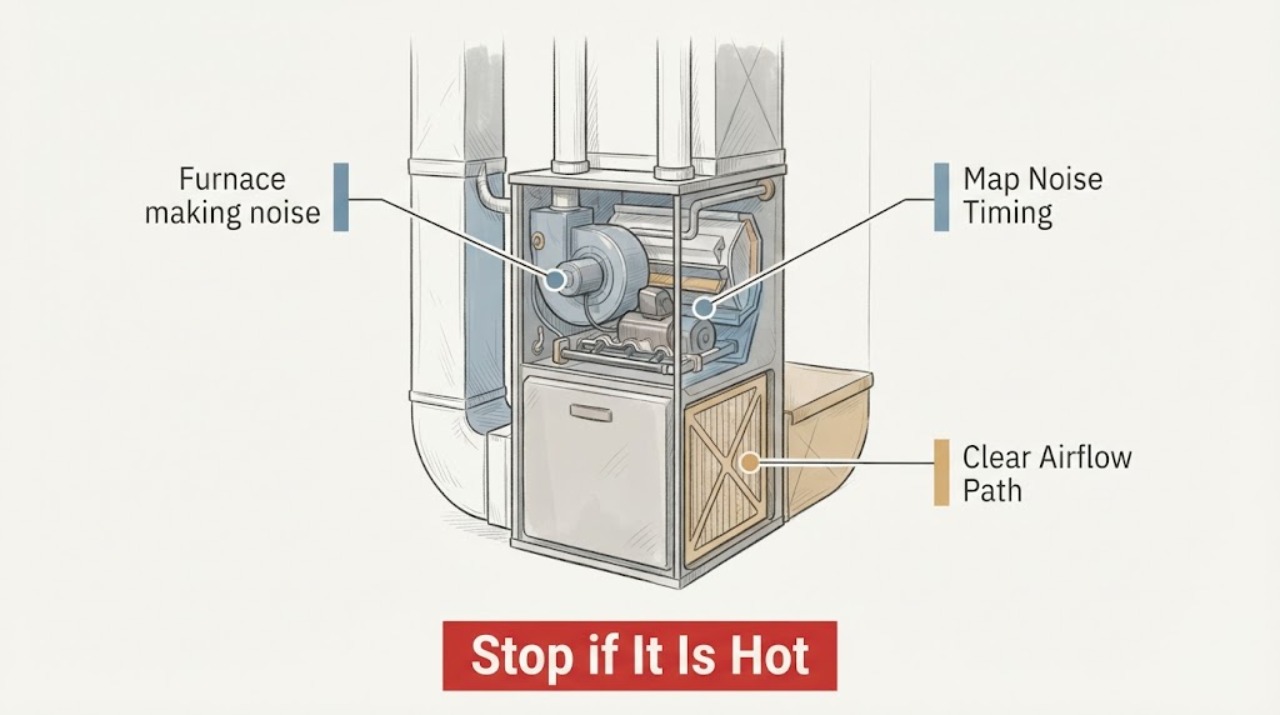
Work through in order
Diagnostic checks
Use only checks that match the exact appliance or system and its official guide.
-
Check 1
Before listening closely, check from a safe position for a CO alarm, gas odor or hissing, smoke, burning odor, visible flame outside the normal enclosure, exhaust or vent damage, water near electrical equipment, or people with headache, dizziness, weakness, nausea, confusion, chest pain, or shortness of breath.
Expected result: A CO alarm sounds, gas is smelled or heard, smoke or burning odor is present, symptoms occur, or none of these hazards is present.
Next step: If any hazard is present, leave immediately without operating electronics when gas is suspected, call emergency services or local gas authorities from outside, and do not re-enter until cleared. Otherwise continue only with the safe timing and airflow checks.
Stop if: Stop immediately for any alarm, gas smell or sound, smoke, flame outside the enclosure, rapidly worsening noise, or health symptom.
Why this matters
Why: An alarm, gas indication, combustion concern, or possible CO symptoms is an emergency and overrides sound diagnosis. No immediate warning sign allows only limited, non-invasive observation; it does not prove the furnace is safe.
-
Check 2
Without removing panels or touching the furnace, note whether the noise starts at ignition, when the inducer or blower begins, only at supply registers, at shutdown, or continuously. Record whether it is a hum, whistle, rattle, scrape, squeal, bang, roar, or vibration.
Expected result: The sound is limited to airflow, begins with a motor, occurs at ignition or shutdown, is a metal-on-metal scrape, or is continuous even when the thermostat is not calling.
Next step: Make one short recording from outside the equipment area if safe, then turn the furnace off for scraping, grinding, repeated banging, burning odor, or worsening vibration and call a qualified HVAC technician.
Stop if: Stop for ignition bangs, rumbling, scraping, grinding, electrical buzzing with odor, or any sound accompanied by poor heat, smoke, gas, or CO concern.
Why this matters
Why: Timing helps a technician distinguish airflow or duct resonance from a blower or inducer issue, ignition or combustion concern, cabinet vibration, or a control or electrical symptom. It cannot identify the failed part by sound alone.
-
Check 3
With the furnace off and no hazard present, look at accessible return and supply vents for blockage, and inspect the air filter only as the owner's manual allows. Do not run the furnace with a door or panel removed and do not reach into the blower compartment.
Expected result: A filter is visibly loaded, a return or supply vent is blocked, many registers are closed, the filter is clean and airflow is open, or access is unsafe.
Next step: Replace a loaded filter only with the correct model-approved type and safe access, then observe one normal cycle. If noise persists, worsens, or is not airflow-related, turn the furnace off and call a technician.
Stop if: Stop for a missing or damaged filter, hot cabinet, exposed wiring, water, smoke, a blocked combustion or vent path, or any need to remove a furnace panel.
Why this matters
Why: Restricted airflow can change pressure and air speed and increase register or cabinet noise. A clean filter and open vents make a mechanical, duct, control, or combustion cause more likely. Unsafe access needs professional inspection.
-
Check 4
From outside the furnace cabinet and without touching moving or hot parts, look for a loose-looking exterior panel, nearby object vibrating against the cabinet, visible duct movement, or debris around an exterior vent. Do not tighten fasteners or insert tools.
Expected result: A nearby object or duct visibly vibrates, an exterior panel appears loose, the vent is obstructed or damaged, or no external source is visible.
Next step: Move only a loose household object that is clearly outside the furnace and safe to handle. Leave furnace panels, ducts, venting, and fasteners alone; call qualified service for any furnace or vent issue.
Stop if: Stop for vent damage or blockage, soot, exhaust odor, hot surfaces, a panel that is detached, or any need to touch the furnace cabinet or venting.
Why this matters
Why: A contact point or duct resonance may amplify sound, but a loose panel can also reflect an internal problem. An obstructed or damaged combustion vent can create a safety risk. No external clue does not clear the furnace.
-
Check 5
If no hazard is present, record whether the home still receives heat, whether the thermostat reaches its setting, whether the furnace starts and stops normally, and whether the noise changes with the blower or repeats each cycle. Do not repeatedly cycle the furnace to reproduce a severe noise.
Expected result: Heat is normal and the noise is mild, heat is weak or absent, the furnace cycles unusually, the noise repeats at ignition or shutdown, or the noise worsens during operation.
Next step: Turn the furnace off for severe, repeated, or worsening noise and arrange qualified HVAC service. Do not bypass a limit, reset a fault repeatedly, or adjust gas or thermostat controls as a noise fix.
Stop if: Stop for poor heat with combustion odor, repeated ignition bangs, short cycling, smoke, soot, a hot electrical smell, or a noise that becomes louder or changes character.
Why this matters
Why: Normal heat does not rule out a developing motor, bearing, cabinet, duct, or airflow problem. Weak heat, abnormal cycling, ignition or shutdown bangs, and worsening sound raise the need for prompt service and may involve combustion, controls, airflow, or heat-transfer components.
-
Check 6
Record the Amana model and serial label if safely visible, noise description and timing, filter condition and last change, thermostat behavior, heat output, visible vent or duct concerns, recent service, and a short audio or video taken from a safe location.
Expected result: The model is known, the model is unknown, the sound began after service or filter work, or the sound appeared without a recent change.
Next step: Provide the record to a licensed HVAC contractor or Amana dealer and arrange an inspection. Keep the furnace off when the sound is severe, worsening, or paired with a safety symptom.
Stop if: Stop documenting if it requires entering an unsafe mechanical room, removing panels, touching wiring, approaching flame or exhaust, or reproducing a dangerous noise.
Why this matters
Why: Model, history, and timing help the technician distinguish a design-specific operating sound from a new motor, blower, duct, filter, control, or combustion issue. Missing model information does not justify opening the furnace.
Use your observations
Decision map
Find the observation that best matches what you see, then follow the next safe action.
-
PATH 01Next step
What you see
The sound is a whistle, rush, or roar at registers and changes with airflow, while the filter or vents are visibly restricted and no combustion warning is present.
Do this next
Use the owner's manual to replace an accessible loaded filter with the correct type and open only an obviously closed supply register. If noise persists or access is uncertain, call a licensed HVAC professional; do not change blower settings.
-
PATH 02Next step
What you see
The noise is a new rattle, vibration, clatter, scrape, grinding sound, or squeal from the cabinet or equipment and is not explained by an external household object.
Do this next
Turn the furnace off if the sound is severe, metallic, worsening, or accompanied by poor heat. Keep panels closed and arrange qualified inspection of the blower, inducer, cabinet, and ductwork.
-
PATH 03Next step
What you see
A bang, boom, rumble, or sharp change occurs when the furnace ignites or shortly after a heat call, especially with soot, odor, poor heat, or repeated cycling.
Do this next
Stop operating the furnace and call a qualified HVAC technician. Do not relight, adjust gas pressure, clean burners, bypass a safety, or remove panels. Leave immediately for gas smell, CO alarm, or symptoms.
-
PATH 04Next step
What you see
Noise occurs with weak or absent heat, repeated starts and stops, delayed blower behavior, or a thermostat that does not reach its setting.
Do this next
Limit operation and arrange prompt licensed HVAC diagnosis. Do not keep resetting the furnace or changing gas, limit, or control settings as a workaround.
-
PATH 05Next step
What you see
A CO alarm sounds, gas is smelled or heard, people develop headache, dizziness, weakness, nausea, confusion, chest pain, or shortness of breath, or a furnace vent is damaged or obstructed.
Do this next
Leave immediately. When gas is suspected, do not operate lights, phones, or other electronics before leaving; call 911 or local gas authorities from outside and do not re-enter until cleared.
-
PATH 06Next step
What you see
The sound is mild but new, heat and cycling appear normal, no gas, CO, smoke, water, or burning odor is present, and the filter and vents are accessible.
Do this next
Make one safe recording, check the filter and visible vents, monitor without repeated cycling, and schedule a licensed HVAC inspection if the sound remains or changes.
Helpful context
Understand the symptom
Use the timing and character of the noise to narrow the system area
A furnace can make different sounds during ignition, combustion, inducer operation, blower operation, duct expansion, and shutdown. A soft operating hum may be normal for a model, but a sudden change to buzzing, rattling, clatter, squeal, roar, scraping, or repeated banging deserves attention. Amana describes changed sounds as a reason to have a licensed HVAC dealer inspect the system; the sound alone cannot identify a failed component.
Airflow is the one low-risk homeowner check
If the sound comes from supply registers or changes when the blower runs, look for a visibly blocked return or supply vent and check the filter according to the furnace's instructions. Amana explains that blocked filters, vents, intake ductwork, or too many closed registers can change air pressure and speed, increasing sound. Replace a filter only with the correct type and only when the access is safe; do not run the furnace with panels removed.
Do not open the combustion or blower compartment to chase a noise
A furnace contains fuel-burning components, electrical connections, moving motors, hot surfaces, and a heat exchanger. ENERGY STAR lists gas connections, burner combustion, heat exchanger, electrical connections, blower components, and controls as service checks, not casual noise fixes. Removing a panel or reaching inside can expose you to moving parts, flame, live voltage, hot metal, or combustion hazards. Turn the equipment off and arrange qualified service instead.
Separate airflow noise from mechanical or combustion warning signs
An airflow whistle or register roar may follow a restricted filter, blocked vent, duct restriction, or pressure imbalance. Rattling, scraping, grinding, or squealing can indicate loose or worn moving parts, bearings, a motor, debris, or an unbalanced component. A bang at ignition, a rumble, exhaust concern, burning odor, or soot is not a filter diagnosis and should be handled by a qualified HVAC technician. Do not infer that a quieter sound means the furnace is safe.
Gas and carbon-monoxide symptoms override ordinary troubleshooting
Gas- and oil-burning furnaces can produce carbon monoxide. CDC says CO is invisible and odorless, and CPSC says to leave immediately if gas is smelled or heard; CPSC also says never ignore a CO alarm, get outside, and call 911. Do not investigate the furnace, reset a safety device, relight anything, or operate switches or phones inside when gas is suspected. From outside, contact emergency services, local gas authorities, or a qualified professional as appropriate.
Safety boundary
Stop conditions
- Stop immediately and leave for a CO alarm, gas odor or hissing, smoke, flame outside the normal enclosure, or compatible headache, dizziness, nausea, weakness, confusion, chest pain, or breathing symptoms. Call emergency services or local gas authorities from outside and do not re-enter until cleared.
- Turn the furnace off and call a qualified HVAC professional for ignition bangs, rumbling, grinding, scraping, worsening vibration, burning odor, soot, water, damaged venting, poor heat, repeated cycling, or a hot electrical smell.
- Do not remove furnace panels, reach near burners, blower or inducer assemblies, alter gas pressure, bypass a limit or safety, relight the furnace, tighten electrical or combustion parts, lubricate an unknown motor, or clean a burner as a guess.
- Limit owner checks to thermostat observation, safe visual checks of filter and vents, moving an unrelated household object, and recording the sound from a safe position. Do not run the furnace with panels removed or keep cycling it to reproduce a severe noise.
Only after diagnosis
Potential parts
- Amana furnace air filter
Relevant only when the exact furnace or filter cabinet specification confirms the filter is loaded or damaged and the noise pattern supports restricted airflow.
Match the exact model, cabinet size, filter dimensions, orientation, and system requirements; do not use an unknown restrictive filter as a noise experiment. - Amana blower motor or blower assembly
Relevant only when a qualified inspection confirms motor, bearing, wheel, or blower-assembly wear as the source of the noise.
Match model, motor type, speed or control requirements, wheel, and electrical specifications. Blower access involves moving and electrical hazards and is not an owner noise repair. - inducer motor or assembly
Relevant only when the sound timing and professional diagnosis point to the draft inducer or its assembly.
Confirm exact furnace model, venting arrangement, motor and gasket requirements, and combustion-safe installation; do not open or run the combustion compartment. - furnace blower wheel or bearing service
Relevant only when qualified inspection finds debris, imbalance, bearing wear, or a damaged wheel rather than a filter or duct restriction.
Verify wheel dimensions, motor match, balance, and safe removal procedure. Do not lubricate or reach into the blower without professional isolation and access. - furnace igniter, burner, or combustion service
Relevant only when a licensed technician confirms an ignition or burner component fault after evaluating gas supply, combustion, heat exchanger, and venting.
Match the exact furnace model and fuel or ignition system. Combustion components require qualified service; do not select or replace them from a sound symptom alone.
When checks do not resolve it
Need a professional?
Call a licensed HVAC contractor or Amana dealer for any new or worsening furnace noise that remains after a safe filter and visible-vent check, and promptly for rattling, scraping, grinding, squealing, ignition bangs, rumbling, poor heat, abnormal cycling, burning odor, soot, water, damaged venting, electrical concerns, or a noise from inside the cabinet. Treat gas odor, a CO alarm, or compatible symptoms as an emergency requiring immediate exit and outside help.
Safety scope: Owner checks are limited to safe observation, filter and visible-vent checks, and recording behavior. A licensed HVAC professional must handle cabinet access, blower or inducer inspection, electrical connections, gas pressure, burners, ignition, heat exchanger, venting, controls, refrigerant or duct diagnosis, and any repair involving heat, fuel, combustion, live voltage, or moving parts.
Have this ready
- Provide the Amana model and serial information if safely visible, noise type and timing, recording from a safe location, thermostat and heat behavior, filter type and condition, accessible vent observations, onset after service or weather, odors, soot, water, vent concerns, and any alarm or symptom. Do not remove panels to gather details.
Common questions
FAQ
Is an Amana furnace hum normal?
Some operating hum is expected, but Amana says a significant change to buzzing, roar, clatter, squeal, or other unusual sound warrants professional inspection. Timing, location, airflow, heat, and safety symptoms matter more than the label of the sound.
Why is my Amana furnace rattling?
Possible areas include loose parts, a motor or bearing, debris, an unbalanced component, cabinet or duct contact, or airflow restriction. Look only for an unrelated object or blocked filter or vent; do not open the furnace or tighten internal hardware.
Can a dirty filter make an Amana furnace noisy?
Restricted airflow can change pressure and air speed and increase sound. Amana and ENERGY STAR support checking an accessible filter, but a filter check does not clear a mechanical, combustion, or electrical problem. Use only the correct filter and safe access.
What does a banging sound at furnace startup mean?
A bang or rumble at ignition may involve combustion, ignition, burner, heat-exchanger, venting, or control conditions. Stop operating the furnace and call a qualified HVAC technician; do not relight, adjust gas pressure, or remove panels.
Why does my Amana furnace squeal or grind?
A changed squeal or grinding sound can involve a motor, bearing, blower or inducer, debris, or an unbalanced moving part. Turn the furnace off if the sound is severe or worsening and arrange qualified inspection rather than lubricating or reaching inside.
Can I remove the Amana furnace panel to listen better?
No. Removing a panel can expose moving parts, hot surfaces, live voltage, burners, and combustion hazards, and the furnace may not operate safely with access panels removed. Record the sound from outside and call a professional.
What if the furnace noise comes from the vents?
Blocked filters, supply or return vents, intake ductwork, closed registers, and duct resonance can increase airflow noise. Check only visible, accessible restrictions; persistent vent noise needs licensed duct and airflow inspection.
What if the noise comes with weak heat or short cycling?
That combination suggests more than a harmless operating sound and may involve airflow, controls, motor, combustion, heat exchanger, or sizing. Limit operation and call a licensed HVAC contractor. Do not repeatedly reset or adjust safety controls.
What should I do if a CO alarm sounds while the Amana furnace is noisy?
Leave immediately, get outside, and call 911. Do not ignore the alarm or re-enter until authorities or qualified professionals say it is safe. CO is invisible and odorless, so do not wait for a furnace smell.
What information should I give the HVAC technician?
Share the model, sound recording, timing in the heat cycle, location, filter and vent observations, heat and cycling behavior, onset after service or weather, odors, soot, water, vent concerns, and any alarm or symptoms. Do not open the furnace to obtain more details.
Read the exact guide
Official sources
- HVAC Learning CenterAmana brand · Amana learning material used for the blower, heat exchanger, burner, inducer, flue, ductwork relationship and the role of professional inspection for gas-furnace systems.
- Protect Your Family from Carbon Monoxide PoisoningU.S. Consumer Product Safety Commission · CPSC safety guidance used for annual trained service, CO alarms, leaving immediately for a sounding alarm or gas leak, outside calls, and symptom recognition.
- Air Conditioner SoundsAmana brand · Amana's official HVAC learning article is used for general sound-pattern and airflow reasoning applicable to forced-air equipment; it is not treated as a furnace-specific part diagnosis.
- Maintenance ChecklistENERGY STAR · ENERGY STAR guidance used for qualified maintenance of gas connections, combustion, heat exchanger, electrical connections, blower and controls, and the limited homeowner action of checking or changing the filter.
- Amana Brand AD9T96 96% AFUE Gas FurnaceAmana brand · Amana product documentation used only to establish that gas-furnace models contain sound-isolated blower and induced-draft components and multiple fuel, heat, control, and airflow subsystems.
- Furnace Safety Fact SheetCenters for Disease Control and Prevention · CDC furnace-safety guidance used for the fact that gas and oil furnaces produce CO and that CO is invisible and odorless; emergency actions are paired with CPSC guidance.
Community feedback
Share a repair observation
Share a plain-text repair observation. Accepted observations are published automatically; this page may take a moment to update.