
HVAC guides
Furnaces Repair Guides
Guides for furnace heating, ignition, airflow, cycling, and control problems.
Published furnaces guides
Choose the guide that best matches the equipment and symptom you are seeing.
-
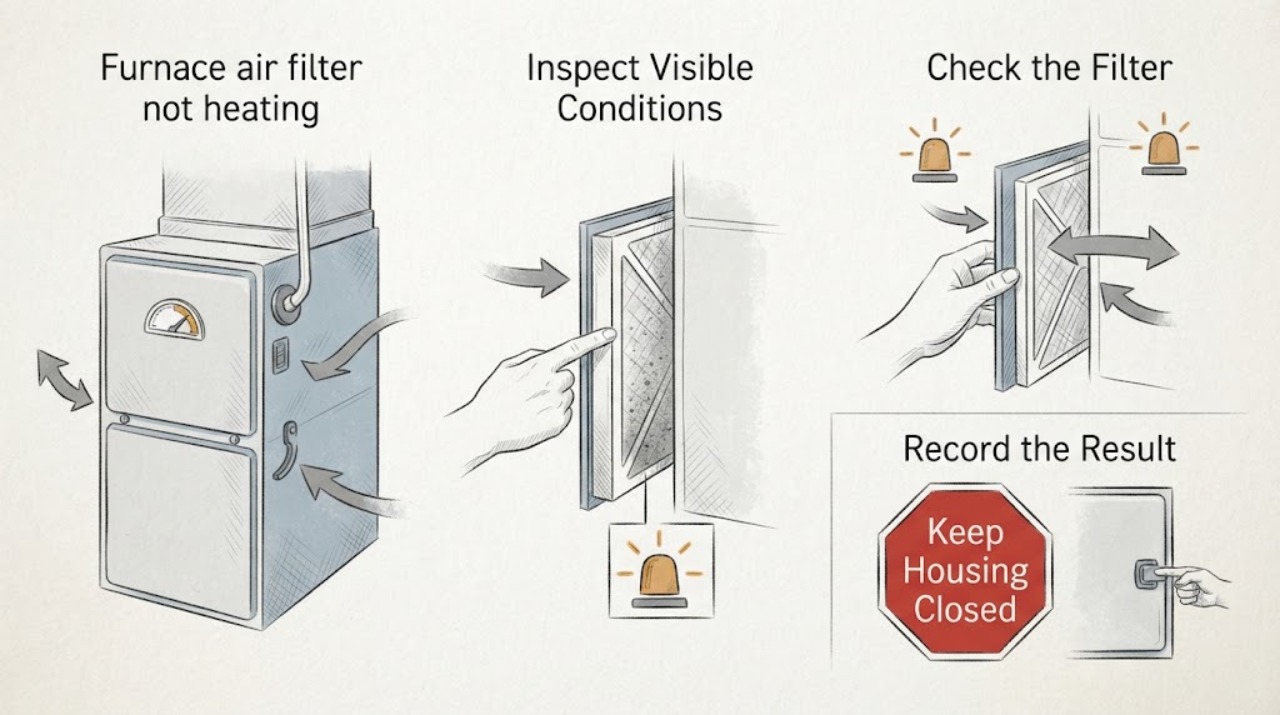
Amana furnace air filter not heating: What to Check and What to Do Next
A dirty, blocked, incorrectly installed, or overly restrictive air filter can reduce airflow and make an Amana furnace run poorly, but a clean filter does not prove the furnace's heat-producing components are working. Check the filter at the accessible return grille or filter cabinet, confirm its size and airflow orientation from the exact Amana instructions, and replace or clean it only as the manufacturer permits.
-
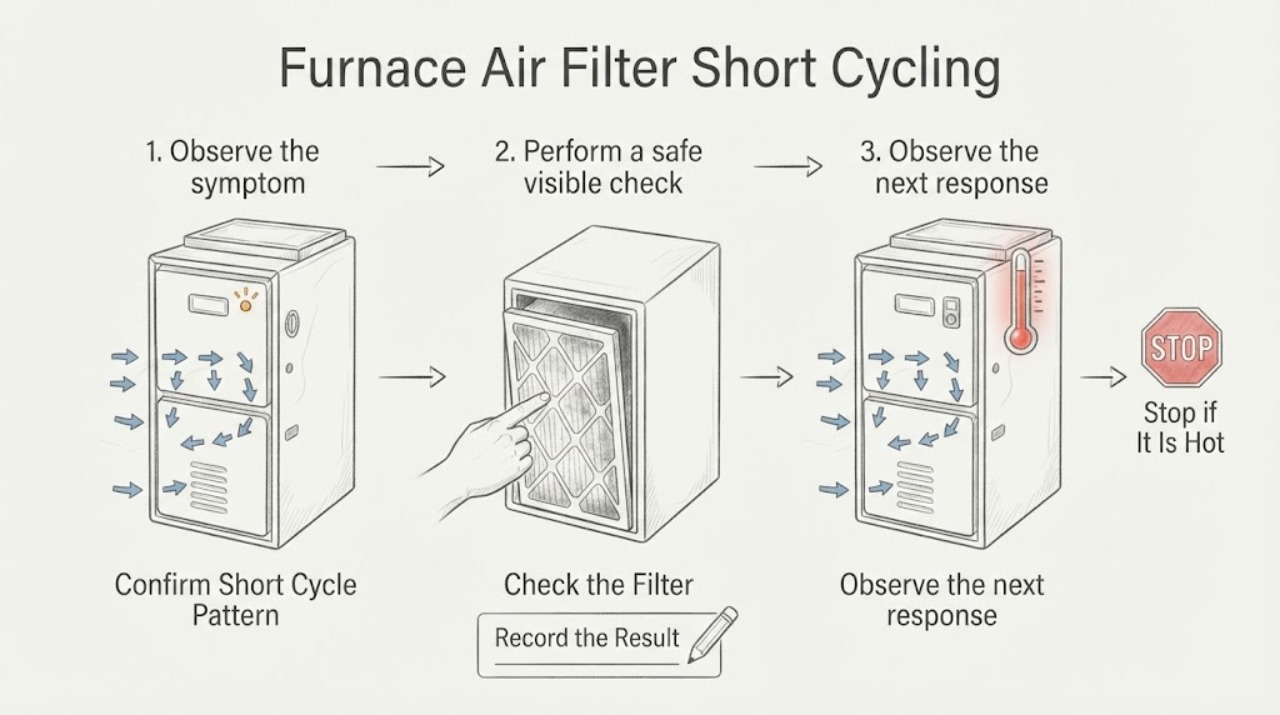
Amana Furnace Air Filter Short Cycling: What to Check and What to Do Next
A dirty, incorrectly installed or overly restrictive air filter can reduce the airflow an Amana furnace needs, but a filter is not the only reason a furnace may start and stop too soon. Turn the thermostat to a normal heat demand and observe the pattern without opening the furnace: whether the burner starts, the blower runs, warm air reaches the rooms, and a fault indication appears.
-
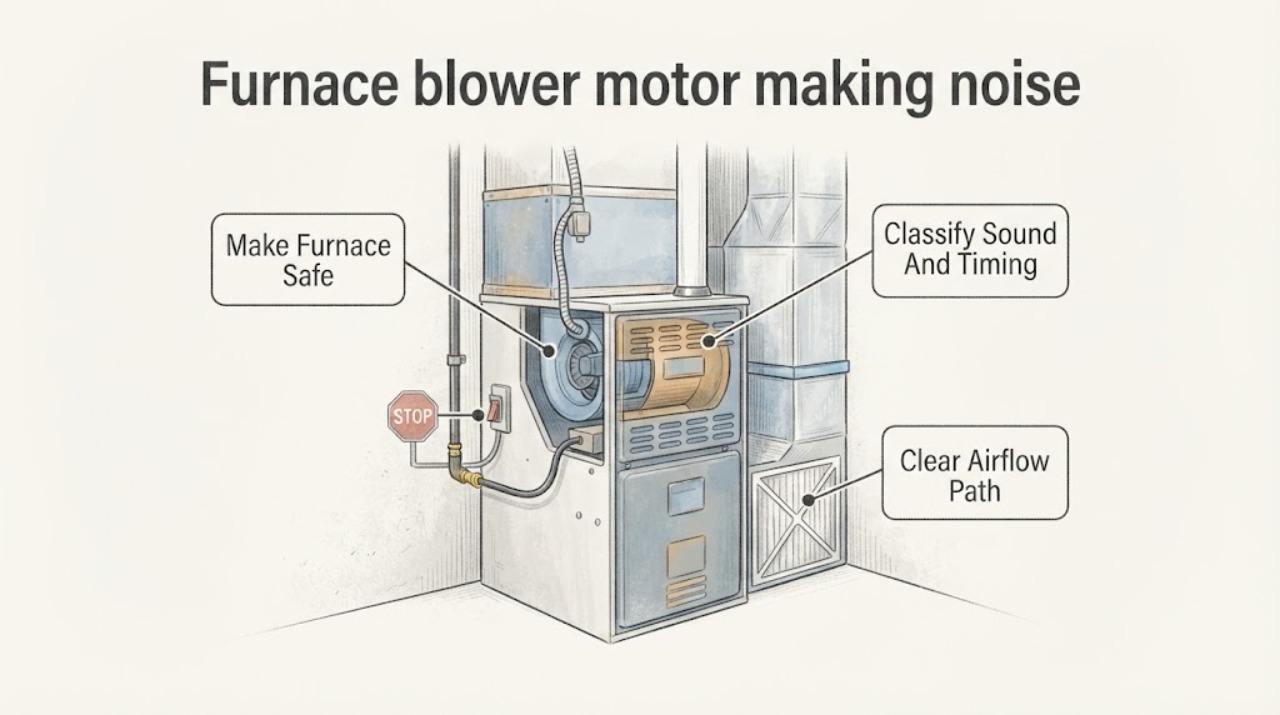
Amana furnace blower motor making noise: What to Check and What to Do Next
An Amana furnace blower motor that suddenly hums, rattles, scrapes, squeals, or vibrates may be reacting to restricted airflow, debris, a loose panel or duct, an unbalanced blower wheel, worn bearings, an electrical/control fault, or a motor that is overheating. First make a safe note of when the sound starts and whether it changes with the heating call, then check only the accessible filter, return and supply airflow, and exterior panels or ducts.
-
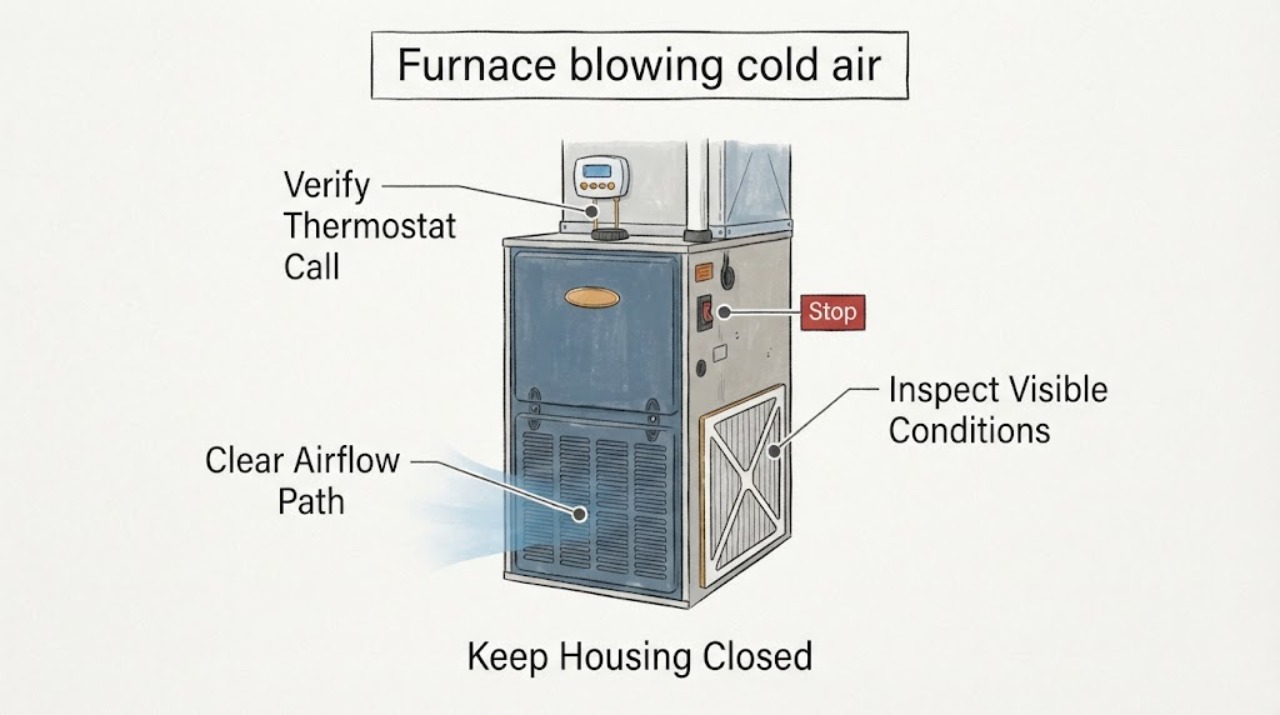
Amana furnace blowing cold air: What to Check and What to Do Next
An Amana furnace can blow cool air briefly at the start of a cycle or while the blower is circulating air, but air that stays cold while the thermostat calls for heat means the heating sequence is not completing. First verify that the thermostat is calling for heat and the fan is set to Auto, then check the user-accessible filter and supply-air pattern without opening the furnace.
-
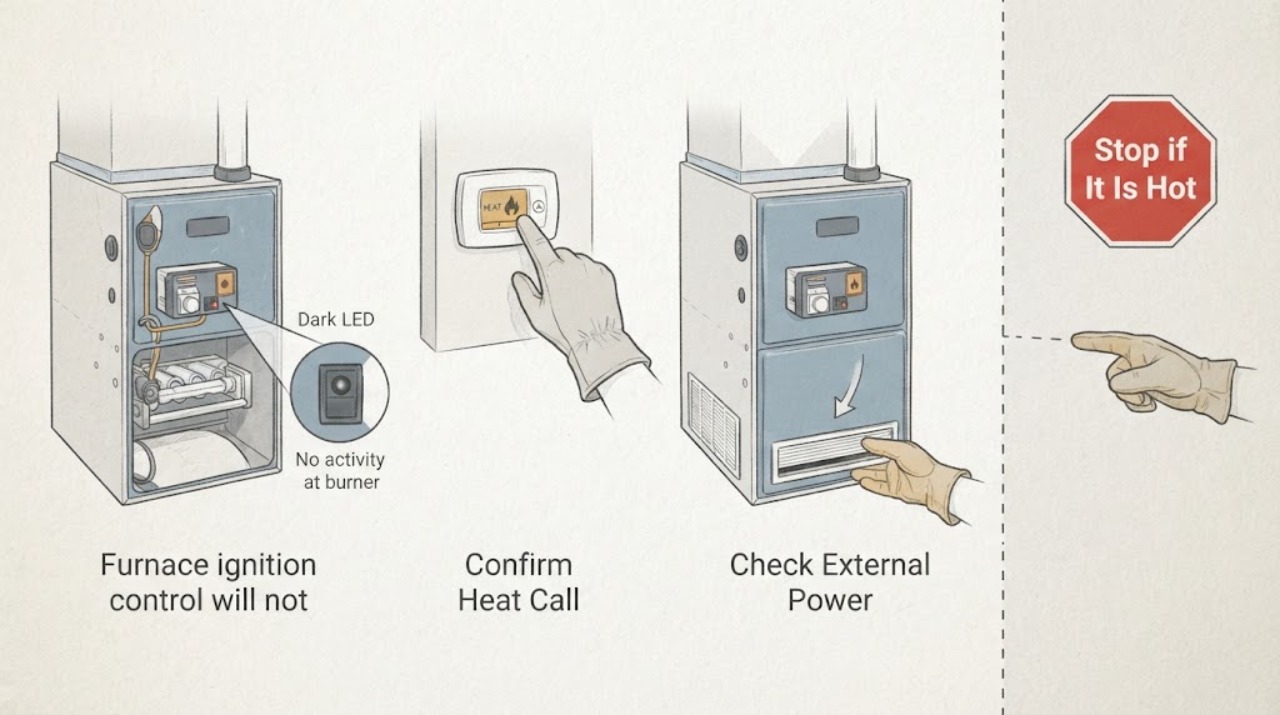
Amana furnace ignition control will not start: What to Check and What to Do Next
An Amana furnace that will not start may have no valid thermostat call, no power, an airflow or venting safety interruption, an ignition or flame-sensing problem, a gas-supply issue, or a failed ignition control. Confirm the thermostat is calling for heat, the nearby furnace switch and labeled breaker are on, and the accessible filter and registers are not blocked.
-
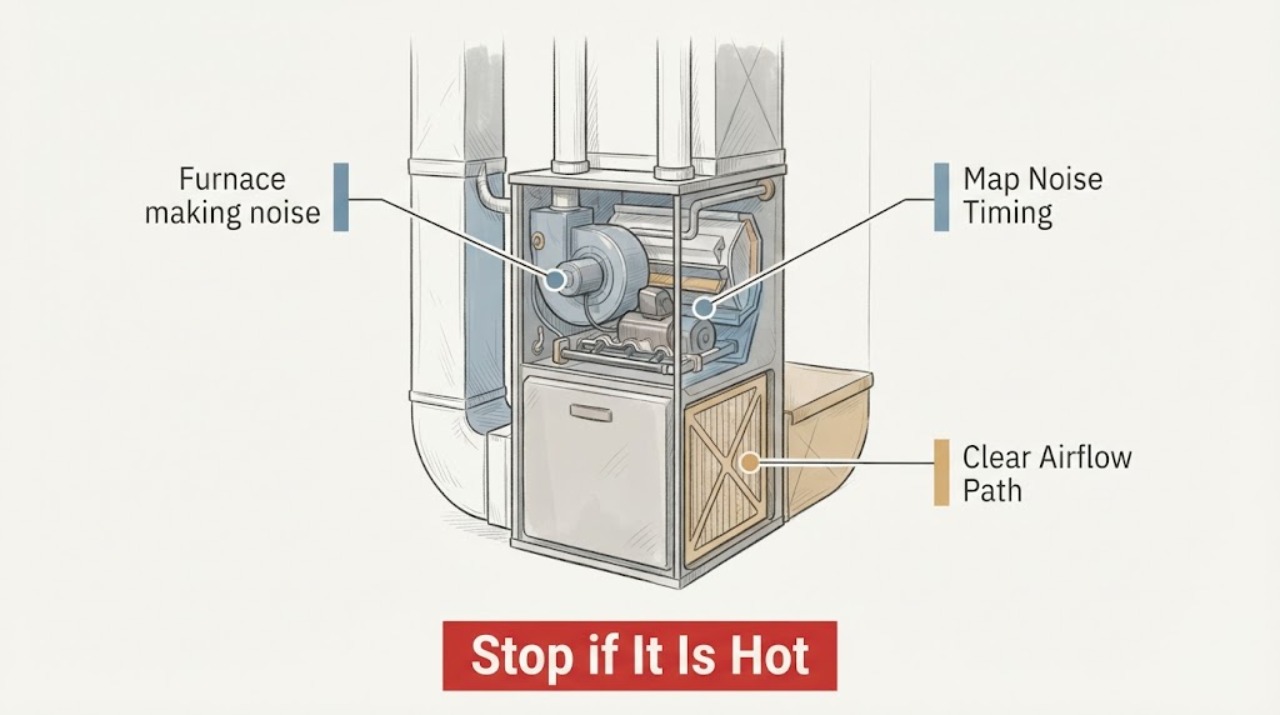
Amana furnace making noise: What to Check and What to Do Next
Treat a new or sharply louder Amana furnace noise as a symptom, not as a part diagnosis. From a safe position, note when the sound starts—at ignition, while the blower runs, at shutdown, or continuously—and whether it is a hum, rattle, scrape, squeal, bang, roar, or airflow whistle.
-
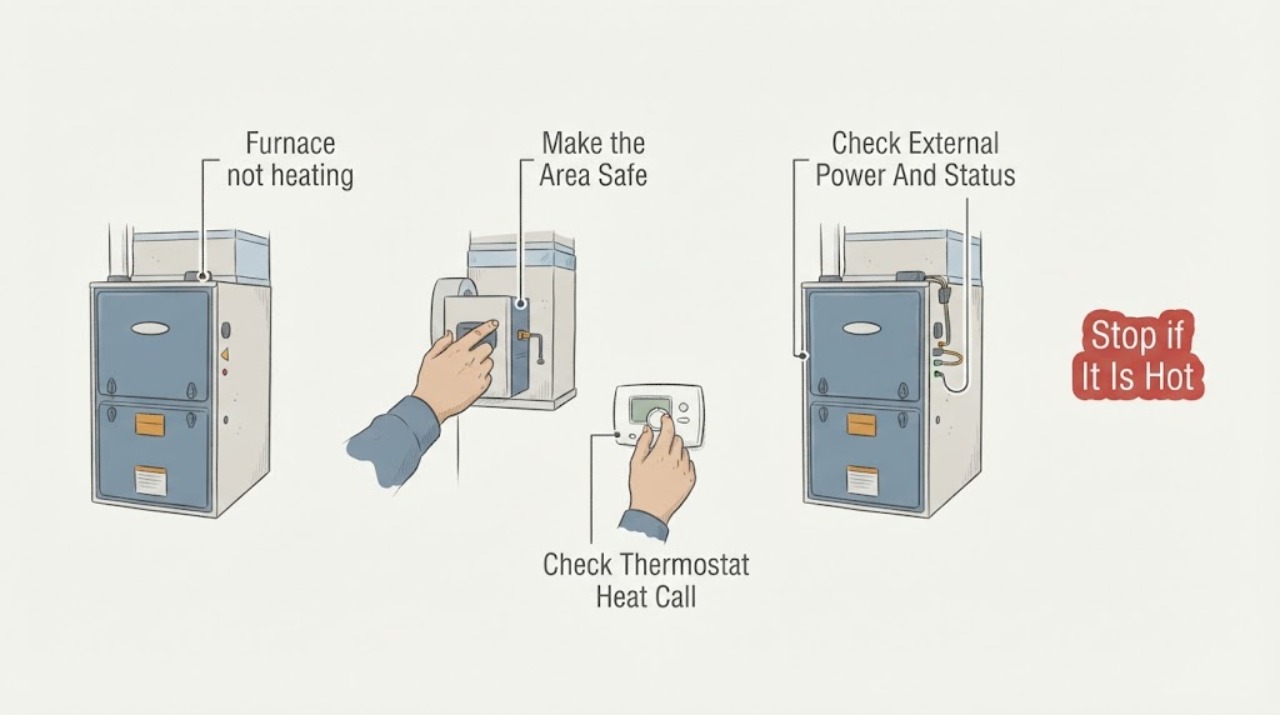
Amana furnace not heating: check the blower motor symptoms safely
An Amana furnace that is not heating can have no thermostat call, lost power, a dirty filter, an ignition or flame-safety shutdown, or a blower motor and airflow problem. The blower motor moves heated air through the ductwork, so a furnace that lights but has no airflow, weak airflow, a humming or non-starting blower, or a blower that stops after overheating needs a different path from a furnace that never attempts ignition.
-
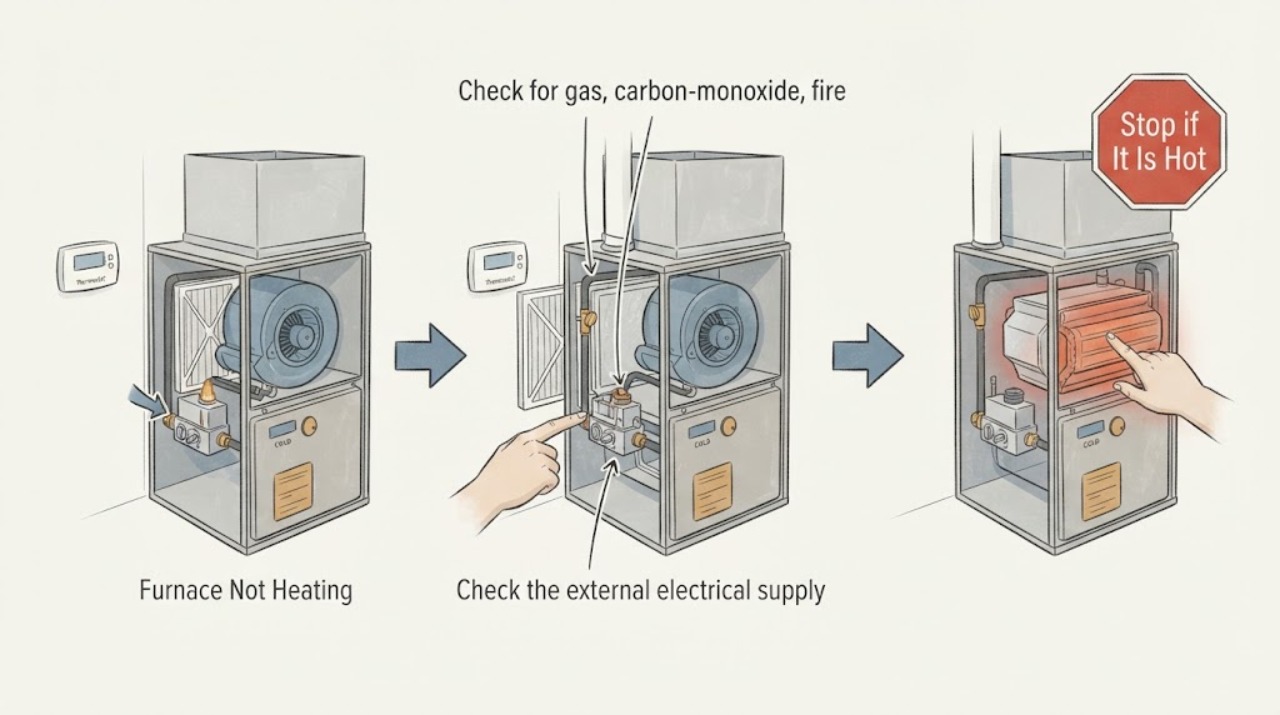
Amana Furnace Not Heating: What to Check and What to Do Next
An Amana furnace that is not heating can have a thermostat setting or battery issue, lost electrical power, a restricted filter or airflow path, a blocked outdoor vent, a lockout, or a fuel, ignition, flame-sensing, blower, or control fault.
-
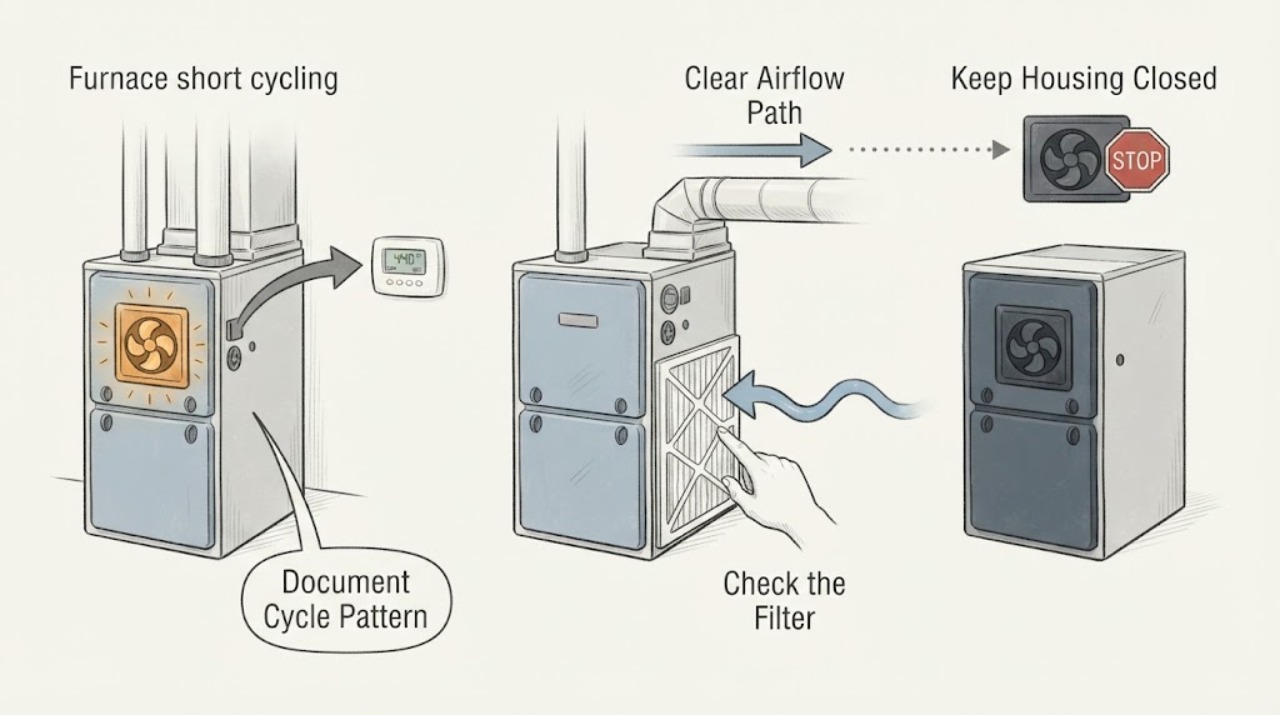
Amana furnace short cycling: What to check and what to do next
An Amana furnace is short cycling when it starts and stops repeatedly before the thermostat's heat demand is satisfied. Begin with the homeowner-safe causes: verify the thermostat is actually calling for heat, inspect the accessible air filter, make sure supply and return grilles are open and unobstructed, and look for an external vent or intake blockage without climbing or dismantling anything.
-
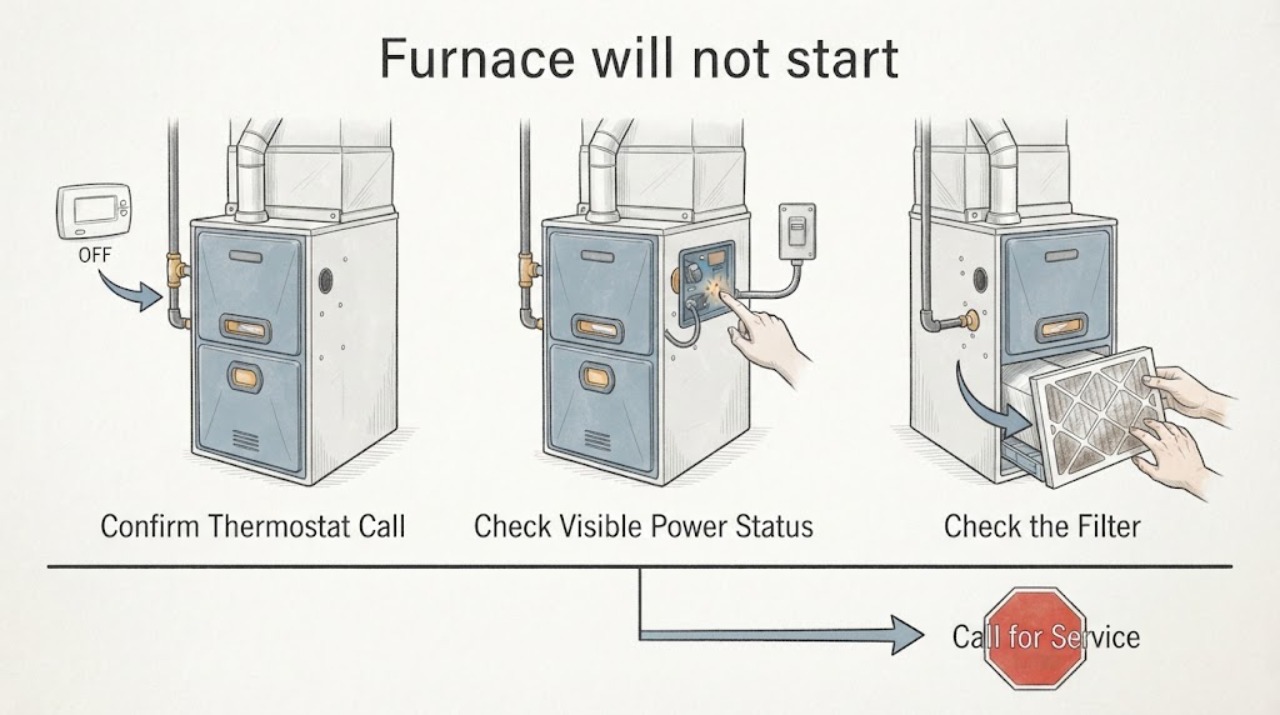
Amana furnace will not start: What to Check and What to Do Next
If an Amana furnace will not start, first confirm the thermostat is calling for heat, the system has normal visible power indications, the filter and registers are not obviously restricted, and the status light or display is recorded without opening the cabinet. Then note the last safe stage: no response, blower or inducer only, ignition attempt without flame, brief flame followed by shutdown, or a normal fan-only response.
-
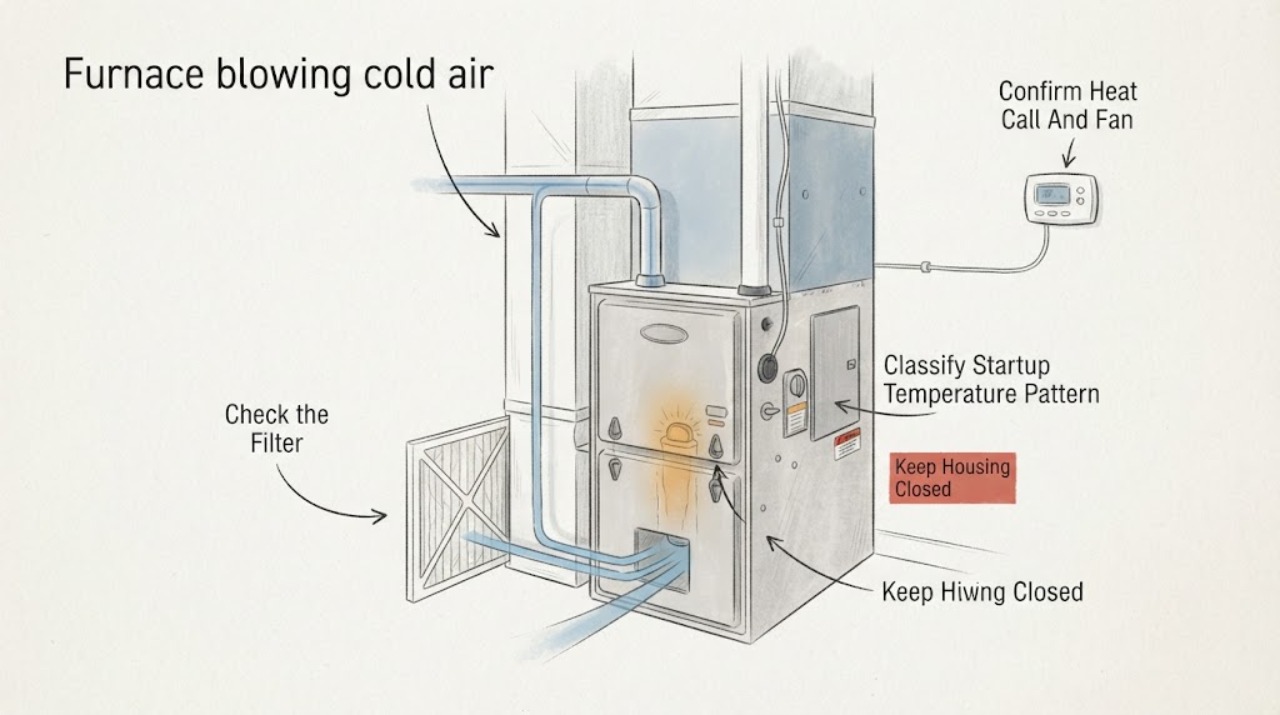
Carrier furnace blowing cold air: What to Check and What to Do Next
A Carrier furnace can feel cold briefly while its heat exchanger warms, or it can circulate room-temperature air when the thermostat fan is set to On. If the air stays cold, becomes cold after the furnace starts, or arrives with weak airflow or repeated cycling, check the thermostat call, the user-accessible filter, registers, returns, and any reachable exterior intake or exhaust for blockage.
-
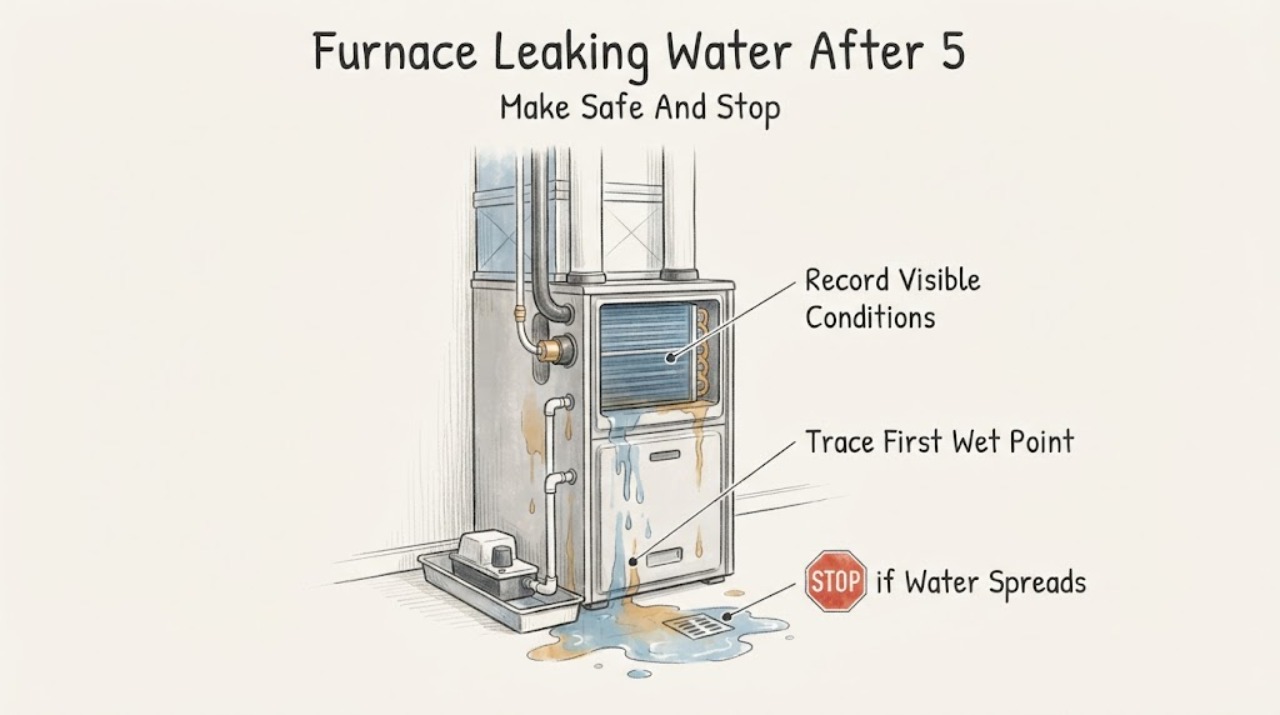
Carrier Furnace Leaking Water After 5 Years: Trace the Source Safely
A Carrier furnace leaking water after five years needs source tracing, not an age-based part diagnosis. If it is a high-efficiency condensing furnace, a blocked or disconnected condensate drain, trap, pan, or pump can back water up; a whole-home humidifier, air-conditioner evaporator coil and pan, or nearby supply/drain line can also wet the furnace area.
-
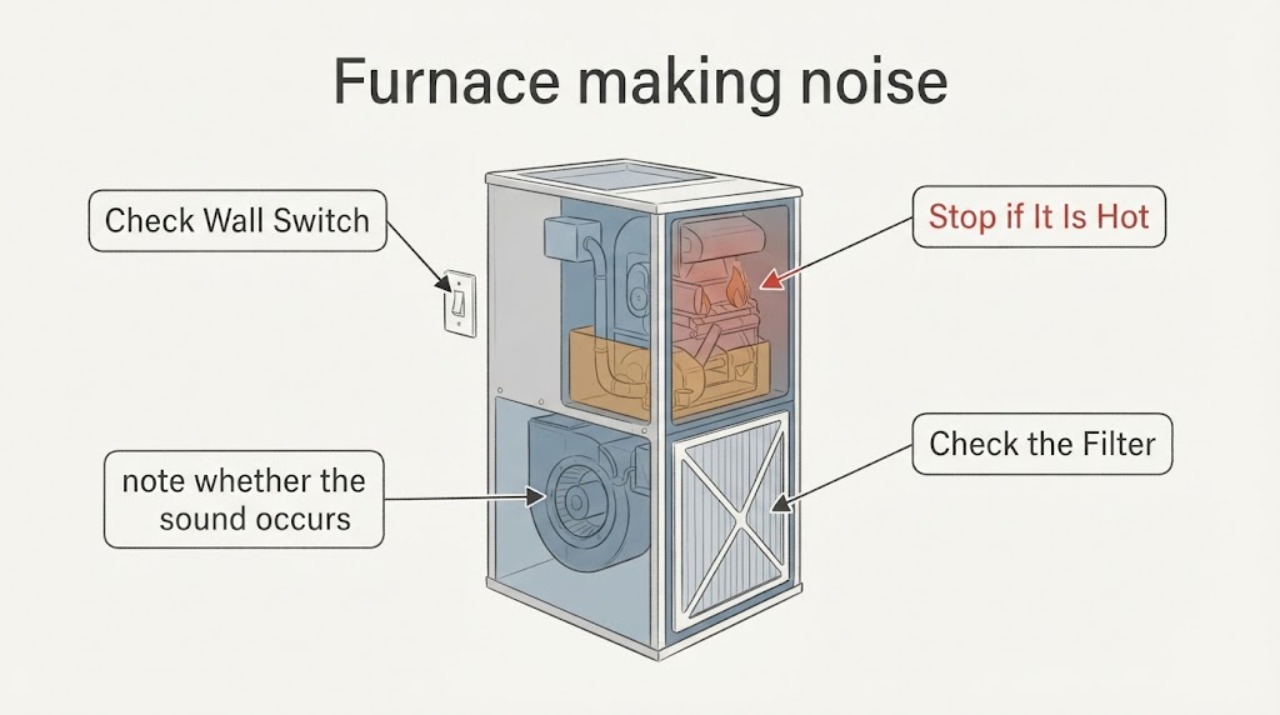
Carrier furnace making noise: What to Check and What to Do Next
A noisy Carrier furnace can be reacting to restricted airflow, loose duct or cabinet connections, a blower wheel, motor, belt, or bearing problem, or a combustion and ignition fault.
-
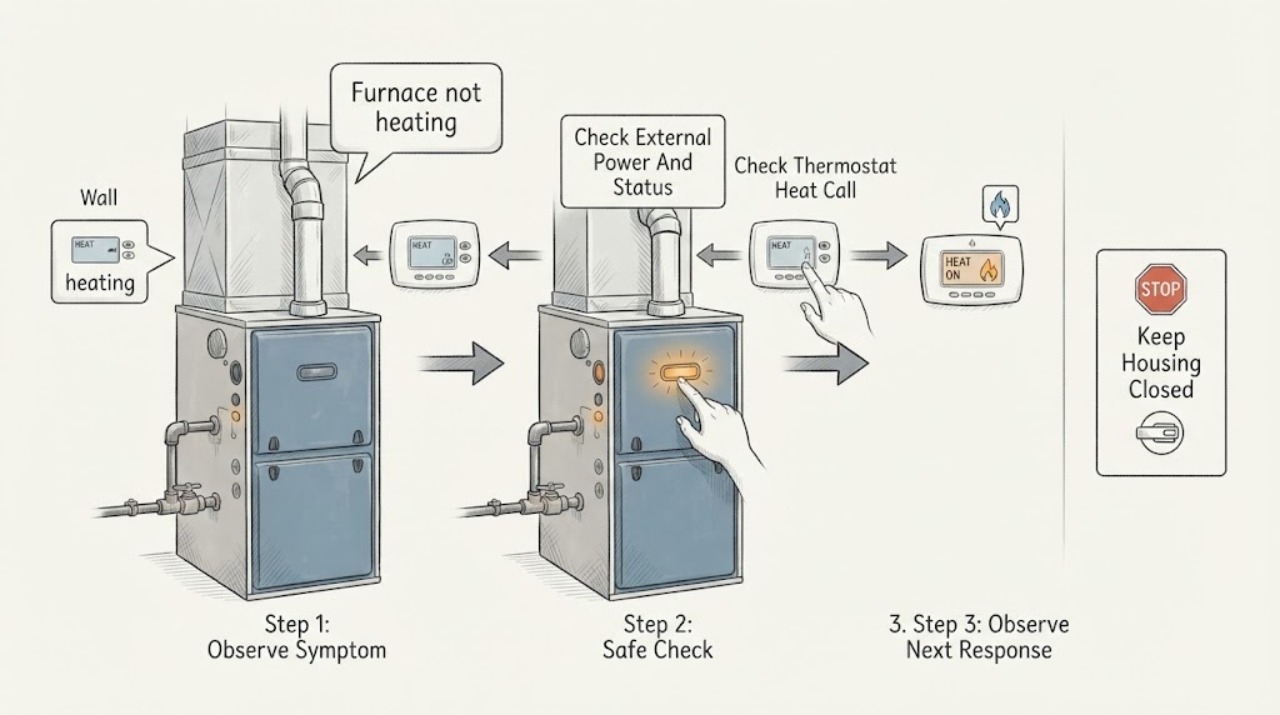
Carrier furnace not heating: safe checks before service
A Carrier furnace that is not heating may have no thermostat call, lost power, a blocked filter or vent, an ignition or flame-safety shutdown, or a fuel and combustion problem. First check the thermostat mode, set point, batteries if applicable, and fan setting, then inspect the filter and open supply and return grilles.
-
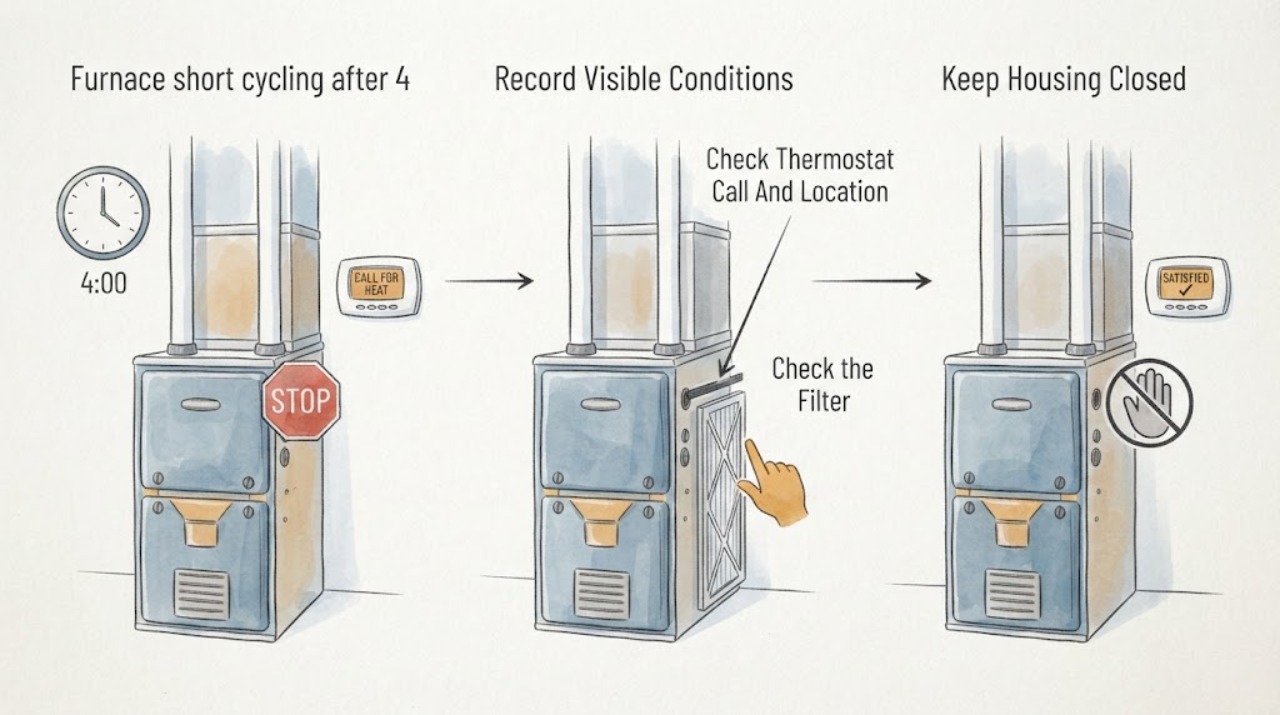
Carrier furnace short cycling after 4 to 6 minutes: check the thermostat and airflow safely
If a Carrier furnace starts and stops after about 4 to 6 minutes, treat that timing as an observation rather than a diagnosis. First confirm the thermostat is calling for Heat, the set point is above room temperature, the fan is on Auto, and the thermostat is not in a draft, sunlit spot, or near a heat source.
-
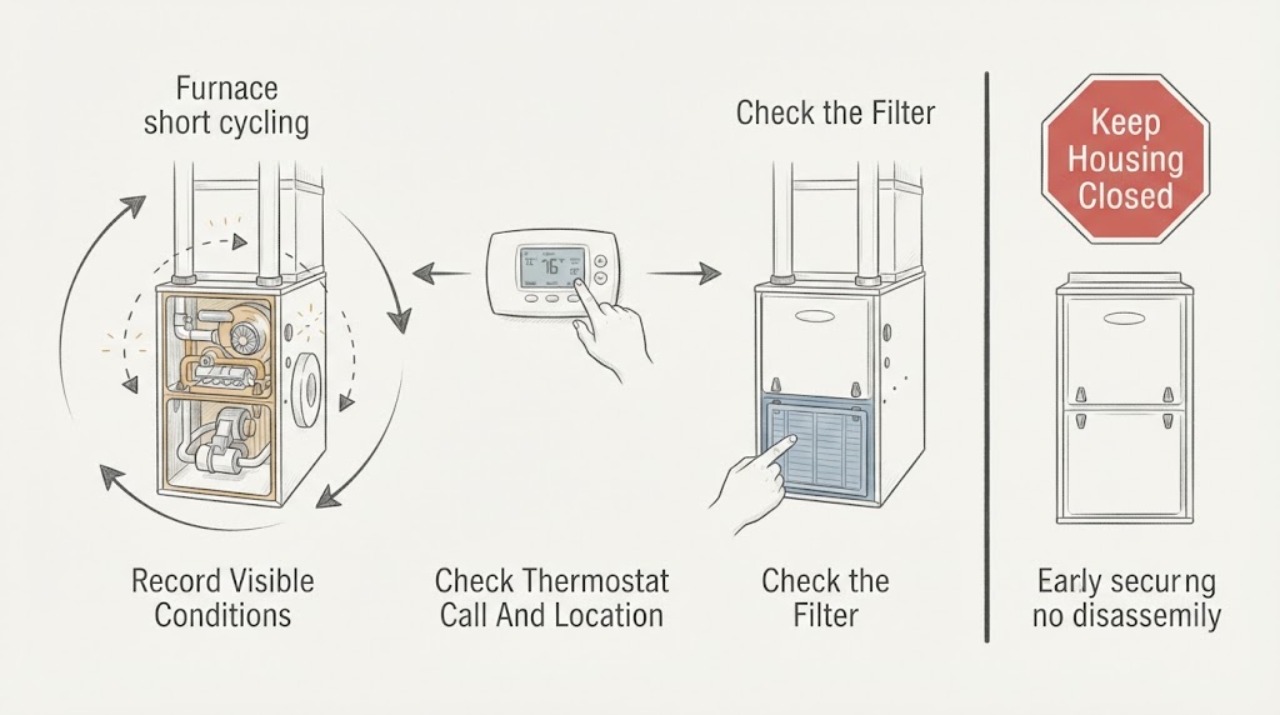
Carrier furnace short cycling: What to Check and What to Do Next
A Carrier furnace is short cycling when it starts and stops repeatedly before the home reaches the thermostat setting. First note whether the burners stop after only a few seconds, after the furnace has heated up, or because the thermostat display stops calling for heat.
-
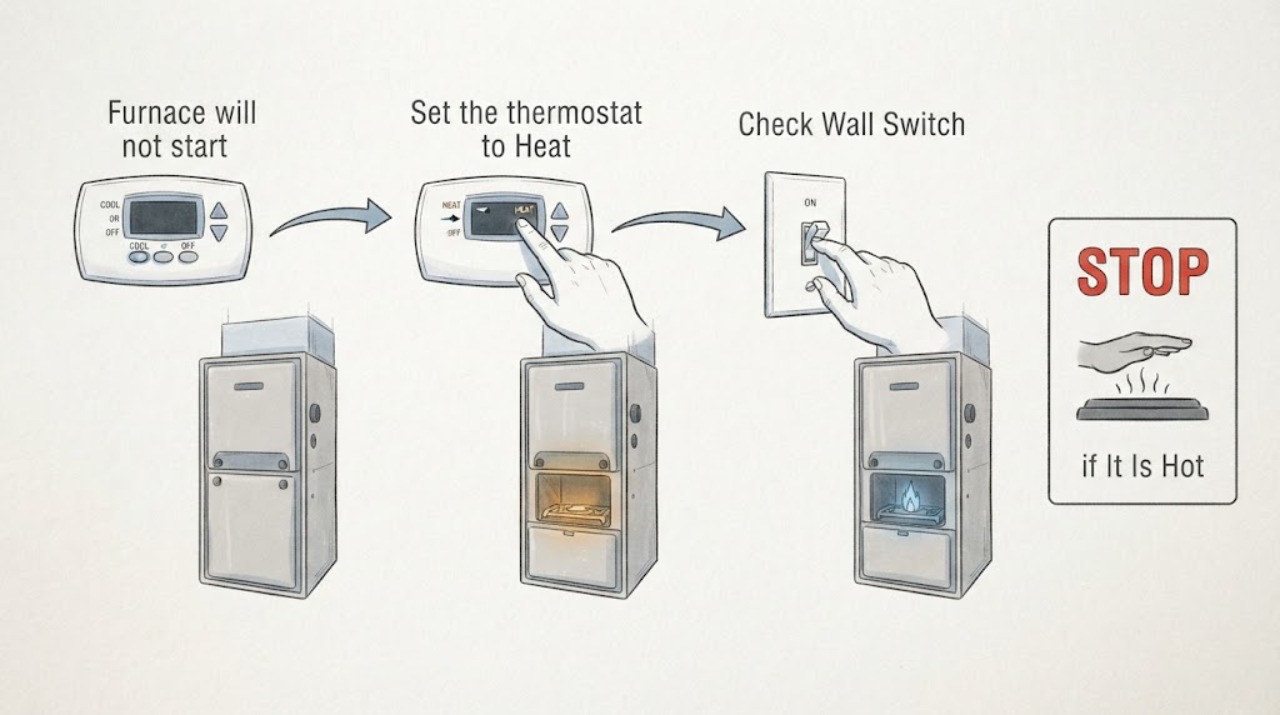
Carrier furnace will not start: What to Check and What to Do Next
If a Carrier furnace will not start, first determine whether the thermostat is actually calling for heat and whether the furnace is completely silent, produces a click or motor sound, or starts and then stops. Set the thermostat to Heat above the room temperature, confirm the furnace switch and labeled breaker are on, and inspect the accessible air filter and external airflow.
-
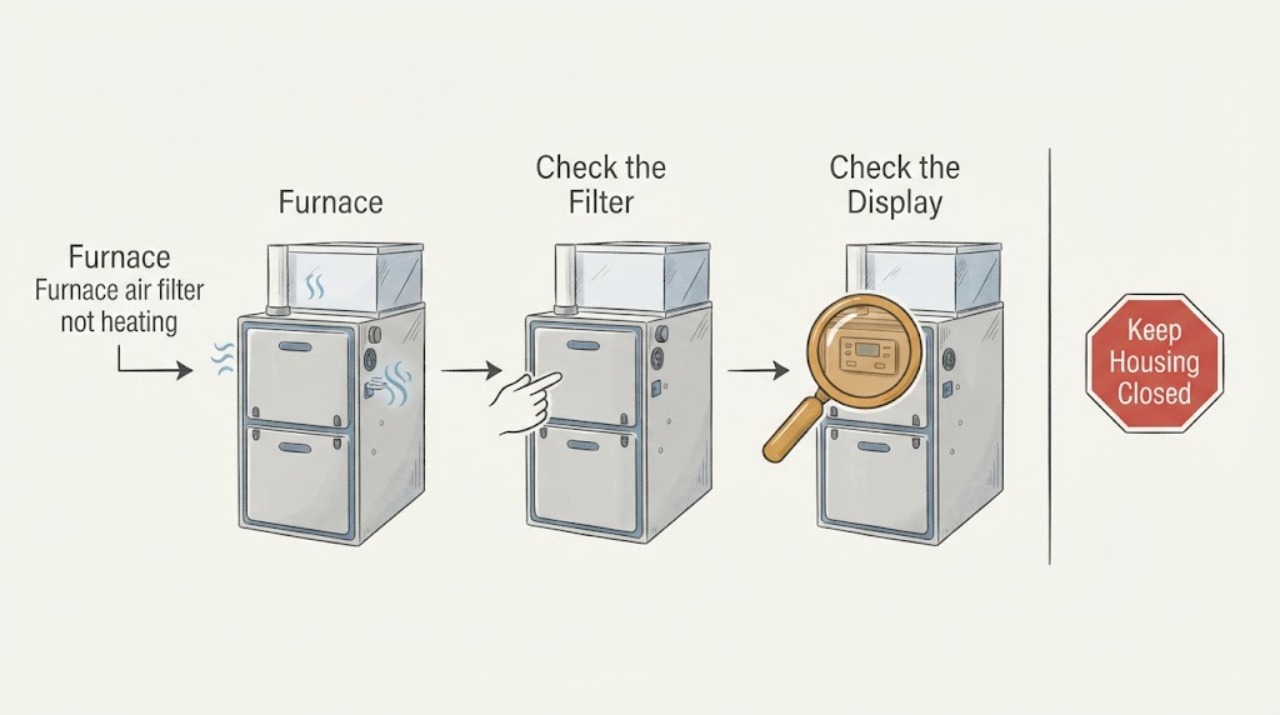
Furnace air filter not heating: What to Check and What to Do Next
A furnace filter does not create heat; a dirty, wrong-size, backward, or poorly seated filter can reduce airflow and make the system run poorly or shut down, while no heat can also come from thermostat, power, ignition, flame-sensing, fuel, or limit faults. With the furnace off and cool, check the filter's condition, airflow arrow, fit, and accessible return path, then verify the thermostat and one normal power reset if the manual allows it.
-
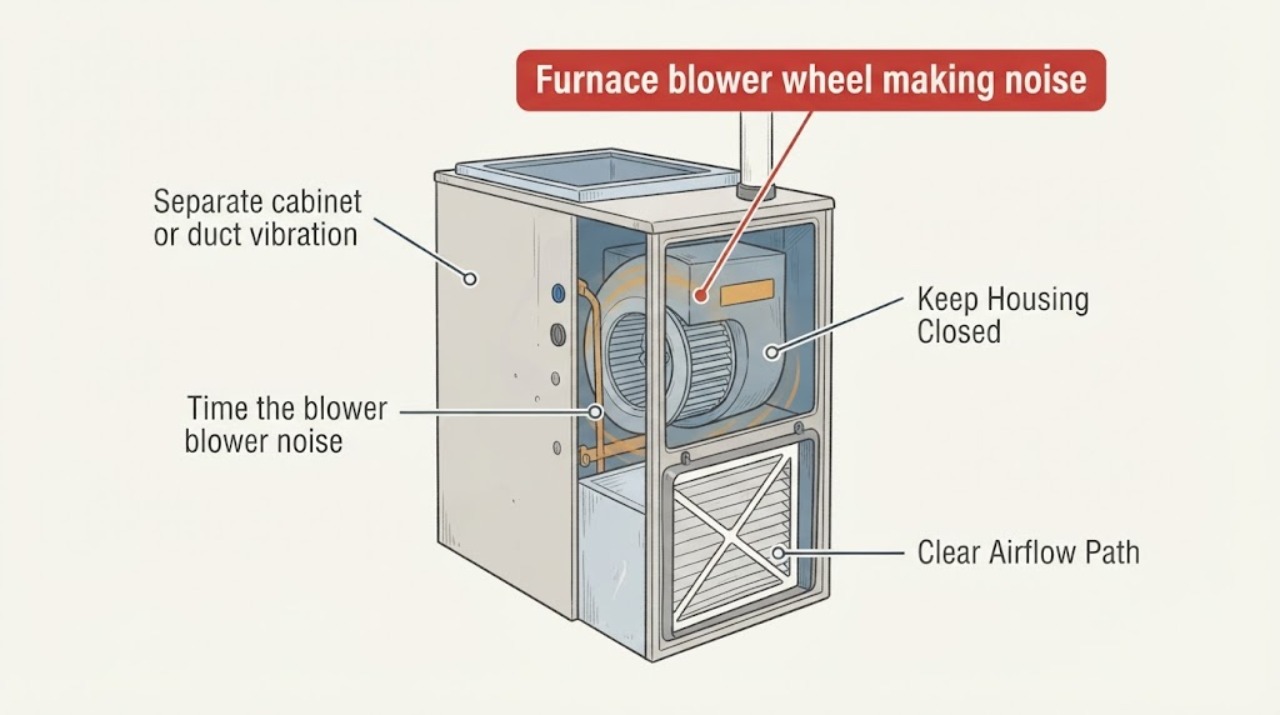
Furnace blower wheel making noise: What to Check and What to Do Next
A new rattle, scrape, vibration, squeal, or hum from a furnace blower wheel is a stop-and-observe symptom, not a safe invitation to reach inside the cabinet. From outside the closed furnace, record when the sound occurs, check only the accessible filter and registers, and look for external cabinet or duct vibration.
-
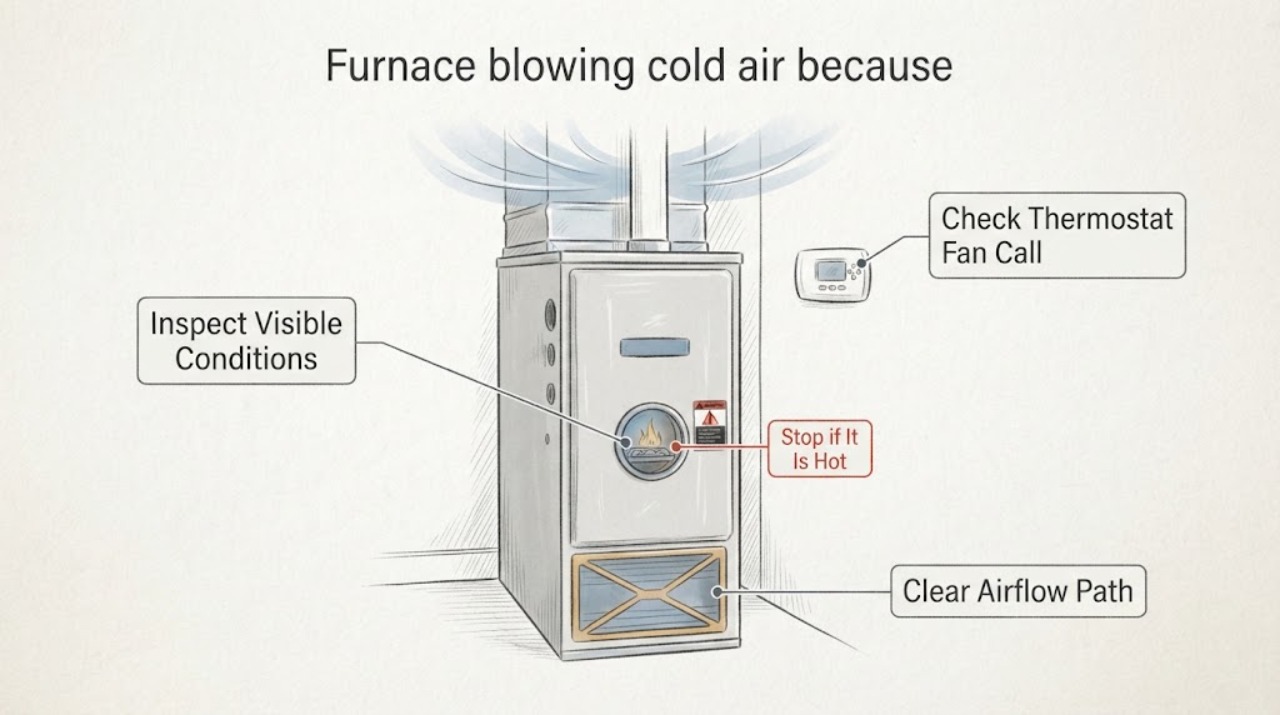
Furnace blowing cold air because the burner does not stay lit: What to Check and What to Do Next
If a fuel-burning furnace lights its burner and then shuts it off while the blower sends cold air, the shutdown may be a safety response rather than a simple thermostat problem. A dirty or restricted filter can cause overheating and a limit switch to stop the burner; a flame sensor or pilot-safety problem can shut off fuel when flame is not proven; and burners, ignition, gas supply, controls, or venting can also be involved.
-
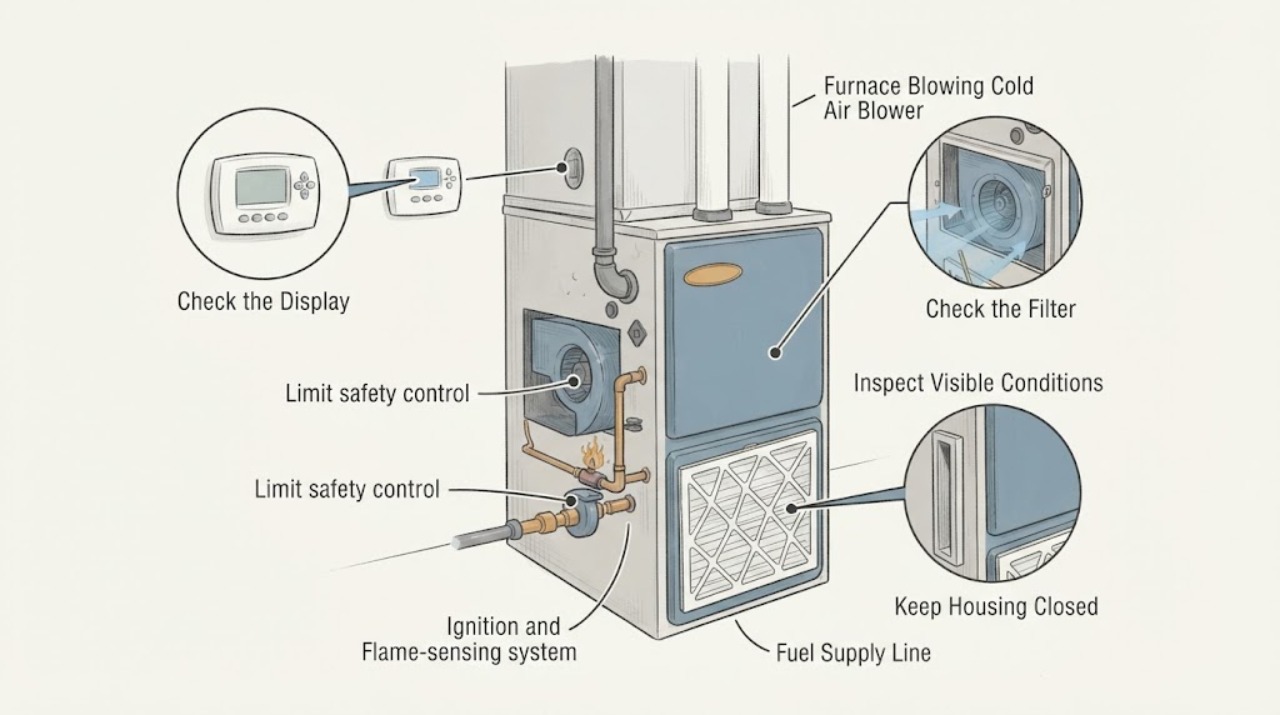
Furnace Blowing Cold Air Blower Runs: What to Check and What to Do Next
If the furnace blower runs but the registers feel cold, first check the thermostat mode and fan setting. Fan set to On can circulate room-temperature air when the burners are off, and a short blower run at startup or after shutdown can be normal while the heat exchanger warms or residual heat is distributed.
-
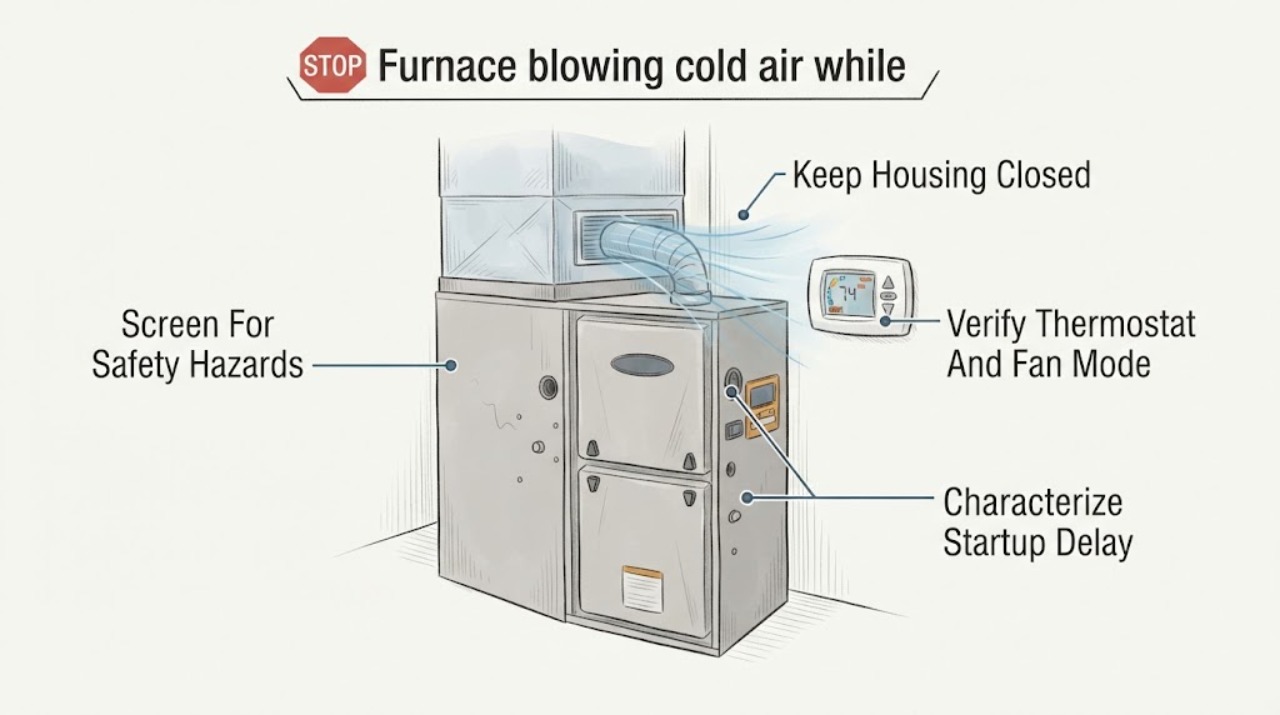
Furnace blowing cold air while the thermostat calls for heat: What to Check and What to Do Next
A furnace can blow room-temperature air even while the thermostat calls for heat when the fan is set to On, when the blower is in its normal startup or shutdown delay, or when the burners are being stopped by an airflow or safety control. First check that the thermostat is on Heat, the set temperature is above the room temperature, and the fan is on Auto; an On setting can circulate unheated air.
-
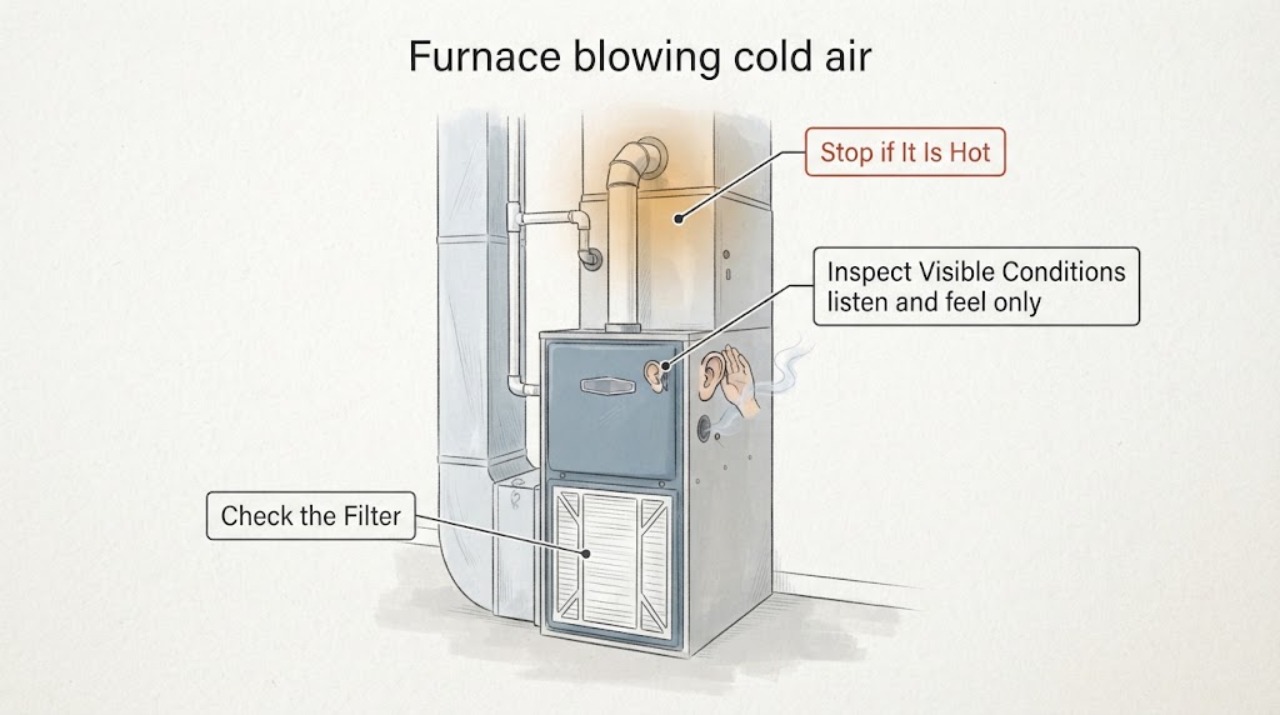
Furnace blowing cold air: What to Check and What to Do Next
A furnace can blow cool air briefly while a heat cycle starts, or continuously when the thermostat is calling for heat but the burners are not heating. First check the thermostat mode, setpoint, and fan setting, then observe one normal cycle, the accessible filter, and the open supply and return vents.
-
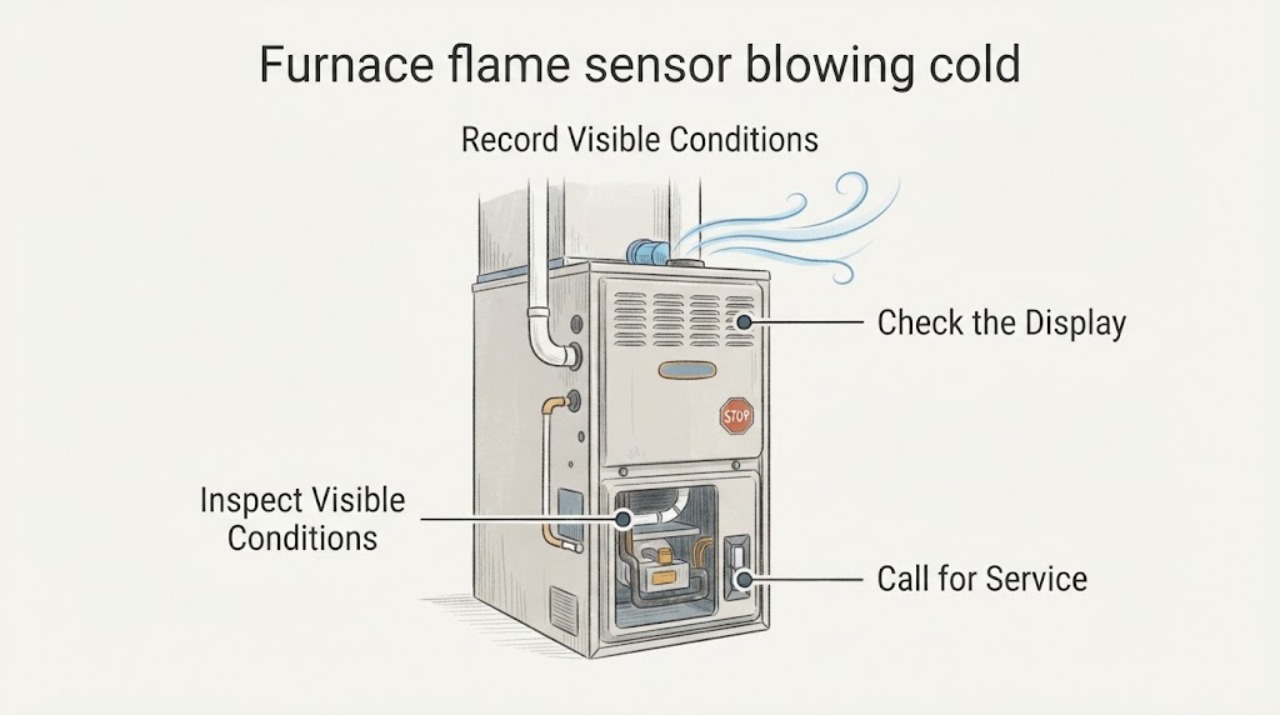
Furnace flame sensor blowing cold air: What to Check and What to Do Next
A furnace that starts and then blows cold air may be losing the burner after the ignition sequence, but thermostat settings, airflow, a limit control, fuel delivery, venting, or another safety control can look similar. Observe only from normal safe positions: note the call for heat, burner and blower timing if visible without opening the unit, filter condition, and any fault indicator.
-
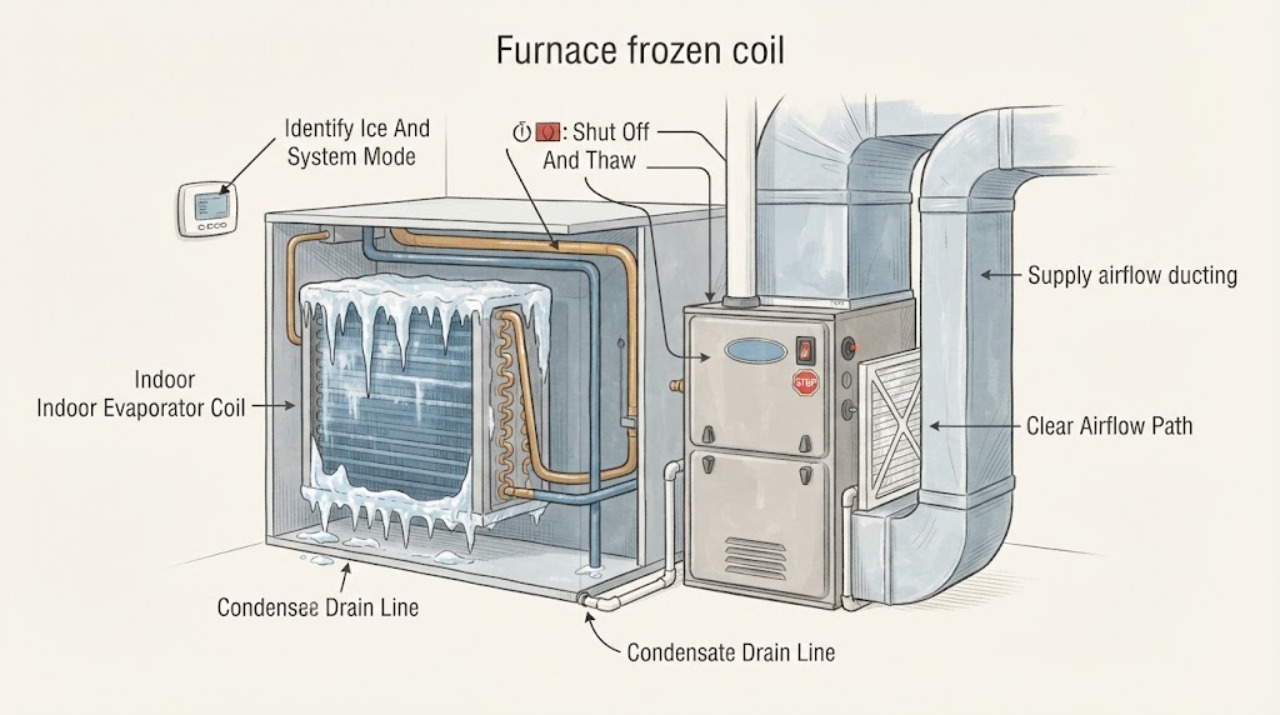
Furnace frozen coil: safe checks before HVAC service
In a furnace-and-central-AC system, the frozen coil is usually the indoor evaporator coil mounted in or beside the furnace airflow path, not the furnace heat exchanger. If you see ice on the indoor coil or refrigerant line, or the system blows warm air while cooling runs, turn cooling off at the thermostat and do not keep operating the system frozen.
-
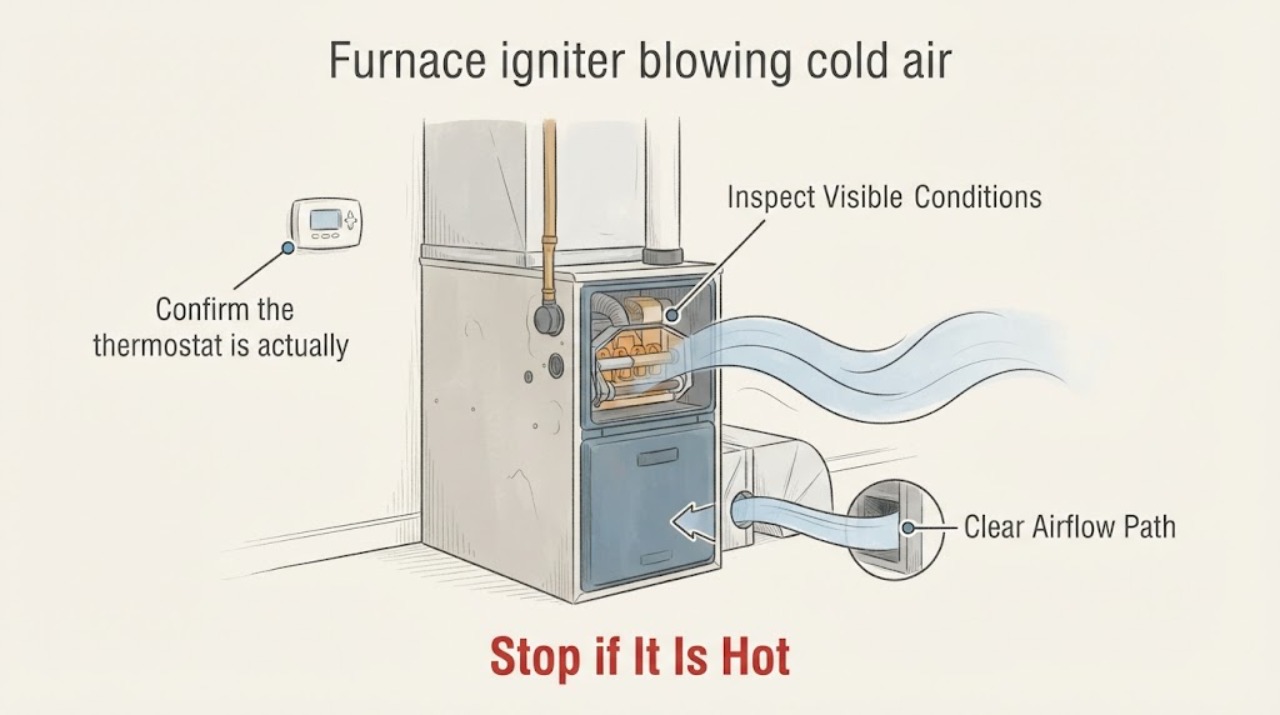
Furnace igniter blowing cold air: What to Check and What to Do Next
If a gas furnace blows cold air and the igniter is suspected, do not open the burner compartment, touch the igniter, test live voltage, clean a flame sensor, or replace a gas or flame component. From outside the cabinet, confirm a heat call, note whether the blower runs before any warm air, check the accessible filter and supply registers, and record any status light pattern or unusual sound.
-
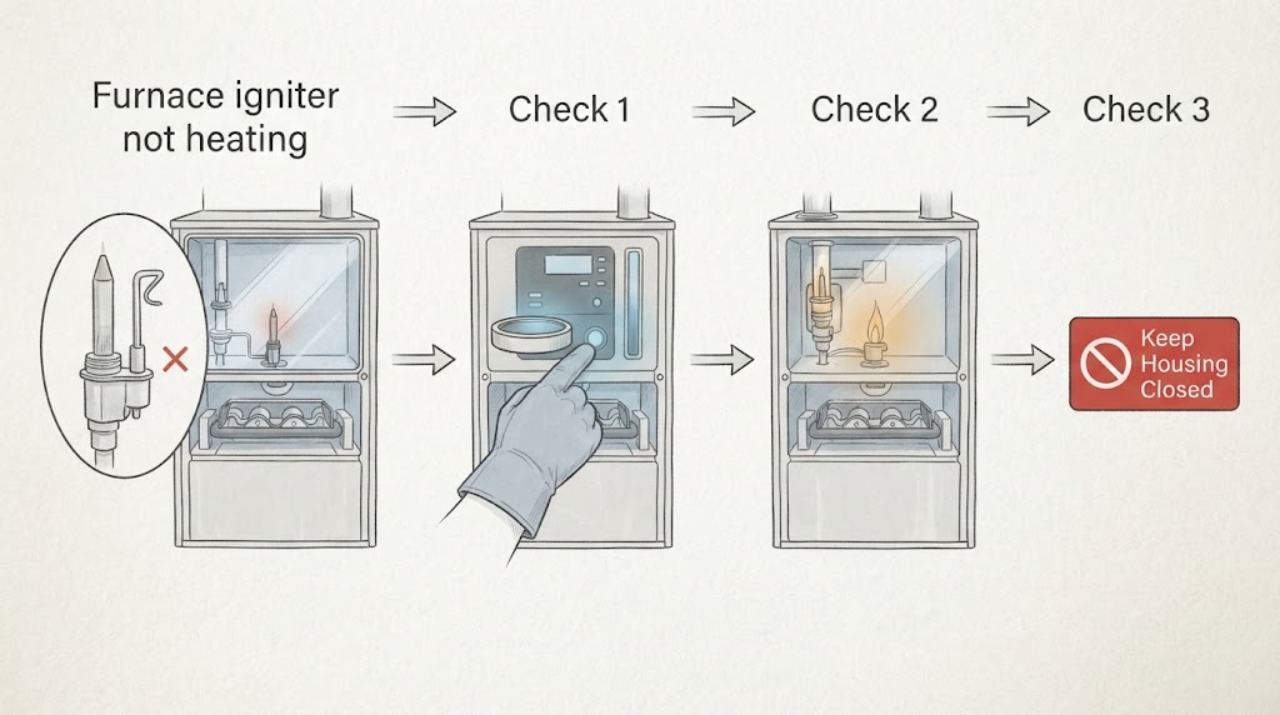
Furnace igniter not heating: What to Check and What to Do Next
If a furnace igniter is not heating, do not remove the access panel or test the igniter with a meter. First confirm that the thermostat is calling for heat, the furnace has normal power, the filter and registers are not obviously blocked, and any diagnostic light or sight window can be read without opening the cabinet.
-
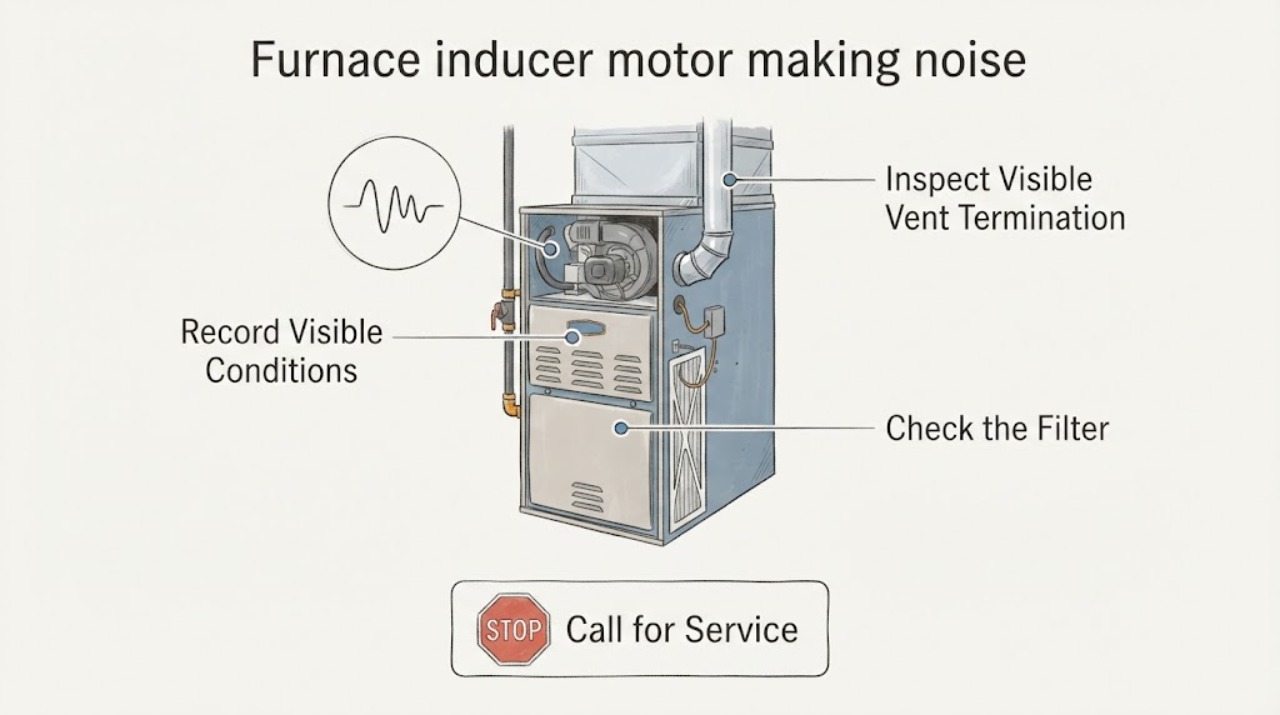
Furnace inducer motor making noise: What to Check and What to Do Next
A furnace inducer motor normally runs at the beginning of a heating sequence to establish draft, but a new or unusually loud whine, squeal, grind, rattle, or vibration should not be treated as normal. First record exactly when the sound occurs and whether the furnace completes ignition, then check only the thermostat setting, accessible air filter, open vents, and any visible vent obstruction from a safe position.
-
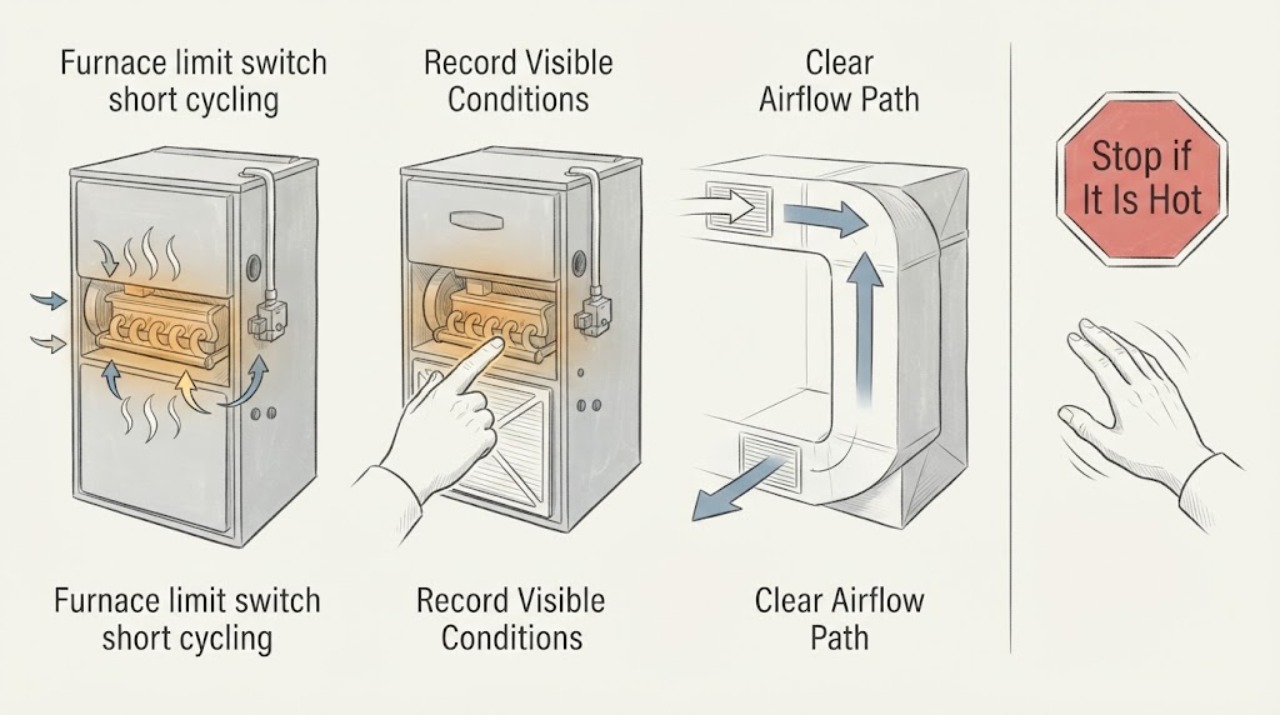
Furnace limit switch short cycling: What to Check and What to Do Next
A furnace limit switch is a safety control that can shut off the burners when the furnace overheats, so short cycling does not prove the switch itself has failed. First record when the burners stop and whether the blower continues, then check only the thermostat setting, accessible filter, open return and supply vents, and any normal status code visible without opening the cabinet.
-
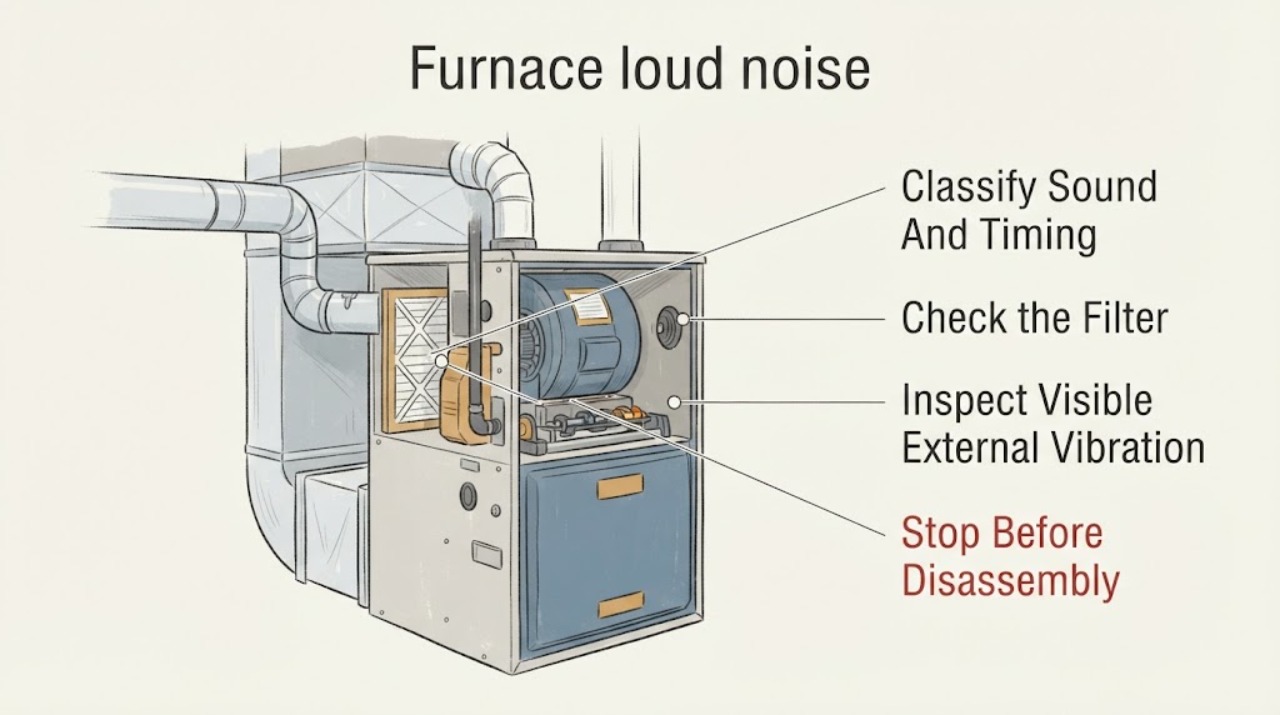
Furnace loud noise: identify the sound and the safe next step
A furnace that suddenly becomes loud should be identified by sound and timing, not by replacing a guessed part. With the system off and cool, note whether the noise is a bang at ignition, whistle during airflow, rattle or vibration, high-pitched squeal, buzzing, or rumbling.
-
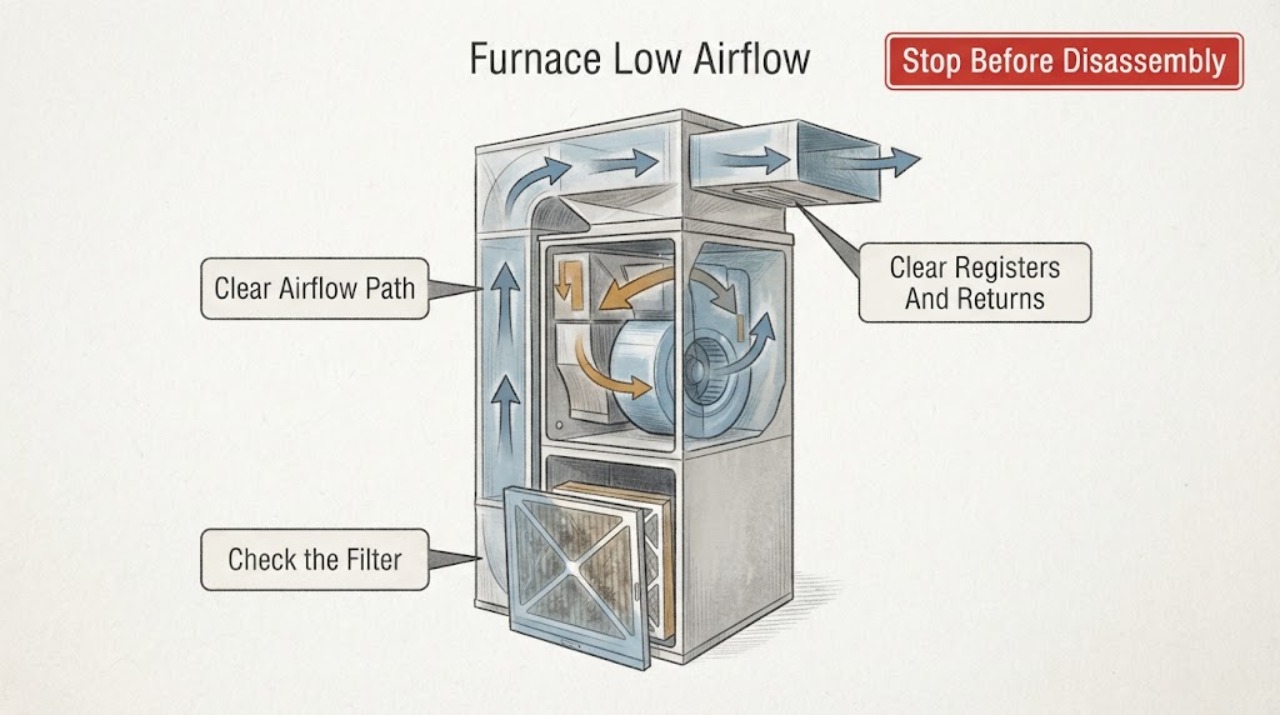
Furnace Low Airflow
Low airflow from a furnace should be traced through the filter, return grilles, and supply registers before assuming a blower or duct fault. Turn the system off, inspect or replace a visibly dirty filter in the correct airflow direction, remove furniture or other obstructions from returns and registers, and compare whether the weak flow affects one room or the whole home.
-
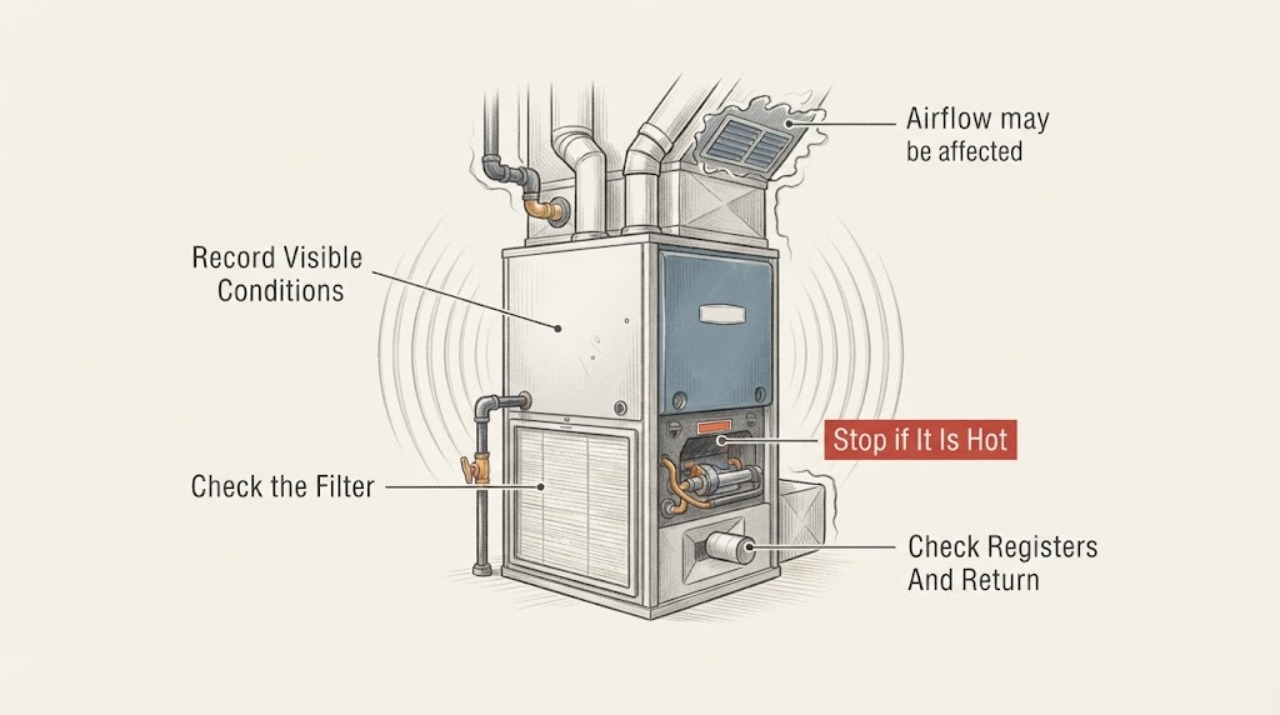
Furnace making noise airflow may change: What to Check and What to Do Next
If a furnace starts making an unfamiliar noise and airflow changes, first stop the heating call if the sound is metallic, scraping, grinding, banging, or accompanied by a burning smell. From a safe position, note whether the sound occurs at startup, while the blower runs, or as the system shuts down; inspect only the normally accessible filter and supply and return grilles.
-
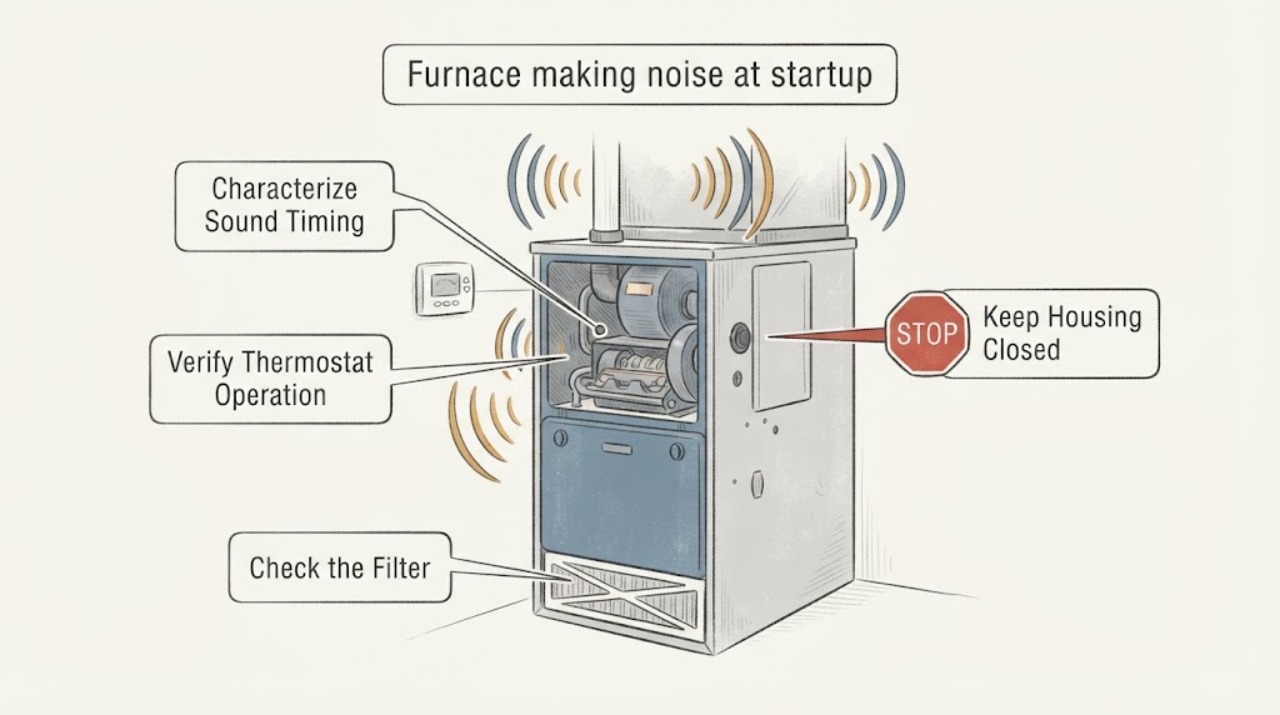
Furnace making noise at startup or during heat: What to Check and What to Do Next
A furnace can make a brief click before ignition, a soft hum, or a small duct ping as metal warms, but a new, loud, worsening, or unusual noise needs attention. The timing and character help separate airflow or duct vibration from a blower or inducer problem, loose panel, ignition fault, or electrical issue.
-
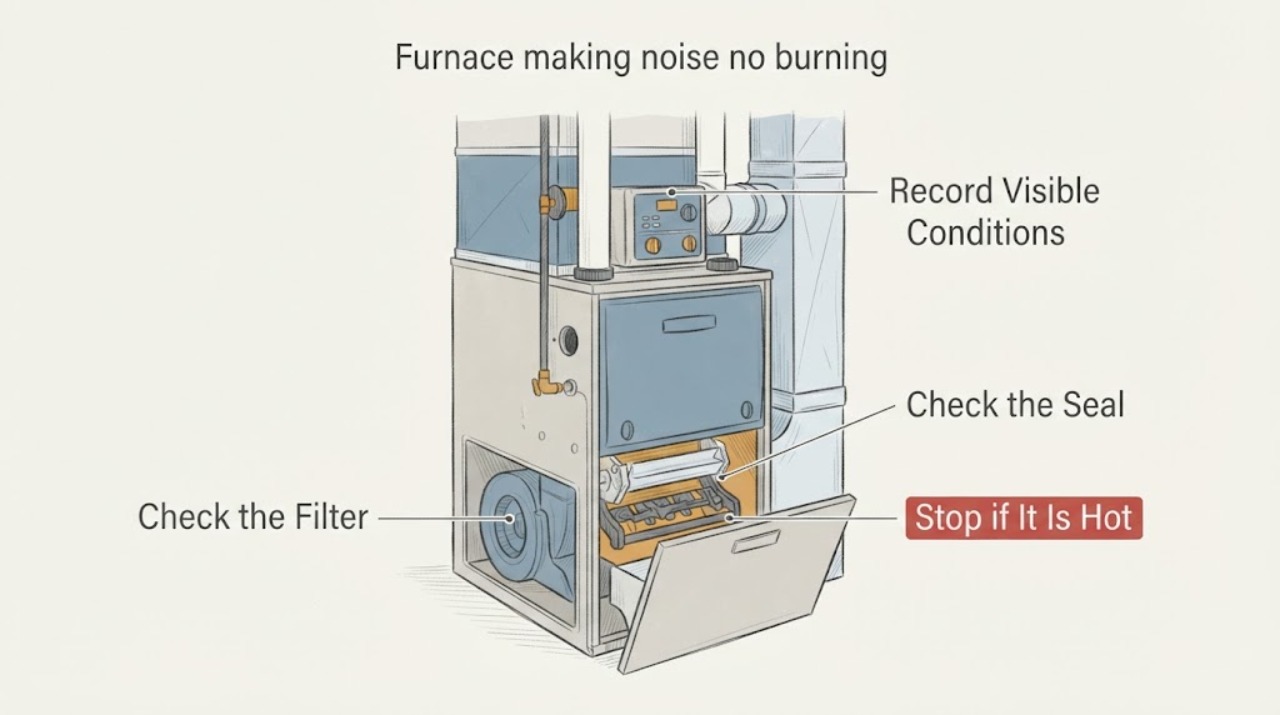
Furnace making noise no burning odor: What to Check and What to Do Next
A furnace can make normal brief clicks, airflow sounds, or light duct expansion noises, but a new loud, repeating, metallic, high-pitched, buzzing, rattling, whistling, or banging sound deserves attention even when there is no burning odor. From a safe distance, record when the sound occurs, whether it follows ignition or the blower, and whether airflow or heating changes.
-
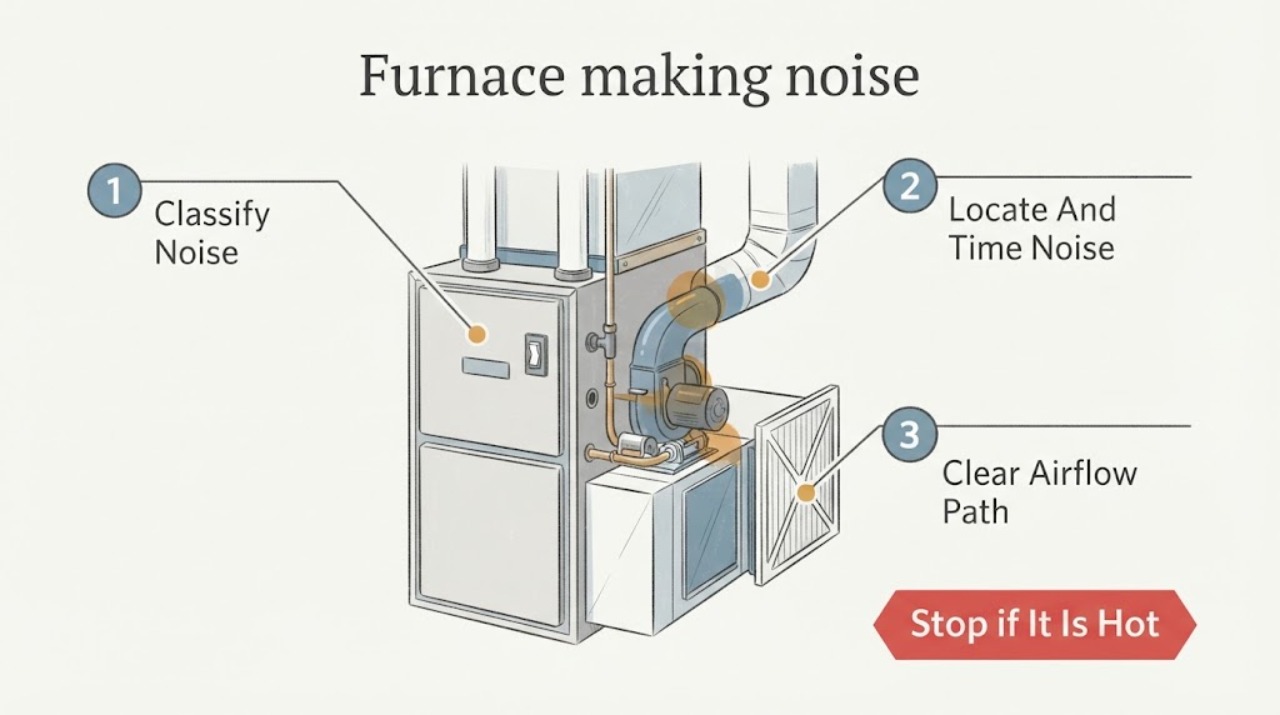
Furnace making noise: What to Check and What to Do Next
Do not open the furnace cabinet, touch combustion or electrical parts, bypass a safety control, or keep running the system to reproduce a dangerous sound. From a safe standing position, record whether the noise is a hum, buzz, rattle, squeal, whistle, bang, grinding, or hiss; where it is loudest; whether it occurs at startup, shutdown, or throughout a cycle; and whether there is burning odor, gas odor, smoke, vibration, poor airflow, or a carbon-monoxide alarm.
-
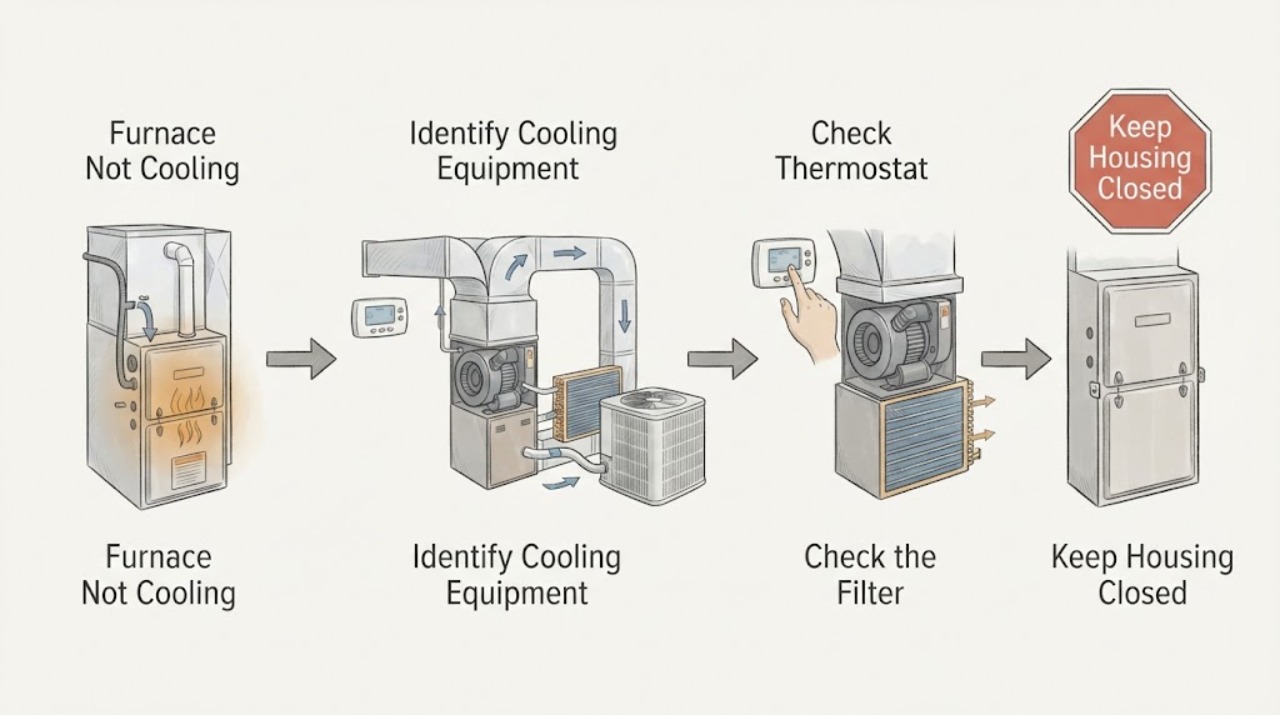
Furnace Not Cooling: Check the Shared HVAC System Safely
A furnace does not provide cooling; it is the heating and indoor-air-moving part of many central HVAC systems. If the home is not cooling, check the thermostat's Cool mode and temperature setting, keep the fan on Auto, inspect the accessible air filter and vents, and observe whether the outdoor air-conditioning condenser operates.
-
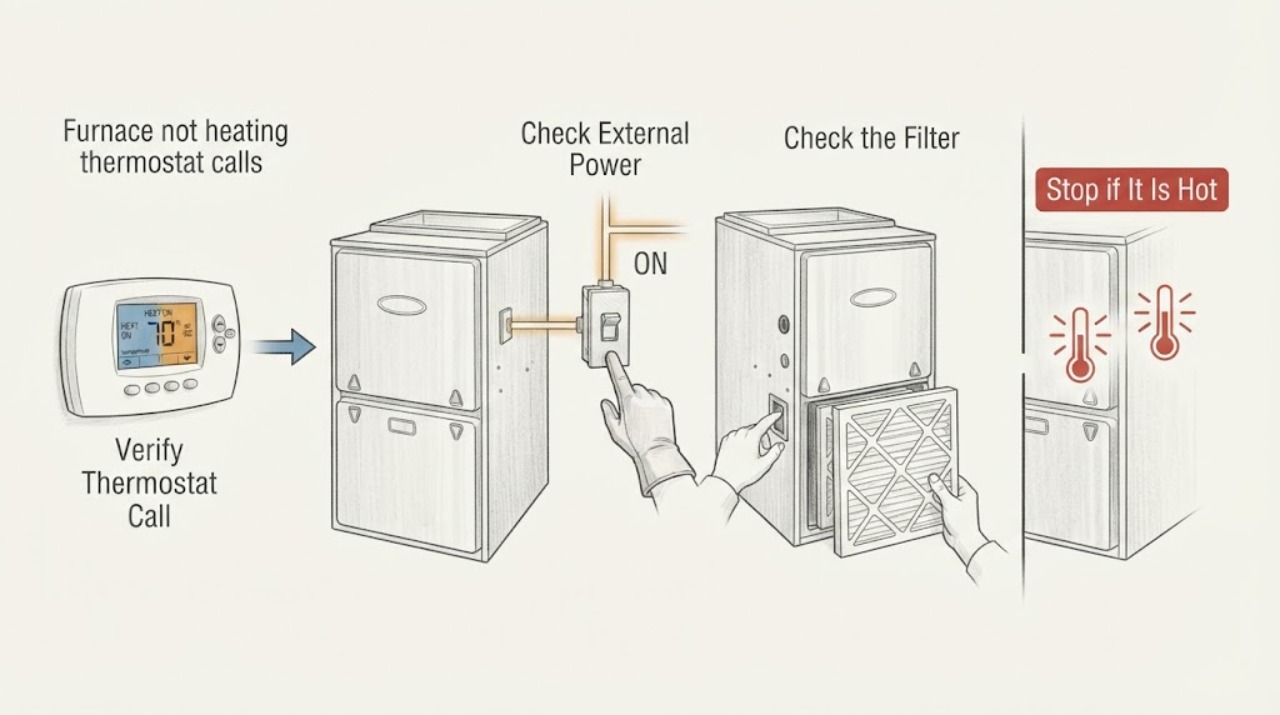
Furnace not heating thermostat calls for heat: What to Check and What to Do Next
If the thermostat is calling for heat but the furnace is not heating, first confirm the display, Heat mode, setpoint, and fan setting, then check only the accessible furnace switch, breaker, filter, and open supply and return vents. A furnace can receive the call yet fail because of lost power, restricted airflow, a limit or condensate safety shutdown, fuel or ignition trouble, a blower fault, or a control problem.
-
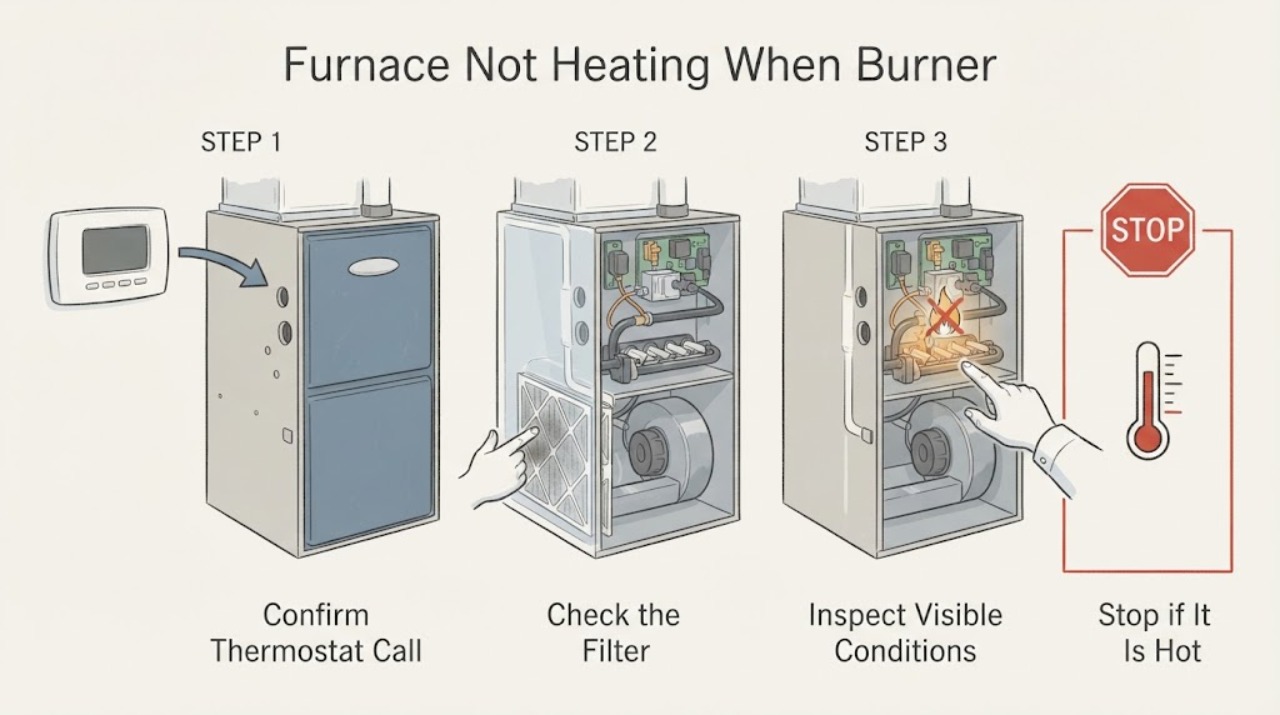
Furnace Not Heating When Burner Ignition May Fail: What to Check and What to Do Next
When a gas furnace is not heating and the burner may not be igniting, first confirm the thermostat is calling for heat, the furnace switch has power, and the filter is not visibly blocked. If the furnace has a safe viewing window, note whether the inducer or blower starts, ignition clicks or glows, a burner flame appears, and the flame stays on; do not remove access panels or touch the igniter, flame sensor, burner, gas valve, or wiring.
-
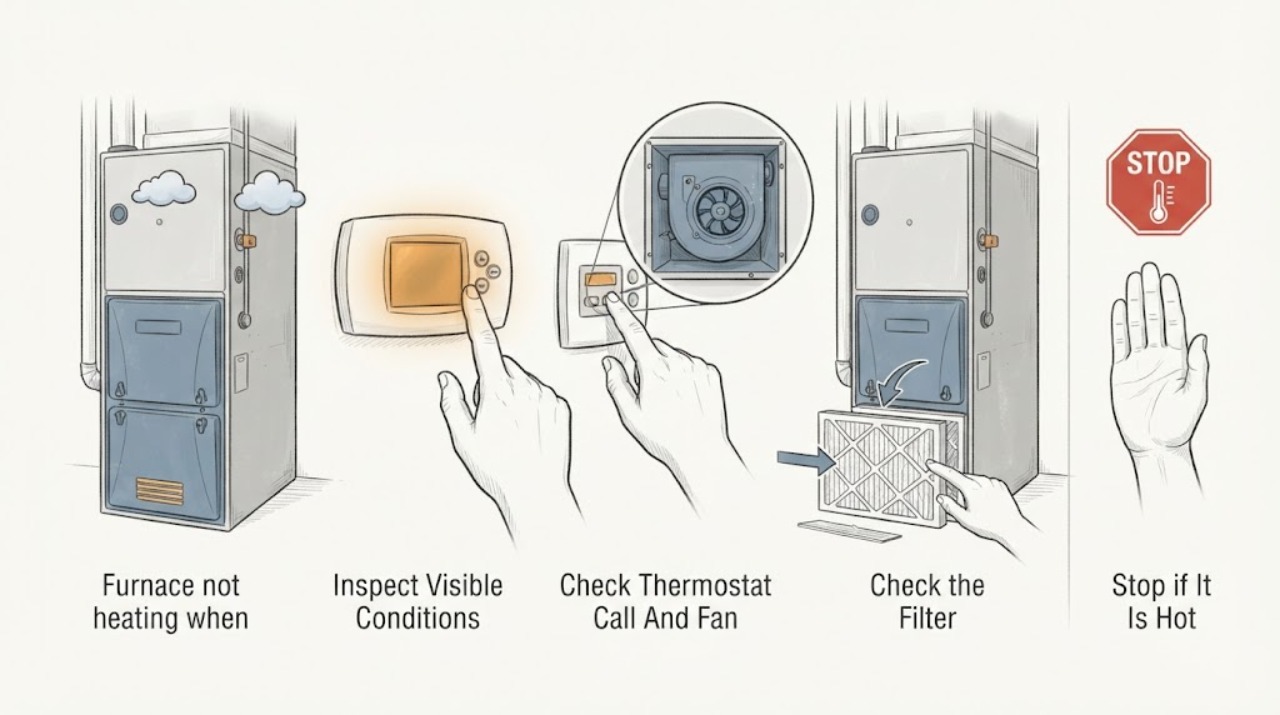
Furnace not heating when the blower runs or is silent: What to Check and What to Do Next
First separate a blower-only problem from a furnace-that-is-not-producing-heat problem. If the blower runs but the air is cold, the thermostat may be set to Fan On, the burner or igniter may not be operating, a dirty filter may have triggered a safety limit, or a fuel, condensate, control, or flame-sensing fault may have stopped heat production.
-
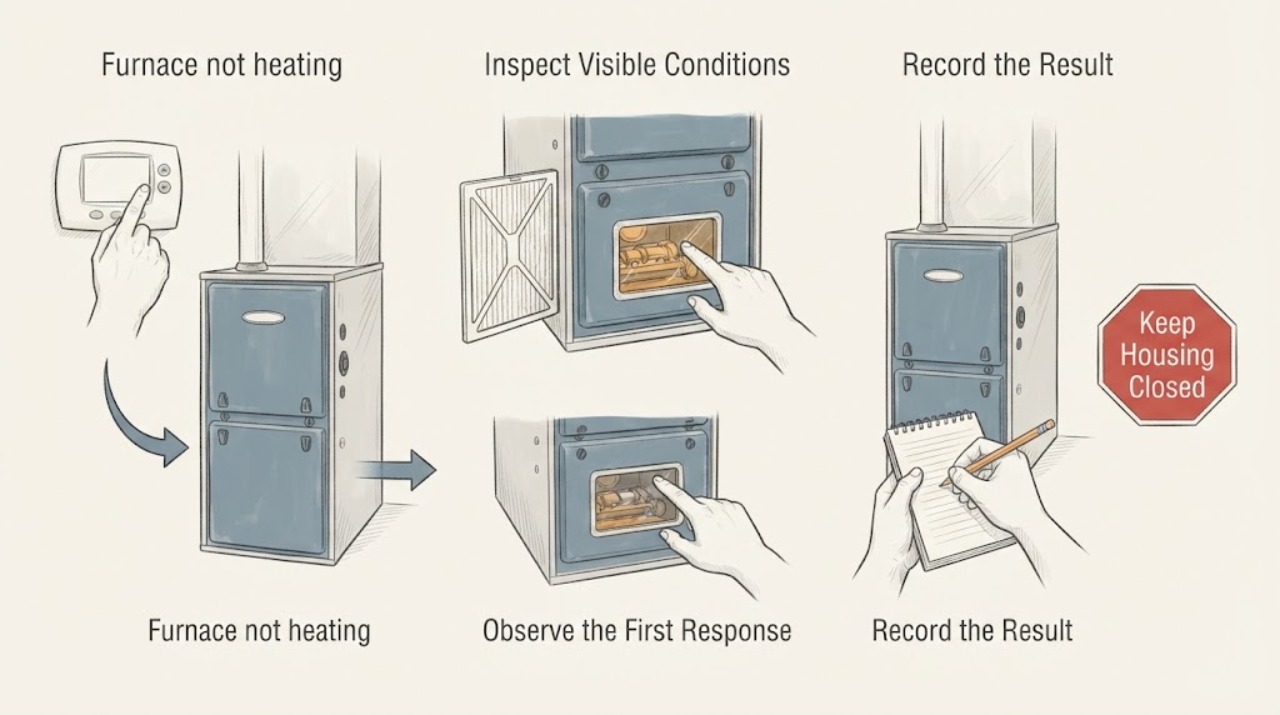
Furnace not heating: What to Check and What to Do Next
If a furnace is not heating, first check only the thermostat display and mode, room registers and return airflow, and any filter indicator or filter that is accessible without opening the furnace cabinet. Record whether the blower runs, whether warm air ever appears, and any visible diagnostic light pattern without repeatedly resetting or cycling the unit.
-
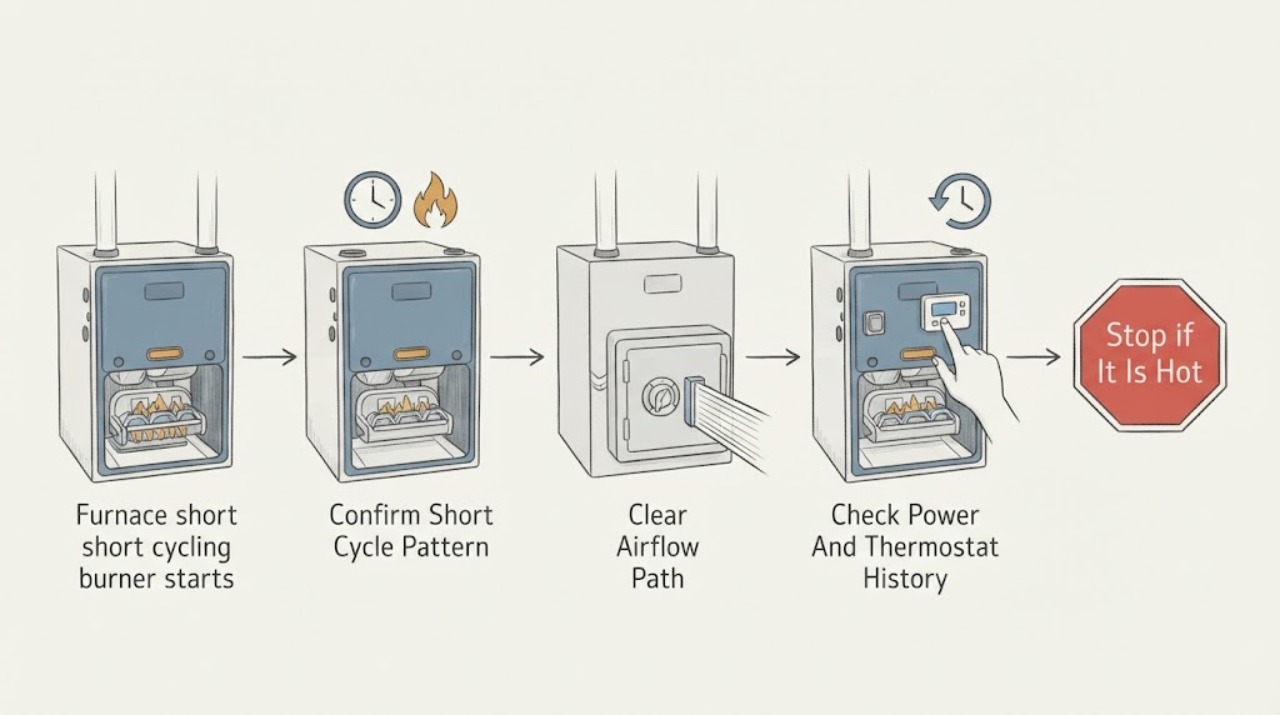
Furnace short cycling burner starts then stops: What to Check and What to Do Next
If the furnace burner starts and then stops before the home is warm, first confirm that the thermostat is still calling for heat and record whether the blower continues. A dirty filter, blocked return or supply, or another airflow restriction can make the furnace overheat and shut the burners off through a safety control.
-
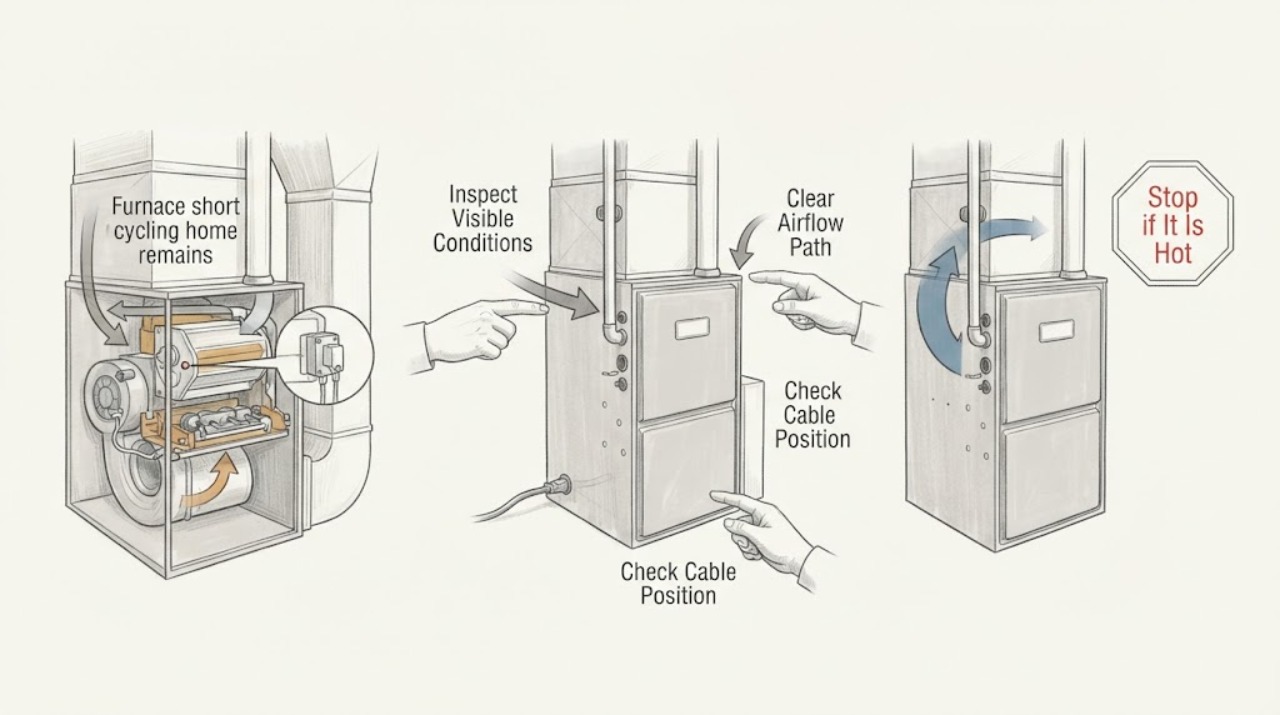
Furnace short cycling home remains cold: What to Check and What to Do Next
A furnace is short cycling when it starts and stops repeatedly before the home reaches the thermostat setting. A dirty filter, blocked return or supply air, thermostat error, vent restriction, limit-control problem, ignition or flame-sensing fault, or incorrect furnace sizing can all produce this pattern.
-
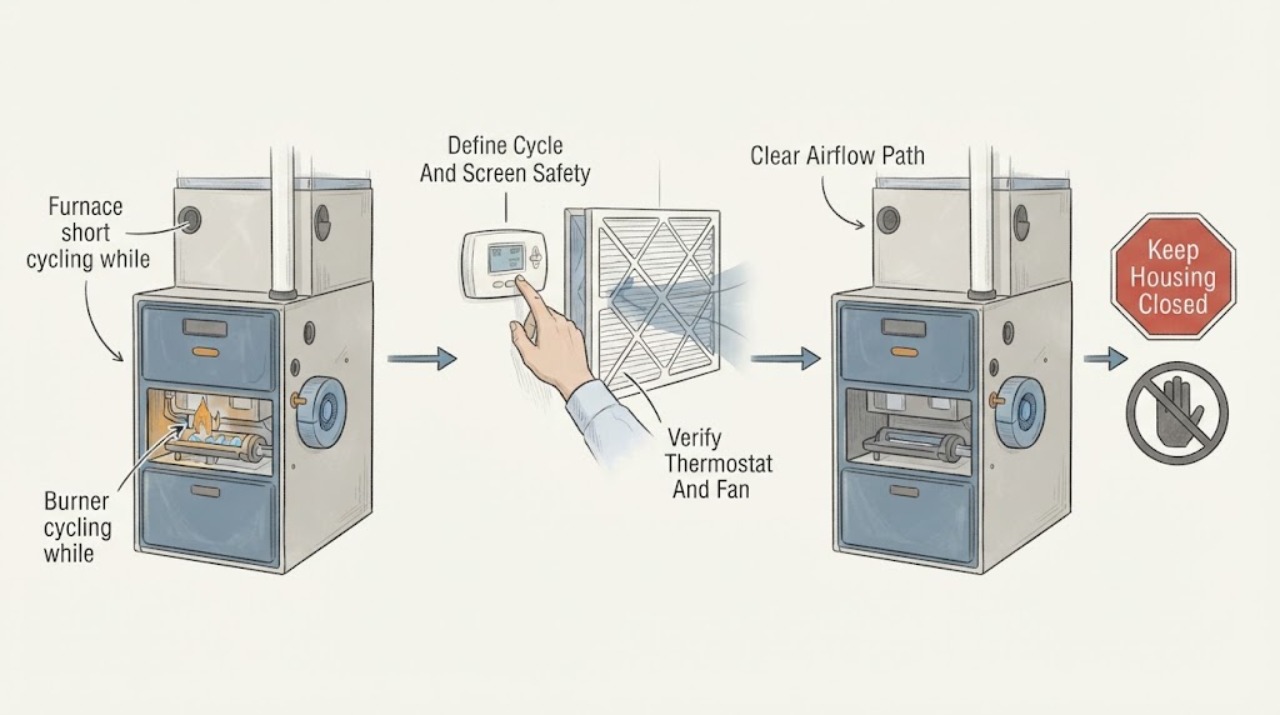
Furnace short cycling while the blower may continue: What to Check and What to Do Next
Short cycling means the furnace starts a heat cycle but stops and restarts before the home reaches the thermostat setting. The blower may continue briefly after the burners stop as the system cools or distributes remaining heat; a fan set to On can also circulate air when no heat is being produced.
-
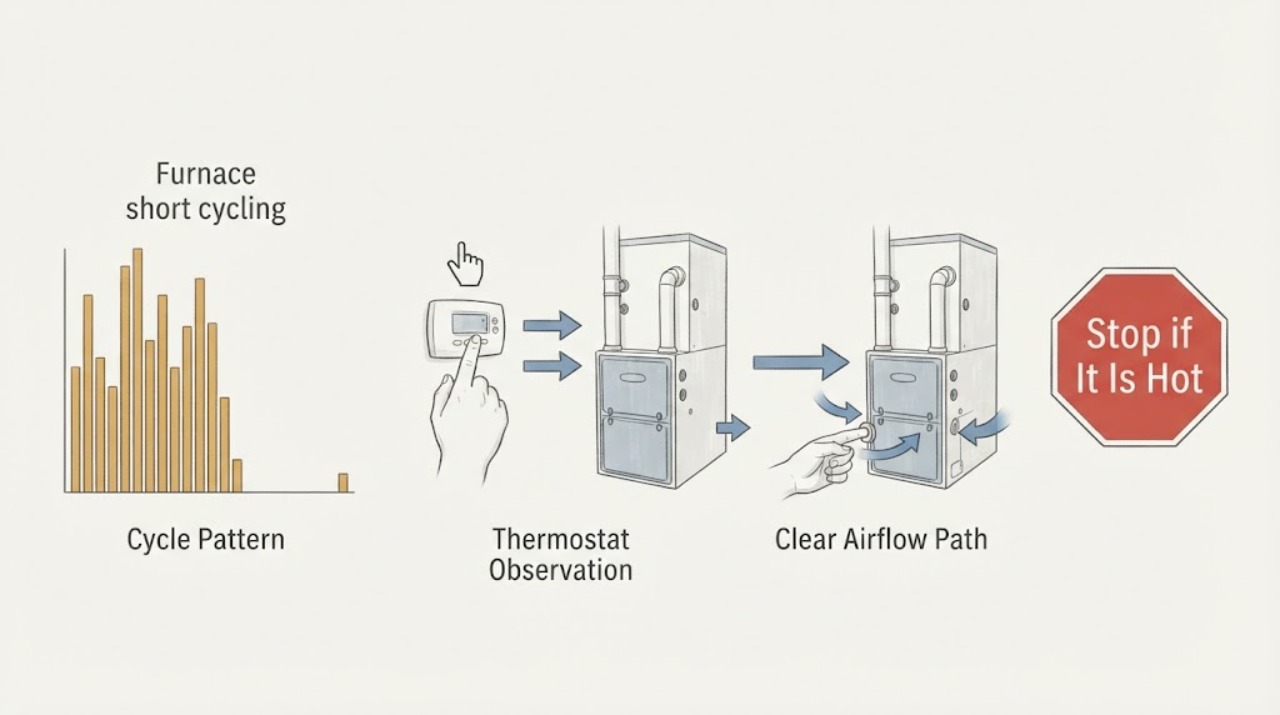
Furnace short cycling: What to Check and What to Do Next
A furnace that starts and stops repeatedly before the home reaches the thermostat setting is short cycling. Restricted airflow, thermostat sensing or placement, system sizing, and internal safety or combustion faults can all look similar.
-
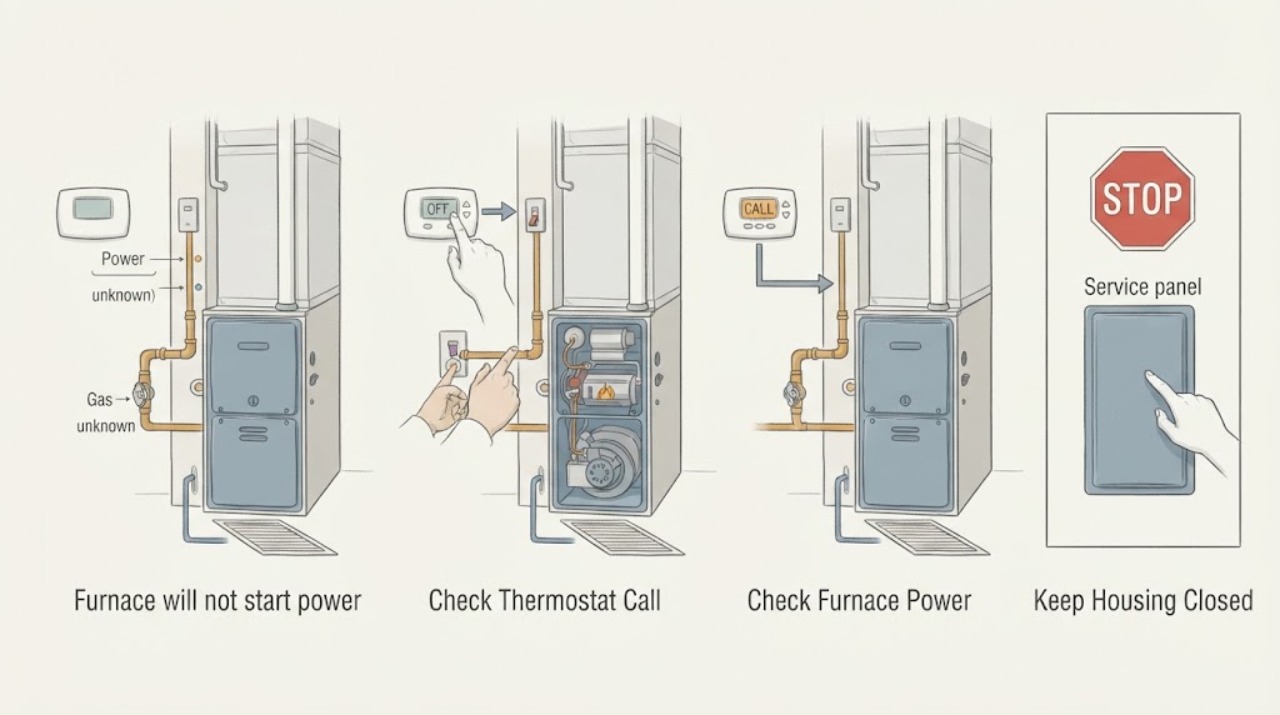
Furnace will not start power or gas status is unknown: What to Check and What to Do Next
When a furnace will not start and you do not know whether power or fuel is available, begin with safe, external observations: confirm the thermostat is calling for heat, look for a furnace power switch or tripped breaker, check the filter and registers, and note whether the furnace is completely silent or begins a startup sequence.
-
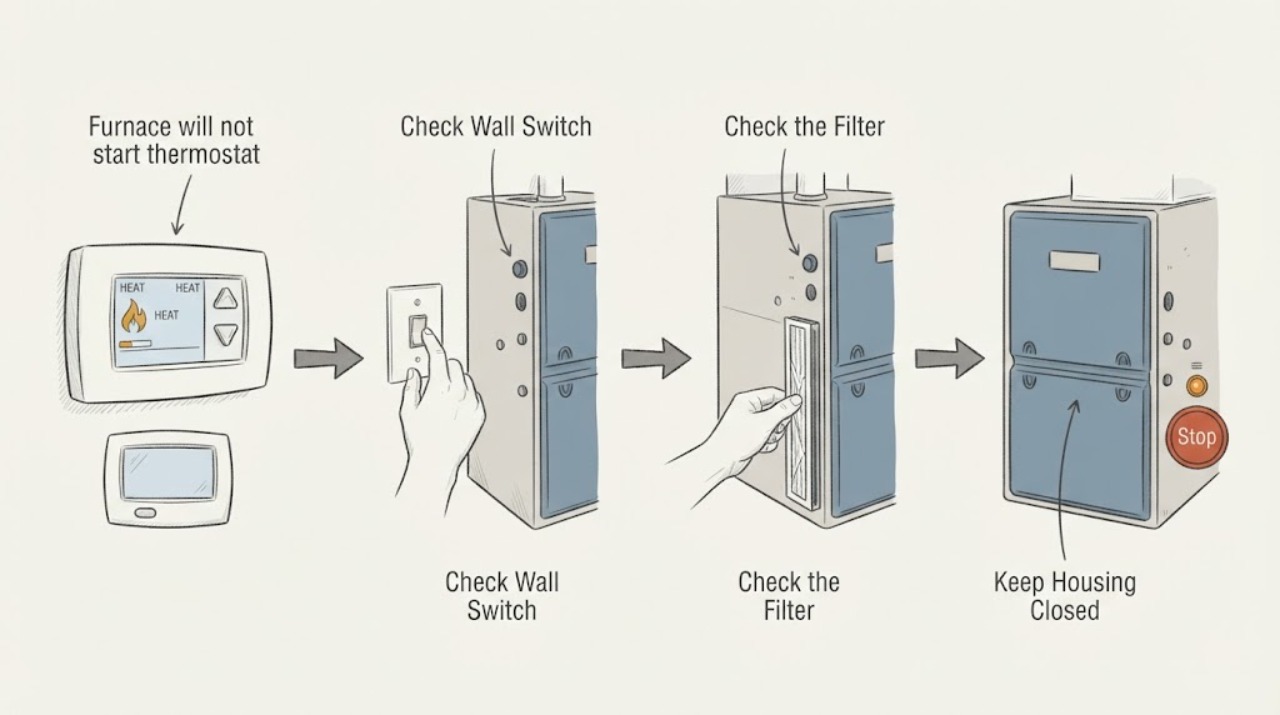
Furnace will not start thermostat is calling: What to Check and What to Do Next
If the thermostat says it is calling for heat but the furnace does not start, verify the thermostat mode and setpoint, the furnace service switch, and the furnace circuit breaker without opening the cabinet. A dirty filter or blocked return can prevent safe operation, while a tripped limit, ignition or flame-sensing fault, gas-supply issue, control failure, or hard lockout can stop the sequence after the call begins.
-
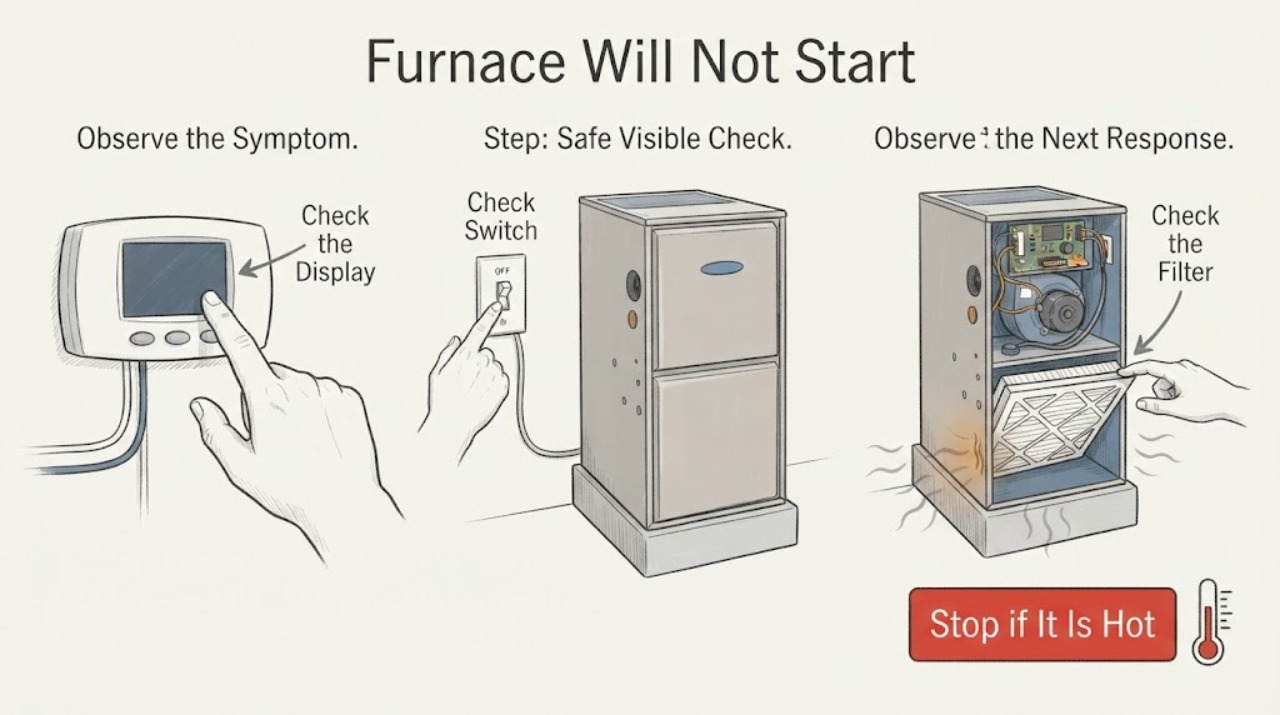
Furnace Will Not Start: Blower Is Silent—What to Check and What to Do Next
When a furnace will not start and the blower is completely silent, begin with the thermostat call for heat, the furnace switch, the circuit breaker, the blower access door, and the air filter.
-
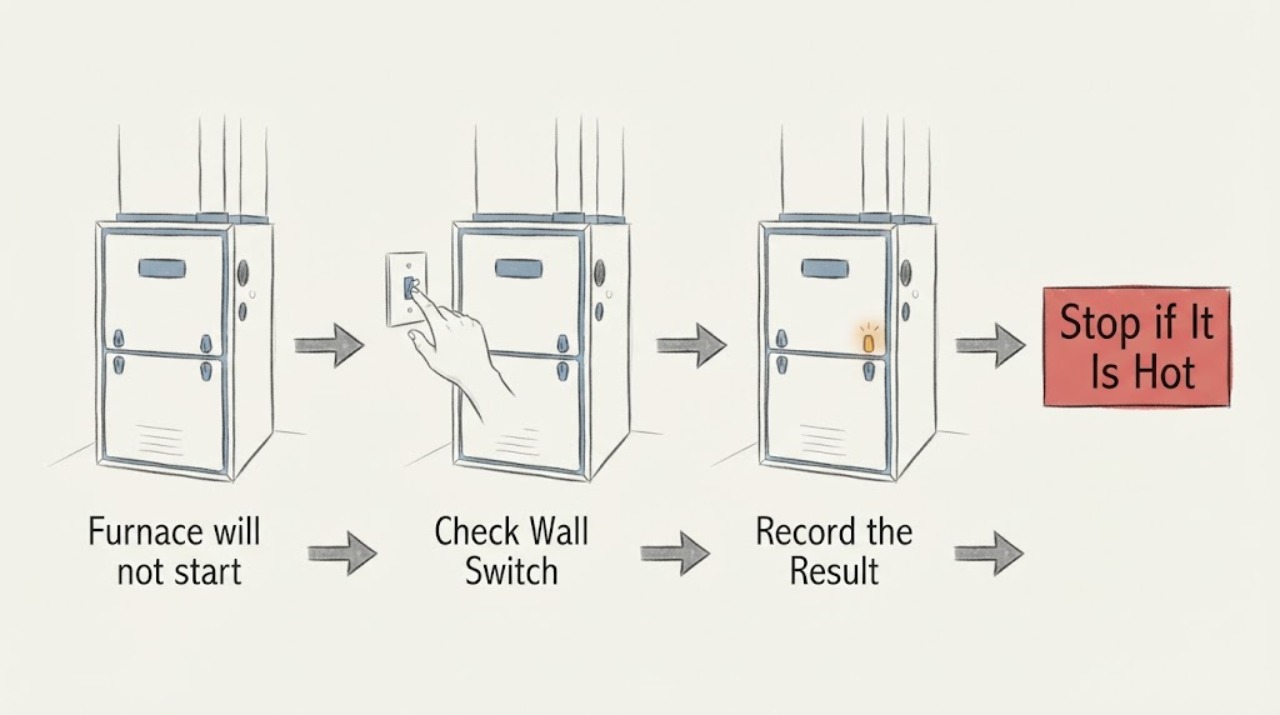
Furnace will not start: What to Check and What to Do Next
Start with safe observations, not a furnace-panel repair. Note whether the thermostat display is awake and calling for heat, whether the home has a broader power interruption, whether the furnace shows an external status light or code, and whether the return-air filter or registers visibly restrict airflow.