
HVAC guides
Furnaces Repair Guides – Page 2
Guides for furnace heating, ignition, airflow, cycling, and control problems.
Published furnaces guides
Choose the guide that best matches the equipment and symptom you are seeing.
-
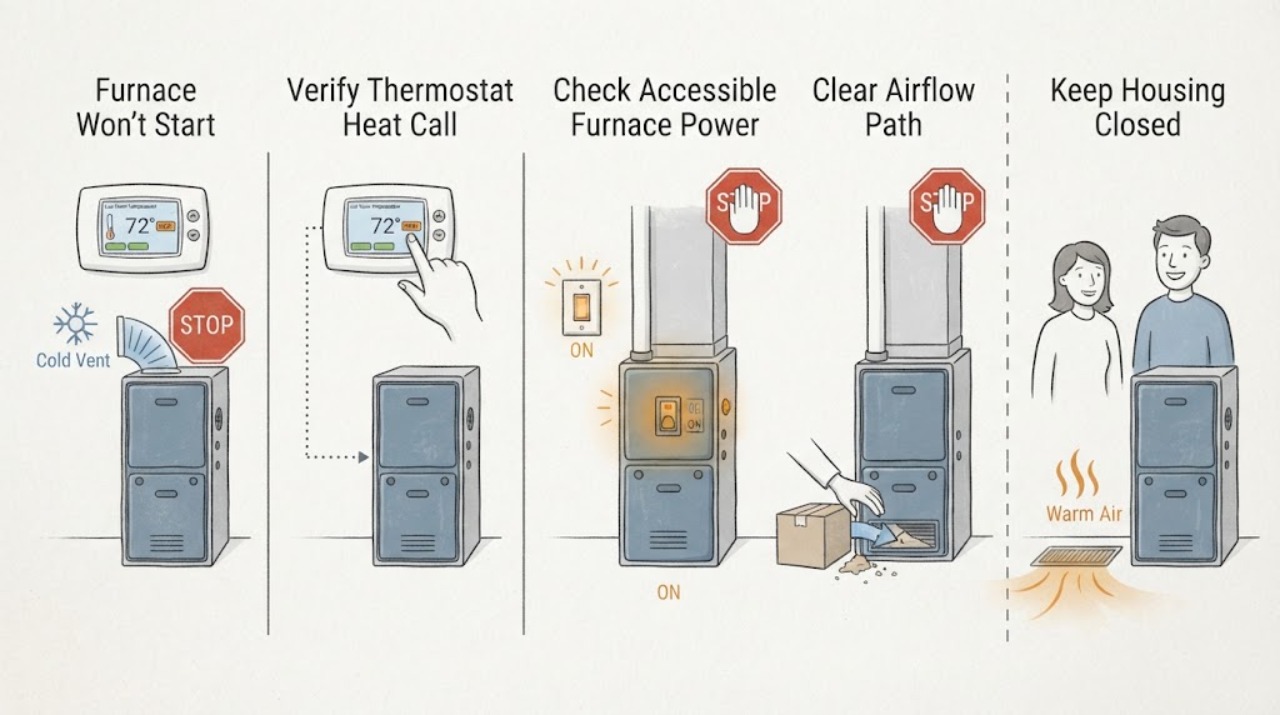
Furnace Won't Start: Safe HVAC Checks
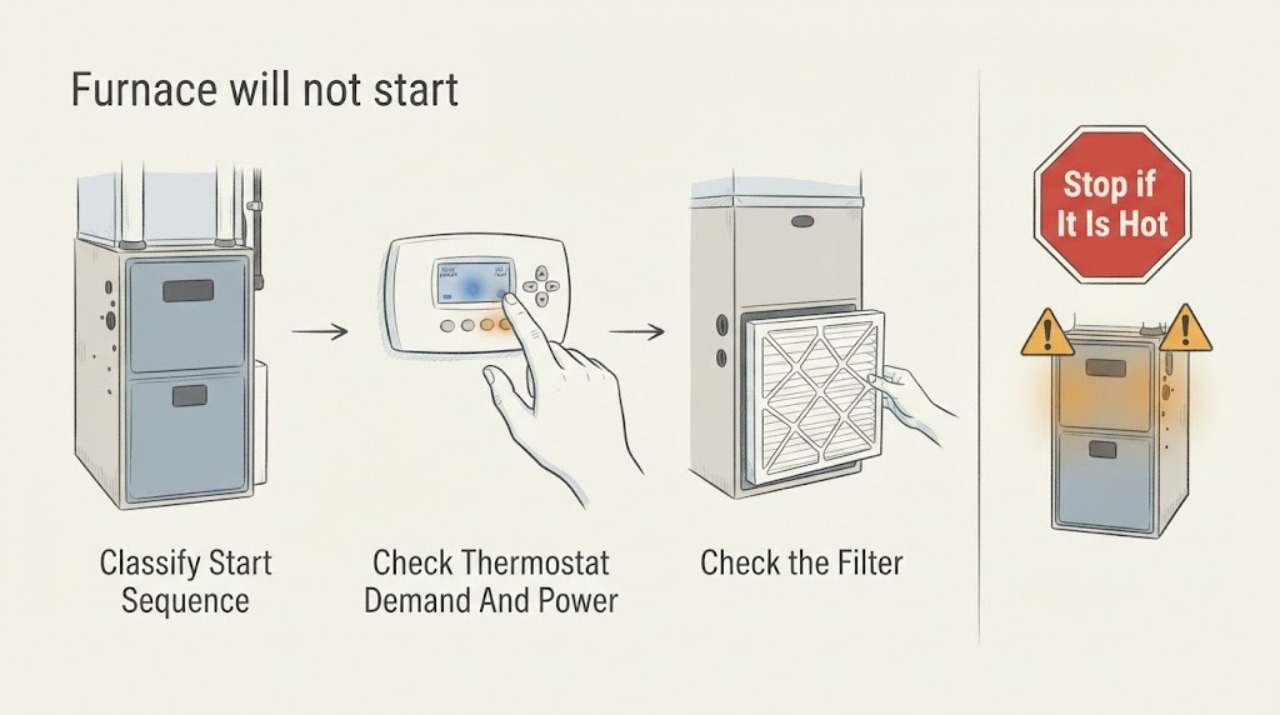
Set the thermostat to Heat with a target above the room temperature, then note whether the thermostat is powered, the furnace's accessible service switch is on, and the air filter is blocked. A furnace can fail to start because of settings, loss of power, restricted airflow, ignition or flame-sensing faults, or a fuel-supply issue, but the internal diagnosis is not a homeowner repair.
-
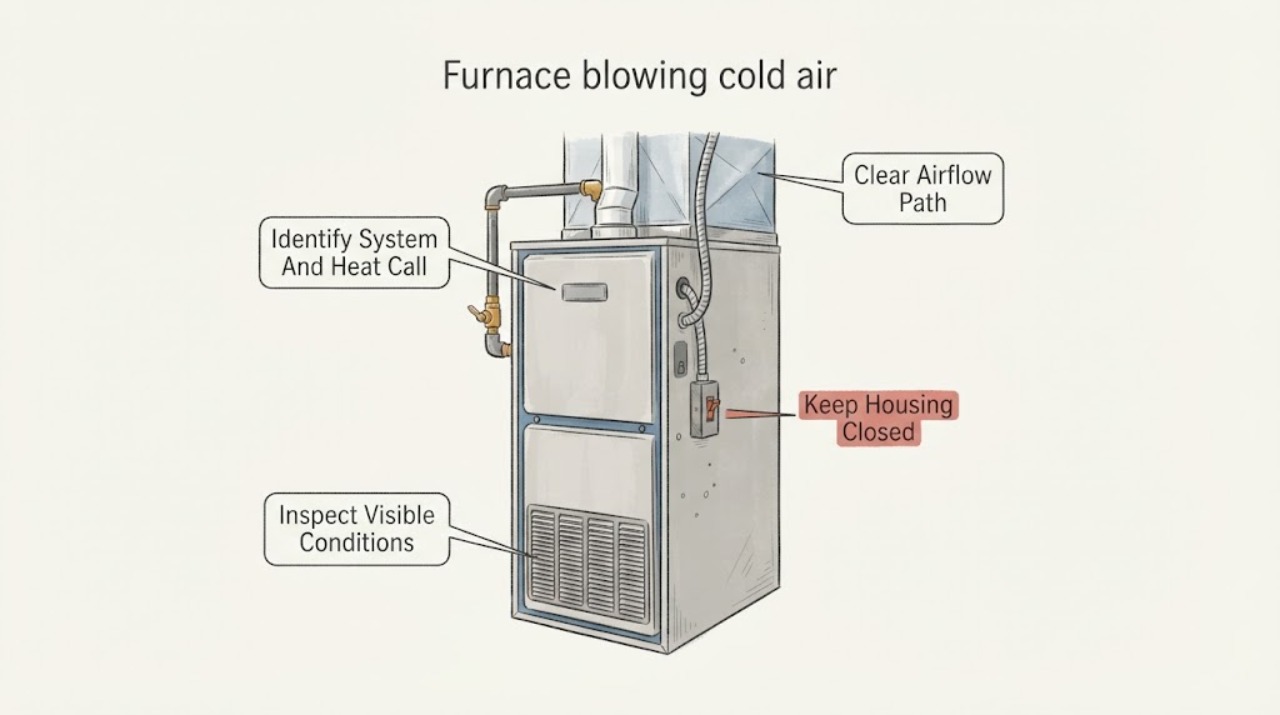
Goodman furnace blowing cold air: What to Check and What to Do Next
A Goodman furnace can blow cool air when the thermostat is not actually calling for heat, the fan is set to run independently, or the blower is completing a normal start-up or post-cycle period. If a valid heat call produces no warmth at all, or the air becomes warm and then turns cold, the furnace may be stopping its heating sequence because of an airflow, venting, condensate, ignition, flame-sensing, control, or other equipment problem.
-
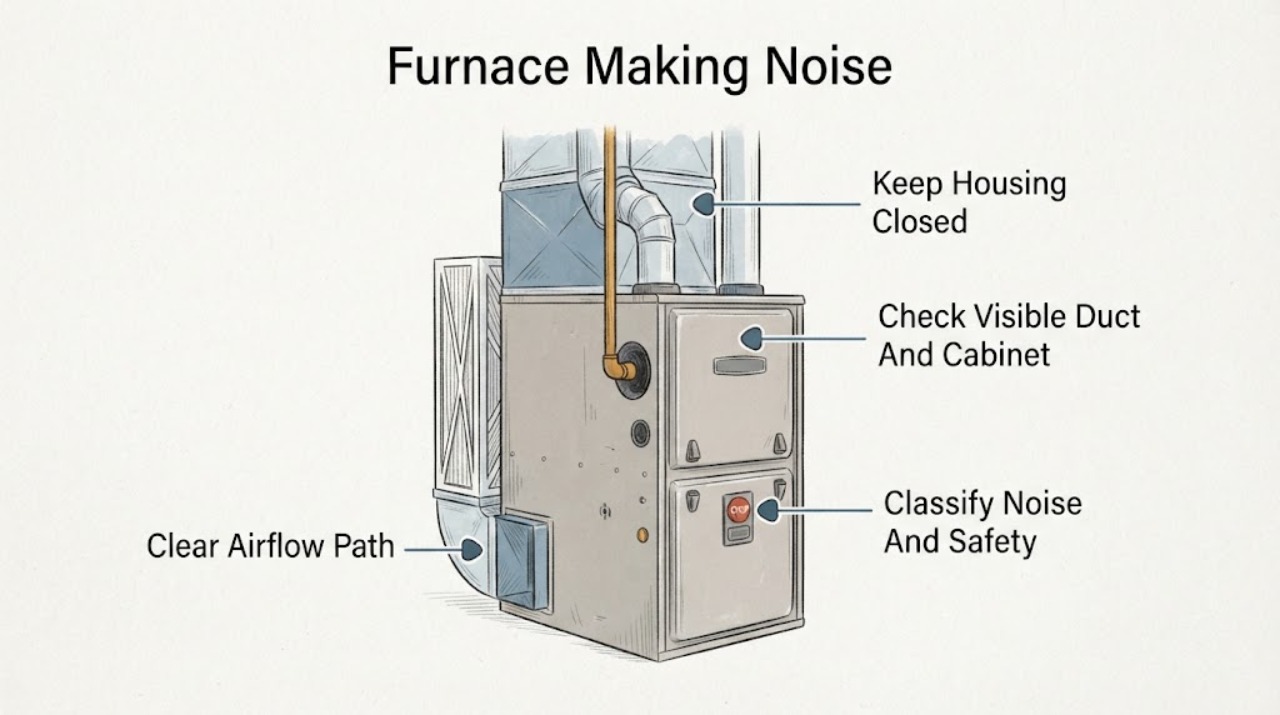
Goodman Furnace Making Noise: What to Check and What to Do Next
A Goodman furnace should not be assumed faulty from a familiar start-up click or airflow sound, but a new or worsening bang, grinding, screech, rattling, whistling, burning odor, or gas odor deserves attention. First note when the sound occurs—at ignition, during blower operation, at shutdown, or continuously—then check only the thermostat setting, accessible air filter, open registers, and loose-looking external duct or cabinet panels.
-
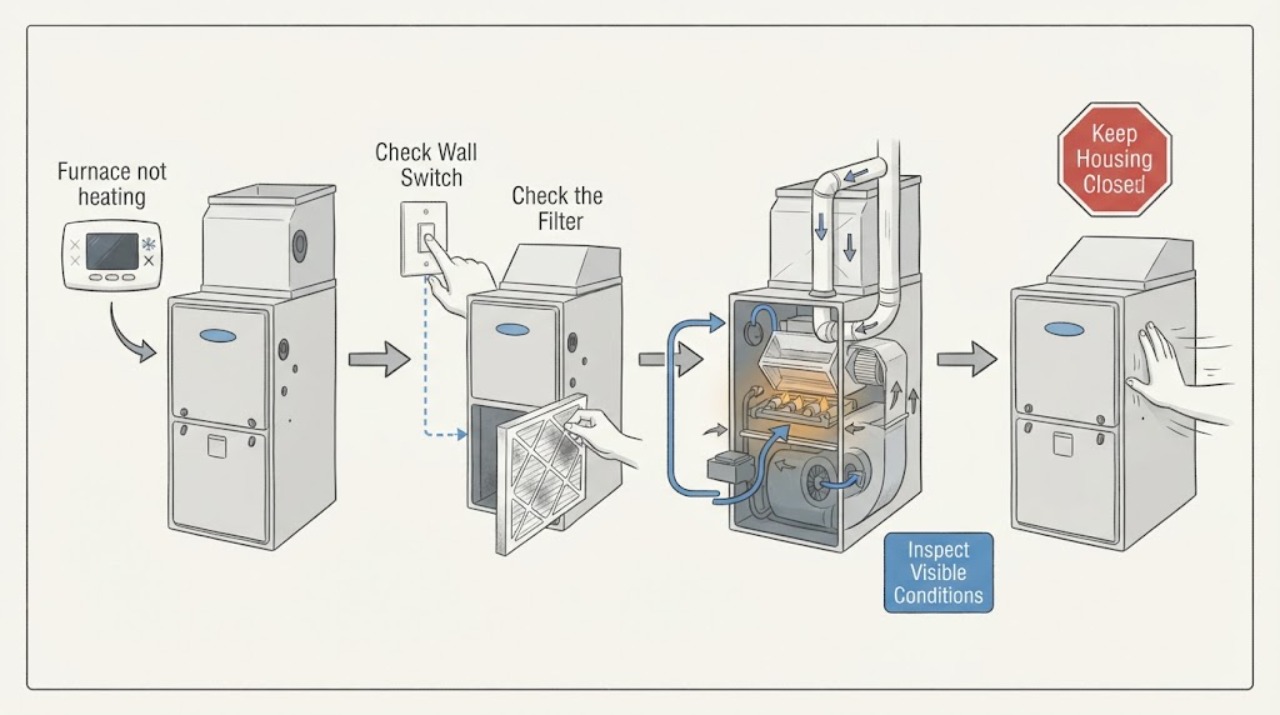
Goodman furnace not heating: What to Check and What to Do Next
A Goodman furnace that is not heating may not be receiving a call for heat, may have lost electrical power, may have an airflow restriction, or may be stopping during ignition, combustion, exhaust, or blower operation. Start with safe observations: thermostat mode and setpoint, the furnace power switch and clearly labeled breaker, the return-air filter, supply and return airflow, and any status light or code visible without opening the cabinet.
-
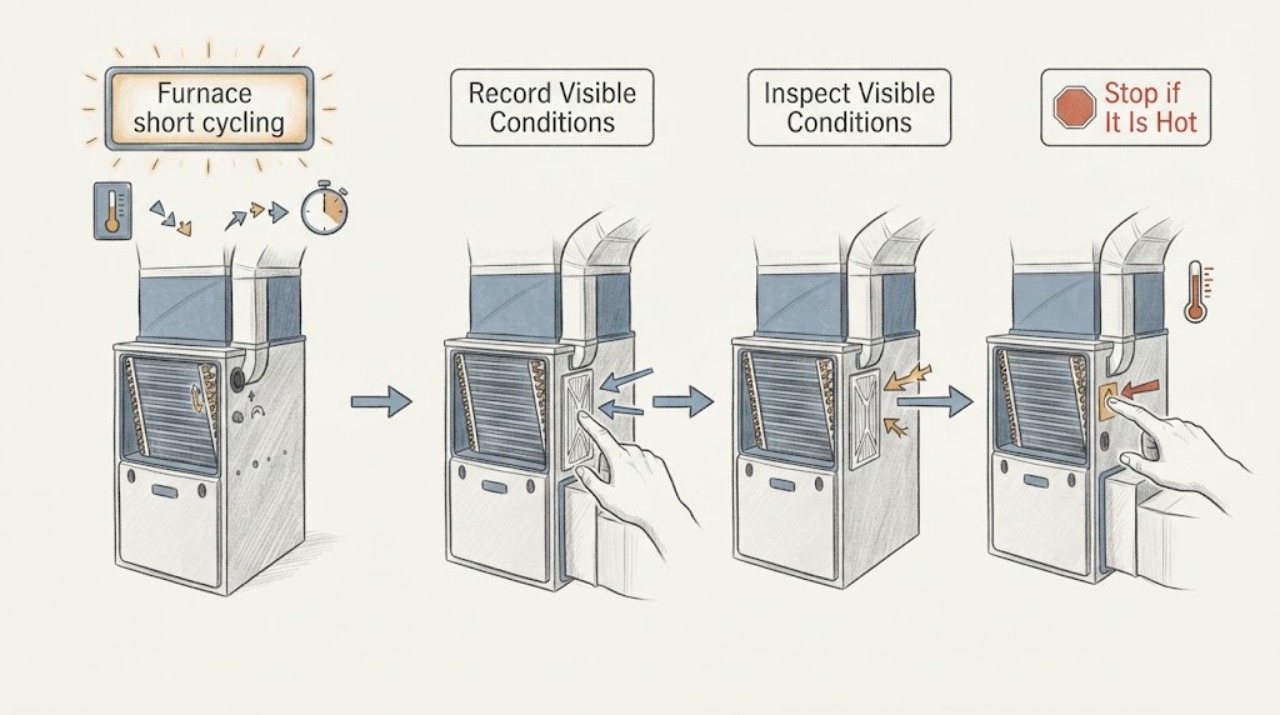
Goodman furnace short cycling: Check airflow around the evaporator coil
A Goodman furnace that starts and stops before the home is comfortable needs a pattern check, not a guessed coil replacement. The evaporator coil is normally part of the indoor air-handler or furnace-and-air-conditioner assembly, so a dirty filter, blocked return or supply path, restricted coil airflow, or a condensate problem can affect the furnace's heat cycle; a furnace that is simply oversized or a thermostat that is satisfied quickly is a different branch.
-
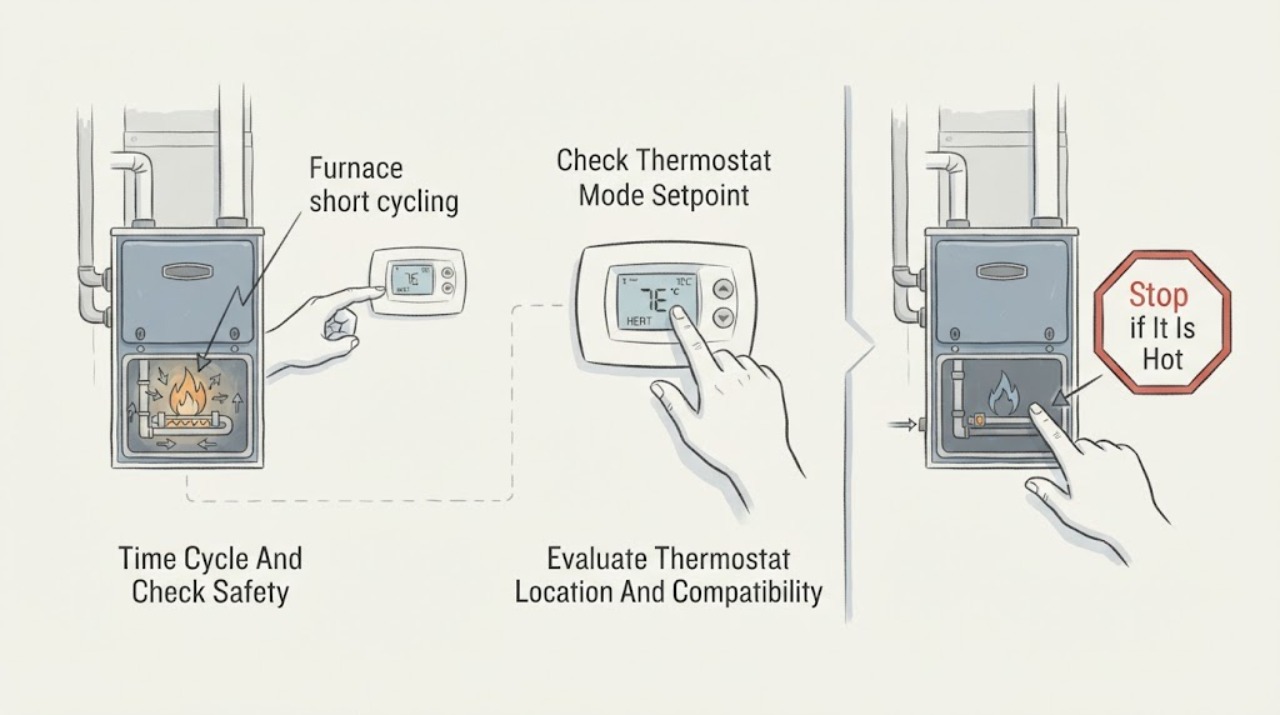
Goodman furnace short cycling: check the thermostat before service
A Goodman furnace that starts and stops before the home reaches the thermostat set point may be reacting to a thermostat setting or location, a clogged filter or blocked airflow, a safety-limit shutdown, an ignition or flame problem, an oversized system, or another control fault.
-
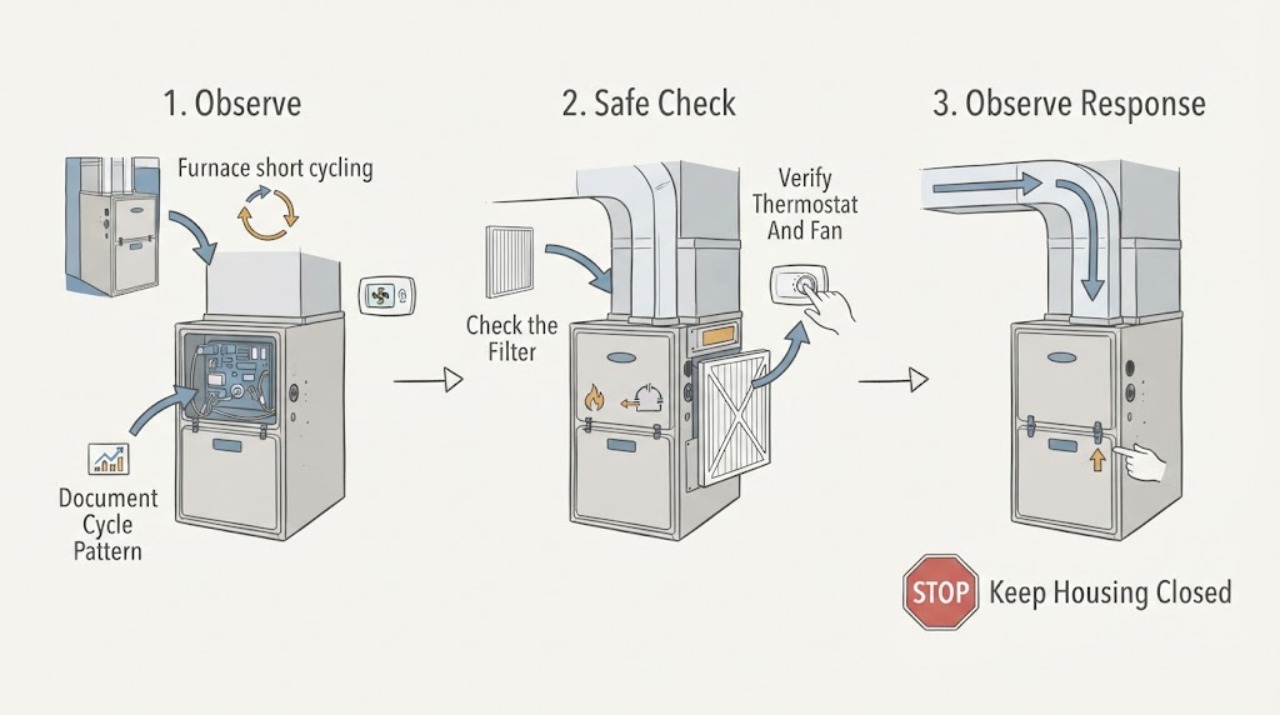
Goodman furnace short cycling: What to Check and What to Do Next
A Goodman furnace is short cycling when it starts and stops repeatedly before the home is comfortable or before a normal heating call completes. First confirm the thermostat is in Heat and the fan is not set to run continuously, then check the user-accessible filter and make sure return and supply vents are not blocked.
-
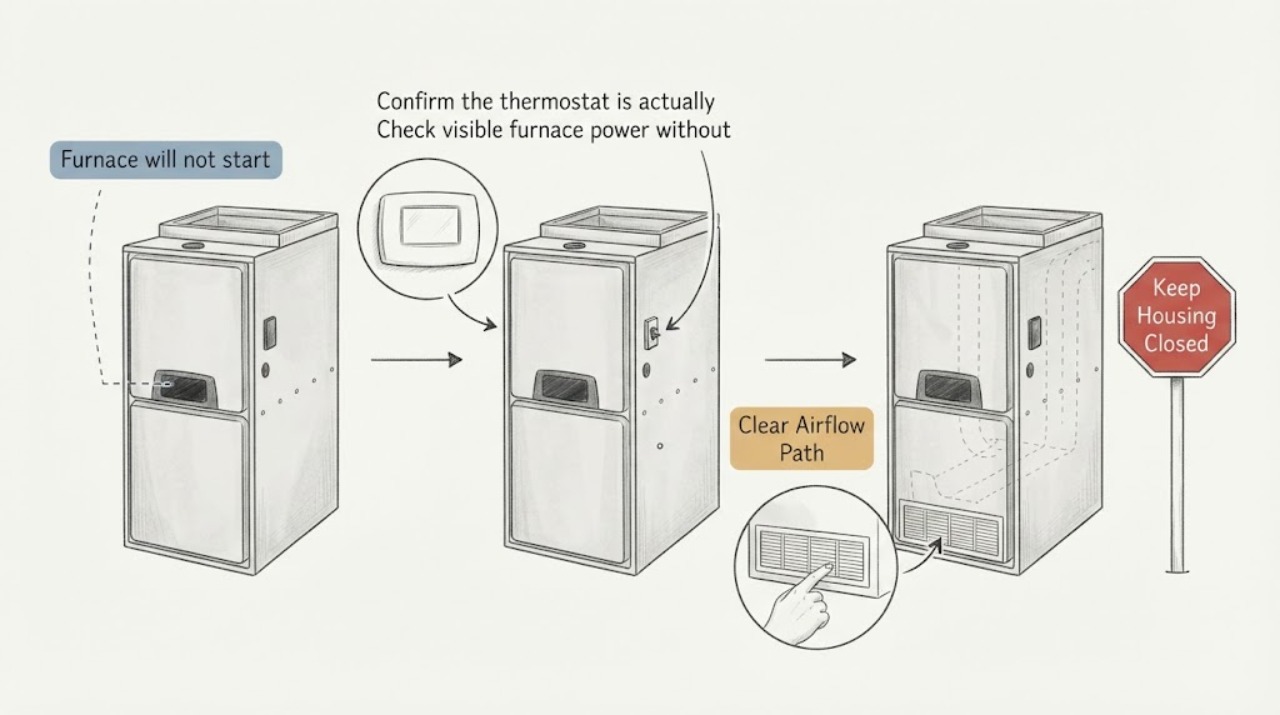
Goodman furnace will not start: What to Check and What to Do Next
A Goodman furnace that will not start should be diagnosed by its first response to a heat call: no display or sound points toward control power, a running inducer with no flame points toward draft or ignition sequencing, and a blower that runs without heat points toward an open limit or airflow problem.
-
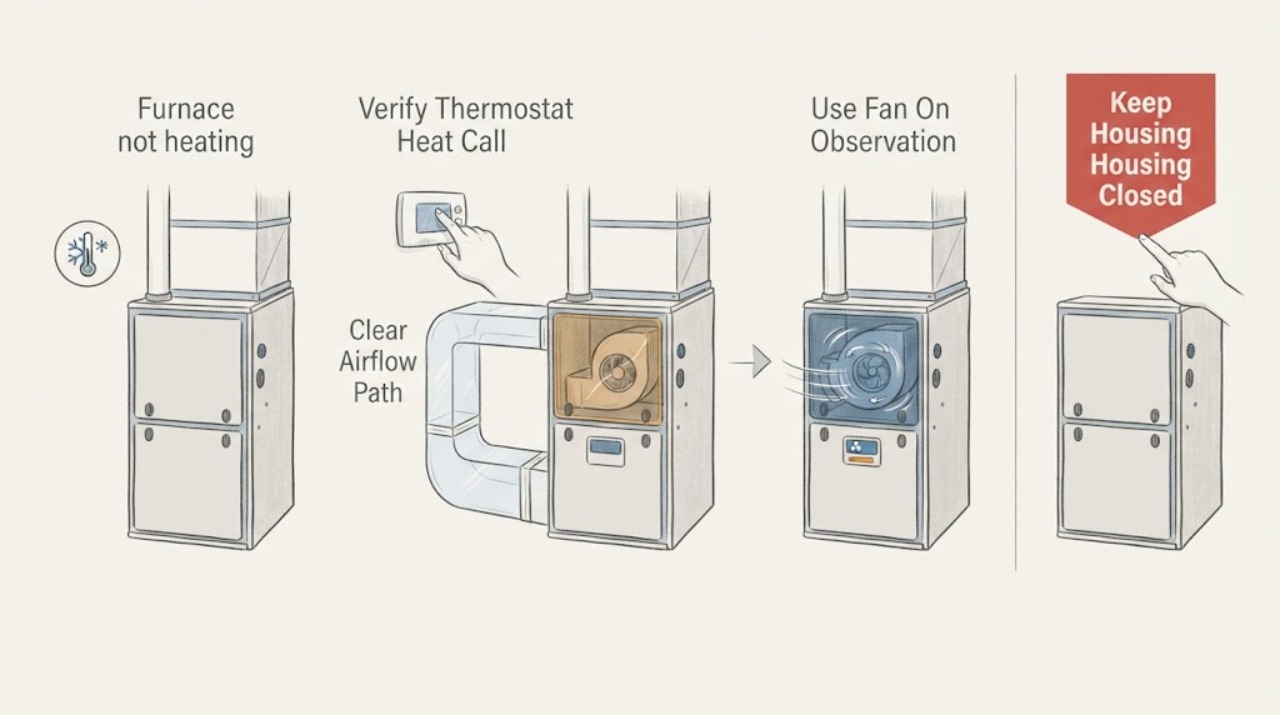
Honeywell furnace not heating: blower motor checks and when to call for service
Honeywell Home's own no-heat guide separates no air, room-temperature air, weak warm air, and cold air, then routes a fan that does not operate with a fan call to service. Start by recording the Honeywell thermostat model, furnace manufacturer/model, fuel type, and whether the vents have no airflow or weak airflow.
-
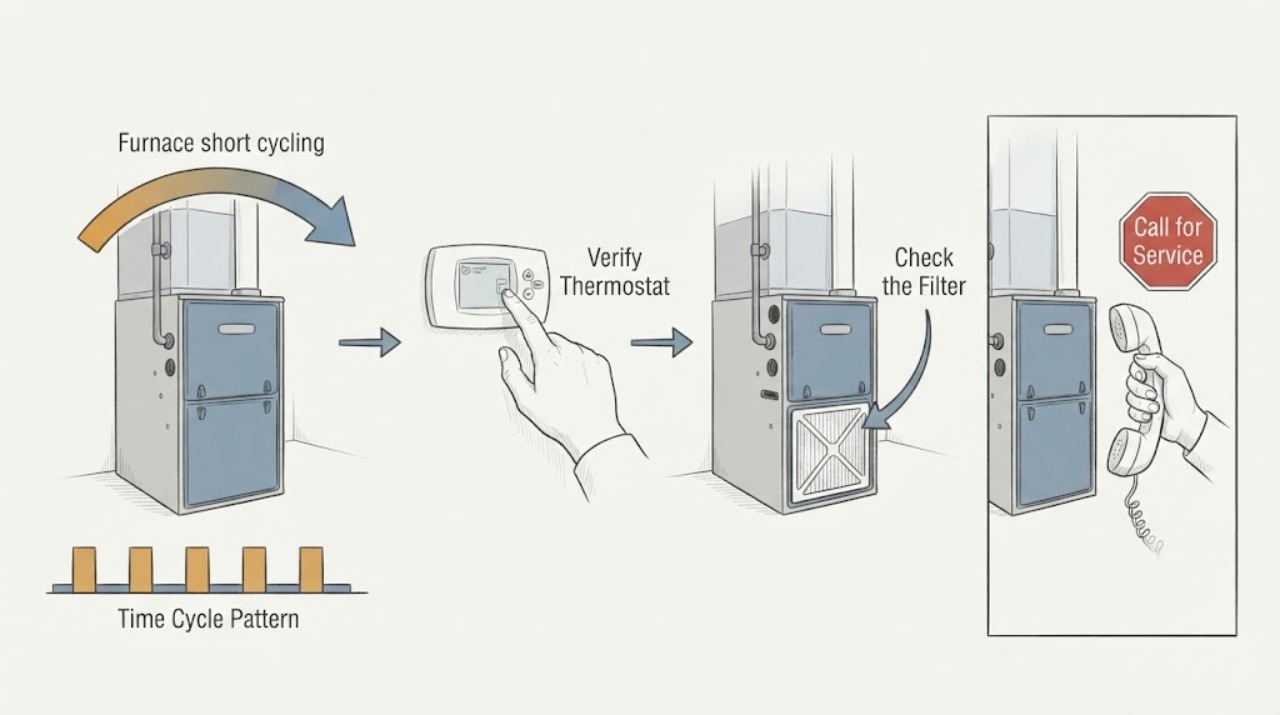
Honeywell furnace short cycling
If a furnace controlled by a Honeywell thermostat starts and stops before the home is comfortable, time several calls and note whether the burners stop while the blower continues. Check the Honeywell thermostat's Heat mode, setpoint, display, and any normal “Waiting for equipment” delay; then inspect the accessible air filter and make sure supply registers and return grilles are not blocked.
-
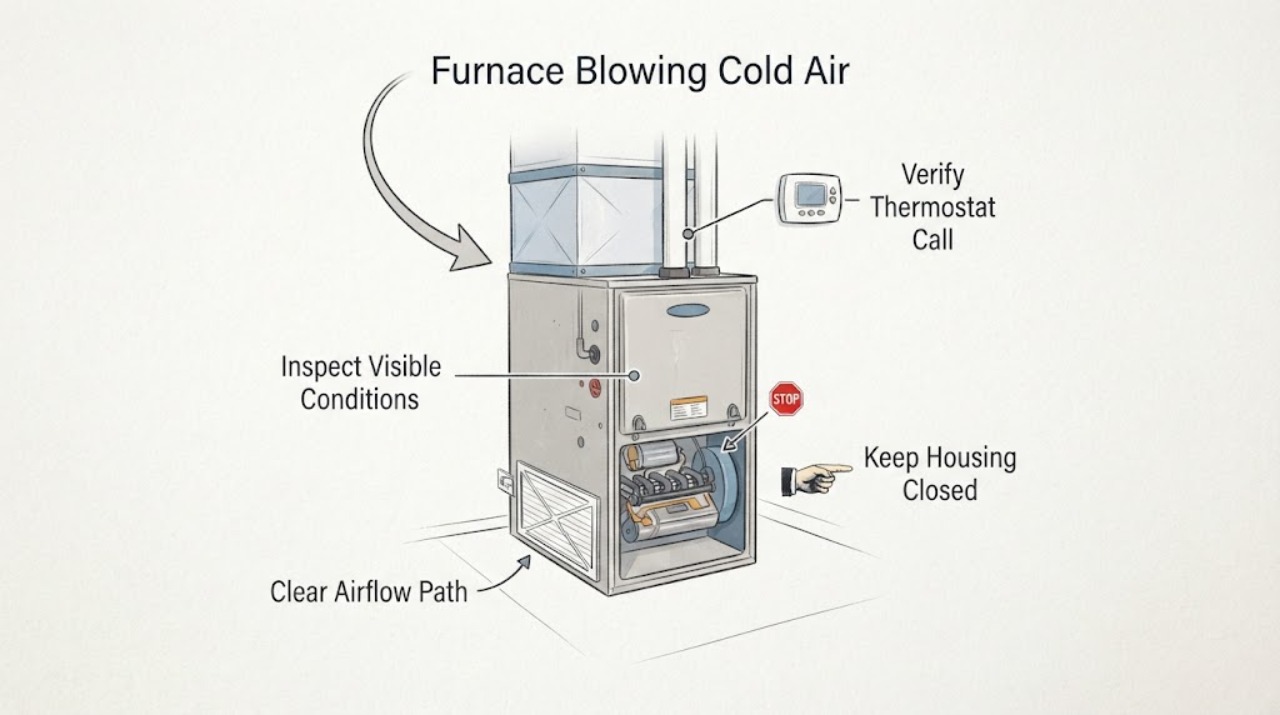
Lennox Furnace Blowing Cold Air: What to Check and What to Do Next
A brief cool stream when a Lennox furnace first starts can be air that was sitting in the ducts, but air that stays cold, turns cold after the burners light, or returns repeatedly means the heat cycle is not completing or the heat is not reaching the rooms. First confirm the thermostat is in Heat, the target is above room temperature, and the fan is set to Auto rather than On.
-
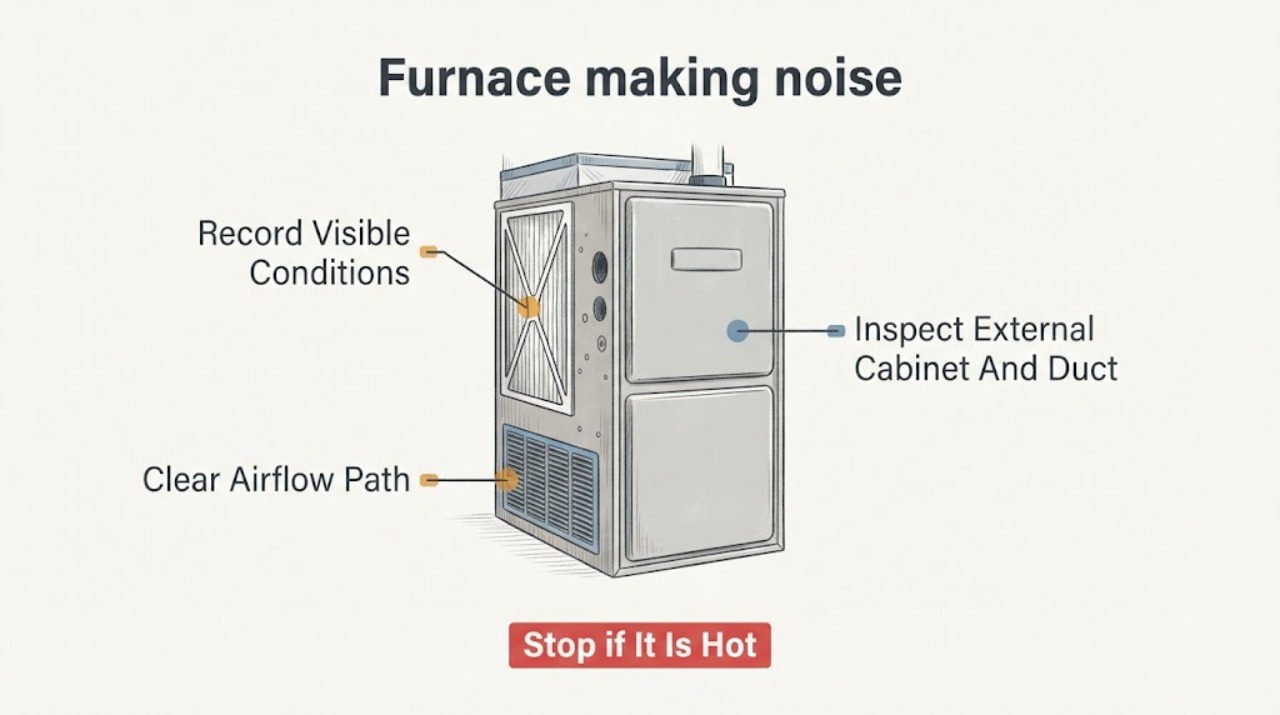
Lennox furnace making noise: What to Check and What to Do Next
First identify when the Lennox furnace makes the noise: a brief click or soft hum can occur during a normal call for heat, while a loud buzz, rattle, screech, bang, grinding sound, or noise that continues when the furnace is idle needs attention. Turn the system off if the sound is sudden, worsening, or accompanied by a burning smell, flickering lights, a repeated breaker trip, smoke, a gas odor, or weak airflow.
-
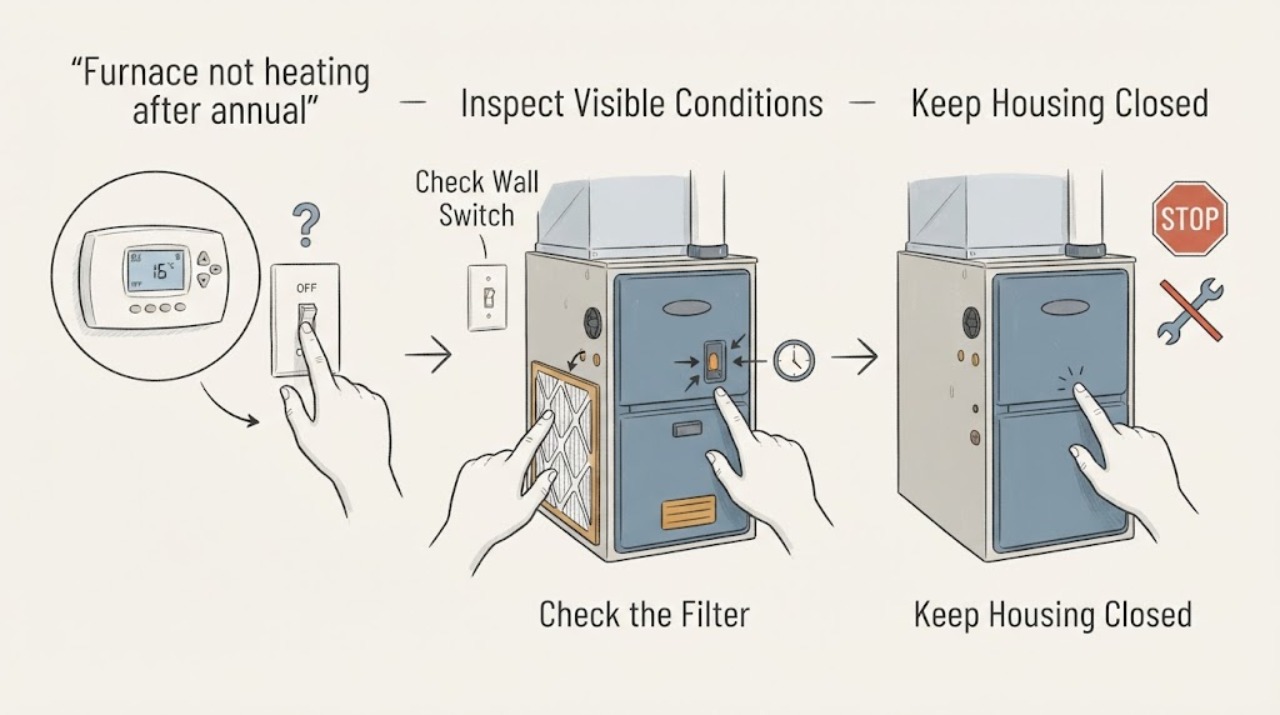
Lennox furnace not heating after annual maintenance: safe checks
A Lennox furnace that is not heating after annual maintenance may be responding to a thermostat setting, a power interruption, a restricted filter, an access panel that is not seated, or a fault in ignition, airflow, controls, or venting. The timing after maintenance is useful history, but it does not prove the visit caused the failure.
-
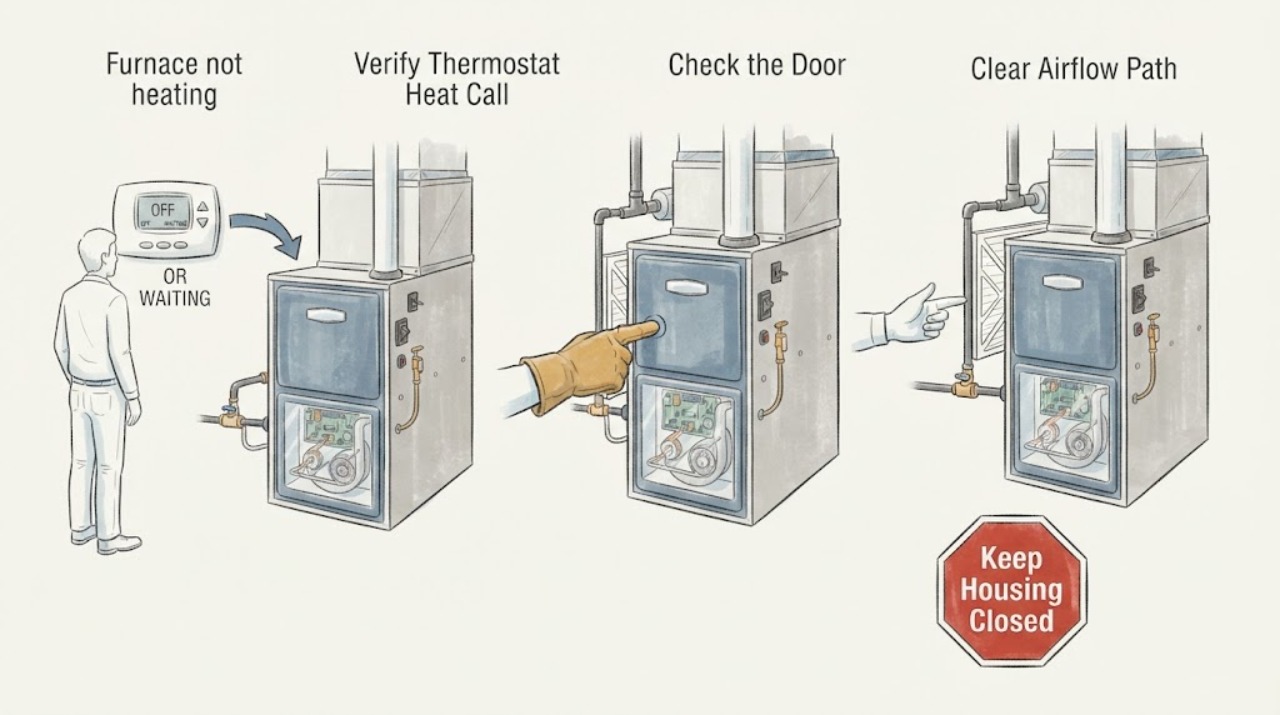
Lennox furnace not heating: What to Check and What to Do Next
If a Lennox furnace is not heating, first confirm the thermostat is calling for heat and the fan is set to Auto, then check the furnace disconnect or breaker and the filter without opening the cabinet. A brief burst of cool air at startup can be normal while the ducts warm, but air that stays cool means the burners or electric heat are not producing or delivering heat.
-
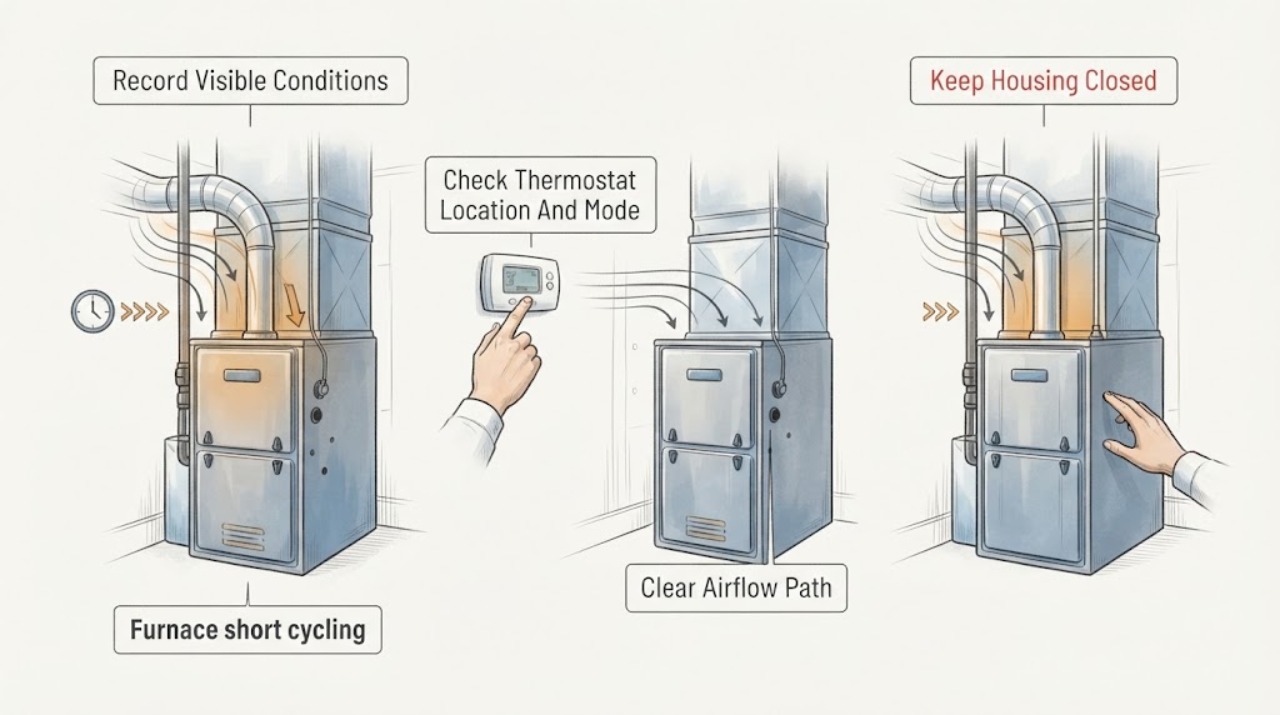
Lennox furnace short cycling: What to Check and What to Do Next
Short cycling means a Lennox furnace starts and stops repeatedly before a normal heating cycle is complete, often leaving the home unevenly heated. Start with the thermostat setting and location, the furnace filter, and open return and supply paths; restricted airflow can make the furnace overheat and shut down.
-
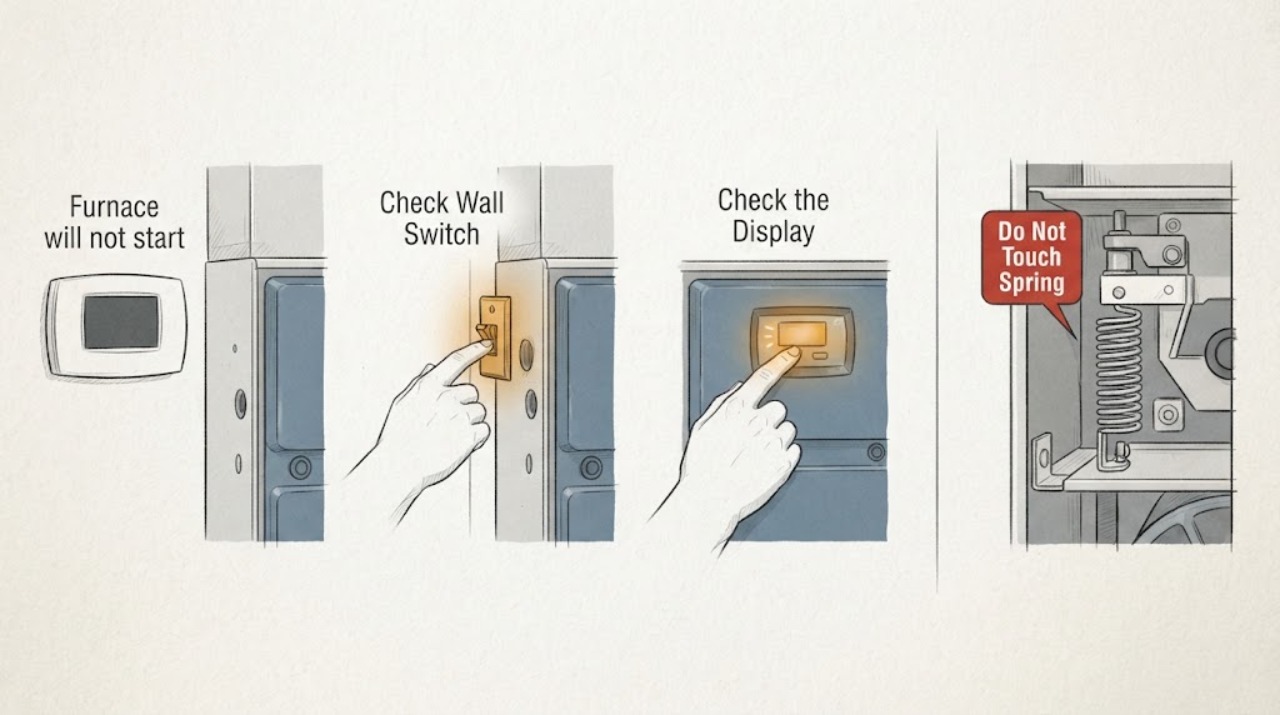
Lennox furnace will not start: What to Check and What to Do Next
If a Lennox furnace will not start, first check for gas odor, a carbon-monoxide alarm, smoke, soot, or an abnormal flame and leave the home for danger signs. Otherwise confirm the thermostat is active and calling for heat, check the furnace switch and breaker from a safe position, and replace or clean the filter only as the exact model instructions allow.
-
Lennox G61MP-36B-045-06 Furnace Short Cycling
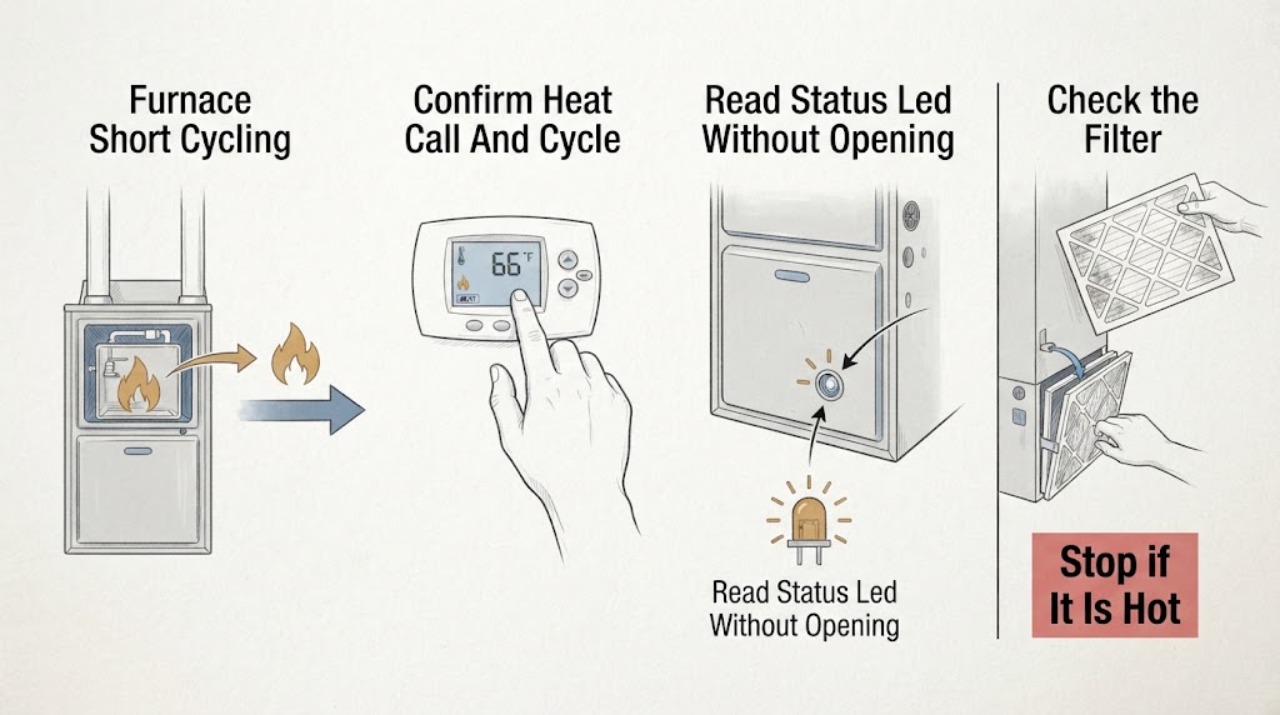
A Lennox G61MP-36B-045-06 that repeatedly shuts its burners off before the thermostat is satisfied should be treated as a fault until you distinguish a normal blower delay or two-stage transition from a true short cycle. The opened Lennox G61MP installation manual is for the G61MP series and lists the G61MP-36B-045 family; use the furnace nameplate and Lennox model-specific data for any suffix-specific service values.
-
Maytag Furnace Short Cycling: Check the Thermostat Before the Furnace
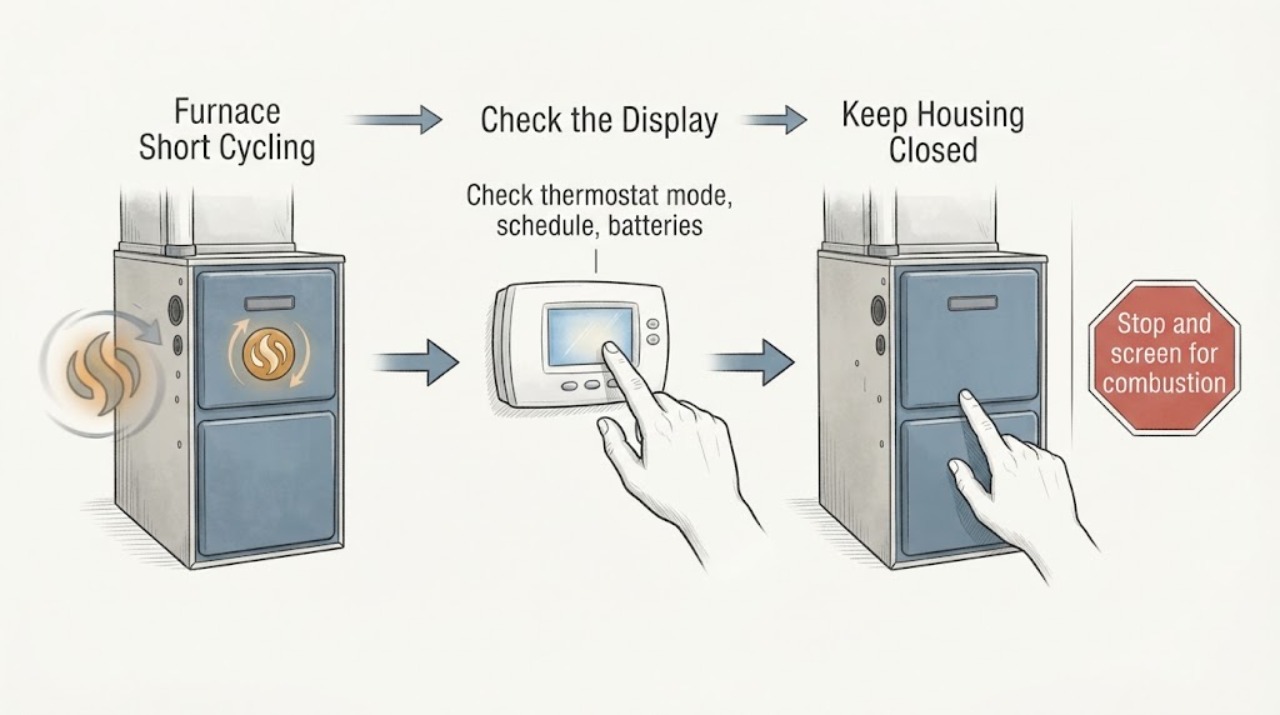
A Maytag furnace is short cycling when it starts and stops repeatedly before the home reaches the thermostat setting. The thermostat is a useful first branch, but it is not automatically the failed part.
-
Maytag Furnace Short Cycling: Check Cycle Pattern, Airflow, and Safety Limits
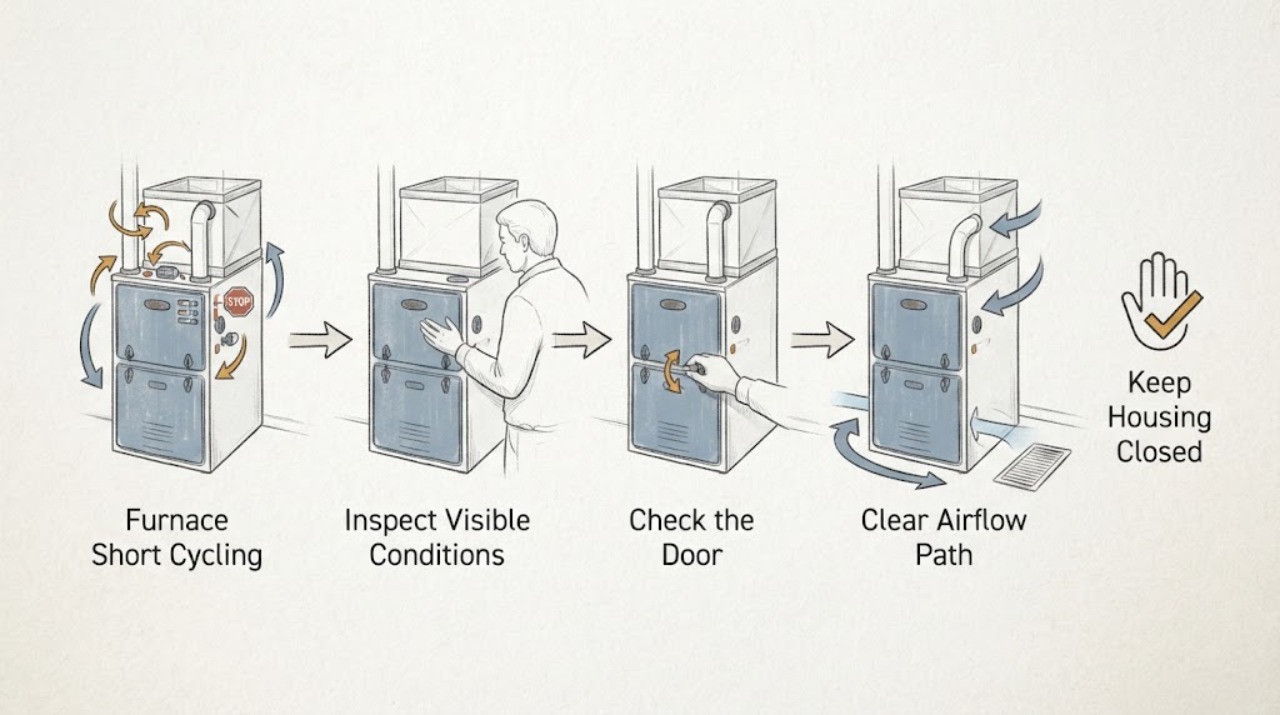
A Maytag furnace is short cycling when the heat turns off before the thermostat is satisfied and then starts again repeatedly. Do not assume the thermostat or limit switch is bad from that symptom alone.
-
Nordyne Furnace Short Cycling: Check the Blower Motor and Airflow Safely
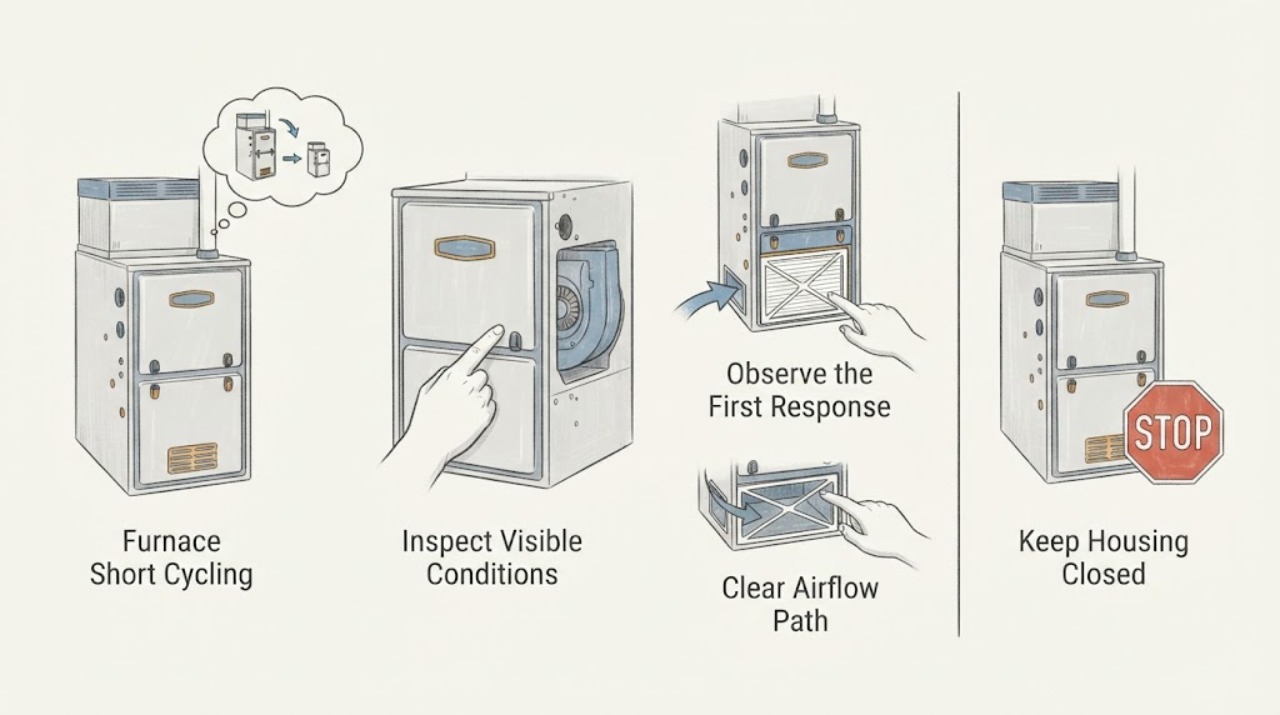
If a Nordyne furnace shuts the burner off before the thermostat is satisfied and then restarts, do not assume the blower motor is the cause. First record whether the indoor blower starts, runs continuously after the burner stops, runs weakly, or fails to start.
-
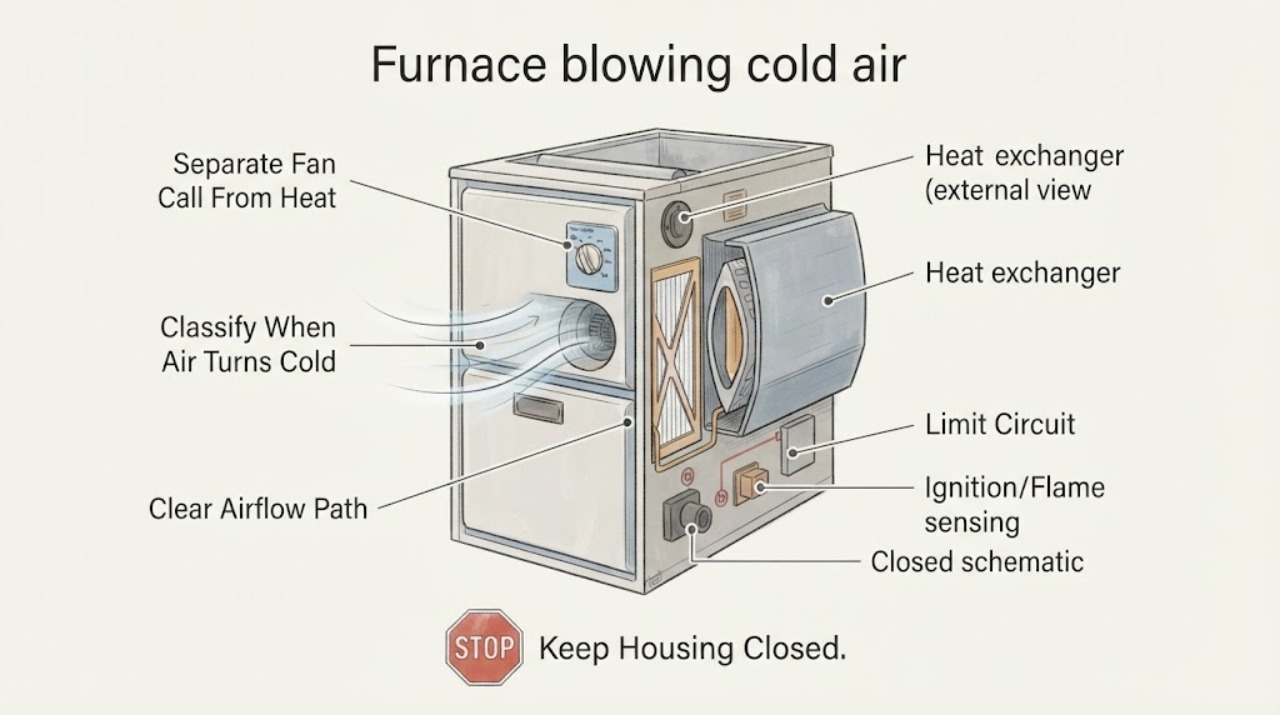
Rheem furnace blowing cold air: follow the heat-call sequence
First decide whether the air is cold only because the Rheem thermostat fan is set to On, or because a heat call is failing. Set the thermostat to Heat and Fan Auto, then observe one call from a safe location: a short room-temperature period before warm air can be normal, but air that stays cold, becomes cold after ignition, or follows a repeated shutdown is a fault pattern.
-
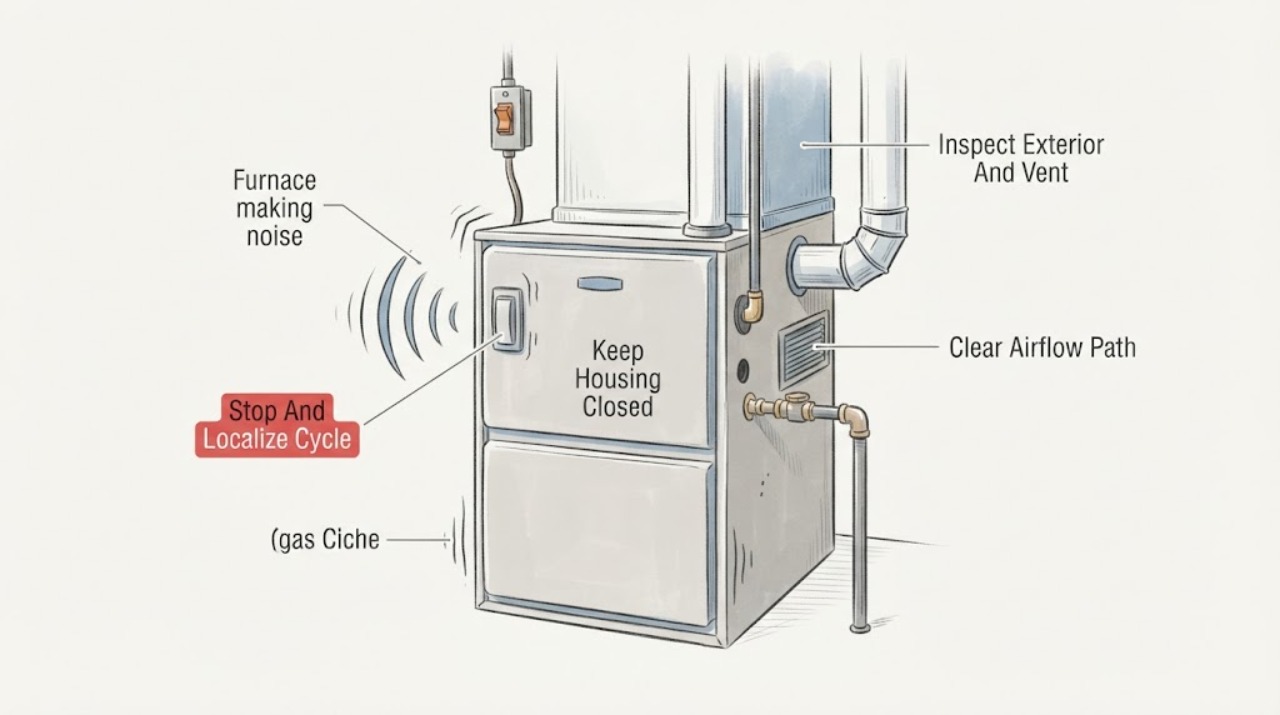
Rheem furnace making noise: What to Check and What to Do Next
A noisy Rheem furnace should be localized by when the sound starts and which airflow or combustion component is operating, not by guessing at a part. Turn the thermostat off and, if the noise is abnormal, shut off furnace power; for a gas furnace, use the manual gas shutoff when there is overheating, a gas concern, flame trouble, smoke, or another immediate hazard.
-
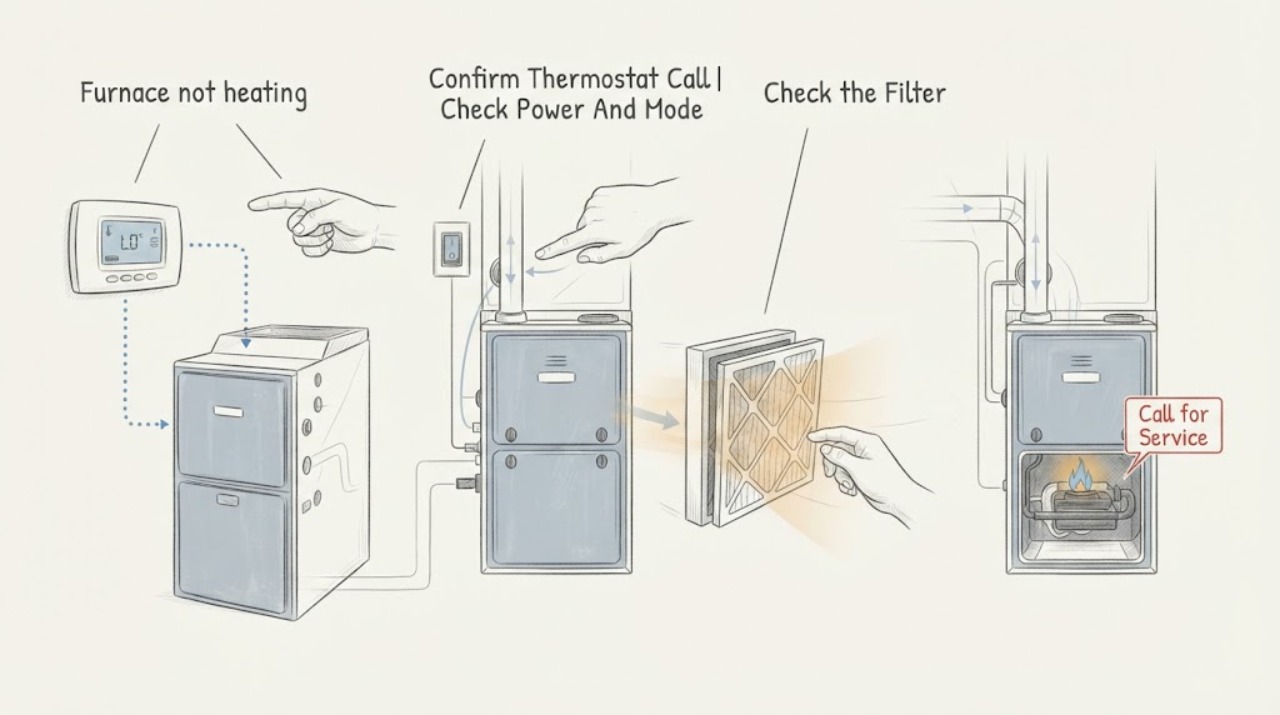
Rheem furnace not heating: What to Check and What to Do Next
Start with observations that do not require opening the Rheem furnace: confirm the thermostat is actually calling for heat, check that the system has power and the correct mode, inspect the filter and visible registers, and note what the furnace does next. If nothing starts, the control call, power, or low-voltage path may be missing.
-
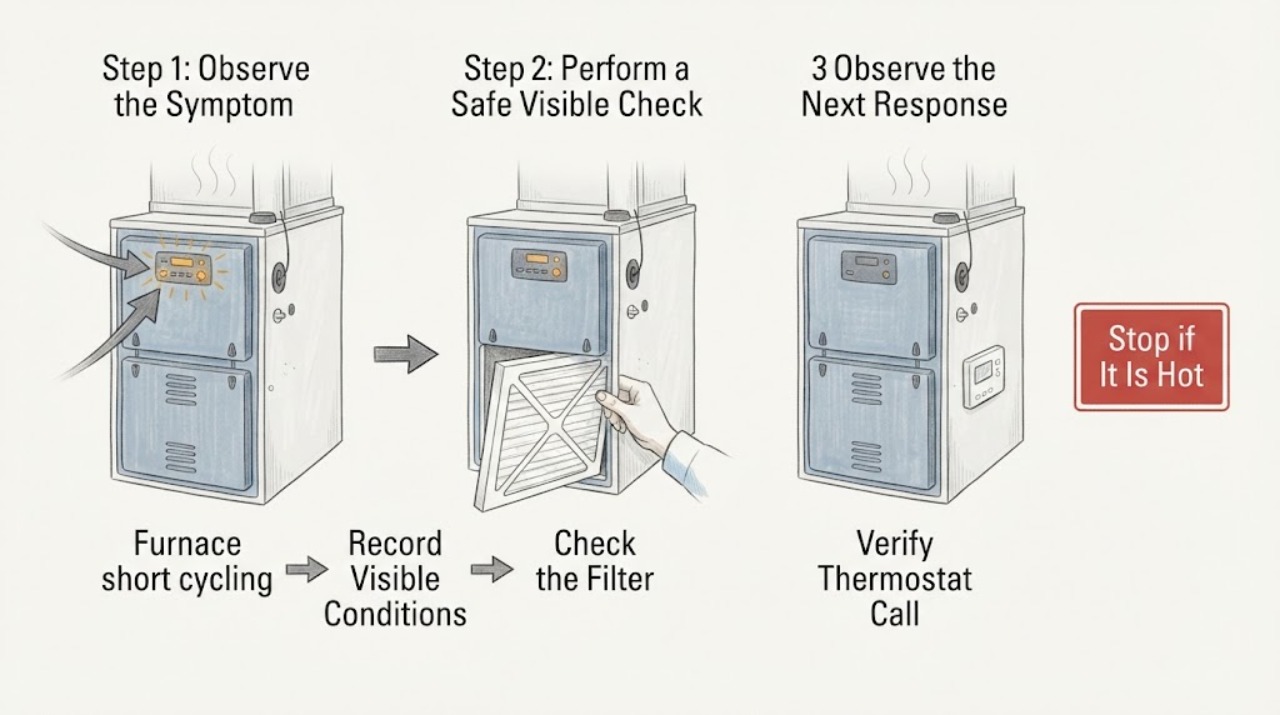
Rheem furnace short cycling: Check the filter first, then know when to stop
A Rheem furnace is short cycling when it stops before the thermostat is satisfied and then starts again. With the furnace left closed and no gas, smoke, soot, abnormal flame, loud ignition, or CO warning, record whether the thermostat is still calling for heat, then turn the thermostat off and inspect the external filter and return path.
-
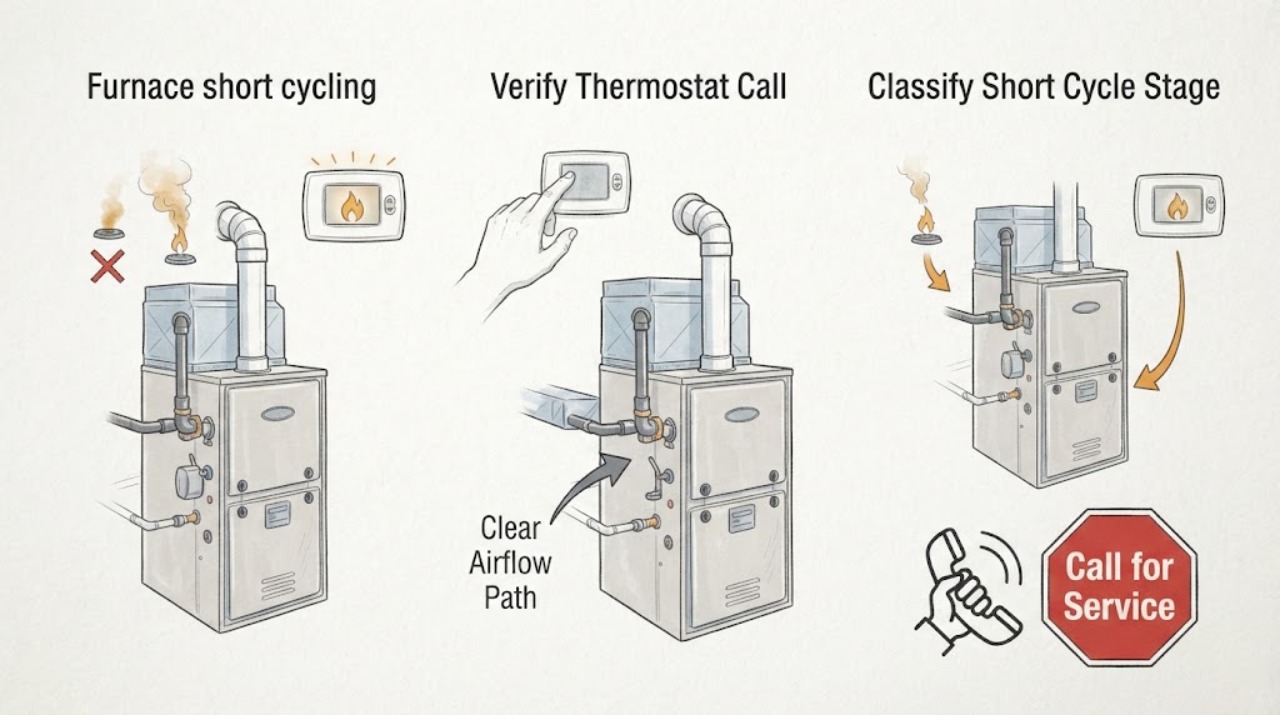
Rheem furnace short cycling: What to Check and What to Do Next
Short cycling means a Rheem furnace starts and stops repeatedly before the thermostat is satisfied. First document whether the thermostat call remains active, whether the burners light and then stop, whether the blower continues, and whether the home has weak airflow or an unusually hot supply.
-
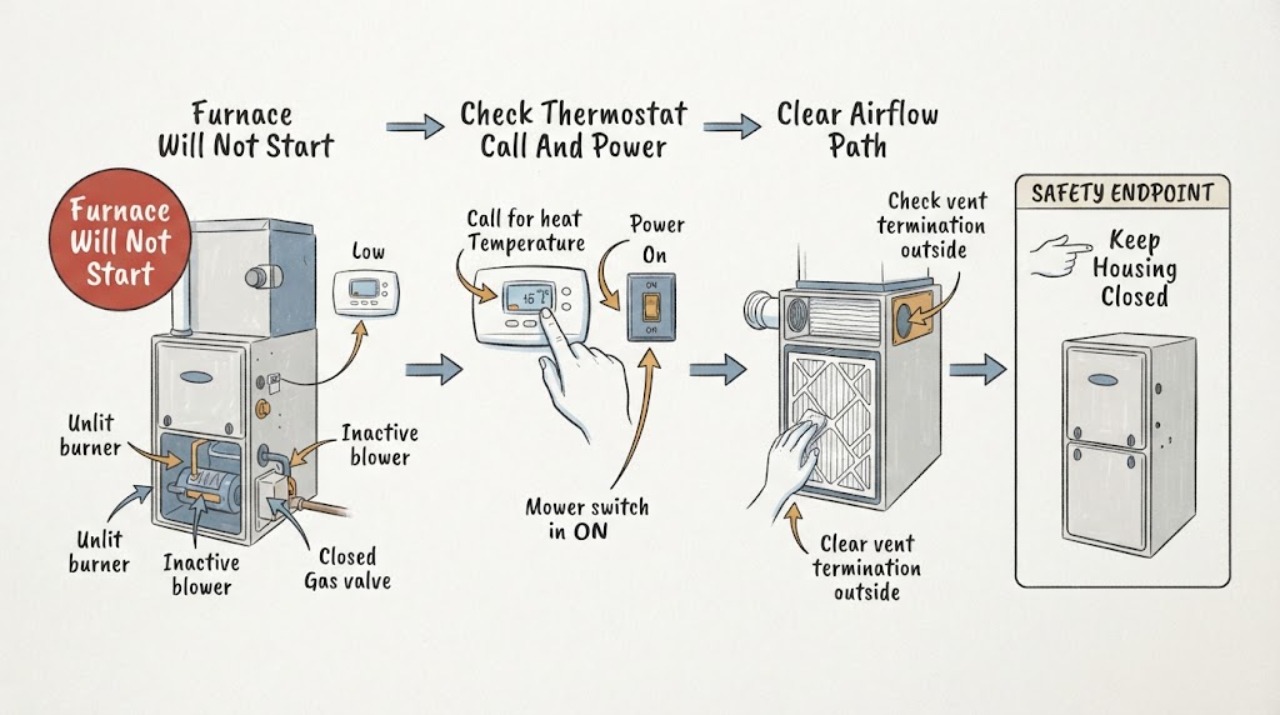
Rheem Furnace Will Not Start: What to Check and What to Do Next
When a Rheem furnace will not start, first determine whether the thermostat is calling for heat and whether the furnace has visible power. Check the thermostat mode and setting, the furnace switch or breaker from a safe position, and that the access door is fully seated; replace or clean the filter as the model instructions direct and keep return and supply grilles clear.
-
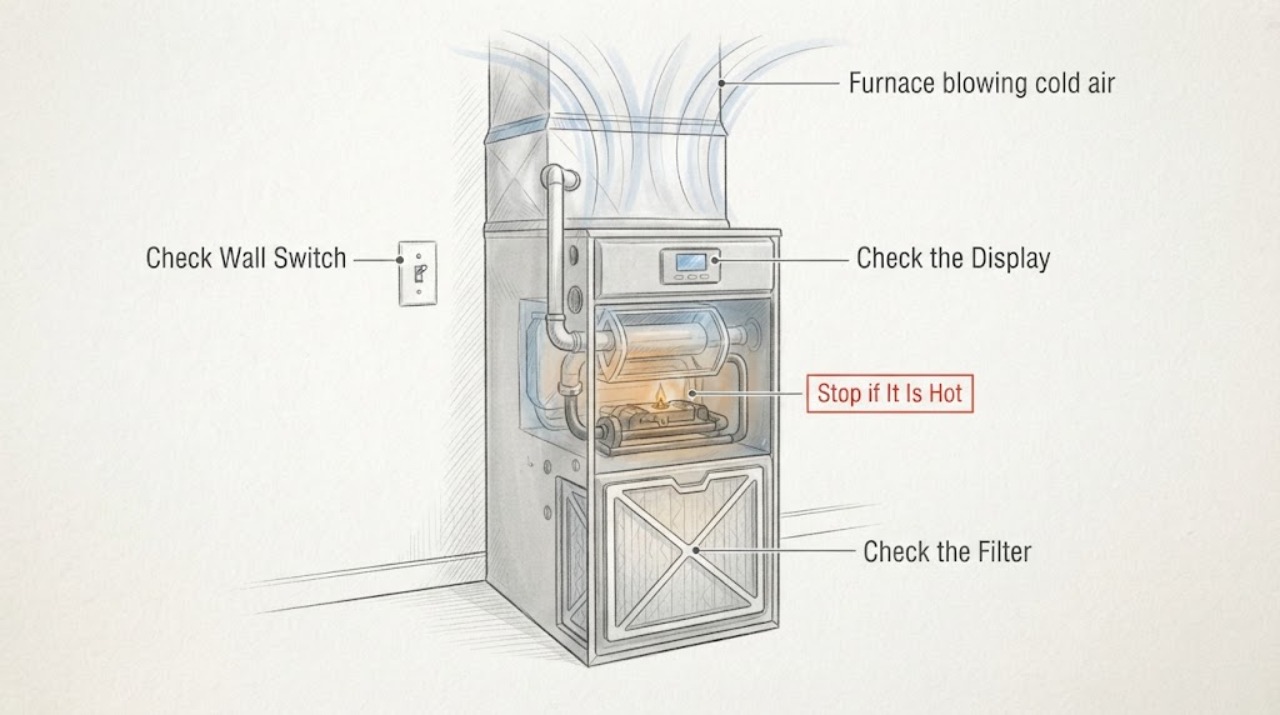
Trane furnace blowing cold air: What to Check and What to Do Next
A Trane furnace can blow cool air when the thermostat is set to Fan On, is in the wrong mode, or is misreading the room; when a dirty filter restricts airflow and trips an overheat limit; when a high-efficiency furnace’s condensate drain blocks ignition; or when fuel, ignition, burner, flame-sensing, blower, duct, or control trouble prevents sustained heat.
-
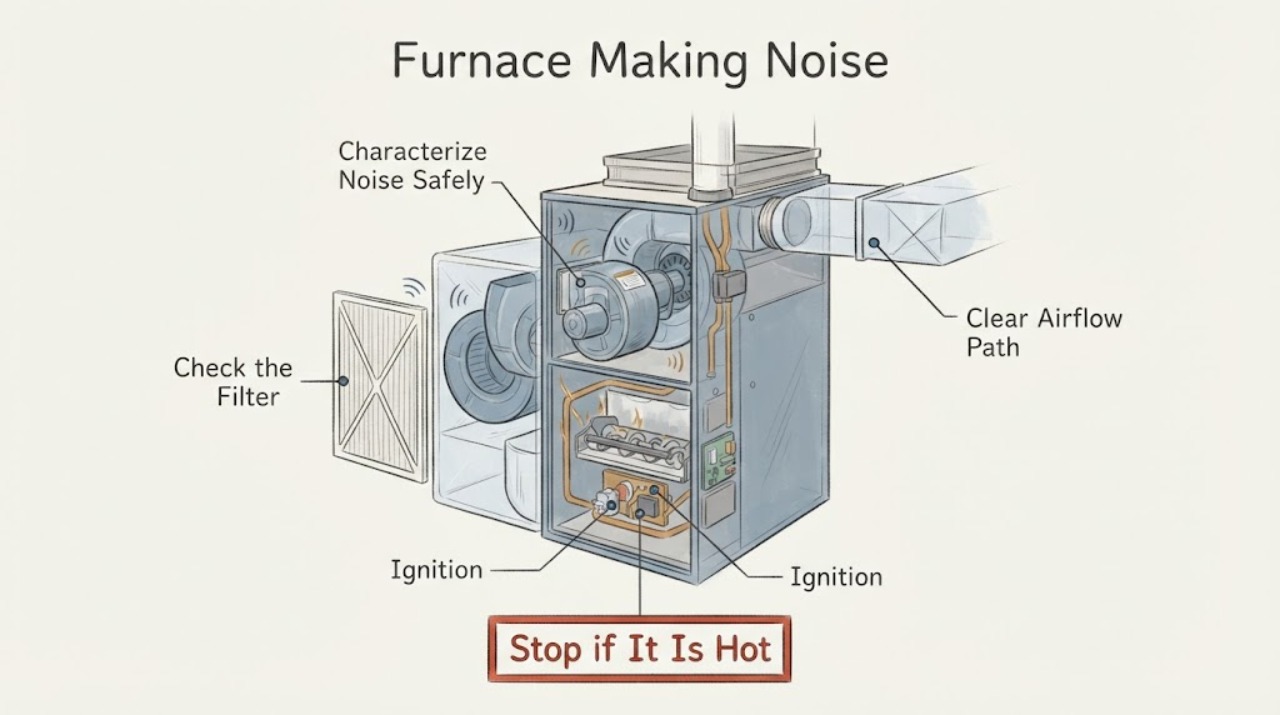
Trane Furnace Making Noise: What to Check and What to Do Next
First identify the sound, where it comes from, and whether it happens at startup, during heating, at shutdown, or continuously. Trane says a light click before ignition and slight duct pinging or popping as the metal expands can be normal, while a furnace should not make loud or newly unusual noise.
-
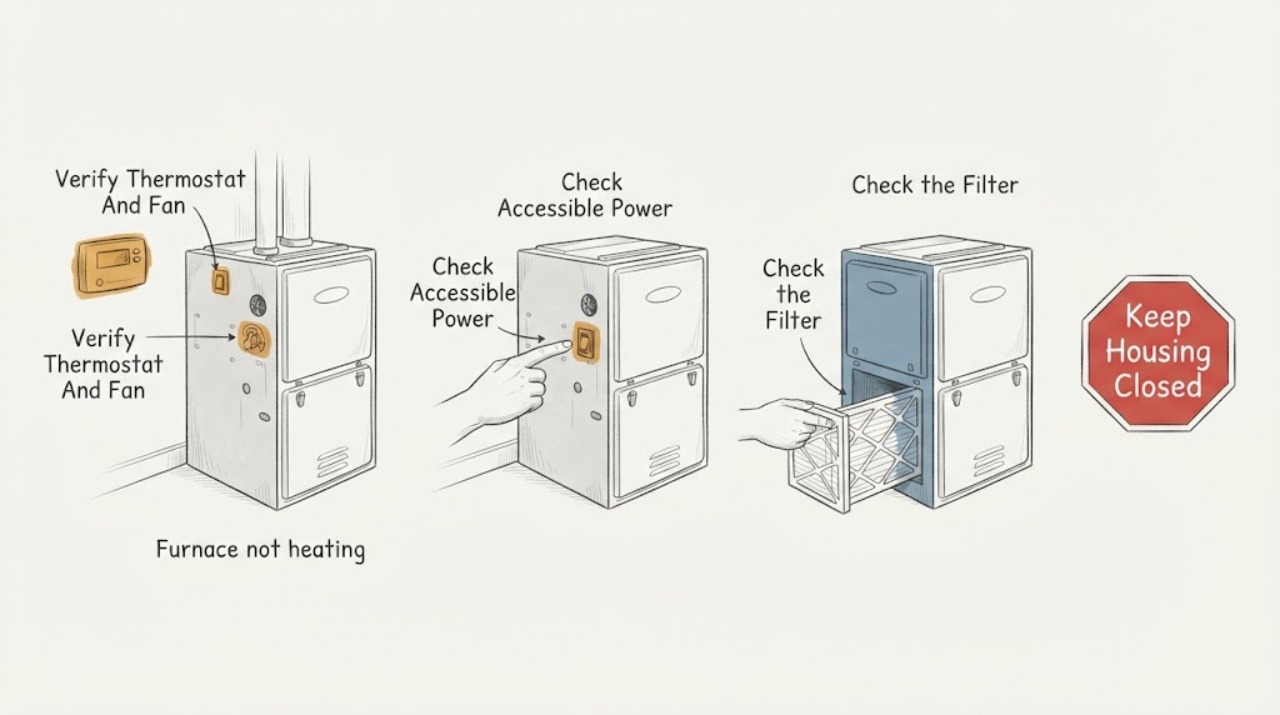
Trane furnace not heating: What to Check and What to Do Next
If a Trane furnace is not heating, verify that the thermostat is calling for heat and the fan is set appropriately, then check the accessible furnace switch, breaker, filter, return, and supply vents. Note whether the furnace is silent, starts but does not ignite, ignites and shuts back down, or runs the blower with cool air.
-
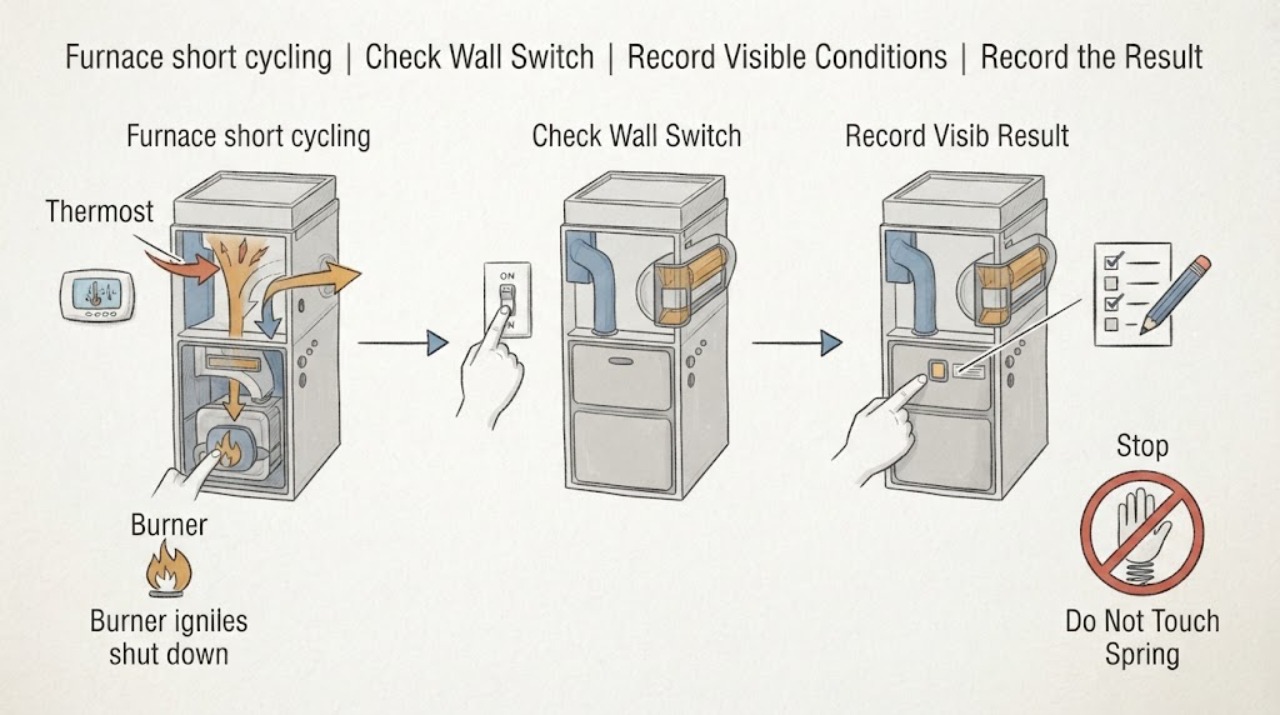
Trane furnace short cycling: What to Check and What to Do Next
A Trane furnace is short cycling when it starts and stops before reaching the thermostat's set temperature, especially when the pattern repeats in ordinary weather. First rule out a thermostat setting or battery issue, then check the furnace switch and breaker from a safe position, replace a dirty model-correct filter, and make sure return and supply vents are not blocked.
-
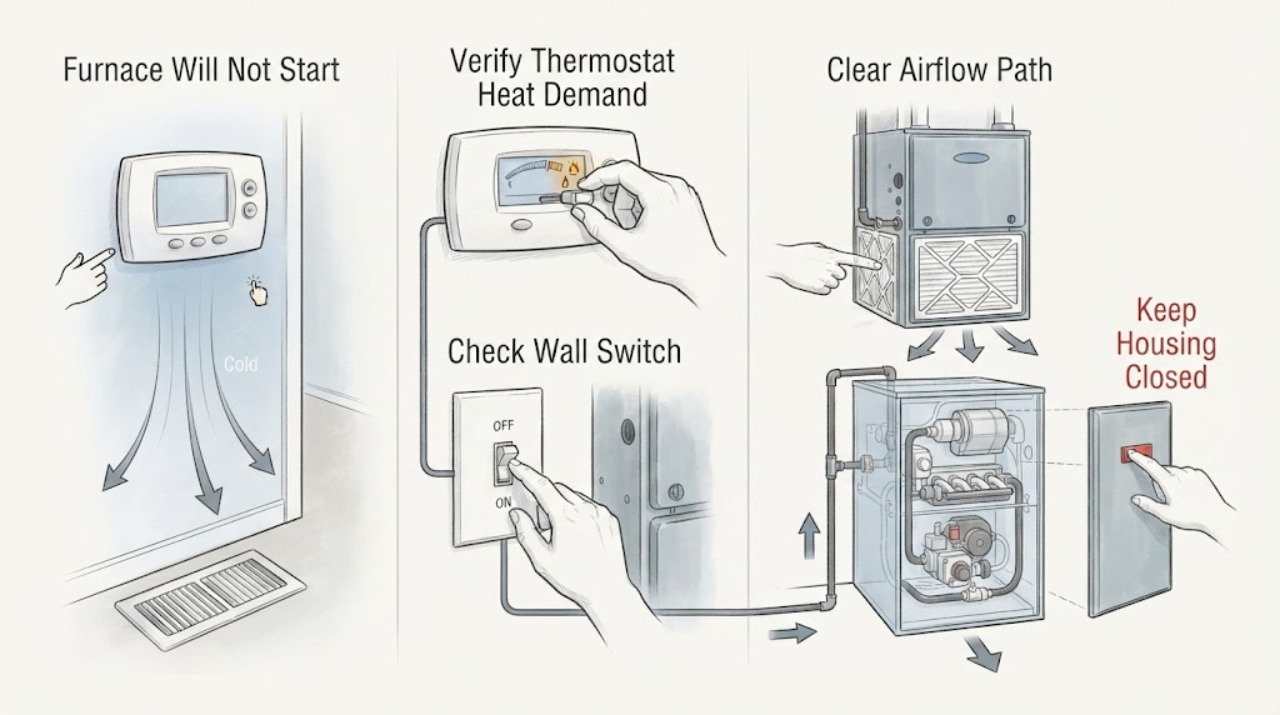
Trane Furnace Will Not Start: What to Check and What to Do Next
For a Trane furnace that will not start, first confirm the thermostat is calling for Heat and has power, then check the furnace service switch and breaker without repeatedly resetting a tripped circuit. With the furnace power off, inspect the filter and make sure return and supply vents are not blocked.
-
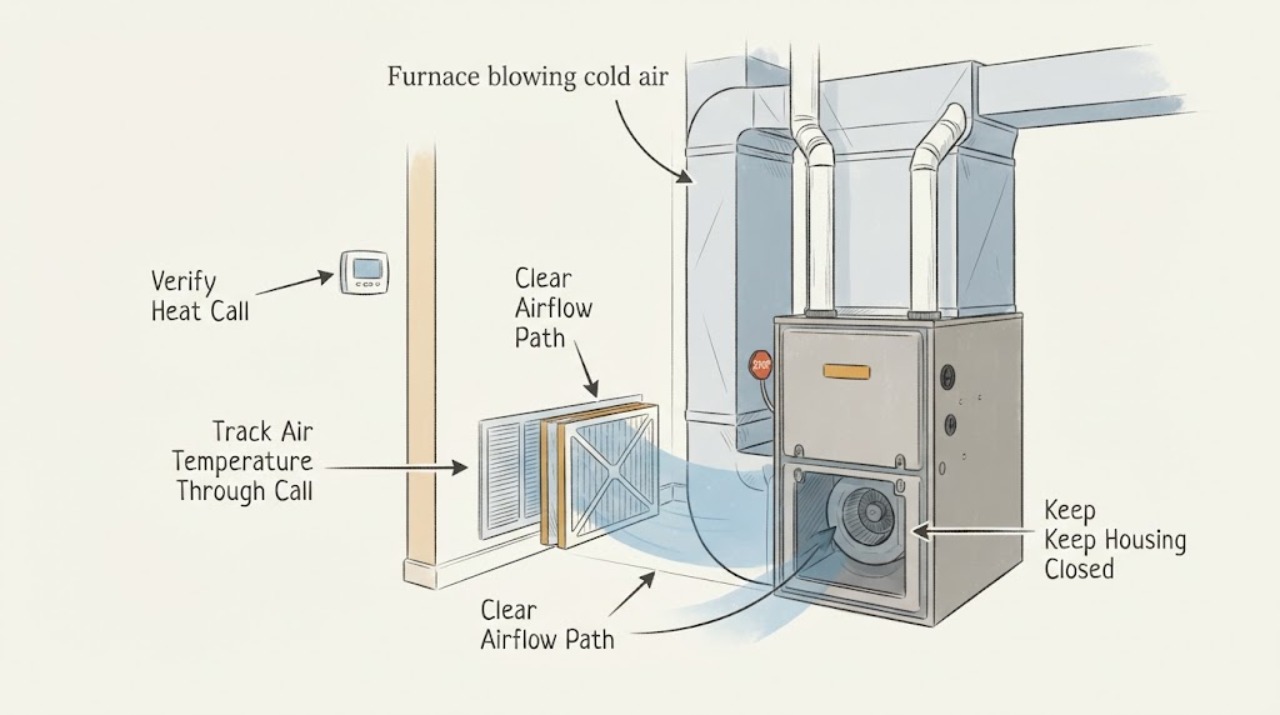
York furnace blowing cold air: What to Check and What to Do Next
First separate a brief cool period at the beginning or end of a call from air that stays cool for the whole call. York sells furnaces with single-stage, two-stage, modulating, and variable-speed features, so a startup ramp or a lower first stage is not the same as a failed heater; the air should still become warm and the room should recover.
-
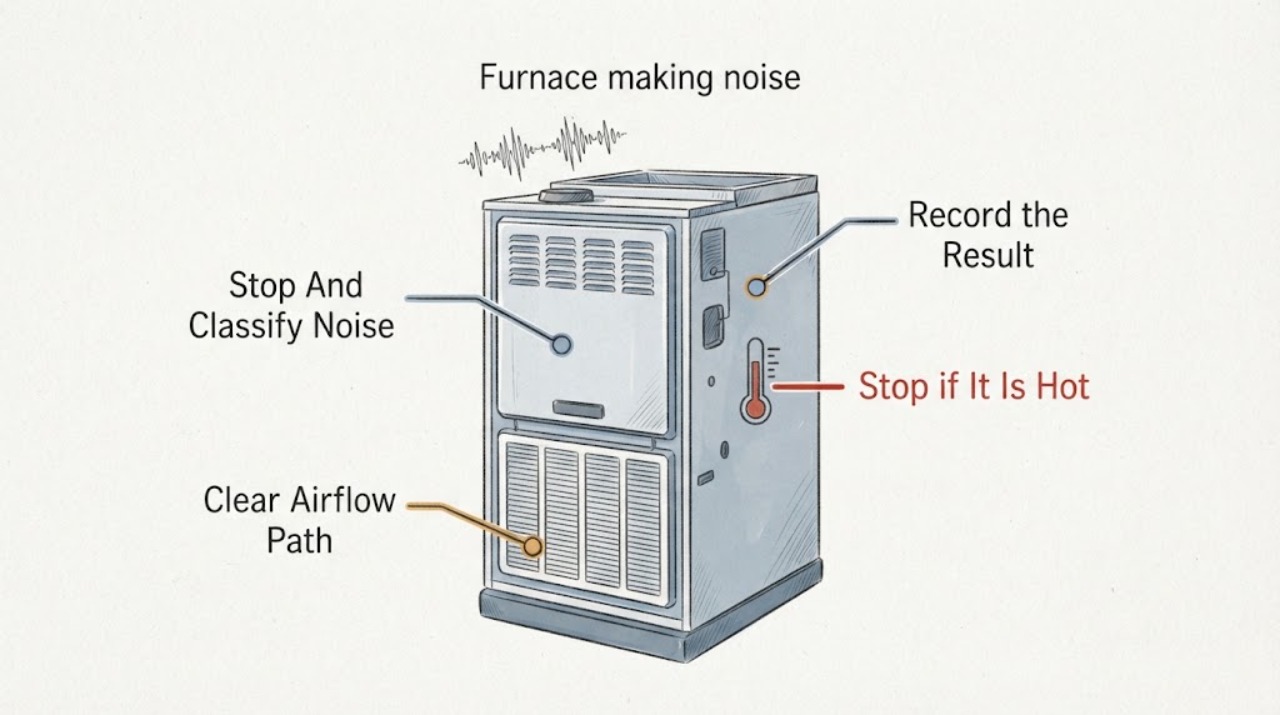
York furnace making noise: What to Check and What to Do Next
A York furnace can make a brief click during ignition, a short whoosh as air moves, or a soft blower hum, but a new bang, grind, scrape, rattle, squeal, or persistent buzz needs attention. Set the thermostat to stop the heat call and turn off electrical power if the sound is sudden, worsening, or paired with a burning smell, gas odor, smoke, flickering lights, a repeated breaker trip, weak airflow, or an alarm.
-
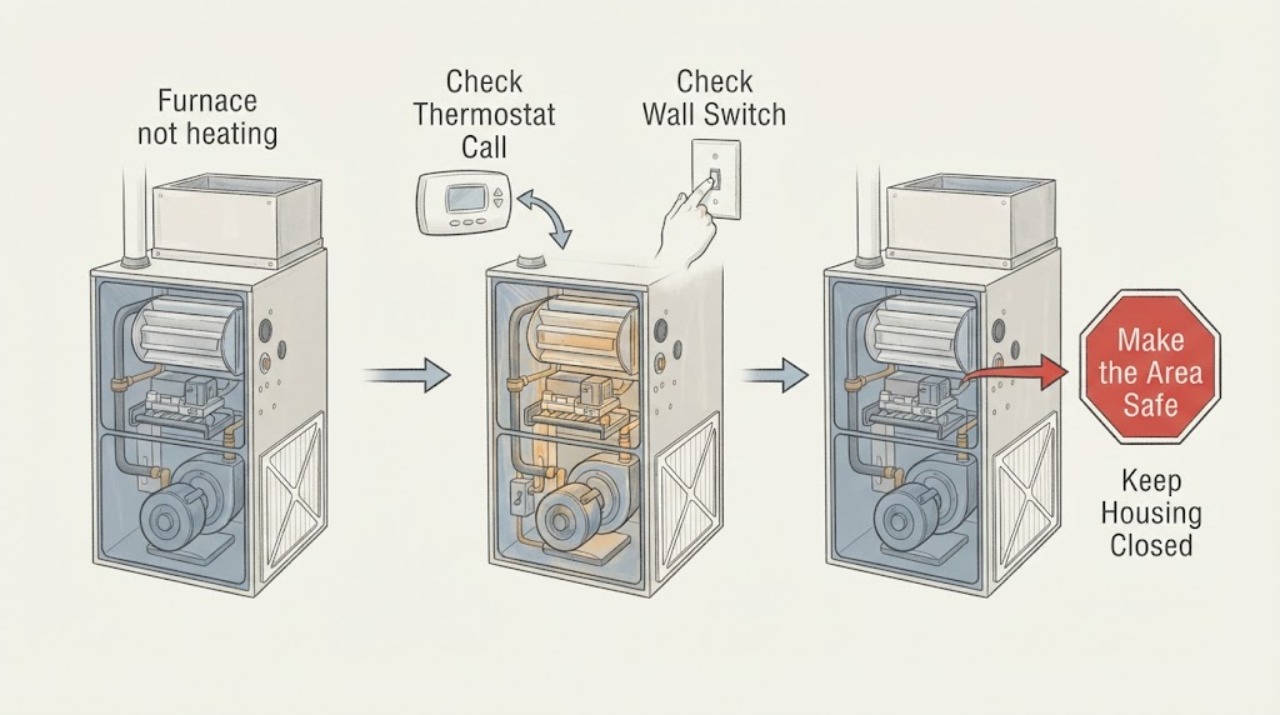
York furnace not heating: safe checks before service
A York furnace that is not heating may not be receiving a thermostat call, may have lost power, may have restricted airflow, or may be stopping during ignition or flame safety checks. Start by recording whether the thermostat is in Heat and above room temperature, whether the furnace switch and labeled breaker appear on, whether the filter is loaded, and whether the blower runs.
-
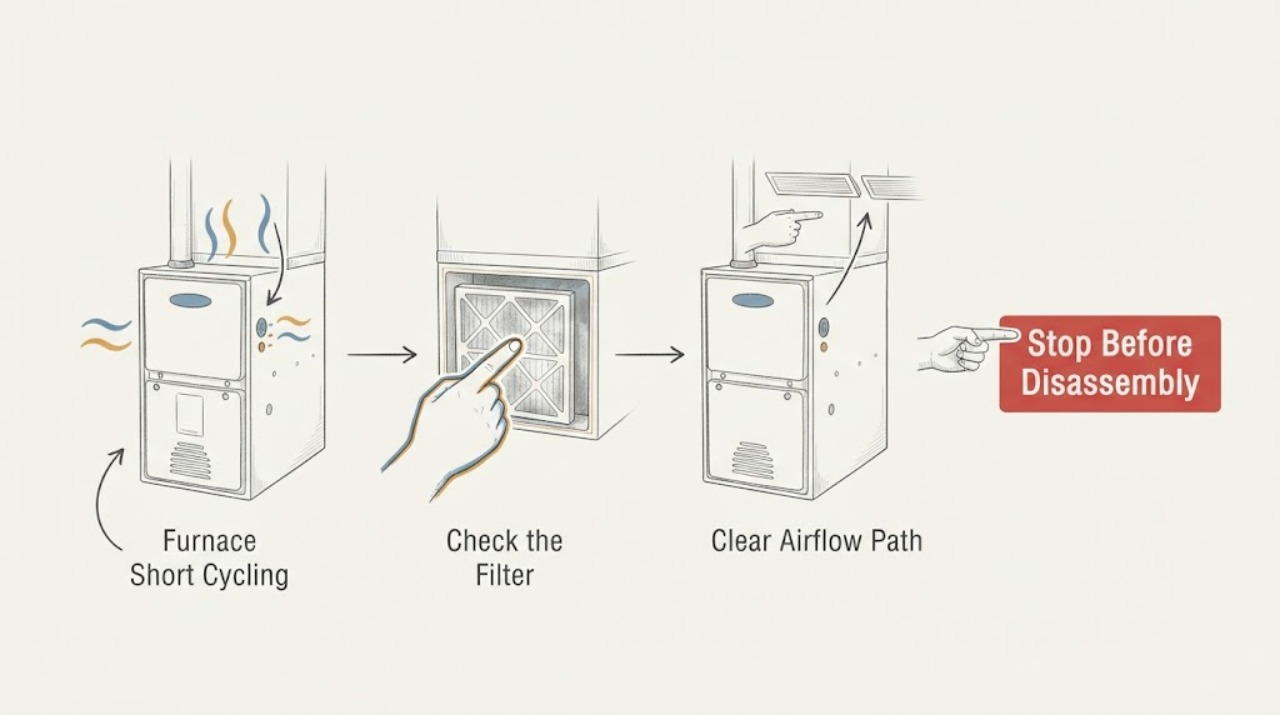
York Furnace Short Cycling: Filter Checks and What to Do Next
A York furnace that starts and stops before the thermostat is satisfied may be short cycling. A blocked, wrong-size, reversed, or poorly seated return filter can reduce airflow enough to make the heat section run too hot and open a protective limit, but the filter is only one possible cause.
-
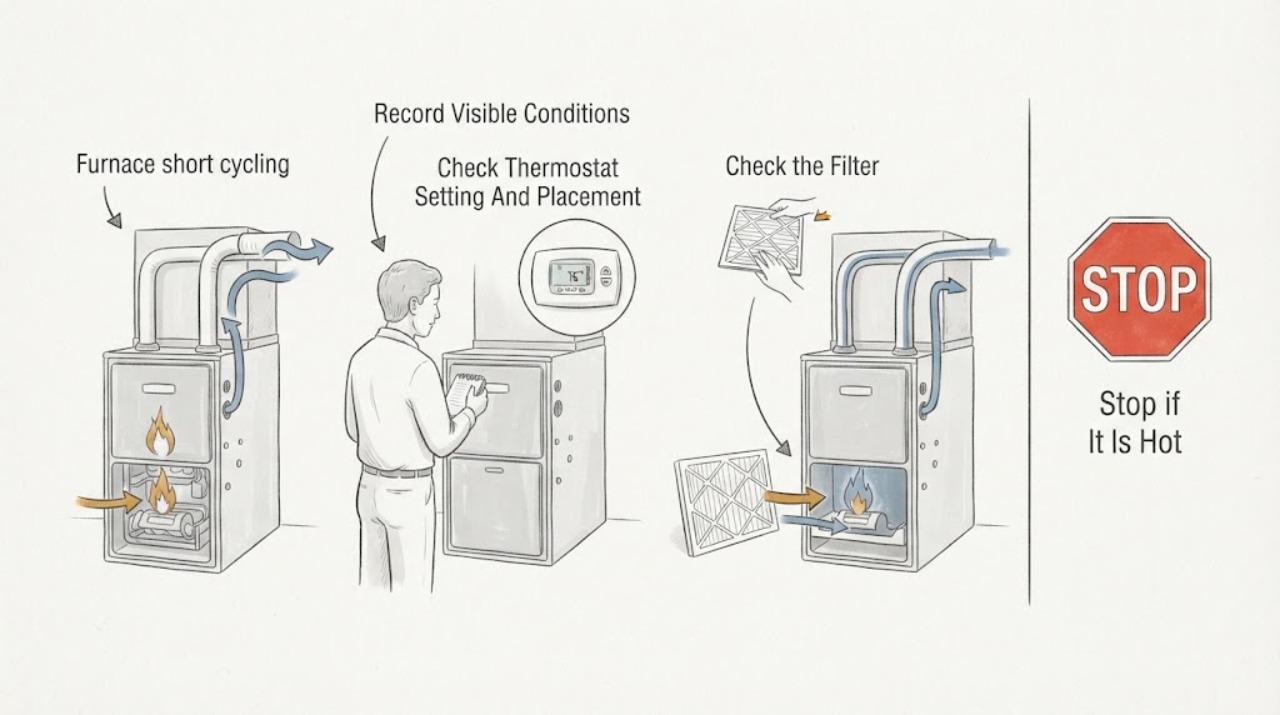
York furnace short cycling: What to Check and What to Do Next
If a York furnace starts and stops before the thermostat reaches its set temperature, record the cycle runtime, restart interval, thermostat call, airflow, and any code or status light. With the furnace off and no hazard present, check the thermostat mode and placement, replace a dirty external filter with the exact approved type, and clear accessible supply registers and return grilles.
-
York furnace will not start: What to Check and What to Do Next
When a York furnace will not start, first determine whether the thermostat is actually calling for heat and whether the furnace is completely silent or begins a sequence and then stops. Confirm Heat mode and a set point above room temperature, check thermostat batteries if used, verify the furnace switch and breaker are on, and inspect the user-accessible filter and return or supply grilles.