
On this page
Start here
Quick answer
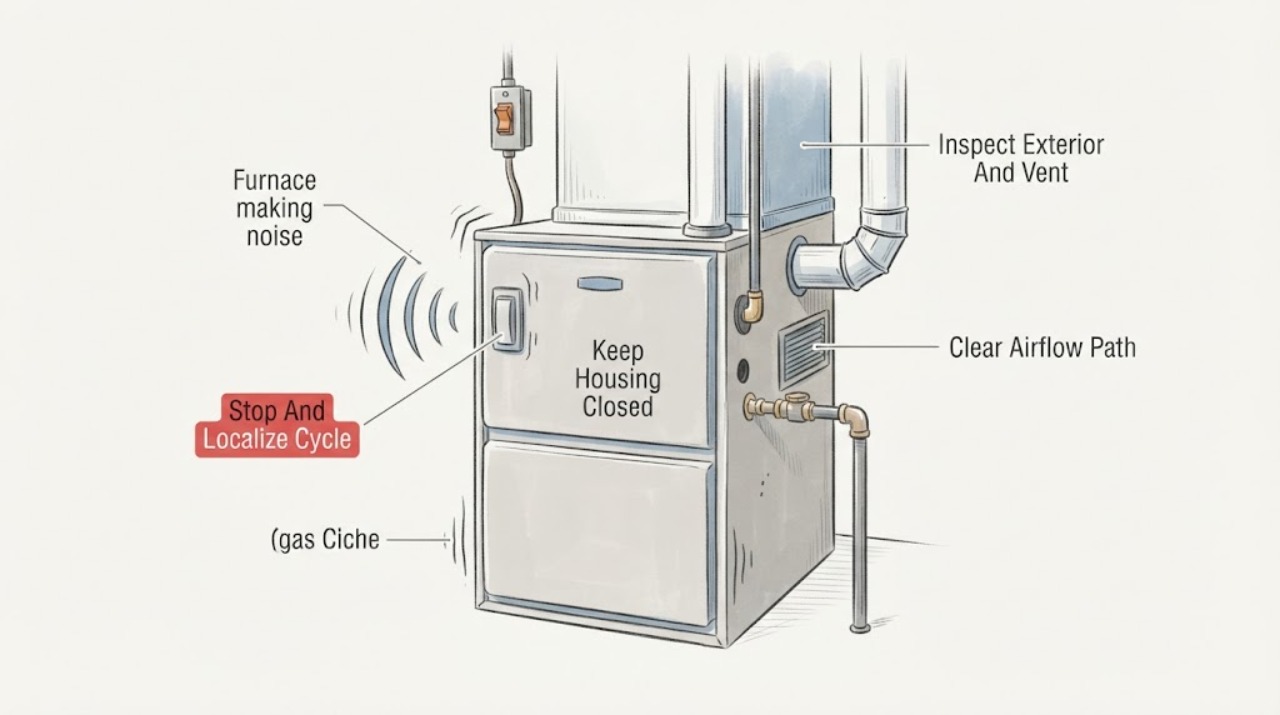
A noisy Rheem furnace should be localized by when the sound starts and which airflow or combustion component is operating, not by guessing at a part. Turn the thermostat off and, if the noise is abnormal, shut off furnace power; for a gas furnace, use the manual gas shutoff when there is overheating, a gas concern, flame trouble, smoke, or another immediate hazard. From outside the cabinet, check the filter, return and supply airflow, cabinet contact, and the outdoor vent or combustion-air termination when safely visible. A startup draft noise can point to the inducer or venting, a burner rumble can involve combustion or manifold-pressure service, and a blower rattle or whine can involve the filter, duct, wheel, bracket, motor, or capacitor. Do not adjust gas pressure, bypass a limit or pressure switch, open the burner compartment, or remove panels. Keep the furnace off and arrange qualified HVAC service for persistent noise, noise with ignition, restricted or damaged venting, weak airflow, or any internal-component concern.
Before you begin
Safety first
- This article supports turning off the thermostat, safe power or gas shutoff when appropriate, ordinary external filter, grille, cabinet-contact, and safely visible vent checks, and documenting the sound. It does not authorize gas adjustment, combustion testing, vent alteration, panel removal, electrical work, or blower, inducer, burner, motor, capacitor, or safety-control service.
Work through in order
Diagnostic checks
Use only checks that match the exact appliance or system and its official guide.
-
Check 1
Turn the thermostat off and listen from a safe position without opening the furnace cabinet; note whether the noise starts before ignition, when the burner lights, when the circulating blower starts, or during shutdown. If the sound is abnormal or worsening, switch off furnace electrical power according to the manual and do not keep cycling it.
Expected result: The sound is limited to startup, follows the flame, follows the blower, continues after the call for heat, or is accompanied by odor, smoke, sparking, unusual heat, a safety alarm, or a gas concern.
Next step: Record the timing and location for service. Keep the furnace off for any persistent, metallic, combustion-related, or safety-associated noise; do not restart it repeatedly for comparison.
Stop if: Stop immediately and leave the area as appropriate for smoke, gas odor, carbon-monoxide alarm, sparking, flame rollout, overheating, or other immediate danger; do not operate electrical switches in a suspected gas leak.
Why this matters
Why: Startup timing makes the inducer or venting more relevant; a noise during flame operation raises a burner or combustion concern; a blower-phase noise makes airflow or blower hardware more relevant. A safety sign overrides routine localization.
-
Check 2
With the furnace off, inspect the return-air filter and visible supply and return grilles; replace or clean the filter only if the model instructions call for it, and make sure grilles are not blocked by furniture or stored items.
Expected result: The filter is visibly loaded, a return or supply path is blocked, airflow is weak, or the filter and grilles are clear while the noise remains.
Next step: Correct only the accessible filter or grille issue using the model's instructions, then arrange service if the noise or weak airflow remains. Never run the furnace without the required filter or with covers removed.
Stop if: Do not reach into the blower compartment, oil a sealed motor, remove a blower door, or operate the furnace with a missing filter or cover.
Why this matters
Why: A restricted return or supply path can load the blower and change airflow noise. A clear filter and open grilles make a dirty, loose, mispositioned, or damaged blower wheel, bracket, motor, or capacitor more likely, which requires service.
-
Check 3
From ground level and without climbing or disassembling anything, inspect the furnace surroundings and any safely visible outdoor vent or combustion-air termination for blockage, damage, corrosion, loose contact, or stored combustible material; keep all air openings clear.
Expected result: A vent or air opening is blocked or damaged, corrosion or a hole is visible, the cabinet or duct is contacting another object, or the exterior appears clear.
Next step: Do not operate with a restricted, damaged, corroded, or questionable vent. Keep the area clear, document what is visible, and arrange qualified HVAC inspection; have an HVAC professional correct any duct, vent, combustion-air, or gas issue.
Stop if: Do not climb onto a roof, insert anything into a vent, seal a vent, change vent routing, adjust combustion air, or remove furnace panels.
Why this matters
Why: Rheem lists incorrect venting and inadequate combustion air as possible contributors to noisy inducer operation, and its manual warns that restricted or damaged venting can allow combustion products into the home. External contact can add vibration but does not explain burner or inducer noise by itself.
-
Check 4
After the furnace is off, record whether the sound was a high-pitched draft or motor noise near the inducer, a rumble or roar that coincided with burner ignition, or a rattle, scrape, or hum from the circulating-air side; use a short recording only if doing so does not require another test cycle.
Expected result: The noise tracks the inducer before ignition, the burner during flame, or the blower after ignition; or its source cannot be localized safely.
Next step: Give the timing, sound description, and recording to a qualified HVAC technician. Do not use the sound category to order a part or to justify gas-pressure, burner, inducer, blower, or capacitor work yourself.
Stop if: Do not open the burner or blower compartment, measure gas pressure, touch live wiring, bypass a pressure or limit switch, or repeat operation when the noise is severe or safety-related.
Why this matters
Why: Rheem's guidance associates noisy inducer operation with venting, combustion-air, manifold-pressure, or inducer motor/capacitor concerns; noisy main burners with manifold pressure or venting; and noisy main blowers with return/supply restrictions, blower-wheel position or balance, a loose blade, bracket, motor, or capacitor.
-
Check 5
Before returning the furnace to normal use, review the noise timing, filter and airflow findings, vent observations, and any safety symptoms; keep power and gas off as appropriate until a qualified technician has assessed unresolved or internal noise.
Expected result: The noise stopped after a clearly corrected filter or external-contact issue with no safety sign, or the noise persists, returns, occurs with ignition, involves the vent or burner, or requires access behind a panel.
Next step: Arrange qualified HVAC service for unresolved noise and provide the model, fuel type, operating phase, sound recording, filter condition, airflow, vent observations, and any error or safety indication. Keep the furnace off when a hazard or internal fault is suspected.
Stop if: Do not remove panels, adjust gas or manifold pressure, repair venting, replace motors or capacitors, pull the blower, or reset a tripped safety control without identifying and correcting the cause through qualified service.
Why this matters
Why: A simple external airflow or contact issue may be resolved by the model's ordinary maintenance instructions, but persistent or phase-specific noise can involve combustion, venting, blower, inducer, motor, capacitor, wheel, bracket, or other internal components.
Use your observations
Decision map
Find the observation that best matches what you see, then follow the next safe action.
-
PATH 01Next step
What you see
The noise begins as the furnace starts its draft sequence, before or around ignition, and seems strongest near the inducer or vent path.
Do this next
Keep the furnace off if the noise is persistent or severe; inspect only the safely visible vent and air-opening condition, then arrange qualified HVAC diagnosis. Do not adjust gas pressure or open the inducer compartment.
Why this path and its safety boundary
Why it matters: A noisy inducer can be associated with incorrect venting, inadequate combustion air, excessive manifold pressure, or a failing inducer motor or capacitor according to Rheem's technical guidance.
-
PATH 02Safety boundary
What you see
A rumble, roar, delayed-sounding ignition, or other unusual noise occurs as the main burner lights or while the flame is operating.
Do this next
Do not run repeated ignition tests or change a gas setting. Turn the furnace off and have a qualified HVAC technician inspect combustion, venting, and burner operation; respond immediately to gas odor, flame rollout, soot, smoke, or a carbon-monoxide alarm.
Why this path and its safety boundary
Why it matters: Rheem identifies excessive manifold pressure and incorrect venting as possible causes of a noisy main burner; the symptom may involve combustion safety rather than a loose cabinet panel.
Safety stop: Do not enter the burner compartment, adjust the gas valve, alter manifold pressure, or bypass any flame, rollout, or pressure safety control.
-
PATH 03Next step
What you see
The sound begins after ignition when the circulating blower starts, especially with weak airflow, a dirty filter, or a rattle from the blower side.
Do this next
Check and service the accessible filter and grilles as the model manual directs. If noise or weak airflow remains, keep the furnace off and arrange HVAC service rather than opening the blower compartment.
Why this path and its safety boundary
Why it matters: A restricted return or supply path may load the blower. Rheem also lists a dirty, mispositioned, unbalanced, loose-bladed, or rubbing blower wheel, a broken bracket, or a bad blower motor or capacitor as possible causes.
-
PATH 04Next step
What you see
The cabinet, duct, register, or nearby object vibrates without a clear burner or inducer event, and the furnace has no odor, smoke, overheating, or safety alarm.
Do this next
Clear only a loose, safe-to-move object and correct an accessible filter or blocked grille. If the sound returns, remains metallic, or changes with the operating phase, stop use and request qualified diagnosis.
Why this path and its safety boundary
Why it matters: External contact, a rocking support, or an airflow restriction may contribute to vibration, but an external check cannot rule out an internal wheel, motor, vent, or combustion issue.
-
PATH 05Safety boundary
What you see
There is a gas odor, carbon-monoxide alarm, smoke, soot, flame rollout, unusual heat, sparking, water damage, a blocked or damaged vent, or a noise that persists despite ordinary external checks.
Do this next
Leave the area and contact the appropriate emergency service for an immediate gas, fire, or carbon-monoxide hazard. Otherwise keep the furnace shut down and arrange qualified HVAC service; do not restore operation to see whether the noise improves.
Why this path and its safety boundary
Why it matters: The situation is no longer a routine noise observation. Rheem warns against operating with restricted or damaged venting and directs safe gas and electrical shutoff procedures and professional help.
Safety stop: Do not operate switches or create ignition sources in a suspected gas leak, reset a rollout or limit control without diagnosis, or attempt vent, burner, gas, or electrical repair.
Helpful context
Understand the symptom
When the noise starts is more useful than the volume
Note whether the sound begins before ignition, during the flame, when the circulating blower starts, or while the blower winds down. Rheem lists separate causes for the inducer, main burner, and main blower, so a noise that follows one operating phase is a useful service clue. Do not keep cycling the furnace to reproduce a sound that is metallic, worsening, or accompanied by heat, odor, smoke, or a safety alarm.
Start with airflow and exterior checks
A homeowner can inspect the return filter, visible registers, furnace surroundings, and safely visible outdoor vent termination without opening the cabinet. A dirty filter, blocked return, contact against the cabinet, or obstructed vent can change airflow and operating noise. Replace or clean a filter only as the model manual directs; leave blower, burner, vent, pressure, and gas work to a qualified technician.
A gas-furnace noise can be a safety symptom
Rheem identifies incorrect venting, inadequate combustion air, and excessive manifold pressure among possible causes of inducer or burner noise. Those are not homeowner adjustment tasks. If there is a gas odor, carbon-monoxide alarm, flame rollout or soot, smoke, overheating, damaged vent, or water damage, leave the furnace off, move to a safe location, and use the appropriate emergency or qualified HVAC response.
Safety boundary
Stop conditions
- Do not continue operating a Rheem furnace with persistent, worsening, metallic, burner-phase, or inducer-phase noise just because it still produces heat.
- Keep the furnace off for gas odor, carbon-monoxide alarm, smoke, soot, flame rollout, sparking, damaged wiring, unusual heat, water damage, or a blocked or damaged vent; leave the area for an immediate hazard.
- Do not adjust gas or manifold pressure, alter vent routing, bypass a pressure, limit, rollout, or door switch, or reset a safety control without identifying the cause.
- Do not remove furnace panels, enter the burner or blower compartment, touch live wiring, or replace an inducer, blower, motor, wheel, bracket, capacitor, or gas component as an ordinary homeowner noise check.
- Never operate the furnace without the required filter, doors, or covers in place, and do not climb or insert objects into an outdoor vent termination.
Only after diagnosis
Potential parts
- Rheem furnace inducer motor or capacitor
Consider this category only after qualified diagnosis links a startup or draft-phase noise to a failing inducer motor or capacitor rather than to venting, combustion air, or gas pressure.
Confirm the exact Rheem model, motor and capacitor specifications, and service diagnosis before ordering; installation requires electrical and combustion-safety checks. - Rheem furnace blower wheel or motor
Consider this category only when service finds a dirty, loose, unbalanced, rubbing, or damaged blower wheel or a failed blower motor causing the blower-phase noise.
Confirm the exact model and wheel, motor, rotation, and mounting specifications; do not assume a generic blower part will fit. - Rheem furnace blower motor capacitor
Consider this category only after qualified testing identifies the capacitor as the cause of a blower-start or running noise, weak airflow, or motor abnormality.
Confirm the exact model and electrical rating from the unit documentation and technician's diagnosis; capacitor replacement involves stored electrical energy.
When checks do not resolve it
Need a professional?
Arrange qualified HVAC service when noise persists after the filter and safe external checks, starts with the inducer or burner, follows the blower with weak airflow, involves a vent or combustion-air concern, or would require a panel, gas, electrical, blower, motor, capacitor, or safety-control access. Stop use immediately for gas odor, a carbon-monoxide alarm, smoke, soot, flame rollout, sparking, unusual heat, water damage, or damaged or blocked venting.
Safety scope: This article supports turning off the thermostat, safe power or gas shutoff when appropriate, ordinary external filter, grille, cabinet-contact, and safely visible vent checks, and documenting the sound. It does not authorize gas adjustment, combustion testing, vent alteration, panel removal, electrical work, or blower, inducer, burner, motor, capacitor, or safety-control service.
Common questions
FAQ
Why is my Rheem furnace making noise when it starts?
If the sound begins before ignition, the inducer or vent path is more relevant; if it begins as the burner lights, combustion or burner operation needs qualified attention. Check only the safely visible filter, air openings, and vent termination, and do not adjust gas pressure or open the cabinet.
Can a dirty filter make a Rheem furnace noisy?
A dirty filter or blocked return or supply path can restrict airflow and load the blower. Turn the furnace off, check the filter and grilles, and service the filter only as the model manual directs. Persistent noise, weak airflow, or a blower-side rattle requires HVAC service.
Is a rumbling Rheem furnace dangerous?
A rumble during burner ignition or flame operation should not be dismissed. Rheem lists excessive manifold pressure and incorrect venting among possible noisy-burner causes. Turn the furnace off and arrange qualified inspection; leave immediately and use emergency help for gas odor, smoke, soot, flame rollout, or a carbon-monoxide alarm.
Should I replace the inducer or blower motor because my Rheem furnace is noisy?
Not based on sound alone. Rheem lists several possible causes for inducer and blower noise, including venting, combustion air, duct restrictions, wheel position, brackets, motors, and capacitors. A qualified technician should identify the cause and exact model-specific part before replacement.
Read the exact guide
Official sources
- 708288-0 G6TA Furn. UM.PMDRheem Manufacturing Company · Owner-manual safety guidance for a Rheem furnace family; the installed model's manual controls where instructions differ.
- Gas Furnace Main Burner NoisyRheem Manufacturing Company · Used for the burner-ignition noise branch; gas combustion and manifold-pressure checks are professional work.
- Main Blower NoisyRheem Manufacturing Company · Used for blower-phase airflow and mechanical branches; internal blower and electrical repairs remain professional work.
- urgent helpRheem Manufacturing Company · Used for conditional gas and electricity shutoff and escalation language; emergency responders and local safety instructions take precedence.
- Gas Furnace Noisy InducerRheem Manufacturing Company · Used for the startup or draft-phase branch; applies to Rheem gas furnace guidance and does not authorize homeowner gas or inducer work.
Community feedback
Share a repair observation
Share a plain-text repair observation. Accepted observations are published automatically; this page may take a moment to update.