
On this page
Start here
Quick answer
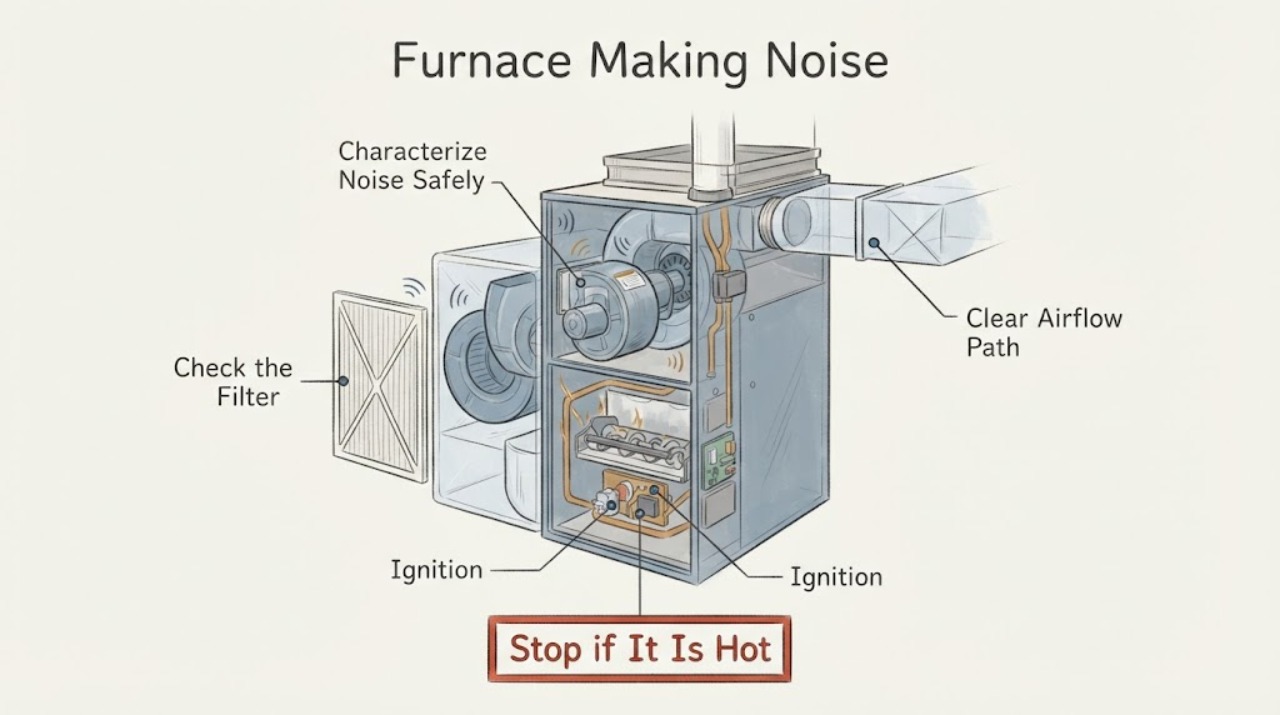
First identify the sound, where it comes from, and whether it happens at startup, during heating, at shutdown, or continuously. Trane says a light click before ignition and slight duct pinging or popping as the metal expands can be normal, while a furnace should not make loud or newly unusual noise. Buzzing, high-pitched squealing, rattling, rumbling, whistling, hissing, or a sudden bang point to different possibilities such as airflow restriction, loose ductwork, blower or inducer trouble, electrical components, dirty burners, or delayed ignition. From outside the cabinet, check that the thermostat is not calling the fan continuously, the accessible filter is correctly installed and not loaded, and visible registers and returns are open. Do not remove panels, adjust gas or electrical parts, oil a motor, relight a pilot, or change venting to chase a noise. Turn the furnace off and arrange qualified HVAC service for loud or new noise, hissing, banging, gas odor, smoke, unstable flame, repeated breaker trips, or a carbon-monoxide alarm.
Work through in order
Diagnostic checks
Use only checks that match the exact appliance or system and its official guide.
-
Check 1
From a safe position outside the furnace cabinet, listen for one normal call only if there is no gas odor, smoke, alarm, or unstable operation. Note whether the sound is humming, buzzing, clicking, pinging, popping, whistling, squealing, rattling, rumbling, or hissing; whether it starts at ignition, continues while running, or occurs at shutdown; and whether it comes from the furnace, duct, register, or wall.
Expected result: The sound is a mild startup click or duct ping; a new loud buzz, squeal, or rattle; a whistle with weak airflow; a rumble or bang at ignition; or a hiss.
Next step: Record the sound and select the matching branch. Stop the furnace for loud banging, hissing, smoke, gas odor, unstable flame, or any alarm; do not open the cabinet to locate the source.
Stop if: Stop immediately for gas odor, hissing near a gas furnace, a bang at ignition, smoke, flame rollout, carbon-monoxide alarm, burning electrical odor, or severe vibration.
Why this matters
Why: Timing and location separate possible duct expansion from airflow, motor, electrical, burner, ignition, or gas-related concerns. A sound that is new, loud, accompanied by vibration, or tied to ignition deserves service rather than repeated testing.
-
Check 2
Check the Trane thermostat without opening the furnace: confirm the desired mode, note whether the fan is set to Auto or is intentionally running continuously, and turn the furnace off before inspecting an accessible filter. Replace a disposable filter only with the exact size and airflow direction specified for the installed system; never run the furnace without a filter.
Expected result: The fan is set to On, the filter is visibly loaded or incorrectly installed, the filter and fan setting are normal, or the filter is accessible only behind a panel.
Next step: Correct only the thermostat fan setting or accessible filter issue allowed by the exact manual, then observe whether the noise changes during one normal call. Arrange service if the sound remains or if filter access requires opening the equipment.
Stop if: Do not run without a filter, force a filter into place, remove a furnace panel, or continue for smoke, burning odor, repeated breaker trips, or a returning fault.
Why this matters
Why: Continuous fan operation can make blower or duct noise seem constant, and a loaded filter can restrict airflow and contribute to whistling or high-pitched noise. A filter that needs panel removal is outside this check; a clear filter does not rule out a motor, inducer, burner, or electrical issue.
-
Check 3
Inspect visible supply registers, return grilles, and accessible duct sections without tools. Look for blocked openings, a loose exterior grille, an obvious disconnected duct, or vibration that begins when the blower starts. Do not tape, tighten, or enter the furnace cabinet, and do not alter flue or combustion-air openings.
Expected result: A return or register is blocked; a visible duct or grille vibrates; the air path is clear; or the noise is inside the cabinet or near venting.
Next step: Clear only an obvious furniture or register obstruction and repeat one brief observation. Escalate a loose duct, internal sound, venting concern, or persistent noise to qualified HVAC service.
Stop if: Stop for a damaged flue or intake, combustion-air blockage, hot or unstable ductwork, soot, smoke, gas odor, or any duct or vent repair that requires tools or equipment access.
Why this matters
Why: Blocked airflow or loose duct connections can create whistling, buzzing, or vibration outside the furnace. Noise inside the cabinet or near venting can involve the blower, inducer, burner, electrical control, or combustion path and cannot be diagnosed from an exterior visual check.
-
Check 4
Without removing panels or viewing burner compartments, note whether the Trane furnace produces normal warm air, whether the blower starts and stops normally, and whether the noise changes when the thermostat call ends. If the model has a manufacturer-approved external status display, record its alert without resetting the system repeatedly.
Expected result: The furnace heats normally with a mild startup sound; the noise accompanies weak airflow; the blower hums or squeals; burners or heat stop after a bang or rumble; or the furnace short-cycles, locks out, or shows an alert.
Next step: Stop for a new loud sound or any heat or safety symptom and arrange service with the timing and alert. Do not relight, bypass, lubricate, or adjust internal parts based on the sound alone.
Stop if: Do not open the furnace, relight a pilot, adjust gas pressure, bypass a safety switch, test live wiring, or keep operating through banging, hissing, unstable flame, smoke, or repeated lockouts.
Why this matters
Why: Normal heat with a mild, repeatable sound is different from a moving-part, airflow, electrical, delayed-ignition, or safety-control symptom. A noise paired with loss of heat, weak airflow, repeated cycling, or an alert increases the likelihood of a component or safety fault.
-
Check 5
Record the complete Trane model and fuel type if visible without opening the unit, the sound description and location, startup or shutdown timing, thermostat and fan setting, filter and register condition, heat output, alerts, recent maintenance, and any odor or vibration. Photograph only visible labels and conditions.
Expected result: The noise persists after safe airflow checks; it is loud or newly worsening; the likely source is a blower, inducer, burner, transformer, capacitor, bearing, control, vent, or heat exchanger; or any gas, combustion, electrical, or carbon-monoxide warning is present.
Next step: Turn the furnace off for persistent loud or unsafe noise and arrange qualified HVAC diagnosis. Provide the model, sound timing, safe observations, and any alert so the technician can begin with the correct documentation.
Stop if: Do not remove access panels, change venting, oil a motor, adjust gas or electrical components, bypass a limit or safety switch, or repeatedly reset a fault.
Why this matters
Why: The remaining diagnosis requires model-specific inspection and may involve moving parts, fuel ignition, electrical power, combustion, venting, or safety controls. Trane's public guidance does not support selecting a replacement part from a noise description alone.
Use your observations
Decision map
Find the observation that best matches what you see, then follow the next safe action.
-
PATH 01Next step
What you see
Do this next
Monitor without opening the furnace. Arrange service if the sound becomes loud, changes character, occurs inside the cabinet, or is accompanied by poor heating, odor, vibration, or an alert.
Why this path and its safety boundary
Why it matters: Trane identifies these limited startup or duct-expansion sounds as potentially normal when they are mild, repeatable, and not accompanied by a performance or safety symptom.
-
PATH 02Next step
What you see
Do this next
With the furnace off, correct only an accessible filter or visible register obstruction allowed by the exact manual. If the sound remains or access requires a panel, arrange HVAC service.
Why this path and its safety boundary
Why it matters: An airflow restriction is more likely, although Trane also lists blower, inducer, valve, or other equipment causes for high-pitched furnace noise.
-
PATH 03Next step
What you see
Do this next
Turn the system off if the sound is new, loud, worsening, or accompanied by vibration, and arrange qualified diagnosis. Do not remove panels or oil, tighten, or replace internal parts.
Why this path and its safety boundary
Why it matters: Possible causes include blower or inducer trouble, a loose or failing electrical component, a moving wheel or bearing, loose ductwork, or another internal component. The sound alone cannot identify the failed part.
-
PATH 04Next step
What you see
Do this next
Stop the furnace and arrange qualified HVAC service. Do not relight, clean burners, adjust gas, or repeat ignition attempts to see whether the noise goes away.
Why this path and its safety boundary
Why it matters: Trane says a loud startup bang can indicate delayed gas ignition, and a startup rumble can be associated with dirty gas burners. Both require professional attention because the combustion sequence is involved.
-
PATH 05Next step
What you see
Do this next
Leave the area for a strong or persistent gas odor or carbon-monoxide alarm and contact emergency services or the gas utility from a safe location. Otherwise turn the furnace off if safe and arrange qualified HVAC service.
Why this path and its safety boundary
Why it matters: A fuel leak, combustion or venting problem, electrical fault, or other hazardous condition is possible. It is not a homeowner noise-localization problem.
Helpful context
Understand the symptom
Sound type and timing narrow the diagnosis
A quiet click before ignition or mild duct pinging as the system heats may be part of normal operation, but a new or loud sound is not something to normalize. A buzzing that continues during operation, a high-pitched squeal, a rattle with vibration, or a bang at ignition has a different decision path. Record whether the sound comes from the cabinet, duct, register, or nearby wall, and whether heat output changes with it.
Airflow checks are the safe homeowner boundary
From outside the furnace, verify the thermostat fan setting, inspect an accessible filter with the furnace off, and check that visible supply registers and return grilles are not blocked. Trane links whistling and some high-pitched sounds with airflow restrictions and says a filter should not be omitted. A filter check cannot confirm a blower, inducer, burner, bearing, electrical, or venting fault, so it should not lead to cabinet disassembly.
Fuel, ignition, and venting noises require qualified service
A sudden bang at the furnace on startup can indicate delayed gas ignition, while hissing near a gas furnace can indicate a gas leak. Rattling, a loud hum, or persistent high-pitched noise can involve moving or electrical components that require testing. Trane's maintenance manual says not to make furnace adjustments or change venting, and its instructions reserve mechanical, fuel, electrical, and combustion work for qualified service.
Safety boundary
Stop conditions
- Leave the area and contact emergency services or the gas utility from a safe location for strong or persistent gas odor, a carbon-monoxide alarm, smoke, fire, or suspected gas leak.
- Turn the furnace off and arrange qualified service for a startup bang, hissing, unstable flame, soot, severe vibration, a burning electrical odor, repeated breaker trips, or a new loud noise.
- Do not remove furnace panels, adjust gas or combustion controls, relight or clean burners, test live wiring, oil internal motors, bypass safety switches, or change the venting system.
- Do not keep operating through a persistent rumble, squeal, rattle, buzz, or whistle when heat output, airflow, cycling, or an alert has also changed.
- Arrange qualified service when safe thermostat, accessible filter, register, and visible return checks do not resolve the noise or when diagnosis requires internal, fuel, electrical, mechanical, or venting access.
Only after diagnosis
Potential parts
- Trane blower wheel, blower motor, bearing, or inducer assembly
Consider this part class only after qualified diagnosis links a squeal, hum, rattle, or vibration to the blower or inducer assembly and confirms the component is worn, loose, or damaged.
Motor, wheel, bearing, inducer, electrical connector, mounting, and control sequence vary by Trane model; identify the complete model before selecting any part. - Trane furnace filter or airflow component
Consider this part class only when an accessible filter is damaged or incorrectly sized, or qualified diagnosis confirms an airflow component or duct connection is causing the noise after visible checks.
Filter size, type, housing, airflow direction, duct configuration, and blower requirements are model-specific; do not substitute by appearance. - Trane transformer, capacitor, control, or electrical component
Consider this part class only when qualified electrical diagnosis confirms that buzzing, humming, clicking, or a failed start is caused by the identified component.
Electrical ratings, terminals, mounting, and safety controls vary by model; do not test or replace energized furnace components as a homeowner noise check.
When checks do not resolve it
Need a professional?
Call qualified HVAC service for any new or loud noise, persistent buzz, squeal, rattle, rumble, whistle, hissing, or noise paired with weak heat, repeated cycling, alerts, vibration, or filter and register checks that do not help. Seek emergency help for strong gas odor, a carbon-monoxide alarm, smoke, fire, or suspected delayed ignition or flame rollout.
Have this ready
- Complete Trane model and fuel type if visible without opening the unit
- Sound description, location, and whether it occurs at startup, during heating, or at shutdown
- Thermostat mode and fan setting, filter condition, visible register and return condition
- Heat output, airflow, cycling, alert, vibration, and recent maintenance observations
- Any gas odor, hissing, smoke, soot, unstable flame, burning electrical odor, water, or carbon-monoxide alarm
Common questions
FAQ
Is a humming sound from my Trane furnace normal?
A mild, familiar hum during normal operation can occur, and Trane identifies a light click before ignition and slight duct pinging or popping as potentially normal. A loud, new, worsening, or vibrating hum can indicate blower, inducer, electrical, or duct trouble and should be serviced.
What does a banging noise when a Trane furnace starts mean?
Trane says a sudden bang at the furnace when it first starts could indicate delayed gas ignition and needs immediate attention. Turn the furnace off and arrange qualified service; do not relight or clean burners or repeat starts to test it.
Can a dirty filter cause a Trane furnace to whistle?
Yes, Trane links whistling and some high-pitched sounds with airflow problems, including a dirty or restrictive filter or blocked returns and registers. With the furnace off, inspect an accessible filter and visible openings; persistent noise needs service.
Should I open the furnace panel to find the noise?
No. Trane's maintenance guidance says homeowners should not make furnace adjustments beyond simple recommended maintenance, and internal noise may involve fuel, electrical, moving, combustion, or safety components. Record the sound from outside and arrange qualified HVAC diagnosis.
When is a Trane furnace noise an emergency?
Treat strong or persistent gas odor, hissing near a gas furnace, a carbon-monoxide alarm, smoke, fire, suspected delayed ignition, unstable flame, or severe vibration as an immediate safety concern. Leave for gas or carbon-monoxide danger and contact emergency help from a safe location; otherwise turn the system off and call qualified HVAC service.
Read the exact guide
Official sources
- Furnace Making a Buzzing Noise? Learn Why and What to Do - Trane®Trane · Official Trane residential gas-furnace guidance used for sound-type interpretation; causes and procedures remain model- and fuel-specific.
- Proper Maintenance – Gas FurnacesTrane · Official Trane maintenance manual for the documented indoor gas-furnace family; used for the no-adjustment, no-venting-change, qualified-service, and unusual-noise boundaries, not as a universal manual for every Trane model.
- Is This Normal? HVAC Smells and Sounds, Explained - Trane®Trane · Official Trane residential sound and odor guidance used for loud, rattling, high-pitched, clicking, and hissing symptom boundaries; exact equipment documentation controls.
- Furnace Troubleshooting: Gas Furnace Solutions - Trane®Trane · Official Trane gas-furnace troubleshooting page used for filter and register checks, unusual-noise escalation, gas odor, carbon-monoxide, and combustion boundaries; electric and oil systems require their own documentation.
Community feedback
Share a repair observation
Share a plain-text repair observation. Accepted observations are published automatically; this page may take a moment to update.