
On this page
Start here
Quick answer
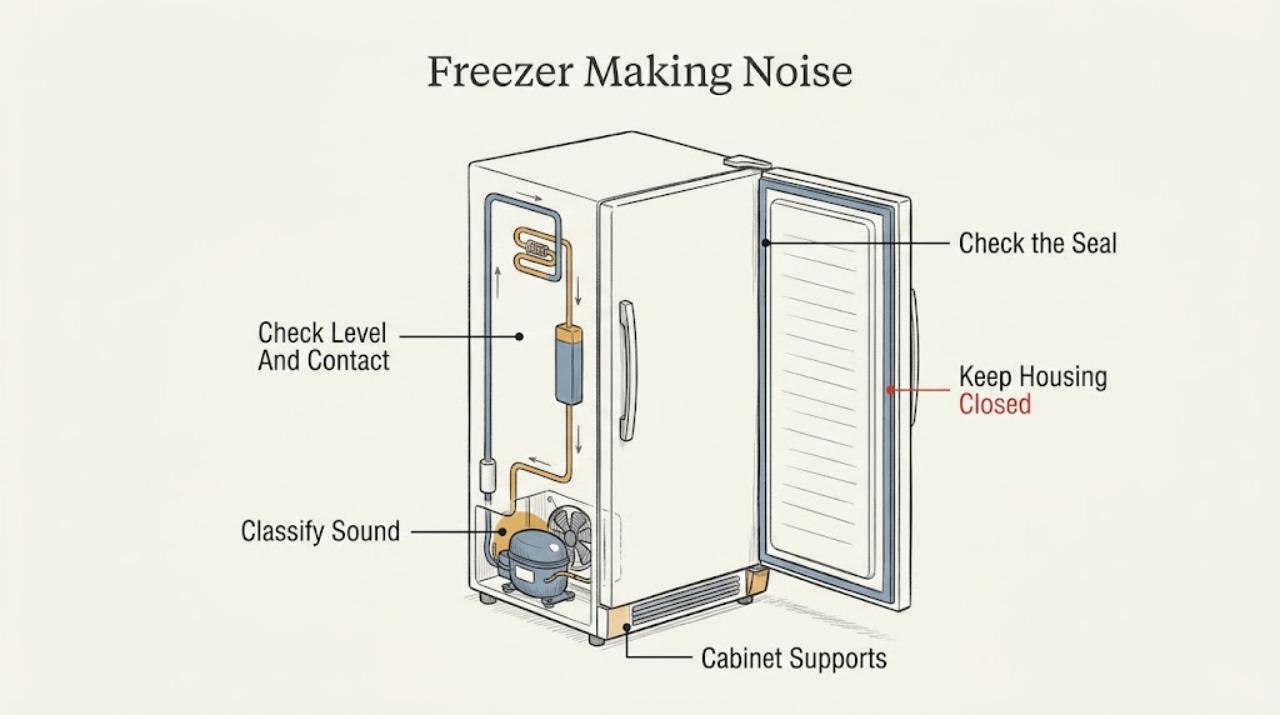
A Beko freezer can make normal humming, fan, liquid-flow, clicking, or cracking sounds during cooling and defrosting. First identify the sound and where it comes from, then check whether the freezer is still holding temperature, whether it is level and touching a wall or object, whether items are vibrating, and whether the door seal, vents, or frost pattern look abnormal. Stop using it and arrange qualified appliance service for a loud or new buzz, repeated clicking with rising temperature, a burning smell, shock, damaged cord, water near electrics, or a freezer that is no longer cooling. Do not remove covers, touch the fan or compressor, chip ice, or handle refrigerant.
Work through in order
Diagnostic checks
Use only checks that match the exact appliance or system and its official guide.
-
Check 1
From outside the cabinet, listen briefly and describe the sound as a steady hum, airflow or whir, liquid-flow or bubbling, click, crack, rattle, scrape, or loud buzz. Note whether it starts when the compressor or fan starts, occurs during defrost, or continues without a pause. Do not place hands inside the freezer to locate the sound.
Expected result: The sound matches a familiar short operating event; it is a new or louder hum, buzz, clunk, or rattle; or it is accompanied by scraping, burning odor, or an electrical symptom.
Next step: Continue only if there is no hazard. Record the sound and timing, then compare cabinet stability, door sealing, frost, and cooling behavior. Stop for odor, smoke, shock, heat, sparks, or damaged wiring.
Stop if: Stop immediately for burning odor, smoke, shock, sparks, exposed wiring, or a rapidly worsening sound.
Why this matters
Why: Beko says liquid-flow, fan, and some clicking or cracking sounds can be normal. A new, loud, or unusual sound, especially with abnormal cooling or electrical signs, needs more than a normal-sound explanation.
-
Check 2
With the door closed, look at the freezer's stance and the clearance around it. Check whether the cabinet rocks, touches a wall or nearby object, or has items sitting on top that could vibrate. Do not drag the appliance or reach behind it to adjust a compressor or pipe.
Expected result: The freezer rocks, touches another surface, or has a loose item vibrating; or it is stable with no visible contact.
Next step: Remove only a loose external item and keep the cabinet from visibly touching surrounding objects. If leveling would require moving a heavy unit or accessing the rear, stop and request service or follow the model manual.
Stop if: Do not move the freezer if it is hard-piped, unstable, heavy, or likely to damage the floor or cord.
Why this matters
Why: Beko troubleshooting guidance lists an uneven surface, contact with a wall, and items placed on the product as causes of shaking or noise. A stable cabinet makes a vibration source less likely but does not clear the fan or compressor.
-
Check 3
Inspect the visible door gasket and the front edge of the compartment for packages preventing full closure. Look through the door for tightly packed food blocking internal airflow, without removing shelves or panels. Do not pull or stretch a damaged gasket.
Expected result: The door is ajar, the gasket is dirty or damaged, packages block closure or vents, or the door closes cleanly with open airflow paths.
Next step: Reposition only loose packages so the door and visible vents close normally. If the gasket is torn, the door will not seal, or the freezer continues to run loudly, arrange service rather than forcing the seal.
Stop if: Stop if the door, gasket, cabinet, or interior liner is cracked, wet near electrics, or damaged.
Why this matters
Why: Beko notes that an ajar or damaged seal and restricted internal airflow can make the appliance run longer, which can change the sound and temperature. A clean seal and clear loading pattern make those causes less likely.
-
Check 4
Check whether frozen food remains as hard as usual and whether the freezer shows a new temperature alarm, heavy frost, or unusual condensation. Use the model's normal display or a suitable thermometer if already available; do not remove an evaporator cover or scrape frost.
Expected result: Cooling remains normal; the freezer is warmer than usual; heavy frost is visible; or condensation or water is present.
Next step: If temperature is rising, frost is heavy, or water is collecting, keep the door closed, protect food as needed, and arrange authorized service. Defrost only as the exact manual directs; do not chip ice or continue a noisy failing cycle.
Stop if: Stop for rapid warming, heavy ice blocking airflow, water near electrical parts, or an alarm that will not clear.
Why this matters
Why: A familiar sound with normal cooling is more consistent with normal operation. A loud noise paired with rising temperature, heavy frost, or water is a fault pattern that can involve airflow, defrost, fan, seal, or cooling components.
-
Check 5
For a frost-free model, listen from outside with the door closed and then note whether the sound changes when the door is opened normally, without touching a fan or defeating a door switch. Do not insert tools or fingers into vents.
Expected result: The sound is an airflow or whir that changes with a cycle; it becomes a scrape or rattle; or there is no airflow sound while cooling is poor.
Next step: If the fan sound is normal and cooling is stable, monitor it. If it scrapes, rattles, stops unexpectedly, or cooling is poor, turn the freezer off if safe and arrange service; do not remove the fan cover.
Stop if: Do not defeat a door switch, reach into a vent, or operate a fan with a cover removed.
Why this matters
Why: Beko states that fan airflow can be a normal cooling sound. A scrape, rattle, or absent airflow together with poor cooling points to a fan, ice, or control issue that cannot be safely diagnosed through the vent.
-
Check 6
If the model manual identifies an accessible external condenser area and the freezer can be safely disconnected without moving it, look for visible dust buildup around that area. Clean only as the manual permits with a dry, gentle method; do not use water, open the rear cover, or touch electrical parts.
Expected result: The accessible area is visibly dusty; it is clear; or access would require moving the freezer, opening a cover, or approaching wiring.
Next step: If safe manual-approved cleaning is possible, perform only that external maintenance and observe one normal cycle. If access is not clearly safe or the noise and cooling problem persist, arrange authorized service.
Stop if: Do not move the freezer, spray or wet the coils, remove covers, or touch the compressor, fan, capacitor, or wiring.
Why this matters
Why: Beko explains that dust on condenser coils can make the compressor work harder and that unusual noise with abnormal operation warrants service. This check cannot establish compressor health or refrigerant condition.
-
Check 7
After correcting only a loose external item, door obstruction, or clearly manual-approved external cleaning issue, observe one normal cooling cycle from outside. Do not repeatedly unplug and restart the freezer or leave food at risk while testing.
Expected result: The sound returns to its familiar level and cooling remains normal; the sound stays loud or unusual; clicking repeats with warming; or a hazard appears.
Next step: If operation is normal, monitor for recurrence. Otherwise keep the freezer closed and arrange authorized service with the sound recording, temperature pattern, frost, door, and power observations.
Stop if: Stop immediately for burning odor, smoke, shock, water near electrics, repeat power trips, or rapid loss of cooling.
Why this matters
Why: A quieter cycle after an external correction suggests that condition contributed, but it does not prove the appliance is healthy. Persistent loud noise, repeated clicking with a temperature rise, or any hazard requires professional diagnosis.
Use your observations
Decision map
Find the observation that best matches what you see, then follow the next safe action.
-
PATH 01Next step
What you see
The freezer gives a shock, has a burning smell, smoke, sparks, damaged cord, water near electrical parts, or repeatedly trips power.
Do this next
Stop using it and keep clear; arrange qualified appliance or electrical service, using emergency response for smoke or fire.
-
PATH 02Next step
What you see
The sound is a familiar hum, airflow, liquid-flow, brief click, or crack and the freezer is cooling normally without other symptoms.
Do this next
Monitor the sound and keep the cabinet level, clear, and properly closed. Use the manual if the sound changes or cooling changes.
-
PATH 03Next step
What you see
The freezer rocks, touches a wall or object, or has a loose item vibrating on or beside it.
Do this next
Remove only the loose external item and restore safe clearance without moving a heavy or fixed appliance. If the sound persists, arrange service.
-
PATH 04Next step
What you see
The door is ajar, the gasket is damaged, packages block visible airflow, or frost and temperature changes accompany the noise.
Do this next
Close or reposition only loose items, then follow the exact manual for defrost guidance. Do not scrape ice; arrange service if sealing, frost, or cooling remains abnormal.
-
PATH 05Next step
What you see
The sound is scraping, rattling, or absent airflow from a frost-free freezer, especially with weak cooling.
Do this next
Leave the fan and cover alone, turn the appliance off if safe, and arrange authorized service for a fan, ice, or control assessment.
-
PATH 06Next step
What you see
A loud buzz or repeated click occurs with rising temperature, long operation, or loss of cooling.
Do this next
Stop repeated restart attempts and arrange authorized appliance service; do not touch the compressor, electrical parts, or cooling circuit.
-
PATH 07Next step
What you see
The noise remains new, loud, or unusual after safe external checks, or its source cannot be established confidently.
Do this next
Keep the freezer closed and arrange authorized service with a recording and the observed cooling, frost, door, and power details.
Helpful context
Understand the symptom
Start with the sound and the freezer's behavior
Refrigeration creates several sounds: a compressor can hum, a fan can move air, refrigerant can sound like liquid flowing, and automatic defrost or ice-making functions can click or crack. The useful distinction is whether the sound is a familiar short event with normal cooling or a new, loud, continuous, or worsening sound accompanied by temperature change, vibration, frost, water, or electrical symptoms. The checks below are external and do not identify a hidden failed part.
Do not turn a noise check into a repair
Do not remove the rear cover, reach into a fan opening, touch a compressor or electrical terminal, bend tubing, add refrigerant, or chip frost. If the appliance can be unplugged safely and the manual allows cleaning, disconnect it before cleaning an accessible condenser area; do not move a heavy freezer or work around a fixed connection. A shock, burning odor, smoke, water near electrics, or repeated power trip is a stop condition.
What to record for service
Record the sound in plain words, where it is loudest, whether it occurs at startup or during a cycle, how long it lasts, whether the cabinet vibrates, whether the temperature and food condition remain normal, and whether there is frost, water, odor, heat, or a power trip. Note the model and rating-plate details without removing panels. This helps service distinguish normal operating sound from a fan, compressor, cabinet, door-seal, or electrical concern.
Safety boundary
Stop conditions
- Do not remove rear or fan covers, touch the compressor, fan, capacitor, terminals, or refrigerant tubing, or bend pipes and coils.
- Do not chip frost, add refrigerant, spray water into the appliance, repeatedly unplug and restart it, or keep using it after a shock, burning odor, smoke, water near electrics, or repeat power trip.
- Do not move a heavy, fixed, or unstable freezer merely to locate a sound; follow the model manual or use qualified service.
When checks do not resolve it
Need a professional?
Use authorized service when the freezer makes an unusual or persistent noise, especially with abnormal cooling, temperature rise, frost, water, repeated clicking, or electrical symptoms, or when a diagnosis would require opening the appliance.
Have this ready
- Provide the model details, a description or recording of the sound, where it is loudest, when it occurs, cooling and temperature behavior, frost or water observations, door-seal condition, cabinet stability, and any power or odor symptoms. Do not remove panels to gather more information.
Common questions
FAQ
Is humming from a Beko freezer normal?
A steady compressor hum or airflow sound can be normal when the freezer is cooling. It becomes more concerning when the sound is new, very loud, or accompanied by warming, repeated clicks, vibration, odor, or a power symptom.
Why is my Beko freezer making a bubbling or liquid-flow sound?
Beko explains that liquid and gas moving through the refrigerant system can sound like flowing, spraying, or bubbling, and this can be normal. If the freezer is not operating normally at the same time, arrange authorized service.
What does repeated clicking with a warmer Beko freezer mean?
A brief click can come from a defrost timer or ice-making function, but Beko notes that increased internal temperature together with clicking can indicate a compressor or condenser problem. Stop repeated restart attempts and arrange service.
Can I fix a noisy Beko freezer by opening the back?
Do not open covers or touch the compressor, fan, wiring, or cooling circuit. You may perform only clearly manual-approved external checks such as removing loose items or cleaning an accessible area after safe disconnection; persistent or unusual noise needs authorized service.
Read the exact guide
Official sources
- My appliance is no longer running?Beko UK · Manufacturer guidance for humming, fan airflow, door seal, loading, frost, and cooling behavior; exact defrost steps remain model-specific
- My refrigerator is making a bubbling, gurgling or whirring noise. Is that normal?Beko Australia · Manufacturer guidance distinguishing refrigerant-flow, fan, clicking, cracking, and loud or unusual sounds; not a model-specific repair procedure
- How to Tell If Your Fridge is DyingBeko UK · Manufacturer guidance for unusual noises, temperature change, water, electrical shocks, and professional escalation; not a component diagnosis
- TroubleshootingBeko · Official Beko troubleshooting documentation for noise, compressor operation, leveling, contact, fan, and normal refrigerant sounds; model applicability must be confirmed
Community feedback
Share a repair observation
Share a plain-text repair observation. Accepted observations are published automatically; this page may take a moment to update.