
On this page
Start here
Quick answer
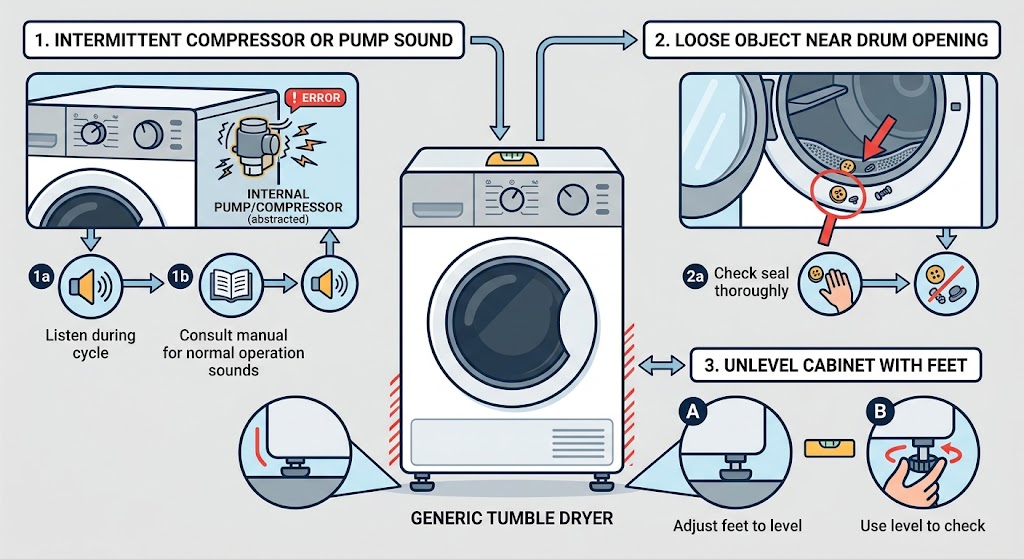
First note the sound and whether drying still works. On a Beko heat-pump dryer, occasional metallic compressor vibration and pumping sounds can be normal. A scraping sound calls for a safe stop and a check for a loose object in the drum; loud continuous rumbling can indicate worn drum rollers, especially when the dryer is no longer operating normally. Also check that the dryer stands level and stable and that pockets, zips, and buttons cannot knock against the drum. Do not remove panels or try to repair the belt, rollers, motor, compressor, or wiring yourself. Stop for burning smell, smoke, sparking, overheating, a jammed drum, or a loud sound that continues with abnormal operation, and arrange qualified service.
Before you begin
Safety first
- Do not run a dryer with a scraping or loud continuous sound, a jammed drum, or abnormal heating or operation. Disconnect power before inspecting the drum or adjusting feet, keep the appliance cool, do not tilt or lift it alone, and do not bypass the door switch or dismantle the drive, heater, compressor, or wiring.
Work through in order
Diagnostic checks
Use only checks that match the exact appliance or system and its official guide.
-
Check 1
Listen from outside the closed dryer and note the character, timing, and location of the sound: occasional metallic vibration, water-pumping, scraping, rumbling, knocking, or a constant harsh sound. Also note whether the drum turns and whether the cycle completes normally.
Expected result: The sound is occasional during a heat-pump or pumping stage and operation is normal, or it is scraping, loud and continuous, synchronized with drum rotation, or accompanied by stopping, poor drying, or other abnormal operation.
Next step: If it is an occasional documented operating sound and the dryer functions normally, monitor it. If it is scraping, loud and continuous, or paired with abnormal operation, stop the programme and continue with the safe drum and stability checks; arrange service if the sound persists.
Why this matters
Why: Beko documents occasional compressor metal vibration and pumping sounds as normal possibilities. Scraping or loud continuous rumbling has a different branch, particularly if the appliance is not operating normally.
-
Check 2
With the dryer stopped, cool, and disconnected from power, inspect the visible drum and door area for coins, fasteners, stones, or another loose object; check pockets and look for anything that could scrape the drum or door seal.
Expected result: A loose object is visible and can be removed without tools, or the drum and seal are clear but scraping remains.
Next step: Remove only a loose, reachable object while the appliance is isolated and cool. Do not reach through a narrow gap or remove the drum. If scraping remains or there is damage to the drum, seal, or door, leave the dryer out of use and call a qualified technician.
Why this matters
Why: Beko advises checking the drum for foreign objects when a metallic sound is more like scraping. A clear drum with continuing scraping points beyond a simple load item and may involve drum support or drive components.
-
Check 3
Check the dryer’s stability without lifting it: gently test whether the cabinet rocks on the floor and look for contact with a wall, cabinet, or nearby hose. Confirm the adjustable feet are supporting it evenly.
Expected result: The dryer rocks, has shifted into another object, or is stable and clear of surrounding contact.
Next step: If it is unstable, disconnect power and have another adult assist with any movement or foot adjustment; use the model instructions and do not work under a raised appliance. If it is stable or the noise remains after leveling, continue to the load and drum-motion branches.
Why this matters
Why: Beko’s noise guide links movement to an unlevel dryer and directs adjustment of the feet. Contact with surrounding objects can transmit or amplify vibration, while a stable dryer makes an unlevel installation less likely as the primary cause.
-
Check 4
Review the load that produced the sound: turn garments with zips or buttons inside-out, fasten closures, and check every pocket for hard loose items before a retest with a small, balanced load.
Expected result: The load contains loose metal or hard objects, unfastened closures, or an uneven mix, or the same noise occurs with a prepared small load.
Next step: Remove the loose item or prepare the load and run one supervised short test only if the dryer has no hazard signs. If the noise returns with the prepared load, stop testing and arrange service rather than continuing to run it to mask the sound.
Why this matters
Why: Beko recommends closing zips and buttons and checking pockets to prevent knocking and scratching. If a prepared load produces the same sound, the load is less likely to be the cause.
-
Check 5
If the dryer is a heat-pump or condenser model, compare the sound with the operating stage: listen for intermittent compressor vibration or water being pumped to the tank, then compare it with a scraping or harsh continuous noise.
Expected result: The sound is intermittent and limited to compressor or pumping operation while drying remains normal, or it is scraping, sustained, or paired with poor operation.
Next step: For the normal operating sound, keep the model manual and monitor for a change. For scraping, sustained noise, or abnormal drying, stop the appliance and request an authorized service diagnosis.
Why this matters
Why: Beko states that intermittent metallic compressor vibration on heat-pump dryers and pumping sounds on heat-pump or condenser dryers can be normal. That explanation does not cover scraping or a dryer that is operating abnormally.
-
Check 6
Only if the dryer is cool, disconnected, and the model instructions allow it, gently turn the drum by hand from the opening; do not remove panels or force it through resistance.
Expected result: The drum turns with consistent resistance, turns unusually freely, is very difficult to turn, or will not move.
Next step: If the drum is unusually free, difficult, or jammed, do not run the dryer and do not open it to inspect the belt, motor, rollers, or switch. Arrange qualified service. If it turns normally but the operating noise persists, use the same service boundary because the fault may occur only under load.
Why this matters
Why: Beko’s no-spin guidance uses manual drum movement to distinguish a possible worn or broken drive belt from a jammed drum, seized drum, or door-switch issue. An abnormal result is an internal mechanical or safety diagnosis, not a user adjustment.
Use your observations
Decision map
Find the observation that best matches what you see, then follow the next safe action.
-
PATH 01Next step
What you see
The sound is intermittent during compressor or water-pumping operation and drying otherwise works normally.
Do this next
Treat it as a potentially normal operating sound, monitor for a change, and follow the exact model manual if the sound becomes loud, continuous, or is joined by abnormal operation.
-
PATH 02Next step
What you see
The sound is scraping, knocking, or rhythmic and a pocket item, closure, or load imbalance is possible.
Do this next
Stop, cool, disconnect power, and remove only a loose visible item; prepare the load and retest once. Persistent scraping or damage requires service.
-
PATH 03Next step
What you see
The cabinet rocks or contacts a wall, cabinet, hose, or other object.
Do this next
Have assistance for any foot adjustment or movement and use the model instructions. Stop if the dryer cannot be made stable without lifting or dismantling it.
-
PATH 04Next step
What you see
The drum is very difficult to turn, will not turn, turns unusually freely, or loud noise accompanies loss of rotation.
Do this next
Do not run or open the dryer. Have a qualified technician diagnose the belt, rollers, motor, drum supports, switch, or related mechanism.
-
PATH 05Next step
What you see
The sound remains with a clear drum, prepared load, and stable installation, or smoke, burning odor, sparking, overheating, or abnormal operation is present.
Do this next
Disconnect power only if safe, keep the dryer out of use, and seek professional service. Do not continue supervised tests or try to identify a part by sound alone.
Helpful context
Understand the symptom
Classify the noise before touching the dryer
The same word, such as rattling or rumbling, can describe a normal operating sound or a developing mechanical fault. Record whether it happens at start-up, only while the drum turns, during water pumping, or continuously. Note whether the dryer still tumbles and heats normally. This keeps a normal compressor sound from being treated like a damaged drum, while still catching a scraping or progressively louder fault.
Safe preparation
Stop the programme normally, allow the dryer to cool, and disconnect power before inspecting the drum or moving anything. Keep the door closed during operation. Do not lift or tilt a heavy dryer alone; Beko specifically cautions about assistance when accessing adjustable feet. No check in this guide requires removing a panel or reaching near a moving belt, fan, heater, or compressor.
When the noise is not a user adjustment
A stable dryer with a clear drum and correctly prepared load should not be opened up just because a sound is unfamiliar. If the noise is loud and continuous, the drum will not turn, the appliance stops, or drying is otherwise abnormal, the useful next step is a technician's diagnosis rather than a guessed part replacement.
Only after diagnosis
Potential parts
- drum support rollers
Consider this category only when loud continuous rumbling persists with a clear drum and stable installation, and a technician confirms roller wear.
Confirm the complete Beko model and manufacturer fit information before ordering; do not infer compatibility from the noise alone. - drive belt or drum drive component
Consider this category only when the drum turns unusually freely or fails to turn and a technician confirms a drive fault.
Use exact model-specific parts information and service diagnosis; never open the cabinet solely to follow a sound-based guess. - motor, compressor, or pump component
Consider this category only when the sound is tied to a specific operating stage and qualified testing confirms that component rather than a normal operating noise.
Confirm model, component type, and manufacturer fit information before ordering; a metallic sound can be normal on heat-pump models.
When checks do not resolve it
Need a professional?
Arrange qualified Beko service when the noise is loud and continuous, scraping persists after loose-object and load checks, the drum is jammed or turns abnormally freely, the dryer stops or dries abnormally, a suspected roller, belt, motor, compressor, or support fault remains, or leveling cannot be completed safely. Provide the model, sound description, operating stage, and whether the drum still turns.
Common questions
FAQ
Is a metallic noise from a Beko heat-pump dryer normal?
It can be. Beko says intermittent metallic vibration from the compressor can be normal, as can pumping sounds while water is sent to the tank. Scraping, loud continuous sound, or abnormal operation needs service instead.
What should I do if my Beko dryer makes a scraping sound?
Stop and disconnect the cool dryer, then check the visible drum for a loose foreign object. Remove only a reachable loose item without tools. If scraping remains or the drum or seal is damaged, do not run it; arrange service.
Why does my Beko dryer rumble?
A short rumble can occur when a dryer is new or has not been used for a while. Beko says loud continuous rumbling may indicate worn drum rollers, especially when the appliance is not operating normally.
Can an uneven Beko dryer cause noise?
Yes. Beko recommends checking whether the dryer rocks gently and adjusting its feet so it stands level and stable. Get assistance before moving or tilting a heavy appliance, and use the model instructions.
Read the exact guide
Official sources
- Tumble Dryer TroubleshootingBeko · Beko tumble dryers with metallic or rumbling noise
- How to stop your tumble dryer making too much noiseBeko UK · Beko tumble dryers with excessive noise or vibration
- Dryer / User ManualBeko · Beko dryer user guidance on normal metallic compressor and pumping sounds and safe operation
- Why is my tumble dryer not spinning?Beko UK · Beko tumble dryers with a drum that does not spin or has abnormal drum movement
Community feedback
Share a repair observation
Share a plain-text repair observation. Accepted observations are published automatically; this page may take a moment to update.