
On this page
Start here
Quick answer
For a water heater that is not working, first identify whether the symptom is no hot water, a leak, a tripped breaker, or a gas/combustion issue. Check only the exterior power/disconnect and visible water conditions; never open electrical panels or service gas controls without the required qualification. Shut off power and the water supply and call a qualified technician for flooding, active leaks, repeated breaker trips, relief-valve discharge, burning odor, or no recovery after the safe exterior checks.
Work through in order
Diagnostic checks
Use only checks that match the exact appliance or system and its official guide.
-
Check 1
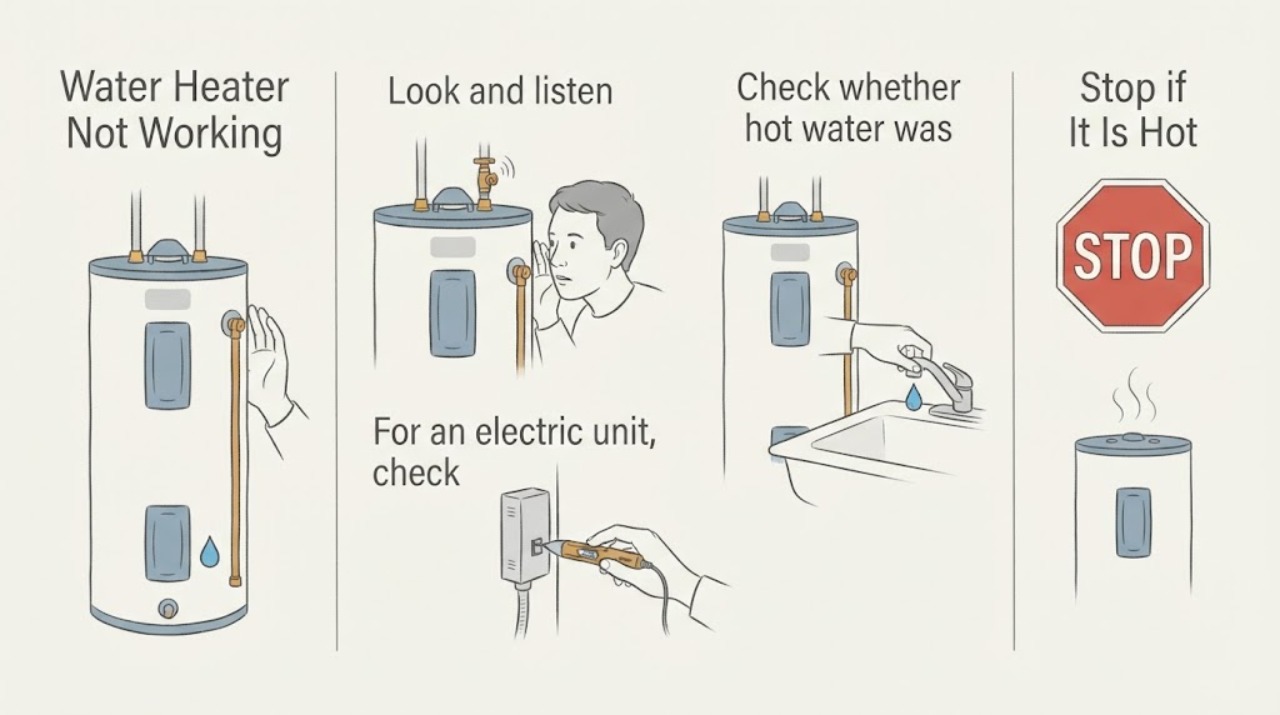
Look and listen from a safe distance for active water leakage, flooding, a relief-valve discharge, burning odor, smoke, gas odor, or a heater exposed to water.
Expected result: Water damage, gas odor, smoke, or an uncontrolled leak is present.
Next step: If safe, shut off the heater’s power and water inlet; for gas odor leave the area and contact the gas utility/emergency service.
Stop if: Do not operate a flooded or externally damaged heater and do not touch electrical controls in water.
Why this matters
Why: The heater may be unsafe to energize and requires isolation and qualified service.
-
Check 2
For an electric unit, check the external disconnect/breaker position and visible status only; do not remove access panels or test live terminals.
Expected result: The disconnect is off/tripped, or the breaker trips again when reset; otherwise power appears present.
Next step: Reset once only if there is no hazard; if it trips again, leave it off and call a qualified electrician/technician.
Stop if: Never keep resetting a tripping breaker or open the control cabinet as a homeowner check.
Why this matters
Why: A single safe reset may restore supply, but a recurring trip indicates an electrical fault or unsafe load.
-
Check 3
Check whether hot water was recently heavily used and whether the unit has had time to recover; inspect visible faucets and nearby pipes for hot-water leakage.
Expected result: Hot water returns after recovery time, or hot-water loss continues with a visible leak.
Next step: Reduce demand while it recovers; arrange plumbing service for a leak or persistent no-hot-water condition.
Stop if: Stop if water is scalding, the tank is leaking heavily, or the relief valve is discharging.
Why this matters
Why: Demand/recovery can mimic failure; a leak can continually drain heated water and needs repair.
-
Check 4
Record the model/rating plate, visible status lights, breaker behavior, leak location, and whether the heater ever produces warm water for the technician.
Expected result: The symptom is repeatable and documented, or it cannot be isolated to an external condition.
Next step: Keep the unit isolated as needed and provide the notes and model/serial information to a qualified service agency.
Stop if: Do not remove panels, test elements, relight gas equipment, or replace safety controls without qualification.
Why this matters
Why: No-hot-water faults can involve high-limit controls, elements, wiring, sediment, valves, or gas ignition, which require model-specific service.
Use your observations
Decision map
Find the observation that best matches what you see, then follow the next safe action.
-
PATH 01Next step
What you see
The breaker/disconnect is off and stays off after one safe check
Do this next
Have the circuit and heater checked by a qualified person before restoring service.
Why this path and its safety boundary
Why it matters: Loss of electrical supply may explain the symptom, but the reason for the shutoff remains unconfirmed.
-
PATH 02Next step
What you see
The breaker trips again, the heater is flooded, or there is an active leak/relief discharge
Do this next
Leave power/water isolated as appropriate and call a qualified water-heater technician or electrician.
Why this path and its safety boundary
Why it matters: An electrical, pressure, or tank/plumbing fault creates a service boundary.
-
PATH 03Next step
What you see
Power is stable and there is no visible leak, but water stays cold
Do this next
Stop homeowner diagnosis at the exterior checks and arrange model-specific qualified service.
Why this path and its safety boundary
Why it matters: An internal element, thermostat/high-limit, control, gas, or plumbing fault is more likely than a simple setting.
Helpful context
Understand the symptom
How to read the result
For a water heater that is not working, first identify whether the symptom is no hot water, a leak, a tripped breaker, or a gas/combustion issue. Check only the exterior power/disconnect and visible water conditions; never open electrical panels or service gas controls without the required qualification. Shut off power and the water supply and call a qualified technician for flooding, active leaks, repeated breaker trips, relief-valve discharge, burning odor, or no recovery after the safe exterior checks.
When checks do not resolve it
Need a professional?
Call a qualified water-heater technician/electrician for active leaks, flooding, relief-valve discharge, gas odor, smoke, repeated breaker trips, damaged equipment, or no hot water after safe exterior checks.
Common questions
FAQ
Can I open the water-heater access panel to reset a control?
The State manual requires power-off verification before opening controls and describes qualified installation/service; leave panel and live electrical work to a qualified technician.
What should I do if the tank is leaking?
Identify the leak only from a safe, dry position. Isolate power and the water inlet when safe and call qualified service; a leaking tank or relief valve is not a routine reset.
Read the exact guide
Official sources
- Instruction Manual - Commercial Electric Water HeatersState Water Heaters · water heater power, no hot water, leaks and qualified service
Community feedback
Share a repair observation
Share a plain-text repair observation. Accepted observations are published automatically; this page may take a moment to update.