
On this page
Start here
Quick answer
“Not working” on an LG water heater can mean no display, no hot water, low recovery, noise, or a leak. Separate those symptoms before changing settings: check the tank and water supply, display/mode, breaker, air filter and clearance, then look for leaks or unusual sounds. Stop using the unit for smoke, odor, flood damage, repeated breaker trips, or internal repair needs.
Before you begin
Safety first
- Do not repair wiring, controls, heating elements, or safety devices yourself; do not plug a relief-valve outlet.
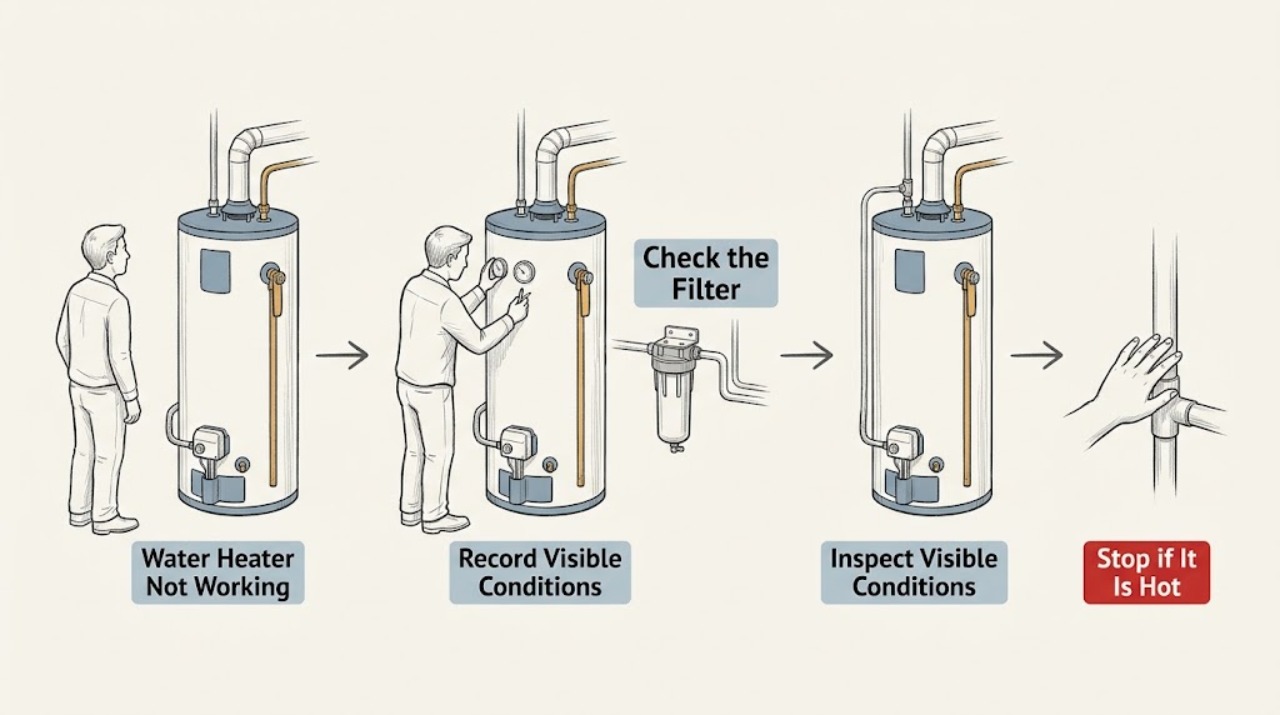
Work through in order
Diagnostic checks
Use only checks that match the exact appliance or system and its official guide.
-
Check 1
Describe what changed: is the display dark, is water cold or merely slow to recover, is there a new noise, or is water visible outside the heater? Record when it occurs.
Expected result: One symptom is isolated, or several symptoms occur together.
Next step: Continue only with the relevant external check and keep the unit off if smoke, odor, flooding, or electrical danger is present.
Why this matters
Why: An isolated symptom can be matched to the appropriate external check; multiple symptoms raise the priority for service and safety review.
-
Check 2
If the complaint is no or insufficient hot water, confirm the tank is full, read the temperature/mode display, and check the breaker, accessible air filter, and clearance around air vents.
Expected result: A low mode/setting, tripped breaker, dirty filter, blocked airflow, or none of these is found.
Next step: Correct only external conditions allowed by the manual and allow recovery. Persistent cold water needs service rather than a guessed element.
Why this matters
Why: LG lists demand, setting, power, filter, and air exchange as distinct contributors to insufficient hot water.
-
Check 3
If the complaint is noise or water, observe whether the sound is a normal compressor/fan sound, a rumble, a drip from the condensate path, a connection, or the temperature-and-pressure relief path.
Expected result: The sound is ordinary operating noise with no leak, or rumbling/drips continue.
Next step: Do not plug a relief outlet or open covers. Arrange qualified inspection for persistent rumbling, connection leaks, or relief-valve drips.
Why this matters
Why: LG distinguishes normal heat-pump sounds from scale-related rumbling, blocked condensate drainage, loose connections, and relief-valve pressure symptoms.
Use your observations
Decision map
Find the observation that best matches what you see, then follow the next safe action.
-
PATH 01Next step
What you see
Only recovery is slow after heavy demand and external conditions are normal
Do this next
Allow recovery and review operating mode and demand before scheduling parts.
Why this path and its safety boundary
Why it matters: Capacity/recovery is more likely than a total failure.
-
PATH 02Next step
What you see
Display is dead or the breaker trips again
Do this next
Leave the heater off and call qualified service.
Why this path and its safety boundary
Why it matters: The issue needs electrical/control diagnosis beyond safe user checks.
-
PATH 03Next step
What you see
Water drips from a relief path, connection, or tank area
Do this next
Shut off water if safe, never cap the relief outlet, and obtain qualified inspection.
Why this path and its safety boundary
Why it matters: This is a plumbing/pressure or possible tank condition, not a generic control symptom.
Helpful context
Understand the symptom
Name the failure before choosing a fix
The LG troubleshooting table treats insufficient hot water, noise, drips, and low pressure as different conditions. A short symptom record prevents a general no-working complaint from sending you toward the wrong component.
When checks do not resolve it
Need a professional?
Stop operating for electrical, flooding, relief-valve, or unresolved leak symptoms.
Safety scope: Do not repair wiring, controls, heating elements, or safety devices yourself; do not plug a relief-valve outlet.
Have this ready
- Provide the model, exact symptom, timing, display/mode, breaker result, sound, and leak location.
Common questions
FAQ
What should I record when an LG water heater is not working?
Record whether the display is dark, water is cold or slow to recover, the mode/setting, breaker behavior, noise, and exact leak location. Those observations separate the manual's troubleshooting paths.
Is a humming sound always a fault?
No. LG lists heat-pump compressor, fan, and valve sounds as normal; a rumble or sound combined with drips needs qualified inspection.
Read the exact guide
Official sources
- MFL71409201-MN Owner's ManualLG Electronics · LG heat-pump water-heater operating safety and symptom-specific troubleshooting
Community feedback
Share a repair observation
Share a plain-text repair observation. Accepted observations are published automatically; this page may take a moment to update.