
On this page
Start here
Quick answer
An LG heat-pump water heater can deliver little or no hot water after unusually high demand, a low temperature setting, a tripped safety control, poor air exchange, or loss of electrical supply. Check demand, the displayed setting, breaker, and air filter/clearance from outside the unit. Do not open covers or reset a safety device unless the model procedure and a qualified person permit it.
Before you begin
Safety first
- Do not open electrical covers or repair heating elements, controls, wiring, or safety devices.
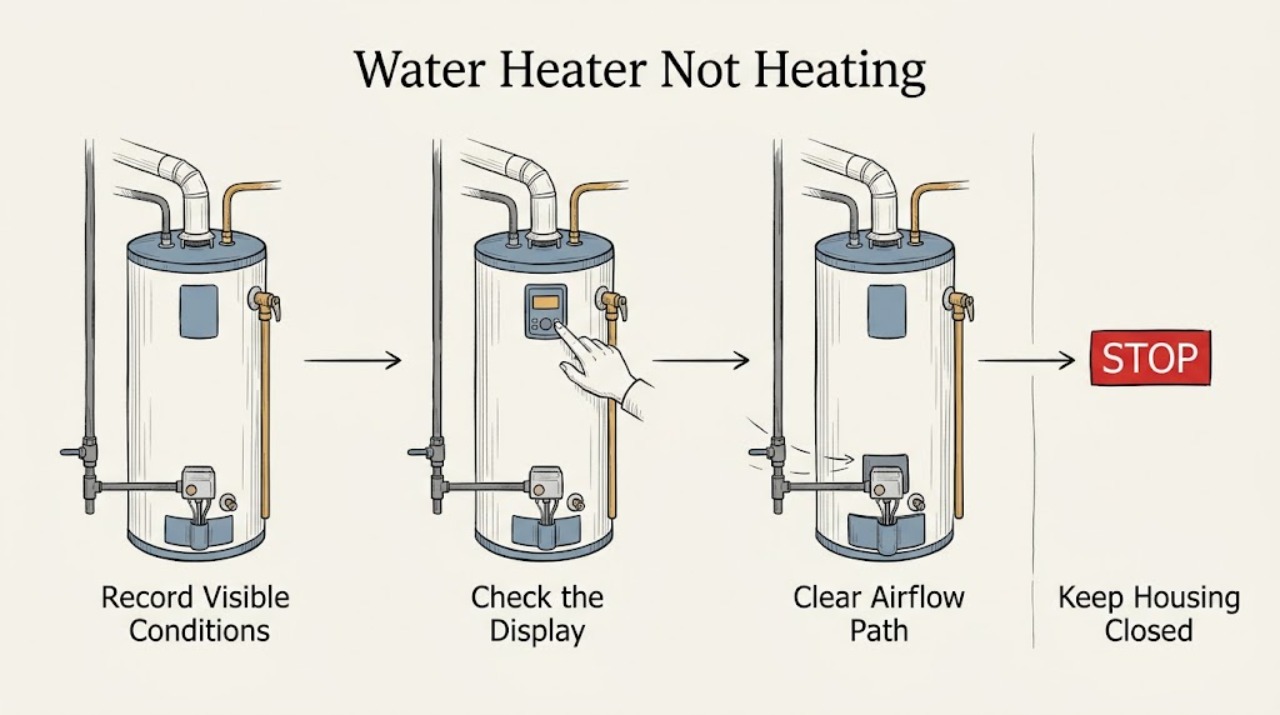
Work through in order
Diagnostic checks
Use only checks that match the exact appliance or system and its official guide.
-
Check 1
Record whether the shortage began after several showers, laundry, or another unusually large demand, and whether some hot water returns after the unit has time to recover.
Expected result: Hot water gradually returns, or it remains absent after a normal recovery period.
Next step: If it recovers, reduce the immediate demand or use a higher-recovery mode as the manual allows. If it does not, continue with the external checks.
Why this matters
Why: Recovery after abnormal demand is consistent with the manual's capacity/recovery explanation; no recovery calls for supply, setting, safety, or service checks.
-
Check 2
Read the displayed water-temperature setting and operating mode without removing any panel. Compare the setting with the household's expected hot-water need and note whether Vacation mode or another reduced-use mode is active.
Expected result: The setpoint/mode is lower than expected, or it is appropriate and the water remains cold.
Next step: Adjust only through the normal controls and allow the unit time to respond. Do not infer a failed element from the display alone.
Why this matters
Why: A low setting or reduced-use mode can explain perceived underheating; a normal setting with persistent cold water points elsewhere.
-
Check 3
Check the dedicated electrical supply and breaker from a safe standing position, then inspect the external air-filter area and the clearance around the air intake/outlet for dust or blocked objects.
Expected result: The breaker is tripped, the filter is dirty, or the air path is obstructed; alternatively, power and airflow appear normal.
Next step: Reset a tripped breaker only once if safe and permitted; clean the accessible filter as directed and clear objects from vents. If it trips again or the symptom remains, request service.
Why this matters
Why: The manual lists no electric supply, a dirty filter, and inadequate heat-pump air exchange among insufficient-hot-water causes.
Use your observations
Decision map
Find the observation that best matches what you see, then follow the next safe action.
-
PATH 01Next step
What you see
Hot water returns after a large demand
Do this next
Allow recovery and review the mode and demand pattern before requesting parts.
Why this path and its safety boundary
Why it matters: The recovery/capacity explanation is more likely than a confirmed heater failure.
-
PATH 02Next step
What you see
Setting is appropriate, power is present, airflow is clear, but water stays cold
Do this next
Stop user troubleshooting and arrange qualified LG service.
Why this path and its safety boundary
Why it matters: The remaining causes include internal heating, control, wiring, or safety faults that external checks cannot identify.
-
PATH 03Next step
What you see
Breaker trips again, smoke/smell appears, or the heater has been flooded
Do this next
Leave the heater off and have qualified personnel inspect it; do not keep resetting the breaker.
Why this path and its safety boundary
Why it matters: Repeated electrical protection or physical damage is a safety boundary.
Helpful context
Understand the symptom
The first clue is recovery behavior
A temporary shortage after heavy use is different from a heater that never recovers. Record when hot water stopped, then use the external checks below before treating the symptom as a failed element or control.
When checks do not resolve it
Need a professional?
Stop using the unit for repeated breaker trips, smoke, odor, flooding, or persistent no-hot-water after recovery and setting checks.
Safety scope: Do not open electrical covers or repair heating elements, controls, wiring, or safety devices.
Have this ready
- Provide the model, demand timing, displayed mode/setting, breaker result, filter condition, and whether hot water recovered.
Common questions
FAQ
Could an LG water heater be fine after a long shower?
Yes. LG lists demand exceeding the unit's capacity as a cause of insufficient hot water and recommends allowing recovery or using a higher-recovery mode.
Should I reset the LG water-heater safety control myself?
Do not remove covers or work on safety devices as a casual test. LG says an excessively high-temperature condition must be investigated by a qualified person before service resumes.
Read the exact guide
Official sources
- MFL71409201-MN Owner's ManualLG Electronics · LG heat-pump water-heater heating modes, safety controls, and troubleshooting
Community feedback
Share a repair observation
Share a plain-text repair observation. Accepted observations are published automatically; this page may take a moment to update.