
On this page
Start here
Quick answer
Treat an LG water heater that appears to be overflowing as a water-safety problem. From a safe position, identify whether water is coming from a connection, condensate drain, tank body, or temperature-and-pressure relief discharge. Shut off water and power if safe, never cap the relief outlet, and call qualified plumbing/service personnel for ongoing discharge or any tank leak.
Before you begin
Safety first
- Never cap a relief outlet or work on hot, pressurized, or energized plumbing; internal repairs belong to qualified personnel.
Work through in order
Diagnostic checks
Use only checks that match the exact appliance or system and its official guide.
-
Check 1
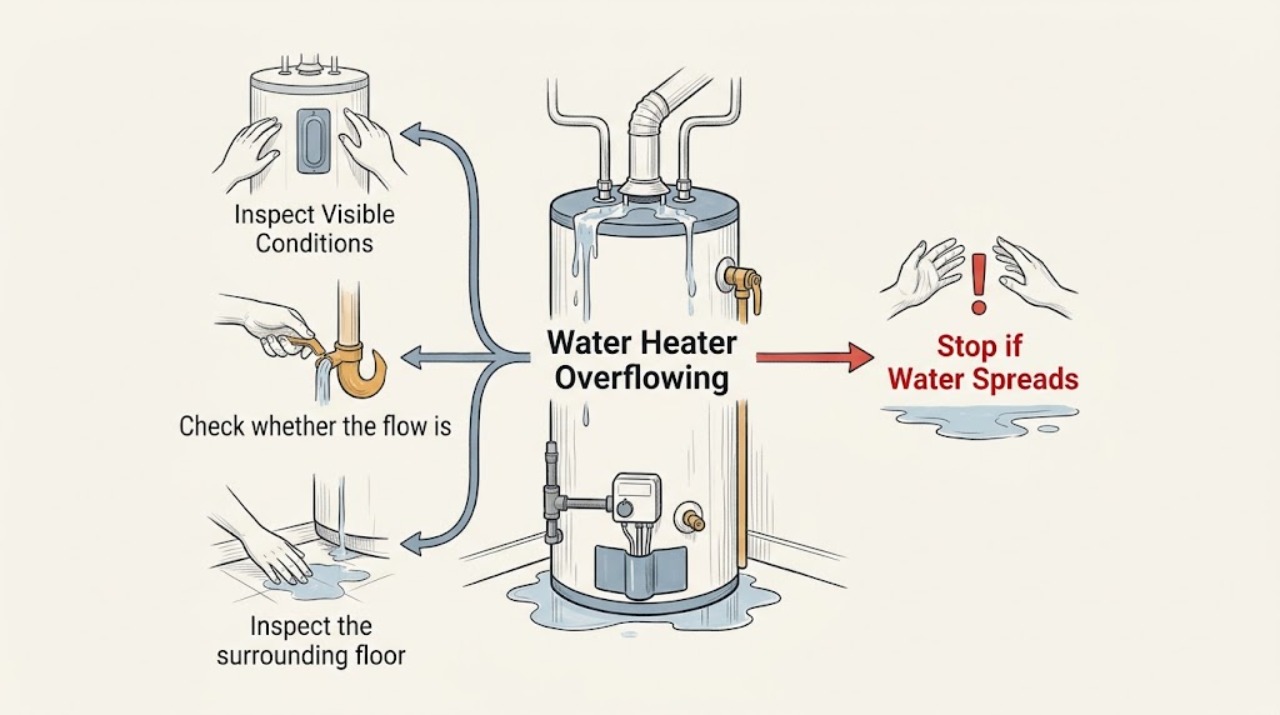
From a dry, safe position, look for the first visible point of water: condensate drain, hot/cold fitting, drain valve, temperature-and-pressure relief discharge, or tank body.
Expected result: Water follows one pipe/fitting, comes from the relief path, or appears from the tank shell/base.
Next step: Do not touch hot water or live parts. Shut off water and power if safe; a tank-body leak warrants immediate qualified service.
Why this matters
Why: The path distinguishes drainage/connection work from a pressure-safety symptom or possible tank failure.
-
Check 2
Check whether the flow is continuous, only occurs while heating, or stops after the water supply is closed. Do not operate the heater to reproduce the overflow.
Expected result: The relief path drips during heating, flow continues with supply closed, or flow stops when supply is isolated.
Next step: Leave the relief outlet unobstructed and call a qualified plumbing professional for pressure or leak diagnosis.
Why this matters
Why: Heating-related relief discharge can indicate thermal expansion/pressure; continued water from the tank or another path requires inspection rather than a reset.
-
Check 3
Inspect the surrounding floor and drain pan for water spread, and check the accessible condensate drain for debris only if the manual permits that external cleaning.
Expected result: The pan is dry except for a blocked condensate outlet, or water is spreading beyond the drain path.
Next step: Clear only accessible debris with power off. Do not disassemble plumbing or cap any safety outlet; arrange service for continuing water.
Why this matters
Why: A blocked condensate port may explain a small external drip; spreading water raises the risk of a connection or tank leak.
Use your observations
Decision map
Find the observation that best matches what you see, then follow the next safe action.
-
PATH 01Next step
What you see
A small drip stops after an accessible condensate port is cleared
Do this next
Keep the drain path clear and request service if water returns or changes location.
Why this path and its safety boundary
Why it matters: Blocked condensate drainage is supported, but the area should still be monitored for recurrence.
-
PATH 02Next step
What you see
Water comes from the relief discharge or the discharge continues during heating
Do this next
Leave the outlet open and call a qualified plumbing contractor.
Why this path and its safety boundary
Why it matters: Thermal expansion or excessive pressure is possible and cannot be safely corrected by plugging the pipe.
-
PATH 03Next step
What you see
Water comes from the tank body or continues after isolation
Do this next
Keep power and water off if safe, protect the area, and obtain urgent qualified inspection.
Why this path and its safety boundary
Why it matters: A tank or plumbing failure is more likely than ordinary condensate.
Helpful context
Understand the symptom
Location matters more than volume
A small condensate drip, a loose connection, a relief-valve discharge, and a leaking tank do not have the same next step. Do not turn an overflow into an internal repair project: record the path and make the area safe.
When checks do not resolve it
Need a professional?
Stop the heater and isolate water/power if safe for tank leaks, spreading water, relief discharge, or electrical exposure.
Safety scope: Never cap a relief outlet or work on hot, pressurized, or energized plumbing; internal repairs belong to qualified personnel.
Have this ready
- Provide the water's first visible location, whether it occurs during heating, isolation result, and photos only if safe.
Common questions
FAQ
Can I cap the LG water heater relief-valve outlet to stop overflow?
No. LG specifically says not to plug the temperature-and-pressure relief-valve outlet. Have the pressure condition corrected by a qualified plumbing professional.
Is every drop under an LG heat-pump water heater an overflowing tank?
No. The manual distinguishes blocked condensate drainage, loose connections, relief-valve drips, and tank conditions. Locate the first point of water before choosing the response.
Read the exact guide
Official sources
- MFL71409201-MN Owner's ManualLG Electronics · LG heat-pump water-heater condensate, relief-valve, connection, and leak troubleshooting
Community feedback
Share a repair observation
Share a plain-text repair observation. Accepted observations are published automatically; this page may take a moment to update.