
Repair problem
Not Heating Troubleshooting Guides
Published FixGraph guidance for diagnosing and responding to not heating.
Matching published guides
Choose a guide that matches the service, equipment, and conditions you are seeing.
-
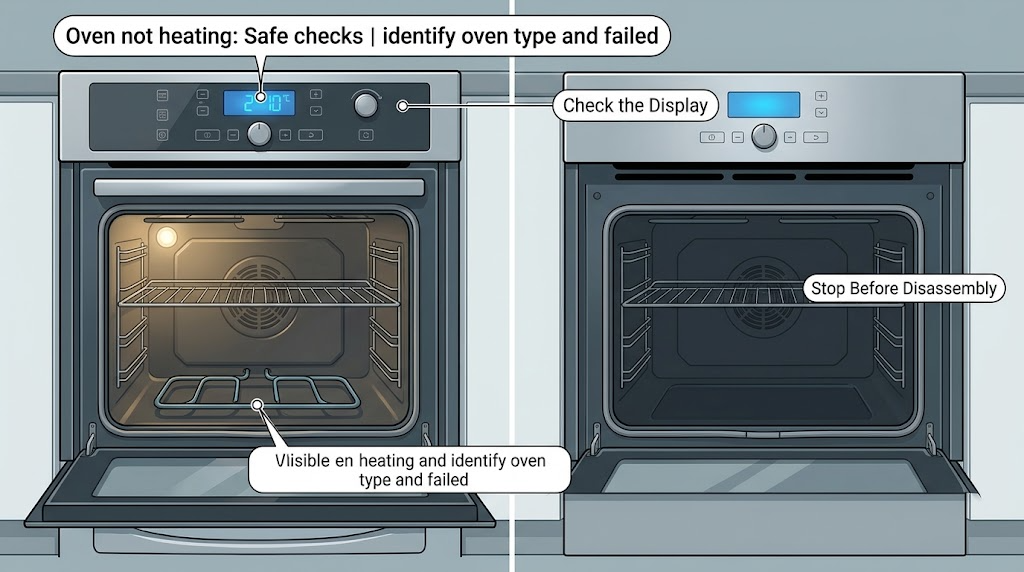
Admiral oven not heating: Safe checks before calling for repair
For an Admiral oven that is not heating, first record whether the display works, whether the cooktop works, whether the problem affects bake, broil, or both, and whether the oven is electric or gas. With the oven cool and no gas or electrical warning, check the selected cooking mode, door closure, visible power status, and any obvious control lock, delay, or demo setting against the exact owner's manual.
-
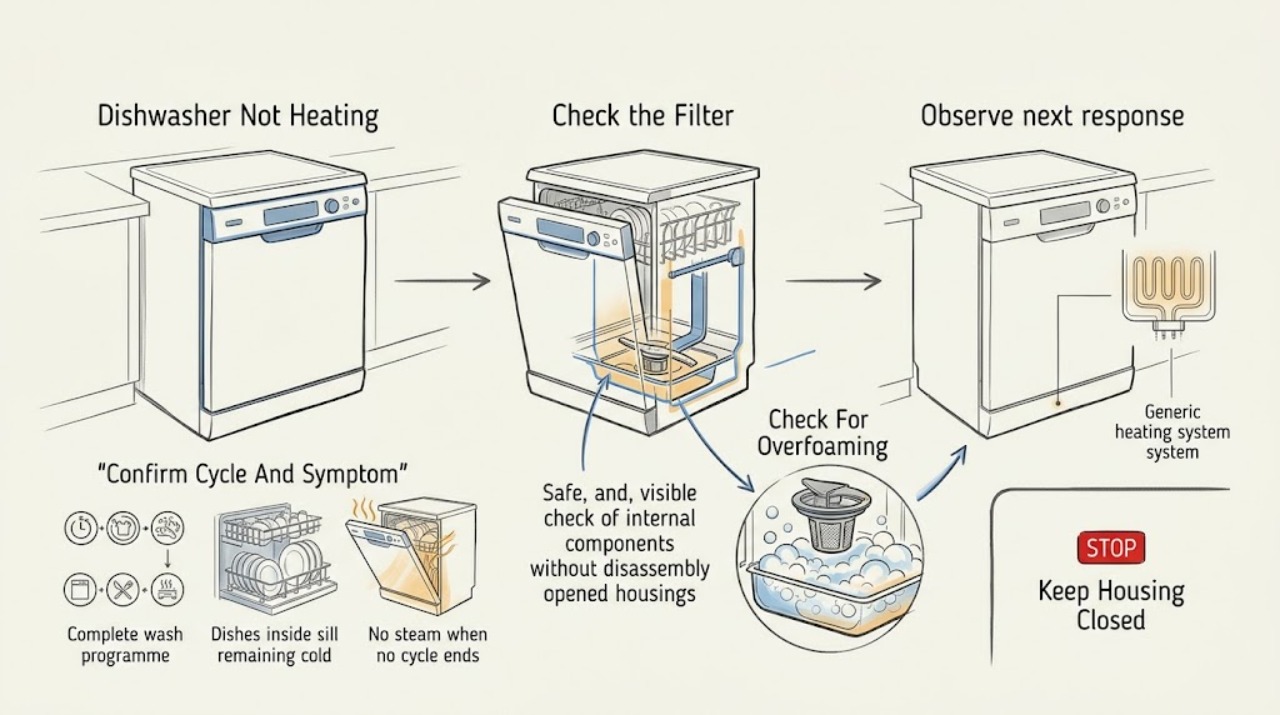
Aeg Dishwasher Not Heating: Check the Programme, Filters, and Foam First
If an Aeg dishwasher finishes with cold dishes or no steam, first confirm that the selected programme is suitable, then switch the appliance off and clean only the user-accessible filters and sump area. If there is water and foam in the tub, deal with the foam and do not continue normal cycles until it is gone.
-
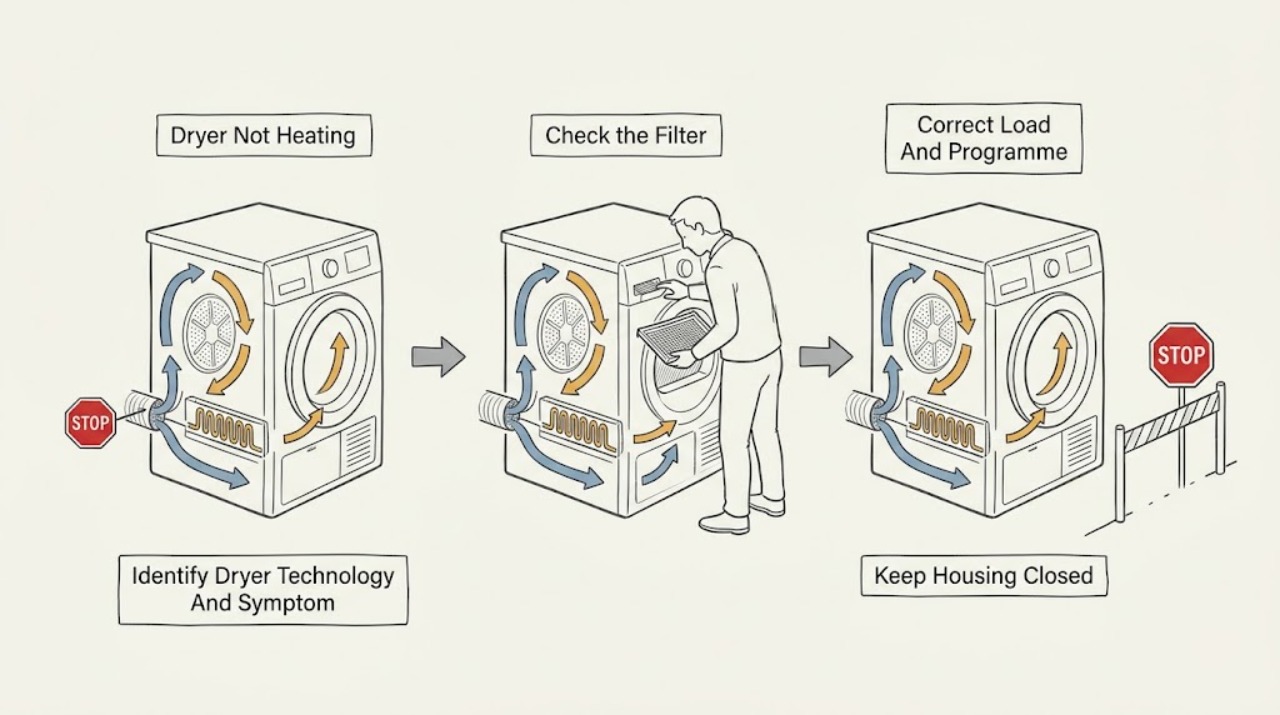
AEG Dryer Not Heating: Safe Checks Before Calling for Repair
An AEG dryer that seems not to heat may be a heat-pump model running at a lower temperature, or it may have restricted airflow, an unsuitable load or programme, or a genuine heating fault. Identify the dryer technology, clean the user-accessible filter and condenser where fitted, check the load, programme and ventilation, then run one model-directed timed heat check while observing the drum without opening the cabinet.
-
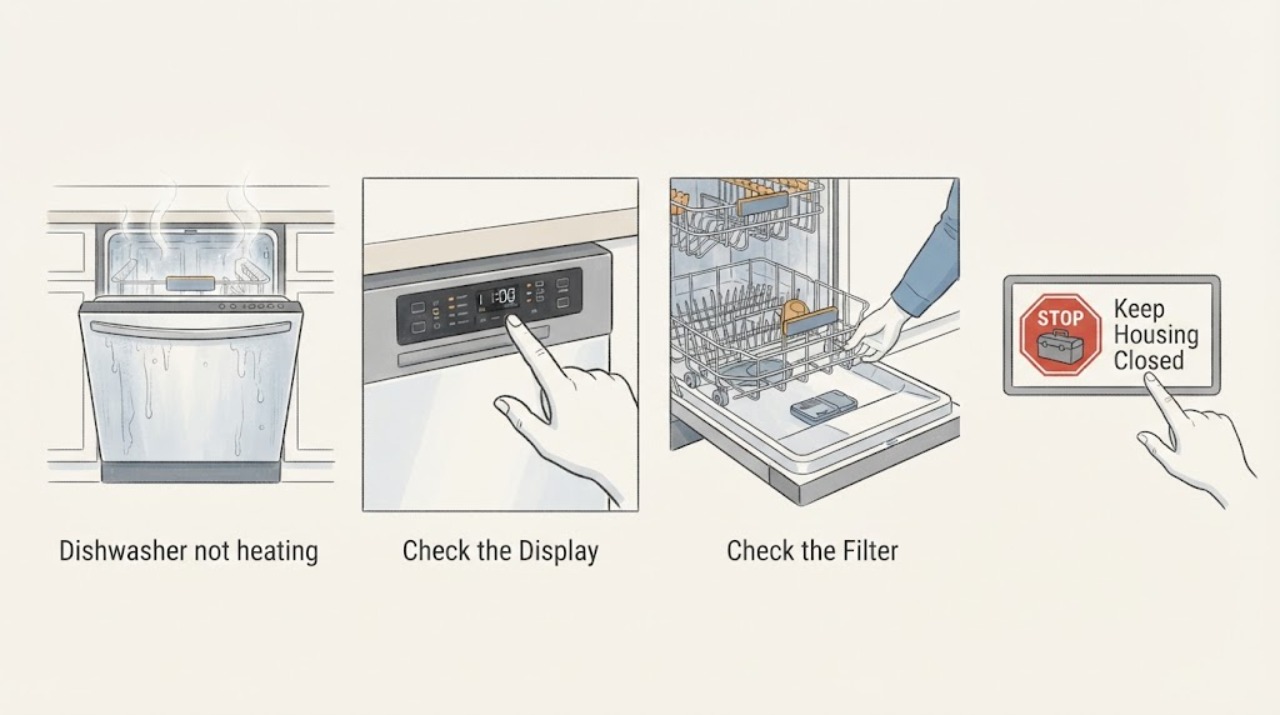
AEG Dishwasher Not Heating: i60 on F45010W0
On an AEG dishwasher, i60 is used for a heating-related problem, including not heating or not drying, but it does not identify a failed heater by itself. For the assigned F45010W0, first record the complete display and rating-plate PNC, then confirm that the incoming water supply is not above 60°C.
-
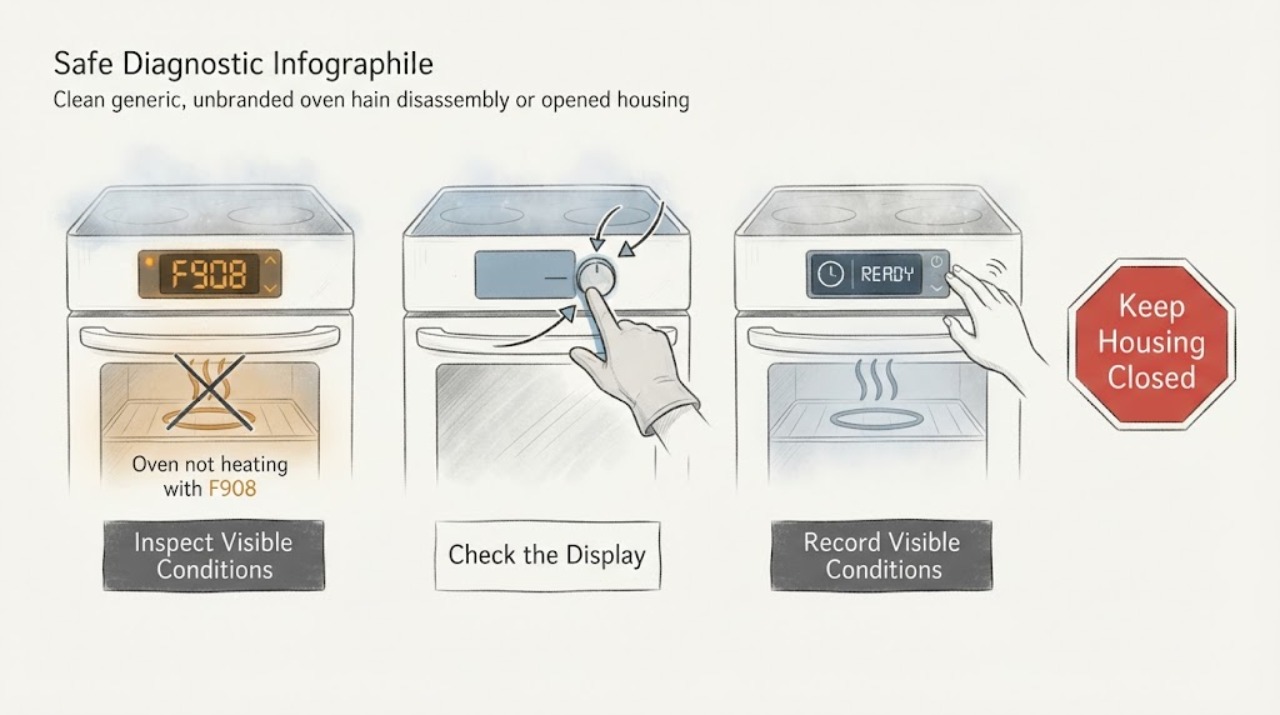
AEG oven not heating with F908: identify the code before any reset
F908 is documented by AEG as an oven-system communication fault: an AEG user manual describes it as the appliance system being unable to connect with the control panel, with an off-and-on action, while AEG support pages say F-number faults require specialist investigation if they persist. The assigned oven has no complete model, so this does not prove that every platform behaves identically and the high-humidity setting is not proof of causation.
-
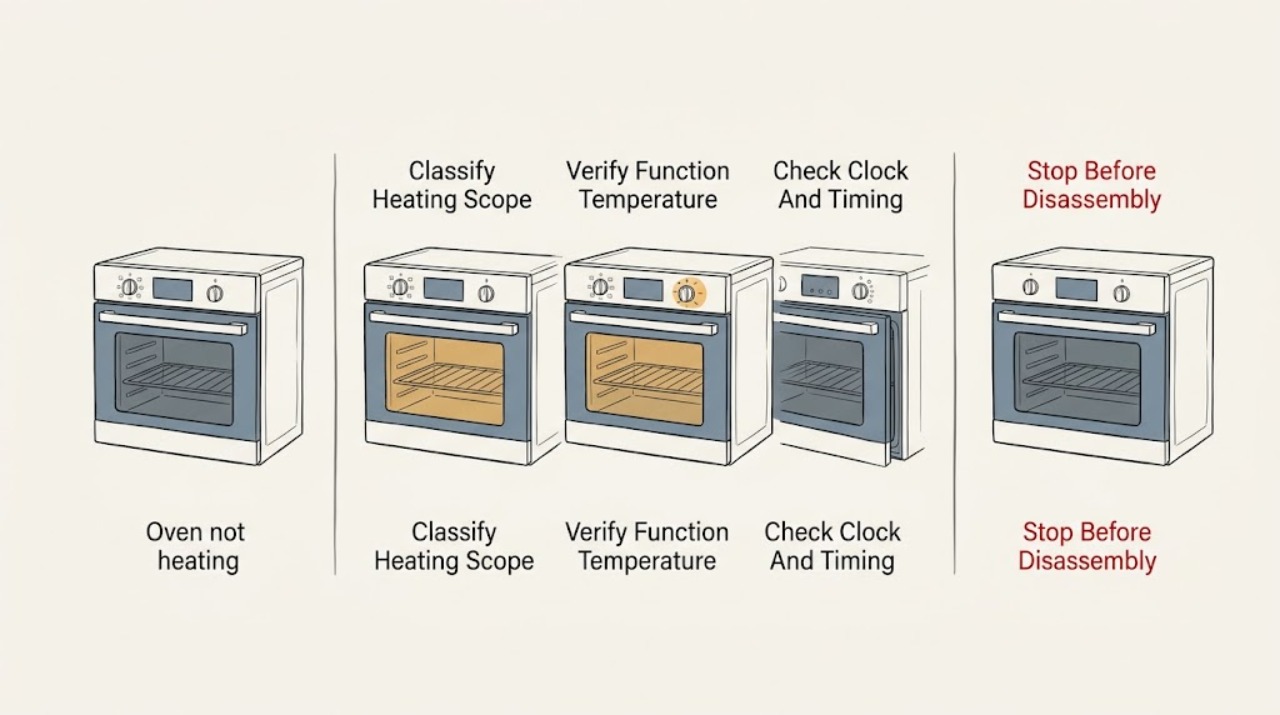
AEG oven not heating: check the setting, control state, and power path
First determine whether one AEG heating function fails or all functions fail. If the display is dark, check the accessible fuse or RCD only when there is no smell, smoke, water, or visible damage; if it trips again, stop.
-
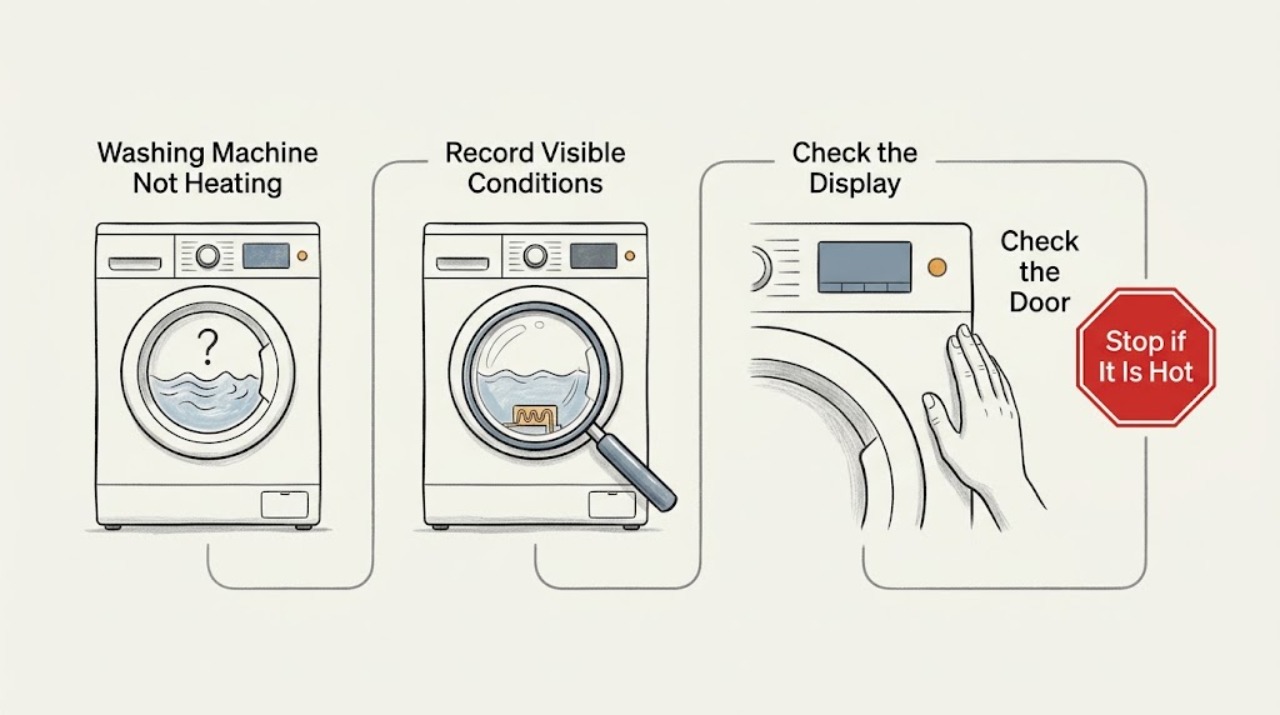
Aeg Washing Machine Not Heating: Safe Checks and Service Signs
Cold clothes at the end of an AEG wash do not by themselves prove a heating fault because the final rinse is normally cold. Check that the selected programme is not a cold or low-temperature option, then run an empty Cotton cycle at a warm setting allowed by the model manual and check the outer door during the wash, before the rinse.
-
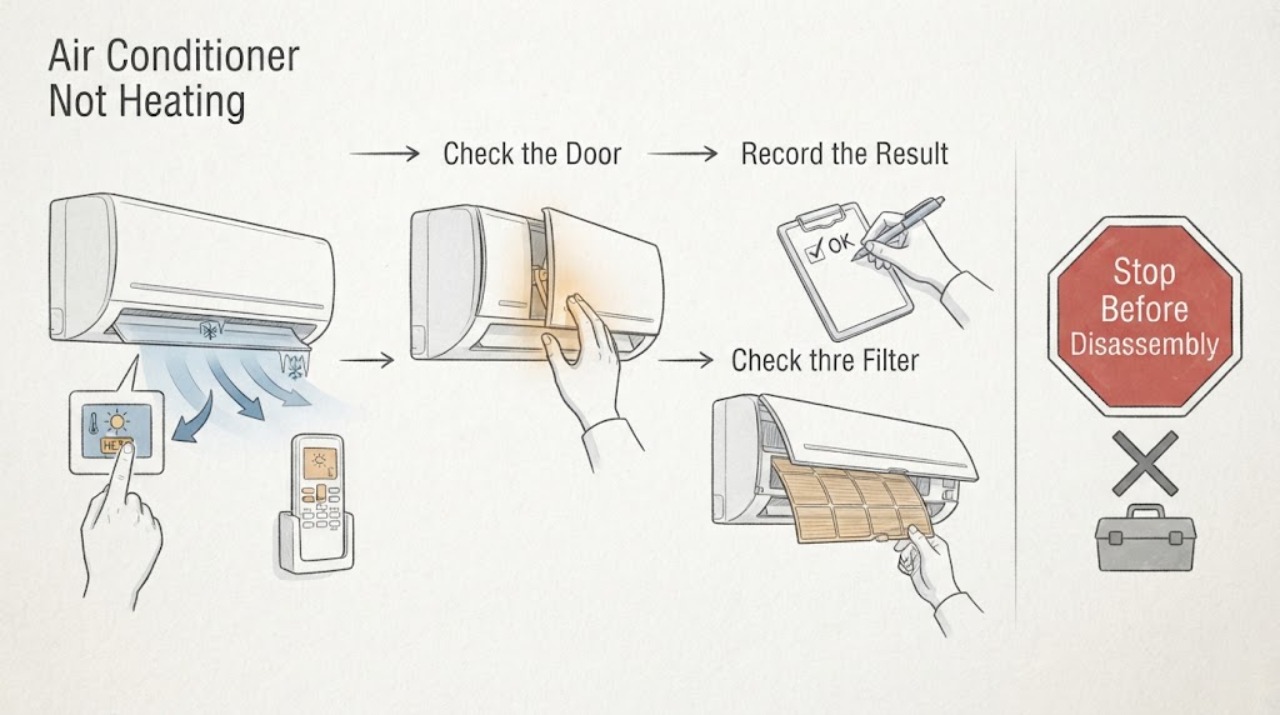
Air Conditioner Not Heating
For a heat-pump air conditioner that is not heating, select Heat and set the thermostat above room temperature, clean the accessible indoor filter, check power, and allow a normal defrost cycle. Constant cold air, a thickly frozen outdoor coil, or a system that never recovers needs HVAC service.
-
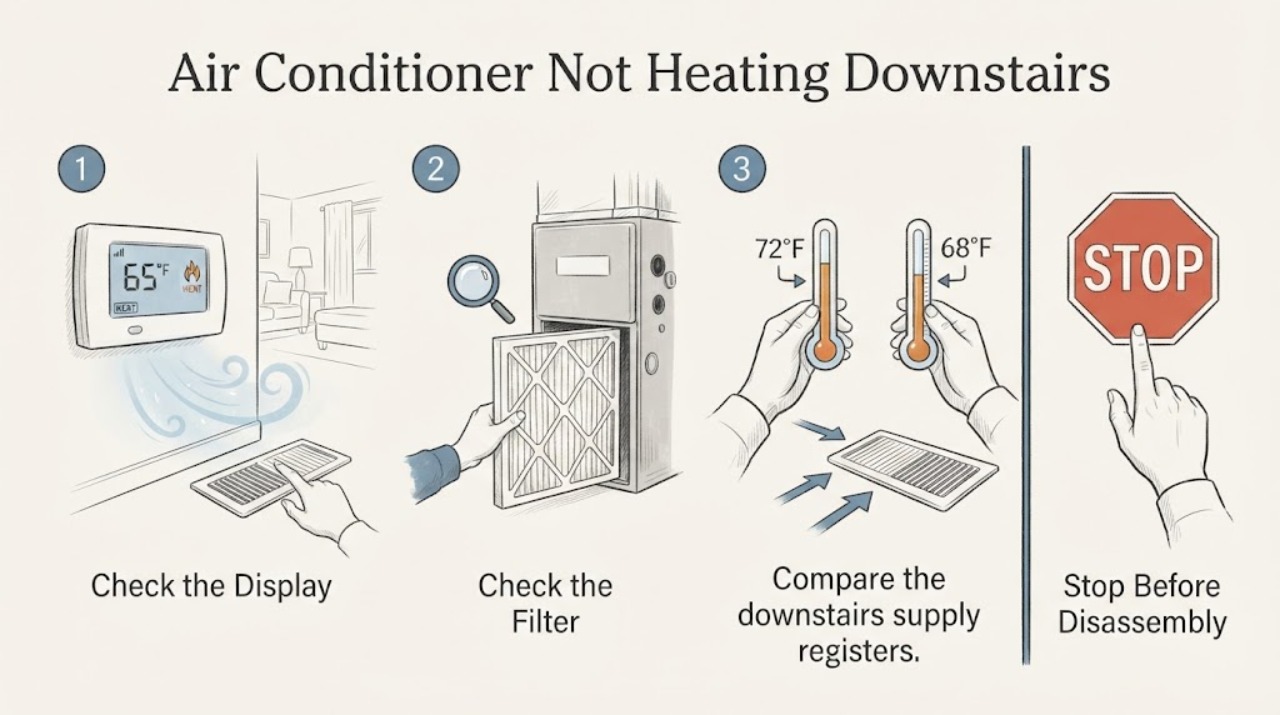
Air Conditioner Not Heating Downstairs: Zone, Airflow, and Heat-Pump Checks
First confirm that the equipment can heat: a cooling-only air conditioner cannot produce heat, while a heat pump or dual-fuel system should have a heating mode. If only downstairs is cold, compare the downstairs thermostat or zone call with the upstairs zone, then check the accessible filter, return, registers, and exposed duct path.
-
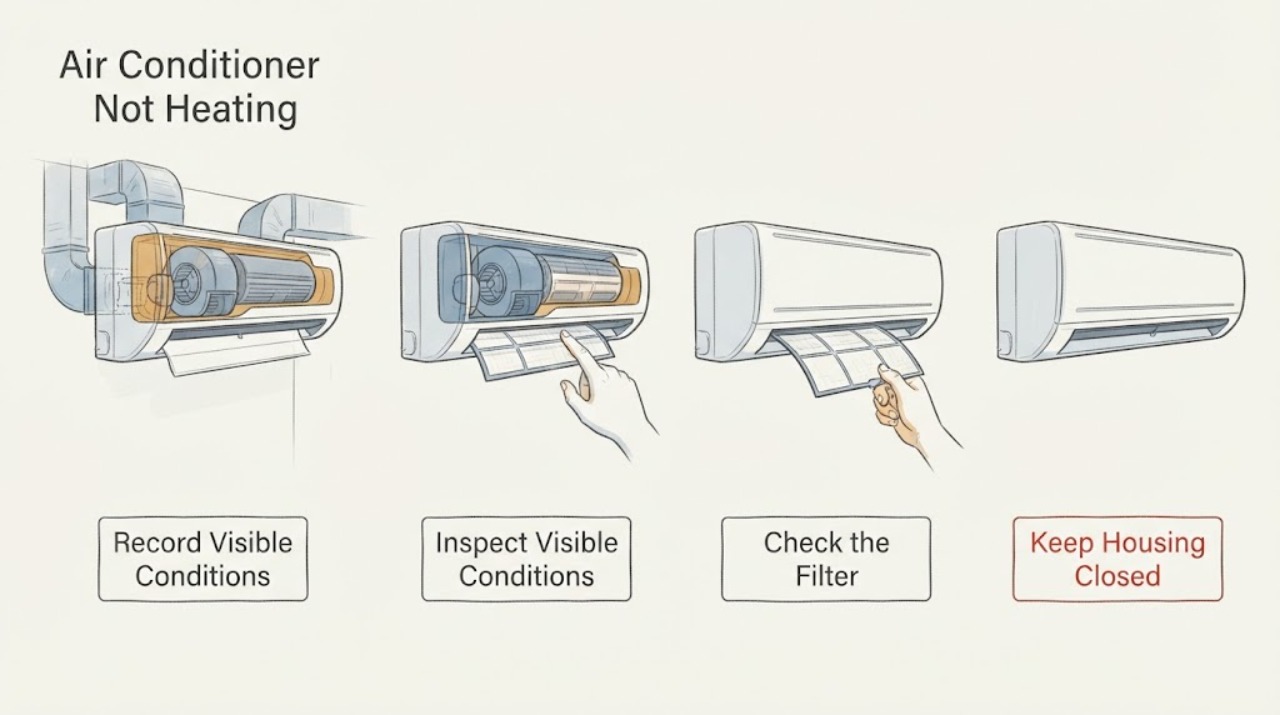
Air Conditioner Not Heating: Separate No Heat From a Blower Motor Airflow Fault
An air conditioner that is not heating may actually be a heat pump in the wrong mode, a normal defrost period, a heating or reversing-valve fault, or a blower-motor and airflow problem. First identify whether the equipment is a heat pump or a cooling-only air conditioner, then record the thermostat mode, indoor airflow, outdoor-unit behavior, filter condition, and any code or alarm.
-
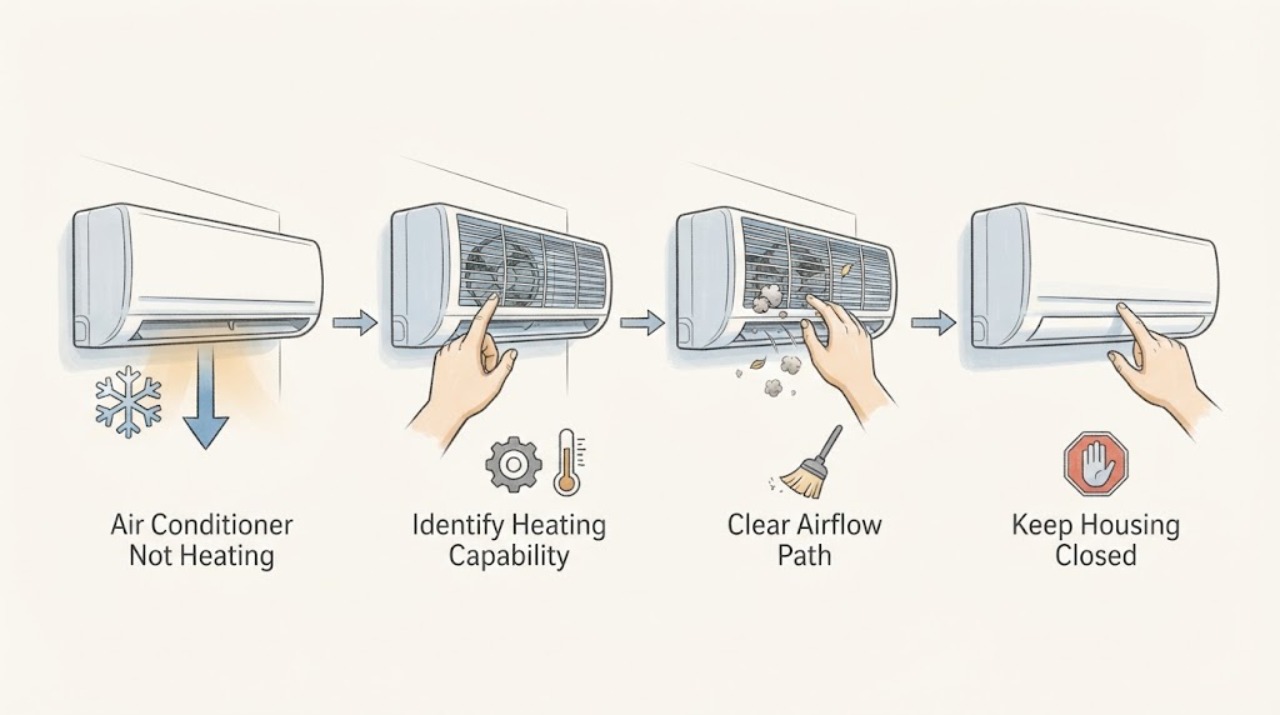
Air Conditioner Not Heating: Separate Fan Motor and Heat-Pump Faults
An air conditioner does not necessarily provide heat: only a heat-pump or another heating-equipped system can heat a home. If a heat pump is not heating, first confirm Heat mode and separate no warm air from no airflow.
-
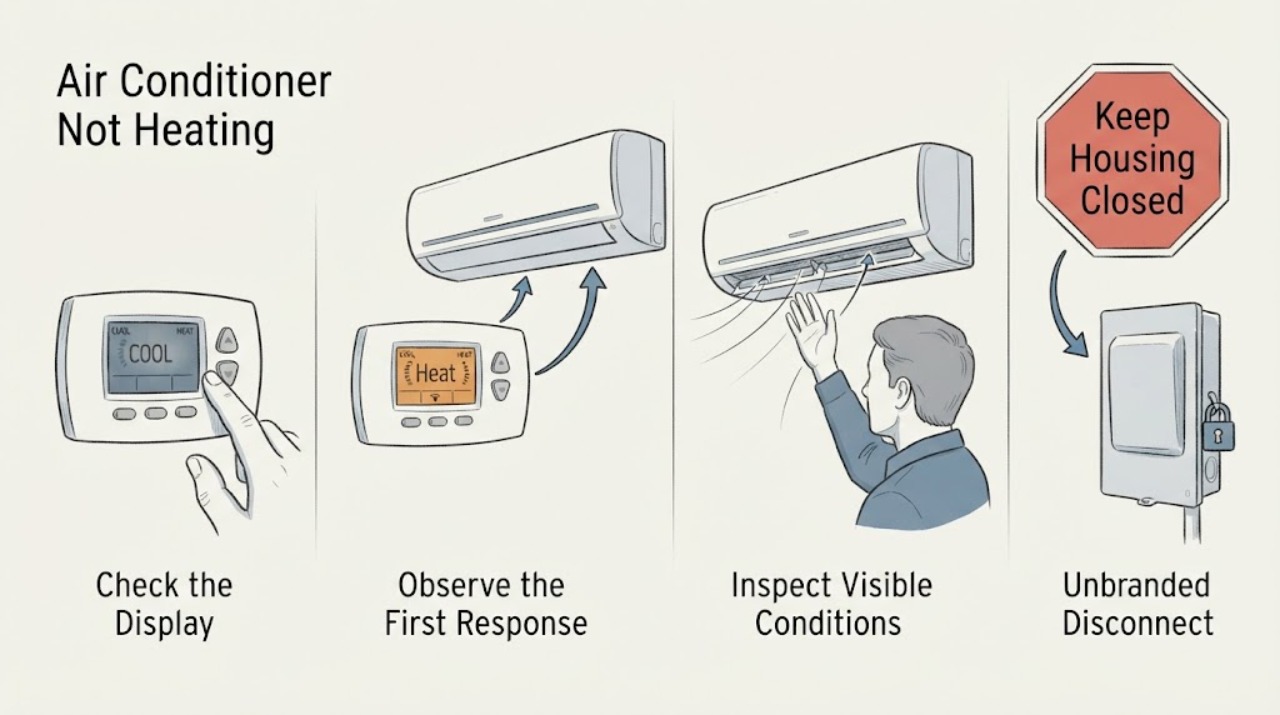
Air Conditioner Not Heating: Check the Thermostat and Heat-Pump Mode
An air conditioner may not heat because it is a cooling-only system paired with a separate furnace, because a heat-pump thermostat is in the wrong mode or schedule, or because the thermostat has lost power or is not sensing the room correctly. First identify whether the outdoor unit is a heat pump and whether the thermostat offers Heat, Aux, or Emergency Heat.
-
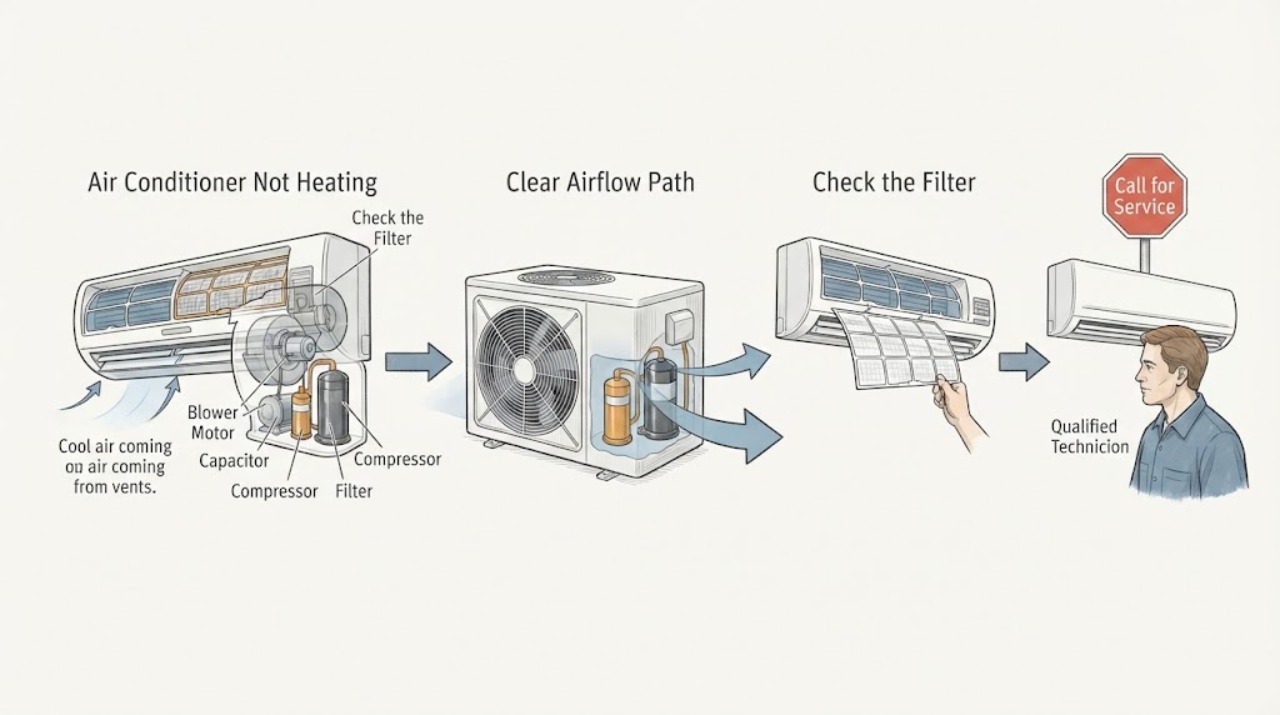
Air Conditioner Not Heating: Check the Heat Mode and Airflow
First confirm what equipment you have: a cooling-only air conditioner cannot provide heat, while a heat pump or a dual-fuel system must be in the correct heat mode. For a heat pump, check the thermostat mode and fan, compare indoor airflow, and inspect the user-accessible filter with the system off.
-
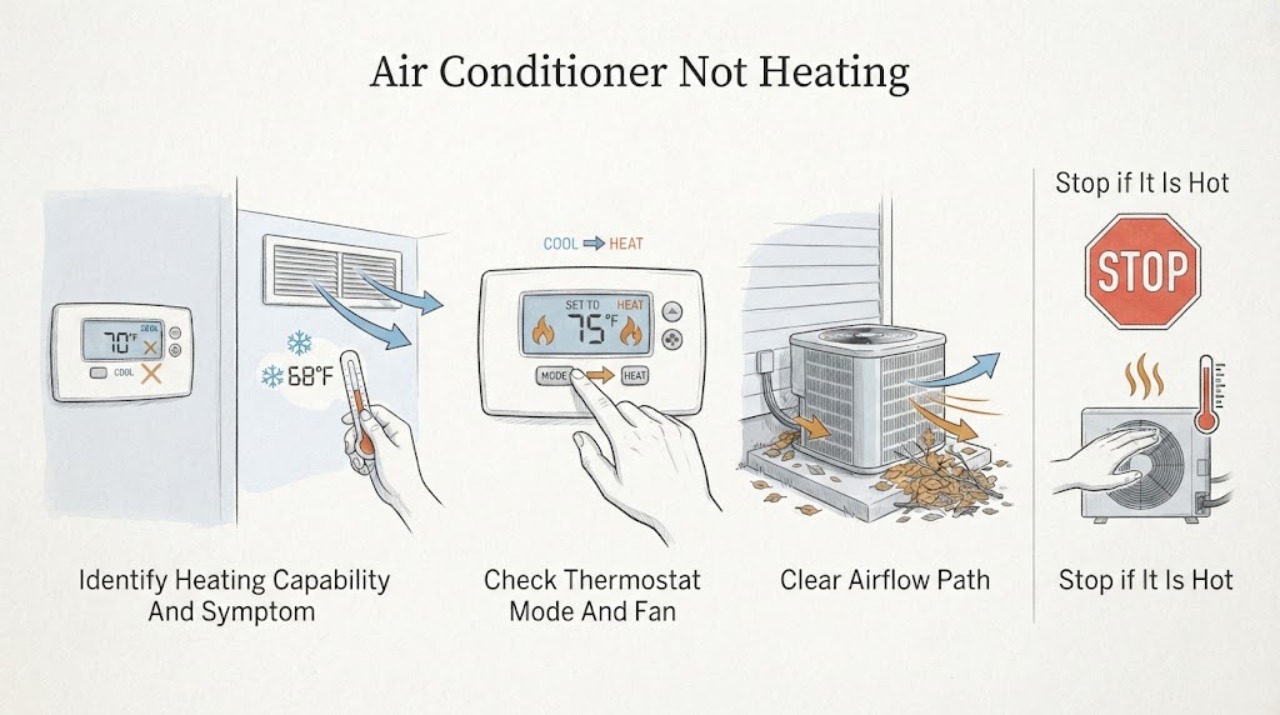
Air Conditioner Not Heating: Safe Heat-Pump Checks
First confirm that your air conditioner is a heat pump or another system designed to provide heat; a cooling-only air conditioner cannot produce heat in winter. If heating is supported, set the thermostat to Heat with the fan on Auto, check the air filter and indoor airflow, verify that the outdoor unit is not blocked, and check the heating-system breaker only if it is safe for you to do so.
-
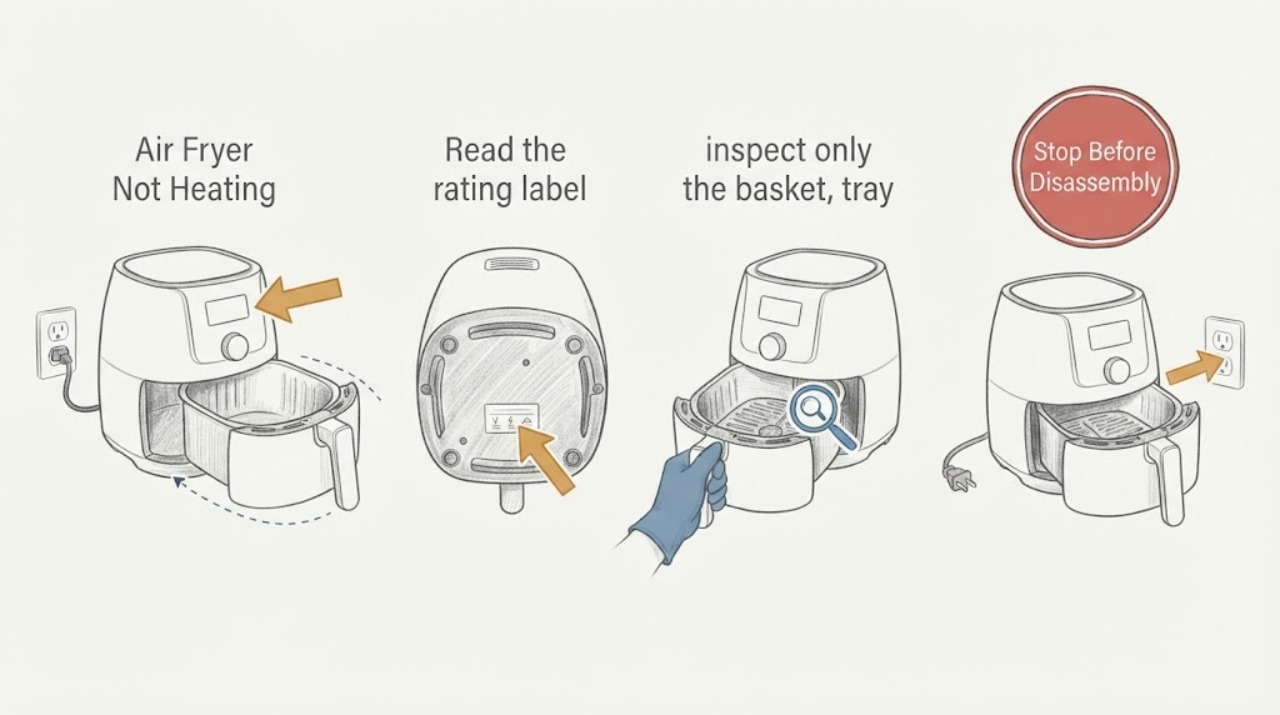
Air Fryer Not Heating: Safe Checks and Service Boundaries
For an air fryer that is not heating, record the brand/model and exact display or behavior, check only the cool external basket, airflow and controls, and stop for smoke, melting, fire, abnormal heat or damaged wiring. The CPSC warning shows why model identity and stop-use boundaries matter.
-
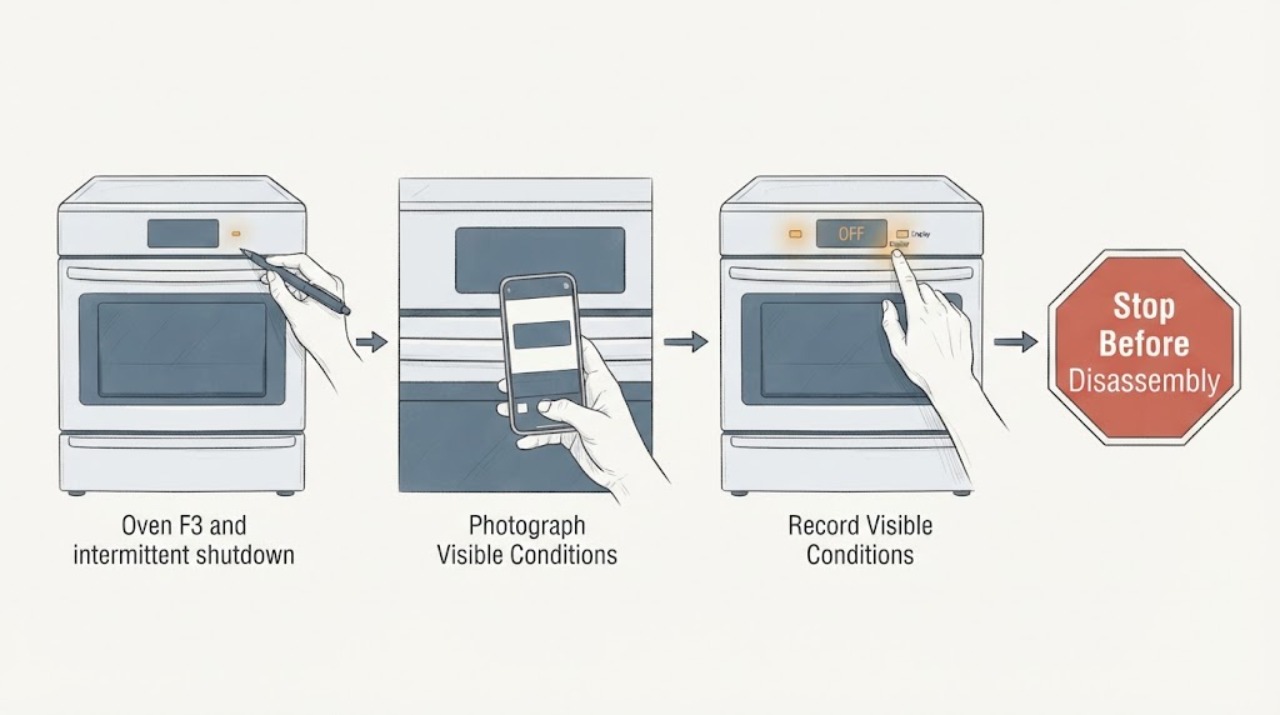
Amana ACS3350AS oven F3 and intermittent shutdown: safe next checks
Treat an intermittent F3 shutdown on the Amana ACS3350AS as an unresolved oven fault, not as proof that the temperature sensor is bad. First stop the heating cycle if it is safe, photograph the complete display (including any E-character), and record whether the shutdown occurs during preheat, baking, or immediately at startup.
-
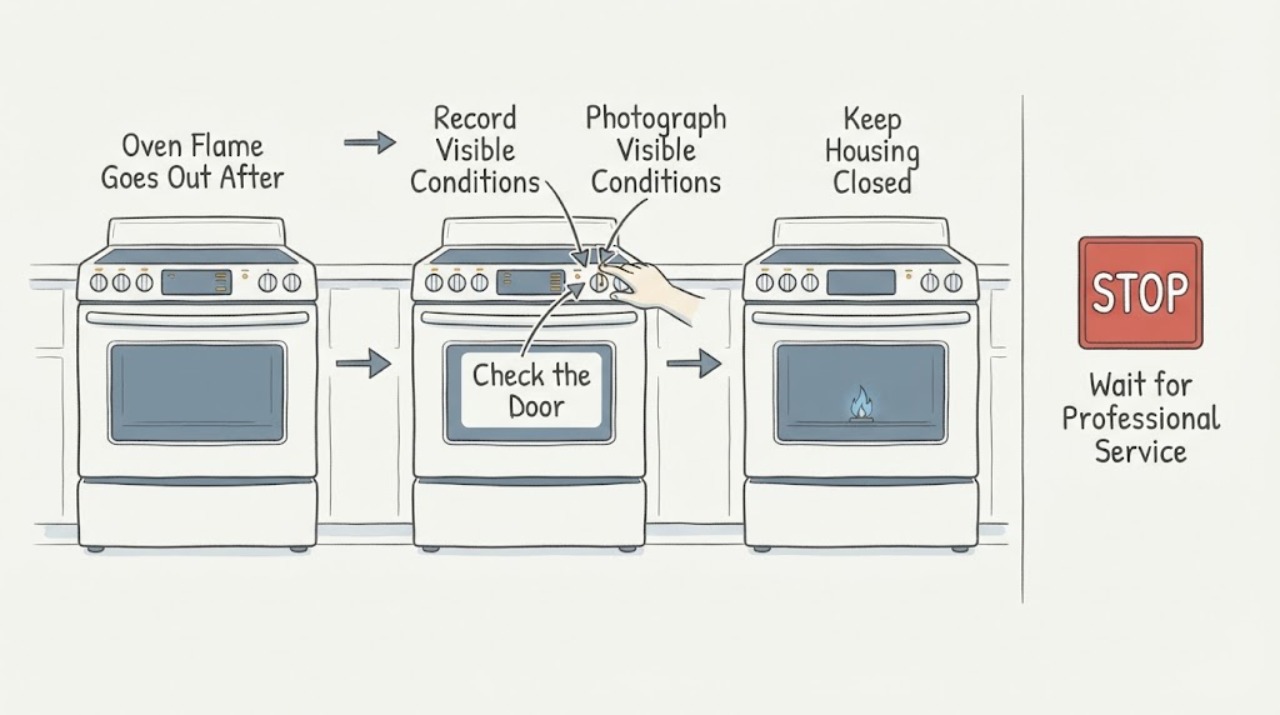
Amana AGR5630BDW1 Oven Flame Goes Out After Ignition
On an Amana AGR5630BDW1 gas oven, a flame that lights while the igniter clicks and then goes out when the clicking stops is not a normal completed preheat. Amana says igniters click until a flame is detected; this sequence means the flame is not being maintained or confirmed, but it does not identify a replacement part.
-
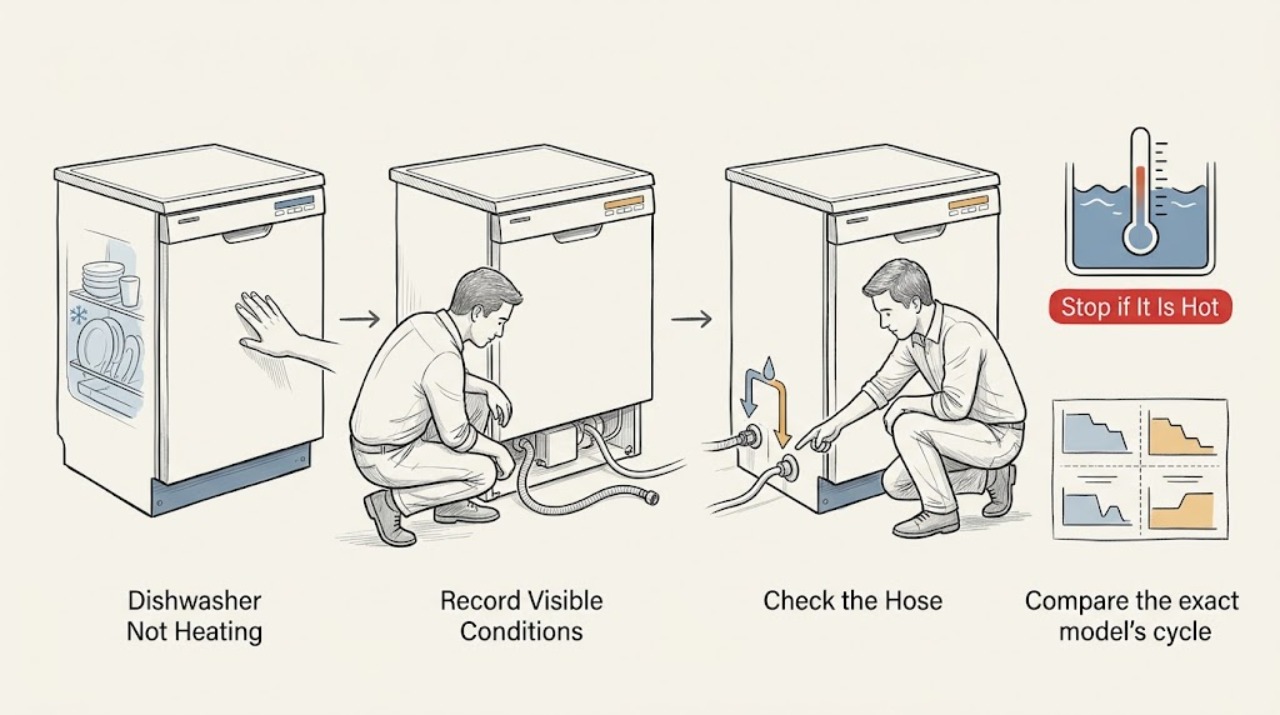
Amana Dishwasher Not Heating: Check Water Temperature and Cycle Results
First separate a long heating pause from a complete lack of heat. Run the hot-water tap at the sink until it is hot before starting, confirm the dishwasher has its normal water supply, and use only options supported by the exact Amana model.
-
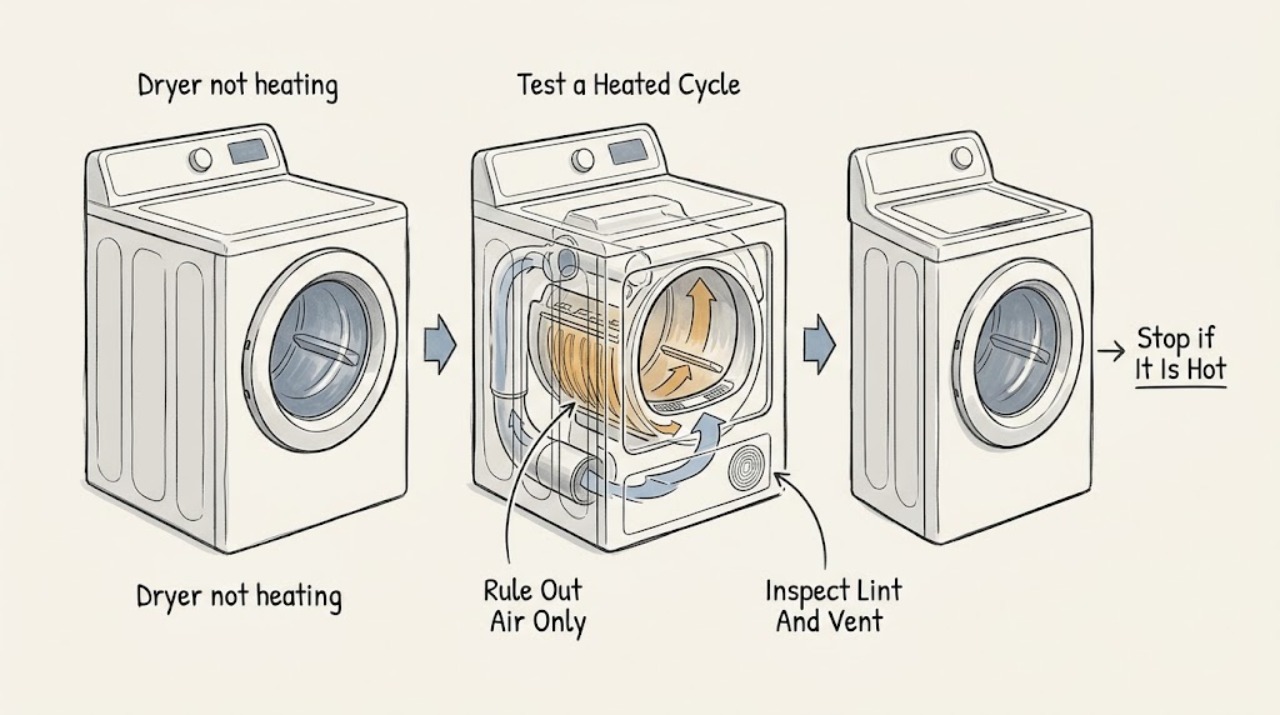
Amana dryer not heating: verify the cycle, airflow, and power before service
First confirm that the Amana dryer is actually on a heated timed cycle: run it empty for about five minutes, stop it, and check for warmth without reaching into a moving drum. Air Only or Air Fluff never adds heat.
-
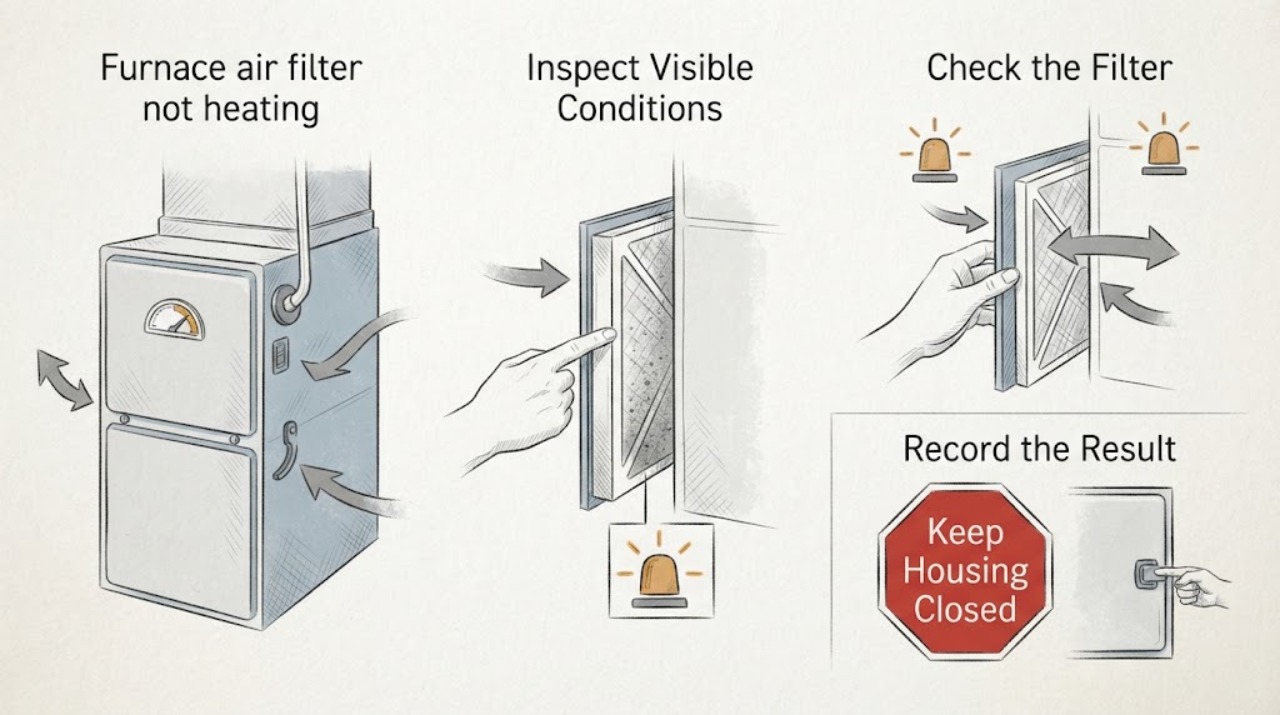
Amana furnace air filter not heating: What to Check and What to Do Next
A dirty, blocked, incorrectly installed, or overly restrictive air filter can reduce airflow and make an Amana furnace run poorly, but a clean filter does not prove the furnace's heat-producing components are working. Check the filter at the accessible return grille or filter cabinet, confirm its size and airflow orientation from the exact Amana instructions, and replace or clean it only as the manufacturer permits.
-
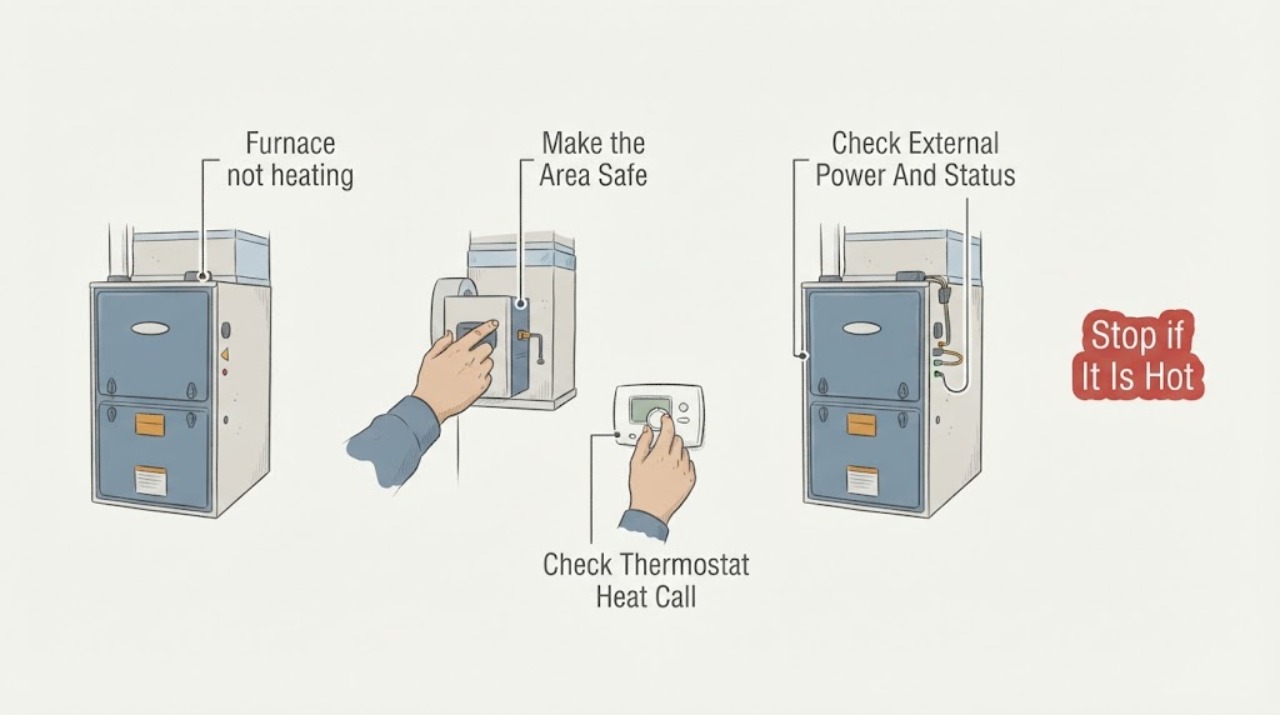
Amana furnace not heating: check the blower motor symptoms safely
An Amana furnace that is not heating can have no thermostat call, lost power, a dirty filter, an ignition or flame-safety shutdown, or a blower motor and airflow problem. The blower motor moves heated air through the ductwork, so a furnace that lights but has no airflow, weak airflow, a humming or non-starting blower, or a blower that stops after overheating needs a different path from a furnace that never attempts ignition.
-
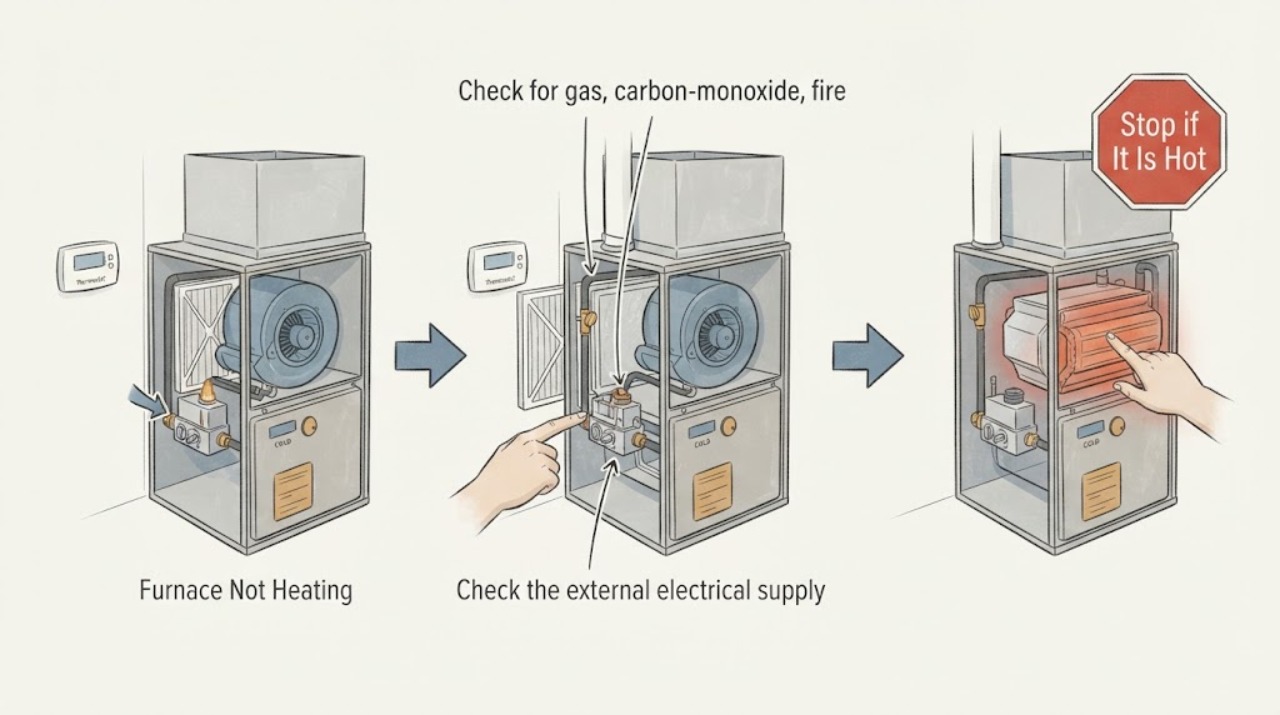
Amana Furnace Not Heating: What to Check and What to Do Next
An Amana furnace that is not heating can have a thermostat setting or battery issue, lost electrical power, a restricted filter or airflow path, a blocked outdoor vent, a lockout, or a fuel, ignition, flame-sensing, blower, or control fault.
-
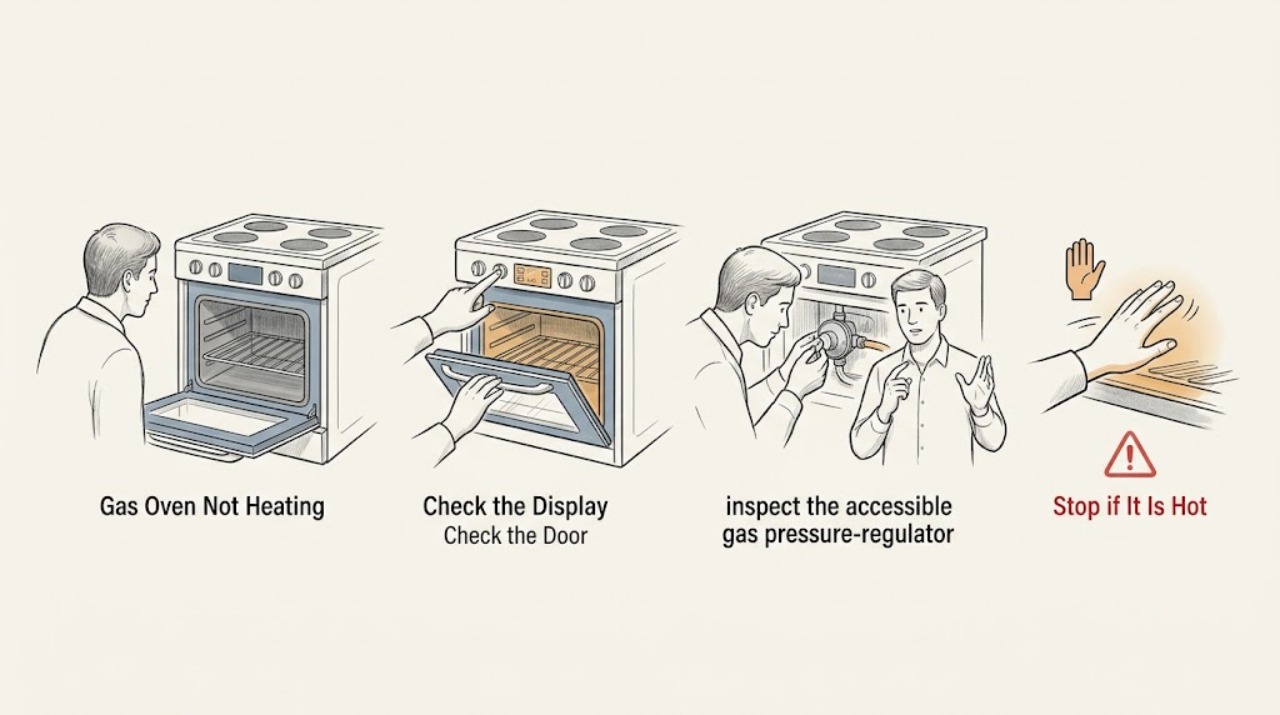
Amana Gas Oven Not Heating: Safe Checks Before Service
If an Amana gas oven is not heating, first check whether the cooktop works, whether the oven controls are set for a normal bake cycle, and whether the door is fully closed. A gas range can have working cooktop burners while the oven's pressure-regulator shut-off is closed, so the oven-specific gas path matters.
-
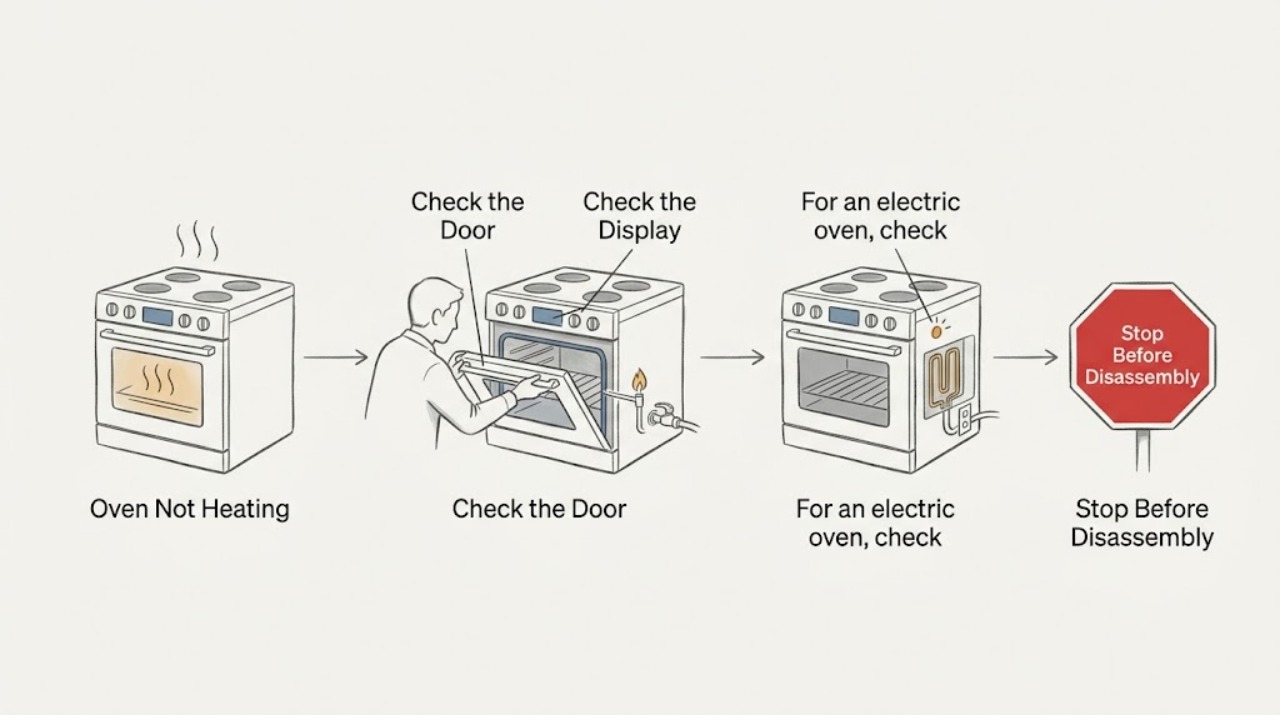
Amana Oven Not Heating: Check the Door, Controls, and Power Safely
Confirm the oven is set to a normal bake or broil cycle, the door is fully closed, and a delayed start, control lock, or demo mode is not preventing heating. If it is a gas range, use the model instructions to verify the oven's regulator shut-off and main gas valve; if it is electric, check only the accessible controls and whether the circuit is supplying the appliance.
-
Amana Washing Machine Not Heating: Check Water Temperature Safely
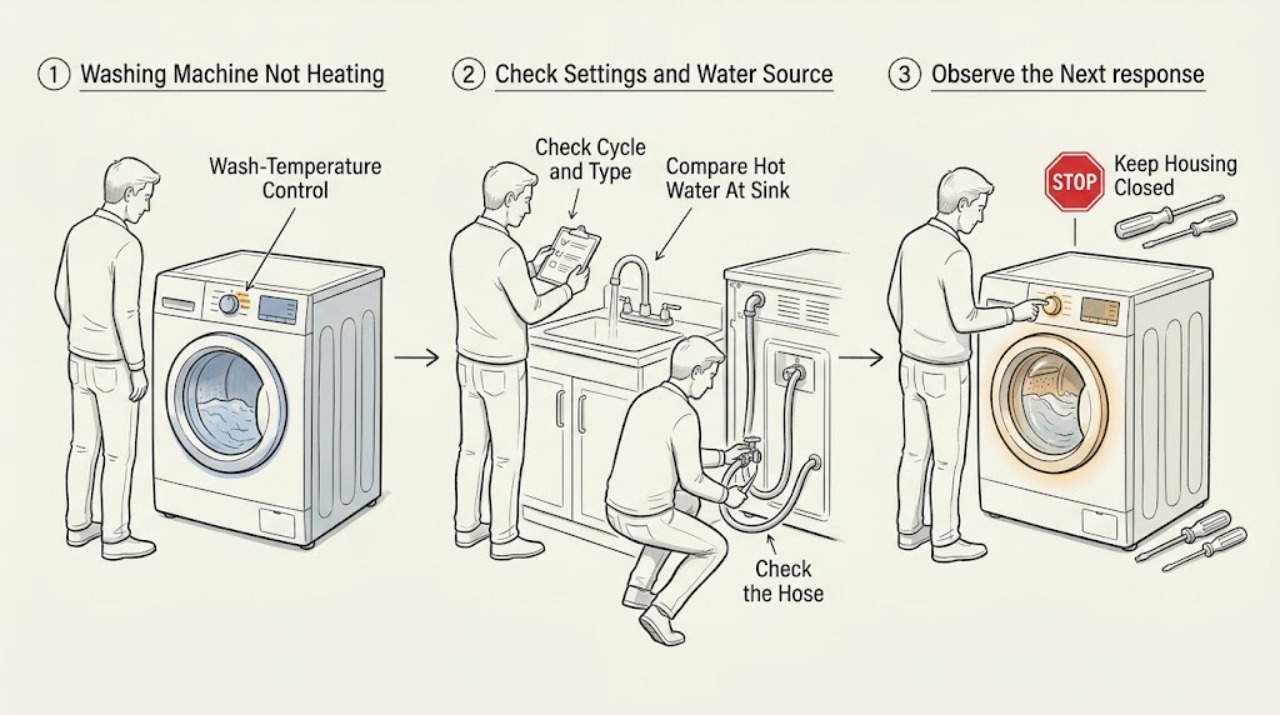
An Amana washing machine that is not heating may be receiving cooler incoming water rather than having an internal heater failure. First confirm the selected cycle and compare the hot and cold supply at the nearest sink, then inspect from outside whether the hot and cold inlet hoses are connected to the matching faucets, both supply faucets are available, and the hoses are not kinked.
-
ASKO Dryer Not Heating: Safe Checks Before Service
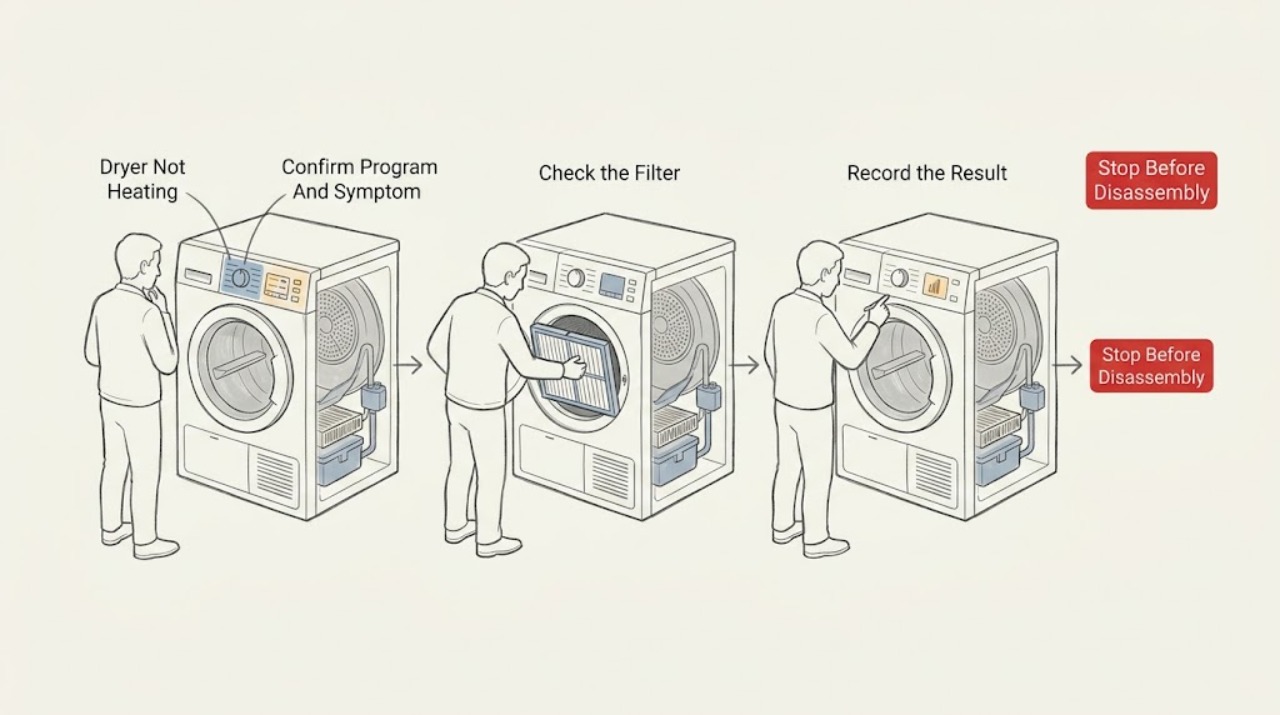
If your ASKO dryer is not heating, first confirm the selected program and note whether the drum still tumbles. With the dryer off and cool, clean the door lint filter and, if fitted, the heat-pump filter; empty the condensate tank and check its drain path.
-
Beko Dishwasher Not Heating: Separate a Program Issue from a Heating Fault
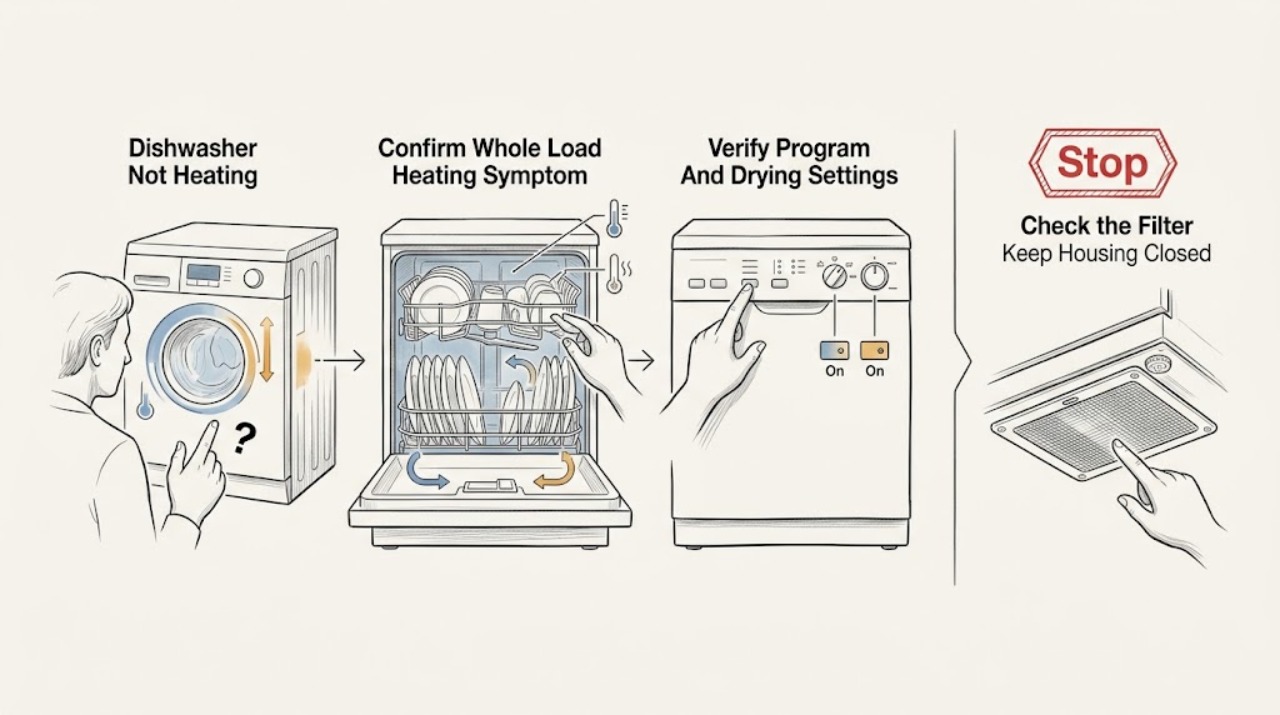
A Beko dishwasher that finishes with cold water, undissolved detergent, dirty dishes, and poor drying may have a heating-element or thermostat fault, but those symptoms can also come from a short or unsuitable programme, poor loading, blocked spray arms or filters, inadequate filling, or a drainage problem. First use the exact model's programme guidance and check the user-accessible water path and filters.
-
Beko Dryer Not Heating: Safe Checks Before Service
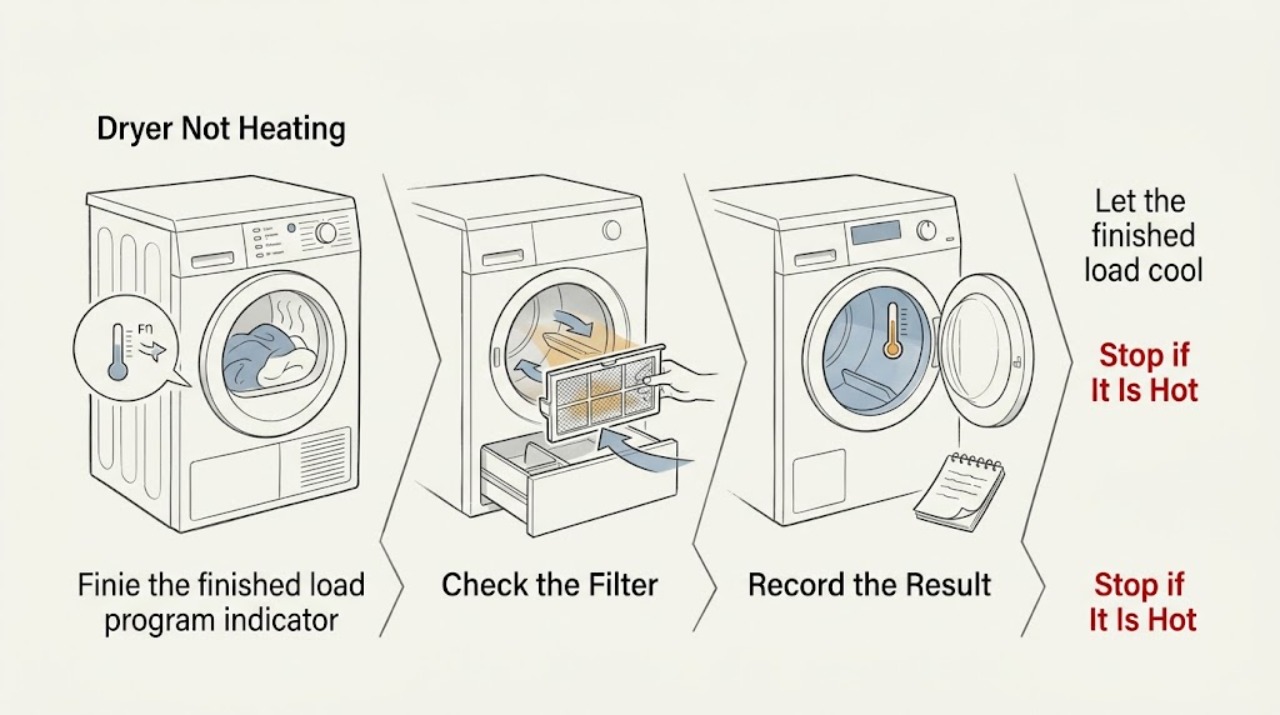
If a Beko dryer is not heating or clothes stay wet, first confirm that the selected program suits the load and that the dryer is not overloaded. With the appliance stopped and cool, clean the door lint filter and, when fitted, the condenser or filter drawer, and make sure external airflow openings are not blocked.
-
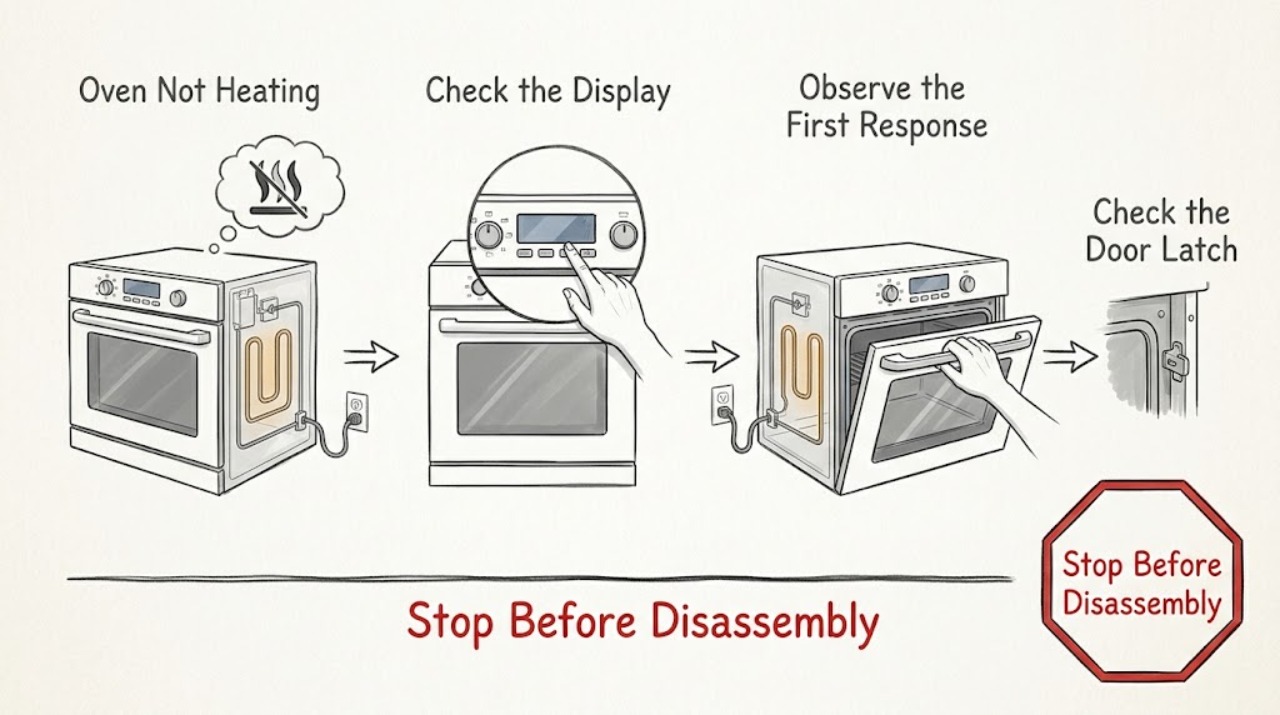
Beko Oven Not Heating: Safe Settings and Power Checks
If a Beko oven is not heating, first stop cooking and let it cool if it has been running. Confirm that a cooking function and temperature are selected, the clock or timer is set as required by the model, the door is fully closed, and the appliance has power at its normal grounded outlet.
-
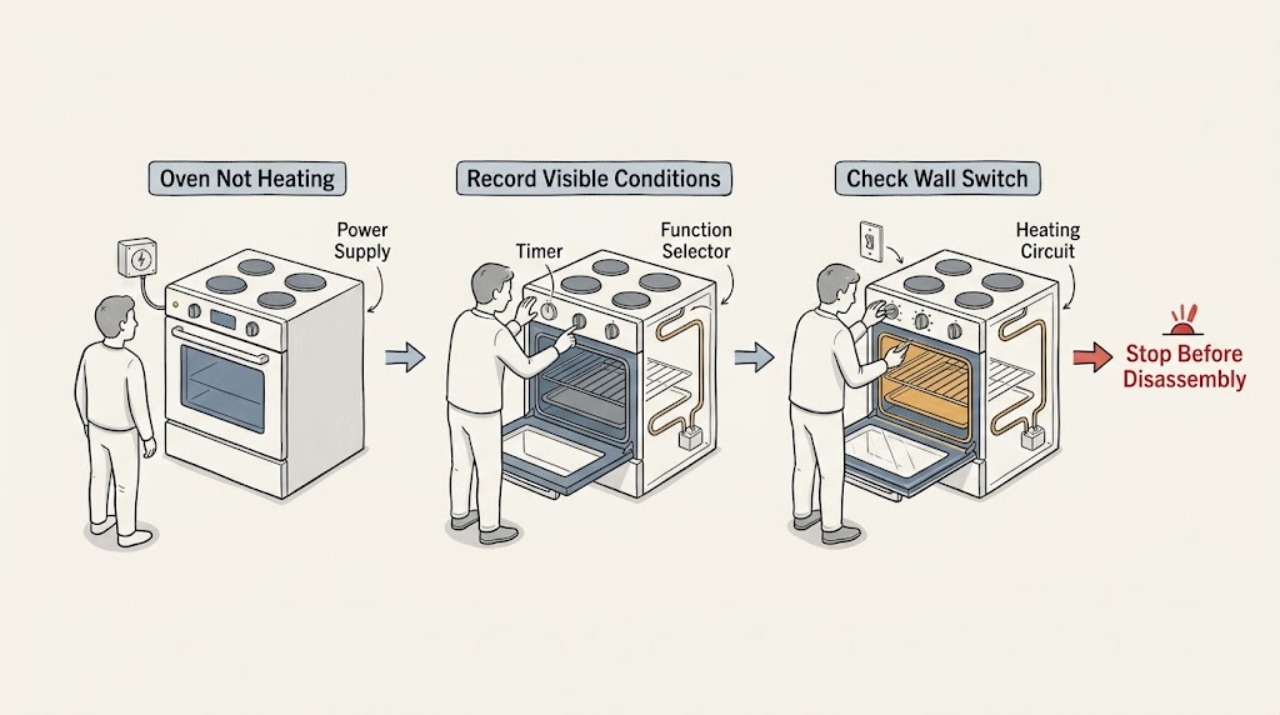
Belling Oven Not Heating: Check Power, Mode, Timer, and Temperature
First determine whether the Belling oven is completely off, powered but cold, or heating weakly. Check the accessible power supply, select both an oven function and a temperature, close the door firmly, and confirm the timer is in manual mode rather than Auto if your model has a programmable clock.
-
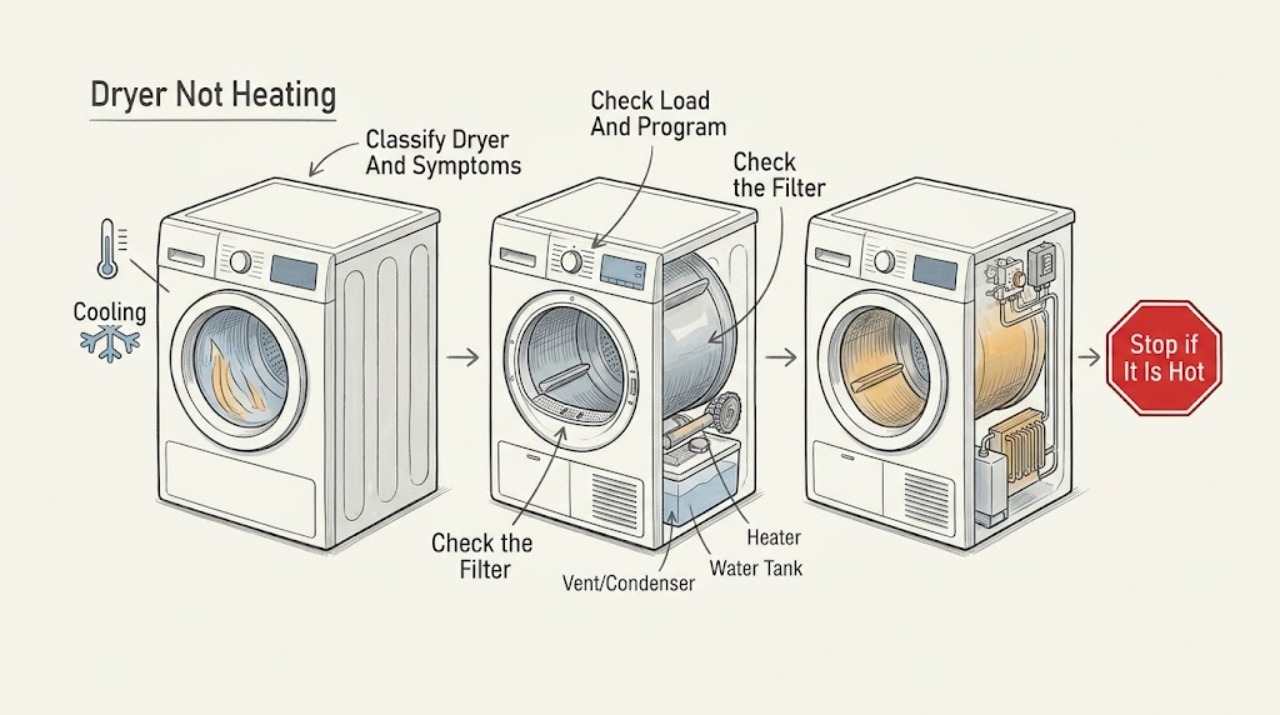
Blomberg Dryer Not Heating: Safe Airflow and Model Checks
If a Blomberg dryer is not heating, stop the cycle and let it cool, then check the load size and selected program, clean the lint filter, and check the model-specific vent, condenser, or water tank. Blomberg says a clogged filter or vent can restrict airflow, while heat-source problems can involve the heating element or thermostat.
-
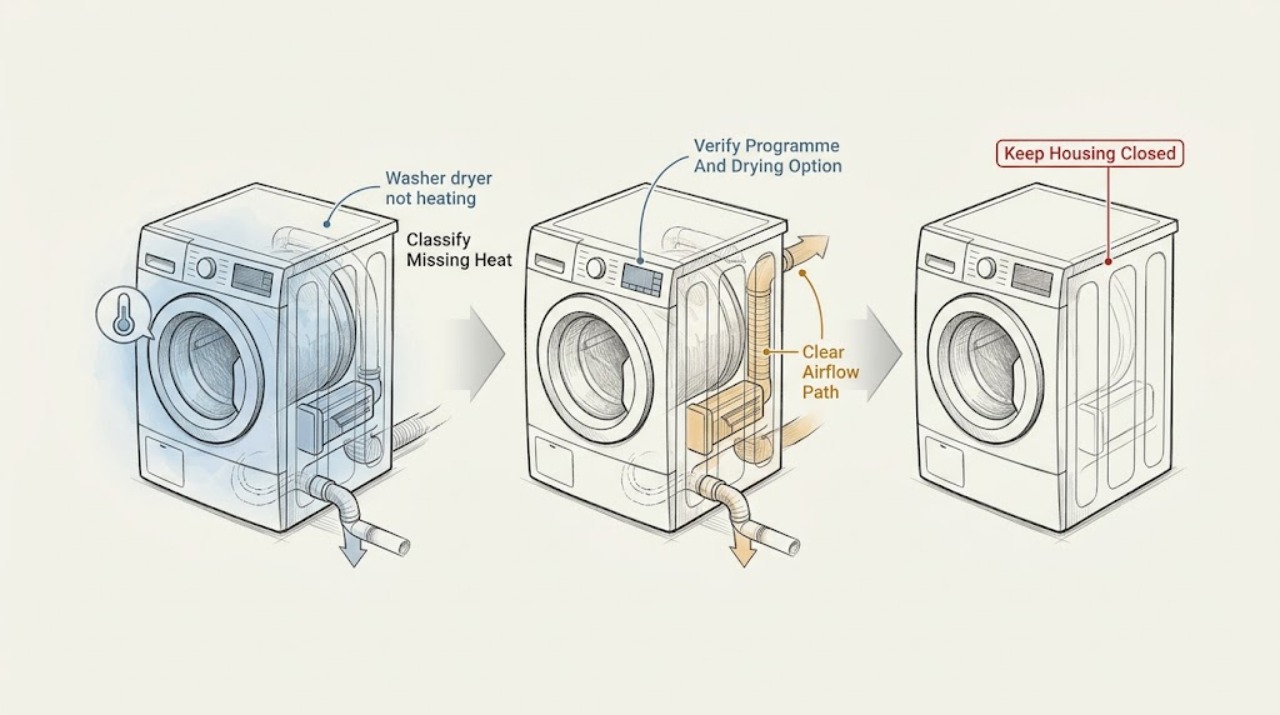
Blomberg washer dryer not heating: safe checks before service
First identify whether the missing heat is in the wash-water stage, the drying stage, or both; these are different checks. Confirm that the selected programme actually includes drying and that its temperature or drying option is enabled for your exact model.
-
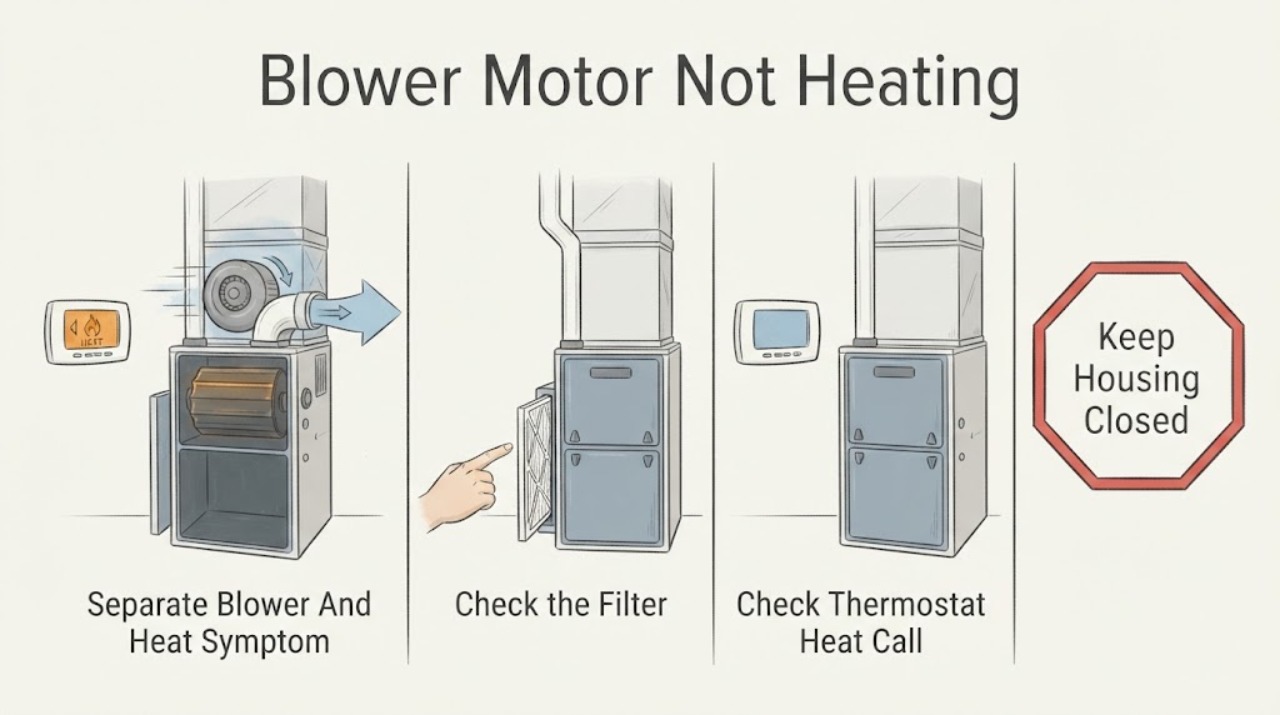
Blower Motor Not Heating: Why the Furnace Blows Cold Air
A blower motor does not create heat; it moves return air across the furnace heat exchanger and into the rooms. First determine whether the blower is running but the air is cold, or whether the blower is not running at all.
-
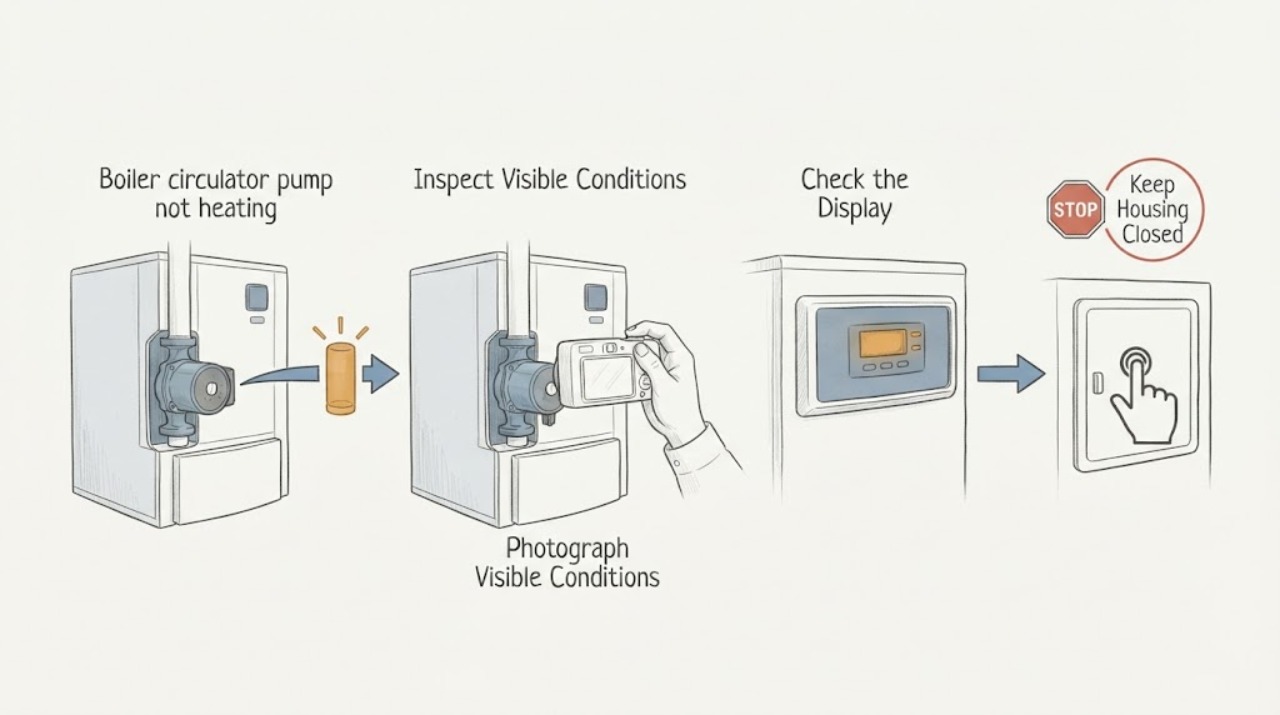
Boiler circulator pump not heating: What to Check and What to Do Next
Do not open a boiler or touch its gas, fuel, electrical, or hot-water components to diagnose a circulator problem. From normal user positions, confirm whether a thermostat is calling for heat, note any boiler display state or warning, compare heat delivery between zones, and listen for unusual circulator noise without touching the pump.
-
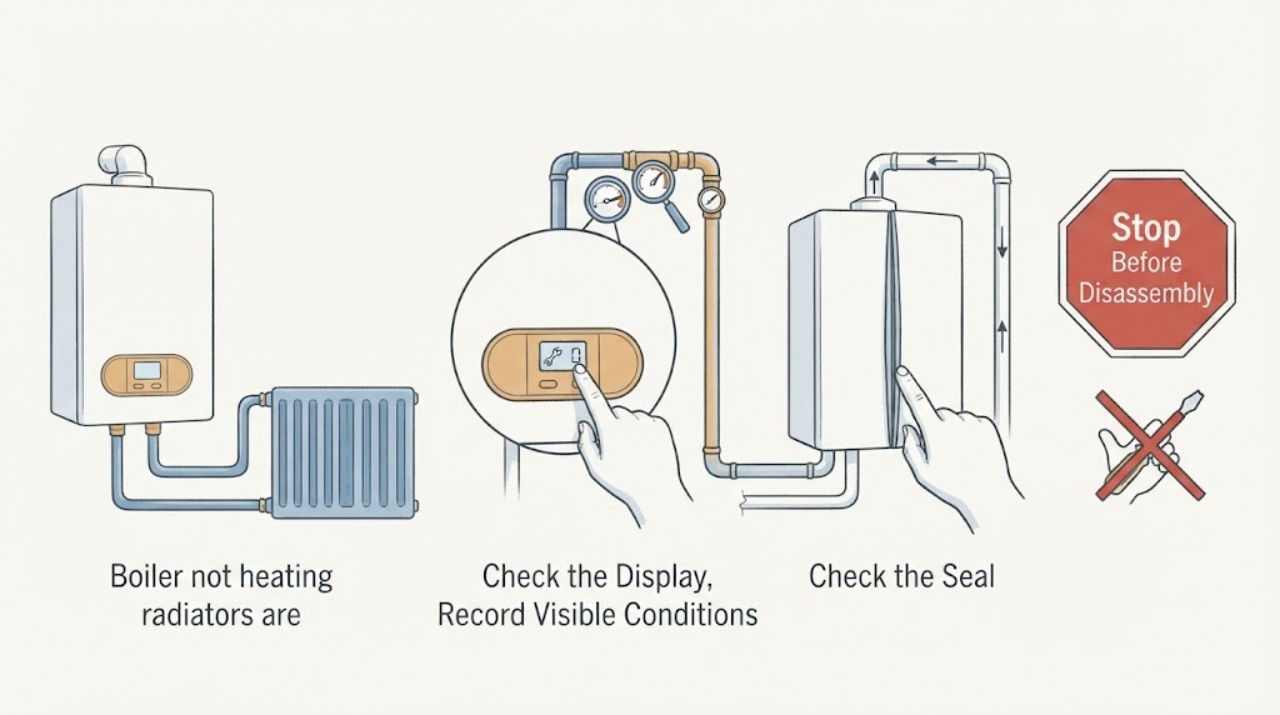
Boiler not heating radiators are cold: What to Check and What to Do Next
If the boiler is not heating and several radiators are cold, first confirm that the programmer or thermostat is actually calling for central heat and that the boiler is in heating mode, not hot-water-only mode. Check the boiler display for a fault or lockout and inspect its pressure indicator and visible pipework without removing the casing.
-
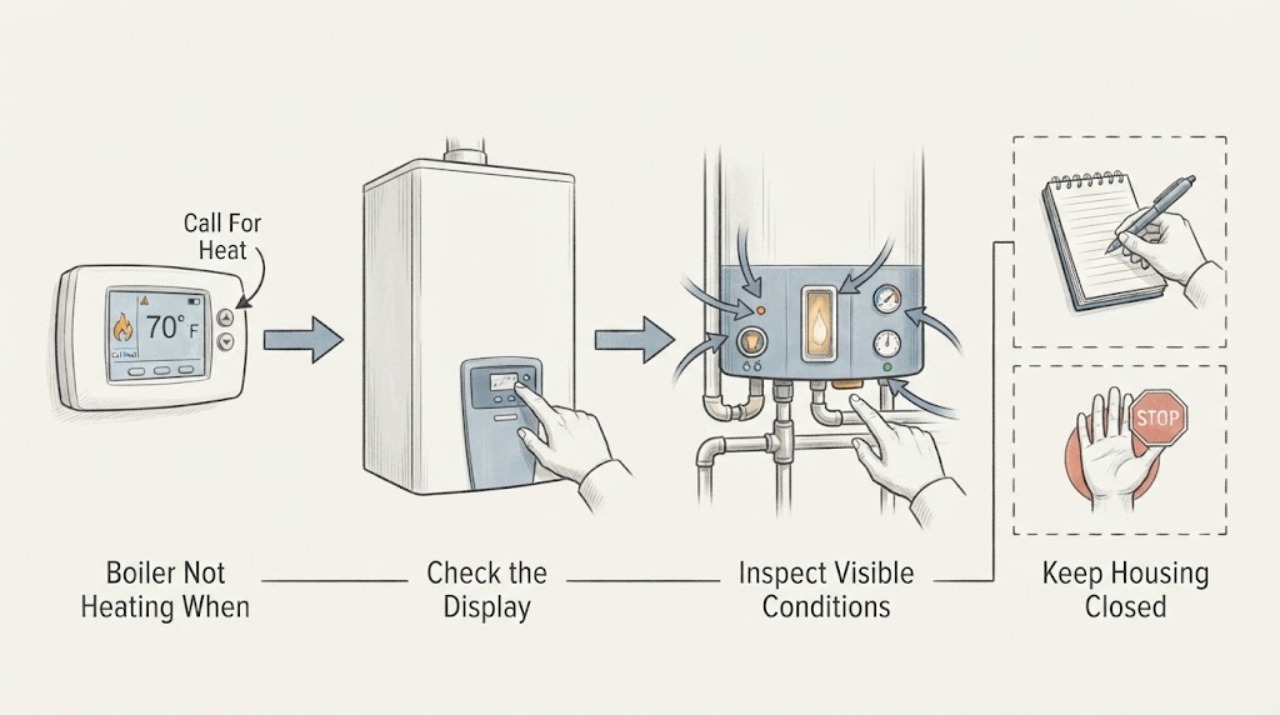
Boiler Not Heating When the Thermostat Calls for Heat: What to Check and What to Do Next
A thermostat showing Heat On, a flame icon, or another call-for-heat indicator is requesting heat; it does not prove that the boiler received the signal or accepted it. Confirm the thermostat mode, schedule and setpoint, then make only visible observations at the boiler: display or power status, fault indication, pressure indication and whether it starts during one normal call.
-
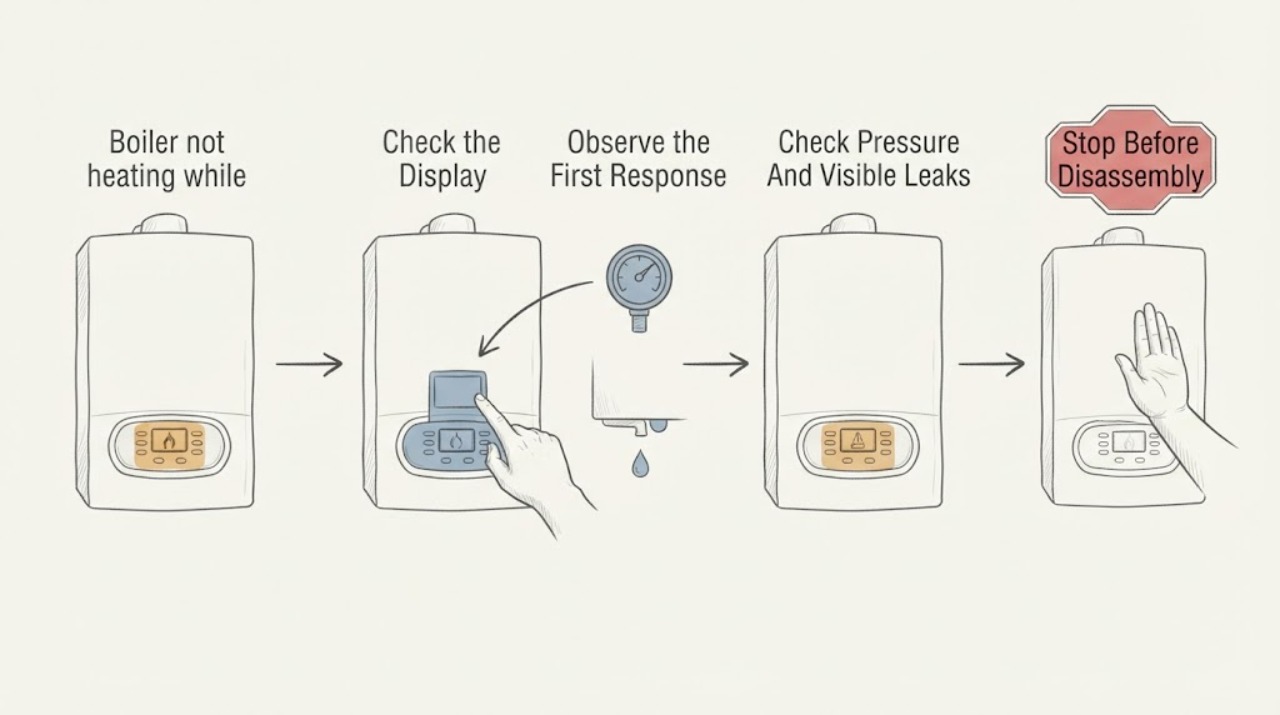
Boiler not heating while the status display is visible: What to Check and What to Do Next
A visible boiler display proves that the appliance has some electrical power, not that it is receiving a heating request or successfully transferring heat to the radiators. First read the display without guessing at an unfamiliar symbol, then check the room thermostat, schedule or programmer, boiler mode, power supply, and system pressure from the user-accessible controls.
-
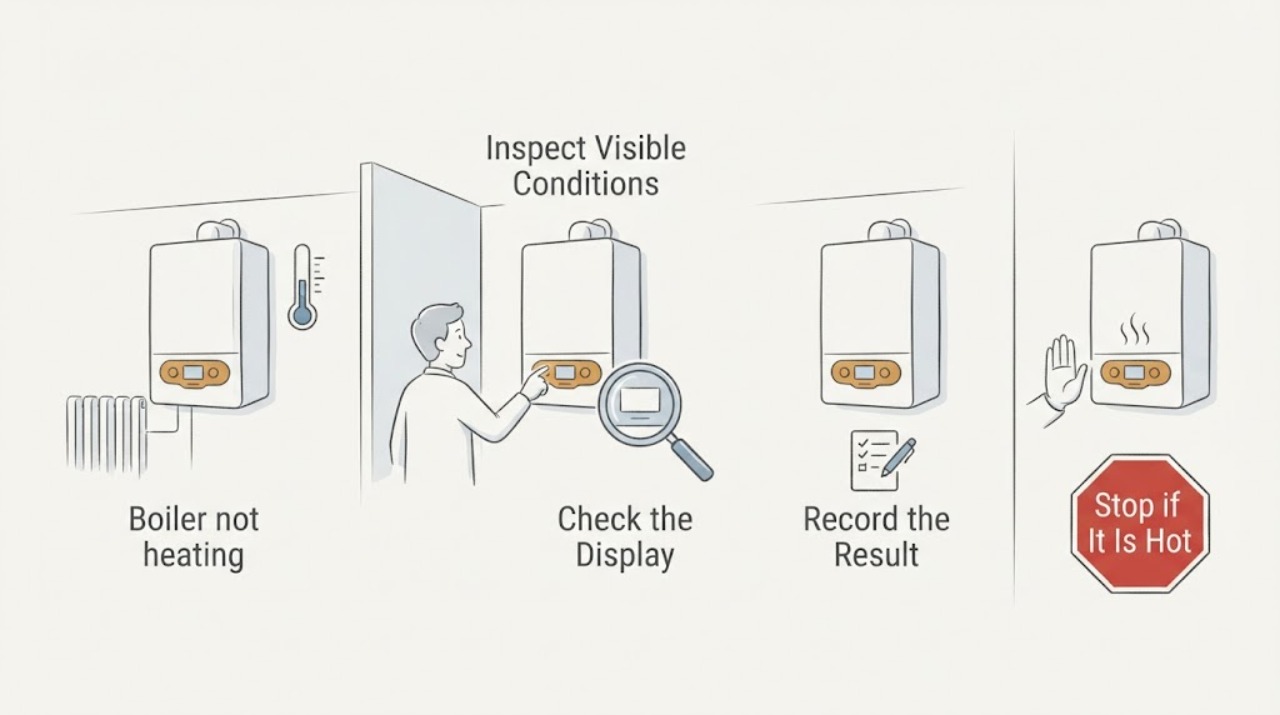
Boiler not heating: What to Check and What to Do Next
Start with observations that do not require opening the boiler: confirm the thermostat or zone control is actually calling for heat, read any visible boiler status or error message, and read the visible pressure gauge or digital pressure display against the range in your manual. Check whether the loss of heat affects every zone or only one.
-
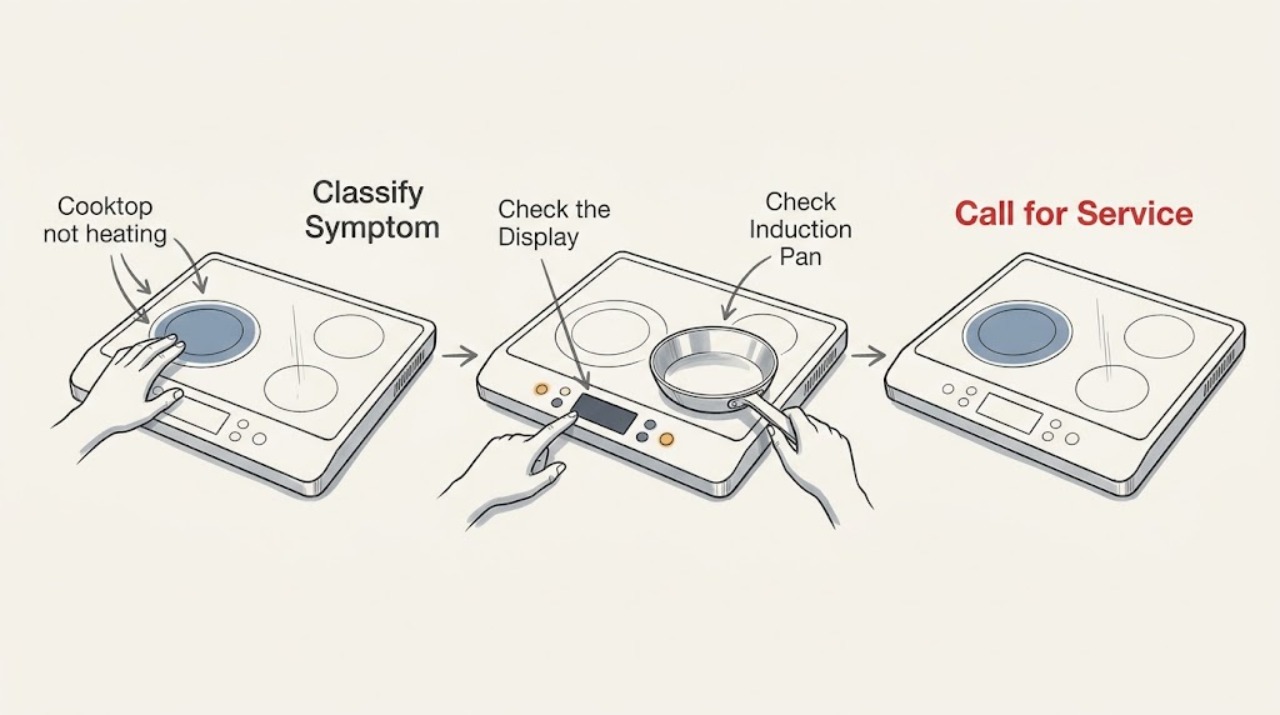
Bosch cooktop not heating: safe checks before service
First identify whether the Bosch cooktop is electric/radiant, induction, or gas, and whether one zone or all zones are affected. From normal user controls only, check power, the control or child lock, a wet or covered touch panel, displayed error codes, and whether the unit is cooling after overheating.
-
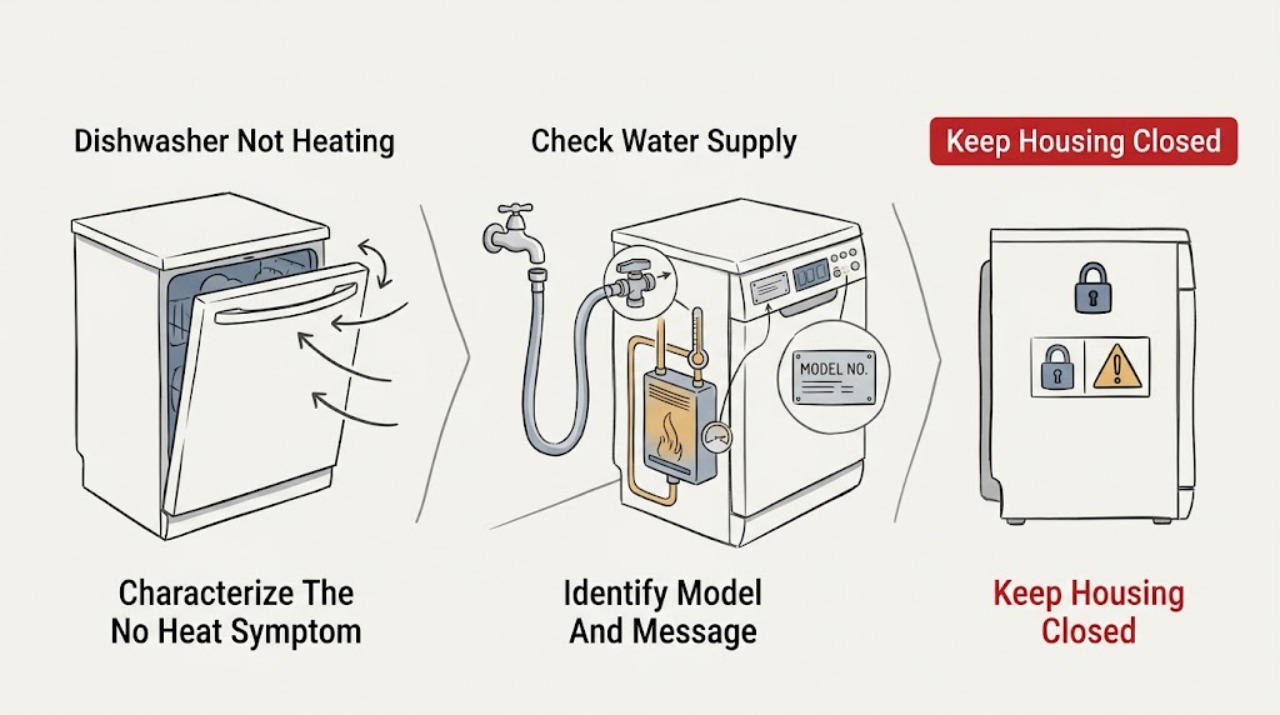
Bosch Dishwasher Not Heating: Safe Checks
If a Bosch dishwasher is not heating, first confirm what is actually cold: a cycle can run longer when incoming water is not warm enough, and wet dishes alone do not prove that the wash water never heated because drying behavior varies by model and cycle. Use the exact model manual to identify the selected cycle and expected drying result, check that the water supply is on and the inlet hose is not kinked, and record any display message exactly.
-
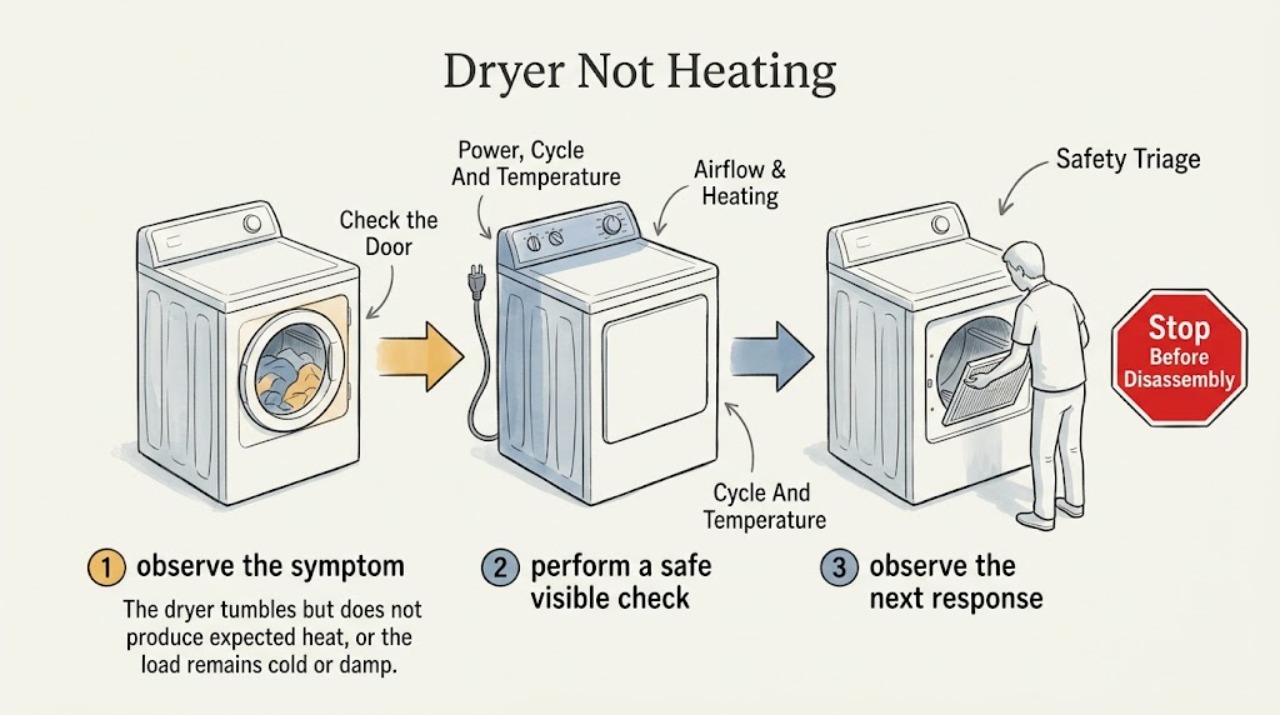
Bosch Dryer Not Heating: Check the Cycle, Airflow, and Fault Code
If a Bosch dryer is not heating, first make sure the selected program is a heat-producing dry cycle rather than an air or cool-down setting. Then clean the lint filter, check the external vent for blockage, and clean the moisture sensor near the lint filter with a damp cloth and a little white vinegar.
-
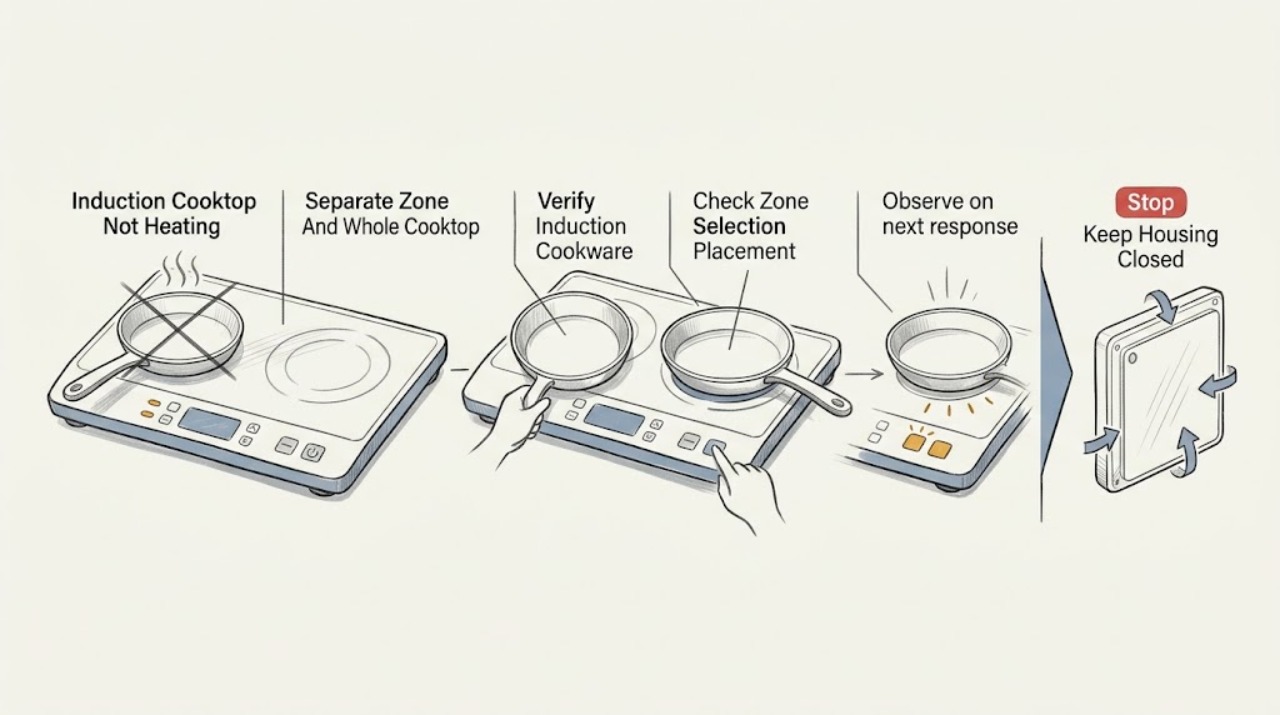
Bosch Induction Cooktop Not Heating: Check Cookware, Zone Settings, and Fault Signs
If a Bosch induction cooktop is not heating, first separate a pan-detection problem from a cooktop fault: confirm the correct zone is selected, the pan is induction-compatible, centered, stable, and appropriately sized, and the control panel is unlocked and dry. If the display flashes, shows an error, the electronics overheat, or all zones remain cold with suitable cookware, follow the exact model manual and stop for qualified Bosch appliance or electrical service.
-
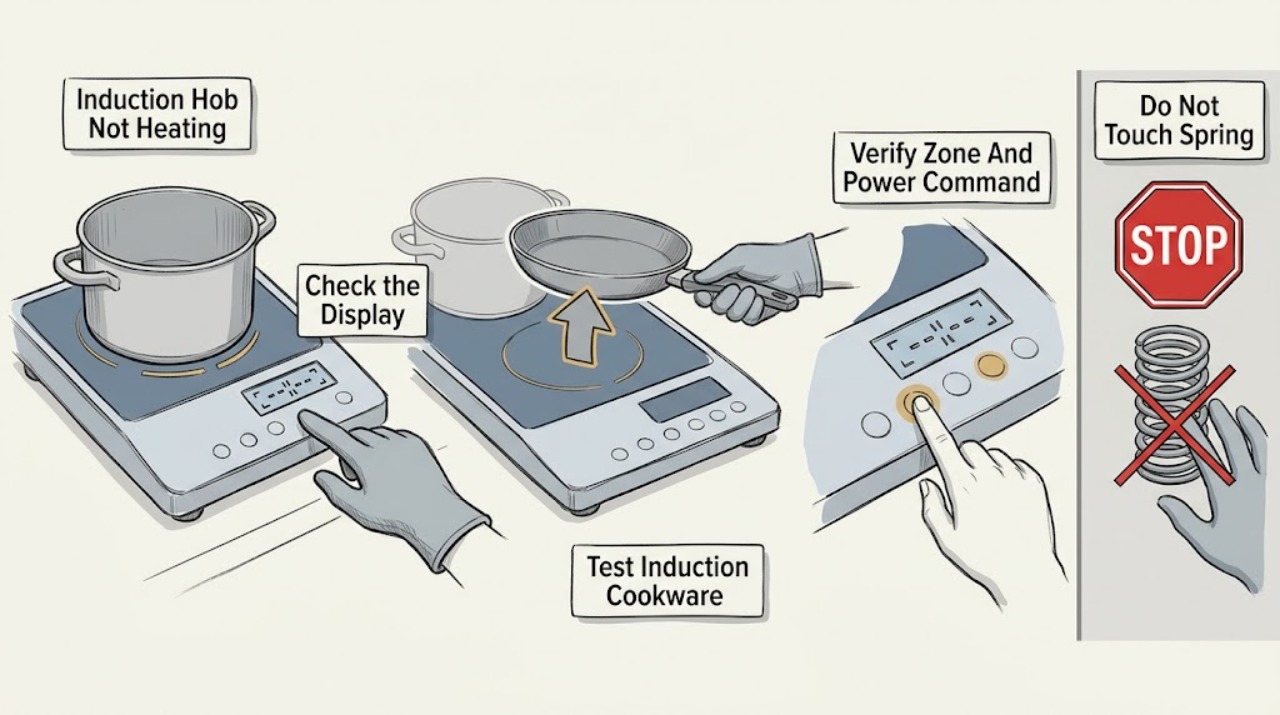
Bosch Induction Hob Not Heating: Check Pan Detection, Controls, and Error Signs
If a Bosch induction hob is on but not heating, test the pan before assuming the hob is broken: induction cookware needs a magnetic, flat base and must be centered on the selected zone. Confirm that the correct zone has a power level, and clear a wet or covered control panel.
-
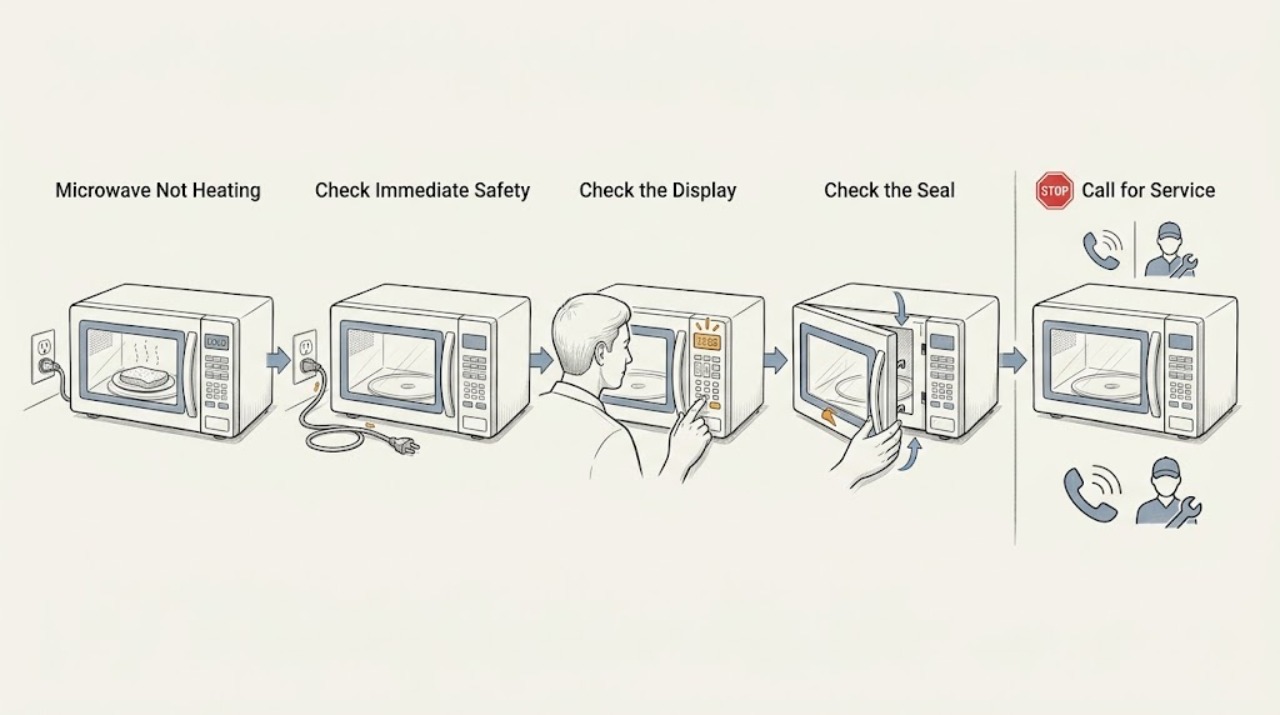
Bosch Microwave Not Heating: Safe Checks Before Service
If a Bosch microwave runs but does not heat, or will not start, begin with safe external checks: confirm power, make sure the door closes fully, look for packing material or visible door damage at the seal, and clear the control state only as the exact model manual directs. Bosch's specific no-heat support page sends an unresolved microwave-not-heating problem to Bosch Customer Support.
-
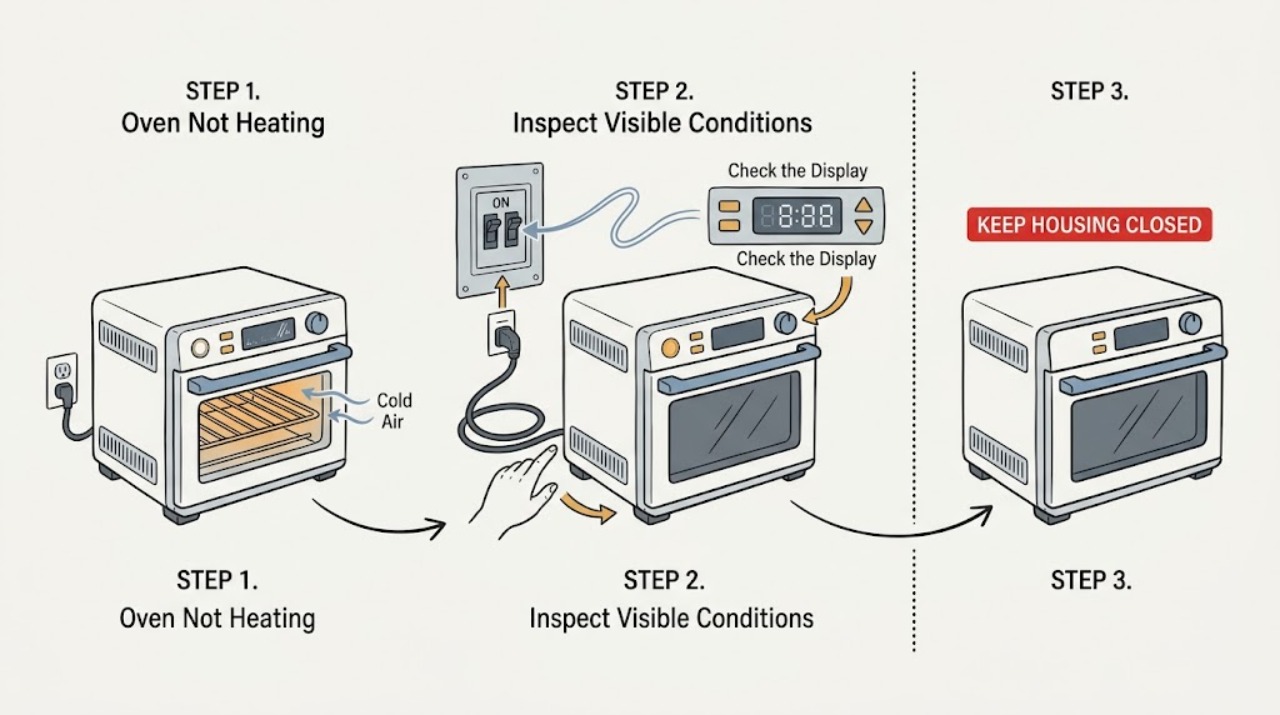
Bosch Oven Not Heating
If a Bosch oven is not heating, first check the external power supply and make sure an oven mode and temperature have actually been selected. A dark display or a tripped breaker points to a supply problem; a powered display with no heat after a valid Bake or other heating mode is selected points to a control, element, sensor, or other technical fault that needs service.
-
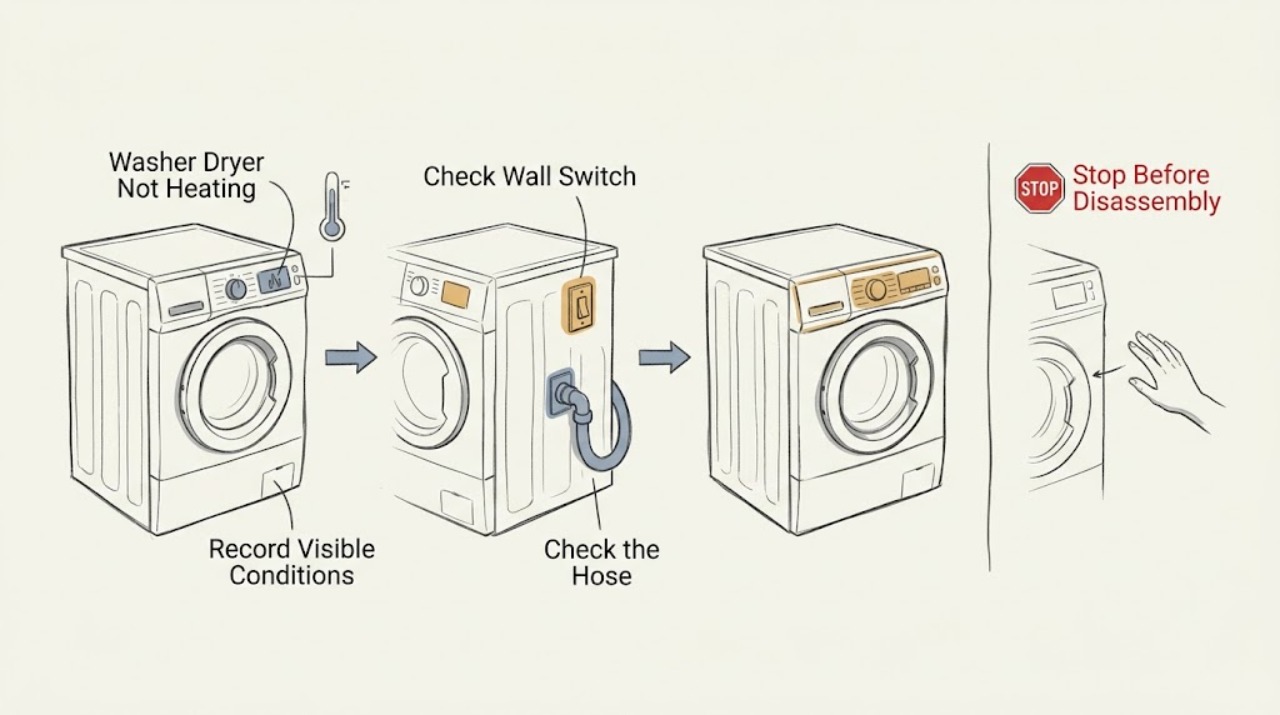
Bosch Washer Dryer Not Heating
First identify which function is not heating: wash water that stays cold, drying air that never warms, or laundry that is warm but still damp. Check the selected wash or drying programme, the model-specific display symbols, water tap, load and airflow conditions, and the accessible filter or inlet guidance in the Bosch manual.
-
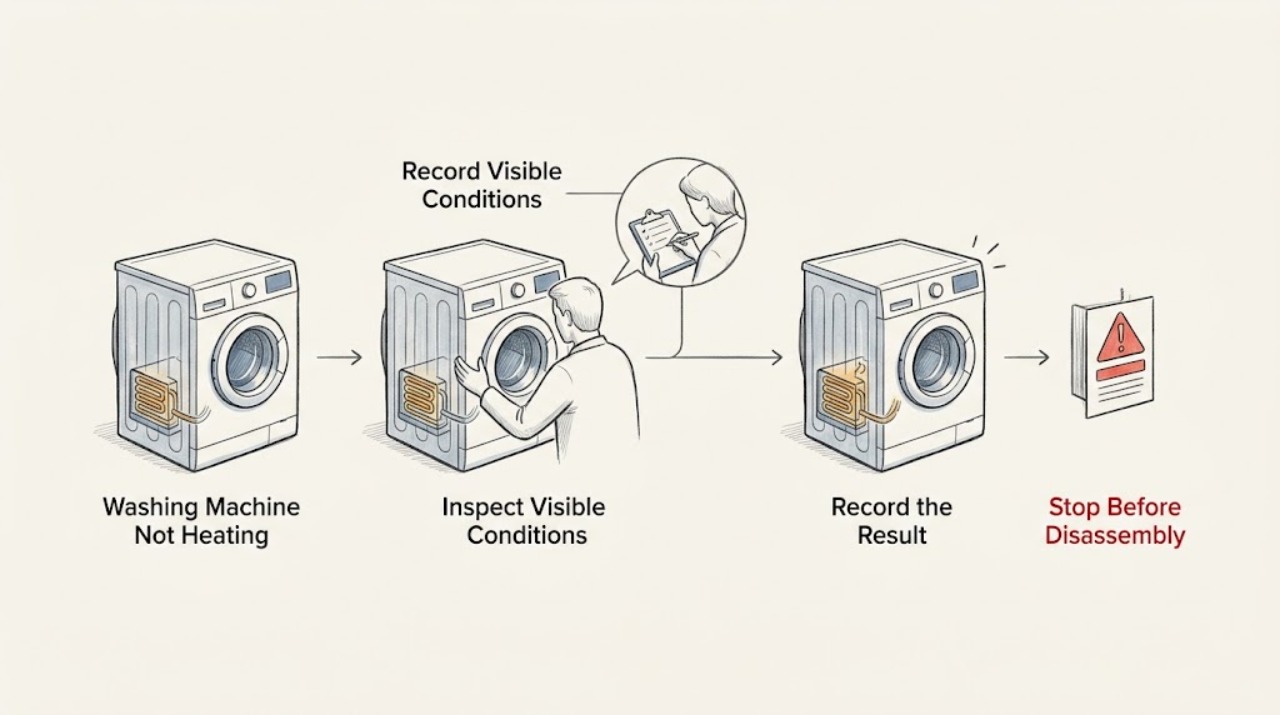
Bosch Washing Machine Not Heating
If a Bosch washing machine is not heating, first confirm that the selected programme actually requests warm water and that the washer fills and runs normally. Check the display for Bosch heating codes such as E19 or F19, which Bosch describes as heating time exceeded, and E20 or F20, which Bosch describes as unexpected heating.
-
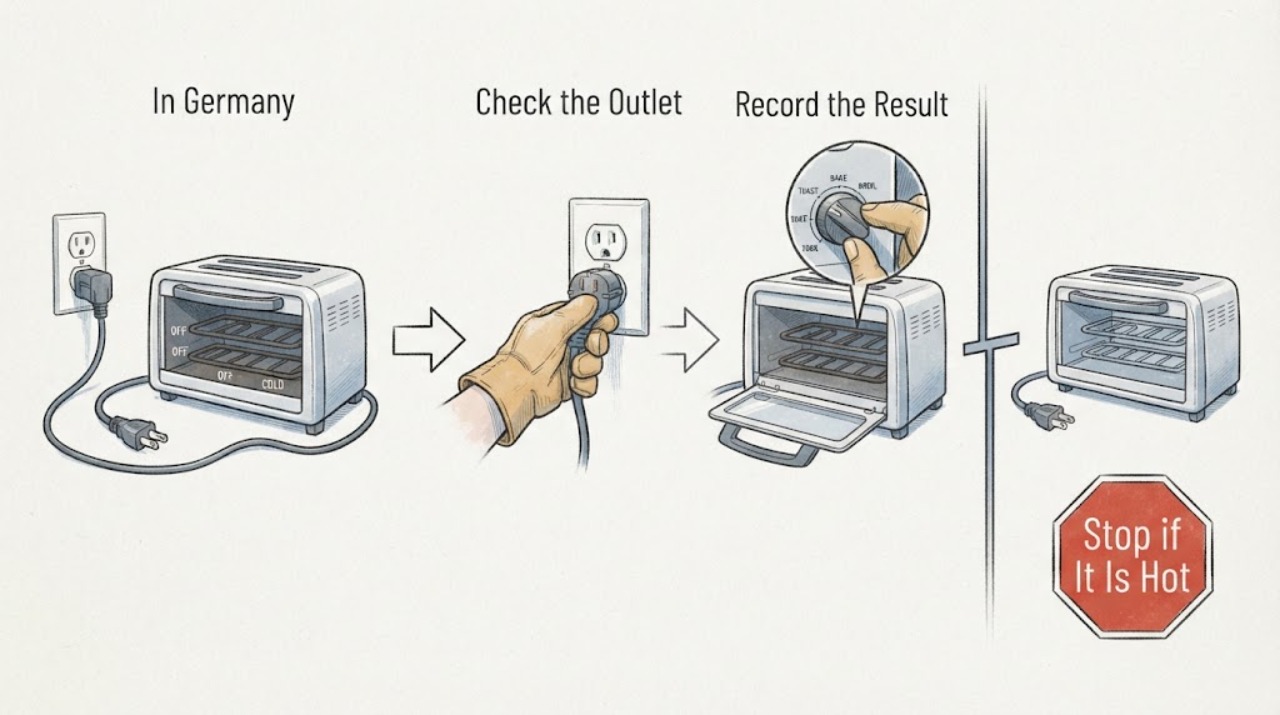
Breville BOV900 in Germany: Check 60 Hz vs 50 Hz First
Before troubleshooting a Breville BOV900 that does not heat in Germany, verify the power supply. The opened BOV900 instruction book rates this model at 120 V, 60 Hz, and 1800 W, while an official German government source describes Germany's grid as 230 V and 50 Hz.